Travel Bucket List: India – Utarakhand Part 3

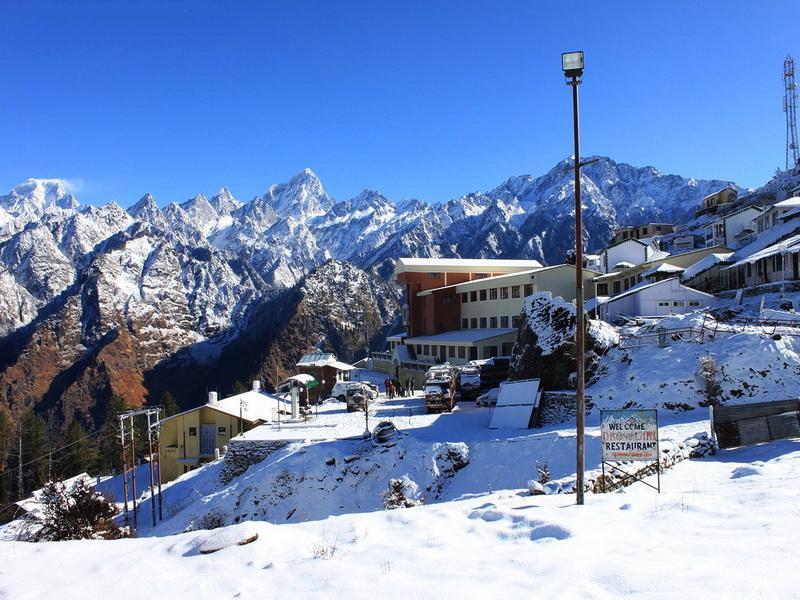
Also known as Auli Bugyal which in the local language of Garhwali mean meadow, Auli is located at an elevation of 2,800 metres and is home to mountain ranges of Nanda Devi, Mana Parvat and Kamat Kamet. Many religious destinations are also scattered around Auli. It is believed that Shankracharya had blessed Auli with his visit. Between June to October, the valley has one of highest number of flower species found anywhere in the world, with 520 species of high altitude plants, 498 of which are flowering plants with significant populations of endangered species. Dotted with apple orchards, old oaks and pine trees there is no dearth of natural beauty in Auli. Apart from skiing visitors can also go for numerous treks in the hills of Garhwal Himalayas and enjoy the spellbinding views of the snow-draped mountains. Auli is a popular hill resort in the Himalayan range which dates back to the 8th century. The three Himalayan mountain peaks of western Kumaun as a whole form the Trishul peak.

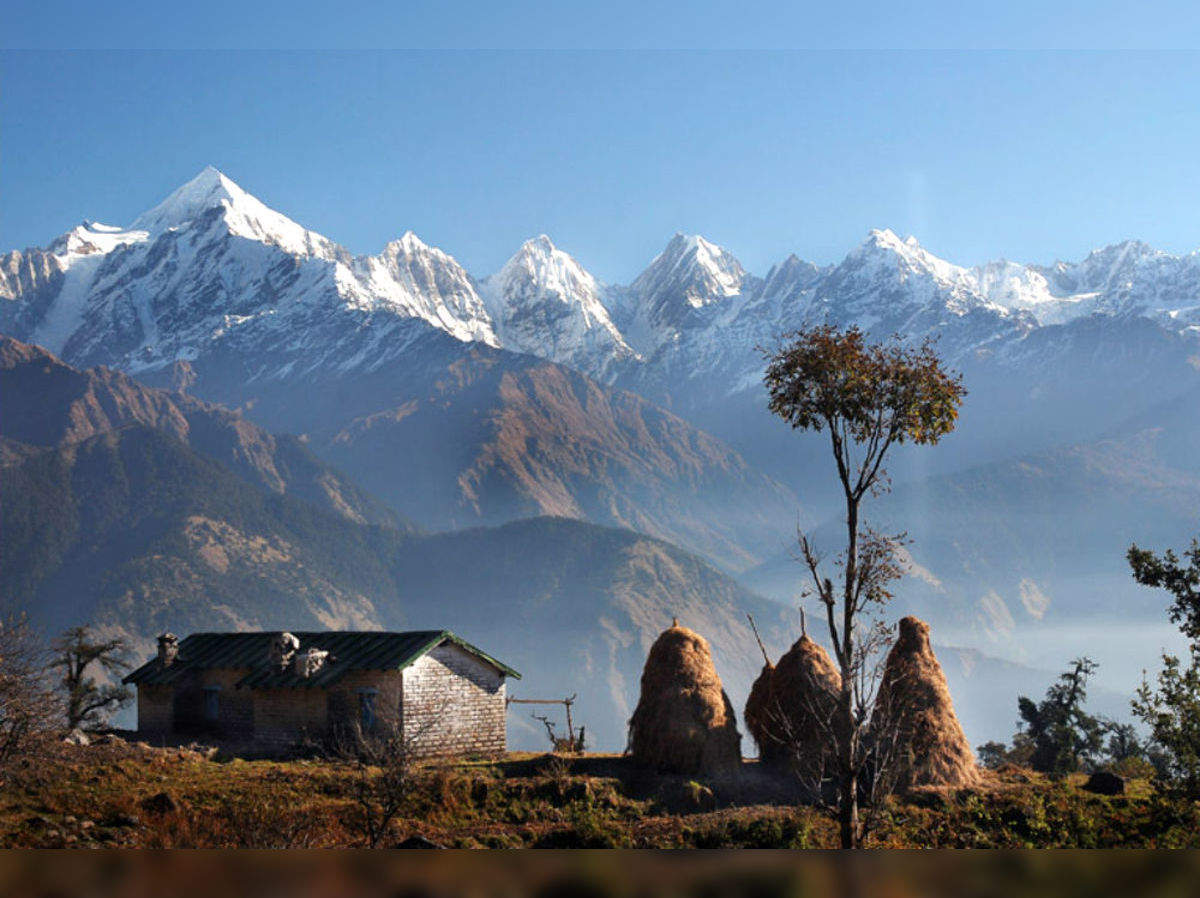
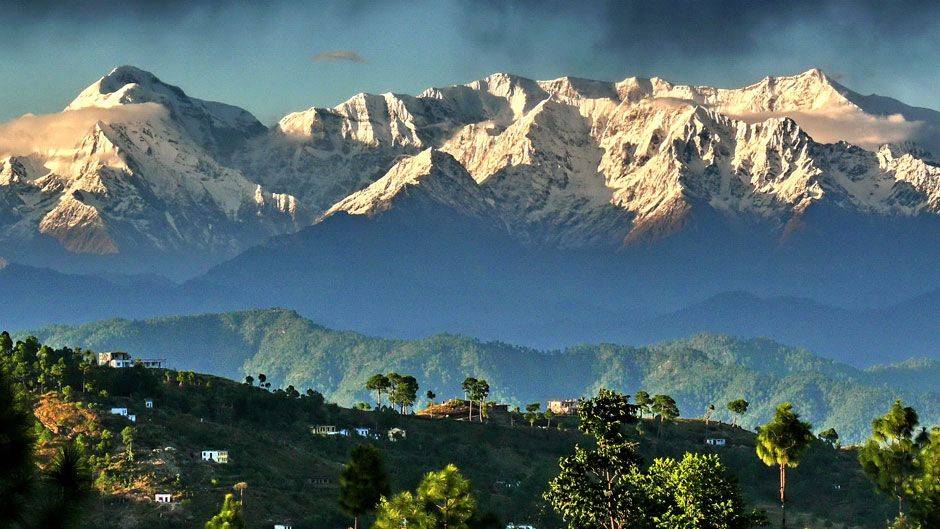
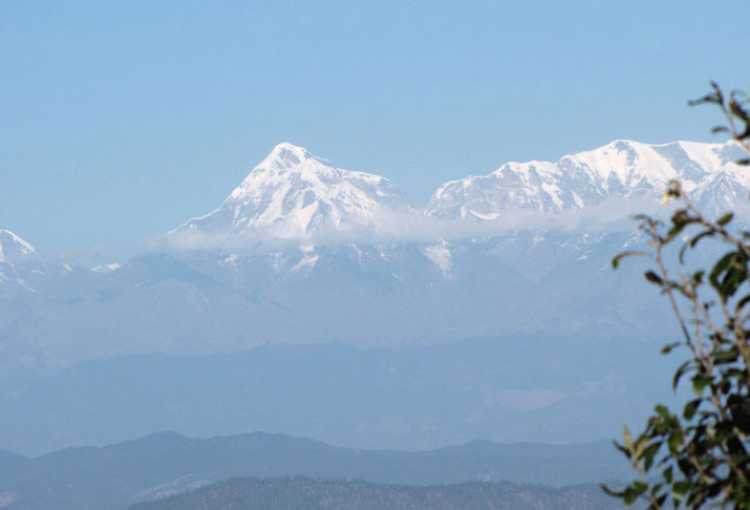
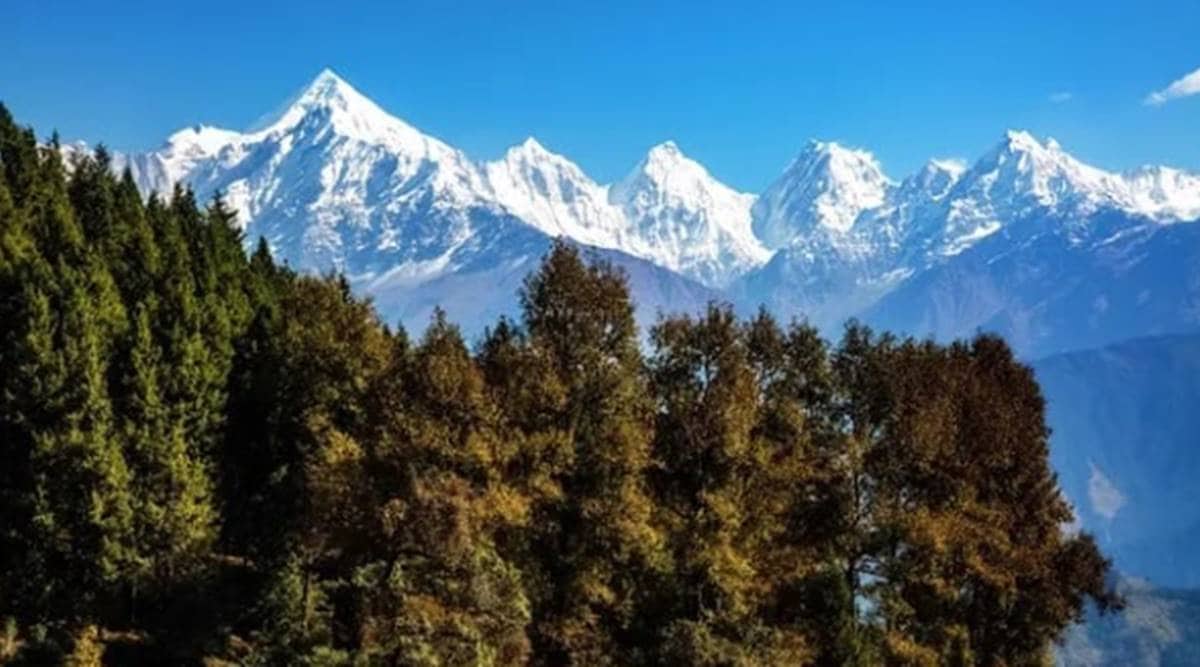
Trishul Peaks Group: At a height of 7120 m, the Trishul group forms the southwest corner of the ring of peaks that enclose the Nanda Devi Sanctuary. The three peaks that form Trishul Peak resemble the shape of a trident or Trishula, as known in Hindi and Sanskrit and the trishul is known to be the weapon of Lord Shiva. In 1907, the main peak – Trisul I – became the first peak over 7,000 m to have ever been climbed by someone. The peak can be best viewed from Kausani or during the Roopkund Trek. During the spring months of March and April the weather becomes very cold due to heavy snowfall in the valley and monsoons remain very cold too, while the temperatures fall further occasionally. In the months of September, October and November, the climate is pleasant and skies are clear. The first snow occurs generally in November/December. Panoramic views in Auli can be astonishing as it is surrounded by very high peaks including the Nanda Devi at 7817 m. The Hanuman Temple here is supposed to be the place where Lord Hanuman took some rest when he had come to the Himalayas to procure the herb Sanjivani to rescue Laxman, the younger brother of Rama during the battle in Lanka. Visitors can also enjoy a cable car here which can give them a beautiful view of the surroundings. There is an artificial lake as well in Auli which is the world’s highest man-made lake.

Joshimath: Also known as Jyotimath, Joshimath is a hill town perched at the height of 6150 feet in the Chamoli district of the Gharwal region. It serves as an important religious centre for Hindu pilgrims and lies in the proximity to one of the four maths founded by Adi Shankaracharya in the 8th century. According to Adi Shankara, Joshimath is in charge of the Atharvaveda, or ‘the procedures of everyday life’.It is believed that Adi Shankara himself placed the deity of Lord Narasimha in the famous Narasimha temple here.The temple is also one of the 108 Divya Desams in the country, which are Vishnu temples worshipped by the Alvar clan of Tamil poets. Overlooking the confluence of rivers Alaknanda and Dhauliganga at Vishnu Prayag, Joshimath is also the winter home of Lord Badri as the idol is shifted from Badrinath to Joshimath during the winter months. Because Joshimath is nestled amid the lap of the snow-capped Himalayas, it is also known as the gateway to trekking with many treks, including the Valley of Flowers trek located is closeby. Perched at an elevation of 3,056 m, Gurso Bugyal is a picturesque wide meadow known for its lush green pasture land and filled with giant coniferous and oak trees. This heavenly place provides a terrific view of all the nearby and significant mountain ranges namely Nanda Devi, Dron and Trishul. During spring, the white sheets of snow melt away making space for herbs and shrubs to grow. The land turns into a natural garden with infinite varieties of plants, trees and flowers. To witness the view in the most magical way, take the trail from Auli and enjoy the picturesque views of mountain ranges as you proceed towards the lush green land of Gurso Bugyal. A 3 km trek from Auli will lead you to this scenic, location. You can also trek towards Chattarkund, a small patch of land with an ethereal water body, known to have sweet water which is just one km away.

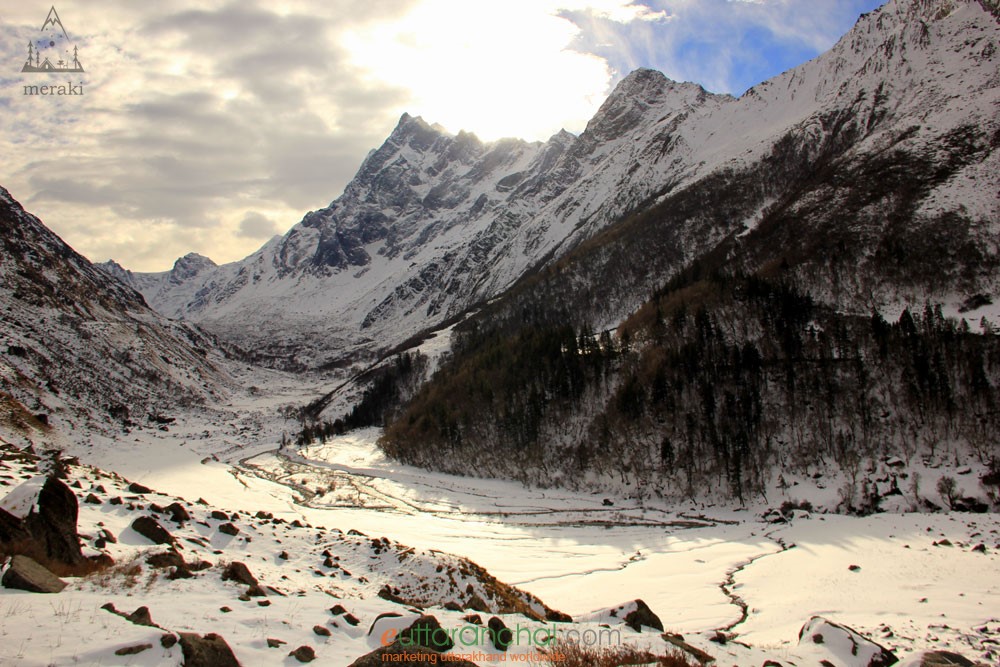
Chenab Lake: An artificial lake that serves as a reservoir for Auli, the Chenab Lake is a small crystalline lake that is still less explored and in its purest state. The trek to the lake is for those who truly want to have a crude and authentic trekking experience – through rocky passes hurdled with twigs and plants. Guarded by the Garhwal Himalayan range, the Chenab Lake still has crystal clear water that acts like a prism to the mountains. As the area around the lake remains untouched, you will not find nicely built roads to trek. No motorbikes and vehicles can be ridden on this track, which remains snow logged during the winters and becomes impossible to trek, so it is recommended to explore this place from May to October.

Skiing in Auli: Offering beautiful views of peaks such as Mount Nanda Devi Kamet, Mana Parwat, Dunagiri, Beethartoli, Nilkanth, Hathi Parbat, Ghori Parbat and Nar Parbat, skiing in Auli is an experience like no other. The snow-covered Auli with evergreen conifers and the oak forest an altitude of 2000 – 3000 m is an ideal place for skiing in India. While skiing in the Gorson Reserve forest which is part of the Nanda Devi National Park is inhabited by some of the widely rare Himalayan wildlife like snow leopards, musk deer, wild boars, wild cats, wild rabbits, jackals, foxes, hyenas and bears. Most skiing packages in Auli include the accommodation as well. The average cost of skiing in Auli ranges between Rs. 20,000 – Rs. 50,000 depending on the length of stay. The best time to ski is between November to February as there is enough snowfall then.

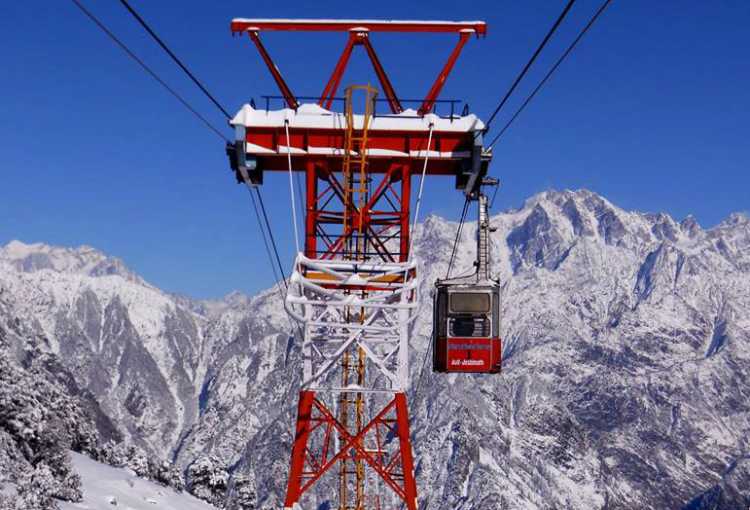
Auli Cable Car Ride: One of the major attractions in Auli is to enjoy a cable car ride. Locally known as a Gondola, the cable car ride in Auli is the second highest and the longest cable car ride in Asia after Gulmarg. Covering a total distance of 4 km, the journey starts at Joshimath and ends at Auli, and takes a total time of around 24 min. Perched at a staggering height of 3010 m above sea level, the entire trip is a visual delight. Visitors can enjoy the majestic Himalayan peaks above them with lush green valleys below. The ropeway works with two cable cars through 10 towers and can accommodate upto 25 passengers. Although, the passengers have to keep standing as there are no seats. In case vistors are lucky and are travelling at the right time, they can also witness a skiing competition going on below. The ropeway station is situated 1 km from Panchvati Inn in Joshimath and can be reached either by car or on foot.

Moving on, we travel about 150 km southwest from Auli Bugyal to the town of Chopta.

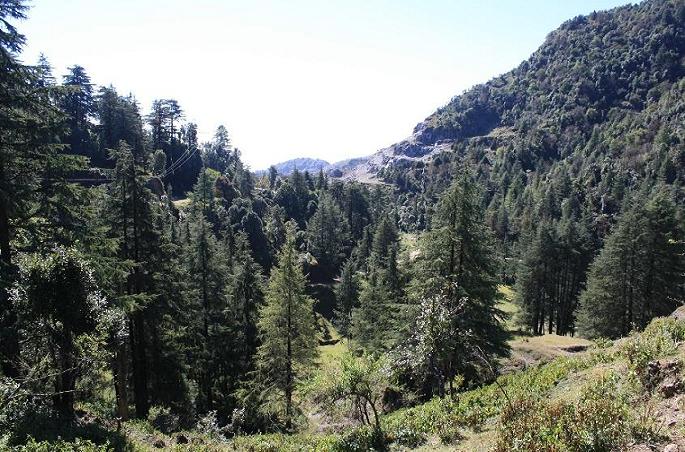
Chopta is a small region of meadows and evergreen forest area which is a part of the Kedarnath Wildlife Sanctuary and a base for trekking to Tungnath, the third temple of the Panch Kedar, which lies 3.5 km away and Chandrashila which rises to 4,000 m and is located 1.5 km from Tungnath. An unspoiled natural destination, Chopta offers views of the imposing Himalayan range including Trishul, Nanda Devi and Chaukhamba and is located at an elevation of 2,680 m. The village of Chopta is surrounded by forests of pine, deodar and rhododendron and is rich in flora and fauna include rare species of birds and musk deer. The place is popularly known as a Mini Switzerland with the best time to visit from April to November. Chopta is also a popular destination during the winter months due to the snowfall that the area experiences. The Tungnath temple and Chandrashila are covered with snow from December to March. Camping in the open grassy meadows of Chopta that slopes on softly, among alpine, pine, deodar and rhododendron trees is soul-fulfilling.

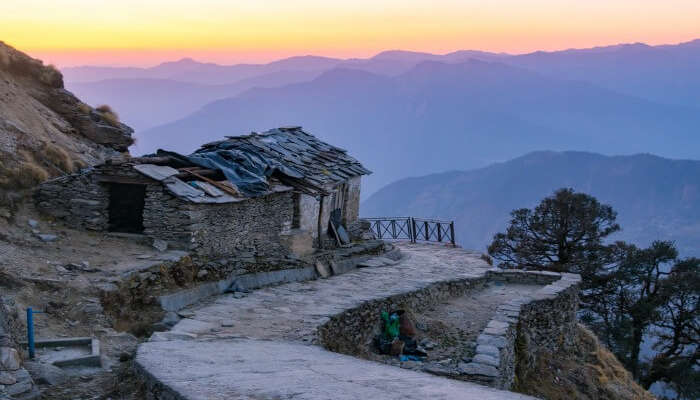
Tungnath Temple: Situated amongst the wondrous mountains of Tungnath in the Rudraprayag, the Tungnath temple is the highest Shiva temple in the world nestled at an altitude of 3680 meters. It is one of the Panch Kedars and is believed to be almost 1000 years old. The foundation of this temple was laid down by the Pandava prince Arjuna, the third brother and was built in the North Indian style of architecture with dozen shrines of other gods surrounding the temple. There are numerous tales associated with the place including the one where Lord Ram carried out meditation to get himself released from the curse of Brahmahatya or the killing of a Brahmin for killing Ravana. The distinguishing feature of this exquisite temple is its location amidst the beautiful mountain ranges. It is a fantastic place to visit especially for adventure lovers because of the trek they need to do to reach the temple. According to legend, it is believed that after the Kurukshetra war when the Pandava brothers defeated and killed the Kauravas, sage Vyas advised the Pandavas their act of killing off their own kins could be pardoned only by Lord Shiva. So they went in search of him who was already convinced of the guilt of the Pandavas and in order to avoid them, took the form of a bull and went into hiding. The Pandavas chased him to an underground safe haven at Guptakashi, where he was hiding. When Lord Shiva went back to his natural form, his remains of the bull-styled body is said to have rematerialized at five different locations. These five locations came to be known as the Panch Kedar and the Pandavas built temples of Lord Shiva at each of these locations as a sign of seeking his pardon and blessings. The opulent temple is made up of stones adorned with decorations which are painted on the outside depicting tall towers. There is a wooden stage present on top of the highest dome which also has sixteen openings. The roof of the temple is composed of stone slabs and at the entrance lays a stone image of Nandi facing towards the idol of Lord Shiva. There is an image of Lord Ganesha on the right side of the temple entrance. Inside the main chamber lies the Ashtadhatu which is composed of eight metals, idols of saint Vyas and Kala Bhairav and the followers of Lord Shiva. There are images of the Pandavas and four other Kedar shrines present inside the premises as well. At the end of the trek path of Tungnath, the entrance of the temple is marked with the presence of the name ‘Tungnath’ painted atop an arch which has recently been constructed. The Panch Kedar Yatra which involves trekking through all the five temples including Kedarnath, Tungnath, Rudranath, Madhyamaheshwar, and Kalpeshwar is considered to be very auspicious. The trek is undertaken to visit all the five shrines which are situated in Kedar valley and complete the circuit. Kedarnath is situated at the head of the Mandakini River, Madhyamaheswar is situated at the base of the Chaukhamba Peak at the height of 3500 m, Tungnath is situated in Garhwal at an altitude of 3810 m, and 500 m above the Tungnath Temple lays the Chandrashila peak. The Tungnath Temple opens when the Char Dhams of Uttrakhand is opened during April or May every year during Vaisakh Panchmi on the date that is decided by the Badro Kedar Temple Committee on Baisakhi. The temple is closed during the winter season after Diwali, and the image of the deity is moved to Mukunath which lies 19 km away from Tungnath by the temple priests during this time. During the months when the temple is not closed, it is open from 6 am to 7 pm.

Ukhimath: Also known as winter Kedarnath, Ukhimath is famous for the temple of Lord Shiva which houses the Lord during the winter months when Kedarnath is shut down. Ukhimath is also a very beautiful hill station and is located at an altitude of 1300 meters in the lower hills. Home to Lord Kedarnath and Lord Madhyamaheswar in the winters when Kedarnath becomes inaccessible due to heavy snowfall, Ukhimath is a deeply religious town with spirituality and devotion oozing through its lanes. Ukhimath also provides some great panoramic views of the Himalayan peaks which are covered in snow. It is a place fit for some time in solidarity and amidst a spirituality of significant religious centre. The town has a beautiful summer weather with comfortable temperatures and cool breeze while the winters are quiet cold yet very beautiful. Omkareshwar Peeth, a temple dedicated to Lord Kedarnath is a must, while in the town.

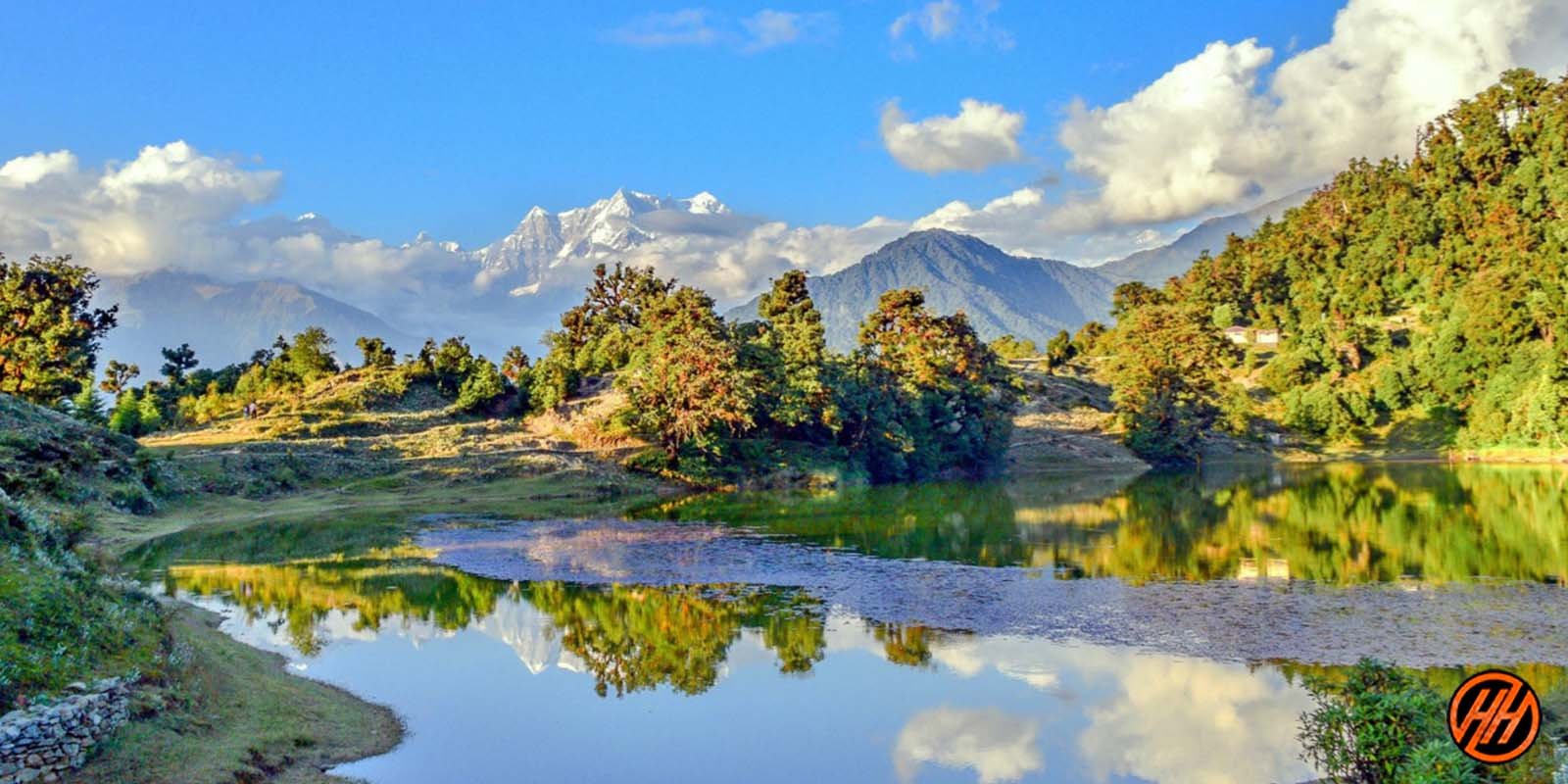
Deori Tal: Located on the Ukhimath-Gopeshwar road, the Deoria Tal is reached by a 2 km trek through the Sari Village. The lake is surrounded by pines in multitude and clearly mirrors these pines and the Chaukhamba peaks once still. The lake itself is one of the chief attractions of Chopta, with tons of visitors thronging it during peak season.

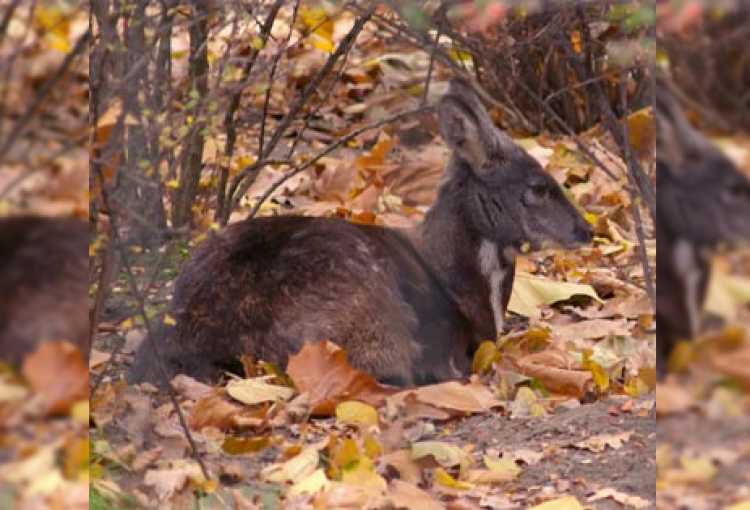
Kanchula Korak Musk Deer Sanctuary: Housing the famous musk deer, the Kanchula Korak Deer Musk Sanctuary has an abundance of lush green vegetation, a lot of varieties of which are claimed by locals to have not even been scientifically classified yet. Sprawled over an area of 5 sq. km, visitors can spend a larger part of their day here, lazing around with a pair of binoculars to explore the place.

Tungnath and Chandrashila Trek: Tungnath, a quaint village, is known as the starting point of the popular Chopta Chadrashila Trek. At a height of 2680 m, this village is surrounded by evergreen forests of pine, deodar and rhododendron. This is one of the easier treks in the Himalayan region and hence, recommended for first timers. The trek covers a large region, starting from Haridwar and ending at Chandrashila. The trek initiates from the holy city of Haridwar towards Devarivatal Lake; which is located at an altitude of 2440 m. Here, you get a picturesque view of the Chaukhamba ranges. As one goes further, one comes across Chopta, with a height of 3000m. Next comes Tungnath, at an elevation of 3680 m. And finally, one arrives at the beautiful Chadrashila Top at 4130 m. The Tungnath temple and Chandrashila peak award you with a 360 degree, mesmerising view of the valleys below. The peaks of Panchchuli, Nanda Devi, Nilkanth and Kedarnath are all covered during the trek. The trek which takes around three days has entry fees at certain checkpoints, permits for the trek and obligatory forest camping charges in the region as per the length of the stay.

Moving further south, out next destination is the hill station of Lansdowne.

Lansdowne, is a cantonment town in the Pauri Garhwal district on the Kotdwar – Pauri road at a height of 1,780 m. A quaint little hill town, Lansdowne is laden with oak and pine forest and dotted with buildings of the colonial era and is a haven for bird watchers, casual hikers and weekend visitors. The town was discovered by British and got its name from the then Viceroy of India, Lord Lansdowne. The guesthouses here are fading reminders of the colonial period, and they offer a stunning view of the mountains from their balconies. Originally known as Kaludanda after Kalu or black and Danda or hills in the Garhwali language, Lansdowne was developed by the British to cater to the recruits training centre of the Garhwal Rifles. Today, the Garhwal Rifles has its command office here. The Annual Sharadotsava or the festival of autumn is also celebrated here during autumn. The old cemetery in Kitchner Lines is one of the more mysterious places and some even call it one of the most haunted places in Lansdowne.

Bhulla Lake: A local favourite and a popular attraction, the Bhulla Lake is a well maintained serene lake made and maintained by Indian Army known for its tranquil atmosphere with ample boating facilities. There is an amusement park is located nearby which is quite popular among kids.

Tip N Top: Also commonly known as Tiffin Top, Tip N Top is a small hilltop viewpoint that is located at 1700 metres above the sea level about 1.5 km from the city centre and provides visitors with magnificent, breathtaking views not only of the city but also of the nearby forested areas and the Garhwal Hills with the majestic Himalayan range in the background. To get to Tip N Top, visitors would have to pass through dense forests and terrains that terminate at high altitudes to reach the final destination. The place is located close to other famous tourist attractions such as St. Mary’s Church and Mata Santoshi Devi Temple which are also very popular, and can be visited in combination with Tip N Top. The viewpoint is open from sunrise to sunset and has no entry fees.

Snow Viewpoint and Hawaghar: Beautiful vantage points reached by a short trek, the views from Snow Viewpoint and Hawaghar are totally worth the effort and energy expended. The snow capped mighty peaks, verdant green forests and a bird’s eye view of the valley below is sure to mesmerise visitors and is worth the trip there.

Bhim Pakora: Reached after a 2 km trek downhill through a rough path, Bhim Pakora is quite surprising as there are two big stones one above the other in perfect balance and while the stone can be moved with a finger it never falls down.

Jungle Safari: If you would like to explore the wilderness of Lansdowne, there are many tour operators who organise jungle safaris into the heart of the forests where visitors can catch a glimpse of Himalayan wild animals in their natural habitat.

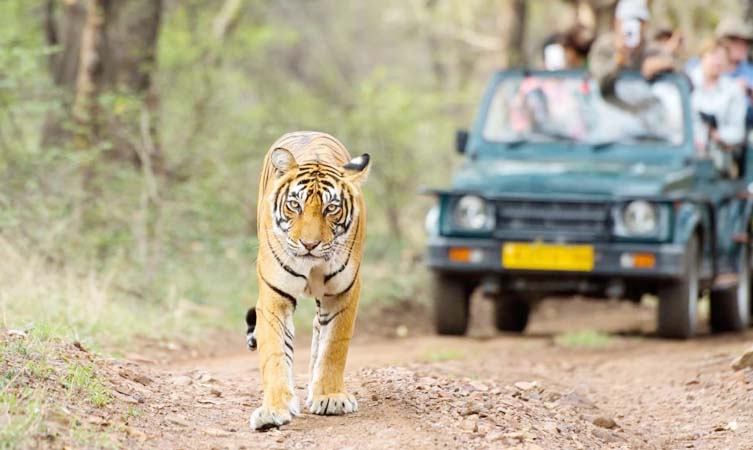
Kalagarh Tiger Reserve: A wildlife sanctuary about 13 km from Lansdowne,the Kalagarh Tiger Reserve is rich in flora and fauna. Sprawling over 300 sq km, the reserve actually forms the northern end of Jim Corbett Park. Apart from the regular spotting of tigers, barking deer, hog deer, goral, sambhar, porcupines and other varied exotic animals can be spotted here.

Tarkeshwar Mahadev Temple: Located atop a hill at 2092 meters about 39 km from Lansdowne , the Tarkeshwar Mahadev Temple is believed to be an ancient holy site or SiddhaPitas dedicated to Lord Shiva. The temple has a special Shivalinga and a Kund or a small pond known as Gauri Kund where devotees bathe before entering the temple. There are two other famous temples, Durga Devi Temple and Jwalpa Devi Temple, which are on the Pauri-Kotdwar road and are 24 km and 47 km away respectively. The Durga Devi Temple is one of the oldest Siddha Pithas in India. The Mahashivarathri festival at the Tarkeshwar Mahadev temple draws a huge crowd from across the country.

Kanvashram: A gateway to Puri, Kanvashram is an ashram located on the banks of Malini river surrounded by thick forests and hillocks. It is believed that Shakuntala, the step daughter of Sage Kanvan and the wife of King Dushyanta and who was deserted by him gave birth to her son Bharata in this Ashram. India got its name ‘Bharat’ in Sanskrit after Bharata became king following the death of his father. The Ashram also provides accommodation facilities to visitors keen on living on the premises.

Darwan Singh Regimental Museum: Established in 1923 and named after the Victoria Cross holder Darwan Singh Negi, the Darwan Singh Regimental Museum is a historical defense museum located near the parade ground in Lansdowne. This beautifully decorated two storey building is all about the origin and achievements of the Garhwal Rifles who participated in the two world wars among countless other battles throughout its more than 100 years of history. Many artifacts, including photographs, arms used by regimental commanders, captured weapons, campaign history and other information are displayed in this museum. There are many items, such as medals won by erstwhile Garhwal Rifle soldiers, that have been put on display, including the Victoria Cross awarded to Darwan Singh Negi and Gabar Singh Negi.

Our next destination is the popular hill station of Nainital.

Source

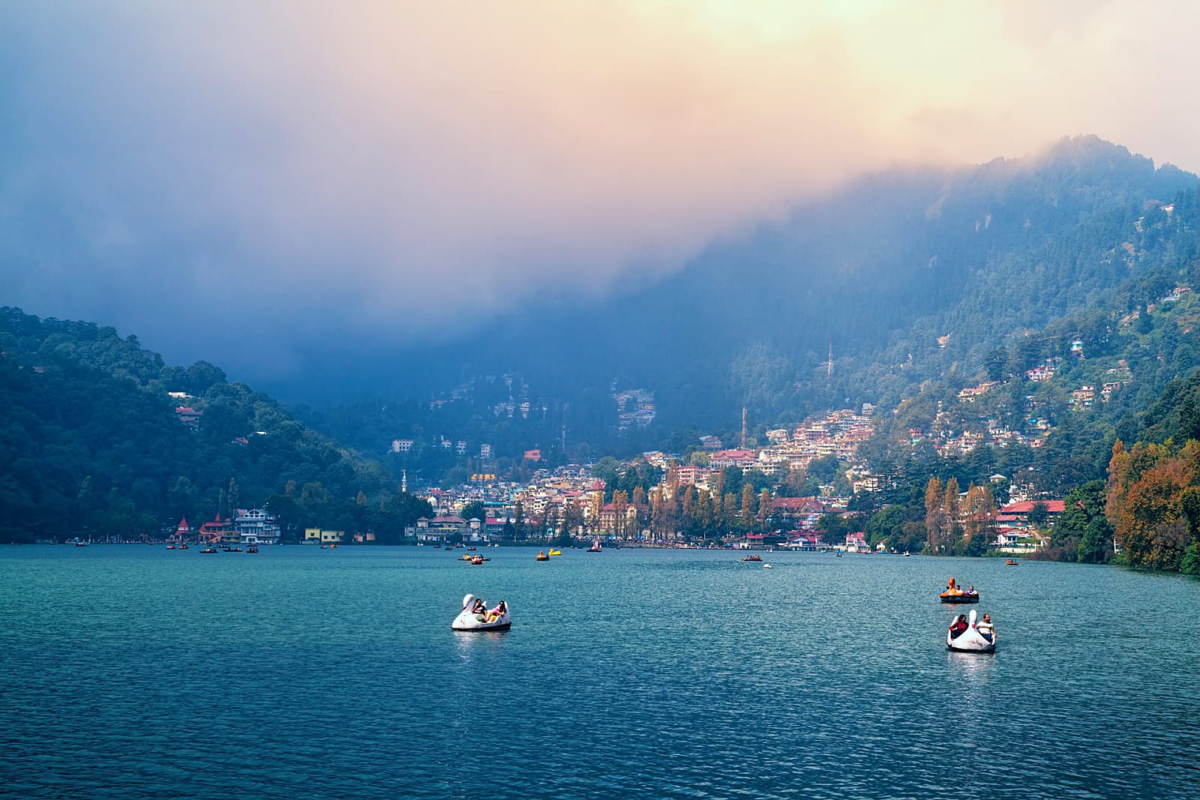
A very popular hill station, Nainital is the judicial capital of the state and also houses the Governor of Uttarakhand, who resides in the Raj Bhavan in Nainital. Located in the Kumaon foothills of the outer Himalayas, Nainital is situated at an altitude of 1,938 metres with the city set in a valley containing an eye-shaped lake, approximately two miles in circumference, and surrounded by mountains, of which the highest are Naina Peak at 2,615 m on the north, Deopatha at 2,438 m on the west, and Ayarpatha at 2,278 m to the south. Founded by the British due to its resemblance to the Cumbrian Lake District, Nainital brims with elegant colonial structures that amplify the beauty of this place. It experiences a pleasant climate throughout the year, making Nainital a tourist getaway. The Naini Lake, along with the other lakes in the area, has earned this town the title of City of Lakes.

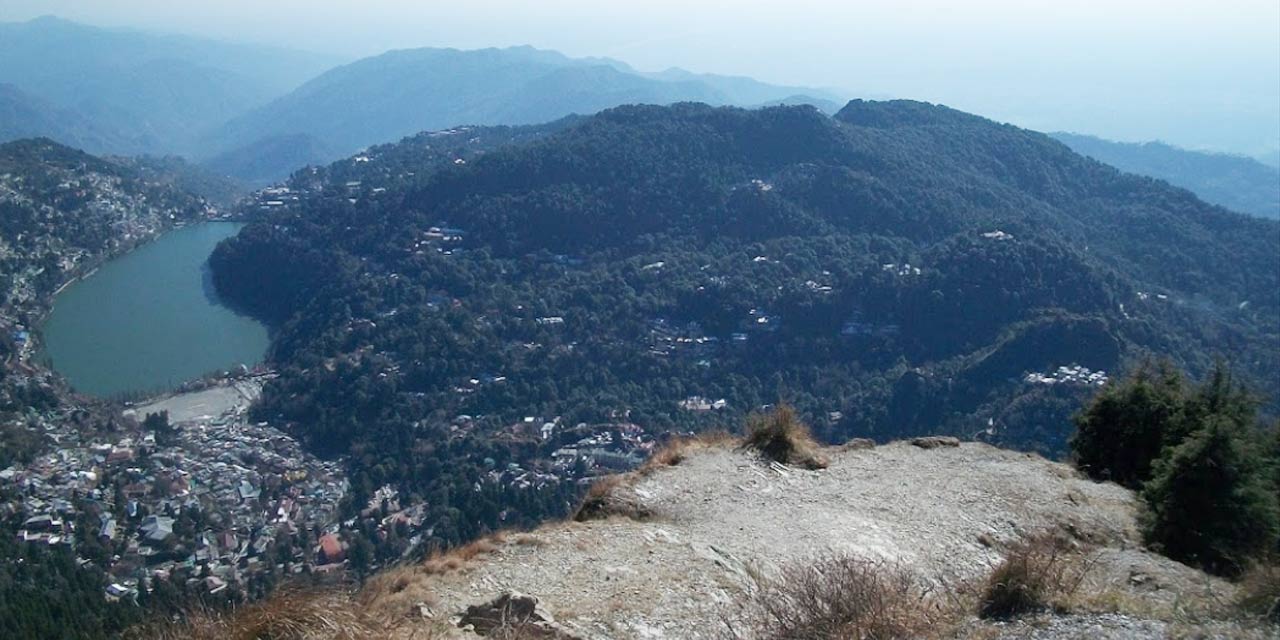
Nainital Lake: Situated in the centre of Nainital, Naini Lake which is short for Nainital Lake is a beautiful natural fresh body lake. The lake is in crescent or kidney shape and is one of the most famous lakes of the Kumaon region. Bounded by Naini Peak on North West, Tiffin Point on the South West and snow-capped peaks on the north, the Nainital Lake offers a breathtaking view, especially during early morning and sunset. The lake itself can be divided into two distinct sections, the northern part called Mallital and southern region called Tallital. Coniferous trees that cover the hillside add charm to the raw beauty of the place with the Naina Devi Temple on the shores of the lake.

Legend says that once upon a time, a very powerful king named Daksha ruled in the country. He had a beautiful daughter named Sati, and when she came of age, King Daksh began looking for a suitable groom for her. As luck would have it, Sati got attracted to Lord Shiva whom King Daksh despised thoroughly. Despite wanting otherwise, Sati and Shiva got married and started living together. This was not acceptable to King Daksh, and he decided to organize a ‘yajna’ or fire sacrifice ritual where Shiva and Sati were not invited. However, Sati decided to attend her father’s prayer service in spite of not being invited to the same. Upon reaching the venue, she and her husband were thoroughly disrespected by Daksh and unable to tolerate the humiliation, Sati jumped into the ritualistic fire. Upon learning of Sati’s death, Shiva was livid and he started performing the Tandava or the celestial dance of destruction and according to legend, it is said that Lord Shiva performed his tandava at Naini Lake as well. This gave way to apocalyptic destruction on the Earth, and the Gods feared that the world was nearing its end. When repeated pleas to Shiva by the other Gods went in vain, Lord Vishnu used his Sudarshan Chakra upon Sati’s dead body which cut it into 52 different parts. Each of the remains fell on a different portion of the country and a temple emerged there. The Naini Devi Temple was the site where Sati’s ‘nayan’ or eyes had fallen. Hindu scriptures such as the Skanda Purana mention a lake called the Tririshi Sarovar, which is believed to be the Nainital Lake. This name was derived from the names of three great sages who used to meditate here, namely Atri, Pulastya and Pulaha. A hole was dug by the three of them which soon got filled with water and came to be known as the Naini Lake or Tririshi Sarovar. According to the historical records, in 1839, a European businessman P. Barron while on a hunting expedition, accidentally found the Naini Lake and was captivated by its beauty. He then decided to build a European colony on the shores of the lake as a summer retreat for Englishmen.

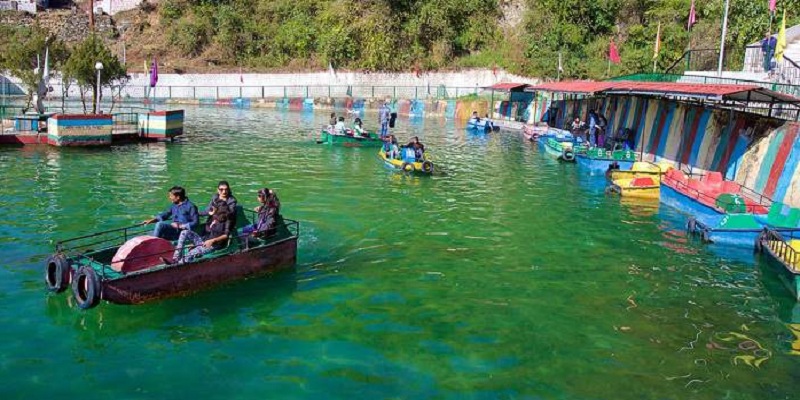
A trip to the Naini Lake is perhaps incomplete without boating on the lake. Boating is available from 6 am to 6 pm when the lake is open from March to June and if you are inclined to a brightly painted gondola-like boat, it will cost you INR 210 per hour while a boat ride through the Nainital Boat Club will set you back by INR 350 per hour and a pedal boat will cost INR 150 per hour.

Peora: Best described as a hidden gem, Peora iis nestled between the Kumaon Hills and is situated at an elevation of 6000 feet. Serene and tranquil with natural beauty and untouched by industrialisation, Peora is a perfect place to enjoy some peaceful moments away from the stressful city life. There are a number of British era bungalows that give the village a rustic vibe with the snow-capped mountains, juicy fruit-laden trees, green meadows and a variety of fauna. The lush green trees are home to a myriad variety of birds and so bird watching becomes an essential activity in Peora and treks and strolls are elevated here. Since Peora is replete with trees that bear juicy fruits, you can carry a basket and collect fruits such as apples, pears, peaches, plums and many more.

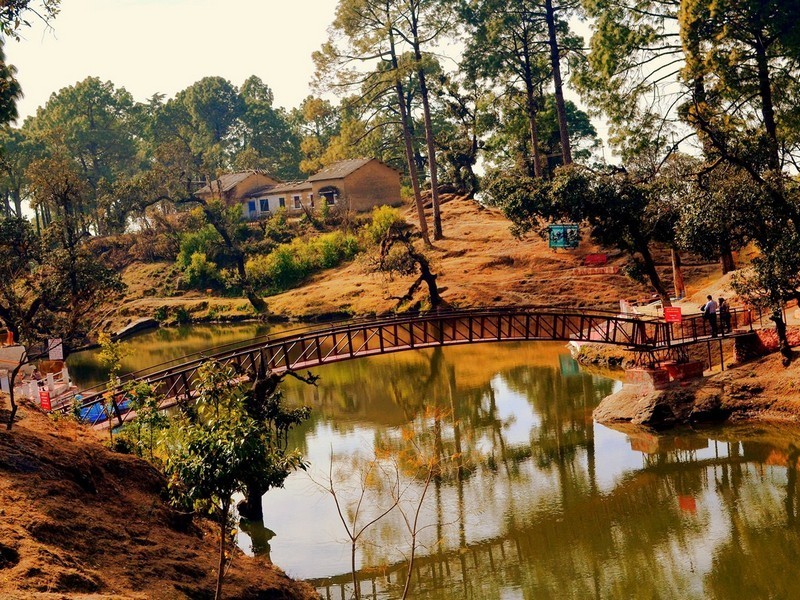
Sariya Tal: Located near Kaladhungi, Sariyatal, is an artificial lake constructed as a tourist spot. The tiny lake has numerous activities like paddle boating and water sports. It is also popular for the Himalayan botanical garden which is a research centre other than being a herbarium and a butterfly park. Hiding a steep waterfall at the corner, Sariyatal is an ideal spot for solitude seekers, nature lovers and photographers. Open from 10 am to 5 pm, the entrance fee is INR 20 per person.

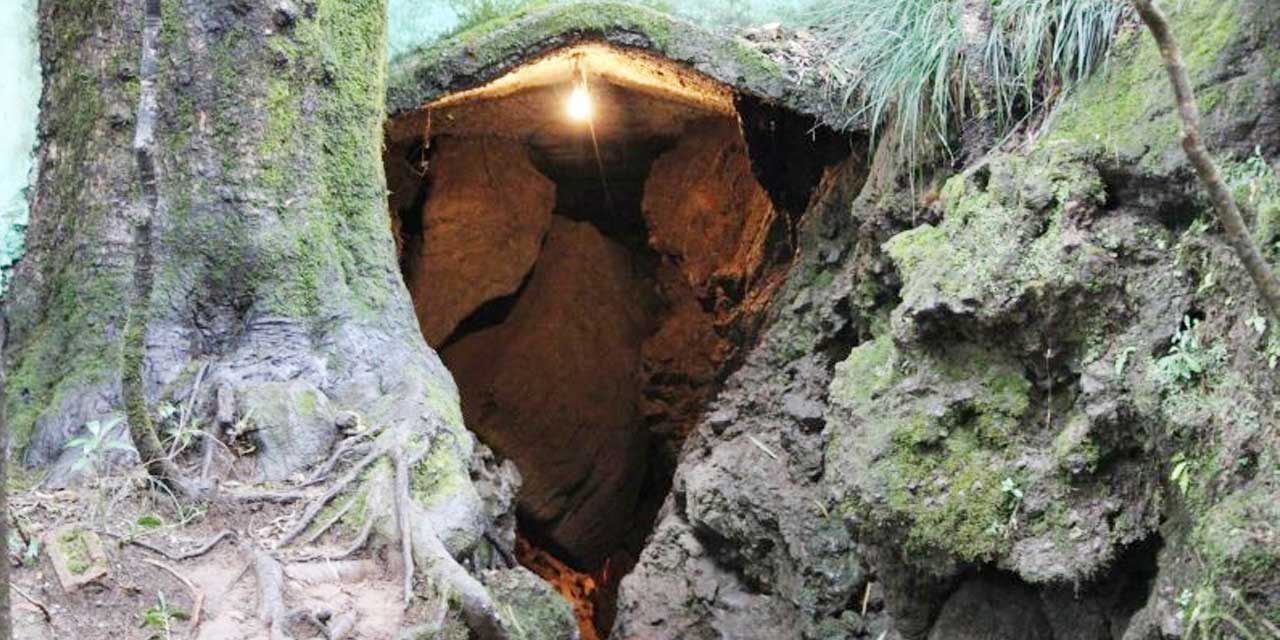
Eco Cave Gardens: Famous for its interconnected rocky caves, hanging gardens and the musical fountain, the Eco Gardens are a set of six small caves in the shape of various animals. Located in the Mallital area of Nainital, visitors need to crawl their way in. In the evenings, there is a musical fountain with various audio video effects. Set up to give tourists a glimpse of the natural habitat of the Himalayan Wildlife by constructing different caves for different animals, similar to their natural home, the Eco Cave Garden is lit with petroleum lamps with the most popular caves being the Tiger Cave, Panther Cave, Apes Cave, Bat Cave and Flying Fox Cave. Please note that if you are elderly, have toddlers or have any other conditions which may be aggravated by visiting the Eco Cave Garden, please stay away. The gardens are open from 10 am to 4:30 pm and adults need to pay INR 20 and children need to pay INR 10 as entrance fee. You also need to pay INR 25 as camera fees.

Pangot: Located just 15 kilometres away from Nainital, Pangot is a small and picturesque hamlet at a height of 6,300 feet and is well known for its rich and exotic bird life. Pangot also becomes a hub for photography enthusiasts when hundreds of different species of birds flock here during the harsh winters in the upper Himalayas and settle down here temporarily. The entire drive that reaches up to this marvellous area passes through the forested areas of Chenna Peak Range via Snow View Point and Kilbury, both of which are famous and excellent habitats for birding. A myriad of bird species can be seen along the way to Pangot. Some of these include Rufous-bellied Woodpecker, Spotted & Slaty-backed Forktail, Himalayan Griffon and Khalij pheasant. Spotting mammals like Yellow-throated Himalayan Marten, Sambhar, Himalayan Goral, Leopard Cat, Serow, Wild Boar, Red Fox etc. is also not uncommon. The famous Corbett National Park is situated just 80 kilometres from Pangot. Thick oak, pine and Rhododendron can be found dominating the vegetation of Pangot and nearby areas. The streams that pass by further enhance the aesthetic appeal of this breathtakingly fantastic sight. Undoubtedly, Pangot is the apt place for a small vacation with your partner, or the entire family, wherein you can simply lay back and relax. Other than bird watching visitors can indulge in camping, trekking and sightseeing.

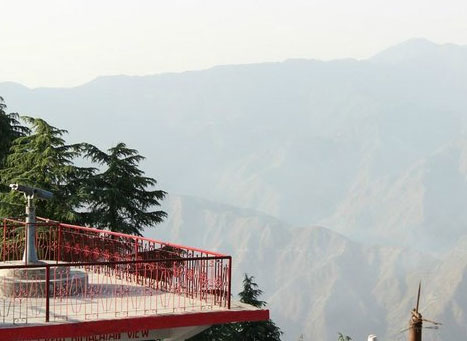
Snow View Point: Standing at a dizzying altitude of 2270 meters above sea level, Snow View Point offers a panoramic view of the mighty Himalayas draped in a blanket of snow. One can see a picturesque view of all three important peaks, namely Nanda Devi, Trishul and Nanda Kot peaks together from this point. A huge pair of binoculars has been installed here that allows visitors to take a closer look at the Himalayan range and its peaks. Looking closer, one can find a small temple housing the images of Ram, Sita, Laxman, Hanuman with Durga and Shiva. An aerial cable car connects visitors to Snow View Point directly from the Mall Road of Mallital and offers a spectacular view of the beautiful town. The view point is open from 10:30 am to 5 pm on all days except Saturdays when it is closed.

Naina Peak: The highest peak of Nainital at a height of 2615 metres, Naina Peak remains covered with snow throughout the year along with a blanket of trees over it. Due to the high altitude and scenic trails, the peak is very popular among hikers and trekkers. Also known as China Peak, it is renowned among tourists and locals for its romantic sunrise and sunset. Apart from trekking, people also reach the summit of the mountain with the help of a pony-ride. About 3 kilometres from the base of the peak is Tanke Band, which is the nearest taxi stand. One can indulge in a photography session of nature and snowclad mountain views during the day and the immensely beautiful cityline of Nainital at night. A trip to Nainital is incomplete without undertaking the 6 kilometres trek to the summit of Naina Peak from Mallital. The trek is an easy to moderate one passing through trees of deodar and cypress, pine forests and rhododendrons. At the beginning of the trek, one goes across the forest covered with blooming rhododendron trees and as the trek advances, one can see oak trees dark and laden with mosses, towering the sky. The trail upwards is steep and it can take an hour to reach the peak. There is a lodge where one can have tea and chat with the forest rangers and hear from them the stories of leopard sightings. It is best to watch the sunset and return downwards before it gets dark to avoid any mishaps. The trek downwards takes about half the amount of time one takes to reach upwards. From the summit, one can look at the elevated view of the tranquil kidney-shaped Naini Lake, the Nanda Devi peak and the mountains of Tibetan border.

Lands End: Set across the Khurpa Tal and the vast stretches of plains, Land’s End is literally the spot where the land ends and all you can see is steep cliffs surrounded by snow-dusted mountains. 4 km off the main town, Land’s End is frequented by adventure enthusiasts who trek to the scenic spot and relish the breathtaking view of mango-shaped Khurpataal Lake. The less-adventurous can take a pony, horse or taxi from the city. Do keep in mind that the view from Lands End depends on weather conditions.

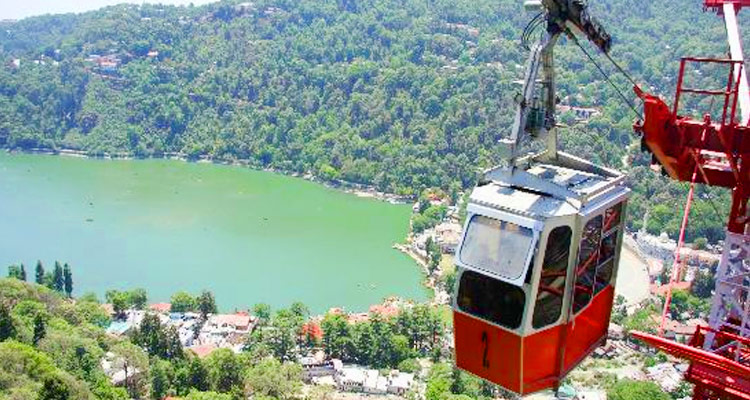
Nainital Ropeway: The most popular attraction in Nainital, the Nainital Ropeway or Cable Car Ride is touted as one of the fastest ropeways in the country. The aerial ropeway connects Mallital to the Snow viewpoint, from the base to a height of 2270 metres. The aerial trip hovering over the Naini lake and the valley offer panoramic views of the breathtaking landscape. The stunning Nainital ropeway covers half a mile distance in about 3 minutes with 2 trolleys accommodating around 11 people in total at a time. The ropeway is open from 10 am to 4 pm and the entry fee for adults is INR 150 while children between the ages of 3 to 12 need to pay INR 100.

Khurpa Taal: At a distance of 12 kms from Nainital, Khurpa Taal is a pristine lake situated at an elevation of 5,500 feet. Laced with tall trees, the lake is considered ideal for fishing owing to its crystal clear waters and abundance of freshwater fish. Unexplored by tourists, the lake is a secret haven replete with bounteous nature and idyllic locales. Located on the Bajpur Road – Kaladgungi Road, Khurpa Taal is a great photography spot, especially during sunrise as the lake glistens like a diamond when the rays of the sun fall on it.

Astronomical Observatory: Perched on top of the Manora Peak in Beluwakhan, the Astronomical Observatory or Aryabhatta Research Institute of Observational Science or ARIES helps visitors see the stars, celestial bodies, the moon and other heavenly bodies with the help of high powered, imported telescopes. Visitors will need to make a prior appointment before visiting the place. Housing one of the most advanced telescopes in India, the Astronomical Observatory is an autonomous institute open of the public during working days and in the afternoons. For night viewing, three fours days are fixed during the full moon period, the permission for which has to be obtained. The observatory is open from 7 to 9 pm and there is no entry fee.

Source

Gurney House: The former abode of British hunter, conservationist, naturalist and author Jim Corbett is called Gurney House. A charming colonial cottage, located near Nainital Lake, the house has a tiny museum with the achievements and life story of Jim Corbett. A quaint little nursery is also housed in the premises with a variety of shrubberies and plants. The Gurney House was sold to Mr Sharda Prasad Varma in 194 by Jim Corbett’s sister. It is currently owned by Mr Varma’s grandaughter Nilanjana Dalmia. Even though the Gurney House is a private residence, tourists are welcome to visit by prior permission. The lovely owners also give a complimentary house tour to Corbett lovers. If visiting the house, it is open from 8 am to 5 pm, strictly by appointment.

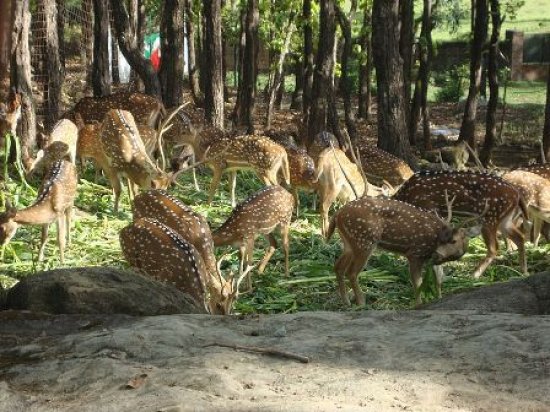
Sitabani and Sitabani Wildlife Reserve: Covered with a huge number of sal and oak trees, Sitabani is situated at the foothills of the Himalayan range and is a place of great historical significance housing splendid temples. The main attraction of this place is the myriad flora and fauna which makes the place a perfect weekend getaway to unwind. Don’t forget to visit the Sitabani temple dedicated to Goddess Sita which is where she gave birth to her twin sons, Luv and Kush. Near the Sitabani temple is the Valmiki Temple believed to be the place where the earth absorbed Goddess Sita. The temples are usually open from 6 to 8 am and then again from 1 to 3 pm daily. The Sitabani Wildlife Reserve is abundant in flora and fauna and is spread prolifically. The place is surrounded by lush green trees with the melodious chirpings of many colourful birds echoing through the forest. Animals that can be spotted lazing around in the reserve include elephants, jackals, sambhars, spotted deer, nilgai and wild boars. The various birds inhabiting the reserve are the emerald dove, white bush chant, red wattle lapwing and kingfisher. There is also a a safari ride to explore the wildlife sanctuary to the fullest and witness the beauty of as many birds and animals as possible. There is no entry fee to the reserve and it is open all days between 7 am to 6 pm.

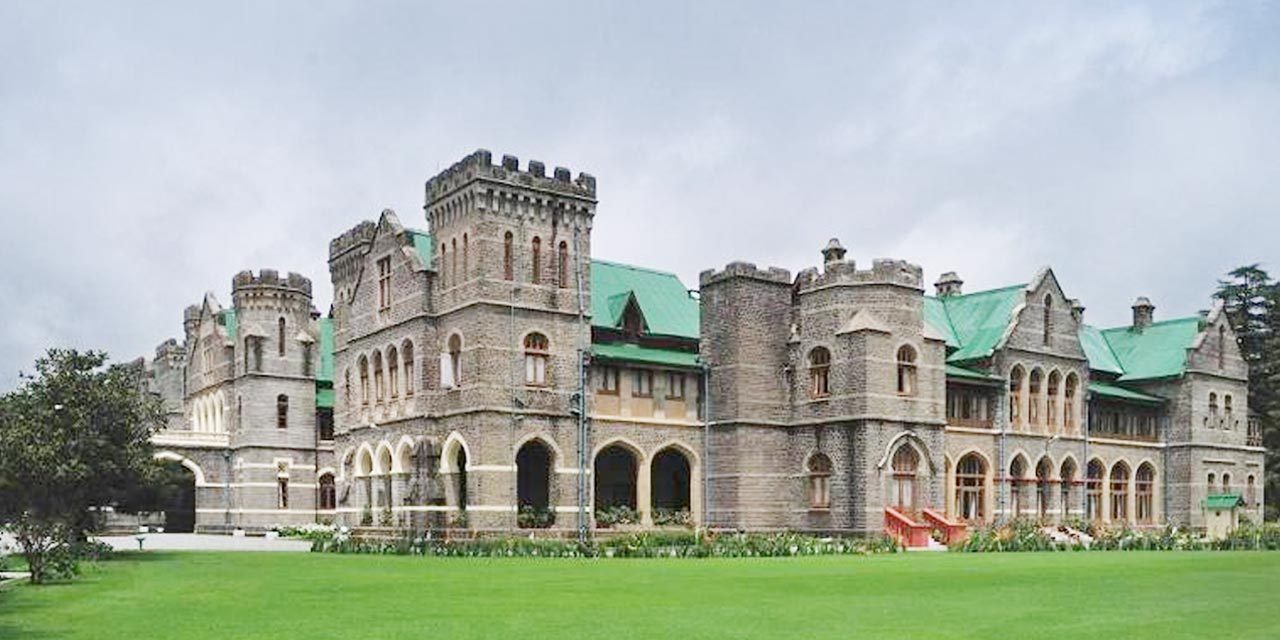
Raj Bhawan: The Governor’s House is a Victorian Gothic edifice resembling closely the Castle of Scotland and consists of two stories of buildings with 113 rooms, a garden, a swimming pool and a golf course. The second Raj Bhawan in Uttarakhand, it was built in 1899 by F.W. Steven as the summer residence of the Governor of North East Province. The Governor’s House now serves as the residence of the Governor of Uttarakhand. A guided tour is available to explore the Raj Bhawan, however, all rooms are not accessible to the public since the Governor still resides here. The Raj Bhawan is open from 8 am to 5 pm during the months of March, April, September and October and from 9 am to 4 pm during November and December. It is closed on Sundays and public holidays. Entrace fee is INR 50 per person and access to the golf course will set you back by INR 450 per person.

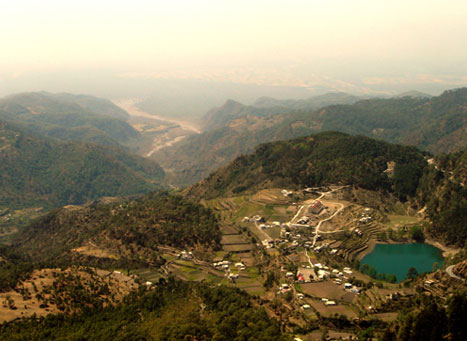
Our next destination is Sattal which lies just 23 km east of Nainital.

Travel Bucket List: India – Utarakhand Part 2

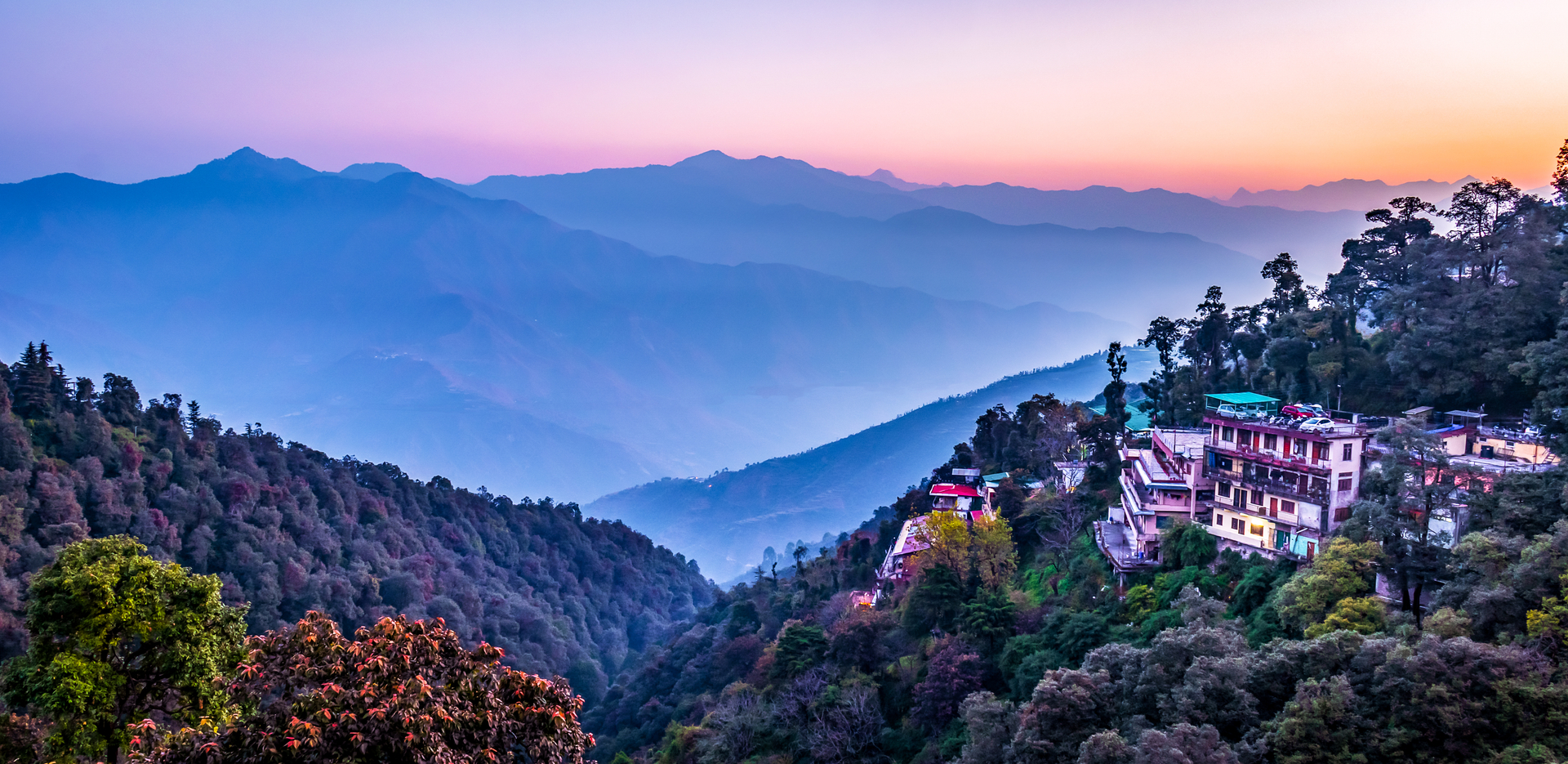
Located in the foothills of the Garhwal Himalayan range and popularly known as the Queen of the Hills, Mussoorie is a hill station and with the adjoining town of Landour, which includes a military cantonment, as well as Barlowganj and Jharipani are all considered part of greater Mussoorie. The town sits at an average altitude of 2,005 meters and has the Himalayan snow ranges to its north and the the Doon valley and the Shiwalik ranges to its south.

The name Mussoorie is often attributed to a derivation of mansur, a shrub which is indigenous to the area and the town is often referred to as Mansuri by locals. In 1803 the Gorkhas under Umer Singh Thapa conquered the Garhwal and the Dehra, during which time Mussoorie was established. On 1 November 1814, a war broke out between the Gorkhas and the British and Dehradun and Mussoorie were evacuated by the Gorkhas by the year 1815 and were annexed to the district of Saharanpur by 1819.

Mussoorie as a resort was established in 1825 by Captain Young, a British military officer. With Mr Shore, the resident Superintendent of Revenues at Dehradun, he explored the present site and jointly constructed a shooting lodge and also raised the first Gurkha Regiment and planted the first potatoes in the valley. Though there are no memorials to commemorate Young in Mussoorie, there is a Young Road in Dehradun. In 1832, Mussoorie was the intended terminus of the Great Trigonometric Survey of India that began at the southern tip of the country. Although unsuccessful, the Surveyor General of India at the time, George Everest, wanted the new office of the Survey of India to be based in Mussoorie; however, a compromise location was Dehradun, where it remains. The same year the first beer brewery at Mussoorie was established by Sir Henry Bohle as The Old Brewery and the brewery opened and closed twice before it was re-established by Sir John Mackinnon as Mackinnon & Co. in 1850. By 1901 Mussoorie’s population had grown, rising in the summer. Accessibility became easier in 1900 with the railway coming to Dehradun, thus shortening the road trip from Saharanpur. The Nehru family, were frequent visitors to Mussoorie in the 1920s, 1930s and 1940s, and stayed at the Savoy Hotel. On 20 April 1959 during the 1959 Tibetan Rebellion the 14th Dalai Lama took up residence at Mussoorie, until April 1960 when he relocated to Dharamsala in Himachal Pradesh, where the Central Tibetan Administration is today headquartered. The first Tibetan school was established in Mussoorie in 1960 and today about 5000 Tibetans live there, mainly in Happy Valley.

Camel’s Back Road: Incorporating a nature walk, Camel’s Back Road is a road, which takes its name from a rocky outcrop in the shape of a camel’s hump overlooking the Doon Valley and contains hotels, motels, and a cemetery with the oldest Christian church in the Himalayas, St Mary’s, above the Mall Road. This road offers stunning views of the Himalayas and is a popular place for viewing the sunrise and the sunset. Taking a long walk along this road or coming here for an early morning jog is the best way to explore what this beautiful road has to offer. You can also see a 180-year-old British cemetery, the first of its kind in Mussoorie, en route the Camel’s Back Road.

Gun Hill: The second highest point in Mussoorie, Gun Hill is at an altitude of 2,024 m and is accessed by cable car from the Mall road. At Gun Hill is a cannon previously used to sound midday. Said to be an extinct volcano, the view from Gun Hill is a panoramic view of the snow-clad Himalayan ranges right beside the widespread Doon Valley and a full view of Mussoorie. During the British colonial period freedom fighters brought a canon to the top of the hill and fired at the British. After this, the hill which is now part of Woodlawn Cemetery, started to be known as Gun Hill. The road that leads to the hill, previously known as Kingsbridge Road, is now called Gun Hill Road. Another story associated with Gun Hill says that the British brought up a large canon on the hill in 1857 during the Sepoy Mutiny, and the canon was shot every day at noon to set the time. Even though the gun was removed in the 70s, the name stuck. Gun Hill’s highlight of Gun Hill is the ropeway which provides a scenic view of the Himalayan ranges. The ropeway cable car round trip costs INR 75 per head and undoubtedly offers a picturesque view during the climb of the distant hills and green landscapes. The ropeway is open from 10 am to 6 pm daily and during the peak period months of May to July and October, it is open from 8 am to 10 pm and during the months of August, September and from late November to April, it is open from 10 am to 7 pm.

Kempty Falls: Located on the way between Dehradun-Mussoorie roads, in the Ram Gaon area of Tehri Garhwal, Kempty Falls is accessed by track from Kempty Fall Road. Surrounded by high mountain cliffs, Kempty Falls is nestled at an altitude of around 4500 ft above the sea level. The pond formed at the bottom of the falls makes an excellent spot for swimming and bathing. The name of Kempty Falls is taken from the terms camp and tea implying the elaborate tea parties that were once organized here in evenings eventually leading to a localized name Kempty. It was developed as a picnic destination by John Mekinan owing to its captivating surroundings and scenic beauty. Offering a stunning view of water stream cascading down from a great height, it divides into two main falls. The perennial Kempty waterfall is crowded almost throughout the year. One of the best ways to explore the terrain of Kempty Falls is by the means of its ropeway. Precarious and thrilling at the same time, the ropeway takes you over lush green mountains and even overlooks waterbodies and has a cost of INR 80 per person. You can also enjoy boating in the nearby man-made pond and climb from the first main Kempty Falls to the second. The first waterfall is located 5-10 minutes walk from the main road. The second falls has to be reached by walking further inside. The falls are open from 8 am to 5 pm and does not have any entry fees.

Lake Mist: About 5 km before the Kempty Falls is Lake Mist, through which flows the Kempty river with its numerous small waterfalls. The pristine Lake Mist is one of the most beautiful places in Mussoorie with its emerald waters that are covered by green forest terrains from the sides. The lake is not as crowded as Kempty Falls, so it becomes easier to enjoy it. The lake is open from 8 amto 6:30 pm.

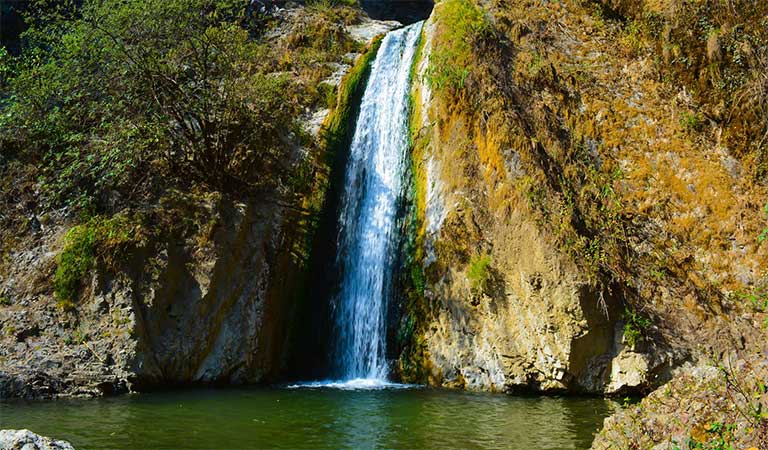
Bhatta Falls: Located in the village of Bhatta, the Bhatta Falls in Mussoorie is a popular tourist attraction. Reaching the exact spot of the waterfall requires a little hike of 500 metres. This natural waterfall cascades down from an altitude it 30 feet into a circular pool where people enjoy swimming and bathing. There is a children’s park there as well with slopes and swings provided for them to play. The place has some small eateries as well. The falls are open from 8 am to 5 pm

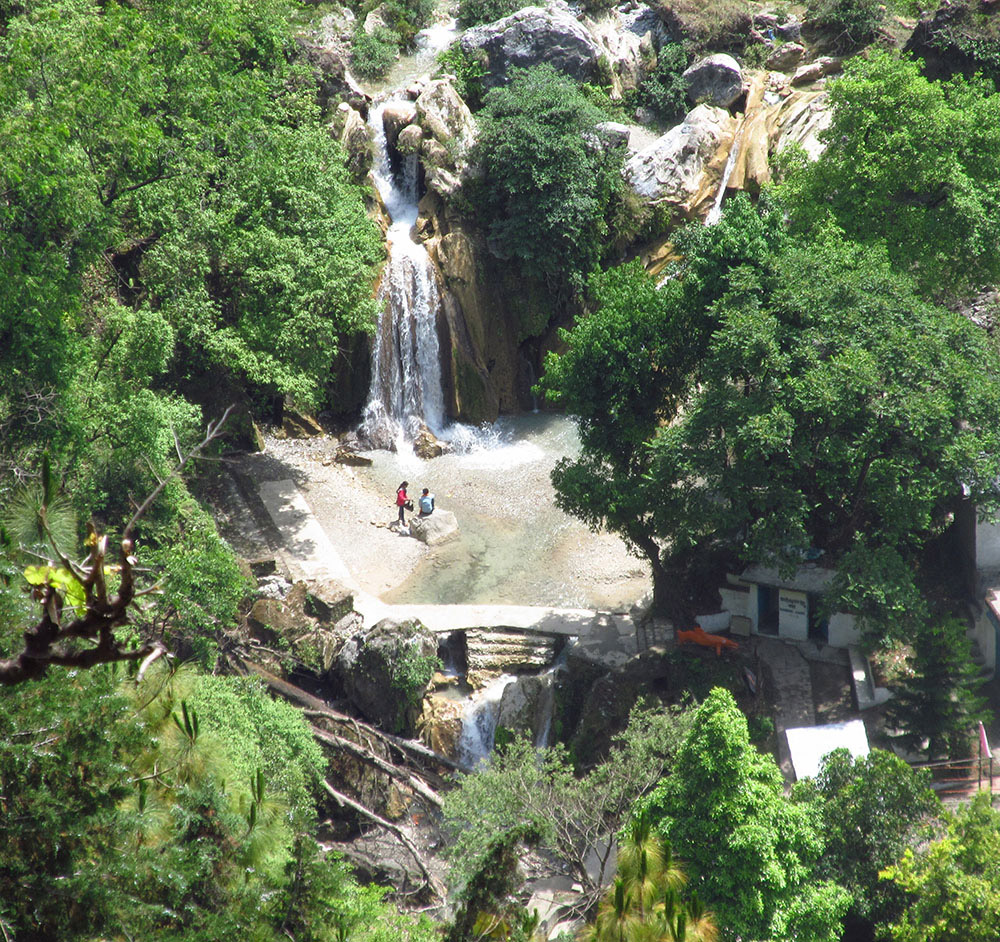
Jharipani Fall: Located 6 km downhill of Mussoorie in the Jharipani village, the Jharipani Falls is a small waterfall which gushes with water just after the monsoons and remains like a thin strip of flowing water during other time of the year. The highlight of Jharipani Falls is the 1.5 km trek to reach the base. On clear days, there is a mesmerising view of the nearby peaks and the amazing valley, especially when the sky is painted a rosy red during the sunset.

Mossy Fall: Cosily tucked amidst the tantalizing mountains and the exuberant woods, Mossy Fall is surrounded by a dense forest and is accessed via Barlowganj or Balahisar. The falls are a well-kept secret of Mussoorie and are named after the moss-laden rocks surrounding the gushing waterfalls. Literally veiled from view, with a cleft in the hillside, the charming Mossy Waterfalls can be reached with a little bushwhack following slightly rough terrain. The highlight is a Shivalinga hidden near the fall, which is drenched by the continously flowing water, creating a surreal site. The scenic Lake Mossy is a hotspot for trekkers as the trail offers moderate to difficult hikes for the tourists to choose from. In addition to that, it is the go-to place for the photography enthusiasts owing to its rich scenery and minimal human interactions. The falls are open from sunrise to sunset.

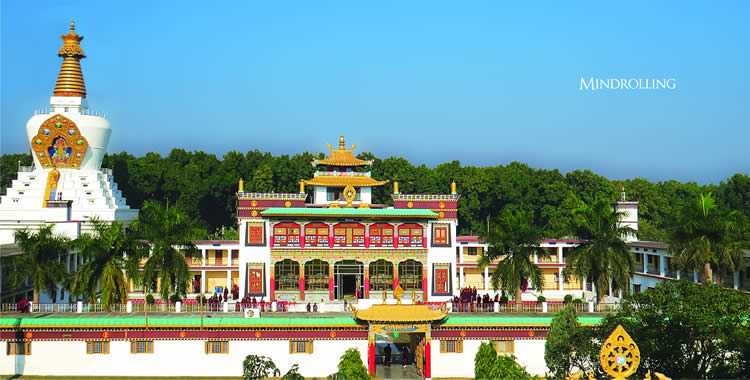
Happy Valley: Lying on the western side of Library Point and famous for some magnificent Tibetan monasteries, Happy Valley is more popularly known as Mini Tibet and is one of the most detailed and largest rendition of a typical Tibetan society and home to around 5000 Tibetan refugees. The valley boasts of gorgeous views in the 360 – degree panorama. The story goes that back in 1959, the 14th Dalai Lama escaped from his home in Lhasa, Tibet and was given refuge in Mussoorie by the then Prime Minister of India, Pandit Jawaharlal Nehru. The Dalai Lama stayed in the valley for about a year before he moved to Dharamshala. During this period, a Tibetan school and a beautiful Buddhist temple was established and the valley started flourishing with the Tibetan culture and eventually came to be known as the Happy Valley, owing to its vibrancy, zeal and exuberance. When the Dalai Lama moved to Dharamshala, a large part of the population stayed back and made this valley their permanent home. The Tibetan culture continued to thrive with more temples and monasteries built and in no time the valley came to give the look and feel of a Mini Tibet as it is colloquially called. The Dalai Lama was honoured with the Nobel Peace Prize for which he delivered his acceptance speech on December 10t 1989 and since then the entire valley gets together every year to celebrate the event. Its recommended that visitors time their visit at this time to be a part of the celebrations. The places in the valley are open from 10 am to 6 pm.

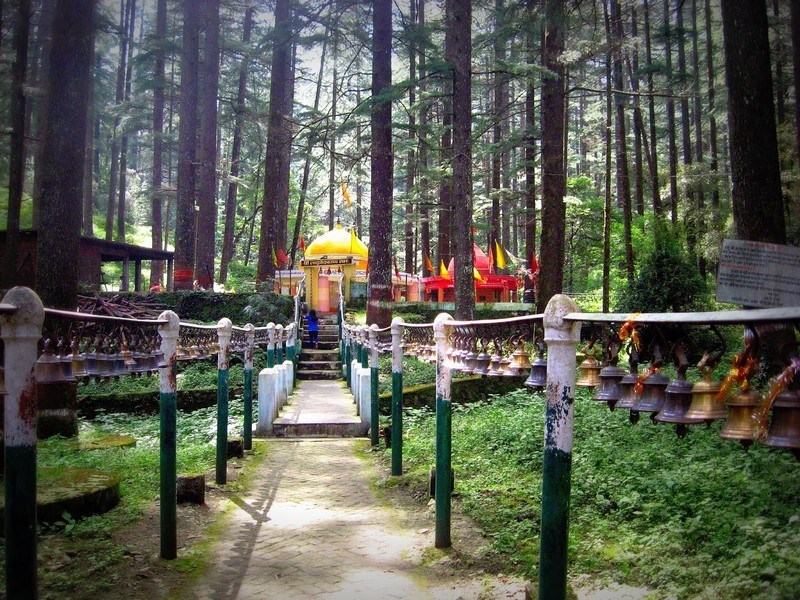
Nag Devta Temple: The ancient Nag Devta Temple on Cart Mackenzie road is dedicated to Snake God Lord Shiva, about 6 km from Mussoorie on the road to Dehradun. There is vehicular access to the temple, which provides a view of Mussoorie and the Doon Valley.

Jwalaji Temple on Benog Hill: At an altitude of 2,240 m the Jwalaji Temple is 9 km west from Mussoorie, and cannot be accessed by vehicle although a motor road goes most of the way from Mussoorie. To get to the temple one has to trek for about 2 kilometers uphill to reach the temple. The path starts from Cloud’s End and passes through thick vegetation of line and deodar trees. The trek offers some panoramic views of the Shivalik ranges, Doon Valley as well as Yamuna River. Atop Benog Hill, it contains an idol of the Goddess Durga and has a view of the valley of the Aglar River. Also known as the Jwala Devi Temple, it is believed that anyone who visits this temple is resurrected from the sufferings of life and is bestowed with sacredness. Apart from pilgrims, nature lovers also visit the place to admire the thick green forest around the temple as well as the Yamuna River and Shivalik range. The temple is open from 5 to 12 noon and then again between 4 to 8 pm.

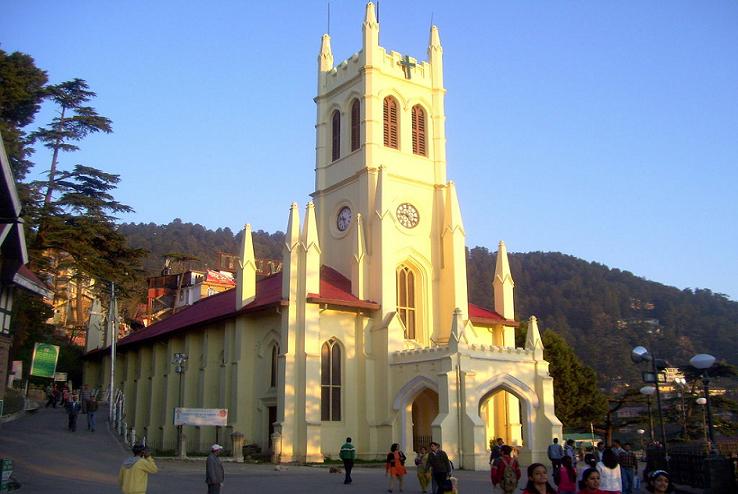
Mussoorie Christ Church: Situated on little hill-lock slightly above the Kasmanda Palace, the Mussoorie Christ Church boasts of being the very first Catholic church in all of the Himalayan region. Built in 1836, the exquisite church is an exemplary example of Gothic architecture which evolved from Romanesque architecture. The prominent style being followed, the church exhibits the pointed arches, ribbed vaults and flying buttresses ideal to the gothic style. Furnished with gorgeous pre-Raphaelite glass windows, this fetching piece of art was a gift to India from the British. The tinted glass window panes tell the tale of life events of Jesus Christ. The high altar is adorned with caricatures about the life and times of Christ from his birth to his sufferings and certification with beautifully done interior walls and a striking century-old William Hill organ. The courtyard of the church still holds the deodar tree planted by the Princess of Wales in 1906 and offers enticing views of the Doon valley on the side. The church is open from 7 am to 6:30 pm, Mondays to Saturdays and from 8 am to 6:30 pm on Sundays.

Tibetan Buddhist Temple: Nestled amidst the hustle bustle of Happy Valley is the Shedup Choepelling Temple. The huge idol of Buddha on top of the temple gives a unique charm to the tiny Buddhist temple. Located on the highest cliff of the valley, the Shedup Choepelling Temple is adorned with murals, prayer wheels and meditation chambers. Situated in between the snow-capped mountains, the temple is colloquially known as Tibetan Buddhist Temple and the first Tibetan shrine to be built in India and consecrated by the Dalai Lama. Besides the numerous idols and statues of Lord Buddha, seated in the main hall of the temple are two huge life-like idols of Buddha and the Dalai Lama, as a mark of respect to both. The vibrantly painted walls, tiny clay lamps and prayer flags add to the appeal of the place. The temple also has a rich collection of books on Buddhism and Tibetan literature and offers lovely mesmerising views of the valley, blooming flowers and snow-clad mountains. The temple is open from 7 am to 5 pm.

Cloud’s End: Surrounded by a thich deodar forest, Cloud End is a bungalow, built-in 1838 by a British major and was one of the first four buildings in Mussoorie which has been converted to a hotel today. The Cloud’s End viewpoint marks the geographical end of Mussoorie and is surrounded by thick oak and deodar forests. It tracks 2 km up to the Benog Wildlife Sanctuary offering a lovely walking track, taking in the soothing mountain air and a breathtaking view of the Aglar River Valley. Another major attraction at Cloud’s End is a heritage building set up by a Britisher in 1838, which is one of the oldest buildings in Mussoorie. Retaining the original architecture and other relics, it has now been converted into a heritage hotel, the Clouds End Forest Resort. Tourists spend some tranquil time during their stay, along with partaking in activities like hiking, hill climbing and nature walks arranged by the hotel on request. People often club the visit to Cloud’s End with the famous attractions nearby, the Jwala Devi Temple and Benong Wildlife Sanctuary.

Lal Tibba: Also called Depot Hill because of its former use as a military depot, Lal Tibba, also is the highest point in Mussoorie, with views over the town and its surroundings. A Japanese telescope, with breathtaking views of Himalayan ranges including Badrinath, Kedarnath, Banderpunch, was installed at Lal Tibba in 1967. A popular viewpoint, Lal Tibba is approximately 6 kilometres from Mussoorie and rises to a height of 2,275 meters and is a popular sunrise and sunset point. The Lal Tibba region has long been occupied, serving as a summer getaway during the British-Raj and a recovering station for the military, hence gaining popularity as a cantonment cum hill station. It is now occupied by the Indian Military Services. The main thing at Lal Tibba would be the undisturbed sight of the Himalayan ranges and a snowy white line of ranges can be easily viewed from near Char Dukan, a famous sightseeing café in Landour. There are few spectacular hikes you can undertake in the region, some of which include Pepperpot Mountain and Deo Tibba, a short hike from Tehri road. Lal Tibba is open from sunrise to sunset, so between 6 am to 6 pm and has an entry fee of INR 50 per person.

Van Chetna Kendra: A 339 hectare sanctuary, about 11 km from Mussoori, the Van Chetna Kendra was established in 1993. It is significant for the extinct bird species Mountain Quail or Pahari Bater, which was last spotted here in 1876.

Benog Wildlife Sanctuary: The sanctuary, about 6.3 km from Mussoori and open to the public, provides a woodland habitat for indigenous birds, and animals. A part of the Rajaji National Park, the Benog Wildlife Sanctuary is famous for its almost-extinct mountain quails, deer, leopards and red-billed blue magpie. The wildlife sanctuary is well known to house rare species of birds and offers an excellent trail of pine-clad slopes surrounded by Himalayan peaks for a refreshing walk. It is an ideal site for bird watching and capturing gorgeous views of the surrounding Chaukhamba and Bandarpunch Peaks. Apart from housing the fir and pine trees, the Benog Wildlife Sanctuary also hides some medicinal plants. Also known as Vinog Mountain Quail Sanctuary, it is spread across 339 hectares. The abundant wildlife paired with stunning views of the enveloping scenic vistas makes Benog Wildlife Sanctuary a must visit, especially for the nature lovers and adventure enthusiasts. Open all days of the week, the sanctuary is open from 7 am to 5 pm.

Jabarkhet Wildlife Reserve: The first privately owned and operated wildlife sanctuary in Uttarakhand, the Jabarkhet Nature Reserve is located on the Mussoorie- Dhanaulti road, around 15 kms from the heart of the city and spread over 100 acres of land. At an elevation of approximately 2000 metres above the sea level, Jabarkhet Nature Reserve is set around different altitudinal zones with an extensive variety of rare plants, insects, reptiles, animals, trees, birds and mammals. The wildlife reserve is a hidden gem and an ideal getaway in the bliss of nature. The park houses eight well-demarcated trails for a walk amidst stunning natural serenity. Guided tours are available for birdwatching and wildlife spotting. If you are seeking yet more adventure, you are free to venture off on your own with the help of tour maps which are colour coded and super easy to follow. Open from sunrise to sunset, a non-guided walk costs INR 350 while a guided walk which includes a guide, binoculars, umbrellas and leech socks costs INR 500. The reserve also organises special walks every month, with expert historians, naturalists and photographers. If you are interested, get in touch with them to get on their mailing list. Charges for this vary from INR 600 to INR 1000 depending on the duration of the walk, guide and area covered. They can also organise customised walks for you depending on the difficulty level of treks and the like. The charges for this vary between INR 1200 for day hikes to INR 3000 for overnight hikes. It is recommended to book your hikes well in advance, online or in person.

Mussoorie Lake: Located at a distance of 6 kms on the Mussoorie – Dehradun highway, the Mussoorie Lake is an artificial lake developed and maintained by the City Board and the Mussoorie Dehradun Development Authority. Surrounded by a mesmerising natural charm and some surreal views of the charming Doon Valley, this lake offers a rejuvenating retreat in nature’s lap. It’s a newly developed picnic spot originating from a natural waterfall and other than the umpteen outdoor activities available at the site, paddle boating is the most popular one. For a nominal fee, you can paddle your way across the lake to enjoy scenic views of the valley and a serene boating experience. The lake is open from 8 am to 7 pm and there is an entry fee of INR 15 per person.

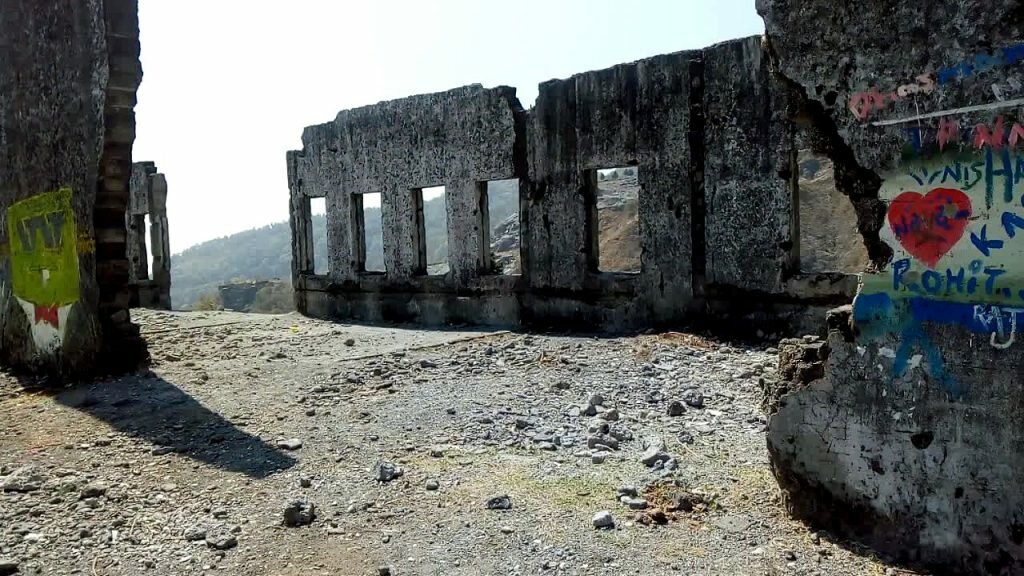
Sir George Everest’s House: At Park Estate are the remains of the building and laboratory of Sir George Everest, the Surveyor-General of India from 1830 to 1843. It is after George Everest that the world’s highest peak Mt. Everest is named. A scenic walk from Library Bazar and 6 km from Gandhi Chowk, the place provides a view of Doon Valley on one side and a panoramic view of the Aglar River valley and the peaks of the Himalayan ranges on the other. Built in 1832, the house is also popularly known as Park House. Sir George Everest owned this house spent 11 years living here and using it as his observatory and laboratory. Although, very derelict and in a precarious state, the house still holds its walls and has a roof; and is likely to be converted into a museum soon. The interiors have been stripped of any belongings but the doors, fireplace and windows still remain in place. The walls have been covered in graffiti though it is whitewashed often. Today the house now comes under the jurisdiction of the Tourism Department. It is open from 10 am to 6 pm and there is no entrance fee to visit.

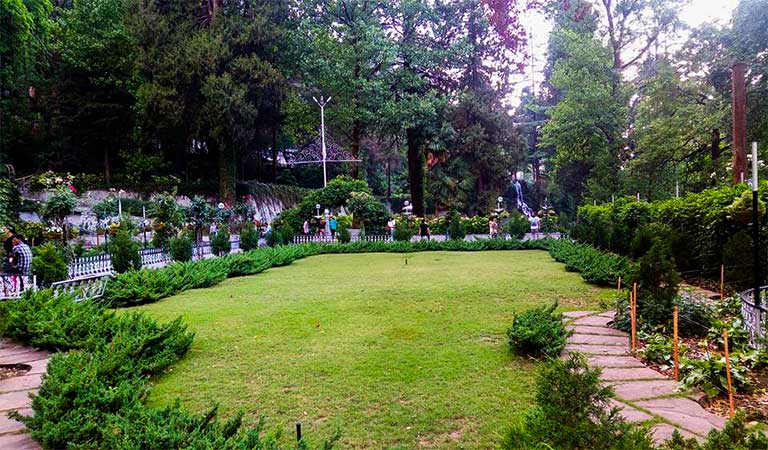
Company Garden: Located arund 3 km from Maill Road, the Company Garden is a popular tourist attraction nestled amidst the high Himalayas. Also known as Municipal Garden, it is maintained by the Garden Welfare Association of Mussoorie and was laid down by Dr H. Fackner in the early years of this millennium. The main attraction of the Company Garden is its vast variety of flora. The lush green carpeted lawn of the Company Gardens is covered with more than 800 types of flowering plants, and during the late spring till the end of monsoon, most of these flowers are in bloom – making the place look like the heaven’s garden. The lawn with a fountain in the middle offers a perfect place to have a little picnic with your friends and families. The heart of the garden is the gigantic China tree which offers a lovely shade during the days the sun shines real bright. The flower shrubs also work as brilliant background for photographs. There is a greenhouse nursery from where you can purchase smaller versions of the flowers you saw out in the garden in little tubs and pots to bring home. There is also an amusement park inside the Company Garden to keep tiny tots busy with safe and exciting rides. There is a man-made lake inside with an artificial waterfall where one can do paddle boating. It costs INR 75 per person for 15 minutes of boating. There is also a shop where you can get yourself photographed by a professional photographer in authentic and traditional Himachali dress. The telescopic view of the surrounding Himalayan mountains, which are otherwise far away and hidden in grey mist, costs INR 10 only. The garden is open between 9 am to 8 pm and has an entry fee of INR 18 per person.

Mussoorie Heritage Centre: Located at a distance of 3 kms from the main market, the Mussoorie Heritage Centre is a social enterprise showcasing the rich culture and heritage of the Mussoorie. Established in November 2013, the Mussoorie Heritage Centre basically displays the archives of the historical heritage of Mussoorie back from 1814 when the National Survey compiled the first map of the region; to 1959, when the 14th Dalai Lama took refuge here in Mussoorie. Started by the father-daughter duo of Vinod Kumar and Surbhi Agarwal, the heritage centre has the objective to preserve and showcase the rich cultural heritage of the town and its adjoining areas. In addition to the numerous exhibits, paintings, artefacts and historic evidence records, the Heritage Centre conducts regular research programmes, curated walks, city tours; to give an elaborate perception on what actual Mussoorie was before commercialisation took over. The Centre has two kinds of exhibitions – Exhibition 1 is the permanent display and representation of ancient pictures, factual paintings, murals and antiques, which define the look and feel of the cultural centre. With a general idea of the evolution of Mussoorie from 1814 to 1949, this exhibition targets to reinstitute the legacy of the hill town. Exhibition 2 is an annual affair with varying topics of interest every year, which runs for a year at a stretch. The topics covered include early modes of transport in the hilly terrain, commercialisation and growth of the tourism industry etc. The centre is open from 10 am to 6 pm daily and has no entry fee.

Soham Heritage Centre: Located on the Chamunda Peeth Temple Road, the Soham Heritage Centre is a private enterprise preserving the rich Himalayan heritage by showcasing the cultural diversity of the Himalayas through paintings, murals, scrap art, frescoes and artefacts. An admirable initiative by Mr Sameer Shukla and his wife Dr Kavita Shukla, the art centre is an effort to display the diversity of the Himalayas through varied art forms. Established in January 2014, the Soham Heritage & Art Centre is the result of around 18 years of tireless planning, inspiration, dedication and collecting of data. Through diverse art forms, paintings, sketches, the Soham Heritage centre aims to educate and inspire the localites and the tourist about the bounteous heritage. Mostly visited by media and architecture students, the centre also conducts occasional workshops and heritage walks to promote the same idea. The centre also has a tiny souvenir corner to help you pick quality antique products including jewellery, musical instruments, utensils, agricultural equipment among other things. The heritage centre is open from 10 am to 5 pm with an hour long lunch break from 2 to 3 pm. It is open on all days except Wednesdays and has an entry fee of INR 100 per person above 5 years of age.

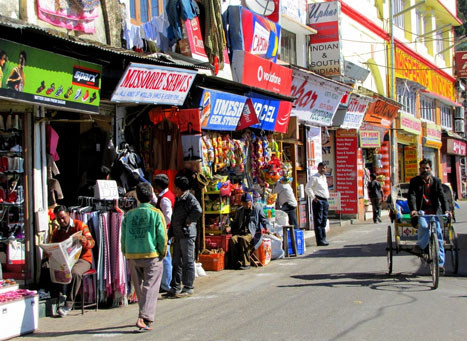
Mall Road: With its architectural evidence of its colonial past, Mall Road contains shops, cafes, video game establishments, skating rinks, a nearby Tibetan market place, and a Methodist church. Located in the heart of Mussoorie, the Mall is a colonial relic with benches and lampposts and visitors can often find the author Ruskin Bond browsing the Cambridge Bookstore. Do try out a photograph in local traditional attire here. Mall Road is open daily between 9 am to 9 pm.

Library Bazaar: Snuggled amidst the eventful Mall Road of Mussoorie is the vibrant Library Bazaar, bustling with energy and vivacity and a stroll in the bazaar can take you back to the vintage times. Arranged along a small circular path, the market oozes with gusto and radiates a colonial feel. The tiny shops dotting the arena perfectly fit into the settlement and present a compressed pretty picture of the entire place. Other than finger-licking street food, local trinkets, handcrafted jewellery, you can find every bric-o-brac at the Library Bazaar. Dribbling with every possible gewgaw knick-knack, this market introduces you to the desi side of Mussoorie. The Library Bazaar gets its name from the 19th-century Victorian style library that was built in the vicinity. Another feature of the popular market is the Band Stand, where you can go to enjoy some good old colonial music. The market also houses a large statue of Mahatma Gandhi in one corner, hence it’s also popularly called as Gandhi Chawk. A haven for compulsive shoppers, the Library Bazaar has something for everyone. The bazaar is open from 10 am to 8 pm daily.

Lambi Dehar Mines: A couple of kilometres from Mussoorie, the Lambi Dehar Mines is an infamous yet popular tourist attraction. Also known as the Mine of Death, it is locally believed that the mines are haunted by a witch. The area in and around the mine is enveloped in lush greenery and surreal landscape but with an eerie and spooky silence. The mine was functional till the early 1990s, after which it was shut down due to the death of around 50000 people working here. While experts say that the death was caused due to inappropriate mining practices causing lung disorders and the eventual death of the people, locals believe that the accident was caused by some spirit who haunts the place still. There have also been reportings of sinister behaviour, blood curdling wails, strange accidents and paranormal activity near the mines, by locals. There have been several road accidents near the spot and a helicopter crash, which perpetuated the belief of witches and hauntings.

Moving on, our next destination is Dhanaulti, a town which is about 60 km east of Mussoori.

Located at a distance of 62 km from Mussoorie, this little town is an offbeat destination located at a height of about 2200 meters above sea level. A hill station from where the Doon Valley and snow-covered Garhwal Himalayas can be viewed, the town does not have much human presence. A popular attraction built in the 16th century, the Deogarh Fort has many beautiful palaces and has several murals. The place also has a number of Jain temples in and around the area. Another attraction, the Tehri Dam boasts of ultra scenic views of the hills in the backdrop and clear waters in the front. People usually come here to enjoy a day out or a picnic amidst beautiful setting. Originally known as Panchayatan temple, the Dashavatar Temple is located 10 kms away from Dhaulti in Deogarh. The temple dates back to the Gupta Empire and is enshrined by Lord Vishnu. Besides a wonderful architecture, the walls of the temple have beautifully carved panels. The walls also have inscriptions of the Vaishnava mythology. At a distance of about 8 km from Dhanaulti on the road towards Chamba, and a 2 km trek from the village of Kaddu Khal is the Surkanda Temple. While the climb is tough, it’s worth the view and serenity. This temple is based on the popular mythology of Sati jumping in to the sacrificial fire to go against her father Daksha’s act of not inviting Lord Shiva to a ceremony, this temple is one of the most popular Shaktipeeths in India. A Shaktipeeth, going by the literal translation, is a holy site with the female goddess residing for her followers. The temple is famous for its Ganga Dussehra fair in autumn and is part of the Devi Darshan triangle, which offers trekking opportunities around Dhanaulti which include Surkanda Devi, Chandrabadni and Kunjapuri.

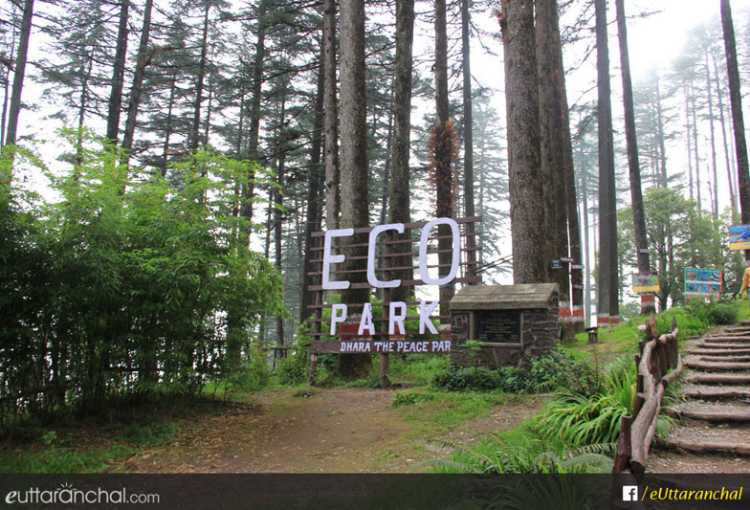
Spread over an area of 13 hectares and covered in deodar and oak trees, the Eco Park at Dhanaulti is a very popular attraction. It was developed by the DFO and the citizens of Dhanaulti to create employment opportunities for the poor as a measure to reduce poverty, the Eco Park is located at the height of 7800 m and enjoys a pleasant weather throughout the year. The park is very well-maintained and is an amazing place for the kids to hang out with a separate playground for them. A tradition known as memory sapling plantation is followed in the park as a part of which one can plant a sapling in memory of their loved ones. The Eco Park is divided into two forests namely Amber and Dhara which are situated at a distance of 200m from each other. One gets a superb view of the Himalayas from this point with the best time to visit the park during sunrise and sunset. The best time to pay a visit to the park is between September and June. The temperature here remains pleasant throughout the year, but monsoons and winters should be avoided. Summers are a perfect time to unwind with the maximum temperature being 31 degrees celcius. The park is open from 9 am to 5 pm and entry fee is INR 15 for an adult and INR 10 for a child. Pretty much every adventure activity you can think of including sky walking, sky bridge, valley crossing, zip swinging, zip lining, trekking, rock climbing, rappelling, paragliding, cave exploration and so much more is available at the Dhanaulti Adventure Park. Located amidst towering hill, snow capped mountains and a magnificent view, it has a perfect mix of leisure and adventure. Another adventure camp, approximately 14 km away from the main market, the Thangdhar Camp is situated at a height of about 8300 feet and surrounded by pine and deodar trees. The camp organises activities like rock climbing, snow camping, trekking or mountain biking as well as sightseeing tours to the nearby Jain temples, which are the structural marvels of a bygone era, intricately carved with the Jain deities. The temples are located in the Kanali Fort, overlooking the Betwa river, and make up for a well deserved break in the journey. The Burma Bridge is a popular camp spot for a perfect campfire experience and the glaciers of Bandarpoonch and Gangotri can be seen far away.

After Dhanaulti, we travel about 325 km east to the town of Auli.

Travel Bucket List: India – Utarakhand Part 1

Formerly known as Uttaranchal, Uttarakhand is often referred to as the Devabhumi or the land of the Gods due to numerous Hindu temples and pilgrimage centres found throughout the state. was formed on the 9th November 2000 as the 27th State of India, when it was carved out of northern Uttar Pradesh, Uttarakhand is located at the foothills of the Himalayan mountain ranges and is known for the natural environment of the Himalayas, the Bhabar and the Terai regions. The state borders the Tibet Autonomous Region of China to the north; the Sudurpashchim Pradesh of Nepal to the east; the Indian states of Uttar Pradesh to the south and Himachal Pradesh to the west and north-west. The winter capital of Uttarakhand is Dehradun, the largest city of the state while Gairsain, a town in the Chamoli district is the summer capital.

Uttarakhand is rich in natural resources especially water and forests with many glaciers, rivers, dense forests and snow-clad mountain peaks. The Char-dhams, the four most sacred and revered Hindu temples of Badrinath, Kedarnath, Gangotri and Yamunotri are nestled in the mighty mountains. The state capital of Dheradun lies in the Dun Valley, on the watershed of the Ganga and Yamuna rivers. The state is blessed with a rare bio-diversity, and has 175 rare species of aromatic & medicinal plants found in the state. The state is unique in that it has almost all major climatic zones and is rich in mineral deposits.

Uttarakhand’s name is derived from the Sanskrit words Uttara meaning north, and khaṇḍa meaning land, altogether simply meaning ‘Northern Land’. The name finds mention in early Hindu scriptures as the combined region of Kedarkhand in present day Garhwal and Manaskhand in present day Kumaon. Uttarakhand was also the ancient Puranic term for the central stretch of the Indian Himalayas. However, the region was given the name Uttaranchal by the union government and Uttarakhand state government when they started a new round of state reorganisation in 1998. Chosen for its allegedly less separatist connotations, the name change generated enormous controversy among many activists for a separate state who saw it as a political act. The name Uttarakhand remained popular in the region, even while Uttaranchal was promulgated through official usage. In August 2006, after assenting to demands, the state name was formally changed to Uttarakhand.

Archaeological evidence supports the existence of humans in the region since prehistoric times. The region formed a part of the Uttarakuru Kingdom during the Vedic age of ancient India. Among the first major dynasties of Kumaon were the Kunindas in the 2nd century BCE who practised an early form of Shaivism. Ashokan edicts at Kalsi show the early presence of Buddhism in this region. During the medieval period, the region was consolidated under the Katyuri rulers of Kumaon also known as the Kurmanchal Kingdom. After the fall of the Katyuris, the region was divided into the Kumaon Kingdom and the Garhwal Kingdom. In 1816, most of modern Uttarakhand was ceded to the British as part of the Treaty of Sugauli. Although the erstwhile hill kingdoms of Garhwal and Kumaon were traditional rivals, the proximity of different neighbouring ethnic groups and the inseparable and complementary nature of their geography, economy, culture, language, and traditions created strong bonds between the two regions, which further strengthened during the Uttarakhand movement for statehood in the 1990s.

Ancient rock paintings, rock shelters, paleolithic stone tools which are hundreds of thousands of years old, and megaliths provide evidence that the mountains of the region have been inhabited since prehistoric times. There are also archaeological remains that show the existence of early Vedic practices from around 1,500 BCE in the area. The Pauravas, Khasas, Kiratas, Nandas, Mauryas, Kushanas, Kunindas, Guptas, Karkotas, Palas, Gurjara-Pratiharas, Katyuris, Raikas, Chands, Parmars or Panwars, Mallas, Shahs and the British have ruled Uttarakhand in turns. It is believed that the sage Vyasa scripted the Hindu epic Mahabharata in the state.

Among the first major dynasties of Garhwal and Kumaon were the Kunindas in the 2nd century BCE who practised an early form of Shaivism and traded salt with Western Tibet. It is evident from the Ashokan edict at Kalsi in Western Garhwal that Buddhism made inroads in this region. Shamanic Hindu practices deviating from Hindu orthodoxy also persisted here. However, Garhwal and Kumaon were restored to nominal Vedic Hindu rule due to the travels of Shankaracharya and the arrival of migrants from the plains. Between the 4th and 14th centuries, the Katyuri dynasty dominated lands of varying extent from the Katyur valley in modern-day Baijnath in Kumaon. The historically significant temples at Jageshwar are believed to have been built by the Katyuris and later remodelled by the Chands. Other peoples of the Tibeto-Burman group known as Kirata are thought to have settled in the northern highlands as well as in pockets throughout the region, and are believed to be ancestors of the modern day Bhotiya, Raji, Jad, and Banrawat people.

By the medieval period, the region was consolidated under the Garhwal Kingdom in the west and the Kumaon Kingdom in the east. During this period, learning and new forms of painting like the Pahari school of art was developed. Modern-day Garhwal was likewise unified under the rule of Parmars who, along with many Brahmins and Rajputs, also arrived from the plains. In 1791, the expanding Gorkha Empire of Nepal overran Almora, the seat of the Kumaon Kingdom, who annexed it to the Kingdom of Nepal and in 1803, the Garhwal Kingdom also fell to the Gurkhas. After the Anglo-Nepalese War, this region was ceded to the British as part of the Treaty of Sugauli and the erstwhile Kumaon Kingdom along with the eastern region of Garhwal Kingdom was merged with the Ceded and Conquered Provinces. In 1816, the Garhwal Kingdom was re-established from a smaller region in Tehri as a princely state.

After India’s independence, the Garhwal Kingdom was merged into the state of Uttar Pradesh, where Uttarakhand composed the Garhwal and Kumaon Divisions. Until 1998, Uttarakhand was the name most commonly used to refer to the region, as various political groups, began agitating for separate statehood and on 9 November 2000, Uttarakhand became the 27th state of the Republic of India.

86% of Uttarakhand is mountainous and 65% is covered by forest. Most of the northern part of the state is covered by high Himalayan peaks and glaciers. Two of the most important rivers in Hinduism originate in the glaciers of Uttarakhand, the Ganges at Gangotri and the Yamuna at Yamunotri and are fed by myriad lakes, glacial melts and streams. These two along with Badrinath and Kedarnath form the Chota Char Dham, a holy pilgrimage for the Hindus.

The state hosts the Bengal tiger in Jim Corbett National Park, the oldest national park of the Indian subcontinent. The Nanda Devi and Valley of Flowers National Parks, a UNESCO World Heritage Site located in the upper expanses of Bhyundar Ganga near Joshimath in Gharwal region, is known for the variety and rarity of its flowers and plants. The Himalayan ecosystem provides habitat for many animals, including bharal, snow leopards, leopards and tigers, plants, and rare herbs.

As I usually do, let’s start with the state capital of Dehradun.

Dehradun is the winter capital and the most populous city of Uttarakhand. Part of the Garhwal region, Dehradun is located in the Doon Valley on the foothills of the Himalayas nestled between the river Ganges on the east and the river Yamuna on the west. The city is noted for its picturesque landscape and slightly milder climate and provides a gateway to the surrounding region such as Mussoorie and Dhanaulti as well as summer and winter trekking destinations like Dodital and Dayara Bugyal for camping and grandeur Himalayan panoromic views. The Hindu holy cities of Haridwar and Rishikesh along with the Himalayan pilgrimage circuit of the Char Dham which include Yamunotri, Gangotri, Kedarnath and Badrinath.

During the days of British Raj, the official name of the town was Dehra. Dehradun is made up of two words Dehra and Dun. Dehra is derived from the word dera, meaning camp, and Dun or Doon in Garhwali language refers to a valley that lies between the middle Himalayas and the Shivaliks. The town was established when Baba Ram Rai, the son of the seventh Sikh Guru, Guru Har Rai settled his Dera or camp in the area in 1675 whichh is when the modern city of Dehradun started to develop. In the Skanda Purana, Dun is mentioned as a part of the region called Kedarkhand, the abode of Shiva. According to Hindu mythology, in ancient India during the Mahabharata era, Dronacharya the great teacher of Kauravas and Pandavas, lived here hence the city is also known as Dronanagari or thecity of Drona.

It is believed that after the battle between Ravana and Lord Rama, Lord Rama and his brother Lakshmana visited this site. Ancient temples and idols have been found in the areas surrounding Dehradun which have been linked to the Ramayana and Mahabharata and these relics and ruins are believed to be around 2000 years old. Rishikesh is mentioned when Lord Vishnu answered the prayers of the saints, slaughtered the demons and handed the land to the saints. In the seventh century, this area was known as Sudhanagara and was described by the Chinese traveller Huen Tsang and later came to be known as Kalsi.

Dehradun was invaded by Mahmud of Ghazni during his campaigns into India followed by Timur in 1368, Rohilla chief Najib ad-Dawlah in 1757 and Ghulam Qadir in 1785. In 1806, the Nepalese King Prithvi Narayan Shah united many of the Indian territories that now fell under places such as Almora, Pathankot, Kumaon, Garhwal, Sirmur, Shimla, Kangra and Dehradun. On the western front Garhwal and parts of Himachal Pradesh up to Punjab and on the eastern front the state of Sikkim up to Darjeeling became parts of Nepal for a brief period until the British East India Company went on the war from 1814 to 1816. The war ended with the signing of the Treaty of Sugowli where almost a third was ceded to British East India company. The British got Dehradun in 1816 and colonised Landour and Mussoorie in 1827–1828. Post-independence Dehradun and other parts of Garhwal and Kumaon were merged with United Provinces which was later renamed the state of Uttar Pradesh. In 2000, the state of Uttarakhand was created from the northwestern districts of Uttar Pradesh under the Uttar Pradesh Reorganisation Act 2000 and Dehradun was made its interim capital.

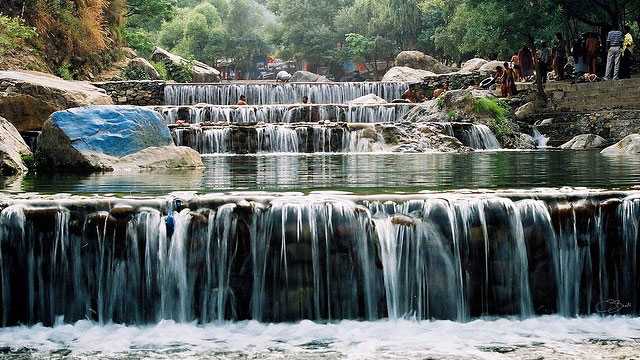
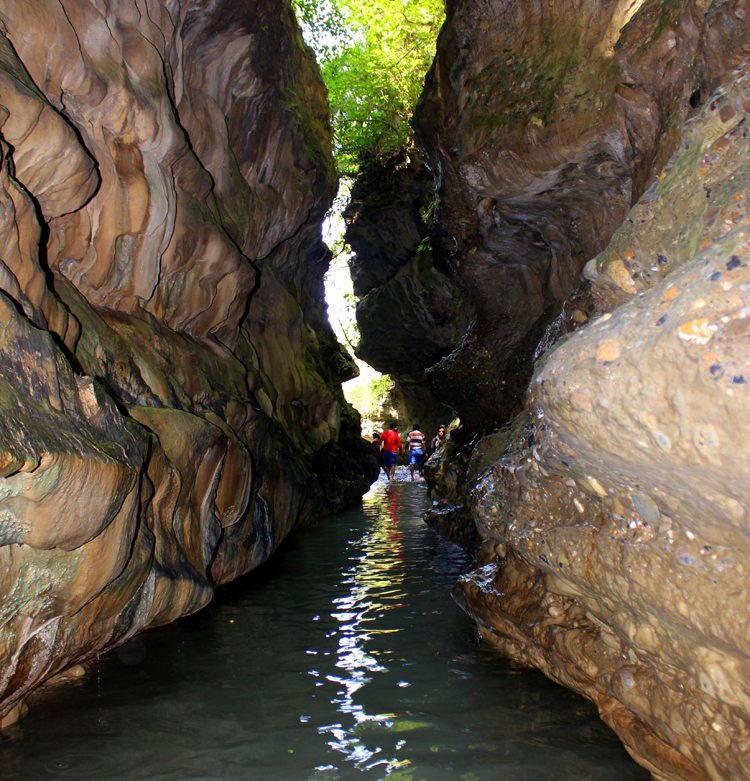
Sahastradhara: Literally meaning a thousand-fold spring, Sahastradhara is a popular attraction, famous for its medicinal & therapeutic value as its water contains sulphur. Sahastradhara is located about 14 km from the city, near Robber’s Cave. Also known as Sulphur Springs, this waterfall cascades through limestone stalactites from a height og around 9 meters, making the water rich in sulphur. A dip in the Sulphur-rich water here feels cold and refreshing but is believed to have remarkable medicinal advantages. The temperature of the water here is a little lower than its surroundings and its picturesque beauty attracts a lot of travellers. One can even enjoy a stunning view of the mountains on a fun ropeway ride. The falls are open from 8 am to 7 pm daily.

Robber’s Cave: Locally known as Gucchu Pani, Robber’s Cave is a river cave formed in the Himalayas, about 8 kilometres from Dehradun. This river cave is believed to be an abode of Lord Shiva and is very close to Sahasradhara and is speciality is that river water flows out from the middle of the cave. The cave is a narrow gorge formed between a conglomerate limestone formation. It creates a feeling similar to being in a scene from a mystery movie, surrounded by dark limestone as streams gush in, echoing inside the cave. With cold water underground springs, the cave cools down during the scorching-hot summer-afternoon and is a perfect picnic spot amidst the natural beauty of Uttarakhand. It is said that the cave got its name from the British after they found out that robbers kept stolen items in the cave. While the cave has elegant natural interiors, the most exquisite feature of Robber’s Cave is its 10 m high waterfall. The water in the cave appears and then, all of a sudden, vanishes underground. The water appears again on the surface a few yards away. You may also visit the Tibetan Buddhist Temple, the Takpeshwar Temple, the Ramakrishna Ashram Temple and the Dehradun Zoo; each being 2 to 4 kilometres away from Robber’s Cave.
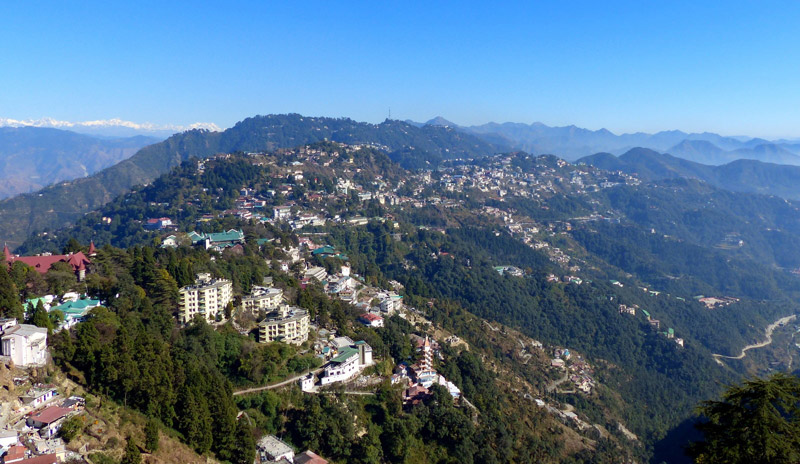
Maldevta: located in Shripur, Maldevta offers one of the vistas of nature’s perfection, with the great Himalayas in the backdrop, the pristine Song rRiver gurgling through thick shrubberies and little birds hopping and chirping about the area. Visitors are many during the summer months, as people often come to take a chilling and refreshing dip in the river. You can indulge in a little adventure and trek through the thick wilderness and stroll around and observe birds on the go. A temple sits, most solemnly on the lap of nature, adding to the beauty. Maldevta is also famous among campers, but as the place is thickly populated with flora and fauna, campers are advised to come in groups, as wild animals tend to come out of their hideout after sunset. Maldevta is open from 10 am to 6 pm and the best time to visit is during summer, between April to July, though it is open all year round.

Lacchiwalla: Located in the forest area of Rajaji, Lacchiwalla is famous for its greenery, picturesque cottages and hotels. The brook serves as a natural water park where people can get engaged in all sorts of water activities such as swimming, boating, etc. However, one must remember to carry one’s swimming equipment as the authorities do not provide anything as such. The place is especially popular among families to hang out on weekends. It also has a garden with several monkeys menacingly hanging around and about the trees. It is open from 8 am to 5 pm in the summer and from 9 am to 5 pm in winter. Entrance fees are INR 20 for adults and INR 10 for children below the age of 12 while parking fees are INR 50 for four wheel vehicles.

Har Ki Dun: Nestled away from the hustle bustle of the city, Har Ki Dun, also known as the Valley of Gods is a beautiful cradle shaped valley with untouched panoramic beauty. Perched at an elevation of 3,566 mts above the sea level, this place is one of the remotest areas of Uttarakhand offering a plethora of trekking excursions. Here, you will find yourself surrounded by thick Pine forests and scintillating mountain peaks. This beautiful trail will take you to some of the most unexplored areas of the Garhwal Himalayan region where the simplicity and rustic lifestyle of the residents of hills is still untouched by the time. The beautifully carved houses along the way add to the charm of this trek. Visit this splendid place if peaceful nature and adventure is what you are looking for. The best time to visit is between March and June and then again between September and November. The trek will take approximately eight days.

Bali Pass: One of the least explored treks in the Indian Himalayan region that connects the Har Ki Dun Valley with Yamunotri, the Bali Pass Trek is a beautiful journey that one should try at least once in a lifetime. Bali Pass, which is set at an elevation of about 4,800 meters and located in the heights of Garhwal Himalayan region, is an exhilarating getaway where from you can capture the majestic trio of Kalanag at 6,387 meters, Bander Poonch 6,316 meters and Swargarohini group of peaks at a maximum elevation of 6,252 meters. The trail crosses the Govind National Park, which houses several colourful orchards and species of animals and birds, pens and clicks the trekker’s diary and lenses with enrapturing moments. The trail is best explored between May and June and between September and October and takes about ten days to cover. The entry fees for the trek is between INR 9,000 and INR 13,000.

Kalsi: A small village near Dehradun, Kalsi is known as the gateway to the Jaunsar-Bawar tribal region and is located between Dehradun and Chakrata hill station along the banks of the river Yamuna and is the confluence of the rivers, Yamuna and Tons. Inhabited by the people from the Khils, Bhutis and Mundar communities, Kalsi is surrounded by lush green oak and sal trees and a vast green valley, offering visitors an enchanting view of the Garhwal Himalayan ranges. Summertime is arguably the best period to visit Kalsi as the weather is much nicer and suitable for the outdoor activities with the morning hours being the best time for walking the trails. On the other hand, the periods of October to November and February to March is usually when you will see the migratory birds gather at Asan Barrage, sothere never really is a bad time to visit Kalsi. Where there, make sure, you visit the Ashokan Rock Edict which is a pear-shaped quartz rock onto which the fourteenth edict of King Ashoka is inscribed. The Pali language and the Brahmi script used in these edicts reflect upon the humane nature of Ashoka as a king and his concern for the welfare of his subjects. The names of five great Greek kings can be found engraved on the edict which conclusively dates it back to 253 BC. Dakpathar is an ideal picnic spot with many recreational water sports and activities including boating, canoeing, sailing, river rafting, water skiing, and even hovercrafts. Chakrata Hills is a hill station about 43 kms from Kalsi and offers visitors views of the towering Chakrata hills and ravishing waterfalls and also trek along the Chakrata Pass which winds along some of the waterfalls, including the very famous and beautiful Tiger Pass. If you are looking to soak in a bit of history along with the scenery, then the Timli Pass is worth visiting. This place is regarded to be historically significant as it is believed to have bore witness to the battle between the British army led by Major General Ochterlony and the Gorkhas.

Asan Barrage: Known for the many endangered migratory birds that flock here at various times of the year during their migrations, the Asan Barrage is a bird watcher’s paradise with its artificial lake attracting thousands of birds of varied species. Also known as the Dhaulipur Lake, the Assan Barrage was formed due to the confluence of two great rivers, the Assan and Yamuna rivers. Many exotic birds such as the red-crested pochards, coots, cormorants, wagtails, greater spotted eagles, osprey, marsh harriers, etc, can be seen in all their glory. A majority of bird species which migrate over the Himalayas during the winter season, stop over here on their journey towards the south of India. The lake and barrage is open during the daytime and has no entry fee.

Malsi Deer Park: Located at the base of the Shivalik range in Dehradun, the Malsi Deer Park, also known as the Malsi Zoo, is a zoological garden and heaven for nature lovers, with the beauty of the place highlighted by rich flora and fauna. It is a small zoological park with a picturesque location and vibrant wildlife, making it an amazing place for photographers. Though the park is mainly famous for deer, visitors can also spot peacock, nilgais, rabbits, and tigers to name a few. Apart from the nilgais, the park is home to Himalayan antelopes and the park is a part of the Malsi Forest Reserve. The park is closed on Mondays and on other days, it is open from 10 am to 5 pm and has an entry fee of INR 10 per person.

Tapovan Temple: Situated on the banks of the river Ganga, the Tapovan temple is a holy place which is located 5 km from Dehradun. All sorts of holy Hindu rituals are performed at the ashram which also conducts yoga courses for those interested. Surrounded by greenery a visit to this temple is known for releasing the tension and providing a sense of satisfaction as well as peace of mind. Tapovan as a place holds a lot of spiritual importance because according to Hindu mythology, Guru Dronacharya who was the teacher of the Kauravas and Pandavas in Mahabharat underwent his forfeit here. The word Tapovan has been derived from two words, Tapasya which means rigour and van which means forest. The temple and ashram are open from 6 am to 8 pm daily.

Tapkeshwar Temple: Also known as the Tapkeshwar Mahadev Temple, the Tapkeshwar Temple is located 6.5 kms from Dehradun’s city centre. A humble cave shrine dedicated to Lord Shiva, this temple is situated along the banks of a river which imparts it a unique sanctity. This cave was once the abode of the famous guru Dronacharya and hence is also known as Drona cave. A Shiva Linga is enshrined in the main complex which is believed to grant the wishes of all those who seek the Lord’s blessings. Water trickles from the ceiling continuously on the Shivalinga, making it an interesting spectacle to watch. Cool sulphur water springs here are available for pilgrims to take a bath in before they enter the main temple. The Tapkeshwar Temple, while simple and charming in its appearance, is a popular destination and is also thronged by young travellers as a picnic spot. To reach the temple, one has to take a short trek through the forest. The best time to visit the temple is during Shivratri, during which a large-scaled festival is organised to mark the occasion. Elaborate prayer services are held and pilgrims offer Lord Shiva’s favourite eatables to him on the day. A widespread legend says that Ashwathama, the son of Dhronacharya, was born inside the cave. However, his mother did not have enough milk to be able to feed her newborn. Ashwathama was wise beyond his years, and he prayed to Lord Shiva to grant him some milk to satiate his hunger. Being the generous God he is, Lord Shiva granted the wish of the newborn for milk to suffice his hunger. Since then, a Shiva Linga has been established there which is said to grant the wishes of all those who visit this temple seeking the Lord’s blessings. The Tapkeshwar Temple is a gentle amalgam of manmade and natural design. It is situated between two gentle hills, while the main sanctum is contained within the bounds of a naturally occurring cave. The architecture itself pertains to typical Hindu style. The temple is open daily from 6 am to 7 pm.
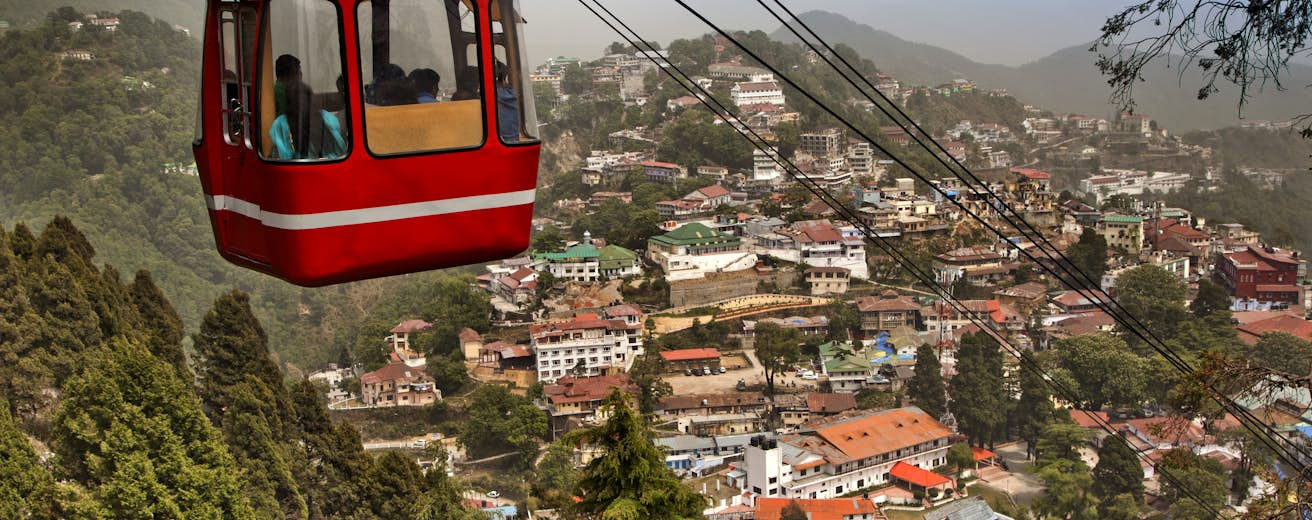
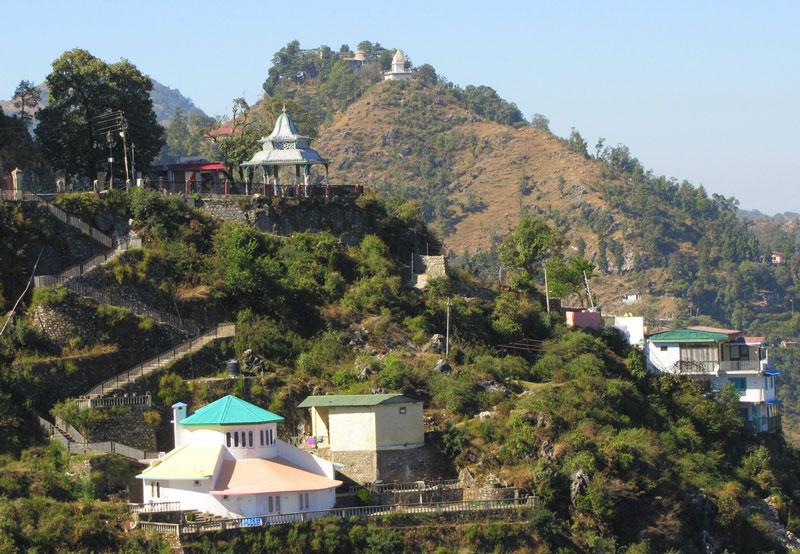
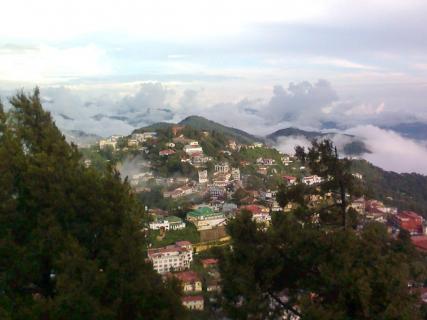
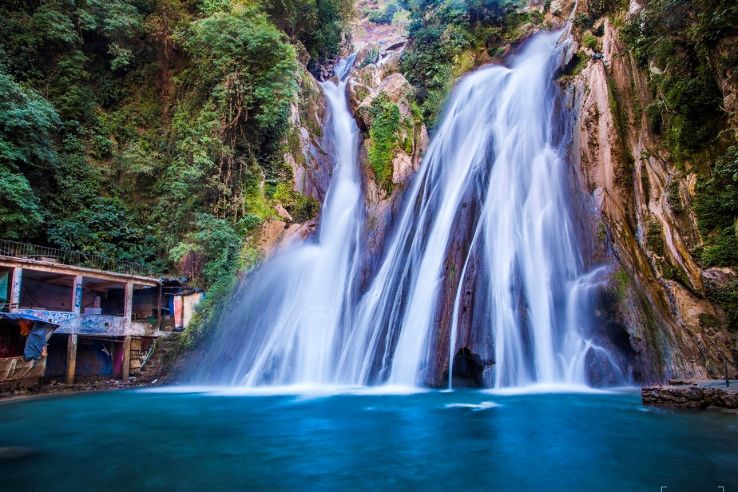
Ram Rai Gurudwara: Established by Ram Rai, the eldest son of the seventh Guru of the Sikhs, Sri Har Rai ji in 17th century, the Ram Rai Gurudwara in Dehradun is one of the oldest gurudwaras and a popular pilgrimage centre for adherants of the Sikh faith. There is an annual fair is held every year on the 5th day after Holi, the festival of colors.

Mindrolling Monastery: Also known as the Buddha Temple Complex, the Mindrolling Monastery was established in Clement Town, Dehradun by Khochhen Rinpoche in 1965. Situated in the middle of the serene foothills of the Himalayas, the Mindrolling Monastery is one of the largest Buddhist centres in India which attracts thousands of visitors. Being an architectural masterpiece with several sections, the monastery is a visual wonder. The monastery exudes beauty owing to its gardens, university complex and the tallest Stupa in Asia. While surrounded by greenery, it also has numerous shrine rooms, Tibetan art forms, and murals. What catches the attention of every tourist is the presence of the tall statue of Lord Buddha. One of the six major monasteries of the Tibetan Nyingma School, this monastery was first established in 1676. The Ngagyur Nyingma College is also present within the premises offering advanced Buddhist studies to monks. The monastery has wall paintings inside which showcase the life of Lord Buddha and has been built in the Japanese style of architecture with the Stupa, also known as the Great Stupa, inaugurated in 2002 as one of its major attractions. It has a height of 220 feet and a width of 100 square feet, making it the largest stupa in Asia. The monastery has five floors with statues of Lord Buddha and Guru Padmasambhava. There are ornate gold colour wall paintings present on the first three floors and an open platform offering a huge 360-degree view of the Dehradun Valley on the fourth floor. Visitors are allowed to go on the upper floor on Sundays only. Another distinguishing factor of the monastery is the 130 feet tall statue of Lord Buddha inside. The Mindrolling Monastery was constructed by Rigzin Tendak Lingpa in 1676. In 1965, it was re-established by Khochhen Rinpoche with the help of fellow monks. The Buddha Temple Complex was built with the aim to protect the religious and cultural understanding of the Nyigma school of Buddhism, being one of the four schools of Tibetan Buddhism. The other schools are known as Sakya, Kagyu, and Gelak. Around 50 artists were involved in the design and construction of the monastery which took almost three years to complete. The monastery is open from 8 am to 12 noon and again between 2 to 7 pm during the summer months and from 9 am to 12 noon and again between 1:30 to 6 pm during the winter months.

Clock Tower: Also known as the Ghanta Ghar, the Clock Tower is a very famous tourist attraction. Construction for the tower began in 1948 and completed in 1953 and inaugurated by Lal Bahadur Shastri. The clock does not work at present, but it is said that years ago when it was built, it was said a person on the other end of the city could hear the clock when it rang. The clock tower is situated on the Rajpur Road and is surrounded by numerous business centers. The tower has a gold plate on top of it which has all the names of the freedom fighters who fought for the independence of the country. Originally, the tower was named Balbir tower and was built to mark India’s independence. Sarojini Naidu, the then Governor of Uttar Pradesh, laid the base of the monument in 1948. It is 85m tall and has an exclusive architecture with six faces.

Moving on, let’s travel about 35 km north to the hill station of Mussoorie.