International Women’s Day

Regular readers will know that I am a huge supporter of women’s rights and so International Women’s Day which falls tomorrow is a topic I never fail to write about.

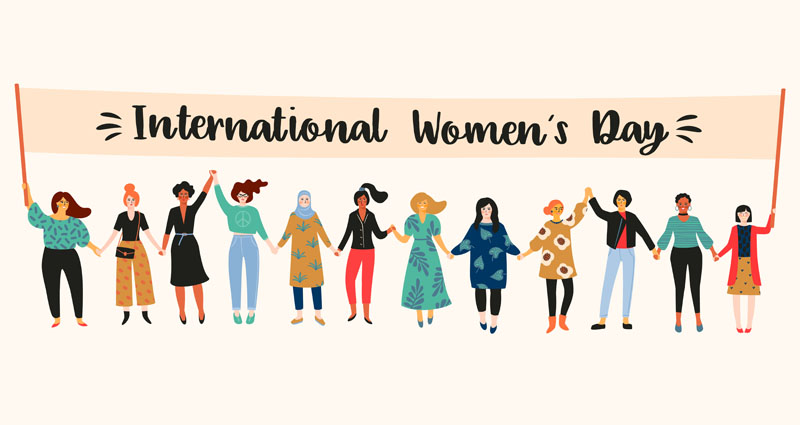
International Women’s Day is celebrated in many countries around the world. It is a day when all women are recognised for their achievements. International Women’s Day was first born out of labour movements at the turn of the twentieth century in North America and across Europe. Since those early days, International Women’s Day has grown in prominence and reach, touching women in every corner of the world. The growing international women’s movement has helped make International Women’s Day a central point for action, to build support for women’s rights and their full participation in the economy, politics, community and everyday life.

In 1910, Clara Zetkin, the leader of the Women’s Office for the Social Democratic Party in Germany tabled the idea of an International Women’s Day at the second International Conference of Working Women in Copenhagen. The proposal received unanimous support from over one hundred women representing 17 countries. The very first International Women’s Day was held the following year on March 19th. Meetings and protests were held across Europe, with the largest street demonstration attracting 30,000 women. In 1913, IWD was moved to March 8th and has been held on this day ever since.

International Women’s Day or IWD, celebrated on March 08 is a global day celebrating the social, economic, cultural, and political achievements of women. The day also marks a call to action for accelerating women’s equality. The IWD has occurred for well over a century, with the first IWD gathering in 1911 supported by over a million people. Today, International Women’s Day belongs to all groups collectively everywhere and is not country, group or organization specific.

The theme for this year’s International Women’s Day from the IWD organisation is Break the Bias. Let’s imagine a gender-equal world free of bias, stereotypes, and discrimination, a world that is diverse, equitable, and inclusive and a world where difference is valued and celebrated. Let us all forge women’s equality and collectively we can all Break the Bias. Individually, we’re all responsible for our thoughts and actions – all day, every day and we can break the biases in our communities, our workplaces, our schools, colleges and universities and together, we can all break the bias – on International Women’s Day and beyond. Purple, green and white are the colours of International Women’s Day with purple signifying justice and dignity, green symbolising hope and white representing purity, albeit a controversial concept. The colours originated from the Women’s Social and Political Union or WSPU in the UK in 1908.

The United Nations celebrated International Women’s Day with a separate theme. Women and girls face greater vulnerability and exposure to disasters, and conflicts, and yet they remain largely ignored in developing solutions and their capabilities are often under-utilised. As the most impacted, women are also a critical part of the solution. The theme this year is Women in leadership: Achieving an equal future in a COVID-19 world. Women stand at the front lines of the COVID-19 crisis, as health care workers, caregivers, innovators, community organizers and as some of the most exemplary and effective national leaders in combating the pandemic. The crisis has highlighted both the centrality of their contributions and the disproportionate burdens that women carry. This year’s theme celebrates the tremendous efforts made by women and girls around the world in shaping a more equal future and recovery from the COVID-19 pandemic.

International Women’s Day is a time to reflect on progress made, to call for change and to celebrate acts of courage and determination by ordinary women, who have played an extraordinary role in the history of their countries and communities. The world has made unprecedented advances, but no country has achieved gender equality. Fifty years ago, we landed on the moon; in the last decade, we discovered new human ancestors and photographed a black hole for the first time. In the meantime, legal restrictions have kept 2.7 billion women from accessing the same choice of jobs as men. Less than 25 per cent of parliamentarians were women, as of 2019 and even today one in three women experiences gender-based violence.

Because sometimes we need to remember we’re not alone. Happy International Women’s Day to all the lovely women and the men who support and motivate their women!

In My Hands Today…

My Own Words – Ruth Bader Ginsburg, Mary Hartnett and Wendy W. Williams

My Own Words showcases Ruth Ginsburg’s astonishing intellectual range.

In this collection Justice Ginsburg discusses gender equality, the workings of the Supreme Court, being Jewish, law and lawyers in opera, and the value of looking beyond US shores when interpreting the US Constitution.

Throughout her life Justice Ginsburg has been a prolific writer and public speaker. This book’s sampling is selected by Justice Ginsburg and her authorized biographers Mary Hartnett and Wendy W. Williams, who introduce each chapter and provide biographical context and quotes gleaned from hundreds of interviews they have conducted.

Witty, engaging, serious, and playful, My Own Words is a fascinating glimpse into the life of one of America’s most influential women and a tonic to the current national discourse.

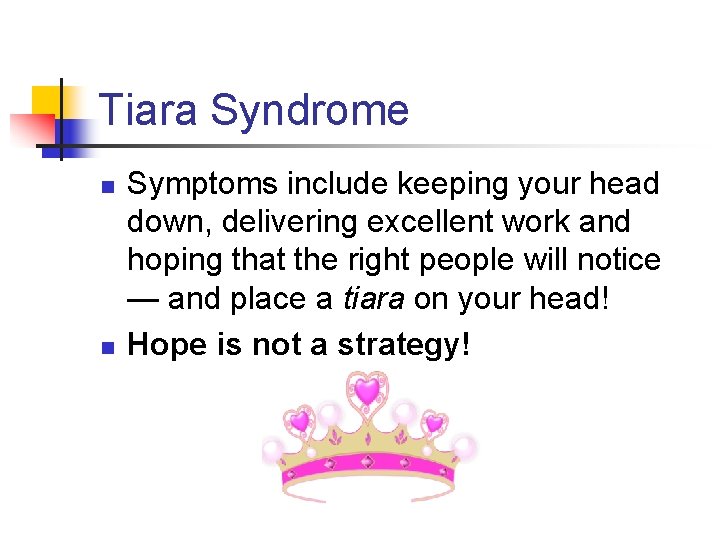
The Tiara Syndrome: Something that will never happen unless you ask for it

A term coined by Carol Frohlinger and Deborah Kolb, the founders of Negotiating Women, Inc, the Tiara Syndrome or the Tiara Effect is used to describe how many women approach salary and raise negotiations.

As Carol Frohlinger says, “Women expect that if they keep doing their job well someone will notice them and place a tiara on their head. That never happens.”

The fact is, most women don’t negotiate. That tiara is the recognition in the form of increased salary or pay. Women believe that they will be recognised for their value and automatically be paid what they are worth but the reality is, you have to ask for what you want. And if you don’t ask, the answer is always no.

In her bestselling book, Lean-In, Sheryl Sandberg says, “Women are also more reluctant to apply for promotions even when deserved, often believing that good job performance will naturally lead to rewards.”

Many women feel that working hard and doing a good job will be enough and the reality is that women are often extremely conscientious at delivering against their objectives. Just as at school where girls’ conscientiousness often leads to higher academic results than achieved by boys, many women believe that this same strategy will lead to success at work. However, sometimes this very diligence gets in the way of fast-tracking their careers. Many women are so so focused on doing the operational aspects of their job well that they don’t have time to step back and focus on strategic priorities and they often feel they do not have space in their busy working weeks to fit in networking which is seen as an unnecessary, and often uncomfortable, use of their precious time. In the same vein, they do not seek mentors to guide them or get the support of sponsors to give them the invaluable exposure and opportunities needed to step up to senior leadership positions.

Academic psychologist Cordelia Fine says such behaviour stems from socialisation, not innate differences between the sexes. And, of course, some men are sufferers, just as many women aren’t. But how do those who have been schooled not to boast learn to champion their cause and get over tiara syndrome?

A 2003 study of thirty-eight business students conducted University of California at Irvine discovered that 85% of the men believed that it was up to them to make sure their company paid them what they were worth. Only 17% of the women in the study believed this to be the case. The remaining 15% of the men and 83% of women assumed their worth would be determined by what their company paid them. The Tiara Syndrome only adds to the pay disparity between men and women. If we don’t ask for more pay based on our contributions, the answer is always no.

As women, we don’t negotiate. Most of us don’t negotiate our first job offer, which has been calculated to equal $500,000 over the length of her career. And all because we don’t speak up for ourselves and our worth.

So why do we women avoid negotiating? This is to a large extent because of the social conditioning females are brought up in where we are always told to be polite and quiet. Asking for money seems, greedy and rude and it is also uncomfortable. Frohlinger advises women to keep a work journal by month detailing the projects and accomplishments achieved, client kudos, amounts in new business created, or savings generated. This compelling evidence of their value to the company can be persuasively presented during a salary negotiation. Even if one gets an automatic raise annually, this substantiation of the corporate value could pay off in a larger increase. If you are stepping into a new role or moving to a new organization, don’t settle for the first offer.

Tory Johnson, the CEO of Women for Hire and Good Morning America’s career expert recommends the following for negotiating that initial offer. Start positive and get the whole compensation package in writing if it has been verbal so far. Be firm. If you have been offered a package lower than your expectations, then let them know politely with an emphasis on the skills and experience you bring to the role and ask them how much wriggle room is available. Every organisation will have a wriggle room, especially for someone they deem the best fit. Follow up especially if the hiring manager is firm on their offer. Work towards reaching an agreement, on paper, for a salary negotiation or review within a pre-determined period. Also try and negotiate on non-money aspects like vacation time, flexible working arrangements, medical benefits, etc.

What are the blocks that don’t allow extremely able women from progressing? These include insufficient impact and presence and lack of a strong personal brand, a lowered productivity and overwhelm through being pulled in too many directions at once as well as poor work-life balance, a belief that doing a good job will be enough and not seeking sponsors, discomfort with networking both internally and externally, being insufficiently strategic and too stuck in the detail, a lack of strategic career planning and reduced confidence and lack of self-belief as a leader.

If you suffer from this syndrome, here’s what you can do to overcome it:

Own your career, acknowledge that you suffer from the syndrome and come up with an action plan. If you don’t like talking about it, use technology instead. Copy your boss into relevant emails and share them on your professional social media accounts. Keep a career journal to keep a record of your accomplishments. This is great for building evidence required for negotiations, it can be confidence boosting and be useful for CVs, appraisals, and other career development opportunities. Stop comparing yourself to others and plan for and maximise the formal opportunities for negotiation, whether for a pay rise or a promotion. Build your brand and internal network. Your brand also includes managing your energetic presence, personal image and communication, including body language. Harness Your Potential which includes identifying and capitalising on strengths as well as being clear about which weaker areas are mission-critical and maximising time and energy. Creating a balance between work and other aspects of life is also vital for sustainable career success. Cultivate supportive relationships within your current work setting as well as the wider professional network, including sponsors and mentors. It is important to be able to initiate these relationships, enhance your influence and also handle difficult relationships. Focus on strategy and volunteer for strategic or extra credit projects so that you can develop an idea of the big picture. Thinking like a leader is necessary to develop a leadership mindset and this includes handling the little voice of doubt that we all have in our heads and also learning to let go of some of what we have excelled at to take on even higher level leadership tasks.

It’s naive to think that delivering excellent results is all that it takes to succeed in the workplace. The playing field is not yet equal for women; the fact is that women have to negotiate for things their male colleagues can often take for granted. In addition to the obvious issue regarding compensation, women should negotiate for high visibility assignments, the resources they need to get the job done, support from those senior in the organization and buy-in from colleagues. They should also negotiate in their personal lives for the things that will enable them to be successful in the workplace. Effective negotiation is a prerequisite to “leaning in”. As Sheryl Sandberg says, “Do not wait for power to be offered. Like that tiara, it might never materialise.” So to all the women reading this post, if you have the Tiara Syndrome, shrug it off and know that you too are worth it!

In My Hands Today…

Cassandra Speaks: When Women Are the Storytellers, the Human Story Changes – Elizabeth Lesser

What story would Eve have told about picking the apple? Why is Pandora blamed for opening the box? And what about the fate of Cassandra who was blessed with knowing the future but cursed so that no one believed her? What if women had been the storytellers?

Elizabeth Lesser believes that if women’s voices had been equally heard and respected throughout history, humankind would have followed different hero myths and guiding stories—stories that value caretaking, champion compassion, and elevate communication over vengeance and violence.

Cassandra Speaks is about the stories we tell and how those stories become the culture. It’s about the stories we still blindly cling to, and the ones that cling to us: the origin tales, the guiding myths, the religious parables, the literature and films and fairy tales passed down through the centuries about women and men, power and war, sex and love, and the values we live by. Stories written mostly by men with lessons and laws for all of humanity. We have outgrown so many of them, and still they endure. This book is about what happens when women are the storytellers too—when we speak from our authentic voices, when we flex our values, when we become protagonists in the tales we tell about what it means to be human.

Lesser has walked two main paths in her life—the spiritual path and the feminist one—paths that sometimes cross but sometimes feel at cross-purposes. Cassandra Speaks is her extraordinary merging of the two. The bestselling author of Broken Open and Marrow, Lesser is a beloved spiritual writer, as well as a leading feminist thinker. In this book she gives equal voice to the cool water of her meditative self and the fire of her feminist self. With her trademark gifts of both humor and insight, she offers a vision that transcends the either/or ideologies on both sides of the gender debate.

Brilliantly structured into three distinct parts, Part One explores how history is carried forward through the stories a culture tells and values, and what we can do to balance the scales. Part Two looks at women and power and expands what it means to be courageous, daring, and strong. And Part Three offers “A Toolbox for Inner Strength.” Lesser argues that change in the culture starts with inner change, and that no one—woman or man—is immune to the corrupting influence of power. She provides inner tools to help us be both strong-willed and kind-hearted.

In My Hands Today…

Half the Sky: Turning Oppression Into Opportunity for Women Worldwide – Nicholas D. Kristof and Sheryl WuDunn

With Pulitzer Prize winners Nicholas D. Kristof and Sheryl WuDunn as our guides, we undertake an odyssey through Africa and Asia to meet the extraordinary women struggling there, among them a Cambodian teenager sold into sex slavery and an Ethiopian woman who suffered devastating injuries in childbirth. Drawing on the breadth of their combined reporting experience, Kristof and WuDunn depict our world with anger, sadness, clarity, and, ultimately, hope.

They show how a little help can transform the lives of women and girls abroad. That Cambodian girl eventually escaped from her brothel and, with assistance from an aid group, built a thriving retail business that supports her family. The Ethiopian woman had her injuries repaired and in time became a surgeon. A Zimbabwean mother of five, counseled to return to school, earned her doctorate and became an expert on AIDS.

Through these stories, Kristof and WuDunn help us see that the key to economic progress lies in unleashing women’s potential. They make clear how so many people have helped to do just that, and how we can each do our part. Throughout much of the world, the greatest unexploited economic resource is the female half of the population. Countries such as China have prospered precisely because they emancipated women and brought them into the formal economy. Unleashing that process globally is not only the right thing to do; it’s also the best strategy for fighting poverty.