The 2020 Words of the Year are…

2020 is finally over. Happy New Year! Welcome 2021 and hope this year we finally see an end to all the suffering worldwide!

2020 has been a year like no other we have seen in our lifetime for which there is no precedent in living memory. And every year, most dictionaries put out what they feel is the most important word for the year, something that encapsulates what the year has been. The German tradition, Wort des Jahres was started in 1971. The American Dialect Society’s Word of the Year is the oldest English-language version, and the only one that is announced after the end of the calendar year, determined by a vote of independent linguists, and not tied to commercial interest. However, various other organisations also announce Words of the Year for a variety of purposes.

A Word of the Year is a word or expression that has attracted a great deal of interest over the last 12 months with shortlisted words hotly debated by llexicographers, editors and even the public involved in choosing the word that is judged to reflect the ethos, mood, or preoccupations of that particular year and to have lasting potential as a word of cultural significance. So the word of the year is one which sums up the state of the world succiently and defines it.

For the first time, the Oxford Dictionary did not come up with a word for 2020 because according to them, it quickly became apparent that 2020 was not a year that could neatly be accommodated in one single “word of the year”, so they decided to report more expansively on the phenomenal breadth of language change and development over the year in their Words of an Unprecedented Year report. This report examines, in detail, the themes that were a focus for language monitoring in 2020, including Covid-19 and all its related vocabulary, political and economic volatility, social activism, the environment, and the rapid uptake of new technologies and behaviours to support remote working and living.  One of the year’s most remarkable linguistic developments, according to them, has been the extent to which scientific terms have entered general discourse, as we have all become armchair epidemiologists, with most of us now familiar with term like R number, flatten the curve and community transmission. You can download the report from here.

The Cambridge Dictionary has chosen Quarantine as their Word for 2020. According to their data, it was one of the most highly searched words on the Cambridge Dictionary this year. Quarantine was the only word to rank in the top five for both search spikes and overall views, more than 183,000 by early November, with the largest spike in searches at 28,545 searches seen the week of 18-24 March, when many countries around the world went into lockdown as a result of COVID-19. Noticing this spike in searches, the Cambridge Dictionary editors started to research how people were using the word quarantine, and found a new meaning emerging: a general period of time in which people are not allowed to leave their homes or travel freely, so that they do not catch or spread a disease. Research showed the word was being used synonymously with lockdown, particularly in the United States, to refer to a situation in which people stay home to avoid catching the disease. This new sense of quarantine has now been added to the Cambridge Dictionary, and marks a shift from the existing meanings, which relate to containing a person or animal suspected of being contagious. The two runner-up words to the word of the year was predictable – lockdown and pandemic. To know more, here is a short video.

Over at the Mariam Webster Dictionary, Pandemic was the word of the year chosen by them. According to Peter Sokolowski, editor-at-large for Merriam-Webster, this year the word pandemic is not just technical anymore, but has become a word in general usage and is probably the word which will be used to define this period and searches for the word pandemic on March 11 2020 were 115,806% higher than look-ups experienced on the same date in 2019. The word Pandemic, with roots in Latin and Greek, is a combination of the word pan, which means for all, and demos, for people or population. The latter is the same root of democracy and the word pandemic dates to the mid-1600s, used broadly for universal and more specifically to disease in a medical text in the 1660s, after the plagues of the Middle Ages. According to Sokolowski, the the traffic for pandemic was attributed not entirely to searchers who didn’t know what it meant but also to those on the hunt for more detail, or for inspiration or comfort.

The online dictionary, Dictionary.com also had Pandemic as its word of the year for 2020. An overwhelming choice, the word kept running through the profound and manifold ways our lives have been upended — and our language so rapidly transformed—in this unprecedented year. On March 11 when the WHO declared the COVID-19 as a pandemic, when only 4,291 lives were lost around the world, searches for pandemic skyrocketed 13,575% on Dictionary.com compared to 2019. The search volume for pandemic sustained the highest levels on the site over the course of 2020, averaging a 1000% increase, month over month, relative to previous years. Because of its ubiquity as the defining context of 2020, it remained in the top 10% of all lookups for much of the year since.

2020 has changed our vocabulary in ways that cannot be fathomed. Words that were previously scientific in nature have now become commonplace and are used in daily usage. Languages are constantly evolving but I don’t think there has been so many changes in such a short period. 2020 will be a year most of us will never forget, for many reasons and the pandemic that COVID-19 brought will be the foremost reason. This is a year, every one, including children will recount to their children and grandchildren and I pray that the future generations learn from our mistakes and don’t repeat them.

2020 Reflections

Most years I usually do a reflection for the year, which is part of my weekly update, but this year, because of how this year was, I thought it warranted a post all by itself.

2020 has been an extremely challenging year for each and every one of us, irrespective of where in the world you live in and what you do. This year we saw the COVID-19 pandemic hit pretty much every nation on earth and this is something none of us saw anything like this before. Not wars, not recessions and no other natural catasrophes came close to shutting down the world like COVID-19 has done.

Singapore went into a circuit breaker or lockdown for two months first in April and that was when S started working from home. The children had already been home for a few months by then since school had not yet started for them. They started their first year of school online and are a bit sore that orientation and other activities traditionally offered to incoming students were either cancelled, offered online or extremely abbreviated. They could not really make friends because they only saw their classmates face to face after months and either formed groups for projects randomly or as assigned to by teachers. They have now made friends within their project groups and they slowly start going back to face-to-face lessons, more for BB than GG, given their respective courses, they are making more friends and getting more used to poly life.

S started working from home sometime in April when the circuit breaker was instituted and has continued to do till now. He is someone who probably does not work well at home, so the initial days were a bit hard on him. He needs to feed off his colleagues and friends at work, and not having colleagues next to him or being able to meet them for a coffee chat or join them for lunch was hard. I am sure this is something a lot of people, baring introverts like me, would have and are facing with not much interaction with colleagues and friends.

As for me, life went on pretty much as usual, though I did lose some employment opportunities and clients because organisations were scaling down following loss of income during this period. But I can’t complain much as I was doing what I was doing pre-COVID, only this time with a house full of people.

For the first time, other than holidays, I had a house full of people living with each other 24/7. GG & BB are grown up now, so I don’t have to pander to them all the time and neither do I have to be behind them for online classes. They are fairly independent and are able to get their own work done and on time. But being the kind of mother that I am, I do keep a close eye on their work and especially during exams and their exam schedule and do make sure at least during this time they spend more time studying.

But my biggest takeaway this year has to be meditation. I have been meditating on and off for a few years now, though I have to say it was more off than on. Around April, I came across an app which was offering the full suite of their offerings free for a year and I took it up. I used to meditate at night before bed and started doing the same. Then I realised that this was why I was not regular, so started meditating in the morning. I usually get up 30 minutes before everyone else and use this time, when everything is quiet and dark to do my daily meditation. And this was what worked best for me. Today, I have been meditating for about nine months now and have not gone a single day without doing some form of meditation or the other. While I will not continue with the app I first used once the free period is over, I will continue with the meditation lessons I have learnt from it and also use other free apps. Meditation has allowed me to become more calm and collected and the things that used to irritate me previously do not as much today. Meditation has now become a part of my life and if I don’t meditate for a few minutes each morning, I feel something is missing that day. I am hopeful that I carry this habit over to 2021 onwards.

I have also introspected a lot this year and have decided that I will not tolerate negativity in my life. I am slowly started eliminating people and things that cause negativity and am taking small baby steps and slowly but surely will get there. We already have too much going on in our lives and to have negative thoughts, ideas and adding negativity to the mix makes life harder. Why do we do this to ourselves was a question I asked myself and the answer was an obvious no.

As I grow older I am also slowly realising the beauty of minimalism. This year, when we hardly left the house and din’t wear makeup and new clothes, I started questioning the need for uncontrolled materialism. I have always been someone who valued experiences over things, so this was not a huge shift in  thinking, but still it was a move in curbing impulse buying. I have very consciously tried not to buy anything new until and unless I really need it. And I am also trying to wait a few days before something so I can check in with myself to see if it is a need or a want, a luxury or a necessity.

2020 has brought about many changes in our lives – both personal and professional. We all have learnt that those who want to work from home are not slacking and in fact, working from home can make you more productive than an office. We have also learnt to live with ourselves and our loved ones. We have learnt that family is important and so are close friends who are the family you choose. We have learnt new normenclatures and new words and phrases have been added to our vocabulary.

My hope for 2021 is a very simple one. For one, I want the world to heal, for the vaccine to generate herd immunity to the disease, so we can all move on and live our lives. I want travel to resume so I can go and visit my parents and make what would probably one of my last trips to my hometown of Mumbai. I also want us to continue being a kinder world that we are today. The world we live in is already very fractured and the kindness generated by people this year should go on as we enter a new year so we continue to help our fellow human beings.

Happy 2021 folks! May this year bring joy, health and happiness to you and your loved ones!

Quotes that Inspire Me

I saw this blog post prompt some time back and kept it as something I would like to do.

Quotes are something that all of us, at some point in time gravitate to. Maybe the words have meaning in your life or is something you aspire to. Some quotes keep you sane and some quotes seem to the answer that you are looking for at a point in life. Here are five quotes that really resonate with me and I’ll also say why.

karmaṇyevādhikāraste mā phaleṣu kadācana, mā karmaphalaheturbhūrmā te saṅgo’stvakarmaṇi

This first quote is from the Mahabharata, chapter 2, verse 47. It means that you should just do your duty and not think about how you will benefit from what you do. Do your duty because it is right, and the benefits will naturally accrue to you.

I loved this phrase so much that when I was working full-time, I actually printed it out and pasted it on my workstation so I am reminded of it every single time. We should do what we are paid to do and do it correctly without any expectations. The benefits or the fruits you accrue will flow naturally to you.

If you can dream it, you can do it – Walt Disney

This next quote from Walt Disney is another favourite. I like it so much that it forms part of one of my social media presence also. Why I like it is because of the promise the quote offers. If you can think and dream about something, you can and should do something about them, so you can reach those dreams. I think this quote is not only very aspirational, but it is also extremely motivating.

krodhādbhavati sammohaḥ sammohātsmṛtivibhramaḥ, smṛtibhraṃśād buddhināśo buddhināśātpraṇaśyati

The next quote also comes from the Mahabharata, from chapter 2, verse 63. What this quote means is that from anger comes delusion; from delusion, the loss of memory; from the loss of memory, you forget how to discriminate between good and bad and when that happens, you lose yourself. This quote is personally very relevant because I tend to hold on to anger. So this quote is a learning for me where I learn to release my anger. Though I am a lot better these days, I still hold some residual anger which needs to let go before I end up losing everything.

When one door of happiness closes, another opens; but often we look so long at the closed door that we do not see the one which has been opened for us. ― Helen Keller

This fourth quote I love is attributed to Helen Keller and is another very motivational one. So often we just keep looking back and thinking about the what-ifs that we don’t look for the opportunity and happiness that is there in front of us and only realise it when it may be too late. This is especially true for someone like me who always overthinks and overanalyses everything in life that I don’t really look forward, thinking perhaps that when I think of a positive or rosy future, it won’t come true. That’s the pessimistic in me thinking and this is something I am seriously working on overcoming. I will be honest and say this, it is very hard and I am taking extremely small baby steps and one day, not too far in the future, I will get there.

Life is like a book……some chapters are sad,some are happy and some are exciting, but if you never turn the page, you will never know what the next chapter has in store for you – Izuudon

I found this last quote a few years back on Pinterest and loved it so much that I screen shot it and it has remained in my phone all these years. This quote is pretty self-evident if you think about it. Life is really like a book and sadness and happiness are chapters in our life. But if you remain stuck in one chapter, you will not know what the next chapter in your life is going to look like!

So here you have it, five quotes I love and are either something that I live by or are words I try to work towards. What about you, do you have any quotes that you love and live by? Please comment as I would love to know.

Adaptability: The Simple Secret to Success and Survival

Today’s world is fraught with risk and uncertainty, of risk and unstability. You just have to look at 2020 to see what I am talking about. Our world is constantly changing and we can’t remain as we were, because if we do, we run the risk of losing out.

According to the Cambridge English dictionary, Adaptability is an ability or willingness to change in order to suit different conditions. What this means is that you need to change or be willing to change yourself so as to adapt yourself to the different situations you will come across in life.

So why is adaptability so important today? I believe it is a life skill that if not innate, should be learnt and fast so that as an individual you are agile and are able to tackle any issues or problems in your life, be it at work or in your personal life. Actually we are constantly adapting. The easiest example I can think is in the kitchen. Sometimes you don’t have all the ingredients at hand while cooking, so we substitute ingredients, adapting in the process.

Adaptability is not just about changing something or adjusting to a situation. It encompasses being able to effect changes in a course of action with smoothness and timeliness, without any major setbacks. For as long as there are many uncontrollable factors in our environment such as laws and economic factors, it is necessary to acquire this skill. It is one of the key skills or factors that keep many multinational companies running and the reason why some professionals are always in demand. This skill is important because as new technology evolves, employers are looking for employees who can demonstrate strong adaptability skills and become company leaders.

Adaptability in the workplace means being able to change in order to become successful. In the work environment, adaptability is a soft skill that refers to the ability to rapidly learn new skills and behaviours in response to evolving circumstances. Employers typically look for adaptability when hiring new staff, and the skill is increasingly included in job descriptions due to its importance for growth and development within a role. Someone who demonstrates adaptability in the workplace is flexible and is able to respond effectively to their working conditions, even in situations where things do not go as planned. They typically work well on their own and with team members. The need for adaptability in the workplace – to learn and unlearn – is crucial to future success.

People in leadership positions are often expected to manage unusual situations without explicit instruction. Therefore, an adaptable leader must be able to resolve problems in a fast-paced environment and trust their judgment when making tough decisions. However, at the same time, still recognising that what worked before may not necessarily work every time. So adaptability is a critical leadership skill and potential leaders need to be adaptable and flexible at all times to succeed.

How important can being adaptable be? Well, the short answer is very, as it’s a skill that has no bounds in the ways it can be applied in the workplace. Being adaptable means working without boundaries, and being open to finding diverse and unexpected solutions to problems and challenges in the workplace. Without limitations on thinking and actions, challenges become something not to dread, but to seize and enjoy working through. An adaptable person gets to engage a variety of people with diverse skills to get the job done and builds broad networks of highly engaged and capable people. An adaptable person also becomes a better leader because such people know that change is inevitable and don’t shy from it and remain positive in the face of adversity, keeping their teams and employees focused and motivated through tough or lacklustre periods. Those who are adaptable and willing to change or shake up conventional ways of doing things will remain relevant throughout their working lives because they’re comfortable experimenting. Workplaces are changing faster than ever before, and if you’re not willing to constantly adapt, then expect to be left behind.

Everyone can all benefit from adaptability but, in an ever-changing world, it is particularly crucial for leaders. Leadership roles become more complex as you progress through an organisation, requiring more subtle influencing and persuading skills. Additionally, as a leader’s seniority increases, they must learn to empower, delegate, form strategic alliances and let go of some of the skills that enabled them to perform effectively in previous roles.

Adaptability skills are skill sets that encompass a person’s ability to adjust to changes in their environment. Being adaptable in your career can mean you are able to respond quickly to changing ideas, responsibilities, expectations, trends, strategies and other processes at work. Being adaptable also means possessing soft skills like interpersonal, communication, creative thinking and problem-solving skills.

As a soft skill, adaptability requires a number of other soft skills in order to be applied successfully. You must be able to learn quickly and put that learning into practice. Additionally, you must be able to recollect what you’ve discovered, so you can identify trends and make decisions accordingly. So what constitutes an adaptability skill?

An ability to learn: People with adaptability skills are never discouraged by failure. For them, failure is just a part of learning. These people are always learning and willing to take risks, as long as it means that they can develop personally and professionally. Skills such as collaboration, critical thinking, research, show continuous Improvement, have an attention to detail, be observant and have a great memory.

Persistence: People who adapt well rarely feel the pressure to quit. Every challenge is exciting, and remaining dedicated to their job means pushing through even when things get hard. Likewise, they are able to stay positive and encourage their team members to stay focused during difficult times. Skills that are emblematic of persistence include resilience, positivity, tolerance to stress, motivation and being able to manage expectations.

Resourcefulness: Often the goal is clear, but the path to get there is not. The traditional way of conducting business may not be possible or effective, because there may not be sufficient funding or staffing. That’s where adaptability can be an asset. An adaptable person will be able to source new resources and techniques that less-adaptable colleagues haven’t considered. An adaptable person will show resourcefulness by demonstrating skills like the ability to notice patterns, be creative and innovative, a problem solver, show initiative and curiosity and budget well.

Curiosity: An adaptable person doesn’t get scared by anything different. If anything, it makes them more curious and they want to investigate it further. They are not afraid of ideas, suggestions, or constructive criticism and often demonstrate open-mindedness, investigation, positivity, active listening, nonverbal communication skills and diversity.

Other skills that showcase adaptability include leadership, integrity, determination, team building, analytical, inductive and deductive reasoning, project management and team work, empathy, resource, conflict and time management, problem solving, strategic thinking and being able to conceptualise, flexibility and commitment, being proactive and open and having excellent negotiation, oral and written communication skills.

Being adaptable can depend on how effectively you communicate with your teammates and managers.

Adaptability is a natural skill, but it can be developed and mastered as well. Here are some tips to help improve this skill:

Observe and monitor changes in the environment: People do not see the need for a change until they notice changes in the environment. Adaptability must not be easy, but timely as well. Always make a conscious effort to monitor trends, values and attitudes and compare present observations with past ones and find out what has changed.

Develop a growth mindset: Being adaptable also means being willing to learn and try new things. Developing a growth mindset can positively influence the ability to take on new challenges, find new opportunities to develop knowledge and contribute to new projects. The willingness and motivation to keep improving skills can also show potential and current employer a commitment to professional growth.

Be willing to learn: Observation alone is not enough. If the result of observations suggests a need to learn something new, do not hesitate to do so. While people can learn some things on their own when furnished with appropriate educational resources, others may require tutorials from specialists. Don’t decline to use the services of a professional tutor if necessary.

Avoid procrastination: Don’t just be willing to learn. Take the necessary course of action. Remember that adaptations are more effective when the action is taken earlier.

Acknowledge the fact that changes are bound to occur: Though it is difficult to let go of norms, it is people who matter, not an individual.

Set goals for one’s self: Another method that can help develop adaptability skills might be to set personal goals to improve those aspects of the skillset that are felt to be lacking so the individual can improve their overall ability to adapt to changes in the workplace.

Ask for feedback: As people develop throughout their your career, they might think about requesting feedback or constructive criticism from managers to help them improve on their weaker skills. Positive and constructive feedback can be beneficial for setting goals and achieving success in their career.

Learn to acknowledge and accept change: It can also be highly beneficial to accept change as it occurs. Learning to acknowledge changes in their career can help prepare and adapt to differing circumstances. Additionally, learning how to be willing to accept change can be an effective step toward recognising when adjustments need to be made to make transitions smoother.

Other than the above, some additional tips to help adaptability skills in the workplace include asking for clarifications from peers and superiors to help better process transitions when there are changes to processes, procedures or operational practices. Offer to request for opportunities to work on tasks that may be new or offer to take on responsibilities that require creative approaches. If sharing your ideas with colleagues is something that causes anxiety, set a goal to contribute to team meetings and collaborations. Try getting all aspects of work organised like documents, paperwork, projects and other work information, so everything is prepared in case there are transitions within a job.

An individual can also highlight adaptability skills on resumes or cover letters by showing concrete examples of successes due to these skills. During an interview, highlight adaptability skills by providing the interviewer with examples of how these were applied in past roles and use past experiences and achievements to help answer the interviewer’s questions in a way that shows adaptability.

Being someone who is adaptable is a skill that will stand in good stead all your life, whether in the personal or professional life. Learning how to adapt to change is a soft skill that will not only make the individual a top candidate when applying for roles, but one that has the capacity to give them a renewed optimism about work. It’s a brilliant life skill that has great application in both personal and professional life, so if an individual does not yet have those skills, its time to start implementing these tips to strengthen the adaptability skills today.

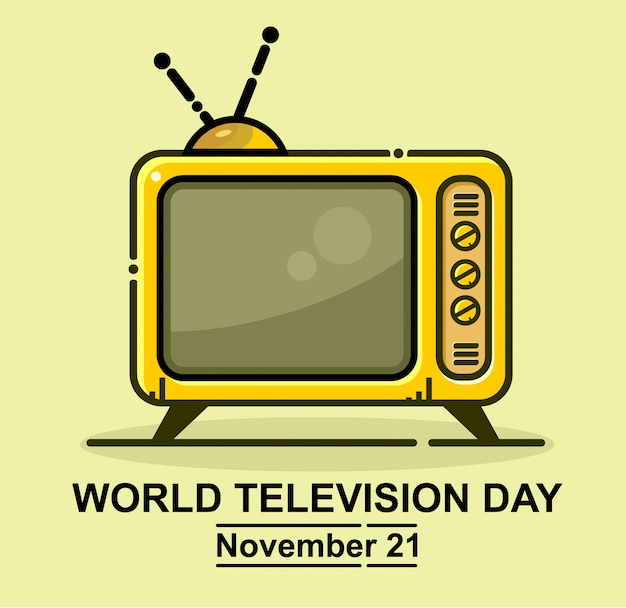
World Television Day

Can any of us imagine a world without television. The generation which has grown up with the flickering television screen would probably be as brefet of it as today’s generation without access to the internet.

In 1927, a 21 year old inventor by the name of Philo Taylor Farnsworth invented the world’s first electronic television. He lived in a home without electricity until he was 14 years old. In high school, he began to think of a system that could capture moving pictures, change them into a code, and them move those images with radio waves to different devices. He was years ahead of the mechanical television system as his structure captured moving images using a beam of electrons. Farnsworth later famously transmitted the image of a dollar sign using his television after a fellow inventor asked “When are we going to see some dollars from this thing?” Neither of them knew how prelevant the television would become across the world with young people today having no concept of a world without one. The first mechanical tv station called W3XK, created by Charles Francis Jenkins aired its first broadcast in 1928.

Television continues to be the single largest source of video consumption. I seriously doubt there are many households in this world today who don’t have access to a television set. Though screen sizes have changed, and people create, post, stream and consume content on different platforms, the number of households with television sets around the world continues to rise. The interaction between emerging and traditional forms of broadcast creates a great opportunity to raise awareness about the important issues facing our communities and our planet.

In times of internet, with people hooked to their laptops and mobile screens, does the television still hold importance, one may ask. As per the United Nations, television continues to be the single largest source of video consumption with the number of TV households across the world rising from 1.63 million in 2017 to 1.74 billion by 2023, according to a study. The World Television Day stands as a reminder of the power of visual media and how it helps in shaping public opinion and influencing world politics.

In recognition of the increasing impact television has on decision-making by bringing world attention to conflicts and threats to peace and security and its potential role in sharpening the focus on other major issues, including economic and social issues, the United Nations General Assembly proclaimed 21 November as World Television Day, through resolution 51/205 of 17 December 1996.

World Television Day is not so much a celebration of the tool, but rather the philosophy which it represents. Television represents a symbol for communication and globalisation in the contemporary world. On 21 and 22 November 1996 the United Nations held the first World Television Forum, where leading media figures met under the auspices of the United Nations to discuss the growing significance of television in today’s changing world and to consider how they might enhance their mutual cooperation. That is why the General Assembly decided to proclaim 21 November as World Television Day. This was done in recognition of the increasing impact television has on the process of decision-making. Television was thus acknowledged as a major tool in informing, channelling and affecting public opinion. Its impact and presence and its influence on world politics could not be denied.

Now the day is commemorated with meet-ups at local and global levels to raise awareness among people about the role television plays in communication and globalisation. This day acknowledges the role of broadcast media. Writers, journalists, bloggers and others associated with the medium come together to promote this day. The interaction between emerging and traditional forms of broadcast creates a great opportunity to raise awareness about the important issues facing our communities and our planet. The World Television Day also marks the commitment of governments, news organisations and individuals to deliver unbiased information in times when veracity of content on social media is questionable.