
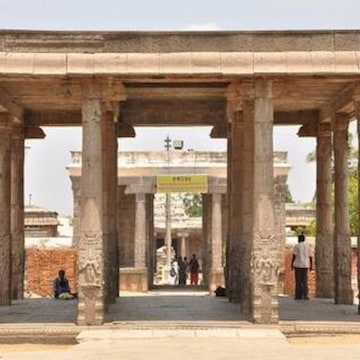
Thiruvidanthai Temple, Chengalpattu, Tamil Nadu
Thiruvidanthai, located along the East Coast Road near Chengalpattu, feels different from many other Divya Desams the moment you approach it. There is the sea not too far away, the open sky, and a sense of quiet movement in the air. The presiding deity here is Nithya Kalyana Perumal, and the goddess is Komalavalli Thayar. The name itself tells you what the temple is about. Nithya Kalyana means eternal marriage, and this is one of the rare temples where the central idea is not just devotion or protection, but union. It is not a one-time event remembered in myth. It is something that is believed to continue every single day.
The legend of Thiruvidanthai is tied to a sage named Kalava Maharishi. According to tradition, he had 360 daughters and was deeply concerned about finding them suitable marriages. He prayed to Vishnu for help, and the Lord appeared before him in a human form and agreed to marry each daughter. One by one, he married them, a single marriage each day, until all 360 daughters were wed. At the end of this sequence, the Lord is said to have united all the brides into one form, who became Komalavalli Thayar, seated on his left thigh. Because this act of marriage happened daily, the deity came to be known as Nithya Kalyana Perumal. The story may sound unusual at first, but its meaning is not difficult to understand. It speaks about continuity, patience and the idea that grace unfolds over time, not all at once.
Inside the sanctum, this legend takes a clear visual form. The Lord stands with Komalavalli Thayar seated on his left thigh, a posture that immediately sets this temple apart. The image is intimate without being overwhelming. It conveys closeness, companionship and a sense of balance. Unlike temples where the goddess has a separate identity that you move toward after seeing the Lord, here the two are inseparable in the main form. That changes the way the temple is experienced. You do not encounter the divine as divided aspects. You encounter it as a union.

There is also a deeper layer to the legend that often stays with visitors. The number 360 is not accidental. It corresponds to the days of a year, suggesting that the idea of union is not limited to one moment in time. It repeats, renews and continues. In that sense, the temple speaks about the rhythm of life itself. Relationships are not built in a single act. They are sustained over time, day after day. The daily marriage of the Lord becomes a symbolic reminder of that continuity.
Historically, Thiruvidanthai carries traces of Pallava and later Chola patronage, like many temples in this region. The structure that stands today reflects additions and restorations over different periods, with inscriptions pointing to ongoing support for rituals and temple upkeep. Despite its age and significance, the temple has not grown into an overwhelming scale. It remains accessible, grounded and closely tied to its surroundings. Its location along the coast adds to its character. The air feels different here, and that sense of openness carries into the temple space.
Architecturally, the temple follows the Dravidian style but with a simplicity that suits its theme. The entrance gopuram marks the boundary clearly, and the prakarams guide you inward without distraction. The sanctum becomes the focal point almost immediately. The deity’s posture, with Thayar seated on his thigh, draws attention not through grandeur but through meaning. The temple tank nearby and the open spaces around the complex add to the feeling of calm. Everything about the layout supports a slower pace.

The daily rituals at Thiruvidanthai follow the Vaishnavite tradition, but the temple is especially known for its association with marriage. Devotees come here with prayers related to relationships, particularly those seeking a suitable partner. It is common to see people performing specific prayers with the hope of resolving delays or difficulties in marriage. Yet even beyond that, the temple’s meaning is wider. It is not only about marriage in the literal sense. It is about connection, balance and the ability to sustain relationships with care.
Festivals such as Brahmotsavam and Vaikunta Ekadasi bring larger gatherings, but the temple’s identity remains rooted in its daily rhythm. The idea of nithya kalyanam is not confined to festival days. It is embedded in the everyday life of the temple. That continuity is what gives the place its distinct energy.
The pilgrimage experience at Thiruvidanthai is shaped by its location and its story. The journey along the coast, the approach through quieter roads and the openness of the surroundings all prepare the mind differently from temples located in dense urban spaces. Once inside, the sanctum holds attention in a steady way. Devotees often spend time simply looking at the form of the Lord and Thayar together, letting the meaning of that image settle slowly.
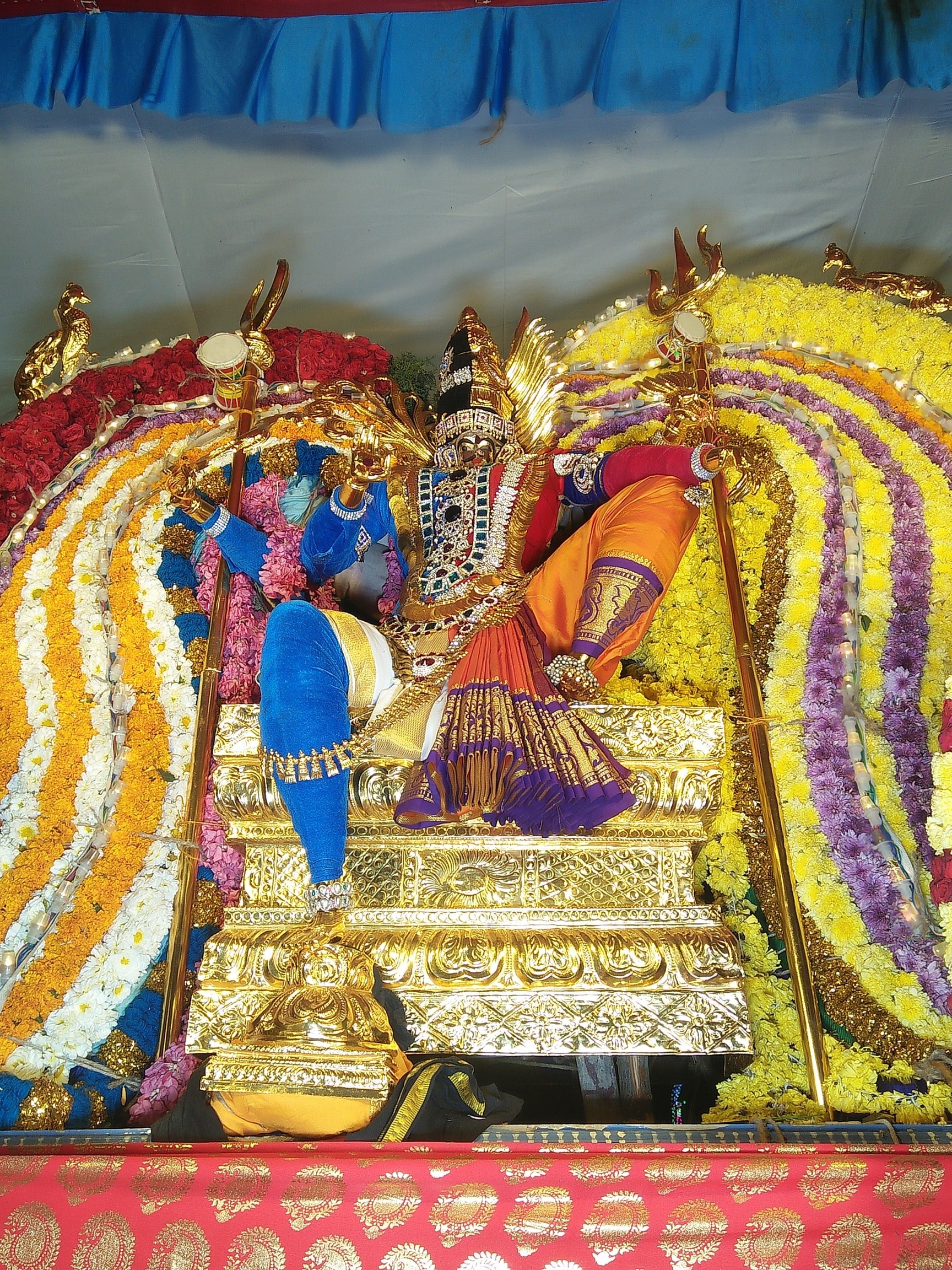
Culturally, Thiruvidanthai holds a strong place within the Divya Desam tradition through the hymns of the Alvars, who recognised the significance of the shrine. Over time, the temple has also become widely known as a place where prayers for marriage are offered, drawing people from different regions and backgrounds. Yet the deeper message of the temple goes beyond that single aspect. It speaks about companionship, continuity and the way relationships are shaped over time.
In modern times, Thiruvidanthai continues to function as an active temple, with a steady flow of devotees throughout the year. Its proximity to Chennai has made it more accessible, but it has managed to retain its quiet character. Renovations and maintenance have preserved the structure while keeping the atmosphere unchanged.
Thiruvidanthai ultimately represents union as a living process rather than a single event. Nithya Kalyana Perumal does not simply marry once and remain distant. He continues the act, day after day, reminding devotees that connection is sustained through repetition and care. In the larger Divya Desam journey, this temple offers a gentle but clear insight. Some forms of grace are not sudden. They are built slowly, one day at a time.

Thirukkadanmallai Temple, Mahabalipuram, Tamil Nadu
In Mahabalipuram, where stone meets sea and ancient carvings carry stories across centuries, Thirukkadanmallai stands with a quiet difference. The presiding deity here is Sthalasayana Perumal, and the goddess is Nilamangai Thayar. The name itself tells you what makes this temple distinct. Sthala means place or ground, and sayanam means reclining. Here, Vishnu reclines not on Adisesha, as he does in many temples, but directly on the ground. That single detail shifts the entire mood of the shrine. It brings the divine closer to the earth, closer to the human world, and perhaps closer to the experience of those who come here.
The legend of Thirukkadanmallai is tied to a sage named Pundarika. According to tradition, he wished to worship Vishnu with lotus flowers and set out to gather them from distant waters. When he returned, carrying the flowers with care, he found an old man lying at the spot where he intended to offer his worship. The presence of the old man blocked his ritual. At first, this seemed like an interruption, even an obstacle. But when the sage looked more closely, he realised that the old man was none other than Vishnu himself. The Lord had chosen to lie there, not on a celestial serpent but on the very ground where the devotee stood. In that moment, the act of worship changed. It was no longer about offering flowers to a distant form. It became about recognising the divine in what seemed ordinary.
Inside the sanctum, this story takes shape in a simple but striking way. Sthalasayana Perumal reclines on the bare ground, without the usual support of Adisesha. The form is calm, but there is a certain directness to it. The Lord is not elevated or set apart. He is present at the same level. Nilamangai Thayar’s shrine nearby adds balance to the space, bringing a sense of quiet reassurance. Together, the two create an atmosphere that feels grounded rather than distant. The temple does not try to lift you out of the world. It meets you where you are.

There is also another layer to the temple’s story that connects it to the larger landscape of Mahabalipuram. The area was once a major port under the Pallavas, and the shoreline was active with trade and movement. Over time, parts of the old town were lost to the sea. Local tradition holds that there were once several temples along this coast, many of which are now submerged. Thirukkadanmallai is seen as one of the few that remain, carrying forward a memory of what once existed. That connection to the sea adds a quiet sense of impermanence to the temple. It reminds you that even stone and structure do not last forever, but the act of worship continues.
Historically, the temple reflects the Pallava period, when Mahabalipuram flourished as a centre of architecture and art. The nearby shore temples and rock-cut monuments speak of that time, and Thirukkadanmallai belongs to the same cultural landscape. Later additions and maintenance through subsequent dynasties ensured that the temple remained active. Unlike the grand sculptural monuments that draw visitors to Mahabalipuram today, this temple continues as a place of living worship rather than historical display. That distinction matters. It keeps the temple rooted in present practice rather than only in the past.
Architecturally, the temple is modest compared to the famous monuments around it. The gopuram is not towering, and the layout is simple. The path from the entrance to the sanctum is direct, without elaborate diversions. The focus remains on the reclining form of the Lord. The simplicity of the structure aligns with the story it carries. There is no need for excess. The meaning is already clear.
The daily rituals follow the Vaishnavite tradition, with regular pujas performed throughout the day. The temple becomes more active during festivals such as Vaikunta Ekadasi and Brahmotsavam, when devotees gather in larger numbers. Yet even during these times, the atmosphere does not lose its calm. The presence of the sea nearby seems to shape the rhythm of the place. There is movement, but it is not hurried.

For pilgrims, the experience of Thirukkadanmallai is shaped as much by its surroundings as by the temple itself. The sound of waves, the open sky and the sense of history in the air all become part of the visit. After seeing the grand stone carvings and monuments of Mahabalipuram, stepping into this temple creates a shift. The focus moves from spectacle to presence. Standing before Sthalasayana Perumal, one begins to understand the simplicity of the legend. The divine does not always arrive in expected forms. Sometimes it lies quietly in the space you thought you knew.
Culturally, the temple holds its place in the Divya Desam tradition through the hymns of the Alvars, who recognised the significance of the shrine. Over time, it has also become part of the broader identity of Mahabalipuram, a place known for both its history and its living traditions. The temple bridges those two worlds. It stands as a reminder that while monuments may draw attention, it is the continuity of worship that keeps a place alive.
In modern times, Thirukkadanmallai continues to receive both pilgrims and visitors. Some arrive as part of the Divya Desam circuit, while others discover the temple while exploring Mahabalipuram. Renovations and maintenance have preserved the structure, but the essential character of the temple remains unchanged. It still feels grounded, steady and close to the earth.
Thirukkadanmallai ultimately represents a form of grace that meets you at your level. Sthalasayana Perumal does not remain elevated or distant. He lies on the ground, reminding devotees that the divine is not separate from the world but present within it. In the larger Divya Desam journey, this temple offers a quiet insight. Not every sacred encounter requires height or distance. Sometimes it begins when you recognise what is already before you.

