Short Story: The Memory Basket

The sun streamed through the kitchen window, casting a warm glow on the sage green woven basket on the table. Aisha Tan stared at it, her heart heavy with memories. Just days ago, she had lost her beloved grandmother, Mei Ling, who had filled their home with laughter and the aroma of delicious food. The basket was all that remained of her culinary legacy.

Aisha gently lifted the lid, revealing a collection of handwritten recipes carefully penned in her grandmother’s elegant script. There were dishes from various cultures—Nasi Lemak, Char Kway Teow, Roti Canai, and even Indian curries like Chicken Rendang and Dhal Curry. Each recipe was a testament to the multicultural tapestry that defined Malaysia.

As she sifted through the recipes, Aisha felt a pang of longing. She had always loved cooking but had never taken the time to learn from her grandmother. Now, with Mei Ling gone, Aisha felt an urgency to reconnect with her roots and honour her grandmother’s memory. “I’ll do it,” she whispered to herself. “I’ll cook every dish in this basket.”

The following weekend, Aisha decided to start with Nasi Lemak, a dish that held special significance in her family. It was often served during family gatherings and celebrations. She gathered the ingredients—coconut milk, pandan leaves, rice, sambal, fried anchovies, peanuts, and boiled eggs. As she cooked, memories flooded—her grandmother teaching her how to prepare the dish while sharing stories of their family’s history. Aisha could almost hear Mei Ling’s voice guiding her through each step.

“Add just the right amount of coconut milk,” she remembered Mei Ling saying with a twinkle in her eye. “It’s what makes the rice fragrant.”

Once the dish was ready, Aisha plated it beautifully and sat down at the dining table. She closed her eyes and took a deep breath, savouring the aroma that filled the air. With each bite, she felt connected to her grandmother and their shared heritage. That evening, as she enjoyed her meal alone, Aisha realised that cooking was more than just preparing food; it was a way to keep memories alive—a bridge between generations.

Inspired by her first culinary adventure, Aisha decided to invite her estranged relatives over for dinner. It had been years since they had gathered as a family; disagreements and misunderstandings had driven them apart. But now, she felt it was time to mend those bonds.

She sent out invitations to her aunties and uncles, promising them an evening filled with nostalgia and delicious food. As the day approached, Aisha prepared an array of dishes from the basket—Char Kway Teow for starters and Chicken Rendang as the main course.

On the night of the gathering, Aisha decorated the dining table with flowers and candles to create a warm atmosphere. When her relatives arrived, there were initial awkward moments filled with hesitant smiles and polite greetings. But as they sat down to eat and shared stories about their childhoods—about Mei Ling’s cooking and family traditions—the atmosphere began to shift. Laughter filled the room as they reminisced about old times and shared their favourite memories of Aisha’s grandmother.

“Remember when Auntie May tried to make Nasi Lemak for the first time?” one uncle chuckled. “She forgot to add salt!” Aisha laughed along with them, feeling the warmth spread through her heart as she watched her family reconnect over food. It was then that she realised how powerful cooking could be—a way to heal wounds and bring people together.

Encouraged by the success of her family dinner, Aisha continued exploring other recipes in the basket. Each dish came with its own story—her grandmother’s experiences in different kitchens around Malaysia and beyond.

One weekend, she decided to try making Roti Canai from scratch. As she kneaded the dough and flipped it on the hot pan, she thought about how this simple bread brought together Indian influences in Malaysian cuisine. While preparing Roti Canai, Aisha remembered visiting Little India with Mei Ling as a child—the vibrant colours of saris in shop windows and the tantalizing scents wafting from street vendors selling delicious snacks. Those memories made her smile as she rolled out each piece of dough.

When she finally served it alongside spicy curry for dipping, Aisha felt accomplished. The flavours transported her back to those joyful moments spent with her grandmother exploring their heritage together.

As months passed by, filled with culinary experiments, Aisha discovered more than just recipes—she uncovered stories embedded within each dish reflecting cultural traditions passed down through generations!

One evening while preparing Laksa—a spicy noodle soup popular among Malaysians—Aisha stumbled upon an old photo album hidden beneath some cookbooks on a shelf! Curiosity piqued; she opened it, revealing faded pictures capturing moments from family gatherings long forgotten…

In one photo stood young Mei Ling, surrounded by relatives, smiling brightly, holding bowls filled with steaming Laksa! Another image showcased festive celebrations during Hari Raya, where everyone gathered around tables laden with various dishes showcasing diversity within Malaysian cuisine! A wave of nostalgia washed over Aisha as she flipped through pages filled with laughter, the joy reminding everyone present of the importance of cherishing bonds forged through shared meals celebrating life itself!

Determined not only to preserve these memories but also to honour the legacy left behind, Aisha decided to host another gathering, inviting everyone once again, ensuring that traditions lived on to inspire future generations to embrace journeys undertaken together, forging connections deeper than ever imagined possible…

On the day of the Hari Raya celebrations, excitement buzzed through Aisha’s home as relatives began arriving adorned in colourful traditional attire, filling the air with laughter and joy celebrating a reunion long overdue! This time, however, instead of simply serving dishes prepared from the basket inherited, Aisha encouraged each member to contribute their favourite recipes, to share stories behind them, reminding everyone present of the importance of preserving cultural heritage intertwined throughout lives lived long ago…

As they gathered around tables laden with food; aromas wafted through the air, creating a symphony of flavours and inviting everyone to partake in discovering that beauty lies within stories shared connecting generations past present future alike, reminding all hope remains alive even in darkest moments faced along the way…

“Let me tell you about my mother’s special recipe for Beef Rendang!” said Auntie May, excitedly recounting tales passed down through families, showcasing the significance behind every ingredient used within the dish, reminding everyone present of the importance of cherishing bonds formed across generations…

As festivities continued late into the night, Emma found herself reflecting upon the journey undertaken since inheriting the sage green woven basket filled with handwritten recipes from her beloved grandmother. Each dish prepared not only served the purpose of nourishing their bodies but also their souls, creating connection and bridging gaps formed over years lost amidst misunderstandings and estrangements experienced throughout life.

Feeling the warmth radiate throughout the room, filled with laughter and joy surrounding loved ones gathered close together and sharing moments cherished forevermore, Emma realized cooking wasn’t merely about food—it was about love, a legacy passed down, intertwining lives forevermore, reminding everyone present of the importance embracing change while honouring past ensuring light would always shine bright, illuminating hearts and souls alike, guiding them homeward bound forevermore…

With newfound purpose igniting spirit within, Emma vowed to continue honouring ancestors, ensuring stories lived on, inspiring future generations to embrace journeys undertaken together, forging connections deeper than ever imagined possible…

And so they stood together, united by purpose celebrating life, love, and resilience, knowing together they’d overcome challenges faced, paving the path forward, ensuring light would always shine bright, illuminating hearts and souls alike, guiding them homeward bound forevermore…

Sacred Stones, Spaces and Stories: Shakthi Peetas Part 2

The first Shaktipeeta temples we will first learn about are the four Adi Shakta Peethas which are sites where most of the energy is. These include the Kamakhya Temple in Assam where the genitals fell, the Dakshina Kalika or Kalighat Temple in West Bengal, where the toes of the right foot fell, the Vimala Temple in Odisha where the feet fell, and the Tara Tarini Temple, also in Odisha housing the breasts.

Kamakhya Devi Temple, Guwahati, Assam
Perched atop the Nilachal Hills in Guwahati, the Kamakhya Devi Temple stands as one of the most revered and enigmatic spiritual sites in India. This ancient temple, dedicated to the Goddess Kamakhya, is not just a place of worship but a powerful symbol of feminine energy, fertility, and creation. As one of the 51 Shakti Peethas, it holds a special place in Hindu mythology and Tantric traditions. It is believed that Sati’s yoni or female reproductive organ fell at the site where the Kamakhya Temple now stands. This event gave the location its sacred status as a Shakti Peetha, symbolising fertility and the power of creation.

The Kamakhya Temple is considered one of the most important among the 51 Shakti Peethas. Ancient Hindu texts such as the Kalika Purana and Devi Purana regard Kamakhya as the supreme Shakti Peetha of all the 51 sites. The Shakti here is known as Maa Kamakhya, and the associated Bhairava, a form of Lord Shiva, is called Umananda or Umanath. What sets Kamakhya apart from other Shakti Peethas is its unique representation of the divine feminine. Unlike most Hindu temples that house idols of deities, the Kamakhya Temple does not contain an anthropomorphic image of the goddess. Instead, the primary object of worship is a yoni-shaped stone over which a natural spring flows. This distinctive feature emphasises the temple’s focus on the primal aspect of feminine energy and fertility.

The Kamakhya Temple complex is a marvel of architecture and spiritual significance. It showcases a blend of styles, with elements of Nilachal and Ahom architecture. The temple features seven oval spires, each capped with three golden pitchers. The intricate carvings and patterns adorning the walls and ceilings reflect Assam’s rich cultural heritage.

The sanctum sanctorum, or the garbhagriha, is located in a cave-like structure below ground level. This is where the yoni-shaped stone, the primary object of worship, is located. The temple complex houses several other shrines dedicated to various forms of the goddess and other deities. A natural spring flows over the yoni-shaped stone in the garbhagriha, which is believed to turn red during the goddess’s menstrual cycle. Kamakhya Temple is renowned as a major centre for Tantric practices and rituals.

The Kamakhya Temple is known for its unique rituals and festivals, the most famous being the Ambubachi Mela. This annual festival, held in June, celebrates the menstruation cycle of Goddess Kamakhy. During this time, the temple remains closed for three days, symbolising the goddess’s menstrual period. The event attracts thousands of devotees and tantra practitioners from across India and abroad. The temple follows a strict schedule of daily pujas and rituals, performed by specially trained priests. As a hub of Tantric practices, the temple is known for its esoteric rituals involving mantras, yantras, and complex ceremonies. Historically, the temple was known for animal sacrifices, though these are now mostly symbolic. Many couples visit the temple seeking blessings for conception and childbirth.

The Kamakhya Temple has a rich history dating back several centuries. Archaeological evidence suggests that the site may have been a centre for Tantric practices as early as the 5th century. Over time, it has been patronised by various dynasties and rulers. The Mleccha dynasty of Kamarupa was among the first to patronise the temple and the Pala dynasty continued the patronage. King Nara Narayana of Cooch Behar rebuilt the temple in the 16th century after it was destroyed while the Koch dynasty made significant contributions to the temple’s development. The temple’s prominence grew significantly during the colonial era, particularly in the 19th century, when it became an important pilgrimage destination for devotees from Bengal.

The Kamakhya Temple has had a profound impact on the cultural and spiritual landscape of Assam and beyond. It attracts millions of devotees annually, contributing significantly to the local economy and tourism. The temple has played a crucial role in preserving and propagating Tantric traditions and practices. By celebrating menstruation as a sacred process, the temple challenges taboos and promotes a positive view of women’s biological processes. The temple’s unique architecture and legends have inspired numerous works of art, literature, and music. Despite its Hindu origins, the temple attracts devotees from various faiths, fostering interfaith understanding and respect.

Like many ancient structures, the Kamakhya Temple faces several challenges. Maintaining the ancient structure while accommodating increasing numbers of pilgrims is an ongoing challenge. The temple’s location on a hill poses challenges related to erosion and environmental preservation. Balancing the need for modern amenities with the preservation of traditional practices and architecture is a delicate task. Many of the temple’s ancient practices and histories are oral traditions, and efforts are being made to document these for future generations.

Kalighat Kali Temple, Kolkata, West Bengal
The Kalighat Kali Temple is one of the most revered Shakti Peethas in the bustling city of Kolkata. Dedicated to the fierce goddess Kali, the temple is believed to be where Sati’s right toe fell. At Kalighat, Shakti is known as Dakshina Kali, or the benevolent mother, and the associated Bhairava is called Nakuleshwar Mahadev. What sets Kalighat apart is its status as one of the four Adi Shaktipeethas, considered the oldest and most significant Shaktipeethas. The name of the city of Kolkata is believed to originate from Kalikshetra, meaning the place of Goddess Kali.

The history of the Kalighat Temple stretches back several centuries, with references dating to the 15th century. The original temple is believed to have been established by a devotee named Kalapahad. However, the current structure is not that old. The temple underwent significant reconstruction in the 19th century. Raja Basanta Roy, the King of Jessore, is credited with building the original temple. Around 1570, Padmabati Devi, the mother of Laksmikanta Roy Choudhury of the Sabarna Roy Choudhury family, claimed to have a divine vision and discovered Sati’s right toe in a lake called Kalikunda in Kalighat. During the British colonial period, the area around Kalighat was part of the Dihi Panchannagram, which the East India Company purchased from Mir Jafar in 1758 after the Battle of Plassey. As Calcutta, now Kolkata, grew, the forested suburbs around Kalighat were gradually cleared and assimilated into the expanding city.

The Kalighat Kali Temple is a classic example of Bengal architecture, which emulates the mud and thatch-roofed huts of rural Bengal. The main temple is a four-sided building with a truncated dome, topped by a smaller identically-shaped projection. Key architectural features include a Chala Temple design with each sloping side of the roof called a Chala, giving the temple its designation as a Chala temple. The two roofs bear a total of eight separate faces, creating a distinctive stacked, hut-like appearance common in Bengali temples. Both roofs are painted with shiny, metallic silver and adorned with bright bands of red, yellow, green, and blue where they join the building at the cornice. The uppermost roof is topped by three spires, with the tallest central spire bearing a triangular pennant flag. The outer walls are decorated with a diamond chessboard pattern of alternating green and white tiles. A recent addition to the temple complex is an elaborate lighting system that creates a novel atmosphere, causing the temple to glow with vibrant colours throughout the night.

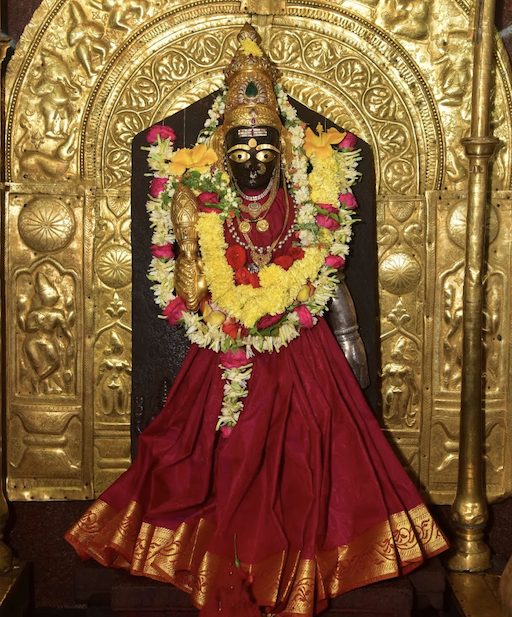
The idol of Goddess Kali at Kalighat is distinct from other Kali images in Bengal. Created by two saints, Brahmananda Giri and Atmaram Giri, the idol is made of black touchstone and has several unique features. The idol has three enormous eyes symbolising omniscience, a long, protruding tongue made of gold, representing the goddess’s fierce aspect, and four arms, with two hands holding a scimitar and a severed head of the asura king Shumbha, while the other two are in the abhaya and varada mudras or gestures of protection and blessings. The scimitar symbolises divine knowledge, while the severed head represents the human ego. The blessing gestures indicate that devotees worshipping with a true heart will receive the goddess’s guidance and protection. Interestingly, the Kali idol originally only had a face. The tongue and hands made of gold and silver were added later.

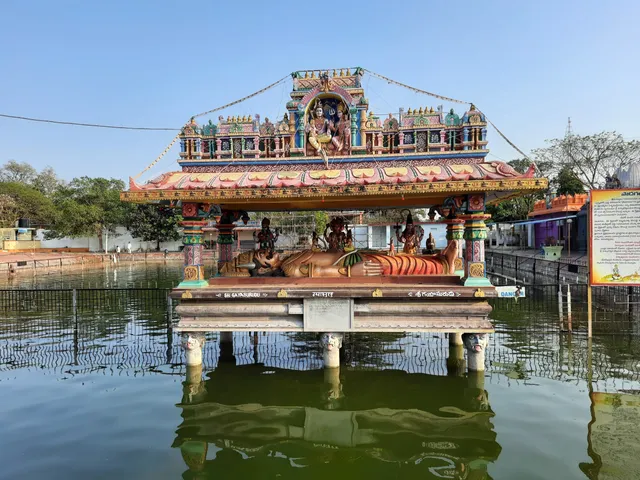
A fascinating aspect of the Kalighat Temple is the presence of another image of Goddess Kali that is never displayed to the public or seen by priests. This hidden image is believed to be svayambhu or self-manifested and extremely powerful. Identified as Sati’s toe, this adirup or original form is concealed within the pedestal upon which the visible Kali idol stands. Adjacent to the temple lies a sacred tank called Kundupukar. The water in this pond is considered as holy as the river Ganga and is believed to have the power to bestow the boon of a child.

The Kalighat Temple is known for its unique rituals and festivals. The temple follows a strict schedule of daily worship rituals performed by specially trained priests. The Snan Yatra is an annual ritual that involves a ceremonial bath of the goddess. Interestingly, the priests perform this ritual with their eyes covered with cloth. Kali Puja is celebrated in October or November, coinciding with Diwali and is one of the most important events at the temple. The temple is beautifully decorated, and thousands of devotees gather to offer prayers and participate in the festivities. Historically, the temple was known for animal sacrifices, though these are now mostly symbolic. Many couples visit the temple seeking blessings for conception and childbirth. The sacred tank, Kundupukar, is believed to have special powers in this regard.

The Kalighat Temple has had a profound impact on the cultural and spiritual landscape of Kolkata and beyond. It attracts millions of devotees annually, contributing significantly to the local economy and tourism. The temple’s unique architecture and legends have inspired art, literature, and music. The Kalighat painting style, characterised by bold lines and vibrant colours, originated in the vicinity of this temple.

In our modern world, where gender dynamics and women’s empowerment are at the forefront of social discourse, the Kalighat Temple’s celebration of feminine power takes on new significance. It reminds us of the timeless wisdom embedded in Hindu traditions and invites us to reflect on the balance of energies in the universe and within ourselves.

Adulting 101: Continuous Learning, the Education of Life

In a rapidly changing world, the concept of continuous learning has become more important than ever. For young adults, especially those who have recently graduated from university, there can be a misconception that formal education marks the end of their learning journey. However, embracing a mindset of lifelong learning is essential for personal and professional growth.

What is continuous learning? Continuous learning refers to the ongoing, voluntary, and self-motivated pursuit of knowledge for personal or professional development. It encompasses various forms of learning beyond formal education. These include self-directed learning by taking the initiative to learn independently through reading, online courses, or exploring new interests, professional development by engaging in training programmes, workshops, or seminars to enhance skills relevant to one’s career, informal learning where one gains knowledge through everyday experiences, conversations, and interactions with others, and peer learning where one collaborates with colleagues or peers to share knowledge and skills. Continuous learning is not confined to any specific age or stage in life; it is a lifelong process that encourages individuals to adapt to new challenges and opportunities.

Why is continuous learning important? The world is constantly evolving due to technological advancements, globalisation, and shifting job markets. Continuous learning equips young adults with the skills necessary to adapt to these changes. In many industries, skills can become outdated quickly. Engaging in continuous learning helps individuals stay current with industry trends and developments. A commitment to learning fosters a mindset that embraces innovation and change rather than fearing it.

For young adults entering the workforce, continuous learning can significantly impact career advancement. Acquiring new skills can open doors to promotions or new job opportunities. Employers often seek candidates who demonstrate a commitment to professional growth. Engaging in continuous learning often involves attending workshops or conferences where individuals can connect with industry professionals and expand their networks.

Continuous learning contributes to personal development and overall life satisfaction. Gaining new knowledge and skills enhances self-esteem and confidence in one’s abilities. A commitment to lifelong learning encourages curiosity and exploration of new interests, leading to a more fulfilling life.

Continuous learners develop critical thinking and problem-solving skills. Engaging with diverse subjects encourages analytical thinking, enabling individuals to approach challenges from multiple perspectives. Exposure to new ideas fosters creativity and innovation, allowing individuals to generate unique solutions to problems.

In an ever-changing world, resilience is crucial for overcoming challenges. Continuous learners are better equipped to navigate setbacks and adapt their strategies based on new information or circumstances. Embracing a growth mindset, one that believes that abilities can be developed through dedication, helps individuals view challenges as opportunities for growth rather than obstacles.

How can young adults become lifelong learners? Embracing continuous learning requires intentionality and commitment. Here are practical strategies for young adults looking to foster a culture of lifelong learning:

Set learning goals: Establishing clear goals helps guide your continuous learning journey. Reflect on topics or skills you are passionate about or want to explore further. Create SMART goals by using the SMART criteria. These are goals that are specific, measurable, achievable, relevant, and time-bound to set concrete learning objectives.

Explore online learning platforms: The internet offers a wealth of resources for self-directed learners. Platforms like Coursera, edX, and Udacity offer courses from top universities on various subjects, with many that are free or low-cost. Websites like LinkedIn Learning or Skillshare provide access to tutorials and courses on practical skills ranging from graphic design to coding.

Read widely: Reading is one of the most accessible forms of continuous learning. Explore books on topics that interest you or are relevant to your career. Consider both fiction and non-fiction for a well-rounded perspective. Stay updated with industry news by reading articles from reputable sources or academic journals related to your field.

Attend workshops and seminars: Participating in workshops and seminars provides opportunities for hands-on learning. Look for workshops hosted by community centres, libraries, or professional organisations in your area. Attend industry conferences where you can learn from experts while networking with peers.

Join professional associations: Becoming a member of professional associations related to your field offers numerous benefits. Many associations provide members with access to exclusive resources such as webinars, publications, and networking events. Many professional organisations offer continuing education programs that allow members to earn certifications or credits toward professional development.

Engage in peer learning: Learning from peers can enhance one’s understanding of various topics. Form study groups with classmates or colleagues where you can share knowledge and discuss concepts collaboratively. Seek out mentorship opportunities where you can learn from someone more experienced in your field while also offering support in return.

Embrace new experiences: Stepping outside your comfort zone can lead to valuable learning experiences. Travelling exposes you to different cultures and perspectives; consider taking short trips or participating in study abroad programs if possible. Engaging in volunteer activities allows you to learn new skills while contributing positively to your community.

Reflect on your learning journey: Regular reflection helps reinforce what you’ve learned. Document your experiences, insights gained from courses or readings, and areas where you’d like further growth. Periodically review your goals and assess what you’ve accomplished; adjust your plans as needed based on your reflections.

What are some tips for overcoming barriers to continuous learning? While the desire for continuous learning is essential, young adults may encounter barriers along the way. Here are some tips for overcoming common obstacles:

Time management: Finding time for continuous learning amidst busy schedules can be challenging. Treat your learning goals as important commitments; schedule dedicated time each week for focused study or skill development. Look for opportunities throughout your day, listen to educational podcasts during commutes, or watch short tutorial videos during breaks.

Motivation challenges: Staying motivated can be difficult when pursuing long-term goals. Break larger goals into smaller milestones that provide a sense of accomplishment along the way. Celebrate achievements by treating yourself when you reach specific milestones—this reinforces positive behaviour!

Fear of failure: Fear of failure can deter individuals from pursuing new challenges. Understand that failure is often part of the learning process; view setbacks as opportunities for growth rather than reasons to give up. Share your fears with friends or mentors who can offer encouragement; knowing you’re not alone helps alleviate anxiety around failure.

Continuous learning is an essential practice that empowers young adults throughout their lives! By embracing this mindset while implementing effective strategies—such as setting clear goals, exploring online resources, attending workshops, and engaging in peer collaboration—you’ll cultivate greater knowledge & skills necessary for success!

Remember—it’s never too late (or too early!) To start investing in yourself through lifelong education! Embrace curiosity & exploration as you navigate this journey towards personal & professional growth! With dedication & perseverance, you’ll find yourself thriving not only today but also well into the future!

Festivals of India: Varuthini Ekadasi

Also known as Baruthani Ekadashi, Varuthini Ekadashi is a significant festival that holds deep spiritual and cultural importance. Falling on the 11th lunar day, or Ekadashi, of the waning moon in the Hindu month of Chaitra or Vaishakha, the festival typically falls in April or May of the Gregorian calendar.

The origins of Varuthini Ekadashi are rooted in ancient Hindu scriptures and mythology. The festival’s name, Varuthini, is derived from the Sanskrit word meaning armoured or protected, signifying the spiritual protection bestowed upon devotees who observe this sacred day. The day is dedicated to Lord Vishnu, particularly his fifth avatar, Vamana, and devotees believe that observing this Ekadashi is believed to bring devotees closer to the divine and offer protection from negative energies and evil influences.

The significance of this festival is highlighted in various Hindu texts, including the Bhavishya Purana, where Lord Krishna narrates its importance to King Yudhishthira. According to these scriptures, observing Varuthini Ekadashi brings numerous benefits, including protection from evil and good fortune, prosperity in this life and the next, liberation from curses and sins, and blessings equivalent to rigorous penance.

The celebration of Varuthini Ekadashi involves a series of rituals and practices that devotees follow with great devotion. The primary observance is fasting, which is considered crucial for reaping the spiritual benefits of this day. Devotees typically observe a strict fast on Varuthini Ekadashi, abstaining from certain foods and activities. Many choose to fast completely, while others may have a single meal while grains, certain vegetables, and specific foods are avoided. The consumption of Havishyanna, or boiled food without spices, salt, and oil from the previous day, is recommended.

The day is marked by various religious and spiritual activities. Devotees wake up during Brahma Muhurta, the auspicious pre-dawn hours, and take a purifying bath. This is the time before dawn that is considered a sacred time for meditation and spiritual practices. It is also known as the creator’s hour. Brahma muhurta is a 48-minute period that begins 1 hour and 36 minutes before sunrise, with the exact timing depending on the location and the time of sunrise, though it usually occurs between 3:30 and 5:30 am. A wooden platform is set up with an image of Lord Vishnu, covered in red or yellow cloth, and offerings of Panchamrit, a mixture of milk, curd, ghee, honey, and Ganga water, are made to Lord Vishnu. Incense, lamps, and camphor are lit as offerings, and mantras dedicated to Lord Vishnu are chanted by devotees, and an aarti is performed. Many engage in meditation and spiritual contemplation throughout the day.

Performing acts of charity is considered highly auspicious on Varuthini Ekadashi. Devotees are encouraged to donate various items, with the belief that different donations yield varying levels of spiritual benefits. Donating knowledge is considered the highest form of charity. Other beneficial donations include cows, gold, food grains, sesame seeds, land, elephants, and horses.

Several mythological stories are associated with Varuthini Ekadashi, each highlighting its spiritual significance and transformative power. One of the most prominent legends involves Lord Shiva and Lord Brahma. In a fit of rage, Lord Shiva cut off the fifth head of Lord Brahma. As a consequence, Lord Brahma cursed Lord Shiva. Seeking a remedy, Lord Vishnu advised Lord Shiva to observe the Varuthini Ekadashi fast. By following this advice, Lord Shiva was eventually released from the curse. Another tale speaks of King Mandata, who gained enlightenment through the observance of Varuthini Ekadashi. The legend of King Dhundhumara from the Ikshvaku dynasty is also associated with Varuthini Ekadashi. According to this story, the king was freed from a curse by Lord Shiva through the observance of this sacred day.

While not specific to Varuthini Ekadashi, the origin story of Ekadashi itself is worth mentioning. Lord Vishnu was in a state of deep sleep or meditation. A demon named Murdanav attempted to attack the sleeping Vishnu. A beautiful woman emerged from Vishnu’s 11th sense, the mind. Murdanav, infatuated, asked to marry her. She agreed on the condition that he defeat her in battle. During the fight, Murdanav was killed. Vishnu awoke and blessed the woman, naming her Ekadashi. He decreed that those who fast on this day would attain moksha or liberation. This legend explains the spiritual significance of all Ekadashi observances, including Varuthini Ekadashi.

Varuthini Ekadashi holds a special place among the 24 Ekadashi observances that occur in a lunar year Its importance is multifaceted, touching various aspects of Hindu spiritual and cultural life. The observance is believed to cleanse the soul and elevate spiritual consciousness. Devotees seek the grace of Lord Vishnu, believing that sincere observance brings immense spiritual benefits. It is thought to help individuals overcome the burden of past sins and negative karma. The festival is seen as a shield against evil influences and negative energies. Many believe that observing Varuthini Ekadashi can lead to the fulfilment of righteous wishes and aspirations. The festival also brings people together, strengthening social and cultural ties within the community.

In contemporary times, the observance of Varuthini Ekadashi continues to be an important part of Hindu religious practice. While the core spiritual principles remain unchanged, the way the festival is celebrated has adapted to modern lifestyles. Many temples now offer online darshan and puja services, allowing devotees to participate remotely. While traditional fasting practices are still followed by many, some adapt the fast to suit their health needs and work schedules.

Varuthini Ekadashi stands as a testament to the rich spiritual heritage of Hinduism. It embodies the principles of devotion, self-discipline, and the pursuit of spiritual growth. The festival’s enduring popularity and significance highlight its relevance in both ancient and modern contexts.

Through its rituals, myths, and spiritual practices, Varuthini Ekadashi offers devotees a path to connect with the divine, seek personal transformation, and contribute to the welfare of their community. As with many Hindu observances, it blends deep philosophical concepts with practical spiritual practices, making it accessible to devotees from all walks of life. In an increasingly fast-paced and materialistic world, festivals like Varuthini Ekadashi serve as important reminders of the eternal spiritual truths that have guided Hindu civilization for millennia. They offer a moment of pause, reflection, and renewal, allowing individuals to realign themselves with their higher purpose and spiritual goals. It is these festivals that stand as a bridge between the ancient and the contemporary, ensuring that the spiritual legacy of Hinduism remains vibrant and relevant for generations to come.

Sacred Stones, Spaces and Stories: Shakti Peethas Part 1

For the past few months, I have been increasingly interested in Hinduism. I’ve been praying more and learning more about my culture, and so a natural offshoot of this was becoming more interested in the different temples and their stories. As I started learning more, I thought I should share it with everyone, hence this new series. This series, which I will call Sacred Stones, Spaces, and Stories, will dive deeper into the various temples across the subcontinent. I will start with the Shaktipeeths dedicated to the Mother Goddess. We can learn more about the Divya Desams, Vaishnava temples of great significance, the Jyotirlingas, dedicated to Lord Shiva, as well as the Ashtavinayaks, temples for Lord Ganesha. Follow me on this journey as we learn more about the incredible temples and the stories behind them. I will upload a new post every Friday starting next week about one or more temples. Today, let’s learn more about Shaktipeeths.

Shakti Peethas are sacred sites in Hinduism dedicated to the worship of Goddess Shakti, the divine feminine power. These temples hold immense spiritual significance and are scattered across the Indian subcontinent, including parts of Bangladesh, Nepal, and Pakistan. The origin of these temples is deeply rooted in Hindu mythology, particularly in the tragic tale of Goddess Sati and Lord Shiva.

The story behind the creation of Shakti Peethas is one of the most poignant and significant in Hindu mythology. It revolves around Goddess Sati, the first consort of Lord Shiva, and her father, King Daksha. Sati, daughter of King Daksha, was married to Lord Shiva against her father’s wishes. Daksha, disapproving of this union, organised a grand yajna or sacrificial ritual but deliberately excluded Sati and Shiva from the invitation. Despite Shiva’s advice, Sati decided to attend the yajna, determined to uphold her husband’s honour.

At the yajna, Daksha publicly insulted Lord Shiva, which Sati could not bear. In a supreme act of devotion and protest, Sati invoked her yogic powers and immolated herself in the sacrificial fire. This act of self-sacrifice had profound cosmic repercussions and forms the crux of the Shaktipeetha origin story.

Upon learning of Sati’s death, Lord Shiva was overcome with grief and rage. He created two fearsome deities, Virabhadra and Bhadrakali, who wreaked havoc at Daksha’s yajna. Shiva then took up Sati’s charred body and began to perform the Tandava, the cosmic dance of destruction, across the universe. As Shiva’s dance threatened to unravel the cosmic order, the other gods appealed to Lord Vishnu to intervene. Using his divine discus, the Sudarshana Chakra, Vishnu dismembered Sati’s body into multiple pieces. These pieces fell to earth at various locations, each becoming a sacred Shakti Peetha.

Each Shakti Peetha is believed to embody a particular form of the Goddess Shakti, representing different aspects of her divine power. These sites are not just temples but are considered to be living manifestations of the Goddess herself. The exact number of Shakti Peethas is a matter of debate among different Hindu texts. Various Puranas mention 51, 52, 64, or even 108 Shakti Peethas. However, 51 is the most commonly accepted number. These sacred sites are spread across the Indian subcontinent, with some located in present-day Bangladesh, Nepal, and Pakistan.

Among the Shakti Peethas, four are considered to be of paramount importance and are known as the Adi Shakti Peethas. These are the Kamakhya Temple in Assam, associated with Sati’s yoni or vagina; the Kalighat Temple in Kolkata, associated with Sati’s face; the Tara Tarini Temple in Behrampur, Odisha, associated with Sati’s chest; and the Bimala Temple in Puri, associated with Sati’s feet. These four sites are believed to be the most potent in terms of spiritual energy and are highly revered by devotees.

Shakti Peethas are not merely places of worship; they represent the fundamental concept of Shakti or divine feminine energy in Hinduism. They are considered sources of immense spiritual power and are believed to fulfil the desires of devotees who visit them with true devotion.

At each Shakti Peetha, the Goddess is worshipped in a specific form, often accompanied by a form of Bhairava, a manifestation of Lord Shiva. The worship practices can vary from one Peetha to another, but they generally involve offerings, prayers, and sometimes elaborate rituals.

Visiting the Shakti Peethas is considered a significant pilgrimage in Hinduism. Many devotees undertake arduous journeys to visit these sites, believing that such pilgrimages can lead to spiritual enlightenment, fulfilment of wishes, and liberation from the cycle of birth and death.

Many Shakti Peethas have faced challenges over the centuries, including invasions, natural disasters, and the ravages of time. Some, like those in Bangladesh, have witnessed heroic efforts by devotees to protect and preserve them. Efforts are ongoing to restore and maintain these ancient temples. Many have undergone renovations to preserve their architectural beauty while maintaining their spiritual essence. However, the challenge lies in balancing modernisation with the preservation of the temples’ historical and spiritual integrity.

Shakti Peethas are not just religious sites but also repositories of art, architecture, and cultural heritage. They often feature intricate carvings, sculptures, and architectural styles that reflect the artistic traditions of their respective regions. In the contemporary era, Shakti Peethas continue to be centres of faith and pilgrimage. They attract millions of devotees annually and play a significant role in the spiritual and cultural life of Hindus. Many Shakti Peethas have become important tourist destinations, contributing to the local economy. This has led to the development of infrastructure around these sites, making them more accessible to pilgrims and tourists alike. Some Shakti Peethas have evolved into spiritual retreats and yoga centres, offering programmes that blend traditional practices with modern wellness approaches. This evolution reflects the adaptability of these ancient sites to contemporary spiritual needs.

As we explore these Shakti Peethas, we delve into a world where myth and reality intertwine, where ancient stories come alive through stone and ritual, and where the divine feminine is celebrated in all her power and glory. These temples serve as bridges between the earthly and the divine, offering seekers a chance to connect with the primordial energy of creation. As we continue this series on Hindu temples, the Shakti Peethas serve as a profound starting point, setting the stage for an exploration of the rich and diverse world of Hindu sacred architecture and spirituality. These temples, with their deep-rooted legends and living traditions, offer a window into the heart of Hindu philosophy and practice, inviting us to discover the divine in the world around us and within ourselves. So let’s start on our journey of exploration.