In My Hands Today…

The Friction Project: How Smart Leaders Make the Right Things Easier and the Wrong Things Harder – Robert I. Sutton, Huggy Rao
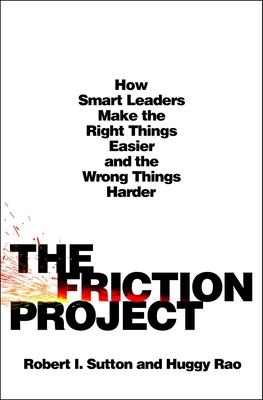
Every organization is plagued by destructive friction—the forces that make it harder, more complicated, or downright impossible to get anything done. Yet some forms of friction are incredibly useful, and leaders who attempt to improve workplace efficiency often make things even worse. Drawing from seven years of hands-on research, The Friction Project by bestselling authors Robert I. Sutton and Huggy Rao teaches readers how to become “friction fixers,” so that teams and organizations don’t squander the zeal, damage the health, and throttle the creativity and productivity of good people—or burn through cash and other precious resources.

Sutton and Rao kick off the book by unpacking how skilled friction fixers think and act like trustees of others’ time. They provide friction forensics to help readers identify where to avert and repair bad organizational friction and where to maintain and inject good friction. Then their help pyramid shows how friction fixers do their work, which ranges from reframing friction troubles they can’t fix right now so they feel less threatening to designing and repairing organizations. The heart of the book digs into the causes and solutions for five of the most common and damaging friction oblivious leaders, addition sickness, broken connections, jargon monoxide, and fast and frenzied people and teams.

Sound familiar? Sutton and Rao are here to help. They wrap things up with lessons for leading your own friction project, including linking little things to big things; the power of civility, caring, and love for propelling designs and repairs; and embracing the mess that is an inevitable part of the process (while still trying to clean it up).

In My Hands Today…

Your Future Self: How to Make Tomorrow Better Today – Hal Hershfield

We’ve all had the desire to travel through time and see what our lives will be like later in life. But while we want the best possible future for ourselves, we often fail to make decisions that would truly make that version of the future.

Based on over a decade of groundbreaking research, Your Future Self is the “entertaining and powerful book” (Carol Dweck, author of Mindset ) that explains that in our minds, our future selves often look like strangers.

Many of us view the future as incredibly distant, making us more likely to opt for immediate gratification that disregards our health and well-being in the years to come.

People who are able to connect with their future selves, however, are better able to balance living for today and planning for tomorrow. Your Future Self describes the mental mistakes we make in thinking about the future and gives us practical advice for imagining our best future so we can make that vision a reality.

In My Hands Today…

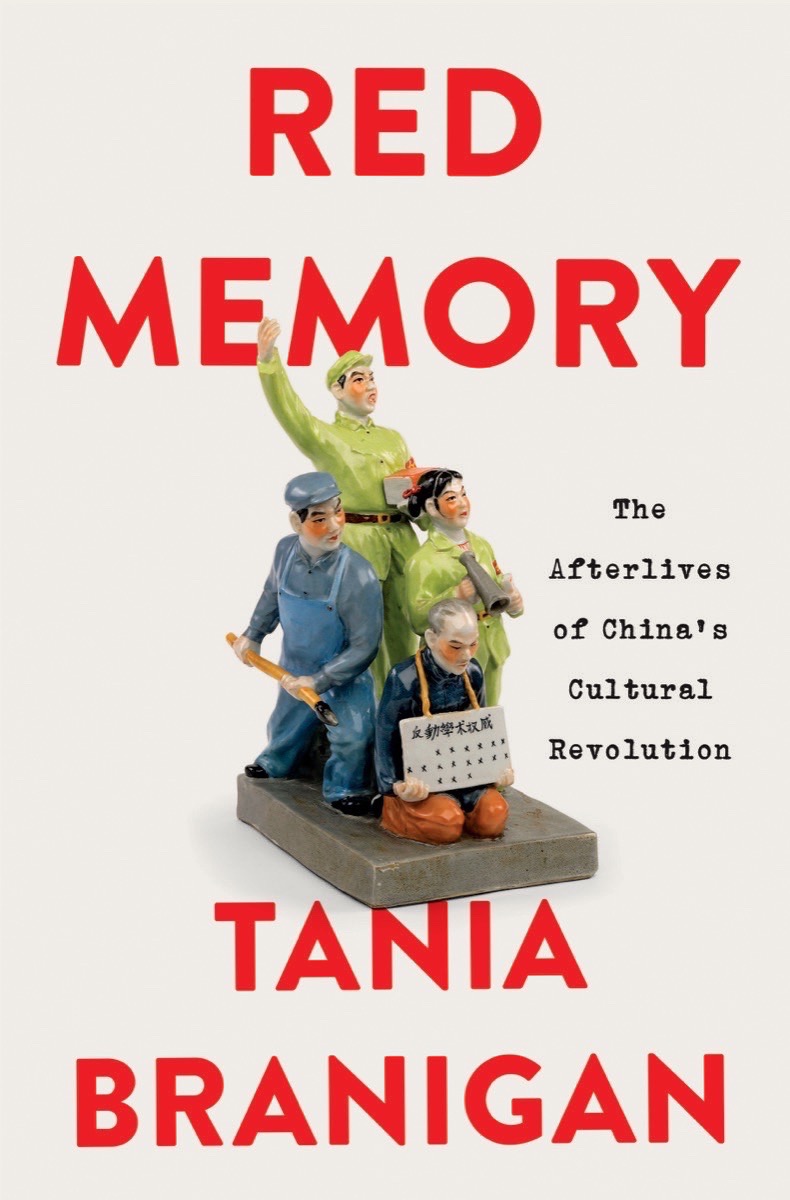
Red Memory: The Afterlives of China’s Cultural Revolution – Tania Branigan

“It is impossible to understand China today without understanding the Cultural Revolution,” Tania Branigan writes. During this decade of Maoist fanaticism between 1966 and 1976, children condemned parents, students condemned teachers, and as many as two million people died for their supposed political sins, while tens of millions were hounded, ostracized, and imprisoned.

Yet in China this brutal and turbulent period exists, for the most part, as an absence; official suppression and personal trauma have conspired in national amnesia. Red Memory uncovers forty years of silence through the stories of individuals who lived through the madness. Deftly exploring how this era defined a generation and continues to impact China today, Branigan asks: What happens to a society when you can no longer trust those closest to you? What happens to the present when the past is buried, exploited, or redrawn? And how do you live with yourself when the worst is over?

In My Hands Today…

Waiting to Be Arrested at Night: A Uyghur Poet’s Memoir of China’s Genocide – Tahir Hamut Izgil, translated by Joshua L Freeman

One by one, Tahir Hamut Izgil’s friends disappeared. The Chinese government’s brutal persecution of the Uyghur people had continued for years, but in 2017 it assumed a terrifying new scale. The Uyghurs, a predominantly Muslim minority group in western China, were experiencing an echo of the worst horrors of the twentieth century, amplified by China’s establishment of an all-seeing high-tech surveillance state. Over a million people have vanished into China’s internment camps for Muslim minorities.

Tahir, a prominent poet and intellectual, had been no stranger to persecution. After he attempted to travel abroad in 1996, police tortured him until he confessed to fabricated charges and sent him to a re-education through labor camp. But even having endured three years in the camp, he could never have predicted the Chinese government’s radical solution to the Uyghur question two decades later. Was the first sign when Tahir was interrogated for hours after a phone call with a fellow poet in the Netherlands? Or when his old friend was sentenced to life in prison simply for calling for Uyghurs’ legal rights to be enforced? Perhaps it was when the police seized Uyghurs’ radios and installed jamming equipment to cut them off from the outside world.

Once Tahir noticed that the park near his home was nearly empty because so many neighbors had been arrested, he knew the police would be coming for him any day. One night, after Tahir’s daughters were asleep, he placed by his door a sturdy pair of shoes, a sweater, and a coat so that he could stay warm if the police came for him in the middle of the night. It was clear to Tahir and his wife that fleeing the country was the family’s only hope.

Waiting to Be Arrested at Night is the story of the political, social, and cultural destruction of Tahir Hamut Izgil’s homeland. Among leading Uyghur intellectuals and writers, he is the only one known to have escaped China since the mass internments began. His book is a call for the world to awaken to the unfolding catastrophe, and a tribute to his friends and fellow Uyghurs whose voices have been silenced.

In My Hands Today…

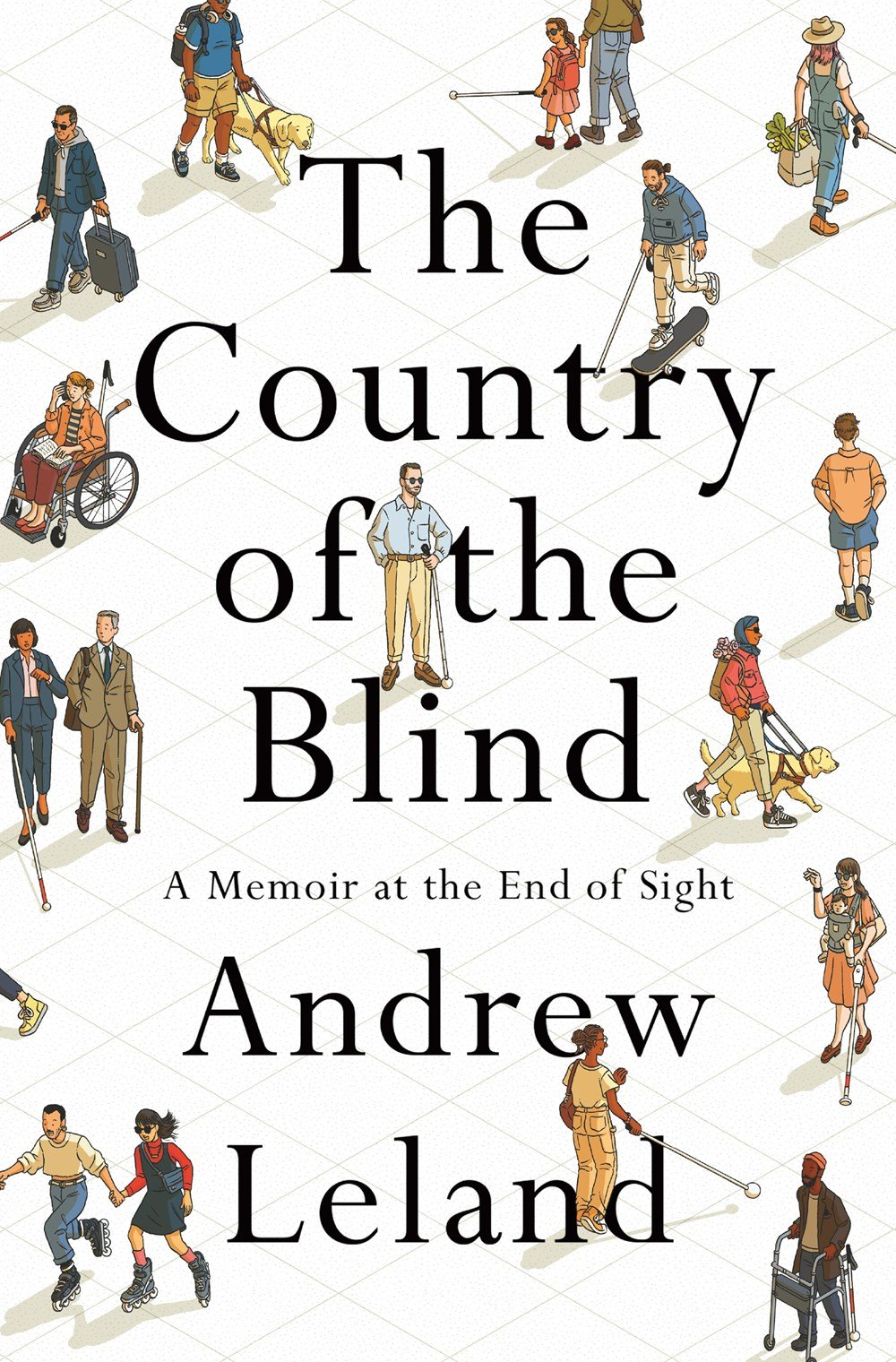
The Country of the Blind: A Memoir at the End of Sight – Andrew Leland

We meet Andrew Leland as he’s suspended in the liminal state of the soon-to-be he’s midway through his life with retinitis pigmentosa, a condition that ushers those who live with it from sightedness to blindness over years, even decades. He grew up with full vision, but starting in his teenage years, his sight began to degrade from the outside in, such that he now sees the world as if through a narrow tube. Soon—but without knowing exactly when—he will likely have no vision left.

Full of apprehension but also dogged curiosity, Leland embarks on a sweeping exploration of the state of being that awaits not only the physical experience of blindness but also its language, politics, and customs. He negotiates his changing relationships with his wife and son, and with his own sense of self, as he moves from his mainstream, “typical” life to one with a disability. Part memoir, part historical and cultural investigation, The Country of the Blind represents Leland’s determination not to merely survive this transition but to grow from it—to seek out and revel in that which makes blindness enlightening.

Thought-provoking and brimming with warmth and humor, The Country of the Blind is a deeply personal and intellectually exhilarating tour of a way of being that most of us have never paused to consider—and from which we have much to learn.