In My Hands Today…

An Era of Darkness: The British Empire in India – Shashi Tharoor

In 1930, the American historian and philosopher Will Durant wrote that Britain’s ‘conscious and deliberate bleeding of India… [was the] greatest crime in all history’. He was not the only one to denounce the rapacity and cruelty of British rule, and his assessment was not exaggerated. Almost thirty-five million Indians died because of acts of commission and omission by the British—in famines, epidemics, communal riots and wholesale slaughter like the reprisal killings after the 1857 War of Independence and the Amritsar massacre of 1919.

Besides the deaths of Indians, British rule impoverished India in a manner that beggars belief. When the East India Company took control of the country, in the chaos that ensued after the collapse of the Mughal empire, India’s share of world GDP was 23 per cent. When the British left it was just above 3 per cent.

The British empire in India began with the East India Company, incorporated in 1600, by royal charter of Her Majesty Queen Elizabeth I, to trade in silk, spices and other profitable Indian commodities. Within a century and a half, the Company had become a power to reckon with in India. In 1757, under the command of Robert Clive, Company forces defeated the ruling Nawab Siraj-ud-Daula of Bengal at Plassey, through a combination of superior artillery and even more superior chicanery. A few years later, the young and weakened Mughal emperor, Shah Alam II, was browbeaten into issuing an edict that replaced his own revenue officials with the Company’s representatives. Over the next several decades, the East India Company, backed by the British government, extended its control over most of India, ruling with a combination of extortion, double-dealing, and outright corruption backed by violence and superior force. This state of affairs continued until 1857, when large numbers of the Company’s Indian soldiers spearheaded the first major rebellion against colonial rule. After the rebels were defeated, the British Crown took over power and ruled the country ostensibly more benignly until 1947, when India won independence.

In this explosive book, bestselling author Shashi Tharoor reveals with acuity, impeccable research, and trademark wit, just how disastrous British rule was for India. Besides examining the many ways in which the colonizers exploited India, ranging from the drain of national resources to Britain, the destruction of the Indian textile, steel-making and shipping industries, and the negative transformation of agriculture, he demolishes the arguments of Western and Indian apologists for Empire on the supposed benefits of British rule, including democracy and political freedom, the rule of law, and the railways.

The few unarguable benefits—the English language, tea, and cricket—were never actually intended for the benefit of the colonized but introduced to serve the interests of the colonizers. Brilliantly narrated and passionately argued, An Era of Darkness will serve to correct many misconceptions about one of the most contested periods of Indian history.

In My Hands Today…

Knowing What We Know: The Transmission of Knowledge: From Ancient Wisdom to Modern Magic – Simon Winchester

From the creation of the first encyclopedia to Wikipedia, from ancient museums to modern kindergarten classes–this is a look at how humans acquire, retain, and pass on information and data, and how technology continues to change our lives and our minds.

With the advent of the internet, any topic we want to know about is instantly available with the touch of a smartphone button. With so much knowledge at our fingertips, what is there left for our brains to do? At a time when we seem to be stripping all value from the idea of knowing things–no need for math, no need for map-reading, no need for memorization–are we risking our ability to think? As we empty our minds, will we one day be incapable of thoughtfulness?

Addressing these questions, Simon Winchester explores how humans have attained, stored, and disseminated knowledge. Examining such disciplines as education, journalism, encyclopedia creation, museum curation, photography, and broadcasting, he looks at a whole range of knowledge diffusion–from the cuneiform writings of Babylon to the machine-made genius of artificial intelligence, by way of Gutenberg, Google, and Wikipedia to the huge Victorian assemblage of the Mundanaeum, the collection of everything ever known, currently stored in a damp basement in northern Belgium.

Throughout this tour, Winchester forces us to ponder what rational humans are becoming. What good is all this knowledge if it leads to lack of thought? What is information without wisdom? Does Rene Descartes’s Cogito, ergo sum–“I think therefore I am,” the foundation for human knowledge widely accepted since the Enlightenment–still hold? And what will the world be like if no one in it is wise?

In My Hands Today…

The Ugly History of Beautiful Things: Essays on Desire and Consumption – Katy Kelleher

Katy Kelleher has spent much of her life chasing beauty. As a child, she uprooted handfuls of purple, fragrant little flowers from the earth, plucked iridescent seashells from the beach, and dug for turquoise stones in her backyard. As a teenager she applied glittery shimmer to her eyelids after religiously dabbing on her signature scent of orange blossoms and jasmine. And as an adult, she coveted gleaming marble countertops and delicate porcelain to beautify her home. This obsession with beauty led her to become a home, garden, and design writer, where she studied how beautiful things are mined, grown, made, and enhanced. In researching these objects, Kelleher concluded that most of us are blind to the true cost of our desires. Because whenever you find something unbearably beautiful, look closer, and you’ll inevitably find a shadow of decay lurking underneath.

In these dazzling and deeply researched essays, Katy Kelleher blends science, history, and memoir to uncover the dark underbellies of our favorite goods. She reveals the crushed beetle shells in our lipstick, the musk of rodents in our perfume, and the burnt cow bones baked into our dishware. She untangles the secret history of silk and muses on her problematic prom dress. She tells the story of countless workers dying in their efforts to bring us shiny rocks from unsafe mines that shatter and wound the earth, all because a diamond company created a compelling ad. She examines the enduring appeal of the beautiful dead girl and the sad fate of the ugly mollusk. With prose as stunning as the objects she describes, Kelleher invites readers to examine their own relationships with the beautiful objects that adorn their body and grace their homes.

And yet, Kelleher argues that while we have a moral imperative to understand our relationship to desire, we are not evil or weak for desiring beauty. The Ugly History of Beautiful Things opens our eyes to beauty that surrounds us, helps us understand how that beauty came to be, what price was paid and by whom, and how we can most ethically partake in the beauty of the world.

In My Hands Today…

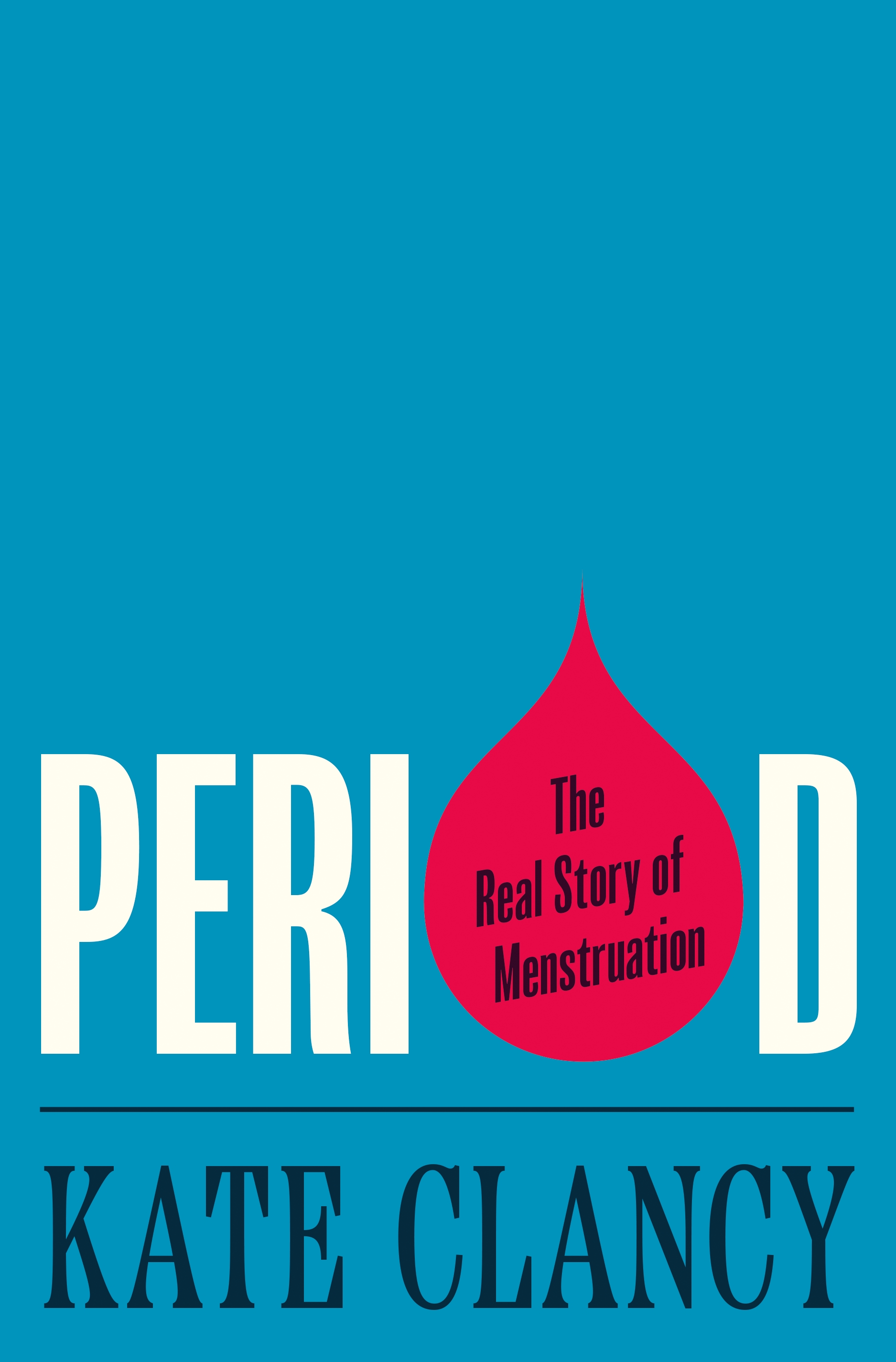
Period: The Real Story of Menstruation – Kate Clancy

Menstruation is something half the world does for a week at a time, for months and years on end, yet it remains largely misunderstood. Scientists once thought of an individual’s period as useless and some doctors still believe it’s unsafe for a menstruating person to swim in the ocean wearing a tampon. Period counters the false theories that have long defined the study of the uterus, exposing the eugenic history of gynecology while providing an intersectional feminist perspective on menstruation science.

Blending interviews and personal experience with engaging stories from her own pioneering research, Kate Clancy challenges many of the myths and false assumptions that have defined the study of the uterus. There is no such a thing as a “normal” menstrual cycle. In fact, menstrual cycles are incredibly variable and highly responsive to environmental and psychological stressors. Clancy takes up a host of timely issues surrounding menstruation, from bodily autonomy, menstrual hygiene, and the COVID-19 vaccine to the ways racism, sexism, and medical betrayal warp public perceptions of menstruation and erase it from public life.

Offering a revelatory new perspective on one of the most captivating biological processes in the human body, Period will change the way you think about the past, present, and future of periods.

In My Hands Today…

How to Lose a Country: The 7 Steps from Democracy to Dictatorship – Ece Temelkuran

‘It couldn’t happen here’ Ece Temelkuran heard reasonable people in Britain say it the night of the Brexit vote. She heard reasonable people in America say it the night Trump’s election was soundtracked by chants of ‘Build that wall.’ She heard reasonable people in Turkey say it as Erdoğan rigged elections, rebuilt the economy around cronyism, and labelled his opposition as terrorists.

How to Lose a Country is an impassioned plea, a warning to the world that populism and nationalism don’t march fully-formed into government; they creep. Award winning author and journalist Ece Temelkuran identifies the early-warning signs of this phenomenon, sprouting up across the world, in order to define a global pattern, and arm the reader with the tools to root it out. Proposing alternative, global answers to the pressing – and too often paralysing – political questions of our time, Temelkuran explores the insidious idea of ‘real people’, the infantilisation of language and debate, the way laughter can prove a false friend, and the dangers of underestimating one’s opponent.

She weaves memoir, history and clear-sighted argument into an urgent and eloquent defence of democracy. No longer can the reasonable comfort themselves with ‘it couldn’t happen here.’ It is happening. And soon it may be too late.