Stories from Ancient India: How Lord Ganesh got an Elephant’s Head

One day Goddess Parvati wanted to be alone and have a bath, so she instructed the bull Nandi who was Lord Shiva’s personal guard to ensure that no one could enter the house while she was bathing. Just then Lord Shiva wanted to meet Parvati. Seeing him, the Lord of Mount Kailash, Nandi immediately allowed him into the area where Parvati was bathing. When Parvati came to know about this, she was furious about the fact that the guard she had ordered to do her work was more faithful to her husband than to her.

In retaliation, she took the turmeric paste from her body and with her powers, created a child whom she wanted to be faithful only to herself and no one else. She named the child Ganesha. At this point in time, no one knew about the creation of this child as Shiva was away from Mount Kailash then.

Soon, the child was guarding the Parvati’s room and did not allow anyone to enter the room as ordered by Parvati. Meanwhile, Lord Shiva entered their home and made his way to Parvati’s private chambers. Following orders, Ganesha stopped the great lord with a loud “Stop! You cannot enter my mother’s private chambers”

Shiva was amazed both at the audacity of this child who was stopping him from entering his own home and with the fact that this child, whom he had never seen before was calling his wife Parvati his mother.

“Who are you to stop me from entering my own home? Do you even know who I am?” Shiva roared in anger.

“I don’t know who you are, but I can’t allow you inside since my mother has forbidden me from doing so” replied Ganesha.

Furious, Lord Shiva sent his army or Gana Sena to attack the child. But Ganesha who was no ordinary child was born with immense strength and he soon defeated the army easily. Shiva then looked at other avenues to reason with the child. He used the services of Lord Brahma who came in the form of a peaceful Brahmin and tried reasoning with Ganesha using the religious texts, but Ganesha did not budge. Then Shiva mobilized the army of the gods or Devas, but the child routed them too easily. Enraged beyond reason, Shiva then goes behind Ganesha when he is battling others and cuts off his head.

“Motherrrrr” Ganesha screams and dies on the spot. Hearing the noise, Pravati rushes from her private apartment and sees the carnage before her. Seeing her child, her creation dead in front of her puts her in a great rage and she moves into her destruction mode threatening to destroy the entire universe. Seeing this makes all the Gods assembled there very nervous and scared and Brahma decided to intervene and asked her to reconsider her decision

“I will not destroy this universe only on two conditions – one my child be brought back to life and two Ganesha will be worshipped and propitiated before any other Gods” Parvati put down her conditions.

In order to console his wife and stop the world from being destroyed, Shiva agreed to the conditions and sent for his servants and soldiers.

“Go forth and bring to us the first head of any creature you come across which is sleeping with it’s head pointed in the northern direction” Shiva ordered his soldiers and they soon set out to do their Lord’s bidding. The Ganas spread out to search for a creature with its head to the north and soon find an elephant sleeping with its head to the north.

They then bring the elephant’s head back to Lord Shiva who attaches it to Ganesha’s body and with his divine powers, soon brings him back to life. Ganesha soon gets revived and Lord Shiva proclaims him his own son and also the leader of his army, hence his name as Ganapati (Lord of the Ganas). He further proclaims that Ganesha will be foremost of all Gods and will be the first God to be worshipped as well as before anyone undertakes any new undertaking.
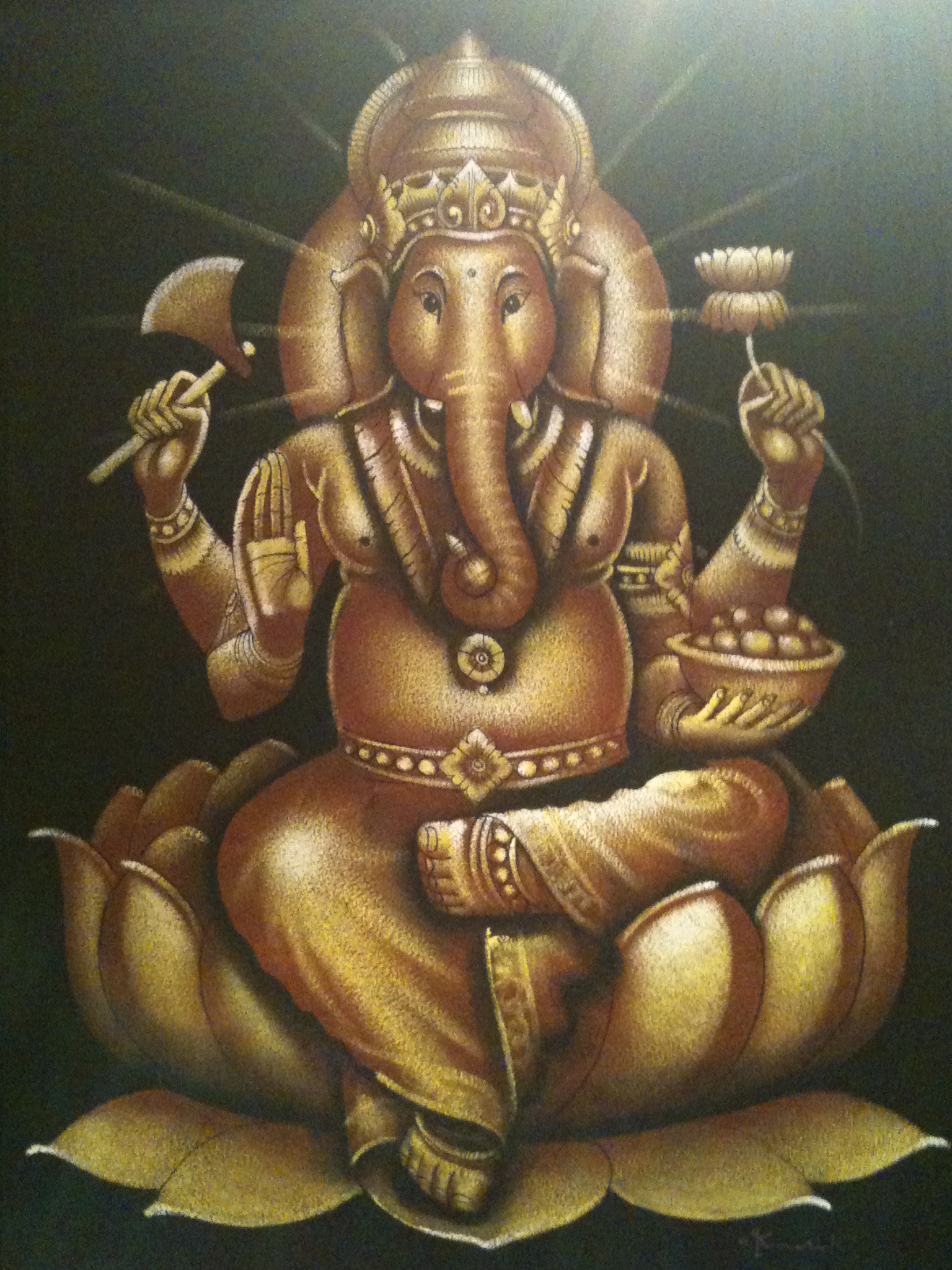
This is how Lord Ganesha came into existence, why we worship him first and why he is also called Ganapati
Diwali: Festival of Lights

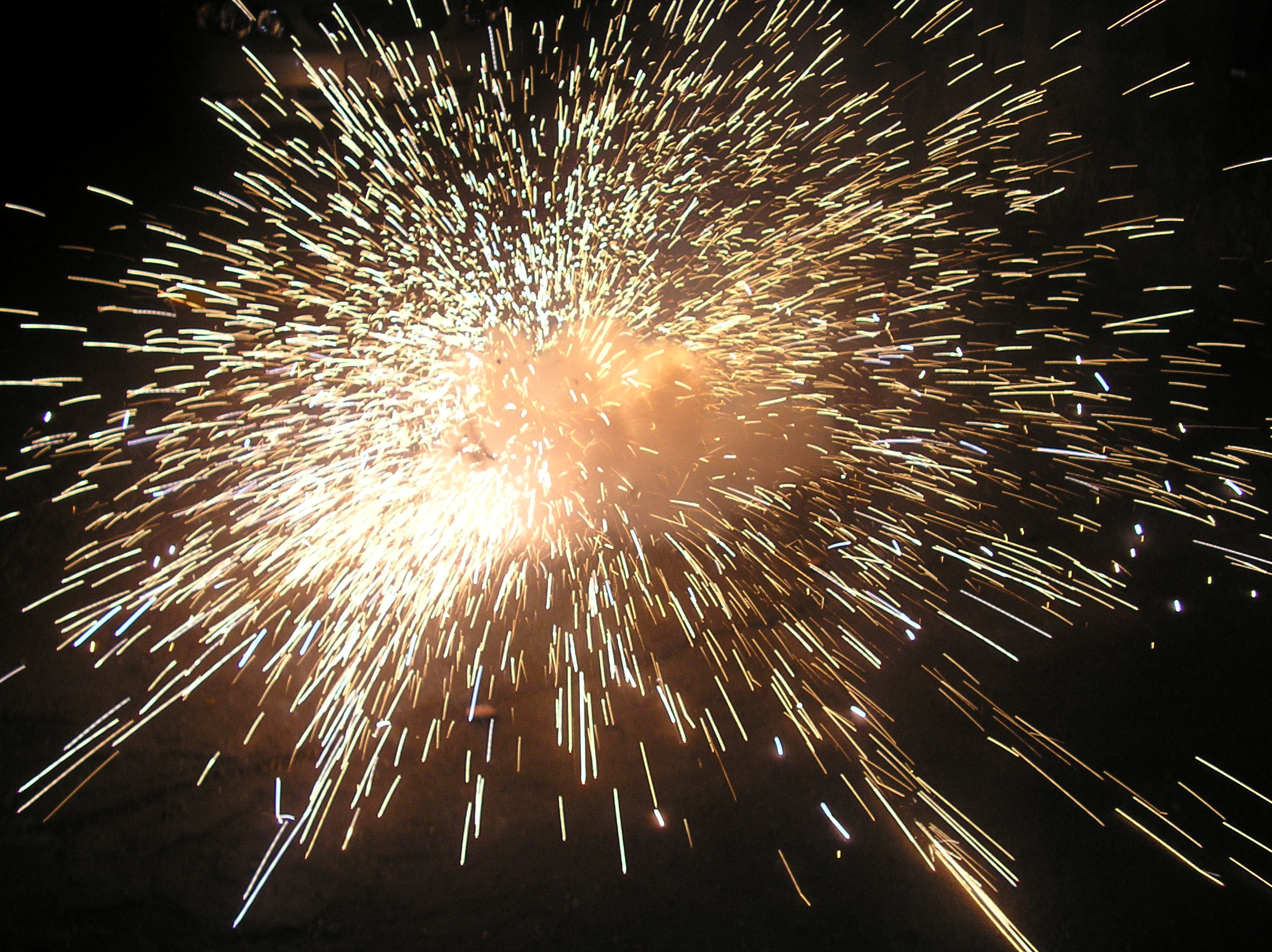
Tomorrow is a festival, which as a child, I used to wait for. Diwali or Deepavali as it called sometimes is also known as the ‘Festival of Lights’.’ This festival is one of the most important Hindu festivals in the year and is celebrated by Hindus all across the world. Deepavali literally means ‘row of lamps’ in Sanskrit and all households – whether rich or poor would have a few lamps outside the door. The lamps are to welcome Goddess Lakshmi, the goodess of wealth into homes. It is said that on this day, she will roam around earth and where she sees lamps lit to welcome her, she will bless that home with prosperity for the coming year.

There are many stories which are told for the origins of Diwali. In the northern part of India, this festival is celebrated to welcome Lord Rama, his wife, Goddess Sita and his brother Lord Laxman to Ayodhya after their 14 years of exile. Dusshera is celebrated as the victory of good over evil when Lord Rama vanquished the demon king Ravan in what is modern day Sri Lanka. The time between Dusshera and Diwali (approximately 2 weeks) is the time taken by the trip to reach Ayodhya in Northern India from Sri Lanka.

In Southern and Western India, this day is celebrated as the day Lord Krishna defeated the demon Narakasura. Therefore, when Diwali comes on an Amavasaya or a new moon night, we have to wake up early (4:30 – 5:00 am) and take a bath before sun-rise to commemorate this occasion. This day is called Naraka Chaturdasi

As for me, I’m almost done with my preparations. Made some savories and sweets and have tidied the house a bit. Exams are going on, so papers and assessment books are all over the place. We will wake up early and take an oil bath. Then wear new clothes and light the lamps. The children will play with crackers (only the simple ones as the others are banned here) and then visit a temple. Then home for a scrumptious lunch and then…..Study! GG & BB have English on Friday, followed by Maths on Monday and Chinese on Tuesday.

So here’s wishing everyone a very Happy Diwali and may the festival of lights be the harbinger of joy and prosperity in your lives…

Who am I? A question of Identity

I am all of the following – a daughter, grand-daughter, wife, daughter-in-law, mother and the myriad other relationships that we acquire as we move along in life. But at the core of all this is one identity that is uniquely me, which is ME! The ME who is a person in her own right, with an identity of her own.

This is so not Me

There are women who have no issues with going through their entire life as someone’s wife, daughter or mother. I know some women who have known each other for the last 30 plus years and still call each other as the other woman’s daughter’s mother. For me, this is something I can’t imagine. Imagine knowing someone and then not knowing or worse not acknowledging their own names – is that what life is all about? I for one refuse to call any of BB or GG’s friends moms by the names of their children. If I don’t know their names, I’ll make it a point to know it and then use that. Yes, we’re all happy and proud mom’s, but that’s not the end of our identity.

In India, most of the laws of Hindusim is governed by what is called Manusmirti or The Laws of Manu.  According to this, before marriage a woman is a subject of her father, at marriage her father passes her responsibility to her husband and if her husband dies before her, her responsibility then passes on to her son. Yet, the same Hindusim gives a woman equal rights as a man where a married man cannot undertake any religious ceremony without his wife sitting next to him and taking part in the ceremony.

Coming back to the topic, at marriage, a woman is supposed to be reborn and to ‘celebrate’ this, a new name is given to her. Some families force the new bride to taken on, formally a new name. So the name she was born with and grew up with is gone forever, and is will now be known as this new person. Her old name, harking back to carefree days is only a memory, which is taken out when she visits her maternal home. I have many friends on Facebook with multiple identities (that is have two first and two last names – pre and post marriage) who are living examples to this custom even today. This irritates me no end. Thank God I didn’t have to go through this – although knowing me, I wonder if I would have done it and whether I would have made a big fuss there and then?

This is one of the reasons I didn’t change my name when I got married (the other, more convenient reason being that I had to leave Mumbai immediately and so flew here on my maiden name and since then all official documentation has been in that name. This is the story I’m going to stick to!)

Do you know what they are saying?

Don’t you hate it when people around you, knowing that you do not know the language they are speaking in, continue to talk in that said language, thus excluding you from the conversation and leaving you to wonder what they were talking about and whether they were talking about you?

Singapore, where we live, is a multi-racial and multi-lingual society. In fact, although English is the most used and working language of the country, there are a total of four official languages – English, Chinese (or Mandarin to be exact), Malay and Tamil. But given that the Chinese make up the largest percentage of the population (about 80%), it is inevitable that you get to hear a whole lot of Chinese spoken in the island.

But what gets my goat is this – when almost every citizen below  the age of 50 has been educated completely in English, you still have people who go around talking in one language when there are people of other races around you, who you know can’t speak or understand the language! How rude and insensitive is this? This happens all over the country and the biggest culprits are the Chinese (since they are the majority population). But I find this happening with Indians (speaking the language of their specific community), Malays and others too.

My master plan for GG & BB to avoid this is to have them take Chinese in school. Given that they will be spending their lives in this country (or not), it’s always better for them to know the language. Even if they do not learn it thoroughly, they should still learn enough to be able to carry on a conversation and in a sneaky way know what others are talking about them! What do you think?

Have you ever been in a situation where people around you are talking in a language you know zilch about and you go nuts trying to figure out what they are saying?

P.S: This is my 99th post and so the post tomorrow is special ‘coz it’s my 100th post! Now wait for something special to be written!

Saraswati Puja

Today is the last day of the Navaratri festival with the Saraswati Puja and Dusshera tomorrow. Then it’s the anticipation of Diwali!


Saraswati Puja is celebrated all over India and across the world today with the day being dedicated to Goddess Saraswathi. In Hinduism, Saraswathi is the goddess of knowledge, wisdom, studies, science and technology, music, arts etc. She is also said to be the consort of Lord Brahma, who is said to be the creator of the world in Hindy mythology. Goddess Saraswati is depicted as a beautiful woman wearing a spotless white saree symbolising the purity of knowledge with four hands embodying mind, intellect, ego and alertness. She is usually seated on a white lotus or a white swan which is also her vehicle of transport, with a peacock close to her. She also holds the following in her four hands – a book, which is usually the vedas representing universal, eternal and true knowledge as well as her power over knowledge and the sciences; a rudrashka or rosary representing the power of spirituality, a veena, which is a musical intrument representingin her perfection in all arts and sciences and a pot of gangajal or sacred water which represent creative adn purification powers. Unlike most Goddesses in Hindu mythology, she is usually dressed very simply and not adorned with loads of jewellery showing that she prefers the intellectual and the artistic over the material.

Saraswati is also the main goodess of the Sringeri Sarada Peetham, which is what my family has been following for generations and the Jagadguru Shankaracharya at the Sarada Peetham is whom we consider our guru. I’ll post more about this later, just is just a teaser.

In South India and our brahmin community, we worship the Goddess on the ninth day of Navaratri. On that day, after bath, we keep books and some new clothes at her feet and worship her. I made a payasam today as the prasad. On this day, children also do not look at their books since she is supposed to be sitting on them and to use them is to disrespect her. The next day, we have to read a couple of pages from each book that was kept at the pooja so that she blesses us with good intellect and the most important thing for children – marks!

I’ve kept BB & GG’s books at the altar and asked them to pray to Saraswati Ummachi (God) so that she can bless them. They both prayed “Ummachi, please bless us so that that we can study well and get good marks in our exams“.

One of the first shlokas that I learnt from my ammama and have taught GG & BB is the one about Goddess Saraswati. It goes like this:

Saraswati namasthubiyam, varade kamarupini
Vidyarambham karishyaami, siddhir bhavatume sadaa

O Goddess Saraswati, salutations to you, the giver of boons, the one who fulfills all desires. I begin my studies. May there always be accomplishments for me.

The picture in this post is the picture of Goddess Saraswati in my pooja.