In My Hands Today…

Outlive: The Science and Art of Longevity – Peter Attia with Bill Gifford

Wouldn’t you like to live longer? And better? In this operating manual for longevity, Dr. Peter Attia draws on the latest science to deliver innovative nutritional interventions, techniques for optimizing exercise and sleep, and tools for addressing emotional and mental health.

For all its successes, mainstream medicine has failed to make much progress against the diseases of aging that kill most people: heart disease, cancer, Alzheimer’s disease, and type 2 diabetes. Too often, it intervenes with treatments too late to help, prolonging lifespan at the expense of healthspan, or quality of life. Dr. Attia believes we must replace this outdated framework with a personalized, proactive strategy for longevity, one where we take action now, rather than waiting.

This is not “biohacking,” it’s science: a well-founded strategic and tactical approach to extending lifespan while also improving our physical, cognitive, and emotional health. Dr. Attia’s aim is less to tell you what to do and more to help you learn how to think about long-term health, in order to create the best plan for you as an individual. In Outlive , readers will discover:

  • Why the cholesterol test at your annual physical doesn’t tell you enough about your actual risk of dying from a heart attack.
  • That you may already suffer from an extremely common yet underdiagnosed liver condition that could be a precursor to the chronic diseases of aging.
  • Why exercise is the most potent pro-longevity “drug”—and how to begin training for the “Centenarian Decathlon.”
  • Why you should forget about diets, and focus instead on nutritional biochemistry, using technology and data to personalize your eating pattern.
  • Why striving for physical health and longevity, but ignoring emotional health, could be the ultimate curse of all.

Aging and longevity are far more malleable than we think; our fate is not set in stone. With the right roadmap, you can plot a different path for your life, one that lets you outlive your genes to make each decade better than the one before.

Travel Bucket List: Malaysia Part 5 – Malacca Part 1

The state of Malacca or Melaka is the next state we will explore. Located in the southern region of the Malay Peninsula, facing the Strait of Malacca, it has Malacca City, also known as the Historic City, which has been listed as a UNESCO World Heritage Site since 2008. The state is bordered by Negeri Sembilan to the north and west and Johor to the south. The exclave of Tanjung Tuan also borders Negeri Sembilan to the north.

Although it was the location of one of the earliest Malay sultanates, namely the Malacca Sultanate, the local monarchy was abolished when the Portuguese conquered it in 1511. The head of state is the Yang di-Pertua Negeri or Governor, rather than a Sultan. Malacca is noted for its unique history and it is one of the major tourist destinations in Malaysia. With a highly strategic state position for international trade routes, Malacca was once a well-known international trade centre in the East. Many traders anchored in Malacca, especially traders from Arabia, China and India, traded at the port of Malacca and from there were born many of the descendants and tribes that exist in Malacca to this day. Malacca is filled with a great diversity of races and ethnicities reflecting its history. Malays, Chinese, Indians, Baba Nyonya, Kristang, Chitty and Eurasians are significant ethnic groups living in the state today.

The state’s name dates to a popular legend surrounding the founding of the sultanate preceding it by Parameswara who sought to find a new spot to establish his new kingdom after fleeing Singapura which fell to the Majapahit army. As the story goes, Parameswara was resting under a tree near a river during a hunt, when one of his dogs cornered a mouse deer. In self-defence, the mouse deer pushed the dog into the river. Impressed by the courage of the deer, and taking it as a propitious omen of the weak overcoming the powerful, Parameswara decided then and there to found an empire on that very spot. He named it Malacca after the tree where he had just taken shelter, the Malacca tree or Pokok Melaka in Malay. However, some historians argue that the story shows remarkable similarities with and was probably adapted from folk tales from Kandy, Sri Lanka, and Pasai, Sumatra, both of which pre-date Malacca.

Another account about the origin of Malacca’s name says that during the reign of Muhammad Shah who ruled between 1424 and 1444, the Arab merchants called the kingdom Malakat which is Arabic for a congregation of merchants because it was home to many trading communities. One theory suggests, as mentioned in Suma Oriental by Tomé Pires, that it is derived from the Javanese terms melayu or mlayu which means to steadily accelerate or to run, to describe the strong current of a river in Sumatra that today bears the name Sungai Melayu or the Melayu River, which was later possibly adopted as Melaka denoting a place for the fleeing prince.

Before the arrival of the first Sultan, Malacca was a fishing village. The kingdom was founded by Parameswara, also known as Iskandar Shah. He found his way to Malacca around 1402 where he found a good port, one that was accessible in all seasons and on the strategically located narrowest point of the Malacca Straits. In collaboration with allies from wandering proto-Malay privateers of the Straits called the orang laut or the sea-people, he established Malacca as an international port by compelling passing ships to call there, and establishing fair and reliable facilities for warehousing and trade. In 1403, the first official Chinese trade envoy led by Admiral Yin Qing arrived in Malacca. Malacca’s relationships with Ming China granted it protection from attacks by Siam and Majapahit and the kingdom submitted to Ming China as a protectorate. This encouraged the development of Malacca into a major trade settlement on the trade route between China and India, the Middle East, Africa and Europe.

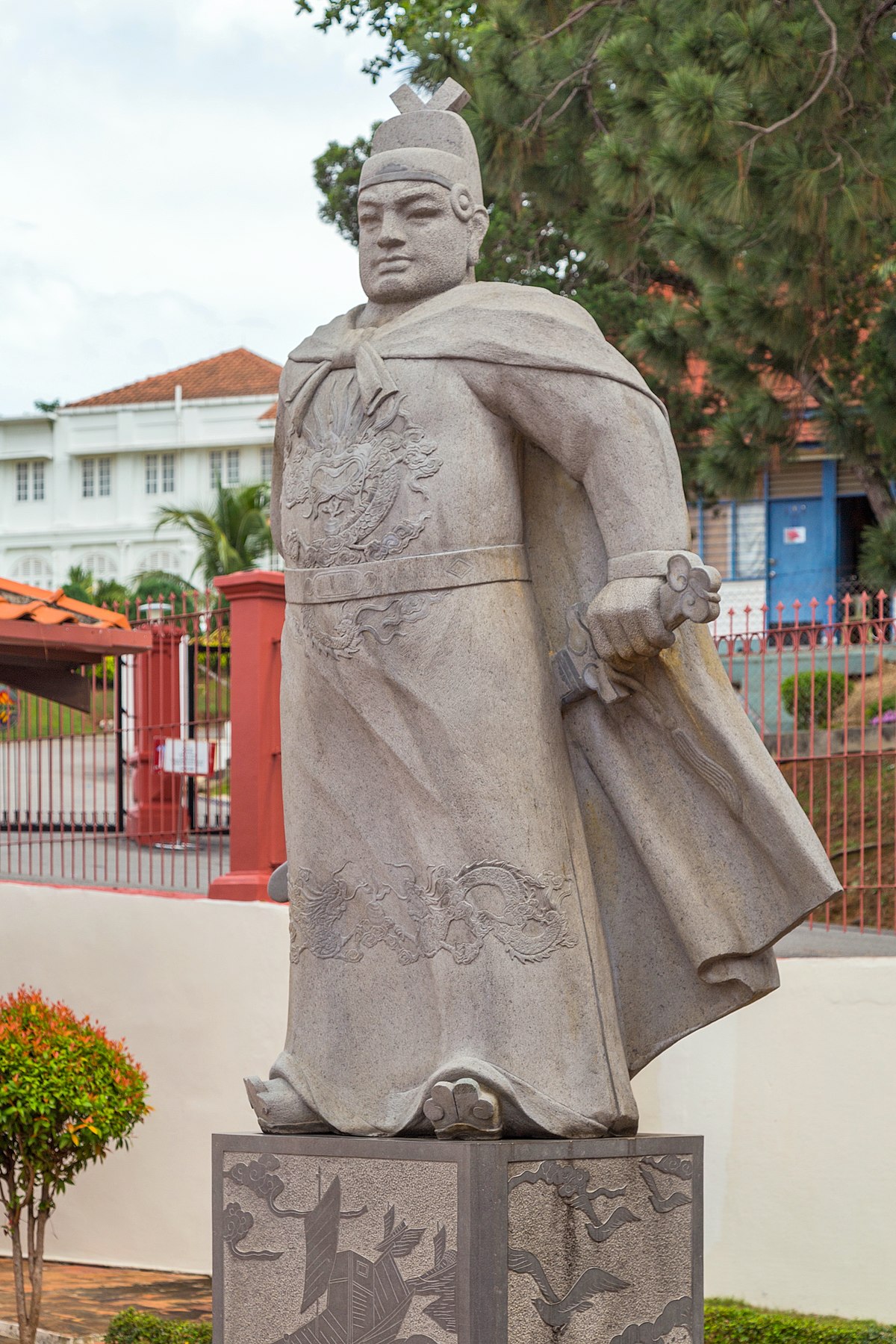
During the early 15th century, Ming China actively sought to develop a commercial hub and a base of operation for their treasure voyages into the Indian Ocean. In 1405, the Ming court dispatched Admiral Zheng He with an imperial order elevating the status of the port to a country. The Chinese also established a government depot as a fortified cantonment for their soldiers. The rulers of Malacca would pay tribute to the Chinese emperor in person. The early kings of Malacca understood that they could gain Ming China’s protection through skilful diplomacy and thereby could establish a strong foundation for their kingdom against Siam and other potential enemies. The Chinese involvement was crucial for Malacca to grow into a key alternative to other important and established ports. Hang Li Po, according to local folklore, a daughter of the Ming Emperor of China, arrived in Malacca, accompanied by 500 attendants, to marry Sultan Mansur Shah who reigned from 1456 until 1477. Her attendants married locals and settled mostly in Bukit Cina.

In April 1511, Alfonso de Albuquerque set sail from Goa to Malacca with a force of about 1200 men and 18 ships and conquered the city on 24 August 1511. After seizing the city, Afonso de Albuquerque spared the Hindu, Chinese and Burmese inhabitants but had the Muslim inhabitants massacred or sold into slavery. It soon became clear that Portuguese control of Malacca did not also mean that they controlled the Asian trade centred there. The Malaccan rule was severely hampered by administrative and economic difficulties. Rather than achieving their ambition of dominating Asian trade, the Portuguese disrupted the organisation of the network. The centralised port of exchange of Asian wealth had now gone, as was a Malay state to police the Straits of Malacca that made it safe for commercial traffic. Trade was now scattered over several ports among bitter warfare in the Straits.

The Jesuit missionary Francis Xavier spent several months in Malacca in 1545, 1546, and 1549. The Dutch launched several attacks on the Portuguese colony during the first four decades of the 17th century with the first attack taking place in 1606. On 14 January 1641, the Dutch defeated the Portuguese and captured Malacca, with the help of the Sultan of Johor and ruled Malacca from 1641 to 1798. But they were not interested in developing it as a trading centre, placing greater importance on Batavia or Jakarta and Java as their administrative centre. However, they still built their landmark, better known as the Stadthuys. In the Dutch era the building was white, today’s red paint is of a later date.

Malacca was ceded to the British in the Anglo-Dutch Treaty of 1824 in exchange for Bencoolen on Sumatra. From 1824 to 1942, Malacca was under the British East India Company and then a crown colony. It formed part of the Straits Settlements, together with Singapore and Penang. Malacca went briefly under the rule of the Empire of Japan between 1942 and 1945 during World War II.

After the dissolution of the crown colony, Malacca and Penang became part of the Malayan Union on 1 April 1946, which later became the Federation of Malaya on 1 February 1948. On 16 September 1963, Malaysia was formed with the merger of Malaya with Sabah, Sarawak and Singapore, and Malacca became part of the new country. On 15 April 1989, Malacca was declared a historical city and listed as UNESCO World Heritage Site on 7 July 2008.

Malacca sits upon the southwestern coast of the Malay Peninsula opposite Sumatra, with Negeri Sembilan to the north and west and Johor to the east. Malacca is located roughly two-thirds of the way down the west coast and commands a central position on the Straits of Malacca. Except for some small hills, Malacca is generally a lowland area with an average elevation below 50 meters above sea level. The peninsula of Tanjung Tuan, formerly known as Cape Rachado is an exclave of the state, situated on the coast of Negeri Sembilan. The Malacca River or Sungai Melaka roughly runs through the centre line of the state from north to south, while the Linggi River acts as the western border of Malacca with Negeri Sembilan, and the Kesang River acts as the eastern border of Malacca with Johor. Malacca has thirteen islands off its coast, with Besar Island being the biggest of all.

Malacca is one of only four Malaysian states without hereditary monarchies, despite being the location of one of the earliest Malay sultanates, as the local monarchy was abolished when the Portuguese conquered it in 1511. The head of the state is the Governor, appointed by the King of Malaysia. In practice, the Governor is a figurehead whose functions are chiefly symbolic and ceremonial. Despite being located in a land without any significant natural resources, the economy of Malacca dates back more than 500 years, due to its strategic location. Located at the centre of the all-important spice trade, Malacca attracted many colonial powers to engage in wars to control it.

The Malay community in Malacca is generally divided into two, one of which follows the Temenggong custom and the other follows the Perpatih custom. The remaining traditional Malay village in Malacca City is the Morten Village. Indians in Malacca are predominantly Tamils, many of whom used to work at the rubber plantation. There is also Chitty Village for the minority Chitty people which houses the Chitty Museum. Among the unique Malacca culture is Dondang Sayang recognised by UNESCO. Dondang Sayang is a traditional Malay art still practised in Malacca by four communities: the Malay, Baba Nyonya, Chitty and Portuguese communities. The practice combines elements of music like violins, gongs and tambourines or the tambour, songs and chants, and features melodious strains of poetry. Also known as love ballads, the songs are used by communities to convey feelings of love and give advice on special topics.

Tourism is a booming industry in Malacca as it is a popular travel destination for Singaporeans during the weekends. In 2017, the state recorded 16.79 million tourist arrivals, the highest number to date. It has also been listed by many publications as one of Asia’s and the world’s top travel destinations. Malacca’s River Art Project which began in 2012 has street art in the buildings beside the port. Nine artists came together to paint on the walls of historical shophouses along the river in Jalan Kampung Hulu. Known as ProjectARM, these murals depict the artist’s representation of Malacca and include a colourful mosaic painted on the walls of Kiehl’s store.

Now that we have learned a bit about Melaka’s history, let’s learn a bit more about the state capital, also known as Malacca or Malacca City.

Malacca City
Malacca City or Bandaraya Melaka or Kota Melaka as it is known in Malay is the capital city of the state. It is one of the cleanest cities in South East Asia, being awarded the National Winner of the ASEAN Clean Tourist City Standard Award for 2018 to 2020. It is the oldest Malaysian city on the Straits of Malacca, having become a successful entrepot during the Malacca Sultanate. The present-day city was founded by Parameswara, a Sumatran prince who escaped to the Malay Peninsula when Srivijaya fell to the Majapahit. Following the establishment of the Malacca Sultanate, the city drew the attention of traders from the Middle East, South Asia, and East Asia, as well as the Portuguese, who intended to dominate the trade route in Asia. After Malacca was conquered by Portugal, the city became an area of conflict when the sultanates of Aceh and Johor attempted to take control from the Portuguese.

When the British succeeded in extending their influence over the Malay Peninsula, the city came under the Straits Settlements as part of the British Empire and the city soon prospered. The development and burgeoning prosperity were, however, halted when the Japanese arrived in World War II and occupied the area from 1942 to 1945. During the occupation, many of the city’s residents were taken and forced to construct the Death Railway in Burma, today’s Myanmar. After the war, the city was returned to the British and remained the capital of Malacca. The status as a capital remained until the formation of Malaysia in 1963, and in 2008 it was listed, together with George Town of Penang, as a UNESCO World Heritage Site. Malacca City’s economy is largely based on tourism. As the economic centre of the state, it also hosts several international conferences and trade fairs. The city is located along the Maritime Silk Road, proposed by China in 2013.

Due to the large influence of Arab, Persian, and Indian traders, Malacca soon turned into an Islamic sultanate, and Parameswara converted to Islam when he married a princess from Pasai, changing his name to Sultan Iskandar Shah. Malacca continued to prosper until the eighth Sultanate of Malacca, Mahmud Shah, with the various races who came to trade becoming associated with particular trade specialities. Like other traders, the Chinese established their area in the city, occupying the southeast side of the port around a hill called Bukit Cina, where they constructed temples and a well called Hang Li Poh’s Well, named after Hang Li Po, the fifth wife of the sixth Sultan of Malacca, Mansur Shah, who was a Chinese princess from the Ming dynasty.

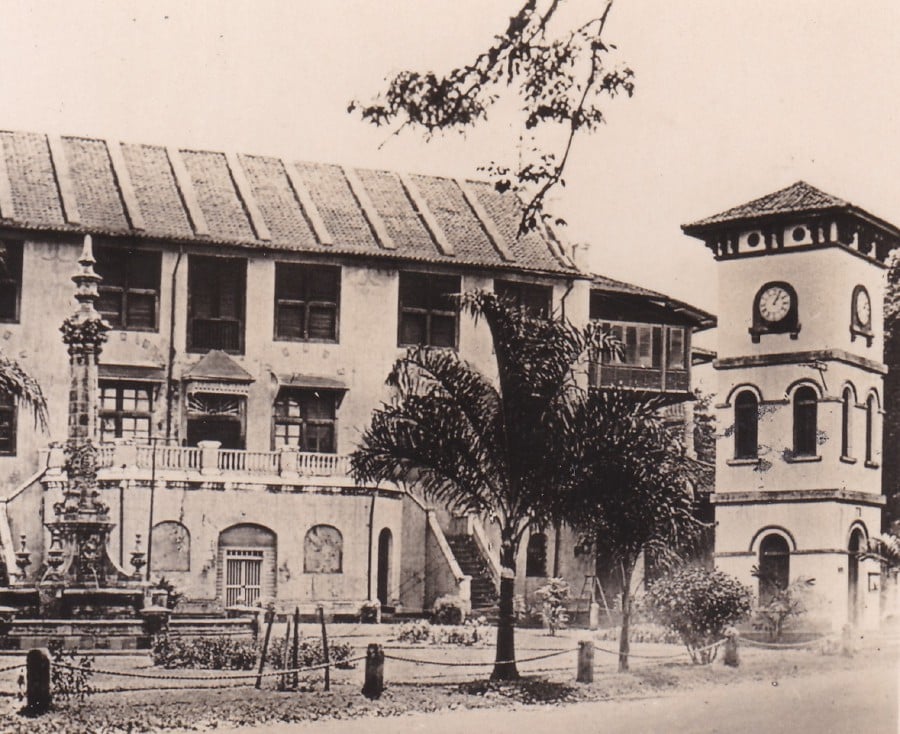
During the first stage of World War II, the city’s residents continued to live normally until the news of the Sinking of Prince of Wales and Repulse on 10 December 1941 reached the city and struck panic. British colonial officials began to flee and thousands of the city’s residents hid in rubber estates and jungles. The Japanese Army arrived in the city on 14 January 1942 in a convoy of bicycles, but as they focused on ensuring the retreat of the British to the south of the Malay Peninsula and Singapore, there was no major battle in the city or other parts of Malacca. During their occupation, a kempeitai headquarters was established in the formerly British Government Rest House which served as a place for arrests, torture and executions. Those who still lived in the city were given low rice rations with a tapioca supplement and a number of them were taken to Thailand and forced to construct the Burma–Siam Railway. After Malaya achieved its independence on 31 August 1957, the Malacca Club was built by the British in the city as the social centre. The building was then turned into a memorial after 38 years to commemorate the Malayan independence. After the Federation of Malaya, together with North Borneo, Sarawak and Singapore formed the Federation of Malaysia in 1963, Malacca was extensively developed and in 2003 it was granted city status. On 7 July 2008, Malacca City was listed as one of the historical cities in Malaysia, together with George Town in the northern Malay Peninsula.

The city is located on both sides of the Malacca River near its mouth on the Straits of Malacca. Due to large-scale land reclamation, it has grown in size, especially in the south and its physical features are characterised by flat and gently undulating land stretching from its coast. The historic central area of the city is located near the old coastline and includes St Paul’s Hill with the ruins of the Portuguese fortress and the Dutch Square on the right or eastern bank of the river, and the old Chinatown on the left or western bank. The Chinese Hill or Bukit Cina, where a large old Chinese cemetery is located, was formerly located to the northeast of the city but is now surrounded by new buildings on all sides.

Travel Bucket List: Malaysia Part 2 – Johor: Part 1

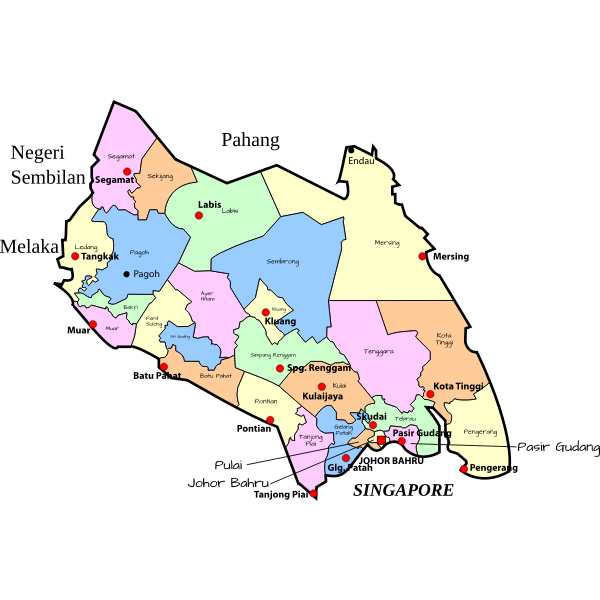
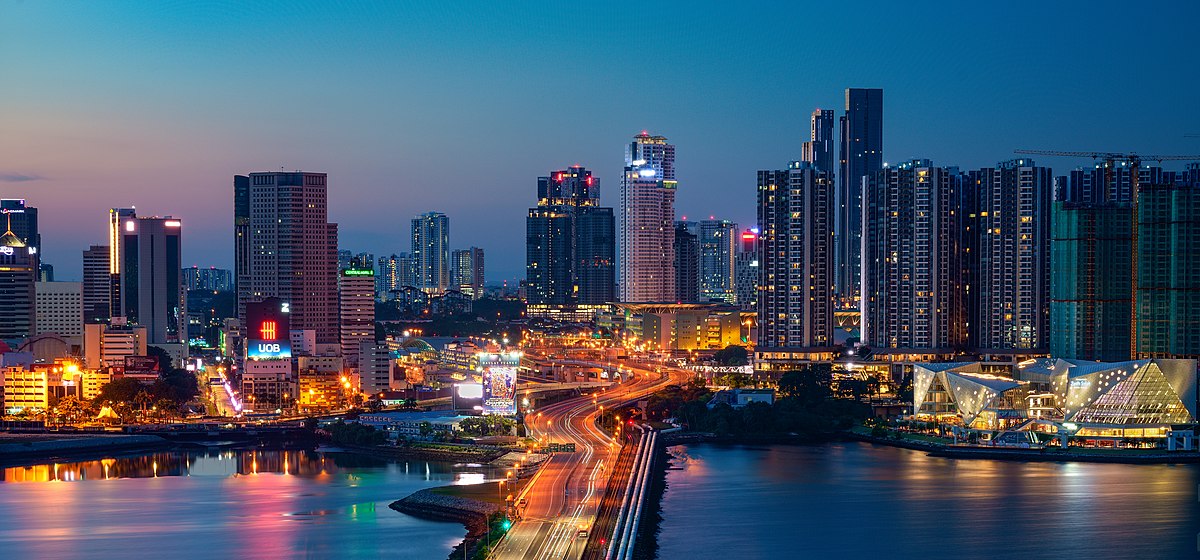
Also spelt as Johore, Johor is Malaysia’s southernmost state and has land borders with Pahang to the north and Malacca and Negeri Sembilan to the northwest and shares maritime borders with Singapore to the south and Indonesia to both the west and east. Johor Bahru is the capital city and the economic centre of the state, while Kota Iskandar is the seat of the state government, and Muar serves as the state’s royal capital. Johor Lama served as the old state capital during the period of the Johor Sultanate. It is the second-most populated state in Malaysia. Johor has highly diverse tropical rainforests and an equatorial climate. Johor Bahru is one of the anchor cities of the Iskandar Malaysia development corridor and is one of the most densely populated and fastest-growing urban areas in Malaysia.

A state that is high in the diversity of ethnicity, culture, and language, Johor is known for its traditional dance of Zapin and Kuda Kepang. The head of the state is the Sultan of Johor, while the head of government is the Menteri Besar. The government system is closely modelled on the Westminster parliamentary system, with the state administration divided into administrative districts. Islam is the state religion, but other religions can be freely practised. Both Malay and English have been accepted as official languages for the state since 1914.

Johor is one of the main economic powerhouses in Malaysia and is currently among the top 4 contributors to the national gross domestic product, along with Selangor, Kuala Lumpur and Sarawak. The state economy is mainly based on the services and manufacturing sectors. It is also one of the most vital international trade centres in Malaysia, with the Port of Tanjung Pelepas being the 15th busiest port in the world, as well as the busiest container port in the nation.

The area was first known to the northern inhabitants of Siam as Gangganu or Ganggayu or the Treasury of Gems due to the abundance of gemstones near the Johor River. Arabic traders referred to it as Jauhar, a word borrowed from the Persian Gauhar, which also means precious stone or jewel. As the local people found it difficult to pronounce the Arabic word in the local dialect, the name subsequently became Johor. The old Javanese eulogy of Nagarakretagama called the area Ujong Medini or land’s end, as it is the southernmost point of mainland Asia. Another name, through Portuguese writer Manuel Godinho de Erédia, referred to Marco Polo’s sailing to Ujong Tanah or the end of the Malay Peninsula land in 1292. Both Ujong Medini and Ujong Tanah had been mentioned before the foundation of the Sultanate of Malacca. Throughout the period, several other names also co-existed such as Galoh, Lenggiu and Wurawari. Johor is also known by its Arabic honorific as Darul Ta’zim or the Abode of Dignity.

A bronze bell estimated to be from 150 AD was found in Kampong Sungai Penchu near the Muar River. The bell is believed to have been used as a ceremonial object rather than a trade object as a similar ceremonial bell with the same decorations was found in Battambang Province, Cambodia, suggesting that the Malay coast came in contact with Funan, with the bell being a gift from the early kingdom in mainland Asia to local chieftains in the Malay Peninsula. Another important archaeological find was the ancient lost city of Kota Gelanggi, which was discovered by following trails described in an old Malay manuscript once owned by Stamford Raffles. Artefacts gathered in the area have reinforced claims of early human settlement in the state. The claim of Kota Gelanggi as the first settlement is disputed by the state government of Johor, with other evidence from archaeological studies conducted by the state heritage foundation since 1996 suggesting that the historic city is located in Kota Tinggi District at either Kota Klang Kiu or Ganggayu. The exact location of the ancient city is still undisclosed but is said to be within the 34,595-acre forest reserve where the Lenggiu and Madek Rivers are located, based on records in the Malay Annals that, after conquering Gangga Negara, Raja Suran from Siam of the Nakhon Si Thammarat Kingdom or the Ligor Kingdom had sailed to Ganggayu. Since ancient times, most of the coastal Malay Peninsula has had its rulers, but all fell under the jurisdiction of Siam.

After the fall of Malacca in 1511 to the Portuguese, the Johor Sultanate, based on the descendants of the Malaccan Sultanate, was founded by Mahmud’s son, Ala’udin Ri’ayat Shah II, in 1528 when he moved the royal court to the Johor River and set up his royal residence in Johor Lama. Johor became an empire spanning the southern Malay Peninsula, Riau Archipelago, including Singapore, Anambas Islands, Tambelan Archipelago, Natuna Islands, a region around the Sambas River in south-western Borneo and Siak in Sumatra together with allies of Pahang, Aru and Champa, and it aspired to retake Malacca from the Portuguese. The Aceh Sultanate in northern Sumatra had the same ambition, which led to a three-way war between the rivals. During the wars, the Johor administrative capital moved several times based on military strategies and to maintain authority over trading in the region. Johor and the Portuguese began to collaborate against Aceh, which they saw as a common enemy. In 1582 the Portuguese helped Johor thwart an attack by Aceh, but the arrangement ended when Johor attacked the Portuguese in 1587. Aceh continued its attacks against the Portuguese and was later destroyed when a large armada from the Portuguese port in Goa came to defend Malacca and destroy the sultanate.

After Aceh was left weakened, the Dutch East India Company (VOC) arrived and Johor allied with them to eliminate the Portuguese in the second capture of Malacca in 1641. Johor regained authority over many of its former dependencies in Sumatra, such as Siak in 1662 and Indragiri in 1669, which had fallen to Aceh while Malacca was taken by the Dutch. Malacca was placed under the direct control of Batavia in Java. Only when the Bugis began to threaten Dutch maritime trade did they become involved with local disputes.

The dynasty of the Malaccan descendants lasted until the death of Mahmud II, when it was succeeded by the Bendahara Dynasty, a dynasty of ministers who had previously served in the Malacca Sultanate. In the 18th century, especially when the English East India Company started to establish a presence in the northern Malay Peninsula, the Dutch seized the Bugis areas of Riau and expelled the Bugis from both Riau and Selangor so these areas would not fall under British rule and ended Bugis political domination in the Johor-Pahang-Riau empire, resulting in the Bugis being banned from Riau in 1784. During the rivalry between the Bugis and Dutch, Mahmud Shah III concluded a treaty of protection with the VOC on board the HNLMS Utrecht and the sultan was allowed to reside in Riau with Dutch protection which escalated the mistrust between the Bugis and the Malays. Malacca was returned to the Dutch in 1818 and served as the staging area for the British victory in 1811.

After the death of Mahmud Shah III, the elder son Hussein Shah was supported by the Malay community, and the younger son Abdul Rahman Muazzam Shah was supported by the Bugis community. In 1818, the Dutch recognised Abdul Rahman Muazzam Shah as the legitimate heir to the Johor Empire in return for his supporting their intention to establish a trading post in Riau. The following year, the British recognised Hussein Shah as the legitimate heir to the Johor Empire in return for his supporting their intention to establish a trading post in Singapore. Before his death, Mahmud Shah III had appointed Abdul Rahman as the Temenggong for Johor with recognition from the British as the legitimate Temenggong of Johor-Singapore, marking the beginning of the Temenggong Dynasty. Abdul Rahman was succeeded by his son, Daeng Ibrahim, although his recognition by the British only occurred 14 years later.  With the partition of the Johor Empire due to the dispute between the Bugis and Malay and following the defined spheres of influence for the British and Dutch resulting from the Anglo-Dutch Treaty of 1824, Daeng Ibrahim intended to create a new administrative centre for the Johor Sultanate under the new dynasty. As he maintained a close relationship with the British and the latter wanted to have full control over trade in Singapore, a treaty was signed between Daeng Ibrahim and Hussein Shah’s successor, Ali Iskandar, recognising Ali as the next sultan. Through the treaty, Ali was crowned as the sultan and received $5,000 in Spanish dollars and an allowance of $500 per month, but was required to cede the sovereignty of the territory of Johor, except Kesang of Muar, which would be the only territory under his control to Daeng Ibrahim.

With the establishment of a new capital in mainland Johor, the administrative centre was moved from Telok Blangah in Singapore. As the area was still an undeveloped jungle, the Temenggong encouraged the migration of Chinese and Javanese to clear the land and develop an agricultural economy in Johor. During his reign, Johor began to be modernised and this was continued by his son, Abu Bakar. In 1885, an Anglo-Johor Treaty was signed that formalised the close relations between the two. The British were given transit rights for trade through the sultanate territory and responsibility for its foreign relations, as well as to protect the Sultanate. The treaty also provided for the appointment of a British agent in an advisory role, although no advisor was appointed until 1910.  Abu Bakar also implemented a constitution known as the Undang-undang Tubuh Negeri Johor or the Johor State Constitution and organised his administration in the British style. By adopting an English-style modernisation policy, Johor temporarily prevented itself from being directly controlled by the British, as happened to other Malay states.

Under the reign of Ibrahim, due to overspending, the sultanate faced problems caused by the falling price of its major source of revenue and problems between him and members of his state council, which gave the British an opportunity to intervene in Johor’s internal affairs. Despite Ibrahim’s reluctance to appoint a British adviser, Johor was brought under British control as one of the Unfederated Malay States or UMS by 1914, with the position of its General Adviser elevated to that of a Resident in the Federated Malay States or FMS.

Since the 1910s, Japanese planters had been involved in numerous estates and the mining of mineral resources in Johor as a result of the Anglo-Japanese Alliance. After World War I, rubber cultivation in Malaya was largely controlled by Japanese companies. By the 1920s, Ibrahim had become a personal friend of Tokugawa Yoshichika, a scion of the Tokugawa clan whose ancestors were military leaders who ruled Japan from the 16th to the 19th centuries. In World War II, at a great cost of lives in the Battle of Muar in Johor as part of the Malayan Campaign, the Imperial Japanese Army forces with their bicycle infantry and tanks advanced into Muar District which is today’s Tangkak District on 14 January 1942. During the Japanese forces’ arrival, Tokugawa accompanied General Tomoyuki Yamashita’s troops and was warmly received by Ibrahim when they reached Johor Bahru at the end of January 1942. Yamashita and his officers stationed themselves at the Sultan’s residence, Istana Bukit Serene, and the state secretariat building, Sultan Ibrahim Building, to plan for the invasion of Singapore. Some of the Japanese officers were worried since the location of the palace left them exposed to the British, but Yamashita was confident that the British would not attack since Ibrahim was also a friend of the British, which proved to be correct.

On 8 February, the Japanese began to bombard the northwestern coastline of Singapore, which was followed by the crossing of the IJA 5th and 18th Divisions with around 13,000 troops through the Straits of Johor. The following day, the Imperial Guard Division crossed into Kranji while the remaining Japanese Guard troops crossed through the repaired Johor–Singapore Causeway.  Following the occupation of the whole of Malaya and Singapore by the Japanese, Tokugawa proposed a reform plan by which the five kingdoms of Johor, Terengganu, Kelantan, Kedah-Penang and Perlis would be restored and federated. Under the scheme, Johor would control Perak, Selangor, Negeri Sembilan and Malacca while a 2,100-sq km area in the southern part of Johor would be incorporated into Singapore for defence purposes. The five monarchs of the kingdoms would be obliged to pledge loyalty to Japan, would need to visit the Japanese royal family every two years, and would assure the freedom of religion, worship, employment and private ownership of the property to all people and accord every Japanese residing in the kingdoms with treatment equal to indigenous people.

Meanwhile, Ōtani Kōzui of the Nishi Hongan-ji sub-sect of Jōdo Shinshū Buddhism suggested that the sultan system should be abolished and Japan should rule the Malay kingdoms under a Japanese constitutional monarchy government. In May, a document was published called A Policy for the Treatment of the Sultan, which was a demand for the Sultan to surrender his power over his people and land to the Japanese emperor through the IJA commander. Through the Japanese administration, many massacres of civilians occurred with an estimate that 25,000 ethnic Chinese civilians in Johor perished during the occupation. Despite that, the Japanese established the Endau Settlement, also known as the New Syonan Model Farm in Endau for Chinese settlers to ease the food supply problem in Singapore.

In the five weeks before the British resumed control over Malaya following the Japanese surrender on 16 August 1945, the Malayan People’s Anti-Japanese Army or MPAJA emerged as the de facto authority in the Malayan territory. Johor and the rest of Malaya were officially placed under the British Military Administration or BMA in September 1945 and the MPAJA was disbanded in December. Fighting between the British occupation forces and their Malayan collaborators against the People’s Army continued through the formation of the Malayan Union on 1 April 1946 and the proclamation of the independence of the Federation of Malaya on 31 August 1957.

Since the 1960s, the state’s development has expanded further with industrial estates and new suburbs. The town of Johor Bahru was officially recognised as a city on 1 January 1994 and on 22 November 2017, Iskandar Puteri was declared a city and assigned as the administrative centre of the state, located in Kota Iskandar.

The constitutional head of Johor is the Sultan and this hereditary position can only be held by a member of the Johor Royal Family who is descended from Abu Bakar. The current Sultan of Johor is Ibrahim Ismail, who took over the throne on 23 January 2010. The main royal palace for the Sultan is the Bukit Serene Palace, while the royal palace for the Crown Prince is the Istana Pasir Pelangi; both of which are located in the state capital. Although the Malaysian constitution states that the federal government is solely responsible for foreign policy and military forces in the country, Johor is the only state to have a private army. The retention of the army was one of the stipulations in 1946 that Johor made when it participated in the Federation of Malaya. This army, the Royal Johor Military Force or Askar Timbalan Setia Negeri Johor, has since 1886 served as the protector of the Johor monarchs. It is one of the oldest military units in present-day Malaysia and had a significant historical role in the suppression of the 1915 Singapore Mutiny and served in both World Wars.

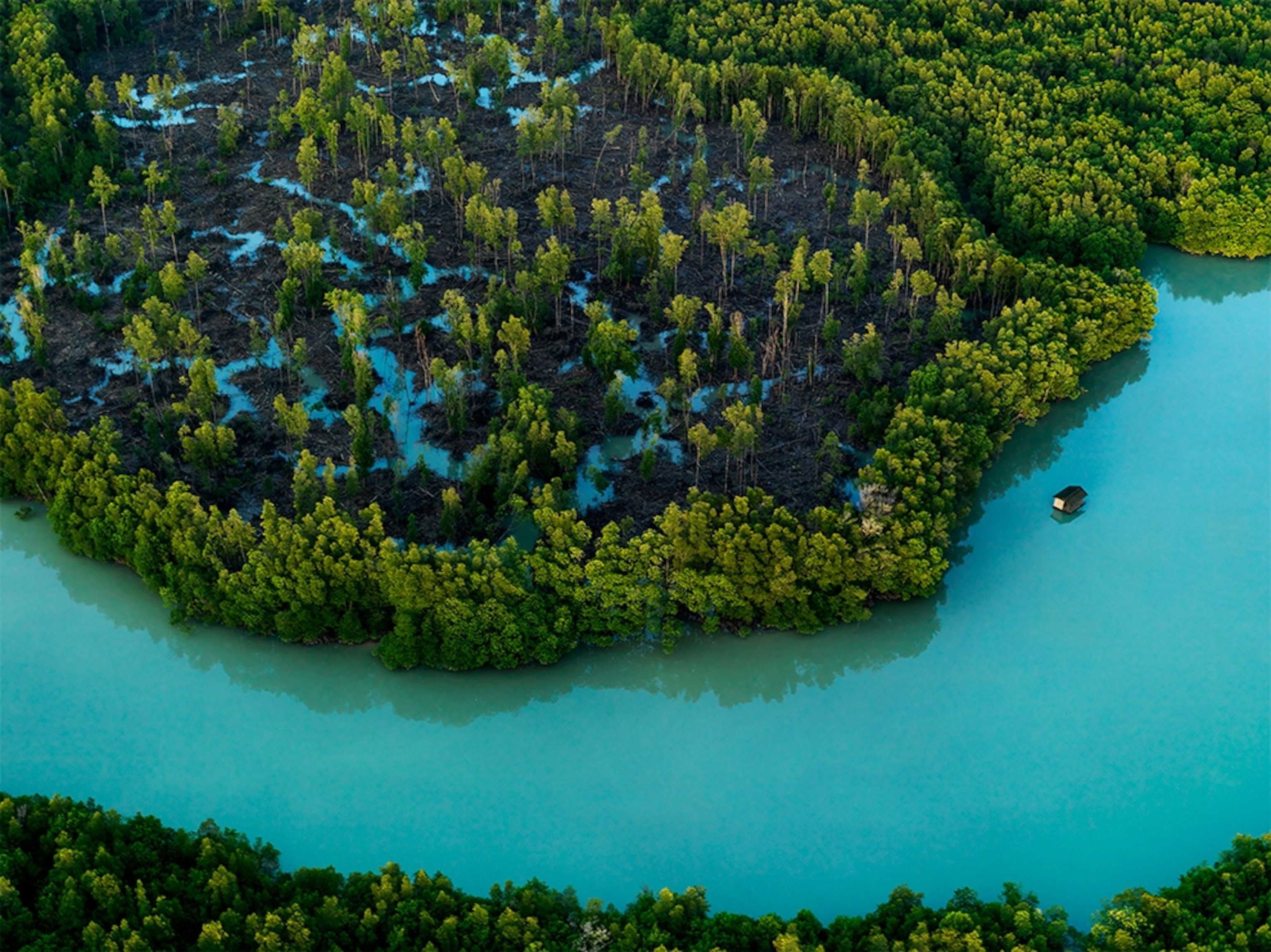
Johor has a land area of nearly 19,166 sq km, and it is surrounded by the South China Sea to the east, the Straits of Johor to the south and the Straits of Malacca to the west. The state has a total of 400 km of coastline, of which 237.7 km have been eroding. A majority of its coastline, especially on the west coast is covered with mangrove and Nipah forests. The east coast is dominated by sandy beaches and rocky headlands, while the south coast consists of a series of alternating headlands and bays. Its exclusive economic zone extends much further into the South China Sea than in the Straits of Malacca.

About 83% of Johor’s terrain is lowlands areas, while only 17% is higher and steep terrain. While being relatively flat, Johor is dotted with many isolated peaks known as inselbergs, as well as isolated massifs, with the highest point being Mount Ledang, also known as Mount Ophir, at a height of 1,276 m. Much of central Johor is covered with dense forest, where an extensive network of rivers originating from mountains and hills in the area spreads to the west, east and south. The jungles of Johor host a diverse array of plant and animal species, with an estimated 950 vertebrate species, comprising 200 mammals, 600 birds and 150 reptiles, along with 2,080 invertebrate species.

Johor is the biggest fruit-producing state in Malaysia with approximately 532,249 tons of fruit produced in 2016, with the Segamat district having the largest major fruit plantation and harvesting area in the state. In the same year, Johor was the second biggest producer of vegetables among Malaysian states. Due to its proximity to Singapore, the state benefits from Singaporean investors and tourists. The state also had a policy of twinning with Singapore to promote their industrial development, which increased the movement of people and goods between the two sides.

Johor is also the most populous Malaysian state and despite the racial diversity of the population, most people in Johor identify themselves as Bangsa Johor or Johor race, which is also echoed by the state royal family to unite the population regardless of ancestry. The majority of Johoreans are at least bilingual with proficiency in Malay and English; both of which languages have been officially recognised in the state constitution since 1914. Johorean Malay, also known as Johor-Riau Malay and originally spoken in Johor, Riau, Riau Islands, Malacca, Selangor and Singapore, has been adopted as the basis for both the Malaysian and Indonesian national languages. Due to Johor’s location at the confluence of trade routes within Maritime Southeast Asia as well as its history as an influential empire, the dialect has spread as the region’s lingua franca since the 15th century; hence the adoption of the dialect as the basis for the national languages of Brunei, Indonesia, Malaysia and Singapore.

In the next part, let’s take a look at Johor’s capital of Johor Bahru

In My Hands Today…

A Taste for Poison: Eleven Deadly Molecules and the Killers Who Used Them – Neil Bradbury

As any reader of murder mysteries can tell you, poison is one of the most enduring—and popular—weapons of choice for a scheming murderer. It can be slipped into a drink, smeared onto the tip of an arrow or the handle of a door, even filtered through the air we breathe. But how exactly do these poisons work to break our bodies down, and what can we learn from the damage they inflict?

In a blend of popular science, medical history, and true crime, Dr. Neil Bradbury explores the morbidly captivating method of murder from a cellular level. Alongside real-life accounts of murderers and their crimes—some notorious, some forgotten, some still unsolved—are the stories of the poisons involved: eleven molecules of death that work their way through the human body and, paradoxically, illuminate the way in which our bodies function.

Drawn from historical records and current news headlines, A Taste for Poison weaves together the tales of spurned lovers, shady scientists, medical professionals and political assassins to show how the precise systems of the body can be impaired to lethal effect through the use of poison. From the deadly origins of the gin & tonic cocktail to the arsenic-laced wallpaper in Napoleon’s bedroom.

In My Hands Today…

The Wife’s Tale: A Personal History – Aida Edemariam

A hundred years ago, a girl was born in the northern Ethiopian city of Gondar. Before she was ten years old, Yetemegnu was married to a man two decades her senior, an ambitious poet-priest. Over the next century, her world changed beyond recognition.

She witnessed Fascist invasion and occupation, Allied bombardment and exile from her city, the ascent and fall of Emperor Haile Selassie, revolution and civil war. She endured all these things alongside parenthood, widowhood and the death of children.

Aida Edemariam retells her grandmother’s stories of a childhood surrounded by proud priests and soldiers, of her husband’s imprisonment, of her fight for justice – all of it played out against an ancient cycle of festivals and the rhythms of the seasons.