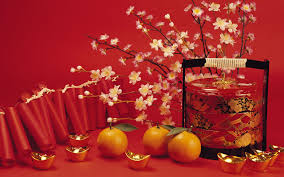
 Gong Xi Fa Cai, Xin Nian Quai Le
With these words, the Chinese diaspora across the world welcomed the Year of the Sheep yesterday. This is also called the Spring Festival in China and is traditionally celebrated for 15 days. The Chinese New Year is also called the Lunar New Year.
 The Lunar New Year is a time to honour both deities and ancestors and is celebrated not only in China, but also in countries with significant Chinese populations like Singapore, Malaysia, Hong Kong, Macau, Taiwan, Indonesia, Thailand, Philippines etc.
Regional differences ensure differing customs across the diaspora, but cleaning the homes thoroughly before the new year, buying new clothes for everyone in the family, putting up auspicious sayings and calligraphy in the home, giving away ‘luck-money’ in the form of angpows or red packets and having a reunion dinner on the eve of the new year are common across different dialect groups.
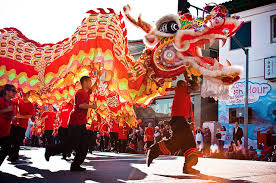 According to tales and legends, the beginning of the Chinese New Year started with a mythical beast called the Nian. Nian would come on the first day of New Year to eat livestock, crops, and even villagers, especially children. To protect themselves, the villagers would put food in front of their doors at the beginning of every year. It was believed that after the Nian ate the food they prepared, it wouldn’t attack any more people. One day a villager decided to get revenge of the Nian. A god visited him and told him to put red paper on his house and to place firecrackers. The villagers then understood that the Nian was afraid of the color red. When the New Year was about to come, the villagers would hang red lanterns and red spring scrolls on windows and doors. People also used firecrackers to frighten away the Nian. From then on, Nian never came to the village again. The Nian was eventually captured by Hongjun Laozu, an ancient Taoist monk. The Nian became Hongjun Laozu’s mount. (source Wikipedia)
The first two days of the Chinese New Year is a public holiday in many countries, including Singapore and when it comes at the beginning or end of a work week, like this year, it means a long weekend!
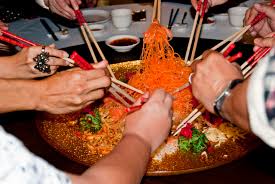 Many workplaces will have a special Chinese New Year lunch and lio-hei or yusheng for their employees. Lo Hei or the Prosperity toss is something which is pretty unique to Singapore and Malaysia and maybe other parts of ASEAN. The lo hei usually has fish served with white radish, carrots, capsicum, turnips, red pickled ginger, sun-dried oranges, daun limau nipis (key lime leaves), Chinese parsley, chilli, jellyfish, chopped peanuts, toasted sesame seeds, Chinese shrimp crackers (or fried dried shrimp), five spice powder and other ingredients, laced with a sauce using plum sauce, rice vinegar, kumquat paste and sesame oil, for a total of 27 ingredients. While putting each ingredient, auspicious couplets are said, each with a special meaning, to increase your prosperity in the coming year. Then everyone in the table grabs a pair of chopsticks and toss the ingredients in the air, repeating the auspicious wishes while doing so, the reasoning being, the higher you toss, the better your luck for the year. Some people believe that if the ingredients fall on your head, you will be very lucky that year!
My workplace had a lo-hei earlier this week, but I was held up and by the time I reached the place for lunch, the lo-hei was over…






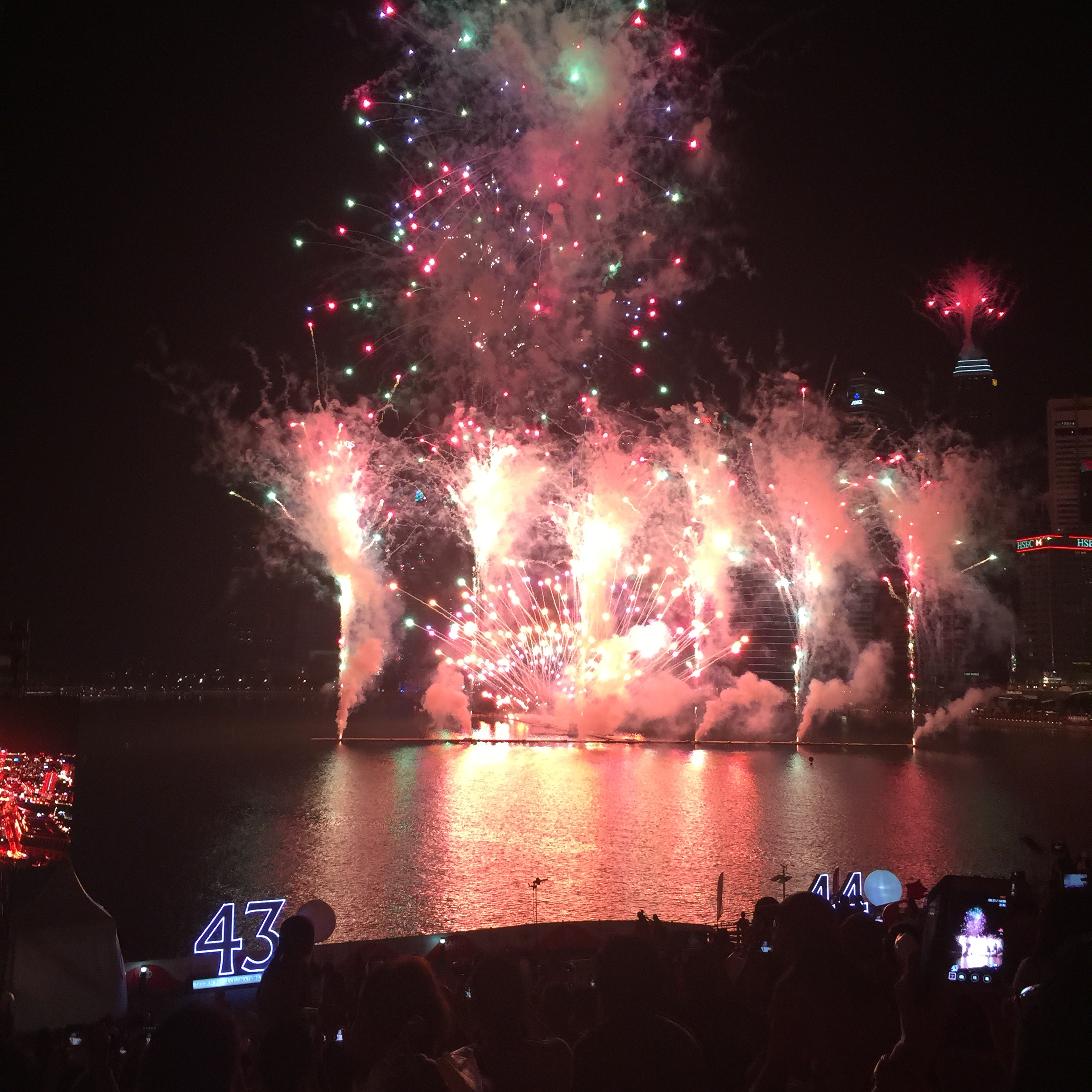


 RIP Mr. Lee.
 Memories and Such