2026 Week 38 Update

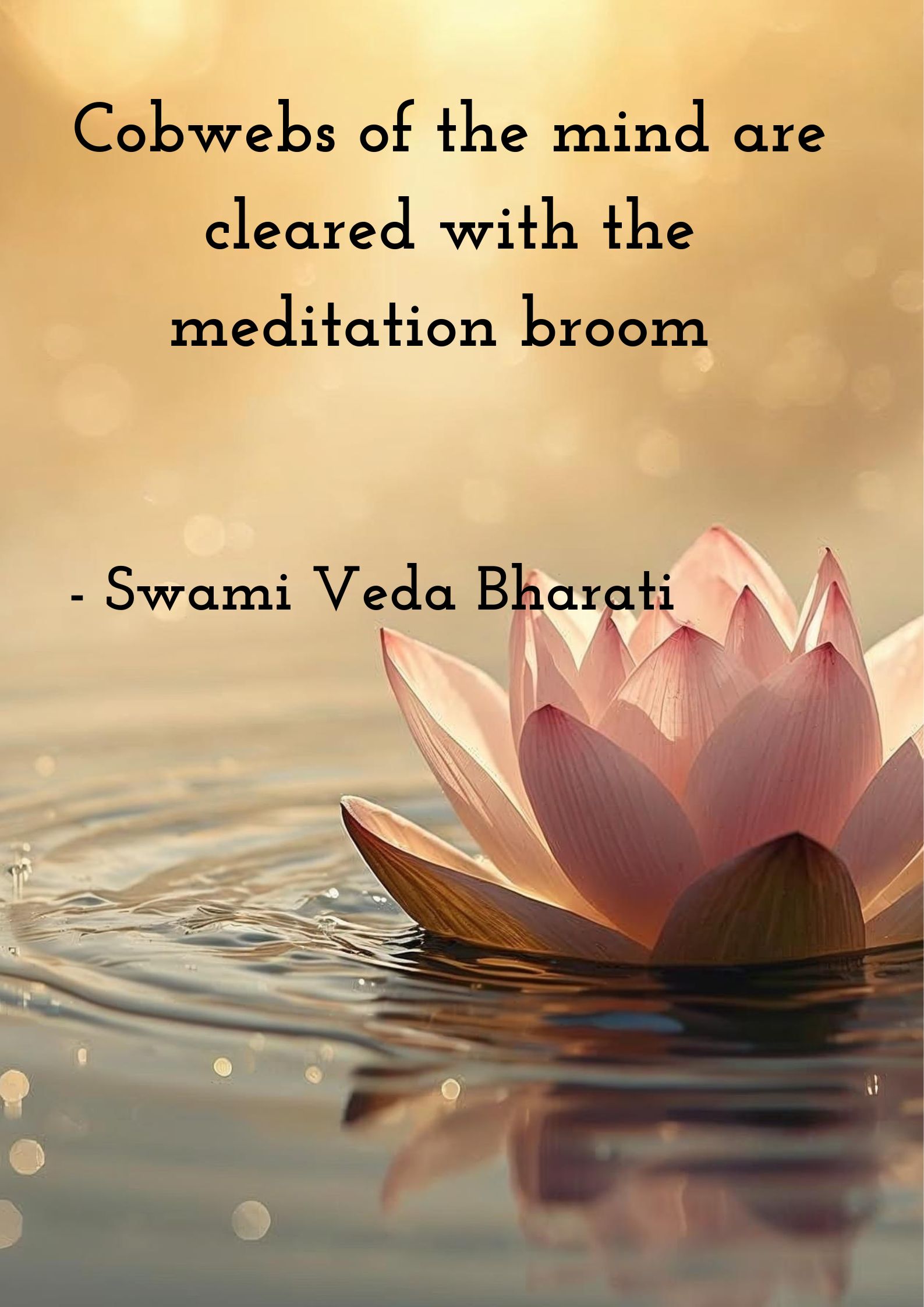
This week’s quote from Indian spiritual teacher, Swami Veda Bharati uses a wonderfully simple image to describe what meditation can do for an overcrowded mind. Cobwebs accumulate quietly. We rarely notice them forming until one day we see how much has gathered. Our minds can work in much the same way. Worries, unfinished conversations, old resentments, imagined problems, repetitive thoughts and the endless stream of information we absorb each day gradually create mental clutter. One thought catches another until it becomes difficult to see anything clearly.

Meditation, in this metaphor, becomes the broom. It does not necessarily make our problems disappear, nor does it prevent difficult thoughts from returning. Instead, regular meditation creates enough space between our thoughts for us to see them more clearly. We begin to recognise which ones deserve our attention and which can simply be allowed to pass. There is something else appealing about the metaphor. We don’t sweep our homes once and expect them to remain dust-free forever. Cleaning is a continuing practice. Meditation is similar. A single session may bring temporary calm, but its deeper benefits emerge through repetition. Each time we return to stillness, we clear away a little of what has accumulated. Perhaps the goal, then, isn’t to achieve a permanently empty or silent mind. It is simply to keep making room within it.

This week seemed to be about evidence. Not the dramatic kind, but those small, tangible signs that the work I have been doing quietly over weeks and months is beginning to produce something I can point to and say, yes, that mattered.

There was a particularly satisfying professional win, the kind that arrives after I have written the application, submitted it and largely pushed it out of my mind. Elsewhere, I spent time learning and thinking more carefully about impact, not simply what we do, but what actually changes because we do it. And another long-running project moved into a wonderfully tangible stage, where ideas and plans became things I could finally see rather than merely imagine. Then, because life apparently has a sense of humour, just as I was preparing to switch off for the weekend, another sizeable assignment landed, more new reasons not to switch my brain off completely! But there is something reassuring about that too. Different strands of my working life continue to exist alongside one another, rather than everything depending upon a single source or direction.

Away from work, there was room for ordinary pleasures, future possibilities, creativity, conversations and the small satisfaction of continuing to make everyday life work a little better. Perhaps what I am taking away from this week is that progress often becomes visible long after the work that created it. Seeds planted earlier suddenly break through the surface. A conversation leads somewhere, an application succeeds, another opportunity arrives, and sometimes, I get just enough evidence to remind myself that even when I cannot see movement, things may still be growing underneath.

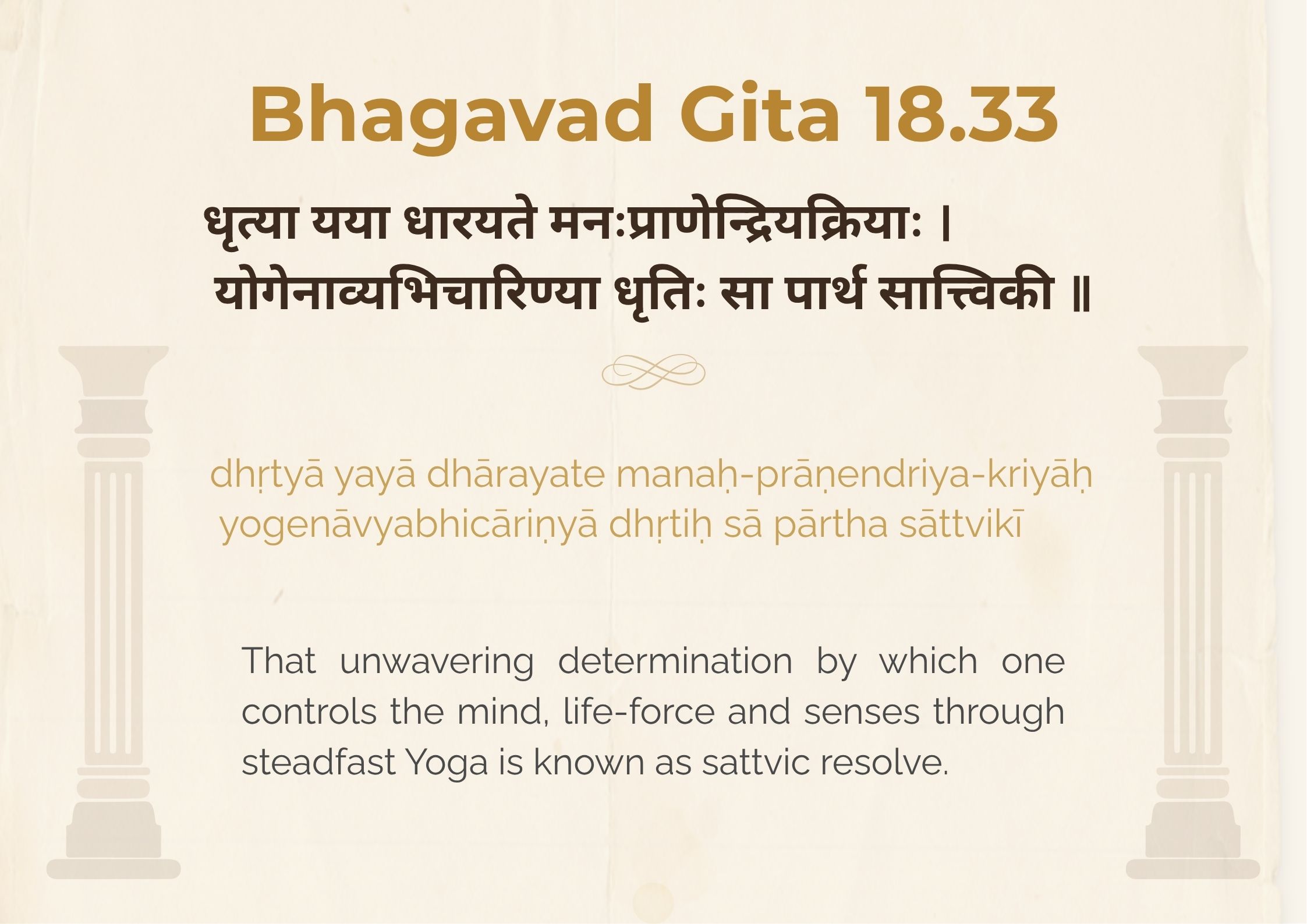
This week’s verse, 18.33 from the Bhagavad Gita tells us that motivation is powerful, but it is often temporary. Determination is quieter and far more reliable. Krishna praises the kind of strength that continues even when enthusiasm fades and progress seems invisible. Every meaningful achievement is built on this foundation. Relationships, health, spiritual growth, learning and service all require sustained effort over time. This verse teaches that true determination is not stubbornness or force. It is the steady commitment to what is right, even when no immediate reward is visible. Inner strength is often less dramatic than we imagine. It is simply choosing to continue when it would be easier to stop.

And this week I learned that life happens, circumstances change, and the people who were once an integral part of your life may no longer hold the same place. You may not talk to them or see them as often, but that doesn’t mean the connection disappears. Learning to let go with grace is one of life’s greatest lessons. Wish them well, even from a distance. The love you shared will always be part of you. Find comfort in knowing that you left them better than they were before you met them, and that your love made a difference, even if it didn’t last forever. 

That’s all from me this week. Be positive, and keep smiling. See you next week in this space! 

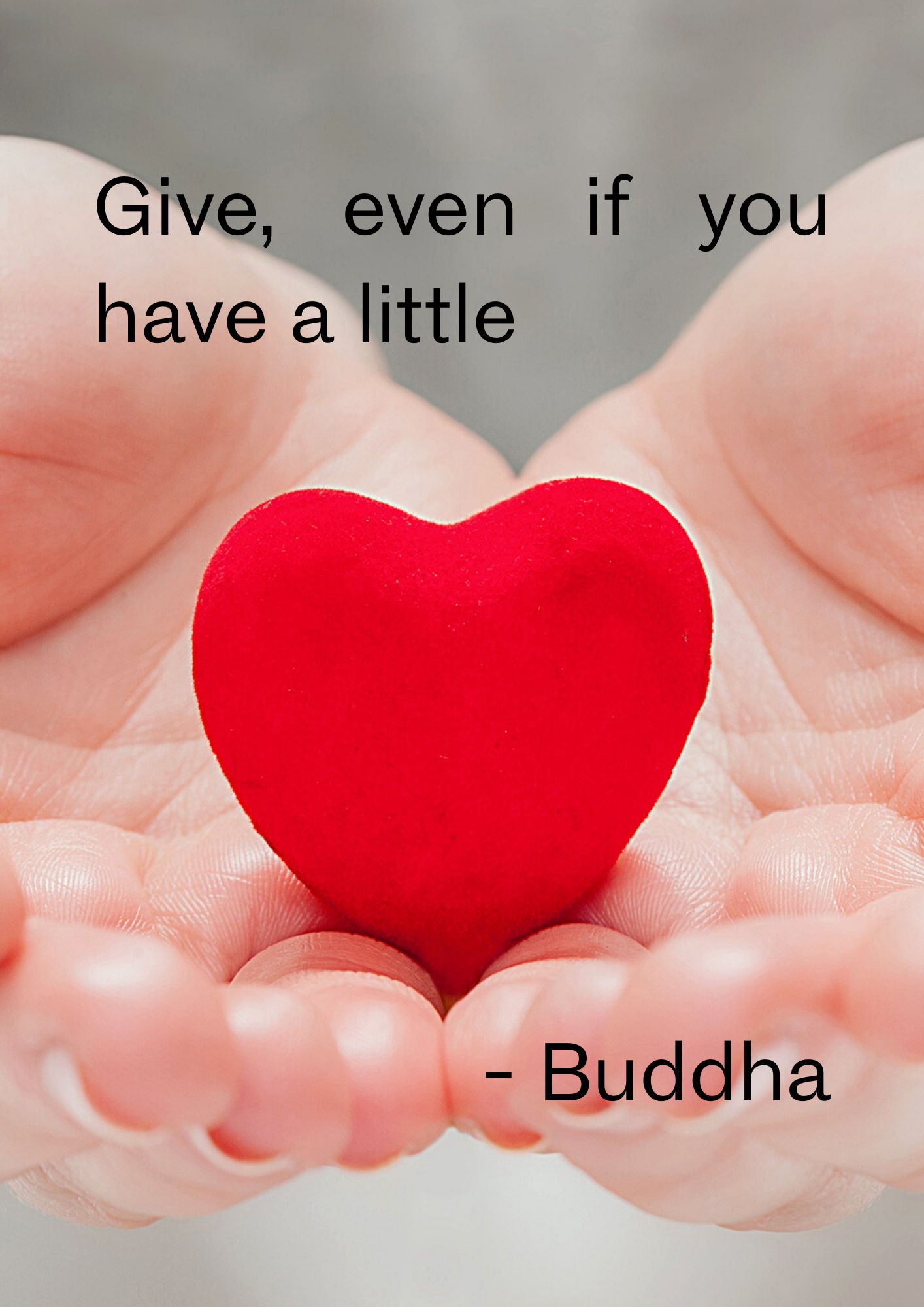
This week’s quote, a modern rendering of a Buddhist teaching on generosity, attributed to the Buddha, reminds us that generosity is not determined by how much we possess, but by our willingness to share what we have. We sometimes imagine giving as something reserved for people with abundance: when we have enough money, enough time, enough knowledge or enough emotional energy, then we will be generous. But this idea turns that assumption around. Even when our resources are limited, there may still be something we can offer. A small amount of money, a meal shared, a few minutes of our time, useful knowledge, encouragement, kindness or simply our full attention can matter enormously to someone else.

More importantly, giving when we have little changes our relationship with abundance. Instead of concentrating solely on what is missing, we recognise what is already available to us. Generosity becomes less about the size of the gift and more about the spirit in which it is offered. This doesn’t mean giving until we have nothing left or neglecting our own needs. Healthy generosity includes discernment and boundaries. Rather, the message encourages us not to postpone kindness until some imaginary future when we finally have “enough”. Perhaps the greatest lesson is that we almost always have something to give. Sometimes the smallest gestures, offered sincerely and at precisely the right moment, can carry far greater value than their material worth suggests.

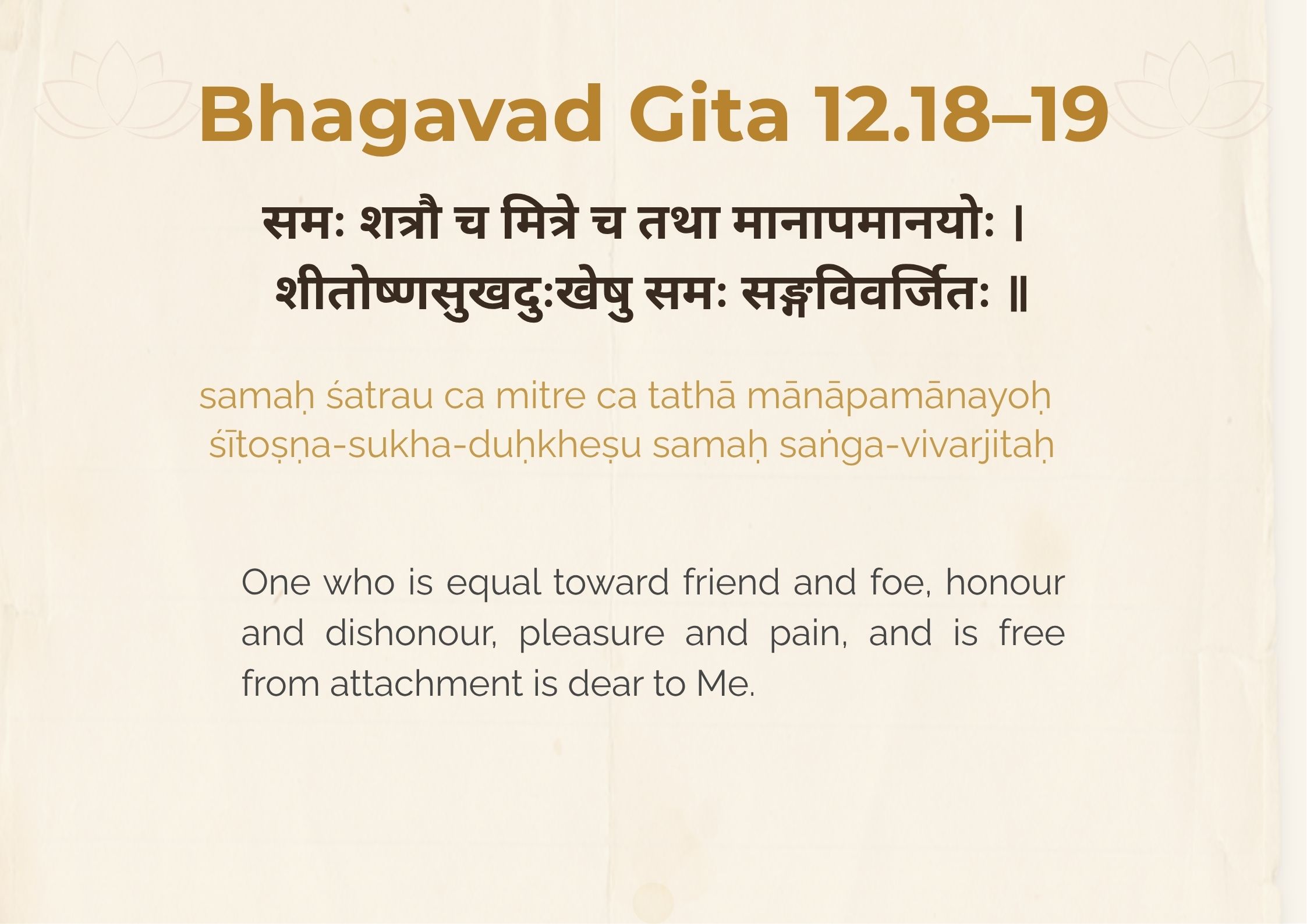
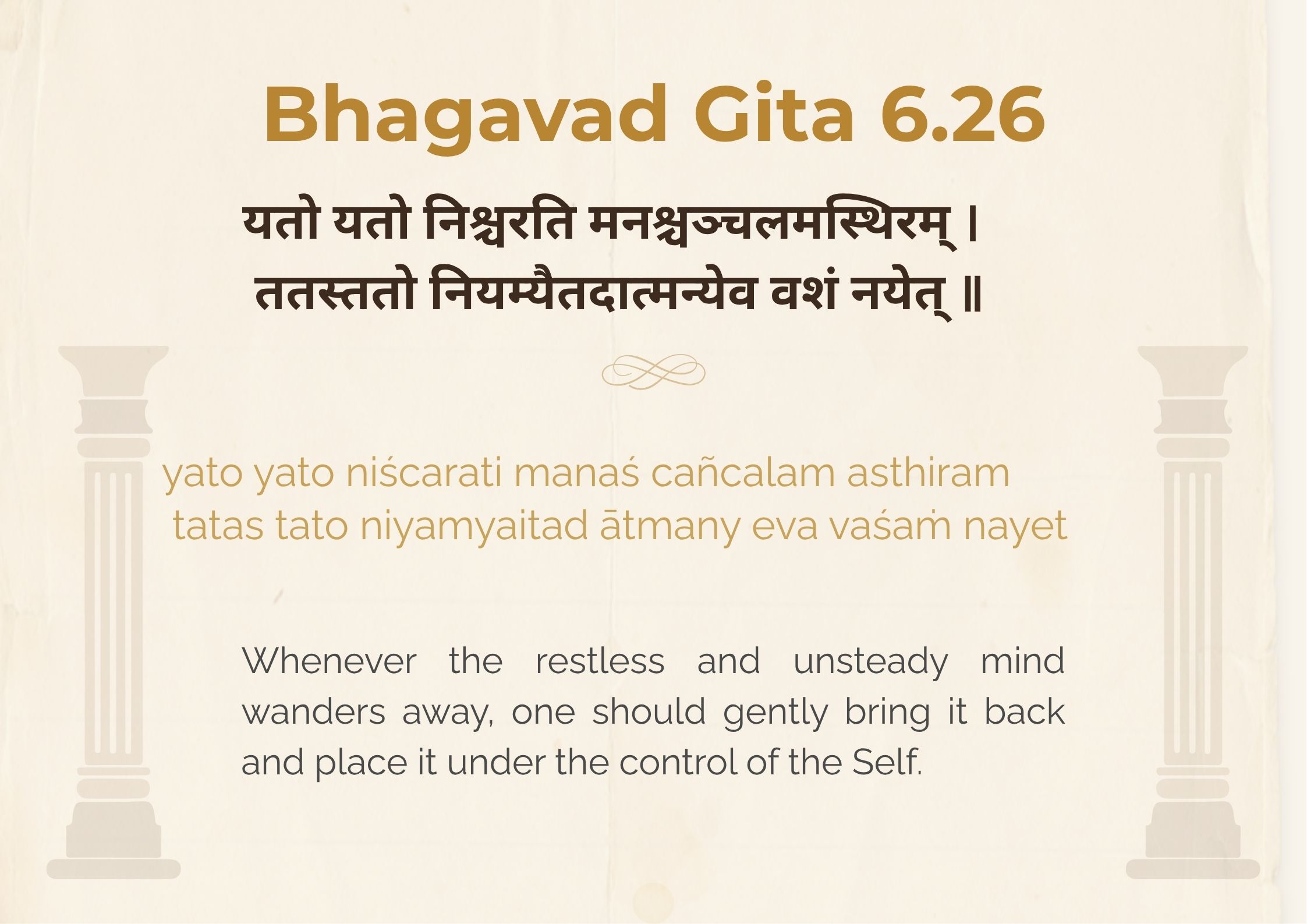
This week, the Bhagavad Gita in verse 6.26 brings the wandering mind back gently. Many of us believe that a calm mind is a mind that never wanders. Krishna offers a gentler perspective. The mind is naturally restless. It drifts toward worries, memories, fears and distractions. Spiritual growth is not measured by how often the mind wanders but by how often we bring it back. This verse reminds us that strength is found in returning. Every time we notice ourselves lost in anxiety, anger or doubt and consciously return to the present moment, we strengthen our inner stability. The practice is not perfection, the practice is patience. Like training a young tree to grow upright, we guide the mind back again and again until steadiness becomes its nature.

This week seemed to carry an unexpected lesson in loosening my grip. There were things I wanted settled, plans I wanted confirmed, and moments when uncertainty could easily have me you down the familiar road of worrying about every possible outcome. But somewhere along the way, something shifted. The question became less of “how do I make this work? and more of “what if it doesn’t, and I’m still perfectly capable of finding another way?”. That is quite a profound change.

Work continued at its usual pace, with deadlines, deliverables, planning and the constant juggling of things that somehow multiply when nobody is looking. There were also practical frustrations and conversations about future arrangements that could have felt much heavier than they ultimately did. Instead, there seemed to be a growing recognition that a job, project or organisation can be important without becoming the foundation upon which your entire sense of security rests. Interestingly, while one part of life was asking me to release control, another was quietly looking ahead. Future plans resurfaced, possibilities that had been tentative began feeling more real. There was organisation, problem-solving and even the satisfaction of finding small ways to stop everyday information from disappearing into the black hole where forgotten tasks apparently go to live. Perhaps that’s the theme of this week: security doesn’t always come from knowing what will happen next. Sometimes it comes from knowing yourself well enough to trust that you’ll handle whatever does. Not everything needs to be secured today. Not every answer needs to arrive immediately. Some doors will open, some won’t, and increasingly, I’m learning that either way, I’ll keep walking.

This week I learned that when you feel overwhelmed by the way events are unfolding in your life, turn inward. Look closely at your limiting beliefs and the assumptions you hold about how life should look. Shift your focus toward cultivating presence. Explore who you are becoming. When you move beyond the noise of external experiences and distractions, you open yourself to unshakable peace. The mind will come up with many unhelpful thoughts; simply let them go. Let trust settle firmly within your heart. No matter how impossible things may seem at first, know that you will never miss what belongs to you.

That’s all I have for you this week. Stay happy, keep smiling and remember to look inward when you get overwhelmed!

2026 Week 36 Update

This week felt like a threshold. One year quietly closed and another began, bringing with it that inevitable temptation to look backwards for a moment and compare the person standing here today with the one who stood here a year ago. And perhaps the nicest discovery was realising just how much can change without us noticing it while it is happening.

Work was busy, but purposeful. There were site visits, conversations, learning, planning and deadlines, alongside the usual unexpected things that appeared demanding immediate attention. Yet there was also a stronger sense of boundaries this week, of recognising when enough really was enough and allowing the working week to end rather than endlessly expanding to fill the available space.

There was also something fitting about spending part of the week thinking about change and impact. Sometimes we become so focused on outcomes that we forget to notice the chain of smaller changes that created them. Perhaps lives work in much the same way. The visible transformation is merely the end of a much longer story made up of tiny decisions, experiments, mistakes and course corrections.

And so this week feels less like the beginning of another year and more like arriving at a small viewing platform along the way. A place to stop briefly, look back at the road already travelled, and then turn towards whatever comes next. There is still plenty unfinished. There always will be. But for this week, perhaps it is enough simply to recognise: I’ve come quite a long way.

This week’s quote by Farrah Gray, an American entrepreneur, author and motivational speaker, is a powerful reminder about taking ownership of the direction of our lives. Most of us spend a considerable part of our lives working towards goals set by someone else. There is nothing inherently wrong with this. A job can provide security, purpose, experience, relationships and opportunities to learn. The danger comes when we become so absorbed in helping organisations or other people achieve their ambitions that we forget to ask what we want to create.

Building your own dream does not necessarily mean quitting your job and becoming an entrepreneur. Our dreams may involve writing a book, travelling, learning something new, creating financial independence, pursuing a creative passion, building a home, changing careers or simply designing a life that gives us greater freedom over our time. What matters is that some portion of our energy is deliberately invested in something that belongs to us.

The quote also reminds us that dreams rarely build themselves. They require time, persistence and often years of seemingly insignificant effort. Waiting until circumstances are perfect can mean waiting forever. Sometimes the most meaningful projects begin quietly, alongside everything else we are already doing. Perhaps the real question is not whether we should stop building other people’s dreams, but whether we are also making room for our own.

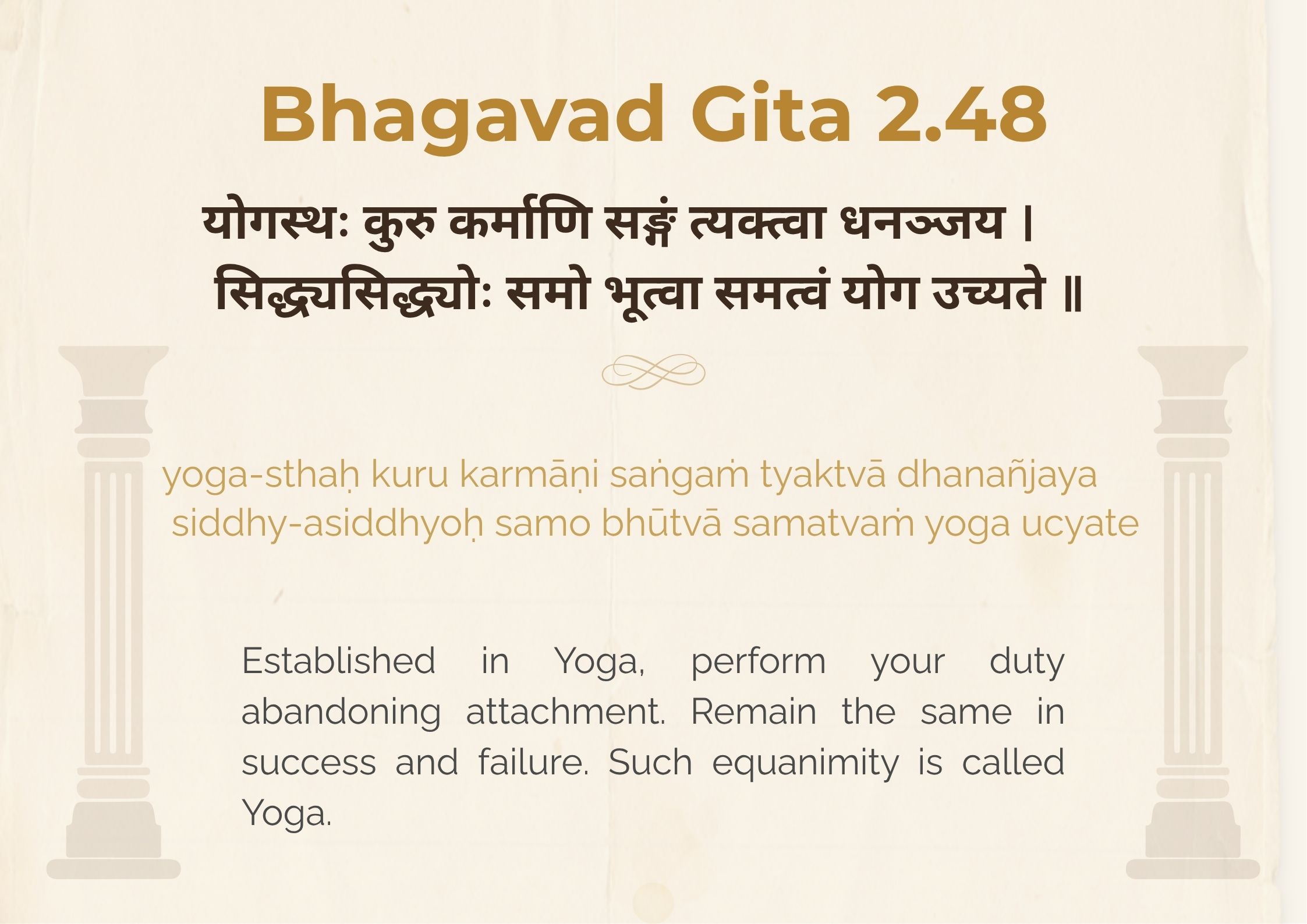
This week, the Bhagavad Gita, in verse 2.38, teaches us to treat success and failure alike. Life becomes exhausting when every outcome determines our peace of mind. We celebrate victories as though they will last forever and despair over failures as though they define us. Krishna offers another path. He asks us to focus on doing what is right rather than obsessing over what might happen next. Inner strength is not the absence of emotion. It is the ability to remain steady while moving through both success and disappointment. The more we anchor ourselves in purpose instead of outcomes, the more resilient we become.

This week, I learned to stop holding on to the outcome so tightly. Use affirmations and gentle shifts in your thinking to tap into the energy of abundance rather than falling into fear, urgency, or scarcity. Surrender the “how” and the “when,” and let yourself relax into life’s pace. The more you relax, the more effortlessly things begin to come together. And when the right opportunity, the right person, or the right shift finally arrives, it fits your life in a way it simply wouldn’t have before.

And on that introspective note, here’s to a wonderful rest of September, and to a week full of joy!

2026 Week 35 Update

Today’s quote, often attributed to Abraham Lincoln, the 14th President of the United States of America, and who led the country through the American Civil War, is a witty reminder that sometimes silence is wiser than speaking simply for the sake of being heard. We often feel compelled to have an opinion about everything. Silence can make us uncomfortable, particularly when everyone around us seems confident about what they think. Yet speaking without enough knowledge or understanding can reveal far more than saying nothing at all. The quote encourages us to listen, observe, and think before contributing to a conversation.

There is also an important distinction between silence and ignorance. Choosing not to speak doesn’t necessarily mean we have nothing worthwhile to say. Sometimes it demonstrates self-awareness: recognising when we don’t know enough, when emotions are running high, or when our words would add little value. Asking questions and listening can often teach us far more than rushing to demonstrate what we know. The idea feels particularly relevant today, when social media makes it possible to respond instantly to almost anything. We are encouraged to react before we have had time to understand. Yet not every opinion needs to be expressed, every argument entered, or every provocation answered. There can be enormous strength in knowing when to remain silent. Ultimately, the quote isn’t telling us to be afraid of speaking. It is encouraging discernment. Words have greater value when they come from thought, understanding, and intention rather than impulse.

This week felt like one of those strange spaces between finishing and beginning. There was satisfaction in looking at something substantial and realising that, after weeks of decisions, revisions and seemingly endless little details, it was finally organised enough to close the folder, metaphorically and almost literally. There is something deeply satisfying about bringing order to what was once scattered.

But clearing one space inevitably makes room for another. Alongside the practical work came thoughts about the future: money, security, creativity, and how to build a life that isn’t overly dependent on any single path. These weren’t anxious thoughts so much as exploratory ones. What else could I create? What could I build now that might quietly support me later? The answers aren’t there yet, but perhaps asking the questions is the beginning.

There was learning too, including the slightly uncomfortable kind where you attempt something unfamiliar, stare at the screen wondering why absolutely nothing happened, try again, accidentally do something you don’t understand, and eventually discover that you have, in fact, made it work. Sometimes progress looks remarkably like confusion until you turn around and see what you’ve learnt.

And threaded through everything were the smaller things: thinking about family, planning meals, photographs worth stopping for, everyday decisions, and the continuing process of making systems work better rather than simply adding more to life. Perhaps that’s what this week was really about: editing. Finishing what no longer needs attention. Organising what remains. Learning something new. Looking at what comes next. Not a dramatic reinvention. Just quietly creating a little more room for the person, and the life that is still unfolding.

Today’s verse is 18.78 from the Bhagavad Gita. The final verse of the Gita serves as a fitting conclusion to this month’s journey. Notice that victory does not arise from strength alone. It comes from the union of wisdom and action. Krishna represents insight. Arjuna represents effort. One without the other is incomplete. Many people spend their lives gathering knowledge without acting on it. Others rush into action without reflection. The Gita teaches that lasting success emerges when understanding and effort work together. This verse is ultimately hopeful. It reminds us that we do not need to be fearless before we begin. We do not need perfect certainty before we act. We simply need the courage to move forward with wisdom as our guide. When clarity and action walk together, progress becomes inevitable.

Earlier this week, BB earned his first pay cheque. It is not a lot, but the first step toward financial independence. It’s hard trying to toe the line between giving them their independence and making sure they don’t spend all the money without saving the bulk of it because right now, other than personal expenses, they don’t have any other expenses.

This week, I learned that radical acceptance is the key to finding peace right where you are. But strong emotions often become major obstacles to cultivating that acceptance. We may have intense emotional reactions to other people’s actions, or to situations that feel unfair or unfavorable. The practice is to engage with these moments in ways that reduce our struggle and suffering. Instead of obsessing over catastrophic thoughts or insisting that “this shouldn’t be happening,” gently guide your mind in a more positive direction. What you need is a willingness to be at peace with whatever is unfolding. A big part of nurturing that openness is trusting that everything is ultimately happening for your highest good, even if it’s not apparent right now.

That’s all I have this week! Stay safe, stay positive and keep smiling!

2026 Week 34 Update

This week felt long! Not necessarily because anything went wrong, but because some weeks simply ask more of us than others. There were early starts, long days, important conversations, meetings that required concentration, and moments when the working day stretched well beyond its usual boundaries. By the middle of the week, tiredness had definitely entered the chat.

Professionally, though, it was a significant week. There were conversations about leadership and the future, opportunities to listen to different perspectives, and the interesting experience of evaluating not simply what someone has accomplished, but what they might bring to the next chapter of an organisation. Elsewhere, a major project continued moving from concept towards reality. Plans became more concrete, partnerships were explored, documents refined, and several small but necessary pieces fell into place. There were disappointments too, including an outcome that didn’t go the way we had hoped, but even that quickly became a question of: What can we do with this instead?

Personally, this week reinforced something I’ve been learning repeatedly this year: energy is finite. There is a difference between being capable of doing everything and needing to do everything, and perhaps wisdom lies somewhere in recognising that distinction.And underneath all the activity was the ordinary rhythm of life: family, routines, conversations, small pleasures, and moments of quiet squeezed between everything else. If last week was hectic, this one felt intense. But it was also purposeful. Things moved forward. Decisions came closer. And as the week ends, I think I’ve earned the right to do something wonderfully unproductive for a while. Sometimes rest isn’t what happens after the important work. Rest is part of the important work.

Today, English novelist and playwright, best remembered for The Hundred and One Dalmatians Dodie Smith’s quote is a gentle reminder that some of life’s greatest luxuries cannot be bought. In a world where luxury is usually associated with expensive possessions, beautiful places, or exclusive experiences, Smith offers something wonderfully simple instead: the freedom to sit quietly and think. Contemplation requires very little. We don’t need special equipment, money, or even a particular place. We simply need enough stillness to allow our minds to wander, reflect, question, remember, and imagine. Yet ironically, this completely free luxury can sometimes feel incredibly difficult to obtain. Our days are filled with responsibilities, notifications, conversations, deadlines, and endless distractions. Even when we have a few spare minutes, we often instinctively reach for something to occupy them.

Smith’s words suggest that perhaps we underestimate the value of doing nothing except thinking. Contemplation gives us space to process what has happened, understand how we feel, and decide what truly matters. It allows ideas to emerge without being forced and gives us an opportunity to notice things that become invisible when we are constantly rushing. There is also something quietly rebellious about choosing contemplation in a culture that celebrates constant productivity. Time spent thinking may appear unproductive from the outside, yet it can bring clarity, creativity, gratitude, and greater self-awareness. Perhaps that is why contemplation really is a luxury. Not because it costs money, but because it asks us to give ourselves something increasingly precious: undivided time and attention.

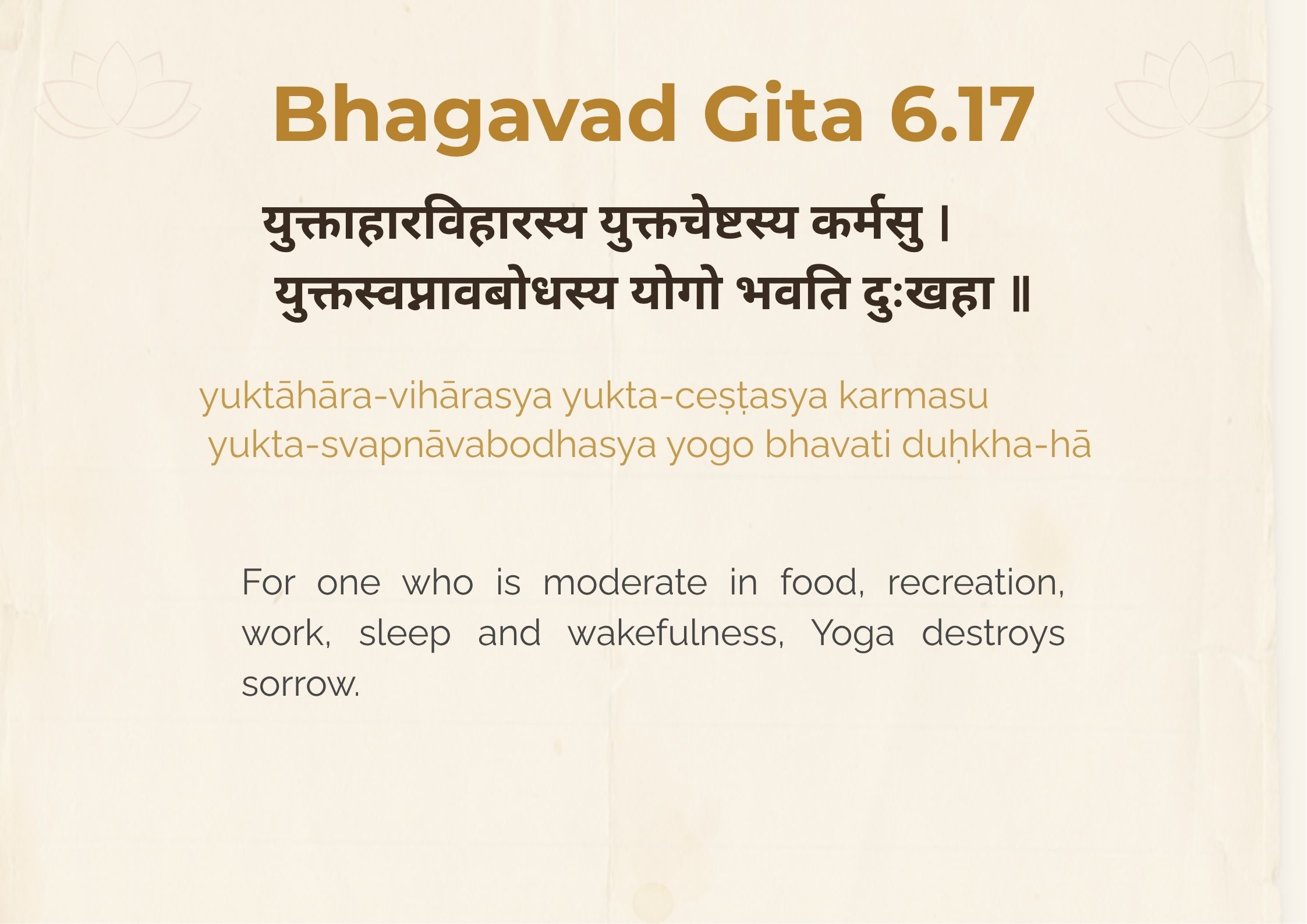
In verse 2.47 of the Bhagavad Gita, Lord Krishna says much of our stress comes from trying to control outcomes. We worry about results before the work has even begun. We become attached to specific endings and measure our worth according to whether those endings arrive. Krishna offers a liberating alternative. Focus on the work. Focus on the effort. Focus on what is within your control. The outcome is never entirely ours. Paradoxically, when we release our grip on results, we often perform better. Fear loosens its hold. Anxiety loses some of its power. We become fully present to the task before us. This verse is not an invitation to care less. It is an invitation to care differently. Do the work wholeheartedly. Let the outcome unfold.

This week, I learned that most of the pieces shift and fall into place behind the scenes. Everything is aligning in your favor in ways you’ll only understand later. Before those changes become visible, we often have to move through periods of waiting, confusion, and uncertainty. As difficult as it may feel, you have to fully trust the process through the delays. Trust that everything is unfolding exactly as it should. Your power lies in the sure belief in the natural flow of your life. Release the need to control. Let your inner wisdom lead the way. Life is shaping you for something greater.

That’s all from me this week. Stay safe, stay happy and stay positive! Speak soon!