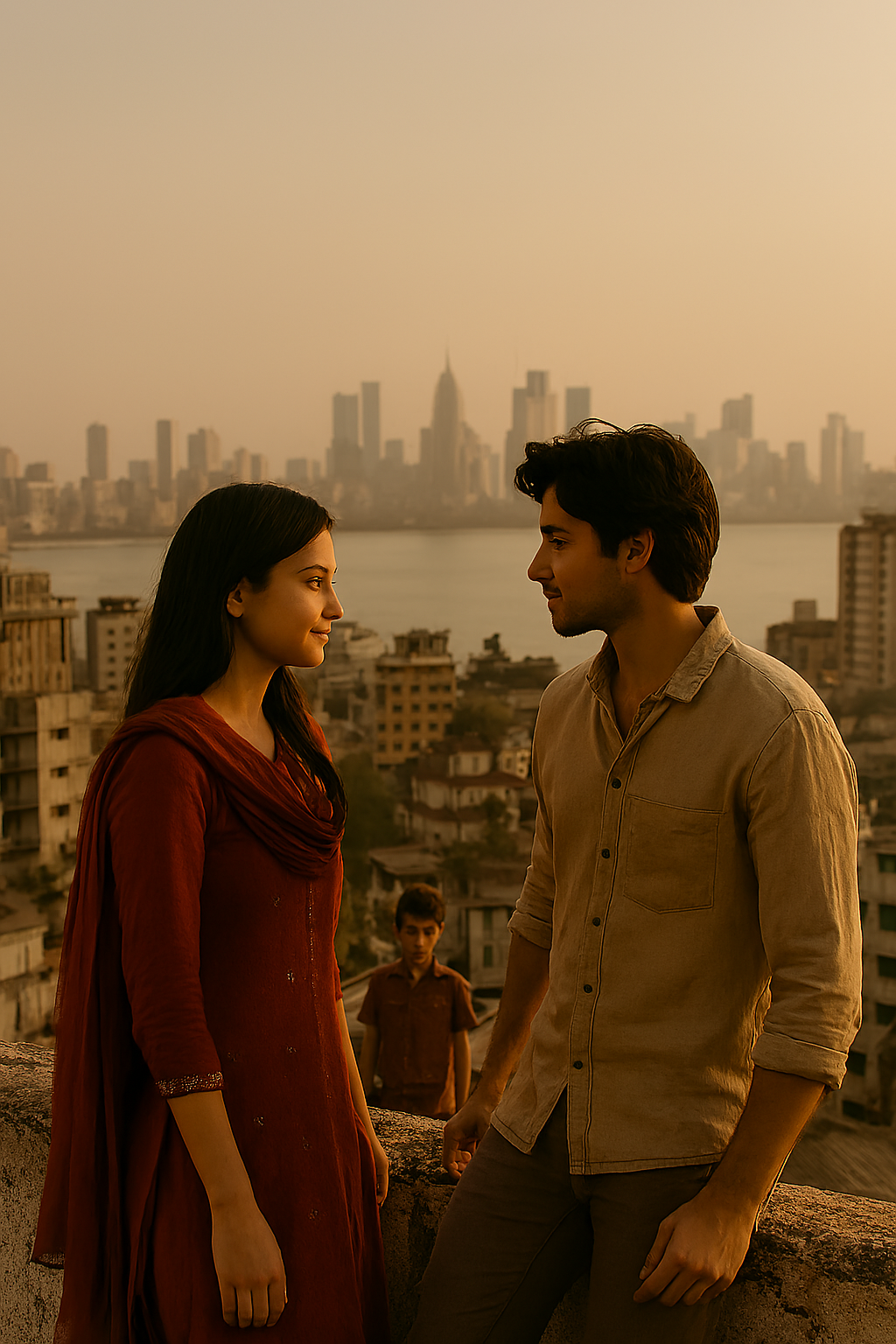
Short Story: The Lonavala Getaway

The train screeched to a halt at Lonavala station, and Arjun practically bounced out of his seat. “Finally! Fresh air!” he declared dramatically, throwing his arms wide as if he could already breathe in the hill station’s crisp atmosphere through the train’s grimy windows.

Calm down, Mountain Man,” laughed Priya, adjusting her oversized sunglasses. “We haven’t even gotten off yet.”

Their group of six had been planning this weekend trip for months. There was Arjun, the eternal optimist and self-appointed trip organiser; Priya, sharp-tongued but fiercely loyal; Rohit, quiet and thoughtful, who’d been harboring feelings for Priya since their first year; Kavya, bubbly and Instagram-obsessed; Vikram, the skeptic who complained about everything but never missed a hangout; and Neha, practical and level-headed, often the voice of reason.

I still think we should have booked a proper hotel,” Vikram grumbled, hefting his designer backpack. “This Airbnb thing sounds sketchy.

It’s not sketchy, it’s authentic,” Arjun countered. “The listing said it’s a colonial-era bungalow with ‘old-world charm.’ How cool is that?”

Old-world charm usually means no Wi-Fi and questionable plumbing,” Vikram muttered.

Kavya, who had been frantically taking selfies since they’d entered the Western Ghats, looked up from her phone. “Guys, I’m getting no signal. Like, zero bars. How am I supposed to post our trip?”

That’s the point!” Arjun said. “Digital detox! Quality time! Bonding!”

I’m already feeling detoxed,” Neha said dryly. “Mainly of my will to live.”

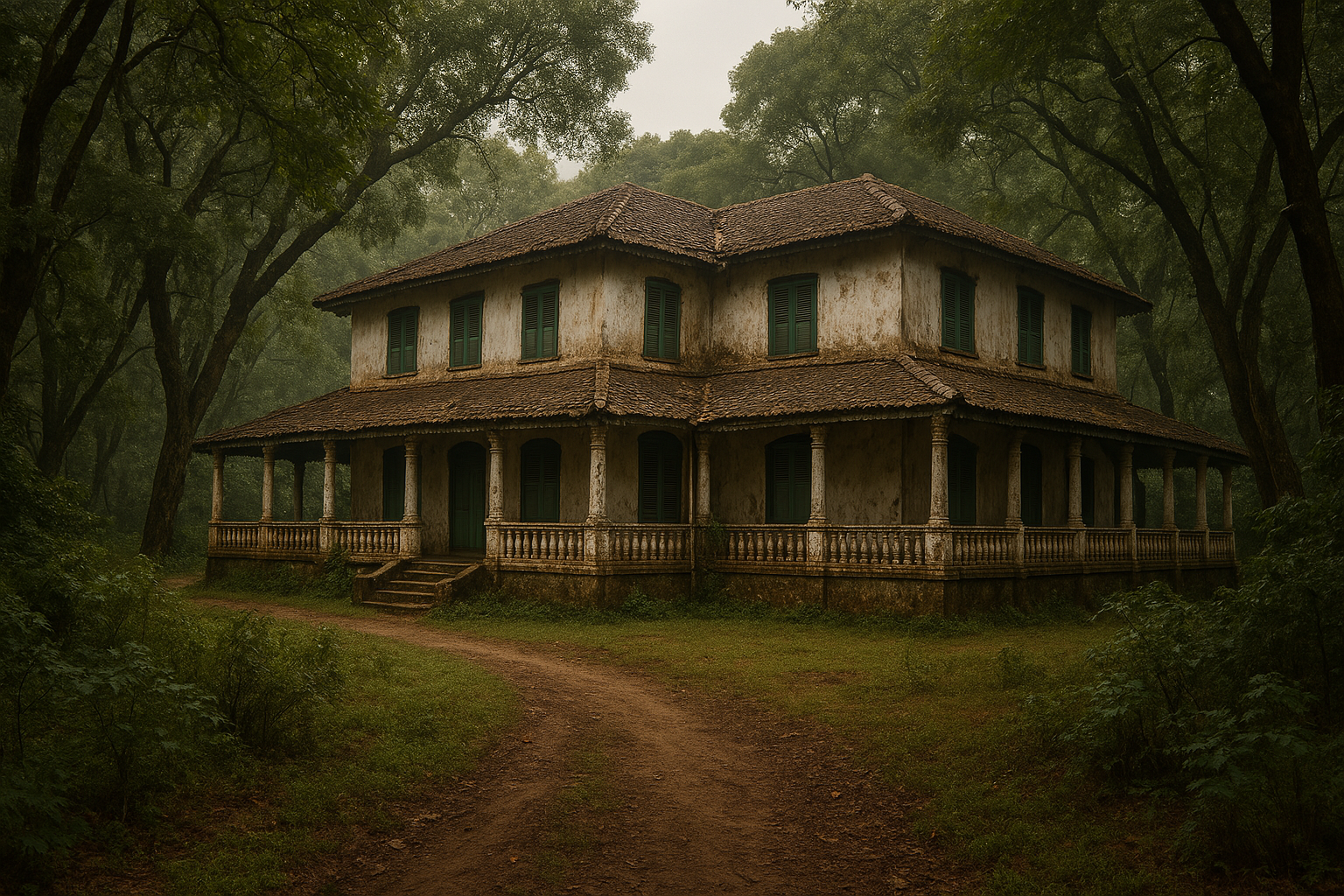
After a bumpy auto-rickshaw ride through winding roads flanked by misty hills and cascading waterfalls, they arrived at their destination. The bungalow stood at the end of a narrow dirt path, surrounded by dense trees that seemed to lean in conspiratorially. It was exactly as advertised: a sprawling colonial structure with weathered white walls, green shutters, and a wraparound veranda that had seen better decades.

It looks like something out of a horror movie,” Rohit observed quietly.

Or a romantic period drama,” Priya added, and Rohit’s heart did a little skip.

Why not both?” Kavya said cheerfully, finally finding one tiny bar of signal and immediately snapping photos.

The caretaker, an elderly man named Raman uncle, greeted them with a mixture of warmth and what seemed like concern. He was lean and weathered, with kind eyes that seemed to hold secrets.

Welcome, welcome,” he said, jangling a large set of keys. “You are the college group, yes? From Mumbai?”

“That’s us!” Arjun beamed. “Ready for the best weekend ever!”

Raman uncle’s smile faltered slightly. “Ah, yes. Well, let me show you the house. There are just a few… guidelines.”

As he led them through the musty interior, pointing out the kitchen, bathrooms, and bedrooms, his tone grew more serious. “Please, do not go to the third floor. It is not safe, old floorboards, you understand. And after sunset, it is better to stay inside. The forest can be… confusing at night.”

“Confusing how?” Neha asked, her practical mind immediately catching the euphemism.

“Animals,” Raman uncle said quickly. “Leopards, sometimes. And the paths, they all look the same in the dark.”

Vikram shot Arjun a pointed look. “Leopards. Great choice, organiser.”

Leopards are scared of humans,” Arjun said dismissively. “And look at this place! It’s perfect!

After Raman uncle left, promising to return the next evening, the group settled in. They distributed themselves across the four bedrooms on the second floor, with Arjun and Vikram sharing one, Priya and Kavya sharing another, and Rohit and Neha taking the remaining two rooms.

The first evening passed pleasantly enough. They cooked a chaotic dinner together, with Priya demonstrating her surprising culinary skills. At the same time, Kavya documented every dish for her Instagram story (which she couldn’t post due to the poor signal, leading to much dramatic sighing). Rohit found excuses to help Priya in the kitchen, and she didn’t seem to mind, which gave him hope.

This is nice,” Vikram admitted grudgingly as they sat on the veranda after dinner, sharing bottles of beer they’d brought from Mumbai. “Peaceful.

See? I told you…” Arjun began, but was interrupted by a strange sound from above.

Thump. Drag. Thump. Drag.

Everyone looked up at the ceiling.

What was that?” Kavya whispered.

Probably just the wind,” Neha said, but her voice lacked conviction.

Wind doesn’t make dragging sounds,” Rohit pointed out.

Thump. Drag. Thump. Drag.

The sound came again, clearly footsteps, but dragging, as if someone was pulling something heavy across the floor above them.

That’s the third floor,” Priya said quietly. “The one we’re not supposed to go to.”

Maybe it’s just settling,” Arjun suggested, though his usual confidence seemed shaken. “Old houses make weird noises.”

Vikram stood up abruptly. “I’m going to check.”

Are you insane?” Kavya hissed. “Raman uncle specifically said not to go up there!”

Raman uncle also said there were leopards, and I haven’t seen any paw prints. I bet he just doesn’t want us messing with his storage or something.”

Before anyone could stop him, Vikram had stalked inside and up the creaking staircase. The others followed reluctantly, clustering at the bottom of the stairs leading to the third floor.

Vikram?” Arjun called. “Find anything?”

There was a long pause, then Vikram’s voice, strangely strained: “Guys? You need to see this.”

They climbed the narrow staircase to find Vikram standing in a doorway, his face pale. Beyond him was a room that looked like it belonged in a different century, or a different world entirely.

The room was filled with old photographs, hundreds of them, covering every wall. But these weren’t ordinary family photos. They showed the same group of six young people, over and over again, in different poses, different clothes, but always the same faces. Their faces.

“What the hell?” Priya breathed.

Kavya grabbed Neha’s arm. “Those are us. Those are literally us.”

In photo after photo, they could see themselves, laughing on the veranda downstairs, cooking in the kitchen, sitting around the very same table where they’d just eaten dinner. The photos looked old, yellowed at the edges, as if they’d been taken decades ago.

“This is impossible,” Rohit said, stepping closer to examine one of the images. “These photos… they look vintage, but that’s definitely me.”

“And me,” Arjun whispered, pointing to a photo showing him with his arm around a laughing Priya. “But I’ve never seen this picture before in my life.”

Neha, ever practical, was examining the room more carefully. “Look at this,” she said, pointing to a corner where dozens of diaries were stacked. She opened one at random and began reading aloud:

“Day 1: Arrived at the bungalow with the group. Arjun is as enthusiastic as ever, Vikram is complaining, and Kavya can’t stop taking photos. Rohit keeps looking at Priya when he thinks no one is watching. Some things never change.”

What does that mean, ‘some things never change’?” Kavya asked, her voice small.

Neha flipped to another entry: “‘Day 15: We tried to leave today, but the path just led us back to the house. Raman uncle won’t explain what’s happening. He just smiles sadly and tells us to be patient.”

Day 15?” Arjun repeated. “We’ve only been here one day.”

Keep reading,” Priya urged, though her voice was shaking.

“Day 43: Rohit finally told Priya how he feels. She said she’d known all along and had been waiting for him to find the courage. Even trapped here, there’s still room for happiness.”

Rohit and Priya looked at each other, and despite the surreal horror of the situation, something passed between them.

“Day 78: We think we understand now. We’ve been here before. Many times. The photos prove it. But each time, we forget when we arrive. We only start remembering as the cycle nears its end.”

“Cycle?” Vikram’s voice cracked. “What cycle?”

Neha flipped ahead frantically. “Day 127: This is my last entry. Tomorrow we’ll try to leave again, and we’ll wake up in Mumbai with no memory of this place, planning another trip to Lonavala. But maybe this time, if we’re lucky, someone will read these diaries before it’s too late. If you’re reading this, you are us, and we are you. Find Raman uncle. Ask him about the curse. Ask him about the English sahib who died here in 1923. Ask him how to break free.”

The room fell silent except for the sound of their collective breathing.

This is insane,” Vikram said finally. “Someone’s playing an elaborate prank. Those photos are doctored, the diaries are fake…

He was interrupted by the sound of footsteps on the stairs. They all turned to see Raman uncle ascending slowly, his face grave.

You found the room,” he said simply.

What is this?” Arjun demanded, his voice higher than usual. “What’s happening to us?”

Raman uncle sighed deeply. “It is a long story. There was an Englishman, James Worthington, who built this house in 1922. He fell in love with a local woman, Kamala, but her family forbade the match. In his anger and heartbreak, he… he did something terrible. He turned to dark practices, tried to bind her spirit to this place so she could never leave him.”

And?” Priya prompted when he paused.

“The ritual went wrong. Instead of binding just her, he created a trap for love itself. Young couples, groups of friends with love between them, they come here, and the house feeds on their connections, their emotions. It keeps them in a loop, living the same experiences over and over.”

“That’s impossible,” Neha said, but her voice lacked conviction.

“How many times?” Rohit asked quietly. “How many times have we been here?

Raman uncle’s eyes were sad. “This is your forty-seventh visit.”

The number hit them like a physical blow.

Forty-seven times,” Kavya whispered. “We’ve lived through this forty-seven times?”

But we don’t remember,” Priya said, as if trying to make sense of it. “We go back to Mumbai and plan the trip again, with no memory of what happened here.”

The house lets you leave when the cycle completes,” Raman uncle explained. “But it also makes you forget, ensuring you’ll return. Only in the final days do the memories begin to surface.”

So, how do we break it?” Arjun asked. “There has to be a way.”

Raman uncle looked at them for a long moment. “The curse was born from love turned selfish, possessive. It can only be broken by love freely given, without expectation of return.

What does that mean?” Vikram demanded.

But before Raman uncle could answer, something extraordinary happened. Despite the supernatural horror of their situation, despite being trapped in a cosmic loop for who knows how long, Rohit stepped forward and took Priya’s hand.

I need to tell you something,” he said, his voice steady despite everything. “I’ve been in love with you since the first year. Maybe that’s why we keep coming back here, I don’t know. But if we’re trapped, if this is all we have, I want you to know.”

Priya looked at him, tears in her eyes. “I know,” she said softly. “I’ve always known. And I’ve been waiting for you to be brave enough to say it.”

They kissed then, simple and sweet, and something in the house seemed to shudder.

“Well, this is awkward,” Kavya said, but she was smiling through her tears. “Here I thought the scariest part would be the supernatural imprisonment.”

“Actually,” Neha said thoughtfully, “I think they might be onto something. Raman uncle, when you said love freely given…”

“The curse feeds on selfish love, possessive love,” Raman uncle confirmed. “But love that expects nothing in return, love that wishes only happiness for the other person…”

Arjun suddenly laughed, and they all turned to stare at him. “You know what’s funny? In forty-seven loops, we’ve probably become the best of friends anyone could ask for. We’ve shared everything, been through everything together, even if we don’t remember it.”

“We have,” Vikram agreed, and for once, he wasn’t complaining. “And honestly? Even if we’re trapped, even if this is all insane, I can’t think of five people I’d rather be trapped with.”

One by one, they moved closer together, forming a circle on the dusty floor of the photograph room.

“I love you all,” Kavya said simply. “Not romantically, well, except you two are adorable, but I love our friendship. I love that Arjun always believes the best in everything, that Vikram pretends to be cynical but cares more than anyone, that Neha always keeps us grounded, that Priya makes us all braver, and that Rohit sees beauty in everything.”

“I love that we found each other,” Neha added. “In all the chaos of college, in Mumbai, in life, we found each other.”

“And I love that even here, even in this impossible situation, we’re still us,” Priya said. “We’re still taking care of each other.”

The house began to tremble. The photographs on the walls started to fade, their edges curling as if being consumed by invisible flames.

It’s working,” Raman uncle said, his voice filled with wonder. “In forty-seven cycles, you never… You were always trying to escape, to get away. You never chose to stay together.”

Because we never remembered how much we meant to each other,” Rohit realised.

The trembling intensified, and a warm light began to fill the room. One by one, the photographs crumbled to dust, decades of trapped moments finally released.

What happens now?” Arjun asked.

Now you choose,” Raman uncle said. “You can leave, return to Mumbai, and continue your lives with the full memory of what happened here. The curse is broken, you’ll never be drawn back.”

“Or?” Priya prompted.

Raman uncle smiled. “Or you acknowledge what you’ve learned in forty-seven lifetimes of friendship. That some bonds are stronger than any magic.”

They looked at each other, these six friends who had been through more together than any group should ever have to endure, even if they couldn’t remember most of it.

We’re graduating next year anyway,” Kavya pointed out. “We were all worried about staying in touch, starting careers, growing apart.”

“Can’t really grow apart from people you’ve been cosmically bonded to,” Vikram said with a grin.

“So we stay together?” Neha asked. “Always?”

“Not trapped,” Rohit clarified, squeezing Priya’s hand. “But connected. By choice.”

“I can’t think of anything I’d want more,” Arjun said honestly.

The light grew brighter, and they felt themselves being lifted, not by any supernatural force, but by the simple power of choosing love, friendship, romance, and loyalty over fear.

When the light faded, they were standing on the veranda of the bungalow, but it looked different now. Cleaner, brighter, as if decades of sadness had been washed away. The sun was rising over the Western Ghats, painting the sky in shades of gold and pink.

“So,” Kavya said, pulling out her phone and finding, miraculously, full signal bars. “Anyone want to extend this trip a few more days? I have a feeling we’ve got some catching up to do.”

They laughed, and the sound echoed across the hills, free and clear and full of promise.

Later, much later, as they sat around the kitchen table sharing stories and filling in gaps that memory couldn’t quite bridge, Raman uncle appeared in the doorway. But he looked different now, younger, lighter, as if a great weight had been lifted from his shoulders.

“Thank you,” he said simply. “I have been the caretaker here for sixty years, watching groups come and go, trapped in their cycles. You are the first to choose love over escape.”

“What will you do now?” Neha asked.

He smiled. “Return to my own life, I think. I have grandchildren I have not seen in many years.”

As he prepared to leave, Arjun called out to him. “Raman uncle, one more question. In forty-seven cycles, did we ever… did Rohit and Priya ever…?”

“Every time,” the old man said with a twinkle in his eye. “Love always finds a way, beta. Even in the worst circumstances.”

And as their laughter filled the morning air, echoing across the hills of Lonavala, six friends discovered that some stories don’t end, they just begin again, deeper and truer than before.

The house stood peaceful in the morning light, no longer a prison but a place where love had learned to set itself free.

Short Story: The Forbidden Forest Adventure

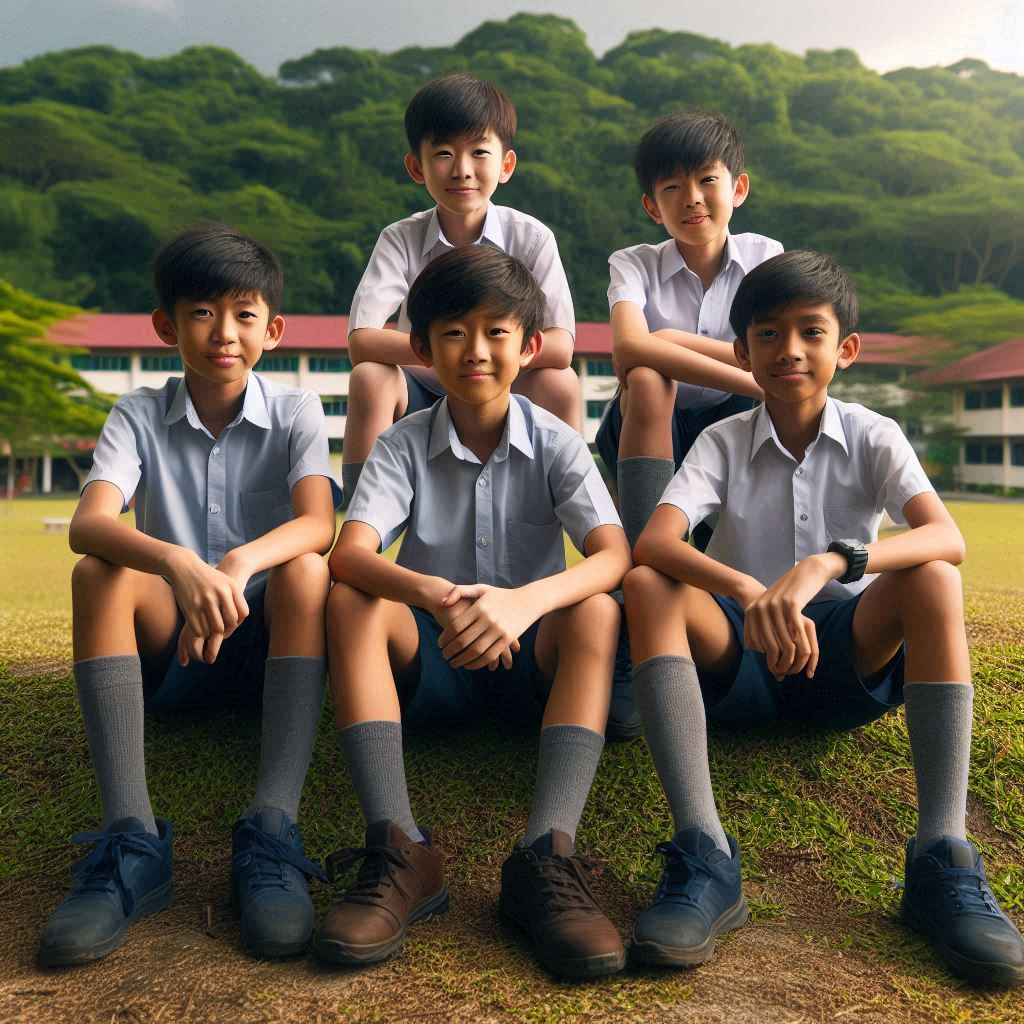
Benji, Salman, Atharva, and Thomas sat on the steps of their primary school, sweat beading on their foreheads in the sweltering June heat. The school grounds were eerily quiet, a stark contrast to the usual cacophony of children’s laughter and shouts. It was the middle of the school holidays, and most of their classmates were at home, enjoying a well-deserved break from the rigorous PSLE preparation that had consumed their lives for months.

“I can’t believe we’re spending our holiday studying,” Benji groaned, closing his math textbook with a thud. “My brain feels like it’s going to explode.” Salman nodded in agreement, absentmindedly doodling in the margins of his science notes. “Yeah, but we can’t slack off now. The PSLE is just a few months away.”

Atharva stretched his arms above his head, his eyes wandering to the dense forest that bordered their school. “You know what we need? An adventure. Something to take our minds off all this studying.” Thomas followed Atharva’s gaze, a mischievous glint in his eye. “Are you thinking what I’m thinking?”

The four boys exchanged knowing looks, a mix of excitement and apprehension coursing through their veins. They all knew what Thomas was suggesting – the forbidden forest. “But we’re not allowed in there,” Salman protested weakly, even as he began packing up his books. “Come on, Salman,” Benji urged, already on his feet. “We’ve been cooped up studying for weeks. What’s the harm in a little exploration?” With a collective nod, the boys made their decision. They quickly gathered their belongings and headed towards the forest’s edge, glancing over their shoulders to ensure no teachers were around to catch them.

As they stepped into the cool shade of the trees, a sense of exhilaration washed over them. The forest was a world apart from their orderly school life – wild, mysterious, and full of possibilities. “This is so cool,” Thomas whispered, his eyes wide as he took in the lush greenery surrounding them. They walked deeper into the forest, the sounds of civilisation fading behind them. The air grew thick with humidity, and the chirping of birds and rustling of leaves created a natural symphony.

After about twenty minutes of walking, Atharva suddenly stopped in his tracks. “Guys, look at that!” he exclaimed, pointing to something partially hidden beneath a tangle of vines. The boys crowded around, their curiosity piqued. As they brushed away the foliage, they gasped in unison. There, half-buried in the earth, was what appeared to be an old metal container.

“What is it?” Salman asked, his voice hushed with awe. Benji knelt down examining the object closely. “It looks like… a World War II relic,” he said, his voice filled with excitement. “Remember those pictures we saw in our history textbook?” Thomas nodded eagerly. “Yeah, from the Japanese occupation! This must be from that time.”

With renewed energy, the boys began to clear away more of the surrounding vegetation. As they worked, the full extent of their discovery became clear. It wasn’t just a single container – they had stumbled upon what appeared to be a small cache of World War II artefacts.

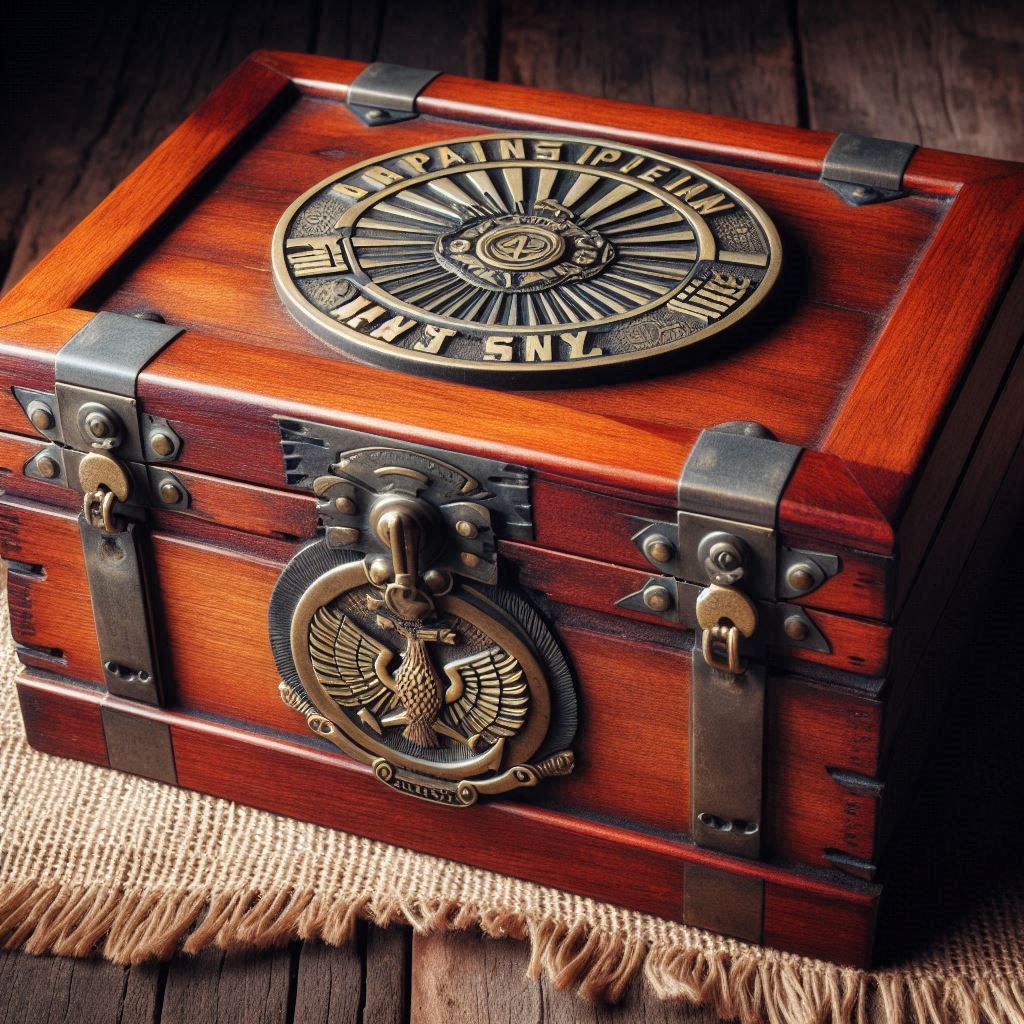
“Look, there’s some kind of insignia on this one,” Atharva pointed out, brushing dirt off a rusty metal box. Salman peered at it, his brow furrowed in concentration. “It looks like the Imperial Japanese Navy symbol. We learned about that in class, remember?” As the boys continued to unearth more items, their excitement grew. They found old canteens, a tarnished compass, and even what looked like parts of an old radio.

“This is incredible,” Benji breathed, carefully turning over a weathered leather pouch in his hands. “It’s like we’ve discovered a piece of history.” But as they delved deeper into their find, Thomas suddenly let out a yelp of pain. “Ouch!” he cried, jerking his hand back from one of the containers. “What happened?” Salman asked concern etched on his face.

Thomas held up his hand, revealing a small cut on his palm. “I think I cut myself on something sharp inside that box,” he explained, wincing. The mood suddenly shifted as the reality of their situation sank in. They were in a forbidden area, handling potentially dangerous artefacts from a war that had ended decades before they were born.

“Maybe we should go back,” Salman suggested, his earlier reservations returning. “We don’t know if these things are safe to touch.” Atharva nodded in agreement. “Yeah, and what if there’s unexploded ordnance or something? We learned about that in history class too.” The boys looked at each other, their earlier excitement now tempered with fear. They had been so caught up in their discovery that they hadn’t stopped to consider the potential dangers. “But we can’t just leave it here,” Benji argued. “This could be important. What if it gets destroyed or someone else finds it and doesn’t report it?”

As they debated what to do, they heard a sound that made their blood run cold – voices coming from the direction of the school. “Oh no,” Thomas whispered, his eyes wide with panic. “Someone’s coming!” The boys scrambled to gather their belongings, their hearts pounding in their chests. But as they prepared to flee, Benji made a split-second decision.

“We have to tell someone about this,” he said firmly. “It’s the right thing to do.” Despite their fear of punishment, the others nodded in agreement. They couldn’t just pretend they hadn’t made this significant discovery. With trepidation, they made their way towards the approaching voices. As they emerged from the treeline, they came face to face with Mr. Tan, their history teacher, and Mr. Lee, the school’s discipline master.

“Boys!” Mr. Lee exclaimed, his face a mixture of relief and anger. “What on earth are you doing in there? You know the forest is off-limits!” Before any of them could respond, Benji stepped forward. “Sir, we’re sorry for breaking the rules, but we found something important in the forest. We think it’s from World War II.”

Mr. Tan’s eyebrows shot up in surprise. “World War II relics? Are you sure?” The boys nodded vigorously, and Atharva added, “There are containers with the Imperial Japanese Navy symbol and lots of old equipment.” Mr. Tan and Mr. Lee exchanged glances, their anger giving way to curiosity and concern.

“Show us,” Mr. Tan said firmly. The boys led the teachers back to their discovery site. As Mr Tan examined the artefacts, his expression grew increasingly serious. “This is indeed a significant find,” he said, carefully inspecting one of the containers. “These appear to be genuine World War II relics, possibly from a Japanese naval outpost or supply cache.”

Mr. Lee, who had been silent until now, spoke up. “Boys, while I’m impressed by your discovery, I hope you understand the gravity of your actions. Entering the forest was not only against school rules but potentially very dangerous.” The four friends hung their heads, the weight of their transgression settling on their shoulders.

“However,” Mr. Lee continued, his tone softening slightly, “your decision to come forward and report your find was the right one. It shows responsibility and maturity.” Mr. Tan nodded in agreement. “Indeed. This discovery could be of historical importance. We’ll need to contact the proper authorities to handle these artefacts safely.”

Over the next few hours, the quiet school became a hive of activity. Police were called, and soon after, a team from the National Heritage Board arrived to assess the discovery. The boys watched in awe as professionals carefully excavated and documented each item they had stumbled upon.

As the day wore on, the full significance of their find became clear. The cache contained not only military equipment but also personal effects and documents that offered new insights into the Japanese occupation of Singapore during World War II.

Dr Lim, the lead archaeologist from the National Heritage Board, approached the boys with a smile. “You’ve made an incredibly important discovery,” she told them. “These artefacts will help us better understand a crucial period in our nation’s history.” Despite their initial fear of punishment, the boys found themselves at the centre of attention, recounting their adventure to officials and even a few reporters who had gotten wind of the story.

As the sun began to set, Mr. Lee gathered the boys for a final word. “While I can’t condone your breaking of school rules,” he began, his tone stern but not unkind, “I am proud of how you handled the situation once you realised the importance of your discovery.”

He paused, looking each boy in the eye. “There will be consequences for entering the forbidden area – you’ll each write an essay on the importance of following rules and the potential dangers of unexplored areas.” The boys nodded, accepting their punishment without complaint.

“However,” Mr. Lee continued, a small smile playing at the corners of his mouth, “in light of the significance of your find, I think we can arrange for you to be involved in the research process if you’re interested. It would be an excellent learning opportunity.” The boys’ faces lit up at this unexpected turn of events. What had started as a reckless adventure had turned into something far more meaningful.

In the weeks that followed, Benji, Salman, Atharva, and Thomas found themselves balancing their PSLE preparations with visits to the Heritage Board, where they learned more about the artefacts they had discovered and the historical context surrounding them. Their find made headlines in local newspapers, and they even featured in a short segment on the evening news. At school, they went from being known as troublemakers to local heroes, with younger students looking up to them in awe.

As the new school term began and the PSLE loomed closer, the boys found themselves changed by their summer adventure. They approached their studies with renewed vigour, understanding now more than ever the importance of knowledge and the excitement of discovery.

On the eve of their PSLE, as they gathered for one last study session, Benji looked around at his friends with a grin. “You know,” he said, “I never thought I’d say this, but I’m kind of glad we broke the rules that day.” The others laughed, nodding in agreement. “Just don’t make a habit of it,” Salman quipped, earning more chuckles from the group.

As they turned back to their books, each boy silently reflected on their extraordinary adventure. They had learned valuable lessons about responsibility, the importance of history, and the unexpected places where knowledge can be found. And as they faced the challenge of the PSLE, they did so not just as students, but as young explorers who had already made their mark on the world.

Short Story: The Memory Basket

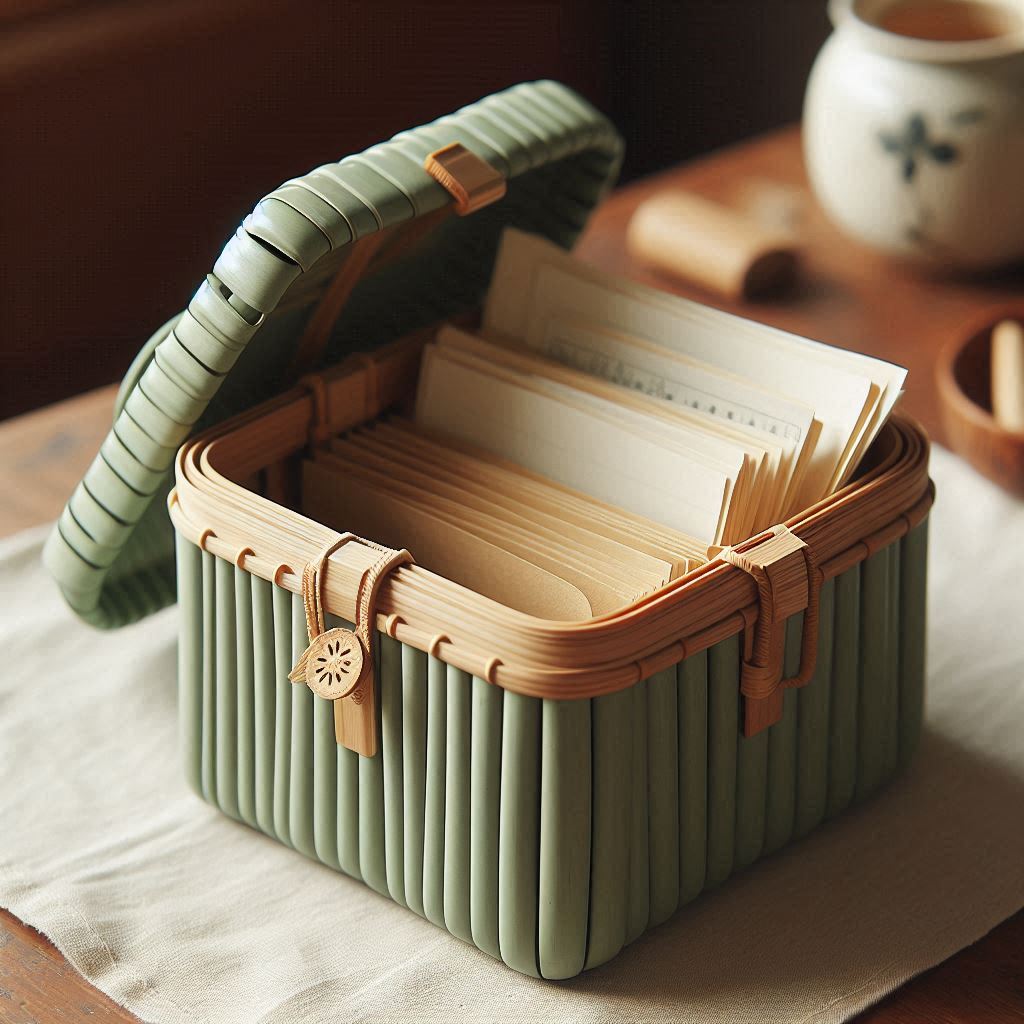
The sun streamed through the kitchen window, casting a warm glow on the sage green woven basket on the table. Aisha Tan stared at it, her heart heavy with memories. Just days ago, she had lost her beloved grandmother, Mei Ling, who had filled their home with laughter and the aroma of delicious food. The basket was all that remained of her culinary legacy.

Aisha gently lifted the lid, revealing a collection of handwritten recipes carefully penned in her grandmother’s elegant script. There were dishes from various cultures—Nasi Lemak, Char Kway Teow, Roti Canai, and even Indian curries like Chicken Rendang and Dhal Curry. Each recipe was a testament to the multicultural tapestry that defined Malaysia.

As she sifted through the recipes, Aisha felt a pang of longing. She had always loved cooking but had never taken the time to learn from her grandmother. Now, with Mei Ling gone, Aisha felt an urgency to reconnect with her roots and honour her grandmother’s memory. “I’ll do it,” she whispered to herself. “I’ll cook every dish in this basket.”

The following weekend, Aisha decided to start with Nasi Lemak, a dish that held special significance in her family. It was often served during family gatherings and celebrations. She gathered the ingredients—coconut milk, pandan leaves, rice, sambal, fried anchovies, peanuts, and boiled eggs. As she cooked, memories flooded—her grandmother teaching her how to prepare the dish while sharing stories of their family’s history. Aisha could almost hear Mei Ling’s voice guiding her through each step.

“Add just the right amount of coconut milk,” she remembered Mei Ling saying with a twinkle in her eye. “It’s what makes the rice fragrant.”

Once the dish was ready, Aisha plated it beautifully and sat down at the dining table. She closed her eyes and took a deep breath, savouring the aroma that filled the air. With each bite, she felt connected to her grandmother and their shared heritage. That evening, as she enjoyed her meal alone, Aisha realised that cooking was more than just preparing food; it was a way to keep memories alive—a bridge between generations.

Inspired by her first culinary adventure, Aisha decided to invite her estranged relatives over for dinner. It had been years since they had gathered as a family; disagreements and misunderstandings had driven them apart. But now, she felt it was time to mend those bonds.

She sent out invitations to her aunties and uncles, promising them an evening filled with nostalgia and delicious food. As the day approached, Aisha prepared an array of dishes from the basket—Char Kway Teow for starters and Chicken Rendang as the main course.

On the night of the gathering, Aisha decorated the dining table with flowers and candles to create a warm atmosphere. When her relatives arrived, there were initial awkward moments filled with hesitant smiles and polite greetings. But as they sat down to eat and shared stories about their childhoods—about Mei Ling’s cooking and family traditions—the atmosphere began to shift. Laughter filled the room as they reminisced about old times and shared their favourite memories of Aisha’s grandmother.

“Remember when Auntie May tried to make Nasi Lemak for the first time?” one uncle chuckled. “She forgot to add salt!” Aisha laughed along with them, feeling the warmth spread through her heart as she watched her family reconnect over food. It was then that she realised how powerful cooking could be—a way to heal wounds and bring people together.

Encouraged by the success of her family dinner, Aisha continued exploring other recipes in the basket. Each dish came with its own story—her grandmother’s experiences in different kitchens around Malaysia and beyond.

One weekend, she decided to try making Roti Canai from scratch. As she kneaded the dough and flipped it on the hot pan, she thought about how this simple bread brought together Indian influences in Malaysian cuisine. While preparing Roti Canai, Aisha remembered visiting Little India with Mei Ling as a child—the vibrant colours of saris in shop windows and the tantalizing scents wafting from street vendors selling delicious snacks. Those memories made her smile as she rolled out each piece of dough.

When she finally served it alongside spicy curry for dipping, Aisha felt accomplished. The flavours transported her back to those joyful moments spent with her grandmother exploring their heritage together.

As months passed by, filled with culinary experiments, Aisha discovered more than just recipes—she uncovered stories embedded within each dish reflecting cultural traditions passed down through generations!

One evening while preparing Laksa—a spicy noodle soup popular among Malaysians—Aisha stumbled upon an old photo album hidden beneath some cookbooks on a shelf! Curiosity piqued; she opened it, revealing faded pictures capturing moments from family gatherings long forgotten…

In one photo stood young Mei Ling, surrounded by relatives, smiling brightly, holding bowls filled with steaming Laksa! Another image showcased festive celebrations during Hari Raya, where everyone gathered around tables laden with various dishes showcasing diversity within Malaysian cuisine! A wave of nostalgia washed over Aisha as she flipped through pages filled with laughter, the joy reminding everyone present of the importance of cherishing bonds forged through shared meals celebrating life itself!

Determined not only to preserve these memories but also to honour the legacy left behind, Aisha decided to host another gathering, inviting everyone once again, ensuring that traditions lived on to inspire future generations to embrace journeys undertaken together, forging connections deeper than ever imagined possible…

On the day of the Hari Raya celebrations, excitement buzzed through Aisha’s home as relatives began arriving adorned in colourful traditional attire, filling the air with laughter and joy celebrating a reunion long overdue! This time, however, instead of simply serving dishes prepared from the basket inherited, Aisha encouraged each member to contribute their favourite recipes, to share stories behind them, reminding everyone present of the importance of preserving cultural heritage intertwined throughout lives lived long ago…

As they gathered around tables laden with food; aromas wafted through the air, creating a symphony of flavours and inviting everyone to partake in discovering that beauty lies within stories shared connecting generations past present future alike, reminding all hope remains alive even in darkest moments faced along the way…

“Let me tell you about my mother’s special recipe for Beef Rendang!” said Auntie May, excitedly recounting tales passed down through families, showcasing the significance behind every ingredient used within the dish, reminding everyone present of the importance of cherishing bonds formed across generations…

As festivities continued late into the night, Emma found herself reflecting upon the journey undertaken since inheriting the sage green woven basket filled with handwritten recipes from her beloved grandmother. Each dish prepared not only served the purpose of nourishing their bodies but also their souls, creating connection and bridging gaps formed over years lost amidst misunderstandings and estrangements experienced throughout life.

Feeling the warmth radiate throughout the room, filled with laughter and joy surrounding loved ones gathered close together and sharing moments cherished forevermore, Emma realized cooking wasn’t merely about food—it was about love, a legacy passed down, intertwining lives forevermore, reminding everyone present of the importance embracing change while honouring past ensuring light would always shine bright, illuminating hearts and souls alike, guiding them homeward bound forevermore…

With newfound purpose igniting spirit within, Emma vowed to continue honouring ancestors, ensuring stories lived on, inspiring future generations to embrace journeys undertaken together, forging connections deeper than ever imagined possible…

And so they stood together, united by purpose celebrating life, love, and resilience, knowing together they’d overcome challenges faced, paving the path forward, ensuring light would always shine bright, illuminating hearts and souls alike, guiding them homeward bound forevermore…

Short Story: From Shadows to Light

Shweta and Ranveer had just returned from their honeymoon in Bali, the tan lines still fresh on their skin and the memories of sunset beaches and endless laughter echoing in their minds. The hustle and bustle of New Delhi seemed a stark contrast to the serene island life they had just experienced. Their return to the rhythm of daily life meant going back to their jobs—Shweta to her dynamic role as a journalist and Ranveer to his high-paced marketing position at an MNC.

Living with Ranveer’s parents, Nidhi and Rajesh, in their spacious family home in South Delhi, came with its own set of challenges. Rajesh, a recently retired Public Works Department engineer, ruled the household with an iron fist, while Nidhi, a once-talented artist, had been relegated to the shadows, her creativity stifled by conservative family expectations.

Shweta, who had grown up in a liberal household where her parents encouraged her dreams and ambitions, was appalled by the dynamics she witnessed between Nidhi and Rajesh. It was a household where respect and equality seemed foreign concepts, especially when compared to her relationship with Ranveer, which was built on mutual respect, support, and love.

One evening, as the family gathered for dinner, Shweta noticed how Rajesh dominated the conversation. He spoke over Nidhi, dismissing her opinions with a wave of his hand, reducing her to a silent presence at the table. The scene was all too familiar, repeated daily, with Nidhi’s voice never heard.

“Nidhi, pass the salt,” Rajesh ordered, not even looking at her. “Yes, Rajesh,” Nidhi replied quietly, her eyes downcast as she complied.

Shweta exchanged a glance with Ranveer, who squeezed her hand under the table, a silent acknowledgement of their shared discomfort. The stark contrast between their relationship and his parents’ was glaringly obvious.

Later that night, Shweta couldn’t contain her frustration. “Ranveer, it’s heartbreaking to see how your father treats your mother. She deserves so much more.” “I know, Shweta,” Ranveer sighed. “But my father’s always been like this. It’s hard to change someone who’s set in their ways.” Shweta’s resolve hardened. “Maybe we can’t change him, but we can empower her. She needs to find her voice again.”

The next morning, Shweta found Nidhi in the kitchen, preparing breakfast. She approached her mother-in-law with a warm smile. “Ma, can I help with anything?” she offered. Nidhi looked up, surprised. “Oh, Shweta, you don’t need to. You must be busy with your work.” “I’d like to spend some time with you,” Shweta insisted. “You know, Ranveer told me you used to be an artist. I’d love to see some of your work.” Nidhi’s face lit up momentarily before the usual shadow of resignation fell over her features. “That was a long time ago, dear. I haven’t painted in years.” “But why?” Shweta pressed gently. “You shouldn’t give up on something that brings you joy.”

Nidhi hesitated, glancing around as if expecting Rajesh to appear and chastise her. “It’s complicated, Shweta. Rajesh and his family didn’t think it was appropriate for me to continue with my art.” Shweta felt a surge of indignation but kept her tone calm. “Ma, it’s never too late to start again. Art is a part of who you are. You should reclaim that.”

Over the next few weeks, Shweta made it her mission to empower Nidhi. She started by talking to Ranveer, enlisting his support. “Ranveer, we need to create an environment where your mom feels safe to express herself,” Shweta explained. “We can set up a small studio space for her in the spare room.” Ranveer nodded, his eyes reflecting Shweta’s determination. “I’ll talk to Dad, try to get him to see reason. But you know how stubborn he can be.” Shweta smiled, appreciating his support. “We’ll take it one step at a time.”

The following weekend, Shweta and Ranveer transformed the spare room into a cosy art studio. They bought canvases, paints, brushes, and easels, creating a space that invited creativity. When they unveiled the studio to Nidhi, she was overwhelmed with emotion. “Shweta, Ranveer, this is… I don’t know what to say,” Nidhi stammered, tears of gratitude in her eyes. “Say you’ll use it,” Shweta encouraged. “This is your space, Ma. A place where you can be yourself.” As expected, Rajesh was not pleased. He walked into the studio one afternoon, his face a mask of disapproval.

“What’s all this?” he demanded. “You’ve turned the spare room into a mess.” Nidhi stood frozen, her newly rediscovered confidence wavering. Shweta, however, stepped forward, her voice steady. “Papa, this isn’t a mess. It’s Ma’s studio. She’s an artist, and she deserves a space to pursue her passion.” Rajesh scoffed. “Nonsense. She has responsibilities here. She doesn’t have time for such frivolities.”

Ranveer, who had been listening quietly, finally spoke up. “Dad, this is important to us. And to her. We want her to be happy. She’s sacrificed enough for this family.” Rajesh glared at his son but was taken aback by his firm stance. He was not used to being challenged, especially not by his own family. Nidhi, emboldened by the support of her children, found her voice. “Rajesh, I’ve given up my dreams for too long. It’s time I did something for myself.” For a moment, it seemed Rajesh would explode with anger, but he saw the determination in their eyes and grudgingly retreated, muttering under his breath.

With the studio established, Nidhi began to paint again. At first, she was hesitant, her strokes tentative and unsure. But with each passing day, she rediscovered her passion, her confidence growing with every brushstroke. Shweta would often sit with her, chatting about art and life, encouraging her mother-in-law to push her boundaries and experiment with different styles.

One day, Shweta had an idea. “Ma, how would you feel about showcasing your work? There’s a local art exhibit coming up. It could be a great opportunity.” Nidhi looked unsure. “But Shweta, it’s been so long. I’m not sure if my work is good enough.” “Your work is beautiful,” Shweta insisted. “You have a gift, and it deserves to be seen. Think about it, okay?”

After much persuasion and reassurance, Nidhi agreed to participate in the exhibit. The weeks leading up to the event were filled with a flurry of activity, as Nidhi poured her heart and soul into her paintings. The transformation in her was palpable, her once-muted spirit now shining brightly.

The day of the exhibition arrived, and the gallery buzzed with excitement. Shweta, Ranveer, and Nidhi arrived early to set up, their anticipation building. Nidhi’s paintings, a vibrant mix of colours and emotions, were displayed prominently, each one telling a story of resilience and rediscovery.

As the evening progressed, visitors flocked to Nidhi’s section, captivated by her work. They marvelled at the depth of her talent, the beauty of her expression. Nidhi, though nervous at first, found herself engaging with the audience, her confidence growing with each compliment and word of encouragement.

Shweta watched with pride as Nidhi blossomed, her talent recognised and celebrated. Ranveer stood beside her, his arm around her shoulders. “You did this,” he whispered. “You helped her find her voice.” “No,” Shweta replied, her eyes shining. “She had it all along. She just needed a little push.”

As the evening drew to a close, a man approached Nidhi, his eyes filled with admiration. “Mrs. Sharma, your work is incredible. I’m the curator of an art gallery in Mumbai, and I would love to feature your paintings in an upcoming exhibition.” Nidhi’s eyes widened in surprise. “Really? I don’t know what to say.” “Say yes,” Shweta urged, her heart swelling with joy. With a mixture of disbelief and excitement, Nidhi agreed, her dreams once again within reach.

The weeks following the exhibition were a whirlwind of activity. Nidhi prepared for her upcoming showcase in Mumbai, her days filled with creativity and purpose. The change in her was evident to everyone, even Rajesh.

One evening, as Nidhi worked in her studio, Rajesh stood in the doorway, watching her. For the first time, he saw the joy in her eyes, the passion in her movements. It was a side of her he had long ignored, buried under the weight of his expectations.

“Nidhi,” he began, his voice uncharacteristically soft. “I’ve been thinking… I may not have been supportive in the past. But I see now how much this means to you. And I… I want you to be happy.” Nidhi looked up, surprise and hope mingling in her gaze. “Thank you, Rajesh. That means a lot to me.” Shweta and Ranveer, who had been listening from the hallway, exchanged a look of astonishment. It was a small step, but it was progress.

The day of Nidhi’s exhibition in Mumbai arrived, a culmination of months of hard work and dedication. The gallery was packed with art enthusiasts, critics, and supporters, all eager to see the work of the talented artist.

Shweta, Ranveer, and even Rajesh travelled to Mumbai to support Nidhi, their pride was evident in their eyes. As they walked through the gallery, admiring Nidhi’s paintings, Shweta felt a deep sense of fulfilment. They had not only helped Nidhi reclaim her passion but had also begun to change the dynamics of their family, fostering an environment of respect and support.

As the evening progressed, Nidhi was approached by several art collectors and gallery owners, all interested in her work. Her paintings resonated with people, their vibrant colours and emotional depth striking a chord.

One collector, an elderly woman with kind eyes, took Nidhi’s hand. “Your work is extraordinary. It comes from a place of deep emotion and experience. I would be honoured to display your paintings in my gallery.” Nidhi’s eyes filled with tears of gratitude. “Thank you so much. This means the world to me.”

As the evening drew to a close, the family gathered around Nidhi, their hearts brimming with pride. Shweta hugged her mother-in-law, tears of joy streaming down her cheeks. “I’m so proud of you, Ma. You did it.” Nidhi smiled, her eyes shining with happiness. “I couldn’t have done it without you, Shweta. You helped me find my voice again.”

Back in New Delhi, the changes in the Sharma household were evident. Rajesh, though still set in his ways, had softened, making an effort to be more supportive of Nidhi’s passion. Nidhi continued to paint, her studio a sanctuary of creativity and expression. Shweta and Ranveer’s relationship, built on mutual respect and love, served as a model for the entire family. Their partnership and support for each other highlighted the importance of equality and understanding in marriage.

One evening, as the family gathered for dinner, Rajesh raised his glass in a rare moment of vulnerability. “To Nidhi,” he said, his voice filled with emotion. “For reminding us all of the importance of following our passions and staying true to ourselves.” Nidhi’s eyes filled with tears as she clinked glasses with her family, feeling a sense of belonging and acceptance she had long yearned for. As the evening wore on, Shweta and Ranveer sat together, their hands intertwined. “We’ve come a long way,” Shweta said softly. “We have,” Ranveer agreed. “And we’ll continue to support each other, just like we did with Mom.” Shweta smiled, her heart swelling with love. “Together, we can achieve anything.”

In the months and years that followed, Nidhi’s art flourished, gaining recognition and admiration. She held exhibitions across the country, and her work was celebrated for its emotional depth and vibrant expression. She had reclaimed her identity, her voice, and her passion, all thanks to the unwavering support of her family.

In the end, it was not just about finding one’s voice, but about celebrating it, nurturing it, and allowing it to sing. In the harmonious symphony of their lives, Shweta, Ranveer, and Nidhi had found their true selves, their dreams, and the boundless joy that came with living authentically and freely.

Short Story: The Pink Spectacles

Shivani was a curious and imaginative 6-year-old girl who lived in a small village near Ratnagiri, nestled in the lush green hills of the Konkan region. She loved to explore the winding paths and swaying coconut trees near her family’s modest home, often getting lost in her little world.

But lately, Shivani has been having trouble seeing things. When she tried to read the blackboard at school, the letters would become a blurry mess. And during playtime, she sometimes missed the ball when her friends tossed it to her, much to their amusement.

“Arre, Shivani, kai jhala? What happened to you? Can’t you see?” Her older brother Akshay would tease. Shivani would huff in frustration, wishing she could see as well as her brother. She didn’t understand why her eyesight had suddenly become so bad.

“Aai, I think there’s something wrong with my eyes,” Shivani would tell her mother, Meena, after school each day. “I can’t see things like I used to.” Meena would frown with concern, gently examining Shivani’s eyes. “Hmm, they do seem a bit strained. Maybe you need to rest them more, bala. No more reading in the dark, okay?”

But even after taking breaks, Shivani’s vision didn’t improve but seemed worse. She started bumping into furniture and tripping over rocks on the ground that she couldn’t quite make out. “Arre, look at our little Shivani, she’s turning into a chamgadar! Shivani the bat,” Akshay would laugh, flapping his arms around. “Flapping around, crashing into everything!”. Shivani would feel her face flush with embarrassment. She didn’t want to be a clumsy bat – she wanted to be able to see clearly and run and play like the other children.

One day, Shivani’s teacher at the village school announced that a team of eye doctors would be coming to the school for a special eye camp. Any student having trouble with their vision could get checked and receive free spectacles if needed. Shivani’s parents, Meena and Rajesh, decided to take her to the eye camp. They were relieved that Shivani’s eyes could be properly examined at the camp in their village.

When the day of the eye camp arrived, Shivani was both excited and nervous. She had never seen a real doctor, let alone an eye doctor with all their strange-looking equipment. The ophthalmologist, a kind older man with a warm smile, greeted Shivani and her parents. “Kaishi ahes,” he said, crouching down to Shivani’s level. “How are you? Let’s look into your eyes, shall we?”. Shivani sat patiently as the doctor shone a bright light into each of her eyes and had her read letters off a chart on the wall. After a thorough examination, the doctor turned to Meena and Rajesh.

“Well, it’s clear that your daughter has a case of myopia or nearsightedness,” the doctor explained. “Her eyes are having trouble focusing on distant objects. But the good news is that spectacles can easily correct this.” Shivani’s eyes widened with excitement. “Chashma? Really?” she exclaimed. The doctor chuckled and nodded, then led them to a table filled with different frames.

“Now, let’s find the perfect pair for you,” he said, gesturing to the selection. Shivani’s gaze immediately landed on a pair of frames with a sparkly pink design. “I want those!” she declared, pointing eagerly. The doctor carefully placed the spectacles on Shivani’s face, and when she looked around, everything came into sharp focus.

“Wow, I can see everything so clearly!” Shivani marvelled, her face lighting up with a huge smile. “The trees, the people, the blackboard – everything is so clear.”. Meena and Rajesh exchanged relieved glances, thrilled to see their daughter so excited and happy. “You look beautiful, beta,” Meena said, giving Shivani a warm hug. Shivani couldn’t stop grinning as she admired her new pink spectacles. She could hardly wait to show them off to her friends and family.

When Shivani returned to school the next day, wearing her new pink glasses, her classmates were instantly fascinated. “Wow, Shivani, your chashma is so chamak, so shiny!” exclaimed her best friend Priya. “Can I try them on?”

Shivani carefully handed the spectacles to Priya, who immediately started giggling. “Everything looks so big and close up! It’s like I’m a giant!” Soon, all of Shivani’s friends were lining up to take turns trying on the pink glasses, running around the schoolyard and marvelling at how the world looked through Shivani’s eyes. “Be careful, you’ll break them!” Shivani fretted, but she couldn’t help laughing at her friends’ antics. She had never felt so popular and special before.

Even Akshay, who usually teases Shivani, seemed impressed by her new look. “Hey choti, you look like a movie star with those glasses!” he said with a grin. “Now you can see all the mischief I get into!” Shivani rolled her eyes at her brother, but she secretly felt proud. She loved her new spectacles and how they made her stand out from the crowd. No more bumping into things for her!

With her pink, shiny chashma on, Shivani began to see the world in a whole new way. She noticed so many details she had never paid attention to before – the intricate patterns on the saris of the women in the village, the tiny insects crawling on the leaves, the wispy clouds drifting across the sky. “Aai, look at that bird up there!” Shivani would exclaim, pointing to the sky. “I can see its feathers so clearly!” Meena would smile and nod, happy to see her daughter so fascinated by the world around her. She was glad they had taken Shivani to the eye camp and that she was adjusting well to her new spectacles.

Shivani’s favourite thing to do was to sit on the roof of her house and gaze out at the lush green hills and swaying coconut trees in the distance. She could see for miles, watching the farmers tending to their crops and the cows grazing in the meadows. It was like a whole new world had opened up to her. At night, Shivani would lie in bed and stare up at the twinkling stars with wonder. She could not get over how she could see them so clearly now. She felt like she was floating in a sea of glittering lights, just like the ones on her frames. “I’m so lucky to have these glasses,” Shivani would whisper to herself. “They make everything so beautiful.”

One evening, as Shivani was sitting on the roof gazing out at the pristine beaches and crashing waves of the Konkan coast, her grandmother came up to join her. “Ajji, tell me a story,” Shivani pleaded, snuggling up to the elderly woman. Her grandmother, Radha, chuckled and nodded. “Alright, my dear. Have you heard the legend of the boksi witch that haunts these hills?”

Shivani shook her head, her eyes widening with curiosity. “Well, they say that long ago, there was a beautiful young woman who lived in these very hills,” Dadi began. “She was known for her kindness and healing powers, and the villagers would come to her for help with all sorts of ailments.” Shivani listened intently, captivated by the story.

“But one day, a jealous woman in the village accused the young healer of being a boksi – a witch who practices black magic. The villagers, filled with fear and superstition, turned on her and burned her at the stake.” Shivani gasped, her hand flying to her mouth.

“They say that the young woman’s spirit never found peace, and now her boksi form roams these hills at night, seeking revenge on those who wronged her,” Ajji continued, her voice lowering to a whisper. Shivani shivered, glancing nervously at the shadowy trees surrounding their home. “But don’t worry, my dear,” Radha said, patting Shivani’s hand reassuringly. “As long as you have your chashma, you’ll be able to see the boksi coming from miles away!” Shivani giggled, feeling a bit more at ease. She knew her ajji was just teasing her, but the legend of the boksi witch had certainly piqued her imagination.

As Shivani lay in bed that night, she couldn’t help but wonder if the boksi was real. She stared up at the twinkling stars, wishing she could see through the darkness with her chashma. But alas, they were no match for the inky blackness of the Konkan night.

The next day, Shivani was so busy daydreaming about the boksi witch that she wasn’t paying attention to where she was going. As she was walking home from school, she became entranced by the swaying coconut trees and the crashing waves in the distance.

Suddenly, Shivani felt herself collide with something solid. She looked up to see an elderly woman glaring down at her, her wrinkled face twisted in anger. “Arre, you foolish girl! Can’t you see where you’re going?” the woman scolded, her voice raspy and harsh. Shivani felt her face flush with embarrassment. “I’m so sorry, kaki,” she stammered. “I didn’t mean to.” “Bah, you children these days, always with your heads in the clouds!” the woman interrupted, shaking her head in disgust. “You should be more careful, or you’ll end up like the poor boksi witch, doomed to wander these hills forever!” Shivani’s eyes widened in fear at the mention of the boksi. She quickly apologized again and hurried home, her heart pounding.

When Shivani told her parents what had happened, Meena and Rajesh were concerned. “Bala, you need to be more mindful when you’re wearing your spectacles,” Meena said gently. “They are a gift, but you have to use them responsibly.” Rajesh nodded in agreement. “Your ajji’s stories may be just legends, but there are real dangers out there. We don’t want you to get hurt, Shivani.” Shivani felt ashamed of her carelessness. She knew her parents were right—she had to be more careful, both for her safety and out of respect for the gift of her glasses.

From that day on, Shivani made a conscious effort to be more aware of her surroundings. She would take the time to carefully navigate the winding paths and crowded markets, always keeping her spectacles firmly in place. Shivani also started using her improved vision to help others. She would read signs and labels out loud to her illiterate grandmother, and assist her younger cousins with their homework by writing out the answers in big, clear letters. “You’re such a good girl, Shivani,” her grandmother would say, patting her on the head. “Your spectacles are a blessing, not just for you but for all of us.”

Shivani beamed with pride at her grandmother’s words. She felt like she had learned an important lesson – that her spectacles were not just about seeing the world more clearly, but about using her gift to make a difference in the lives of those around her. As Shivani sat on the roof, gazing out at the lush green hills and the shimmering Konkan coastline, she couldn’t help but feel grateful for the spectacles that had opened up a whole new world to her. She knew that with her newfound vision, she could accomplish anything she set her mind to – even if it meant facing the legendary boksi witch that haunted these very hills.