

Outward Bound Singapore’s story over the last 50 years
The weekend before last, I was privileged to be invited to Outward Bound Singapore at their Pulau Ubin Campus for a one day. This was part of MOE’s Secondary 3 Adventure Camp for which they had tied up with OBS.
We were one of the 10-12 schools whose Sec 3 children will be attending the camp in term 3 and 4 and were in the pilot programme, hence this open house to showcase to parents what the children will be doing during their five days there.
At this point in time, there will be a minimum of two schools at any point in time. OBS is still upgrading their facilities and when they get to full strength, they should be able to cater to almost 1000 students at any given time.

An example of a trail bike used mainly in cycling expeditions in Mainland Singapore
OBS divides their camps into what they call Blue Belt and Green Belt. Blue belt camps are mostly organised in Pulau Ubin and are more water based. Green belt camps are mostly done in mainland Singapore and may be a mixture of both land and sea camps. There is a possibility that some children may not even make it to Pulau Ubin if they are in a green belt camp and may complete all their expeditions in the mainland itself.
The children will be sorted into groups (or watches as they call it) of twelve each. Each group will be made as diverse as possible (in terms of gender, type of course and of course school) and they will learn to work with each other during the course of the five-day camp.

The ferry which dropped us to Pulau Ubin
After sorting us into our groups and some warm-up exercises, we were led to the ferry which would take us to Pulau Ubin. Before we boarded the ferry, I was told by the instructor in my group that my status was that of an observer because of my diabetes. I did ask if this can change and was told it would be dependent on the resident medical nurse (I was unable to get it changed because they didn’t want to take any risks, so my post is based on what I saw, rather than what I did).

First look at Outward Bound Singapore, Pulau Ubin
The ferry used was a large and comfortable one and it took around 15 minutes to get to Pulau Ubin and the OBS jetty. Once there, we paired up with another group and did all our activities together. After a short talk on OBS and what they do, we were shown the tents the students will be sleeping in. They do not sleep in dormitories at all, and all nights will in tents which can cater to either 12 or 18 pax each. I actually thought the estimates to be overconfident and felt the tents could only take 8 or 12 max respectively.


Types of tents used
After some more games, we headed toward the sea for a short Kayaking stint. We were taught about how to use the kayak (or triayaks in this case) for a short time like using the oars, how to capsize, how to recover etc, followed by a 30-40 stint in the sea. When the children come in, they do get a four- five hour tutorial on how to use the kayaks before they set out on their expositions. Pro tips from the instructors included wearing long-sleeved shirts and pants and slathering sunscreen over every inch of exposed skin as well as having a spectacle band which goes over the head for those wearing glasses to protect them and the ban on contact lenses due to hygiene issues.
A key highlight of the sea expedition would be a kayaking expedition in which they will move from one point to another using the sea route. They will take anywhere between five to eight hours to complete the journey. They will eat and rest in the kayak itself and this will teach them to work with others and also depend on others for their well being.

An example of the Triayak
Another fun sea activity is a Jetty Jump, which is exactly what it seems. You jump from the jetty into the sea below and is something like a bungee jumping and trust fall exercise. There will be an instructor who will be waiting in the water below and so even if you are a non-swimmer, you are in safe hands! The instructors don’t force you to jump but told us when children come in, all of them end up jumping, even the fearful ones, because they get egged on by their group mates and also fear peer pressure!

Inverse Tower – High Element example
Another activity we did post lunch was a high element climb. The camps have multiple high element structures and so it’s not certain which one our children will do. What we did was called the Inverse Tower. It starts off as fairly easy and then gets harder as you get higher.
After this activity, we were taken on a tour of the main operations command centre which is the nerve centre of the operation at Ubin. We also spoke to the duty managers who assured us that there will be a manager 24/7 when camps are ongoing. We also went to the medical centre which is fairly well stocked. There will be a medical nurse stationed 24/7 on three shifts when children camp. They are authorised to dispense simple drugs for fevers, cold, diarrhoea etc. but if there is something serious, the patient will be evacuated to the mainland within 30 minutes and rushed to a hospital in the waiting ambulance at the Punggol Jetty.

A map of Pulau Ubin with the highlighted yellow points which are the campsites.
We were also shown the resources and supplies the children will be carrying as a team. Some supplies are personal which the children can eat at any point in time, and some are supplies with which they will cook their dinners. Also, parents were asked not to send any food with the children as these will be confiscated. This is because there may be children in the group who may be allergic to an ingredient in the food and when this is highlighted, OBS will ensure that the whole group gets food and ingredients without the allergen. Vegetarians will also be taken care of in terms of supplies and food.

Supplies to be carried by the children. Supplies to the left are personal supplies and to the right are group supplies

Resources to be carried as a group. This includes a basic medical kit, cooking utensils, water bottles, a backpack etc.
The day ended with a sharing session within our groups and then a sharing session by MOE and OBS. They spoke about how outdoor learning is instituted by MOE to provide rich learning experiences outside the classroom and helps students to develop holistically, building up well-rounded individuals who are rugged and resilient.

Sample Five Day Course
MOE’s Outdoor Learning’s Objectives and Outcomes include being able to deal with challenges positively through self-directed learning and making right choices to influence their circumstances; build friendships with students from diverse socio-cultural backgrounds to achieve team goals in an inclusive manner; and commit to play an active role in the improvement of the community and environment.
As parents, we can do the below to help our children, pre and post-course.


Hope this was of use to any concerned parent who dropped in here because of this post. Do comment below and share any questions or comments you may have.

 Perseverance: Keep going and always persevere in all you do. Failure is just a stepping stone to success. There are many stories everywhere of individuals who were not the most (insert adjective here), but that did not mean they gave up, instead they stove on and reach the goals they set out for themselves. When you fall, dust the dirt and move on.
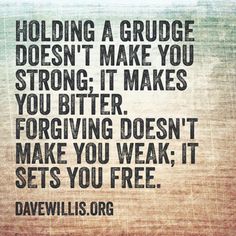 Forgiveness: To forgive is divine! We’ve all heard this and this is true more than ever today. We meet so many people that make us mad, who in this dog-eat-dog world of today let us down. We carry grudges against them for years, making us mad, sad and hurt each time we think about them. Instead let’s forgive them and let it go! There are so many things which are worth thinking about, don’t create negativity in your lives by rethinking and overthinking negative thoughts.
 Passion: If you love what you do, you never work a single day in your life. Most of us go through just working. Waiting for Friday evening and dreading Monday mornings. Instead try and find what you love doing – it could be anything in this world, or even something that no one has done before! Once you find your passion, you will strive towards excellence all by yourself and commit to 100 percent in that thing. You’ll be a winner before you know it!
 Gratitude: Practice gratitude daily. Be grateful to your parents, your family and friends. Count your blessings and nurture them daily. Gratitude helps you nurture present relationships and cultivate future ones. Science has also proven that grateful people are more calm, less predisposed to illness, have increased self-esteem and sleep better. The best way to do this is to have a gratitude journal – before sleeping at night, write three things that you are grateful that day….
 Memories and Such