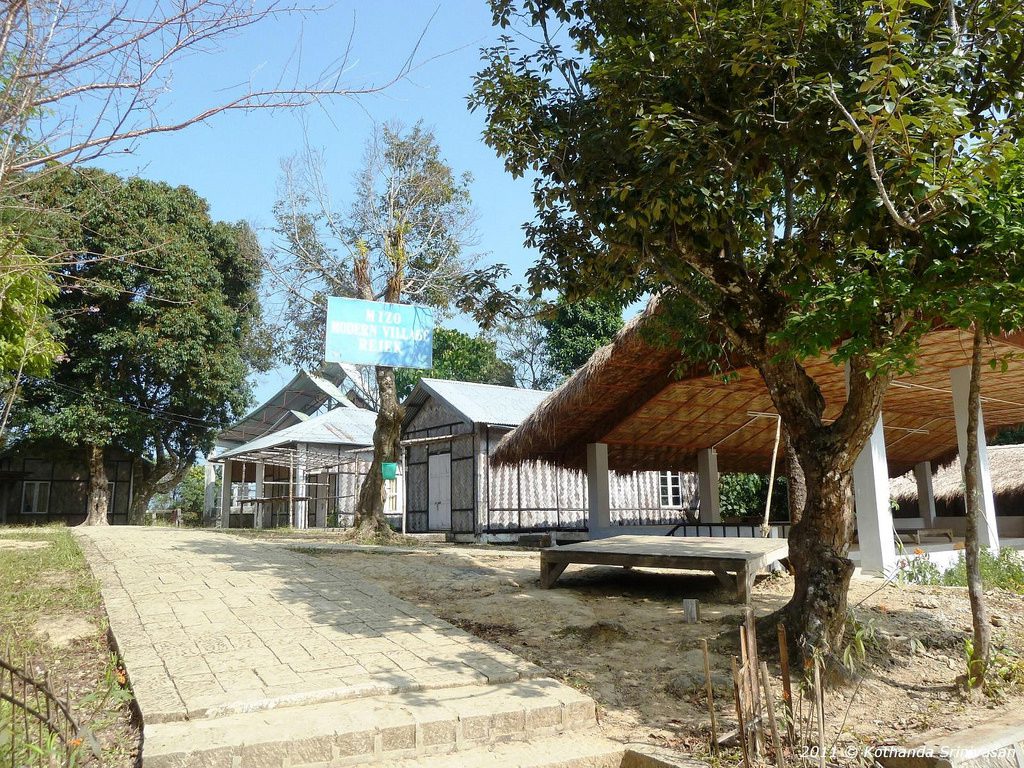
Jammu The winter capital of the erstwhile state and protected and blessed by Mata Vaishno Devi, who seems to have found her earthly abode on the Trikuta Hills, Jammu City is almost a sacred place to visit. Dubbed the city of temples, this city brims with grand ancient temples and beautiful palaces.
Nestled against the backdrop of the snow-capped Pir Panjal Mountains, the region of Jammu constitutes the southernmost unit of the state of Jammu & Kashmir. It forms part of the transition between the Himalayan range in the north and the dusty plains of Punjab in the south. Between these two extremities lie a series of scrub-covered hills, forested mountain ranges and river valleys, encompassing several microclimatic regions that extend from Kishtawar in the north-east to Akhnoor in the south-west, and the historic town of Poonch in the north-west to the borders of Kangra (Himachal Pradesh) in the south-east. The Shivalik hills cut across the area from the east to the west while the rivers Ravi, Tawi and Chenab cut their way through the region.
The unmatched divinity at Raghunath temple, Ranbireshwar temple, Mahamaya temple, Peer Baba and Peer Khoh invigorates visitors. One must visit the Bahu temple, which is situated inside the majestic Bahu Fort. The temple is dedicated to presiding deity of Jammu, Goddess Kali or Bawe Wali Mata as she is popularly called in the region. Besides the temple, a travel enthusiast can witness architectural grandeur of Bahu Fort and Mubarak Mandi Palace. The Aquarium at Bagh-e-Bahu (Bahu Fort) also catches the eyes of the tourists as it is the largest underground aquarium in the country.
Jammu was founded by Raja Jambu Lochan in 14th century, when he constructed Bahu fort on the banks of river Tawi. There also have been excavations found 32 km away from Jammu, in the city of Akhnoor which suggest that Jammu was once a part of Harappan Civilization as well. Remains from Maurya and Gupta dynasties have been found, followed by the invasions by Mughals and Sikhs. The Dogra rule brought back the glory to the city. After the partition of India, Jammu continued to be the official winter capital of the state.
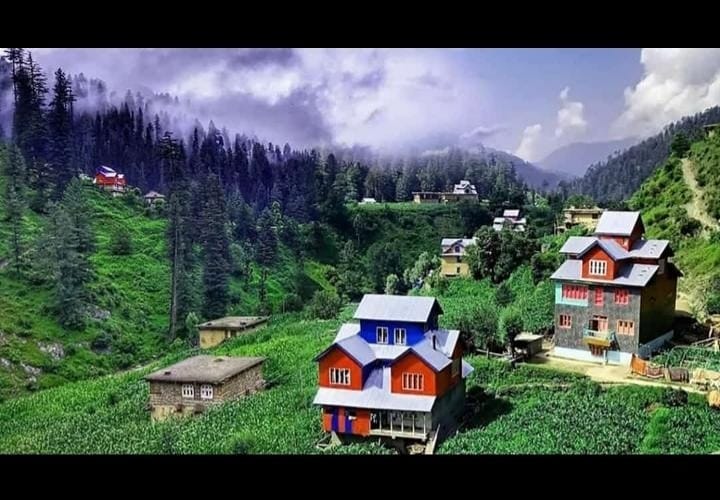
Patnitop Perched on a hilltop at an altitude of 2024m, with endless meadows and panoramic views of the snow capped peaks of the Himalayas, Patnitop is the best place to experience nature at its picturesque best. With views of the Shivalik Range, the area has a plethora of activities like skiing and trekking as well as water springs.
Visit Gaurikund, which not only holds great spiritual value, but you can also see the holy Kailash Mountain. A leisure walk to the Pine forest is ideal for the nature lovers. At Shivgarh, you can enjoy a spot of trekking at Shivgarh and paragliding, abseiling (rappelling), rock climbing and camping at Sanasar. At a little distance from Patnitop, there is a village called Kud that is famed for multitude varieties of sweets, so enjoy and don’t worry about calories!
Rajouri The refuge of several Gujjars and Bakerwalas, Rajouri is situated around 154kms away from Jammu. The district shares border with Pakistan and is blessed with many charming places to visit; Dehra Ki Gali, Thanamandi and Kotranka Budhal are few places that are apt for sightseeing. One can retire to these remote places in summers as the weather remains pleasant here all year round. The magnificent Rajauri Fort, Balidan Bhavan, Dhanidhar Fort and Rama Temple are few places that can be visited in the vicinity of Rajouri.
Udhampur Named after Raja Udham Singh, Udhampur city is the second-largest city in Jammu region. Set amidst lush green surroundings and fringed by eucalyptus trees, Udhampur is one of the best tourist attractions in Jammu & Kashmir. A delight for history lovers, the city offers many relics dating back to the time of epic of Mahabharata. The Krimachi group of temples are said to be the oldest structures in the city. Udhampur is also famous for the underground river Devika, which is considered the sister of Ganga. Visit the Ramnagar fort, located approximately 40kms from Udhampur and built by Raja Suchet Singh. Moungri Cave shrine, Pingla Mata and Sudh Mahadev temple are other prominent places that must be visited in Udhampur.
Kathua Owing to the existence of a large number of Sufi shrines, Kathua is dubbed as the City of Sufis. True to its title, Kathua houses several religious places including Jasrota temple (inside Jasrota fort), Mata Sundrikote, Mata Bala Sundri, Sapt Sarober and Airwan temple. It is ideal to pay homage to one of these sacred places as in to understand the spirituality prevailing in Kathua. A recreation park called Dream has also been set up in Kathua promising an enthralling rafting experience. The Ujh Barrage located 20kms away from Kathua is an idyllic picnic spot. History buffs can also visit the Jasrota Fort to witness the grandeur built by Maharaja Ranbir Singh. Also the temple of Maha Kali in the Jasrota village has emerged as a popular pilgrimage centre in the region.
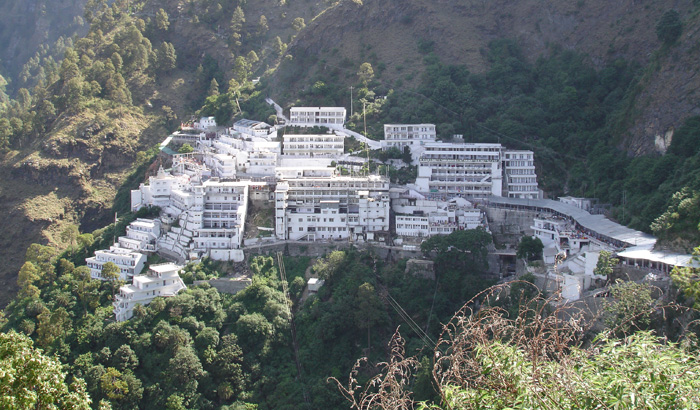
Katra and Vaishno Devi It is often seen that whenever Katra is discussed; it is referred merely as a base camp for devotees who visit Vaishno Devi. Katra is worth visiting, even if you are not on a pilgrimage, because attractions like the Banganga, the Chenab river, and a large amount of peaks around offer great places for mountain climbing and family outings.
The shrine of Vaishno Devi, one of the most important places of worship in India calls the little town of Katra its home. Located in Trikuta hills, 13 km from Katra at the height of 1560 m above sea level this town is the holy cave temple of Mata Vaishnodevi. This famous shrine is a beacon for millions of devotees from all over the world. Popularly known as Mata Rani, Vaishno Goddess is a manifestation of the Hindu Goddess Durga. It is believed that during the pooja and Aarti, Goddesses arrive at the Holy cave to pay their respect to Mata Rani. Devotees believe goddess herself calls the devotees to reach here.
Thousands of pilgrims visit each year to seek blessings and show unflinching faith in this temple. Vaishno Devi is a religious trekking destination where pilgrims walk about 13 km uphill to reach the little caves which are among one of the 108 Shakti Peetha. It takes about 6 to 9 hours depending on the fitness, age and weather conditions. Ponies and palanquins, as well as helicopter services, are available by various vendors to take you there at the top.
The pilgrimage route is only complete when Shiv Khori, 1.6 km away from Vaishno Devi is also visited. Shiv Khori is second to Vaishno Devi in religious value and is famed for its 4ft tall naturally formed Shiva Linga.
Kishtwar Kishtwar is another gem from the crown of Jammu & Kashmir. Situated approximately 255kms away from Jammu city, Kishtwar is surrounded with lofty mountains and dense deodar and pine forests. Situated on a plateau above chenab river and below the nagin sheer glacier, Kishtwar has saffron growth in a limited time and its harvesting is accompanied by ceremonies and festivals, this is typically during summer.
There is a 400 sq km National Park in Kishtwar called Kishtwar National Park. Spread over an area of 400 sq.km the park contains 15 mammal species including the musk deer and Himalayan black and brown bear. Even though Kishtwar is not the only high altitude wildlife sanctuary, it is made special because of its large variety of flora and fauna. There are also two sacred voyages namely, Machail Yatra and Sarthal Yatra that begins from Kishtwar.
After having visit the north-eastern and western parts of India, let’s turn to another of India’s frontiers, this time the northernmost state of Jammu and Kashmir.
This state has been in the news lately as everyone probably knows why. When I started work on this blog post, the state was still intact, but the abolition of Article 370 of the Indian constitution means that the original state of Jammu & Kashmir or J&K as it is known is now bifurcated into two separate union territories, Jammu & Kashmir and Ladakh. I will however, go by the original state as it were before August 5 and continue with the post.
This state has always been on my bucket list, but events in the past, including terrorism has deterred tourists from visiting the valley. Just when I would think things were settling down, something would happen to return things to status quo. Now with this new law, I really don’t know how it will affect life in the valley. I sincerely hope things change for the better in the state and I can soon visit this paradise. If I do make it, here’s where I want to visit.
Traslated to as, “If there is a paradise on earth, it is here, it is here, it is here. These words attributed to the Persian poet, Amir-e-Khusru Dehluvi beautifully says it all about the beauty of this region.
Jammu and Kashmir is located in the northern part of the Indian subcontinent, and a part of the larger region of Kashmir, which has been the subject of dispute between India, Pakistan, and China since 1947.
The underlying region of this state was the southern and eastern part of the former princely state of Jammu and Kashmir, whose western districts, now known as Azad Kashmir, and northern territories, now known as Gilgit-Baltistan, are administered by Pakistan. The Aksai Chin region in the east, bordering Tibet, has been under Chinese control since 1962.
Jammu and Kashmir consists of three regions – the Kashmir Valley, which accounts for 54.93% of the population of Jammu and Kashmir, and 15.7% of the area; the Jammu Division, which accounts for 42.89% of the population of Jammu and Kashmir, and 25.9% of its area; and Ladakh, which accounts for 2.8% of the population of Jammu and Kashmir and 58.4% of its area. Srinagar is the summer capital, and Jammu is the winter capital.
We start our journey from the north of the state, which is Kashmir and its capital of Srinagar.
Srinagar The summer capital of Jammu & Kashmir, Srinagar is one of the most beautiful places in Kashmir. Lying on the banks of the Jhelum river and known as ‘Heaven on Earth’, the name Srinagar originated from two Sanskrit words – ‘Sri’ meaning wealth and ‘Nagar’ which means city. Prehistoric people used to refer Srinagar as ‘Siri – nagar’ which was a local alteration of ‘Surya – nagar’ or City of Sun. King Pravarasena II found this city 2000 years ago, formerly named Parvasenpur. Soon it became a part of the Mughal Empire, one of the largest Empires on India at that time. After the disintegration of Mughals, Srinagar was under the control of Durranis who ruled for several decades on the valley. In 1947, the struggle to gain dominance over Srinagar started between India and Pakistan. This led to the beginning of the Indo – Pak War.
Visiting Srinagar is like living in a beautiful painting. The fresh mountain air plus the novelty of living in a houseboat all add to the surrealness of the city.
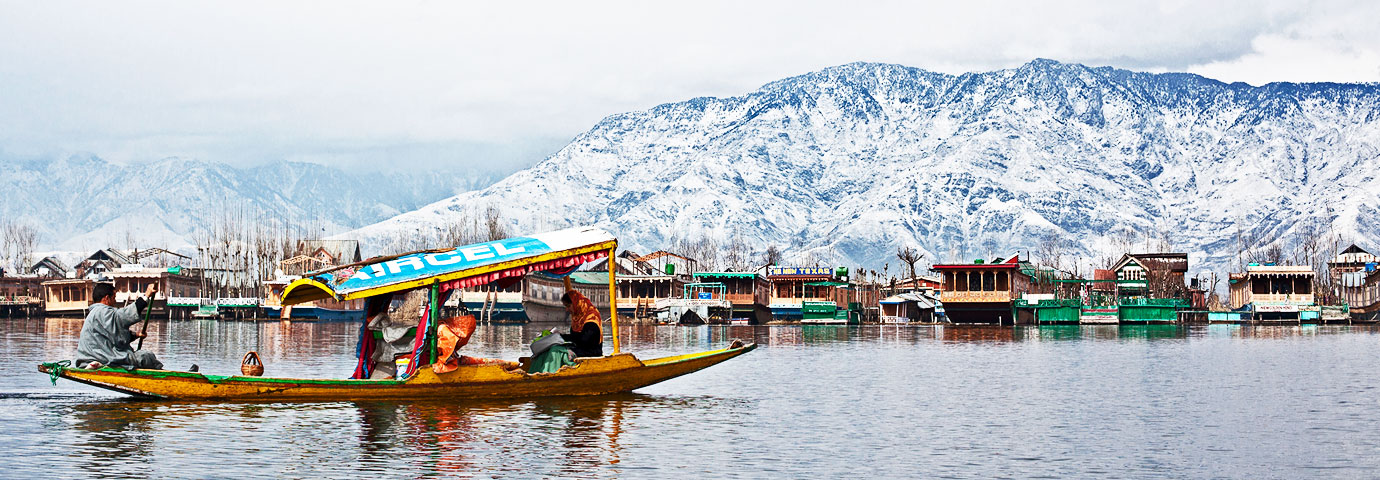
Dal Lake Dal Lake is everything you could ask for in a hillside lake, and more. Considered the jewel of Srinagar and an attraction associated with Srinagar, the beauty of this pristine lake, spread over 26 square kilometres, only grows around every corner. It is not one lake but a combination of three separated by causeways that in itself becomes an attraction. Be it the beautiful wooden houseboats drifting casually through the waters, the colourful Shikharas that cruise by with awestruck passengers, the floating markets at the crack of dawn, or the manicured lush gardens from the Mughal era along the shore, Dal lake is practically a representation of the Srinagar itself. The Dal lake consists of four main char chinars in the middle of the lake which is a means of its recognition. The Mughals saw the potential in the Dal lake and surrounded it with beautiful gardens and pavilions and also built the Shalimar and Nilshad Gardens exactly at a place where the beautiful outstretched lake can be seen in all its glory. The Britishers brought forward the concept of boat houses in the Dal Lake, which further promoted tourism to the lake. A tourist hub, one should not miss the pristine beauty of Dal Lake.
Houseboats and Shikara are synonymous with the Dal Lake, especially since the Shikaras are a cultural symbol and seen only in Srinagar. These are wooden boats pointed at both ends and have beautifully decorated canopies overhead. It is the favoured means of transport for local people, and you can see them ferrying a variety of goods across the lake to the mainland. A ride in a Shikara is a must have. A unique shopping experience in the Dal Lake is that of the lake market, which includes a number of shops located right on the midst of the lake. Much like a roadside market would have, hawkers are present here as well. They have Shikaras of their own and have all sorts of good for sale, which include Kashmir’s specialities such as wooden artwork, hand made earrings, saffron and even Kashmiri ponchos. The other attraction in the waters of Dal Lake is the houseboat, which are stationary boats meant to serve as accommodation for visitors. Overlooking the Dal Lake, they provide the most exquisite views of the lake and its surrounding mountains. They are made of good quality wood with intricate carvings and floral motifs. These could range from a simple one-room affair to huge luxurious suites and are graded accordingly by the Department of Tourism. Often, the interiors are beautifully decorated with Kashmiri carpets, crystal chandeliers and plush furniture.
Mughal Gardens The Mughal Gardens are one of the most popular and the most visited tourist attractions of Srinagar. During their rule, the Mughals began to build several types of gardens in Persian architecture, and the combination of these gardens is referred to as the Mughal Gardens. The natural beauty of the place filled with lush green grass and the scented flowers is a stress-buster and pleasing to the eyes. The Mughal Gardens in Srinagar comprise of Nishat Bagh, Shalimar Bagh, Chashme Shahi, Pari Mahal, Achabal and Verinag Garden. The grandeur of the gardens is dedicated to Emperor Jahangir who always had an undying love for Kashmir. Jahangir was responsible for the selection of the site and planning the requirements of the paradise gardens. They follow a Persian style of architecture and have been influenced by the Persian gardens. Some typical features of Mughal Gardens which are a treat for its visitors include canals, pools and fountains.
Gulmarg Dubbed as skiers’ paradise, Gulmarg is the snow paradise of Kashmir. Located approximately 52kms away from capital city of Srinagar, the Meadow of Flowers as it is popularly called, Gulmarg is a haven for adventure enthusiasts. Along with prominent skiing options, trekking, snowboarding, golfing, mount biking and fishing are the prime options that the town offers adventure seekers. . This skier’s paradise is popular for having one of world’s highest and largest ropeways with an aerial distance of approx. 5kms. The view from top of the mountains at 3979 metres above sea level is absolutely stunning. Snow falls are regular even during summer, giving every tourist a fair chance to enjoy snow! Places to visit near Gulmarg include Kongdori, Shark Fin and Apharwat Peak not only for skiing but also to witness the splendid natural landscape. of Gulmarg. Other places where you can see nature at her majestic best includes a trek to Nagin Valley, Khilanmarg, Frozen Lake and Bota Pathri. Baba Reshi and Gulmarg Gondola (Cable car) also makes for a must visit in Gulmarg.
Sonmarg Sonmarg which translates to ‘Meadow of Gold’ is one of the most picturesque towns in Kashmir at an elevation of around 2,800 feet from sea level with snow-covered flower-laden fields, surrounded by majestic glaciers and serene lakes This town is also one of the base points for starting the Amarnath Yatra. River rafting, zorbing, trekking are the various events conducted around this popular tourist spot. Sonmarg is inaccessible in winters due to heavy snowfall and avalanches.
There are a large number of trek and short routes that lead to mountain lakes like Gangabal Lake, Krishansar Lake and Vishansar Lake, Other places like Naranag, Harmukh Mountain and the famous Baltal and Thajiwas Glacier are also must-see spots in Sonmarg. Baltal, which is located 15kms away from Sonmarg, is used as the base camp for pious Amarnath Yatra. Also try and visit Zojila Pass, which is situated near Sonmarg and connects Kashmir and Ladakh.
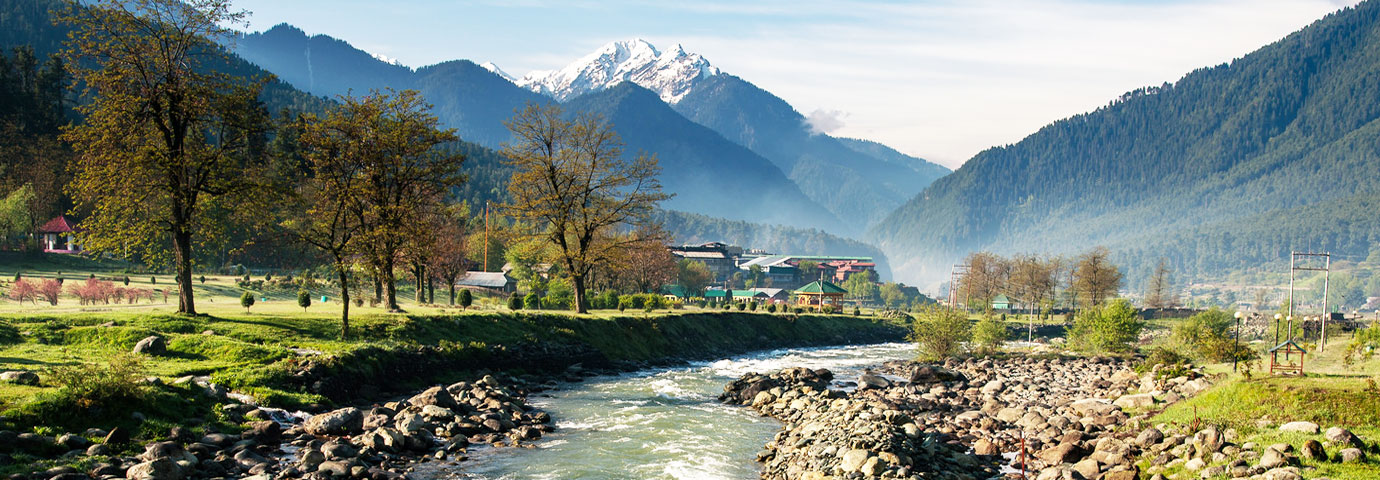
Pahalgam Surrounded by Lidder Lake and Betaab Valley, Pahalgam is the place to experience clear water rivers and exhilarating deep valleys. This place is famous for river rafting at Lidder Lake, golfing and shopping for traditional Kashmiri items.
The green meadows and the lofty mountains are followed with tranquility and serenity in Aru Valley, Betaab Valley, Baisaran, Sheshnag lake and Tulian Lake can invigorate your senses and activities like horse riding; trekking and golf make sure that you remain engaged all through your journey. Chandanwari, which is located 16kms away from Pahalgam is the base camp for Amarnath Yatra, a trekking route of approximately 30kms lead up to the holy shrine of Amarnath from here.
Amarnath Amarnath is one of the most important pilgrimage in India for the worshippers of Lord Shiva. The Amarnath cave is haven to an enshrined image of ice called the Shivaling formed naturally out of ice, which resembles Lord Shiva. This destination is visited by millions of tourists every year from all across the world in what is famously known as the ‘Amarnath Yatra’. The Amarnath cave situated in this town is considered to be a devout location for the pilgrims, most notably Hindus. Legend has it that, this place is regarded to be the same cave where Lord Shiva revealed the secret of life and eternity to Goddess Parvati. The Amarnath Yatra takes place once a year for a duration of 45 days, starting from somewhere in July and extending till late August. There are various means to reach the Amarnath cave; on foot, on horses, or by a helicopter. The entire rendezvous with the ice Shiva Linga does not last more than a few seconds due to a flood of people, but a mesmerizing experience, nevertheless.
Pulwama Also known as the city of colour burst, Pulwama is best known for its saffron fields. A picturesque terrain, pleasant weather and a rich culture means that Pulwama describes Kashmir to a T. It is almost 40 km from summer capital of Srinagar and is often called ‘Anand of Kashmir’ or ‘Dudha-Kul of Kashmir’ due to its high milk production. A lot of trekking trails are also available from the city into the beautiful valley of Kashmir. Pulwama gives you quite a large number of places for sightseeing including Nagberan, Tarsar Lake, Marsar Lake, Shikargarh and Aripal Nag. Where, Nagberan is a small scenic town that draws lot of nature lovers to it, there Shikargarh is known for attracting wildlife lovers. On the other side, Tarsar and Marsar are two legendary lakes that must be visited for its unmatched beauty. Another allure of Pulwama is Aripal Nag, which is situated 11kms from Tral town and is famed for natural water springs. If you cherish visiting historical places and shrines then the Avantishwar Temple is a must visit for you.
Kupwara Knowns as the ‘Crown of Kashmir’, the beautiful city of Kupwara is filled with lush, alpine mountains, gushing clear waters and mountains. Boasting of lofty mountain peaks like Shamsbari (12000ft above sea level), Nastachun (10273ft above sea level) and Dajalonjun (16000ft above sea level), this district exemplifies the beauty of Kashmir. The Ainch Mountain offers the opportunity to get a panoramic view of the Vale of Kashmir from its top. There are also many historical villages that allow the history lovers to contemplate including Gushi (Built by Kashi Shah), Karnah (mentioned in Raj Tarangini written by Kalhana) and Keran. However, the Lolab Valley steals the limelight and Kheer Bhawani Asthapan, Hazrat Mehmood Shah Shrine, Shaloora shrine and many other make for other brilliant option for sightseeing in Kupwara.
Poonch Located in the border of India and Pakistan, this place is frequently in the news for news of fighting. Fringed by Pir Panjal range, it is one of the most scenic places that we encounter in Kashmir. The waterfall at Behram Galla named as Noori Chhamb, the seven lakes (Sukhsar, Neelsar, Bhagsar, Katorasar, Kaldachnisar and Nandansar) at Girgan Dhok, the 18th century Poonch Fort and small villages like Mandi and Surankote are the highlights of the valley. There are many shrines and temples like Budha Amarnath in Mandi, Gurudwara Nangali Sahib, Gurudwara Deri Sahib, Ziarat Sain Illahi Bakash Sahib, Battalkote that are quite popular and should be visited in Poonch.
Anantnag Strategically positioned and organized, Anantnag has some of the most picturesque towns of the valley of Kashmir. Kokernag, Pahalgam, Verinag and Daksum are few places that are places you must visit. Near Anantnag exists the confluence of three streams, Arapath, Brengi and Sandran, and the resulting river is named Veth or Jhelum. There are several larger streams such as Brengi. Another stream Lidder joins the river a little downstream and from that point the river becomes navigable. In olden times river Jhelum was the main source of transportation between Anantnag and other towns downstream. Visit Kokernag for the most interesting ‘Claw-like’ formation of the streams that divide from here, the largest fresh water springs in Kashmir. Standing at 2438m, Daksum is apt for those seeking perfect peaceful ambiance. The prominent feature of the Anantnag city is the Martand Temple, which is a must see. A few kilometers away from the city are Daksum, which is the heaven for nature lovers. Here is at solitude finds its real meaning. A tour to Verinag can leave you stunned; the variety of flowers and the sparkling Verinag springs is truly worth seeing here.
Baramulla Reckoned to be the Gateway of Kashmir, Baramulla is another bright gem from the Kashmir’s treasure trove. Both the city and the district of Baramulla are generously blessed with natural endowments. Gulmarg, Khilanmarg and Tangmarg are also places of interest in Jammu & Kashmir tourism along with being important tourist attractions in the district. Where Gulmarg is an idyllic skiing resort, there Khilanmarg is a flower-spangled wide valley, you will get ample of opportunities to click beautiful pictures here. If in Baramulla, you must also visit Wular Lake, which is considered Asia’s largest fresh water lake and if you enjoy bird watching, you can also visit Manasbal Lake. Vijimarg, Mahalishamarg and Uri are some ideal picnic spots. However, it can rightly be said that a journey to Uri is more interesting rather than the destination.
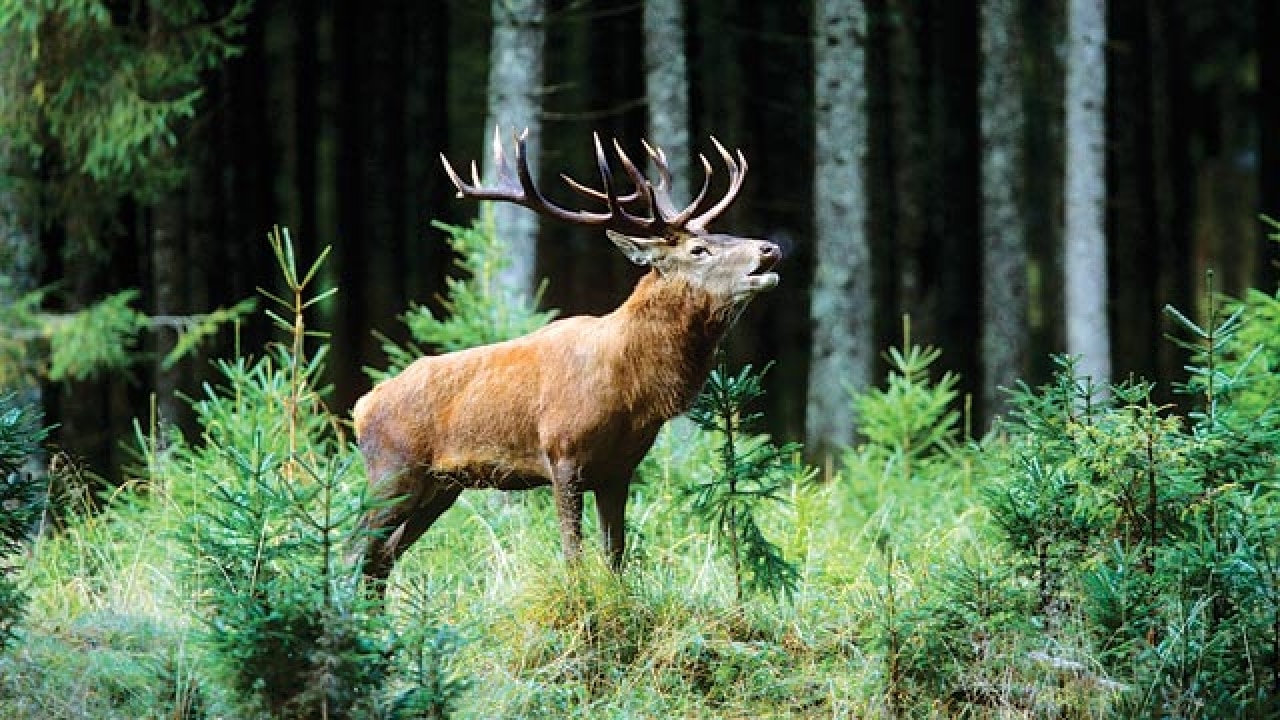
Dachigam National Park The park is best known for having the rarest of species – the hangul, or Kashmir stag, the only species of red deer to be found in India. It is India’s most elevated forest reserve at an altitude of 1,700 m. to 4,300 m. above sea level and is spread over a sprawling 141 sq kms. Right from the Himalayan grey langur that feed on the barks of trees to the rare Himalayan brown bear to Pygmy Owlets to the predators, the leopards. Other inhabitants include the Himalayan black bear, species of exotic Himalayan birds. The elusive snow leopard is also found at the higher altitude. Other animals that can be spotted are rare musk deer and the Himalayan marmot. The magnificent golden eagle and vulture and seen in the soaring skies. Dachigam National Park is situated a mere 22 km from Srinagar. Dachigam literally stands for ‘ten villages’, which is kept in memory of the ten villages that had to be relocated in order to create the catchment area and the park.
I will travel more around the state to the southern parts of Jammu as well as to the exotic westen part of Ladakh in my next post.
Another thing I noted while researching for this blog post – when I searched for images, for most destinations, my first hits were images from attacks. I had to search and refine my search to look for photos on the beauty of the place. This is real sad!
After visiting Jaipur and Udaipur earlier this week, let’s continue our journey in exploring more of Rajasthan by heading slightly north-west, arounf 250 km from Udaipur to the city known as the Blue City or Jodhpur.
Jodhpur – The Blue City The second-largest city in the state, and formerly the seat of a princely state of the same name, Jodhpur has historically been the capital of the kingdom known as Marwar. The city is a popular tourist destination, featuring many palaces, forts and temples, set in the stark landscape of the Thar Desert.
The city of Jodhpur was founded in 1459 by Rao Jodha, a Rajput chief of the Rathore clan. Jodha succeeded in conquering the surrounding territory and thus founded a kingdom which came to be known as Marwar. As Jodha hailed from the nearby town of Mandore, that town initially served as the capital of this state; however, Jodhpur soon took over that role, even during the lifetime of Jodha. The city was located on the strategic road linking Delhi to Gujarat. This enabled it to profit from a flourishing trade in opium, copper, silk, sandalwood, dates and other tradeable goods. There are many building painted blue in the city and this is because it was originally painted blue to signify that they were occupied by the Brahmin community.
So what’s special in terms of places to see and visit in Jodhpur?
Mehrangarh Fort Imposing Mehrangarh Fort, which rises above the “Blue City”, is one of the largest and most famous forts in India. One of the largest forts in India, Mehrangarh Fort is also called Mehran Fort and was built in 1459 by Rao Jodha. You can spot imprints of cannon balls which have existed for many hundred years now. The most interesting part of the fort are the seven gates that were built by Maharaja Man Singh to commemorate his victories. As impressive as it is, as a well-preserved heritage structure, there’s so much more to discover inside. The fort has been privately restored and its museum has an outstanding display of royal memorabilia, including about 15,000 items from Maharaja Gaj Singh II’s personal collection. It also has the only professional museum shop in India. The cultural performances that happen daily at various places inside the fort, as part of the special focus on folk art and music, are another highlight.
Jaswant Thada This intricately crafted cenotaph (empty commemorative tomb) made of milky-white marble was built in 1899, in honor of Maharaja Jaswant Singh II. It features white marble lattice screens and whimsical domes, while the inside is adorned with portraits of Rathore rulers going back to the 13th century. It’s a peaceful place to relax and enjoy stunning views of the Fort and city. Many a tired tourist sprawls on the front lawn to recuperate after sightseeing.
Rao Jodha Desert Rock Park The Rao Jodha Desert Rock Park was developed in 2006, with the aim of restoring the natural ecology of a large rocky wasteland area next to the Fort. Neglected for many years, an invasive thorny shrub overran the park. After the bush was eradicated, more than 80 native species of rock-loving plants from the Thar desert were grown there. The Park extends across 72 hectares (around 200 acres) of rehabilitated land and sits in the lee of Mehrangarh Fort. The park is criss-crossed with walking trails that take you up to the city walls, around Devkund lake, spotting local and migratory birds, butterflies and reptiles. It’s interesting to explore at different times of the year, as its foliage changes with the seasons. Visit in the early morning or late afternoon for the most pleasant temperatures.
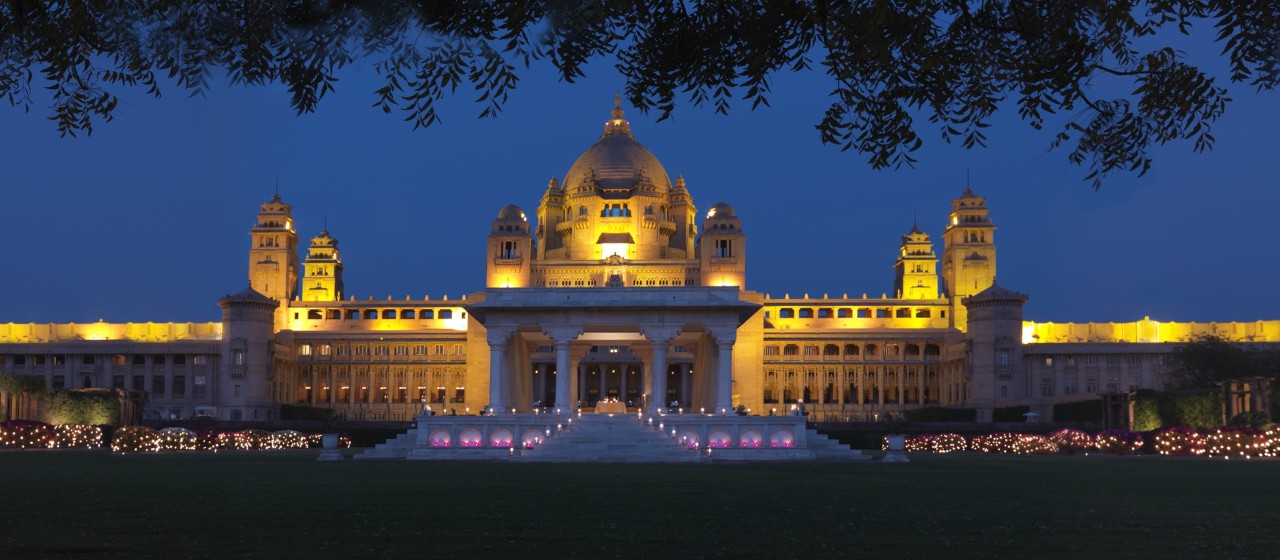
Umaid Bhawan Palace Clearly visible to the south of the city and completed only in 1944, this is the last great palace built in India. The Maharaja of Jodhpur, Gaj Singh II lives here to this day, but half the building has been converted to a 5-star hotel and there is also a small museum on grounds. The construction of the palace started in 1929 for palace for Maharaja Umaid Singh and was designed by the British architect Henry Lanchester and took more than 3000 workers 15 years to complete its 365 rooms, at a cost of around ₹11 million. The building is mortarless, and incorporates 100 wagon loads of Makrana marble and Burmese teak in the interior. Apparently its construction began as a royal job-creation program during a time of severe drought. The museum which includes photos of the elegant art-deco interior plus an eccentric collection of elaborate clocks, is the only part open to casual visitors. A few highly polished classic vintage cars, part of the Maharaja’s collection are also on display in glass enclosures in front of the museum, by the entrance gate.
Clock Tower The century-old clock tower is a city landmark surrounded by the vibrant sounds, sights and smells of Sardar Market. The market is bordered by triple-arched gateways at its northern and southern ends. The narrow, winding lanes of the old city spread out in all directions from here. Westward, you plunge into the old city’s commercial heart, with crowded alleys and bazaars selling vegetables, spices, sweets, silver and handicrafts.
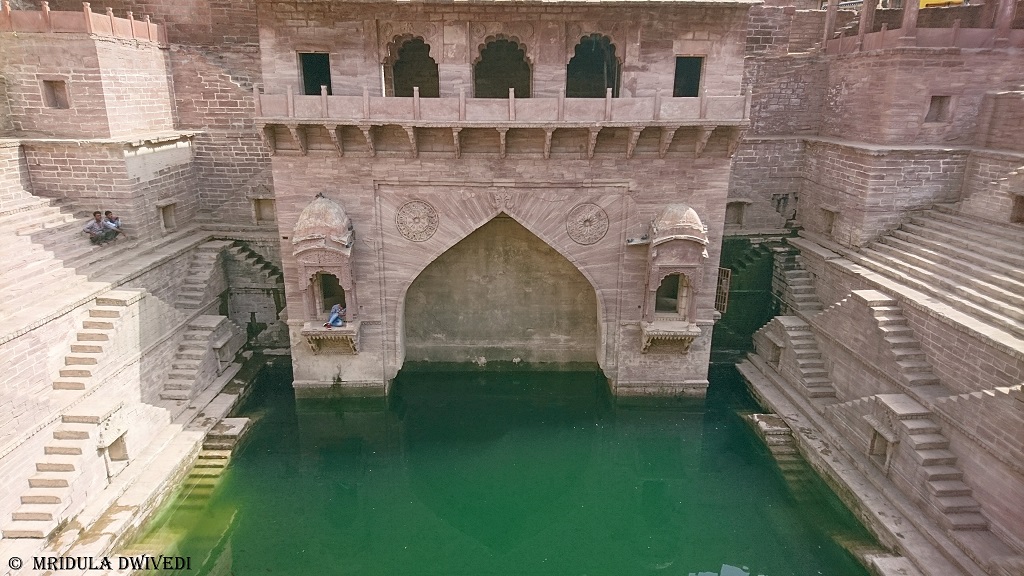
Toorji Ka Jhalra This geometrically handsome step-well (also known as a baori or wav) has been rejuvenated after decades as a rubbish dump. Its clean lines and clear, fish-filled water will leave you mesmerised. It’s a great place to just sit and watch, and the attached cafe adds further incentive for a visit.
With this we bid goodbye to Jodhpur and travel nearly 300 km in a westerly direction towards the border with Pakistan and the Thar Desert to Jaisalmer.
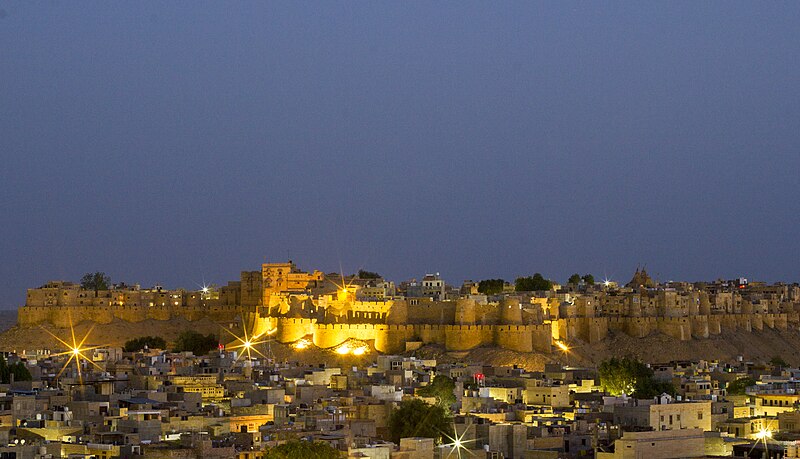
Jaisalmer – The Golden City In the heart of Thar or the Great Indian Desert, the town of Jaisalmer stands on a ridge of yellowish sandstone, and is crowned by the ancient Jaisalmer Fort. The town is known as the Golden City for its beautiful sun-soaked sand dunes, exuberant forts, and rich culture and traditions. Many of the houses and temples of both the fort, and of the town below, are built of finely sculptured sandstone, contributing to its name. Jaisalmer is named after Rawal Jaisal, a Bhati ruler who founded the city in 1156 AD. Jaisalmer means the Hill Fort of Jaisal. Apparently if you take in an aerial view of the town, it looks like an image of a prince sitting on the ridge of sand dunes, crowned by the Jaisalmer fort.
Jaisalmer Fort Called the Golden Fort because of te yellow sandstone used to construct it, Jaisalmer Fort is a living urban centre, with about 3000 people residing within its walls. It is honeycombed with narrow winding lanes, lined with houses and temples – along with a large number of handicraft shops, guesthouses and restaurants. The fort was founded in 1156 by the Rajput ruler Jaisal and reinforced by subsequent rulers, Jaisalmer Fort was the focus of a number of battles between the Bhatis, the Mughals of Delhi and the Rathores of Jodhpur. In recent years, the fabric of the fort has faced increasing conservation problems due to unrestricted water use caused, in the most part, by high tourist numbers. The sunset from the fort is particularly appealing due to the honey golden hue which drapes the fort because of the material used to construct it.
Havelis Jaisalmer is also known for the fairy-tale architecture of its magnificent historic havelis (mansions), located both inside and out of the fort. Many can be found in the narrow lanes about 10 minutes’ walk north of the fort. In this area, the 19th century Patwa Haveli is the city’s biggest and most important one. It’s actually a cluster of five mansions built by a wealthy Jain trader and his sons between 1800 and 1860 who made their fortunes in brocade and jewellery. Kothari’s Patwa Haveli is particularly impressive, with its breath-taking intricate stonework and artwork, and has been converted to a museum. In the same area, the distinctively shaped Salim Singh Haveli and extraordinary Nathmal Haveli are worth visiting as well. Inside Nathmal Haveli, the beautiful gold paintings are a highlight.
Jain Temples Within the fort walls is a maze-like, interconnecting treasure trove of seven beautiful yellow sandstone Jain temples, dating from the 15th and 16th centuries. The intricate carving rivals that of the marble Jain temples in Ranakpur and Mt Abu, and has an extraordinary quality because of the soft, warm stone.
Bada Bagh Bada Bagh, also called Barabagh (literally Big Garden) is a garden complex about 6 km north of Jaisalmer on the way to Ramgarh. Overlooking a mango grove sits a set of royal cenotaphs, or chhatris, of Maharajas of Jaisalmer state, starting with Jait Singh III (d. 1528), built by the son of the Rawal Jait Singh III, Maharawal Lunkaran Singh. Later, with time 104 members of royal family graves and their chattries were built. Maharawal Lunkaran Singh also completed the construction of Jait Bandh, a dam project that was started by his father Rawal Jait Singh III which stands useful till date for conservation of water.
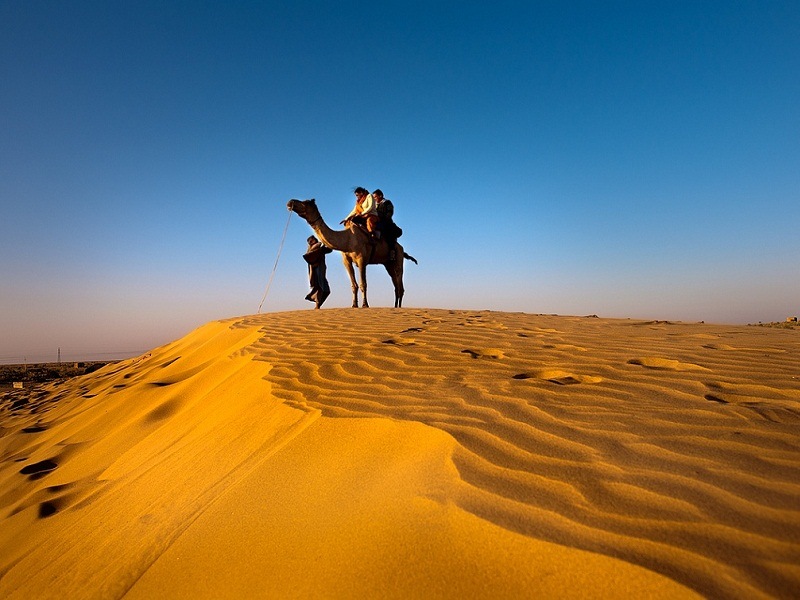
Sam Sand Dunes The silky Sam dunes, 41km west of Jaisalmer along a good sealed road, are one of the most popular excursions from the city. About 2km long the dunes are undeniably among the most picturesque in the region. Some camel safaris camp here, but many more people just roll in for sunset, to be chased across the sands by tenacious camel owners offering short rides. Plenty more people stay overnight in one of the several tent resorts near the dunes. The place acquires something of a carnival atmosphere from late afternoon till the next morning due to the cultural performances, making it somewhere to avoid if you’re after a solitary desert experience. On the way to the Dunes, Kuldhara Abandoned Village is a spooky but interesting place to visit. If you’d prefer a more peaceful desert sojourn, the dunes around Khuri village in Desert National Park an hour southwest of Jaisalmer are more suitable.
Thar Heritage Museum and Desert Culture Center and Museum This private museum has an intriguing assortment of Jaisalmer artefacts, from turbans, musical instruments, fossils and kitchen equipment, to displays on birth, marriage, death and opium customs. It’s brought alive by the guided tour you’ll get from its founder, local historian and folklorist LN Khatri. The Desert Culture Center and Museum, near Gadsisar Lake, is deservedly popular. It’s run by a local historian and teacher, who also runs the Folklore Museum. The museum tells the history of Rajasthan’s princely states and has exhibits on traditional Rajasthani culture. The diverse collection includes regional musical instruments, old currency, traditional jewelry worn by desert women, textiles, hunting items, royal memorabilia, artillery, and armor. It also hosts nightly half-hour puppet shows with English commentary.
Gadisar Lake Gadsisar Lake, also called Gadisar Lake, is a huge artificial reservoir built by Maharawal Gadsi Singh in the 14th century and situated on the southeast edge of the city. It provided the only water supply to the town until 1965. The many small temples and shrines that surround the lake make it an inviting place to relax and spend some time. Migratory waterfowl are an added attraction in winter, along with numerous catfish in the water that love to be fed. Boats are available for hire nearby too.
In addition to the cities mentioned, there are a few other places which are equally entrancing in the state.
Sawai Madhopur – For The Love Of Tigers Founded by Maharaja Sawai Madho Singh in 1763, Sawai Madhopur is home to the Ranthambhore National Park, which is best known for inhabiting tigers. The Ranthambore forests were the hunting grounds for the Kachwaha Rajputs of Jaipur till India received its independence. Aer independence it was established as the Sawai Madhopur Game Sanctuary and it rose to being a tiger reserve in 1973 and got its national park status in 1980. The Ranthambhore Palace and Fort, a 10th century historic palace, located in the heart of the national park, is another tourist attraction here and has been declared a UNESCO heritage as it imbibes a vast cultural history of the several clans, kings, and architectures. The best time to visit is between November and February for it is easy to spot tigers at the national park during that period.
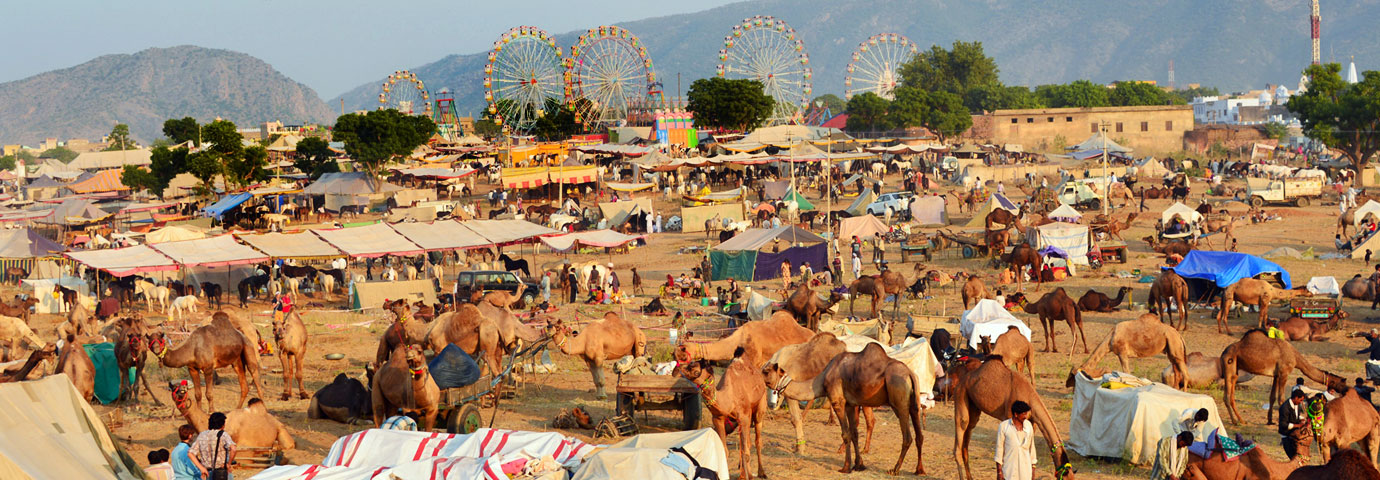
Pushkar – The Home of the Largest Camel Fair in India Known for the world famous five day Camel Fair, where people from nearby villages and towns come to trade camels and livestock, from which takes place in the Hindu month of Kartika (October/November), the town of Pushkar lies about 150 km southwest of Jaipur. For the rest of the year Pushkar remains a prominent Hindu pilgrimage town, humming with puja (prayers), bells, drums and devotional songs. The town wraps itself around a holy lake featuring 52 bathing ghats and 400 milky-blue temples, including one of the world’s few Brahma temples. The main street is one long bazaar, selling anything to tickle a traveller’s fancy, from hippy-chic tie-dye to didgeridoos. The result is a muddle of religious and tourist scenes. Yet, despite the commercialism, the town remains enchantingly mystic and relaxed. It is believed that a dip in the famed Pushkar Lake cleanses all your sins and will cure all skin diseases.
So are you tempted to go visit Rajasthan after reading this post? I definitely am! Hoping to make a trip there sooner than later.
After travelling to the north–easternmost part of India, let’s change directions and go to its western end. We will be visiting the Indian state of Rajasthan in the next few posts.
What comes to mind when you hear the word Rajasthan? To me the word and the state has a very exotic flavour to it. When I hear this word, I conjure up images of palaces, sand, deserts, men and women in colourful attire and camels!
The name Rajasthan can be translated into “Land of Kings” and this state with its erstwhile many princely states is literally just that. The state came into being after India’s independence on 30 March 1949 when the various princely states merged into the Indian Union.
Rajasthan is located on the north-western side of India, where it comprises most of the wide and inhospitable Thar Desert and the state shares a border with the Pakistani provinces of Punjab to the northwest and Sindh to the west, along the Sutlej-Indus river valley. Elsewhere it is bordered by five other Indian states: Punjab to the north; Haryana and Uttar Pradesh to the northeast; Madhya Pradesh to the southeast; and Gujarat to the southwest.
The oldest reference to Rajasthan is found in a stone inscription dated back to 625 A.D. The print mention of the name “Rajasthan” appears in the 1829 publication Annals and Antiquities of Rajast’han or the Central and Western Rajpoot States of India, while the earliest known record of “Rajputana” as a name for the region is in George Thomas’s 1800 memoir Military Memories. Parts of what is now Rajasthan were partly part of the Vedic Civilisation and Indus Valley Civilization.
So with a brief history of the state done and dusted, let’s go visiting! I’ll be splitting up the state into two posts and today’s post will be about the cities of Jaipur and Udaipur, two of Rajasthan’s most famous cities.
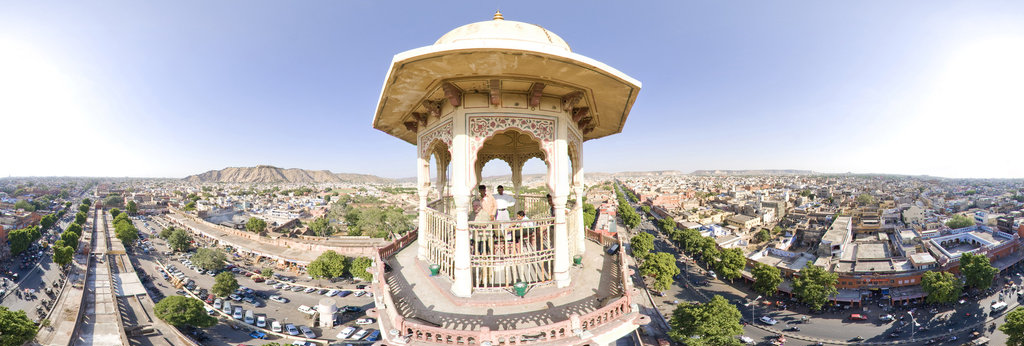
Most tourists start their sojourn in the state from its capital city of Jaipur, the largest city in the state. Founded by Maharaja Sawai Jai Singh in 1727 after whom the city is named. The city is also referred to as ‘Pink City’ for its trademark pink colour in the buildings across the old city. The best time to visit Jaipur is in the winter months between September and March as the summer months are extremely hot with temperatures reaching to highs of 40 degree celcius. The city forms part of the Golden Triangle in Indian tourism along with New Delhi and Agra. Some of the must-see sights in Jaipur include:
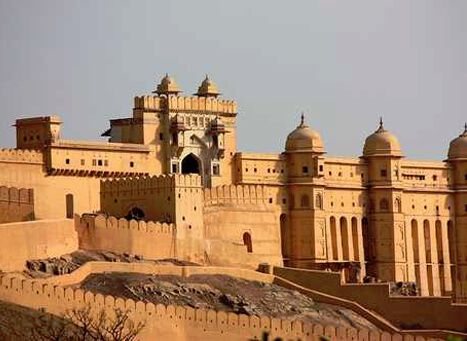
Amber Fort and Palace Located 11 km north of the city centre of Jaipur with a bit of a hike to the fort from the town, this massive fort-palace complex built in hybrid Hindu-Muslim style dates back to Raja Man Singh and was the royal palace of the Kachwahas from 1600 to 1727. The name has nothing to do with the rather pretty pastel yellow colour; instead, the fort is named after the town of Amber, in turn named after the goddess Amba. The main sights within the fort include the Sheesh Mahal, adorned with thousands of mirror tiles on the walls and ceiling. The fort/palace grounds are sprawling and the information panels are somewhat limited, so it might be worth getting an audio guide or a real guide. Make sure you see the Amber Light Show.
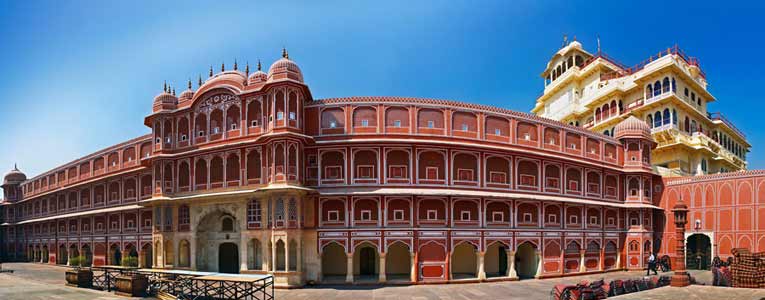
The City Palace Famed for being the seat of the Maharaja of Jaipur, the City Mahal, which lies in the heart of the Old City, includes the Mubarak Mahal and the Chandra Mahal which are popular for their excellent architecture. The ruler of Amber, Jay Singh II built the palace complex between 1729 and 1732. The palace is a delightful blend of Mughal and Rajasthani architecture and has a museum inside which is a must-see while exploring the palace.
Jantar Mantar Observatory Adjacent to the City Palace is the Jantar Mantar, an observatory begun by Jai Singh II in 1728 that resembles a collection of bizarre giant sculptures. Built for measuring the heavens, the name is derived from the Sanskrit yanta mantar, meaning ‘instrument of calculation’, and in 2010 it was added to India’s list of UNESCO World Heritage Sites. The observatory has 14 massive astronomical instruments, Jantar Mantar is known for its clever use of geometrical patterns in the form of instruments. Paying for a local guide is highly recommended if you wish to learn how each fascinating instrument works.
Hawa Mahal Jaipur’s most-distinctive landmark, the Hawa Mahal is an extraordinary pink-painted, delicately honeycombed hive that rises a dizzying five storeys. It was constructed in 1799 by Maharaja Sawai Pratap Singh to enable ladies of the royal household to watch the life and processions of the city. The main feature of the building are the 953 small intricately designed jharokas or windows. The top offers stunning views over Jantar Mantar and the City Palace in one direction and over Sireh Deori Bazaar in the other. An interesting feature of the building is that it does not stand on a foundation, with the structure leaning at a position of 87 degrees. The best time to visit the Hawa Mahal is during the early mornings when it is not so crowded. Also note that the museum in the building is closed on Fridays.
Nahargarh Fort Built in 1734 and extended in 1868, this sturdy fort overlooks the city from a sheer ridge to the north. The story goes that the fort was named after Nahar Singh, a dead prince whose restless spirit was disrupting construction. Whatever was built in the day crumbled in the night. The prince agreed to leave on condition that the fort was named for him. The fort is the smallest of the three forts surrounding Jaipur and has glorious views over Man Sagar lake and the vast sprawl of Jaipur. The fort also houses the (relatively) compact Madhavendra Bhawan palace, although its former splendour is fading fast under a new layer of graffiti and pigeon droppings.
Jaigarh Fort A 1 km walk uphill from Amber Fort, the Jaigarh or Victory Fort was never conquered in battle and was considered the strongest of the three forts in the area. It is best known as the site of the world’s largest cannon, the Jaivana, which was test-fired only once — according to legend, despite using only the half the design amount of gunpowder, the cannonball flew 35 km! A better reason to visit the fort, though, are the scenic gardens at the other end and the spectacular views over the Amber Fort and the hills around. The remains of the foundry where the Jaivana (and many more) were cast are also in the fort grounds.
Government Central (Albert Hall) Museum This museum is housed in the spectacularly florid Albert Hall, south of the Old City. The building was designed by Sir Swinton Jacob, and combines elements of English and North Indian architecture, as well as huge friezes celebrating the world’s great cultures. It was known as the pride of the new Jaipur when it opened in 1887. The grand old building hosts an eclectic array of tribal dress, dioramas, sculptures, miniature paintings, carpets, musical instruments and even an Egyptian mummy.
Isarlat Piercing the skyline near the City Palace is this unusual minaret, erected in the 1740s by Jai Singh II’s son and successor Iswari. The entrance is around the back of the row of shops fronting Chandpol Bazaar – take the alley 50m west of the minaret along the bazaar or go via the Atishpol entrance to the City Palace compound, 150m east of the minaret. You can spiral to the top of the 43m minaret for excellent views.
Galtaji Mandir Galtaji is an ancient Hindu pilgrimage site situated 10 km from Jaipur on Jaipur-Agra highway near Sisodia Rani Garden. The main temple here is temple of Galtaji in constructed in pink stone. The temple has a number of pavilions with rounded roofs, exquisitely carved pillars and painted walls. This temple is one of the most visited temples in the city and The temple is surrounded by natural springs and reservoirs that are considered holy .There are also seven tanks or kunds here.
Galwh Bagh (aka The Monkey Temple) and Suriya Mandir (aka The Sun Temple) Both the temples are located on the eastern edge of the city. Both locals and tourists come here to feed the surprisingly tame monkeys, use the temples, and enjoy the views. You can climb to the top of the hill and then down into the valley to see the Monkey Temple, all the while enjoying the company of countless monkeys, goats, and other animals. At the top of the hill, you turn right to reach the Sun Temple for one of the best views of the city, especially at sunset. Monkey food is available for purchase at the bottom of the hill.
Govind Devji Temple For Vaishnavites, particularly followers of Lord Krishna, this is the most important temple in the world after Vrindavan. The statue of Lord Krishna presiding in the temple was brought to Jaipur from Vrindavan during the Mughal era. According to popular legend, Lord Krishna’s idol in the temple looks exactly like Krishna’s form during his incarnation on Earth. The temple is located in the City Palace complex.
Moving on from Jaipur, lets make our way to Udaipur, which is located around 350 km southwest of Jaipur. The city is also called the The City of Lakes or the Venice of the East. A truly exotic city snuggled under the Aravalli hills beside the tranquil lake Picchola. Fantastical palaces, temples, havelis and countless narrow, crooked, timeless streets add to the city’s natural charms. Geographically, Udaipur is located in the southernmost part of Rajasthan, near the Gujarat border, surrounded by the Aravali Range, which separates it from Thar Desert.
Udaipur was founded in 1553 by the Sisodiya Rajput Ruler Maharana Udai Singh II. The Mewar Rajputs founded the city to relocate their capital from Chittor to a more secure location. Today, most of the palaces have been converted into hotels, thus attracting a huge no. of tourist crowd to this city.
Dubbed “the most romantic spot on the continent of India” by British administrator James Tod, Udaipur is a tourist destination and is known for its history, culture, scenic locations and the Rajput-era palaces. It is popularly known as the “City of Lakes” because of its sophisticated lake system. It has seven lakes surrounding the city.
As with other destinations in Rajasthan, the best time to visit is in the cooler months between September to March. So let’s visit the attractions in Udaipur.
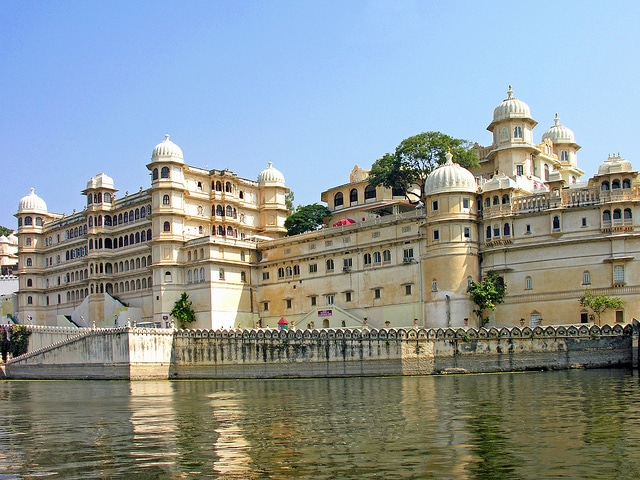
City Palace Complex Constructed in the year 1559 by Maharana Udai Singh II and surmounted by balconies, towers and cupolas towering over the lake, the imposing City Palace is Rajasthan’s largest palace, with a facade 244m long and 30.4m high. Situated on the banks of the Pichola lake, the palace complex is a conglomeration of structures (including 11 separate smaller palaces) built and extended by various maharanas in a blend of European, Medieval and Chinese styles, though it still manages to retain a surprising uniformity of design.
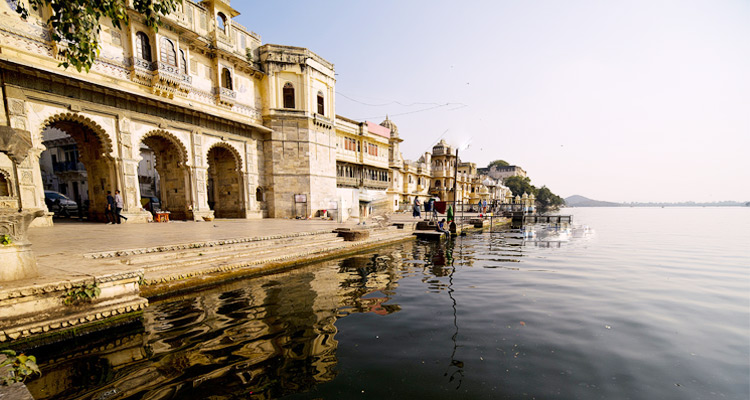
Lake Pichola Created in 1362 and extended by Maharana Udai Singh II, the founder of Udaipur, Lake Pichola is named after the village Picholi in which it is situated. Originally created for drinking and irrigation purposes for the village, today the lake sits on the shore of the city palace, limpidly reflecting the blue-grey Aravalli mountains on its mirror-like surface. You can also go boating on the lake, which is a popular haunt for both locals and tourists alike.
Fateh Sagar Lake An artificial lake constructed by Maharana north of Lake Pichola in 1678 and to the northwest of Udaipur. Within the confines of Fateh Sagar Lake, there are three small islands. The largest of these is Nehru Park. The second island houses a public park with an impressive water-jet fountain, and the third is the address for the Udaipur Solar Observatory. Every year the Hariyali Amavasya Mela (Green New Moon Fair) is organized at the lake precincts in the month of August/September.
Bagore ki Haveli A mansion built in the 18th century on the waterfront of Lake Pichola at Gangori Ghat by Amir Chand Badwa, the Prime Minister of Mewar it is now a museum. The Haveli became the residence of Maharana Shakti Singh of Bagore in the year 1878 and hence the name Bagore Ki Haveli. It has over a hundred rooms, with displays of costumes and modern art. The building has a large and exquisite collection of Mewar paintings and glassworks. There is a nightly one-hour long dance performance at 7pm.
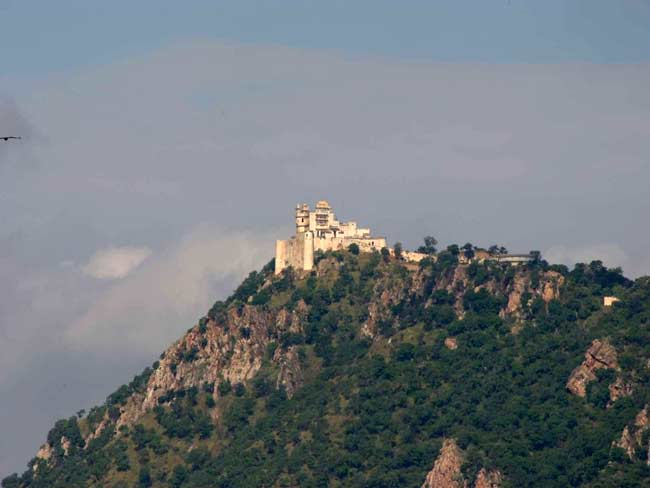
Sajjan Garh Perched on top of a distant hill like a fairy-tale castle, this melancholy, neglected late-19th-century palace was constructed by Maharana Sajjan Singh. Originally an astronomical centre, it became a monsoon palace and hunting lodge. Now government owned, it’s in a sadly dilapidated state, but visitors stream up here for the marvellous views, particularly at sunset. It’s 5km west of the old city as the crow flies, about 9km by the winding road.
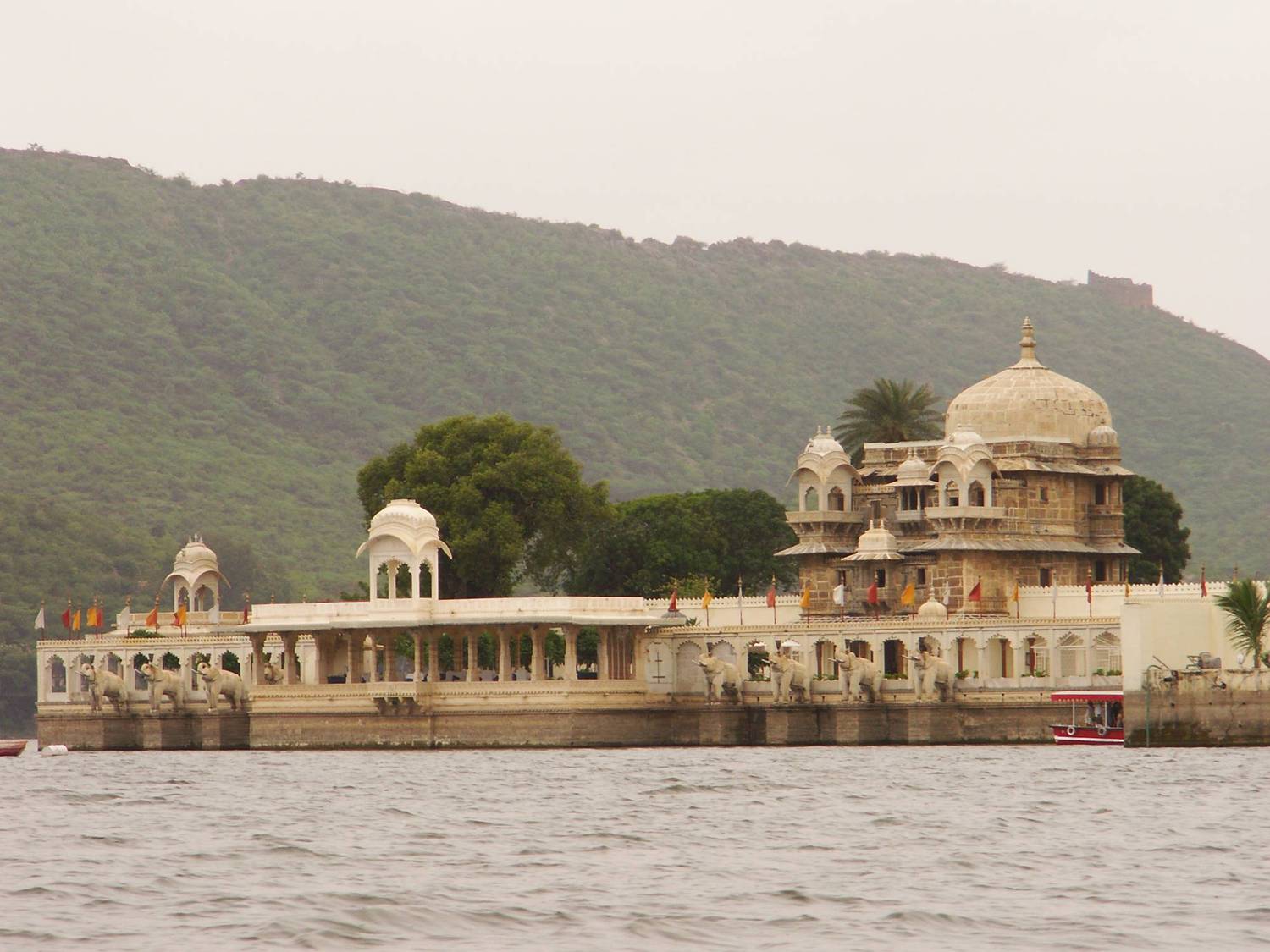
Jagmandir Island The palace on Jagmandir Island, about 800m south of Jagniwas, was built by Maharana Karan Singh II in 1620, added to by his successor Maharana Jagat Singh, and then changed very little until the last few years when it was partly converted into another (smaller) hotel. When lit up at night it has more romantic sparkle to it than the Lake Palace. As well as the seven hotel rooms, the island has a restaurant, bar and spa, which are open to visitors.
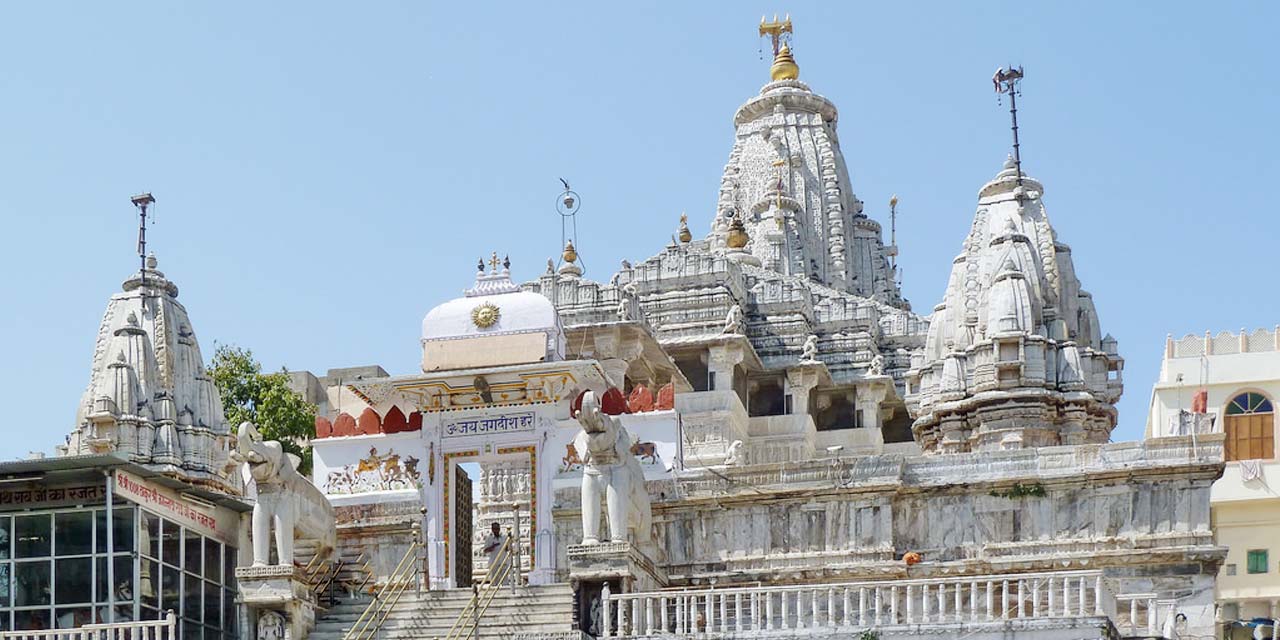
Jagdish Temple Built in the year 1651, Jagdish Temple is Udaipur’s largest temple. An estimated 1.5 million Indian Rupees were spent on this stunning Indo-Aryan architectural marvel. It is dedicated to Lord Vishnu and also houses other shrines dedicated to Lord Shiva, Ganesh, the Sun God, and Goddess Shakti. This temple should be visited not only to oer your devotion but also to witness beautiful wall carvings, elephant sculptures and for the stunning architecture.
Nathdwara Nathdwara is an important hindu pilgrimage site for Lord Krishna devotees and is commonly called Shrinathji, after the presiding deity. This place is around 45 km from the centre of Udaipur. A famous legend is associated with the Shrinathji temple here and therefore throngs of devotees come every day to pay their respects to the lord. Apart, from being a pilgrimage site, Nathdwara is famous for a specific style of paintings dedicated to Shrinathji as well as mouth-watering cuisines. The cultural beauty of town has led to it being called ‘The Apollo of Mewar’
Mount Abu Get some respite from the scorching summers in Mount Abu, the only hill station in Rajasthan which is 163 km from Udaipur. Mount Abu is also the place to Five Unique Temples of Dilwara, which are famous worldwide for their architectural beauty. It’s picturesque beauty is also something to look forward to if visitors are looking for a laid back vacation with some stunning viewpoints.
After having visited Assam, Arunachal Pradesh and Meghalaya in Part 1, let’s turn our attention to the remaining states. Today we will visit the Himalayan state of Sikkim and the most north-eastern states of India which are Manipur, Mizoram, Nagaland and Tripura.
Shri Govindaji Temple, Manipur A shrine to Lord Krishna, it is believed that the temple absolves you of your guilt, worries, and stress. The simple architecture makes it stand apart from any other temple in the region, making it amongst the top places to see in North East India. The temple stands in the capital city of Manipur, and is quite accessible for the tourists. The temple is dedicated to Lord Krishna and Lord Jagannath and dates back to the year 1876, almost 130 years old. The beauty of this ancient temple is dotted with two small ponds named Radha Kunj and Krishna Kunj. The Golden domes of the temple are visible from quite a distance and you are even allowed to photograph this place. If you are interested in history and architecture, it can be an informative stopover which is situated right next to Kangla Fort.
Loktak Lake, Manipur This lake is famous for its numerous small floating islands which are locally famous as ‘Phumdis.’ Loktak lake is one of the largest freshwater lakes in North East India and is home to the world’s only floating National park – Keibul Lamjao National Park. It is located in the Bishnupur district of Manipur and the floating swamps can be toured on a fisherman’s boat. It is a nature lover’s paradise where you can indulge in birdwatching, witnessing he endangered Manipuri brow-antlered deer, Sangai and photographing more than 425 species of animals and 100 species of birds. It is one of the must-go places to visit in North East India.
Imphal Valley, Manipur This oval shaped canyon is situated an hour drive away from the city and is incredibly scenic. This valley owes its beauty to the confluence of several small river streams from the neighbouring hills, giving a unique colour to the river and scenery. The famous Loktak lake is one of the lakes and swamps of the Southern side of the valley. The valley is picture-perfect and you can click endless selfies, the frame will always look bright and beautiful.
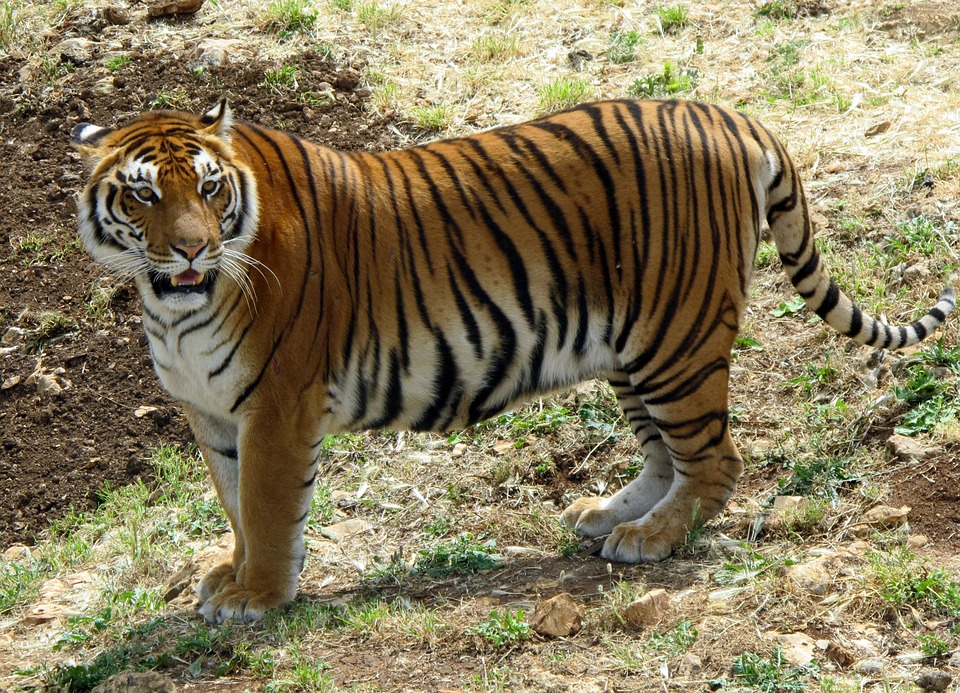
Dampa Tiger Reserve, Mizoram Spread over an immense 550 square kilometres, the Dampa Tiger Reserves have some beautiful tigers that you can catch sight, and capture pictures of. There is no doubt that the sight of a tiger is an experience in itself to cherish for lifelong. The royal look of a tiger, and their menacing yet elegant ways are best experienced in person, and that is why visiting this place is a must.
Reiek Heritage Village, Mizoram This hilltop village is a birdwatcher’s delight and photographers favourite spot. Mizo hills in the background give ample opportunities for trekking. Among the many North East India tourist places, Mizoram is an underrated hill station and Reiek Heritage village is now breaking the barriers with its contrasting landscape of the steep rocky cliffs and the virgin forests. It is well connected with cities like Aizawl, Silchar, Guwahati etc.
Vantawng Falls, Mizoram Vantawng fall is a well-kept secret of the hilly state of Mizoram and is the highest waterfall of the state. It is one of the best sites in Mizoram and a testament to the hidden treasures of Northeast. It originates from Vanva River near Thenzawl and is tucked away in a green setting of valleys and mountains, almost over a hundred kilometres from the city of Aizawl.
Kohima Museum, Nagaland If you are interested in knowing the history, culture, lifestyle, and tribes of Nagaland than there is no better place than visiting Kohima Museum. Furthermore, there are antiques, crafts, and gadgets used by the tribes to meet their daily chores on exhibit. The different types of huts are on display of different tribal settlements. The dialects used by different tribes and clan motifs, along with musical instruments and utensils made of Buffalo horns and bamboos are some of the interesting things in Kohima Museum.
Shilloi Lake, Nagaland The Shilloi Lake is one of the major highlights of the state of Nagaland. It is situated in the town of Phek, and is looked over by some of the most glorious mountain peaks. The lake also has an interesting story and customs associated with it, and the surroundings are just as interesting, which makes it a great place to visit for a surreal holiday experience. For northeast India tourism, best time to visit is after the monsoons.
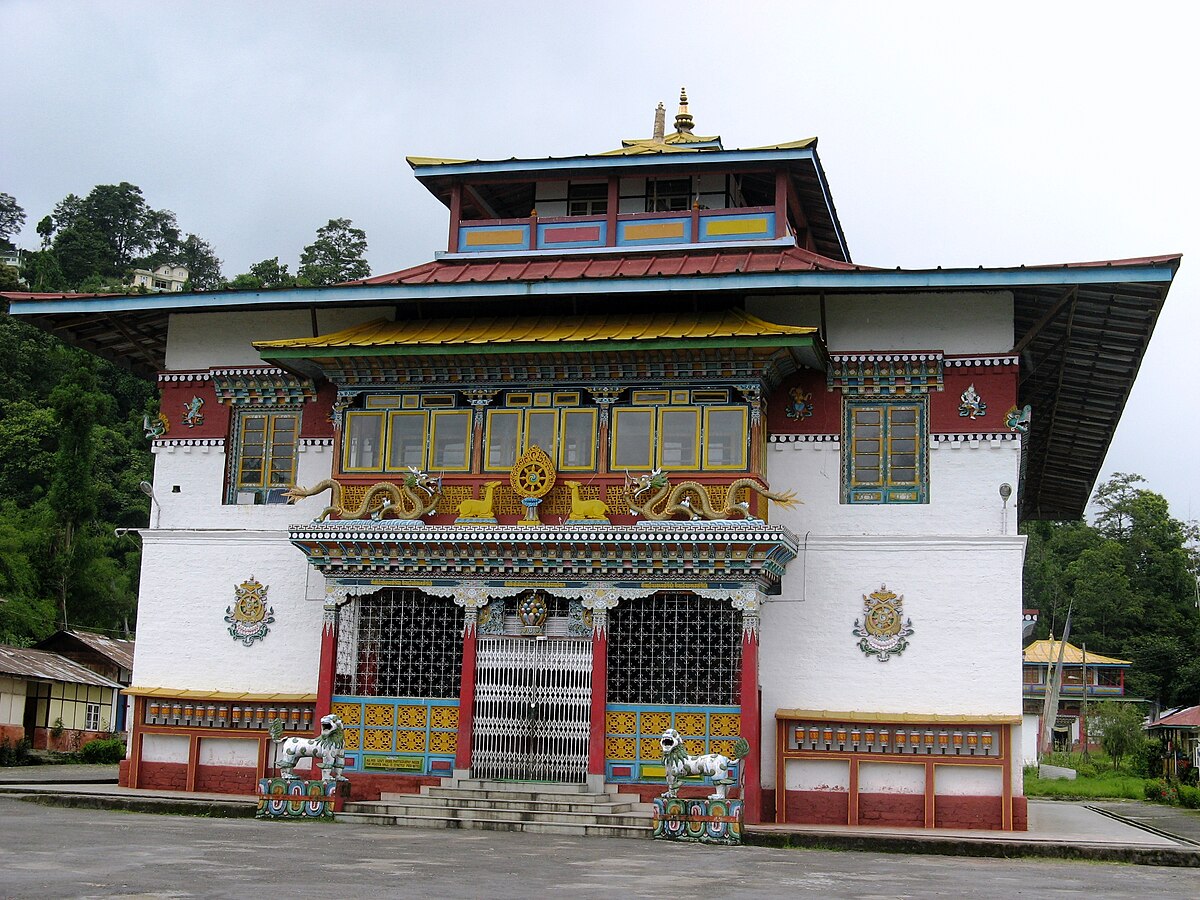
Phodong Monastery, Sikkim The Phogong Monastery dates back to the 18th century, and is one of the most religious places for the Kagyu sect of Buddhists, and even for tourists. There are indications that the structure dates back even more than the 18th century, with the secluded location making it even more wonderful for an enriching experience.
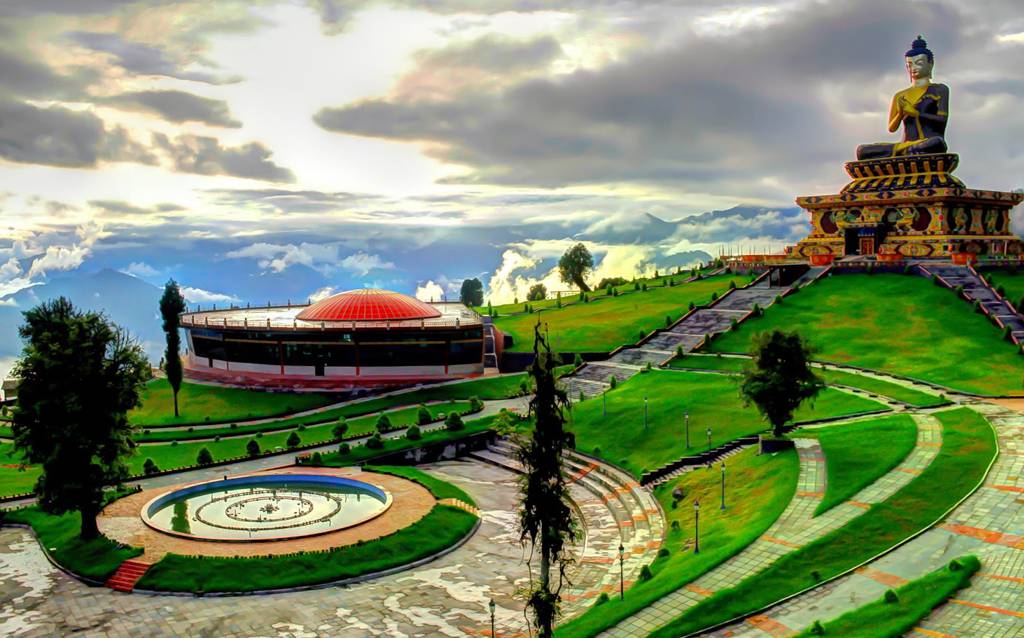
Ravangla, Sikkim A tourist attraction in the southern part of Sikkim, this little town is a recluse for anyone who is looking for one. It lets you stand alone in a crowd, surrounded by the serenity of the flowers in the summer and the snow-clad peaks in the winters. The birdwatchers have a merry time with the Himalayan migratory birds.
Gangtok, Sikkim This cloudy paradise is simply enticing, exuberant and the gateway to Northeast. Gangtok is the capital of Sikkim and a trekking hub. The site of Mt. Kanchenjunga is cherished from Gangtok, and mountaineers who are on their expedition to climb the Eastern Himalayas make it a base town. Travellers can also spot the pristine site of river Teesta and can travel to many points like the famous Tsomgo Lake, Rumtek monastery, Nathula Pass, Tashi viewpoint and Ban Jhakri falls etc. The view of Kanchenjunga during sunrise or sunset is commendable, it shines like a series of Golden Peaks.
Pelling, Sikkim Pelling is gaining popularity with each passing year and the next big attraction after Gangtok. Pelling is a town in the West district of Sikkim at an elevation of 2000 meters and is a paradise for peace-seekers. You can indulge in activities like rock climbing, mountain biking, village walks etc. It is becoming one of the places to visit in North East India to enjoy some of the breathtaking views of the Himalayas. There are various places in Pelling that you should definitely visit when you go to North East.
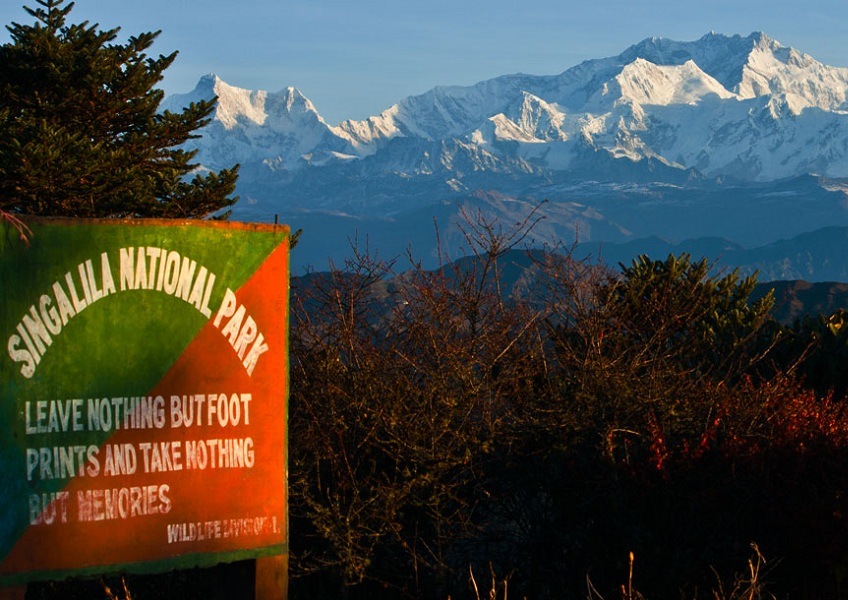
Singalila National Park, Sikkim This alluring National Park is situated at a height of 7000 feet above the sea level, covering an area of 79 sq km of land. The Rhododendron forests, rare species of Orchids and Alpine trees are home to a plethora of species in plants and animals like Himalayan Leopard, Elephant, Pangolin, Chinkara along with Primula, Bamboo, Magnolia, Oak, Rhododendron etc. It is a famous trekking destination as it makes a major part of the Singalila range and can be best traversed on a Jeep Safari.
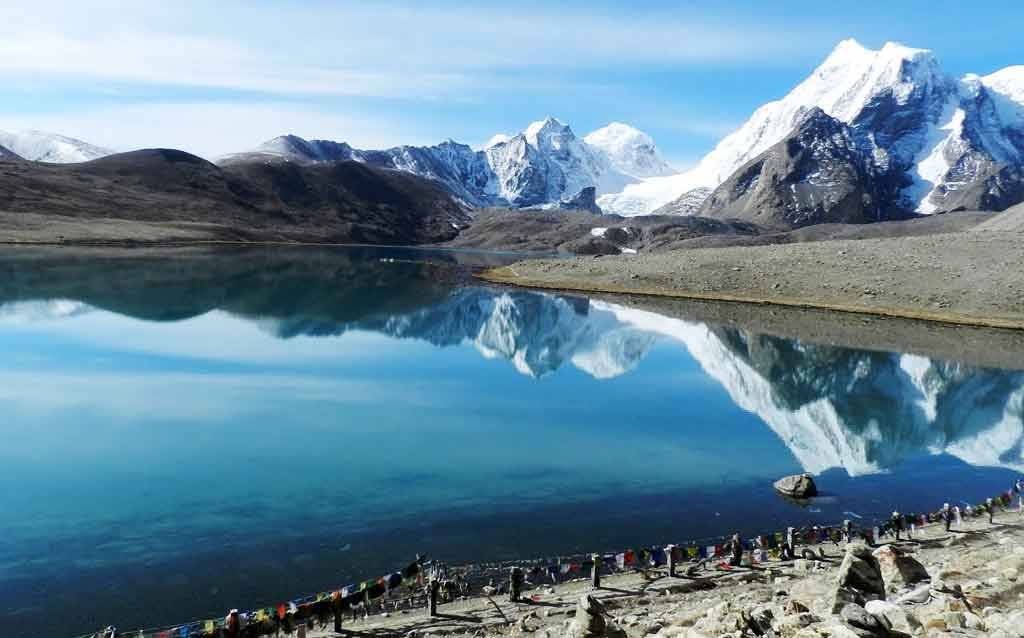
Tsomgo Lake, Sikkim The winding roads which make a 38 km long journey from Gangtok to reach an altitude of 12,400 ft are ethereally beautiful. The lake at such an elevation flaunts its stillness in the most surreal settings of Himalayan peaks encircling it. The snow-clad mountains are the main source for the water in Lake as it melts from the mountains. In winters, this placid lake can also be snow-covered and while you travel to Tsomgo, do not forget to learn the stories which are linked to this lake. It is a different experience altogether.
Nathula Pass, Sikkim The old silk road that once used by merchants and traders is at an elevation of 14450 ft. above sea level on the Indo-Tibetan border. The temperature at Nathula is always freezing regardless of the season and the entire region is rich in Himalayan flora and fauna. It is one of the famous places to visit in North East India can be easily travelled from the capital city Gangtok. The name of the pass translates to “listening ears”. The trek on the Nathu La pass is one of the major highlights of the North East tourism as it gives an invigorating feeling to every traveler who experiences it. During the trek, you are treated to the views that remain ingrained in your memory for a lifetime, and you get to spot some beautiful lakes on the way. The best time to visit is during the summers when the temperatures are at a bearable 15 degrees. In the winters, it falls down to -25 degrees.
Dzongri, Sikkim A safari on an animal as huge and peaceful as the yak holds something magical in itself. The surrounding views while riding the majestic creature form a feeling of unity that you can seldom experience anywhere else, which is why this is one of the best things to do in North East. You can also get pictures captured to take back home as sweet memories.
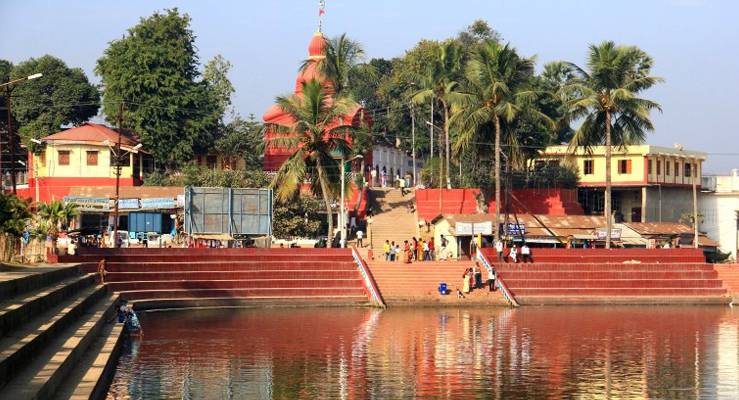
Tripura Sundari Temple, Tripura This old Hindu shrine is situated around 56 km from Agartala town and is said to be one of the 51 Shakti Peethas. The outer upper edifice is a dome structure where the square type sanctum is worshipped, more like a typical Bengali hut. Flocks of tourists and locals visit this temple in lakhs during Diwali every year. It is one of the religious places to visit in North East India and one of the few temples of Goddess Kali in India.
Ujjayanta Palace, Tripura The entire city of Agartala unfurls around this lavishly designed architectural marvel of the Northeastern part of India. Ujjayanta Palace dates back to the year 1901 and from the public halls to the reception hall, from the library to the Chinese rooms; every edge gives a true sense of royalty. The lush greenery of vast gardens is well complemented with a rippling lake. It serves as a pretty museum to the travellers who come to Tripura all the way from their homes.
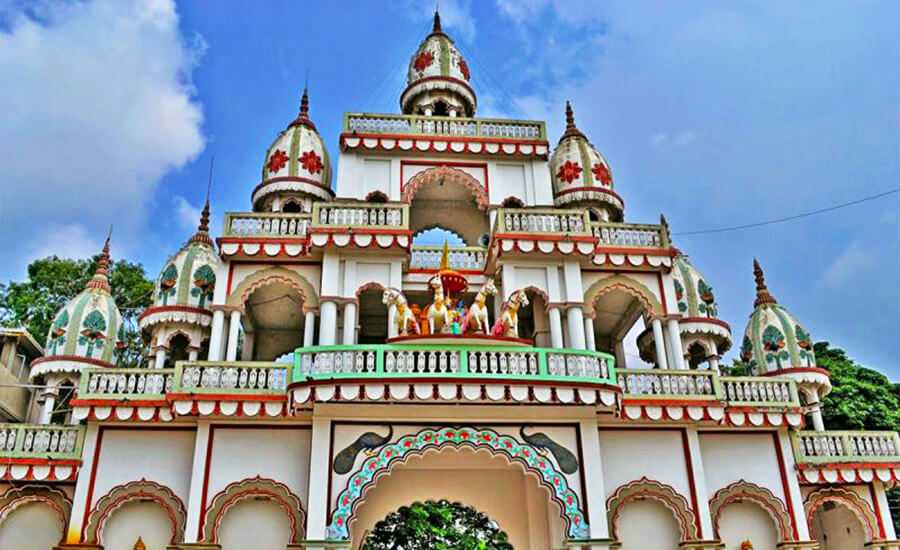
Jagannath Temple, Tripura This is a famous temple in Tripura which dates back to the 19th century and was built by Manikya Dynasty. The temple is dedicated to God Jagannath, Balabhadra, and Subhadra. It is suggested to go during the month of June to witness the famous Rath Yatra. Keep your camera handy because this temple is a sight to the sore eyes. The best time to visit is in June to witness the famous Rath Yatra celebrated at the temple.
Sepahijala Wildlife Sanctuary, Tripura Sepahijala Wildlife Sanctuary is said to be the biodiversity heaven of Tripura for the plethora of animals and plants that dwell within this protected belt. There is a bio-complex, a zoo, a deer park and a Botanical garden within the sanctuary premises. It has around 456 species of plants, with animal species like Barking Deer, Pigtailed macaque, Rhesus macaque, Capped langur, Spectacled monkey, Slow loris, Clouded leopard, Civets, Jungle fowl, Wild pig, etc.
After reading both parts of this wonderful part of India, does it not invoke a desire to visit these places? It sure does for me!
If you have already visited these places, do let me know if there are any must-see places in the northeast that I have missed?










:max_bytes(150000):strip_icc()/GettyImages-481776206-58fde26a5f9b581d59810c1d.jpg)




/https://public-media.si-cdn.com/filer/Jaisalmer-Fort-India-631.jpg)
_1508587892t.jpg)





_1517160407t.jpg)