Adhika Masa: A spiritual month to align oneself to the Divine

In Hinduism, the lunar calendar plays a significant role in determining auspicious times for various rituals, festivals, and ceremonies. While most lunar calendars consist of 12 months, occasionally, an extra month called the Adhik Masa is added to align the lunar and solar calendars. In 2023, after a gap of 19 years, this extra month returns from 18 July to 16 August.

Also known as Purushottam Maas or Mala Masa, the Adhik Maas is a rare additional month that occurs in the Hindu calendar to adjust the discrepancy between the lunar and solar cycles. This intercalary month, approximately 30 days long, is considered highly auspicious and is believed to be under the special blessings of Lord Vishnu, the preserver of the universe. The adhika-masa is an extra lunar month added to the solar calendar every three years so that the lunar and the solar years are synchronised, along with the agricultural cycle and seasons. Adhika refers to the Sanskrit word for additional or extra, while masa means month.

According to the mythology, all the gods refused to become the master of this month due to it supposedly being dirty, then the month prayed to Lord Vishnu, who pleased with the prayer of the month, gave his name to this month, and so the month is known as Purushottam Maas. Lord Vishnu gave the boon to this month that any devotee who worships Lord Shiva during this month does religious work, listens to the Bhagwat Katha, and donates to charity during this month, will get the never-ending virtue.

When the Sun does not at all transit into a new rāshi or zodiac sign which is 30 degrees sidereal zodiac, but simply keeps moving within a rāshi in a lunar month before a new moon, then that lunar month will be named according to the first upcoming transit. It will also take the epithet adhika or extra. The transition of the Sun from one rāshi to the next is called Sankranti. The next month will be labelled according to its transit as usual and will get the epithet nija or original or shuddha or clean. The terms Pratham or first Chaitra and Dvitiya or second Chaitra may also be used.

An extra month, or adhika-masa, falls every 32.5 months on average. The solar year is made up of 365 days and about 6 hours, and the lunar year is made up of 354 days. This causes a gap of 11 days, 1 hour, 31 minutes and 12 seconds between the lunar and the solar years. As this gap accumulates each year, it approximates 2.7 years to one month. No adhika-masa falls during the months of Margashirsha to Magha or November/December to about January/February. An adhika-masa during the month of Kartika or October/November is extremely rare, but in the 250 years between 1901 to 2150, it occurred once, in 1963. The Moon takes about 27.3 days to make one complete orbit around the Earth. The Earth orbits around the Sun once every 365.2422 days. The Earth and the Moon, in 27.3 days, have moved as a system about 1/12 of the way around the Sun. This means that from one full moon to the next full moon, the Moon must travel 2.2 extra days before it appears again as a full moon due to the curve of the Earth’s orbit around the Sun. This creates a variance of 10.87 days a year between a lunar year and a solar year. And so, to compensate for this difference, the additional month is added after every 32.5 months on average.

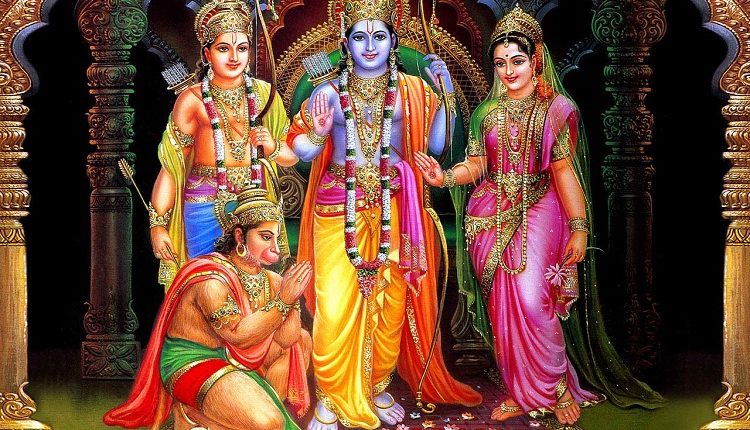
Adhik Masa is dedicated to Lord Vishnu, and devotees observe this month with great devotion and reverence. Lord Vishnu is believed to be more accessible and responsive during this time, making it an ideal period for intensifying spiritual practices such as meditation, prayer, and reading sacred scriptures. The month is also considered a sacred opportunity to cleanse oneself of accumulated karmic debts. Devotees engage in acts of charity, self-discipline, and selfless service, seeking to purify their souls and seek forgiveness for any past wrongdoings. By engaging in these virtuous acts, individuals aim to elevate their spiritual consciousness and bring about positive transformation in their lives.

During Adhik Masa, specific rituals and observances are followed to appease Lord Vishnu. Devotees often perform pujas which are ritualistic worship, and offer prayers to the deity. Fasting, particularly on Ekadashi, the eleventh day of each fortnight, holds great significance during this month. Observing fasts is believed to enhance spiritual growth and foster self-control and discipline.

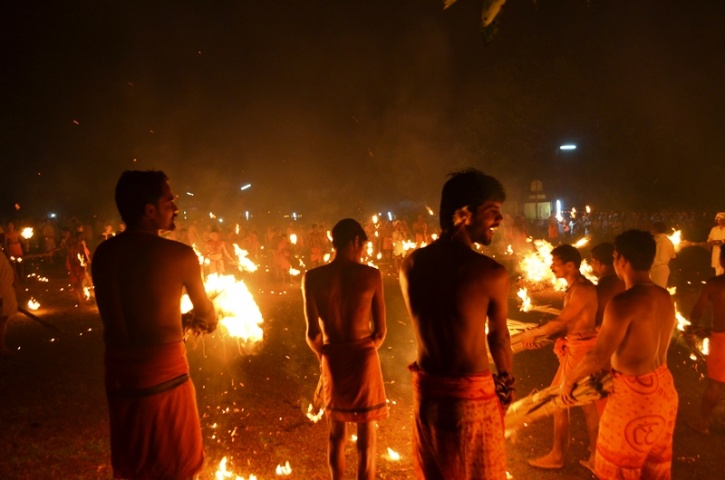
Many devotees undertake pilgrimages to holy places associated with Lord Vishnu during Adhik Masa. Places like Badrinath, Jagannath Puri, and Rameswaram are particularly popular destinations during this auspicious month. These pilgrimages allow individuals to immerse themselves in a spiritually charged atmosphere, fostering a deeper connection with the divine. Regarded to be a holy month, many people perform the adhika masa vrata. People engage in practices such as mala japas, pradakshinas, pilgrimages, scriptural reading, and parayanas. During adhika-masa, people perform various types of religious rituals such as keeping fast, recitation of religious scriptures, mantras, and prayers, and performing various types of puja and havan. Vratas or fasts of various durations, including for the full day, half day, weekly, fortnight, and full month are often undertaken. The vratas may be complete fasting with liquids only or without liquids, fasting with fruits only or keeping fast with vegetarian food, as the individual can tolerate. It is said that the persons performing good deeds or satkarma in this month conquer their senses and they come out of the cycle of rebirth. This month is often regarded to be inauspicious, where the performance of rites such as weddings do not take place. It also serves as a compensatory period for adherents who had previously neglected their religious duties.

A month-long mela or fair is celebrated in Machhegaun village in Nepal during adhika-masa. It is believed that one can wash away all his sins by taking a bath in the pond at Machhenarayan temple. Specific festivals such as Dussehra or Deepavali are not marked during this month. In the Beed district of Maharashtra, there is a small village called Purushottampuri, where there is a temple dedicated to Lord Purushottam, a regional form of Krishna. Every adhika-masa, there is a big fair, and thousands of people come from various places to invoke the blessings of the deity.

Adhik Masa offers a unique opportunity to deepen one’s devotion and connection with the divine. By engaging in daily spiritual practices and rituals, individuals can experience a heightened sense of spirituality and devotion. Regular prayer, chanting of mantras, and meditation can help cultivate a deeper connection with Lord Vishnu and nurture a sense of inner peace and tranquillity. The month encourages devotees to engage in self-reflection and introspection and provides an ideal time to assess one’s spiritual progress, identify areas for improvement, and set new goals for personal growth. Through introspection, individuals can gain clarity, overcome obstacles, and strengthen their resolve to lead a more righteous and virtuous life. Adhik Masa is an opportune time to delve into the study of sacred texts and scriptures. Devotees can spend time reading spiritual literature, participating in satsangs which are spiritual discourses, and attending religious lectures to expand their understanding of the teachings and principles of Lord Vishnu. This knowledge serves as a guiding light in one’s spiritual journey. The Adhik Masa is considered a season of giving and selflessness. Devotees actively participate in acts of charity and service, extending kindness and compassion to the less fortunate. By contributing to the welfare of others, individuals can not only alleviate the sufferings of those in need but also cultivate a sense of gratitude and humility.

So do try and spend time deepening your devotion, engaging in self-reflection, and immersing in sacred rituals and practices. The return of Adhik Masa after a gap of 19 years serves as a powerful reminder of the importance of aligning oneself with the divine and seeking spiritual elevation. May this Adhik Masa bring blessings, peace, and spiritual upliftment to everyone.

Short Story: The Green Bangle

Aishah sat alone on the Klebang beach, the sun sinking below the horizon, casting a warm golden glow over the waves. Tears streamed down her face, her heart heavy with sorrow. Just hours ago, she had received the devastating news that her fiance, Nasrul’s family had called off their engagement. The suddenness of it all left her bewildered and hurt.

“Why?” Aishah whispered to the sea, her voice carried away by the gentle breeze. “Why would they do this without any explanation?”

As she aimlessly sifted through the sand, her fingers brushed against something solid. Intrigued, she dug deeper, revealing a small, intricately carved jade bangle. The sunlight reflected off its smooth surface, casting an ethereal green glow. Without thinking, Aishah slipped the bangle onto her wrist.

In that instant, the world around her transformed. Aishah found herself standing in a bustling street, surrounded by buildings that at once seemed familiar, yet unfamiliar. She looked down at herself and realised that she was no longer Aishah but a young Chinese woman. Floundering, Aishah tried to walk down the street when someone called for Su-Yen behind her. She didn’t stop until someone poked her with an umbrella. “Su-Yen, can’t you see I am calling you? Where are you?” Aishah realised that she was a Chinese woman named Su-Yen and this was Malacca, but from what she knew of her history, she had been transported to 17th-century Malacca. Fear and confusion gripped Su-Yen as she tried to make sense of her new reality and glanced at the jade bangle on her wrist, now pulsating with otherworldly energy.

As Su-Yen navigated the crowded streets, fragments of memories flooded her mind. She recalled being the daughter of a wealthy Chinese merchant and a beautiful Eurasian woman. Her parents’ marriage had been a union of two worlds, a testament to the cosmopolitan nature of Malacca. But her blissful existence had come to an abrupt end when her father’s business faltered, and their fortune vanished.

Stripped of their opulence, Su-Yen’s family struggled to make ends meet. In a desperate attempt to secure a better future, her father arranged a marriage between Su-Yen and a powerful but cruel man named Li Wei. Desperate to escape her fate, Su-Yen sought solace in the arms of her secret love, a kind-hearted Malay sailor named Rizal. The same soulmate who had presented her soon with the bangle which adorned her hand right now.

Through the haze of memory, Su-Yen recalled the fateful night that would forever change her life. Li Wei had discovered her illicit romance and confronted them with rage in his eyes. In a fit of jealousy, he had drawn his sword, and before Su-Yen could react, Rizal leapt in front of her, sacrificing his life to protect her.

Tears welled up in Su-Yen’s eyes as she relived the grief and guilt that had consumed her at that moment. She had blamed herself for Rizal’s death and had made a desperate plea to the heavens for a chance to right her wrongs. Su-Yen made up her mind. She started running and did not stop until she reached the beach. She was panting, and collapsed in the fine sand, tears running down her face. She reached for the jade bangle, the symbol of Rizal’s love and flung it before getting up and walking determinedly towards the sea, to be with her love, her soulmate, Rizal.

Back on the Klebang beach, Aishah’s surroundings began to shift. She found herself back in the present day, the jade bangle still snugly adorning her wrist. She knew now that Su-Yen’s story was not just a figment of her imagination but a connection to her struggles.

A newfound determination surged within Aishah. She would not let the pain of heartbreak consume her. Like Su-Yen, she would fight for her happiness. Aishah sought answers, determined to uncover the reason behind Nasrul’s family’s decision.

Days turned into weeks, and Aishah soon learned why Nasrul’s family broke their engagement. One of his relatives had launched a whisper campaign against her, assassinating her character and poisoning their ears against her and her family. The relative wanted Nasrul to marry her daughter and so started this negativity. The revelation filled Aishah with a mix of anger and sadness. She had hoped that love would conquer all, but it seemed that prejudice still held sway.

Armed with newfound resolve, Aishah confronted Nasrul’s family and challenged their decision. She reminded them that her and Nasrul’s love was the forever kind and that their happiness was worth fighting for. Her heartfelt plea touched Nasrul and he stood up against his family and the relative who poisoned their hearts against Aishah and her family. Seeing Nasrul’s steely determination, his family realised the depth of their son’s love for Aishah and relented, understanding that their happiness lay in accepting her as their daughter-in-law.

Aishah and Nasrul’s love triumphed over the prejudices that had once threatened to tear them apart. As they exchanged vows on their wedding day, the jade bangle served as a reminder of the strength and resilience they had found within themselves. And as Aishah glanced at her reflection, she couldn’t help but wonder if Su-Yen was looking back at her, sharing in her joy and celebrating the victory over the trials of the past. The jade bangle, once a catalyst for their connection, now stood as a symbol of the intertwined destinies of two women separated by time but united by love and the indomitable spirit of Malaysia’s rich history.

10 Must-Watch TED Talks: Enlightening Perspectives for a Lifetime

TED Talks are videos that present a great idea in 18 minutes or less. They’re filmed at flagship TED conferences, independent TEDx events, and other special events. The goal of a TED Talk is to inform and educate global audiences in an accessible way. Scientists, researchers, technologists, business leaders, artists, designers and other world experts take the TED stage to present “Ideas Worth Spreading” including valuable new knowledge and innovative research in their fields. Most of the TED talks are filmed at flagship TED conferences, independent TEDx events, partner events and salons.

In June 2006, TED released six talks recorded at its conferences on the Internet. Since then, every talk delivered at a TED event is reviewed by the research, editorial and curatorial teams for publication on TED.com. And because of these videos, TED has attracted an international following that has grown into the millions with the talks now viewed or listened to more than 3 billion times annually.

A lot goes into researching and creating a TED Talk. Most TED Talks are edited, lightly but carefully with the first few sentences of warmup chatter, and excessive ums and uhs removed, but the speakers’ meanings are not distorted. Editing an 18-minute TED Talk, takes almost an entire day. Almost every TED Talk has full subtitles and a snazzy clickable time-coded transcript.

Below are 10 TED Talks that are a must-watch for anyone seeking to broaden their horizons and gain valuable perspectives.

Do Schools Kill Creativity? by Sir Ken Robinson
In this iconic talk, Sir Ken Robinson discusses the importance of nurturing creativity in education. He challenges the traditional school system and advocates for the development of diverse talents and passions. This talk has sparked a global conversation on reimagining education.

The Power of Vulnerability by Brené Brown
Brené Brown explores the concept of vulnerability and its transformative potential. Through her personal stories and research, she reveals the importance of embracing vulnerability as a path to authentic connection, courage, and resilience.
Link: The Power of Vulnerability

How Great Leaders Inspire Action by Simon Sinek
Simon Sinek uncovers the “golden circle” of inspiration, highlighting the significance of starting with “why.” This talk delves into the essence of influential leadership and encourages individuals to find and communicate their purpose.

The Danger of a Single Story by Chimamanda Ngozi Adichie
Chimamanda Ngozi Adichie shares her personal experiences and explores the impact of stereotypes and limited narratives. Through her poignant storytelling, she emphasizes the importance of embracing diverse perspectives and resisting simplistic judgments.

The Puzzle of Motivation by Dan Pink
Dan Pink challenges the traditional notions of motivation and rewards in the workplace. Drawing on psychological research, he introduces the concept of intrinsic motivation and its ability to drive creativity, engagement, and innovation.

Your Body Language Shapes Who You Are by Amy Cuddy
Amy Cuddy explores the influence of body language on our self-perception and interactions with others. She reveals the power of “power posing” and demonstrates how simple changes in body language can impact confidence and success.

The Paradox of Choice by Barry Schwartz
Barry Schwartz delves into the paradoxical nature of choice, arguing that an excess of choices can lead to anxiety, dissatisfaction, and decision paralysis. This talk encourages viewers to reconsider the relationship between choice and happiness.

The Hidden Influence of Social Networks by Nicholas Christakis
Nicholas Christakis explores the profound impact of social networks on our behavior, health, and happiness. This talk sheds light on the interconnectedness of individuals and the ripple effects of our actions within social systems.

The Happy Secret to Better Work by Shawn Achor
Shawn Achor shares insights from positive psychology and presents actionable strategies to cultivate happiness and well-being in the workplace. This talk challenges the conventional notion that success leads to happiness and offers a fresh perspective.

The Art of Misdirection by Apollo Robbins
Apollo Robbins, a renowned pickpocket and entertainer, showcases the art of misdirection. Through his mesmerizing performance, he reveals how our attention can be manipulated, reminding us to stay vigilant and mindful in our daily lives.

TED Talks have the power to transform the way we think, inspire new ideas, and encourage personal growth. The 10 talks shared here, which is not by any means an exhaustive list provides diverse perspectives on creativity, vulnerability, leadership, diversity, motivation, body language, choice, social networks, happiness, and attention. By watching these talks, one can expand their knowledge, challenge their assumptions, and gain valuable insights that can positively impact their lives and the world around them. If you know of other such talks which can add to one’s perspective, please share them in the comments section.

Poem: Inspiration

Some days, I struggle with a serious case of writer’s block and inspiration eludes me however much I search for it. This poem is inspired from that feeling.

Inspiration

Sometimes when words fail and there’s nothing to say
When my mind goes blank, and I stare at the screen all-day
I search desperately for something, a spark of an idea
Some romance, some poetry and some drama

I then remember inspiration is all around
In nature, in a park and even a fairground
In the stories told over the ages
Or even in the laughter of the babies

Maybe a walk outside will prove to ignite
That inspiration which seems so light and tight
Or maybe a moment of peace will be the key
To find that badly needed perspective and the much-needed beauty

I just need to open my eyes and see
The wonders that surround me every day
I just need to open my ears and listen
The melodies that fill the air with joy

Maybe a book, or a song, or even a work of art
Will be my muse to stir my creative heart
To open up new worlds and sights
And bring about fresh insights

Wherever inspiration comes from
I will embrace it and soothe my mind like a balm
To open my heart and feel the emotion
And imagine the possibilities that beckon

Inspiration is everywhere, I just have to find it
To embrace and share it, to live and enjoy it
It is ingrained in all our psyches
Because inspiration is the key to unlocking creativity

Five Everyday Things that Bring Happiness?

Today’s blog post is based on a prompt I saw on WordPress a couple of months back. The prompt sounded interesting and so I wrote it down and today decided to write a blog post on it.

Let’s start with defining what happiness is. Happiness is a very subjective experience and difficult to define precisely, as it can mean different things to different people. Broadly, happiness can be described as a positive emotional state that is characterised by feelings of joy, contentment, satisfaction, and well-being. Some people may experience happiness as a fleeting emotion that arises in response to a particular event or circumstance, while others may view it as a more enduring state of being that is influenced by a range of factors, including personal values, social relationships, life experiences, and mental and physical health.

There are many different theories about what contributes to happiness, including a sense of purpose, social connectedness, self-esteem, financial security, health, and positive emotions. However, the specific factors that contribute to happiness can vary depending on individual circumstances, cultural backgrounds, and personal preferences.

What makes one person happy may not necessarily bring joy to another. Some things that one does daily that bring positivity to our lives include exercising, spending time with loved ones, doing something creative, being grateful, spending time with nature, and probably the most basic of all, smiling.

Some of the everyday things that bring me happiness daily are

Coffee: I enjoy my first cup of coffee. I wake up at least an hour before everyone else and before I start my chores of the day, that first cup of coffee, drunk slowly and reflectively in a quiet house, in semi-darkness is sheer bliss. I don’t have to talk to anyone until the caffeine hits my system and once I am done with the coffee, I am energised to start the day.

Meditation: After coffee, the next thing that brings a smile to my face is my daily meditation session. I have written in detail about meditation and the benefits it brings to an individual, so I won’t repeat them here. But meditating regularly has changed my thinking and my stress and anxiety levels are very manageable now. If you are not meditating regularly, try it once and see what I mean. Today, if I don’t meditate any day, I feel something is missing that day.

Spending time with my children: As much as I love being alone, I also love spending time with BB & GG. Evenings and afternoons spent talking to them and finding out what makes them tick is a real mood booster. And the cuddle sessions we used to have when they were younger were such a serotonin booster that sometimes, even today, we try to get in a cuddle session or two.

Exercise: I am probably the world’s least fit person, but I love my daily dose of walking. I try to walk a minimum number of steps daily and if by 6 pm, these steps are not in, something feels off. The satisfaction I get when I hit my daily step target is so good that a person needs to do it to experience it.

Reading: Regular readers of my space know that I consider myself a bookworm and wear that label as a badge of honour. I am constantly reading and a day not spent reading feels like I did nothing that day. So this is something that brings a smile to my face whenever I read, especially if it is something that hooks me from page one.

And as a bonus, writing: I love writing and have to write something daily. I am not a very good writer but it’s the thought that counts, right? So writing brings me joy and on most days a smile on my face when a sentence is beautifully constructed.

So there you go, six things I enjoy doing daily that make me happy. What about you? What do you do to put a smile on your face every day? Make sure you do something that brings a smile to your face and brings you joy and happiness. It can be something as simple as hugging your family, but make sure you do something that makes you look back on the day with a smile.