Today is Wednesday and the middle of the week, aka Hump Day. So to use an analogy, if the week was a hill one was climbing, then Wednesday was the peak of the hill, and so the hump of the week. Once this day has been conquered, the hardest part of the week is over and it’s relatively smooth sailing from then. The weekend is also just a couple of days away and it’s closer at the end of Wednesday than it was on Tuesday or Monday.
Wednesday or the middle of the week can also be associated with a lack of ambition or motivation, but once the hump of Wednesday is conquered, it’s an easy path to the weekend, so it’s no wonder people get excited. The day first came to be known as hump day since at least the 1950s.
Hump day rose to particular prominence in September, 2013 thanks to a popular commercial by the insurance company GEICO. In the commercial, a talking camel named Caleb walks through generic office cubicles asking his coworkers if they know what day it is. They roll their eyes, giving the impression that the camel does this every week. One of the office workers reluctantly answers him, to his delight: “It’s hump day.” Two men with guitars then explain that people who switch to GEICO insurance are “happier than a camel on Wednesday.” This commercial was the seventh most viewed on YouTube in 2013. The gag, of course, relies on a pun on the word hump, which Wednesdays metaphorically share with camel physiology.
So have a wonderful mid-week and may your week end just as strong as it started!
After reading my poem about my phone, one of the blog’s readers reached out to me asking if I could write a poem about a backpack. If you are reading this Akshitha, then this one is for you.
My Backpack
A faithful friend, a loyal companion My backpack, you are the chosen one You protect my valuables and possessions In any weather, under any circumstances
In school, you were enormous and more often than not a burden Filled and bursting with books and notes, typed and handwritten Then in college, you were filled with gadgets and gizmos Books were now secondary, these were my main cargoes
Then I grew up and started using you for work You held my precious laptops and electronics I made sure you were protected, else I would go beserk
You became my trusted travel buddy Always with me on every spree Busses, Trains or Planes, you were always by my side My friend, my hero, my pride
I dread the day when you will no longer be with me When I can no longer use you, I will be very blue The day when you will be torn and unusable Is when I send you off and hope your replacement is your equal
My backpack, my friend this is the truth You have seen me in all my glory, from my childhood to my youth I will miss you, but life goes on A new backpack will come and begin a new dawn
A couple of weeks back, I attended a webinar that spoke about positive psychology and what I heard intrigued me enough that I wanted to learn more about the topic. This blog post is the result of that learning and research.
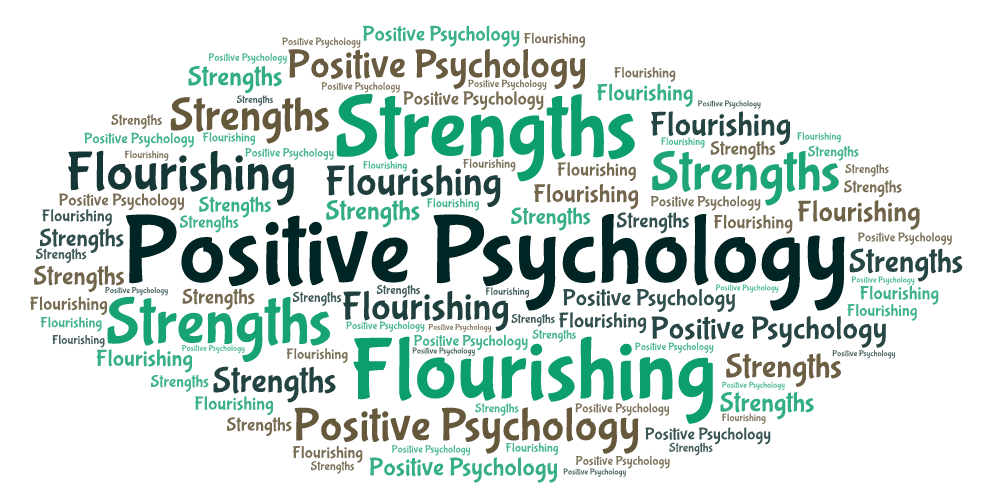
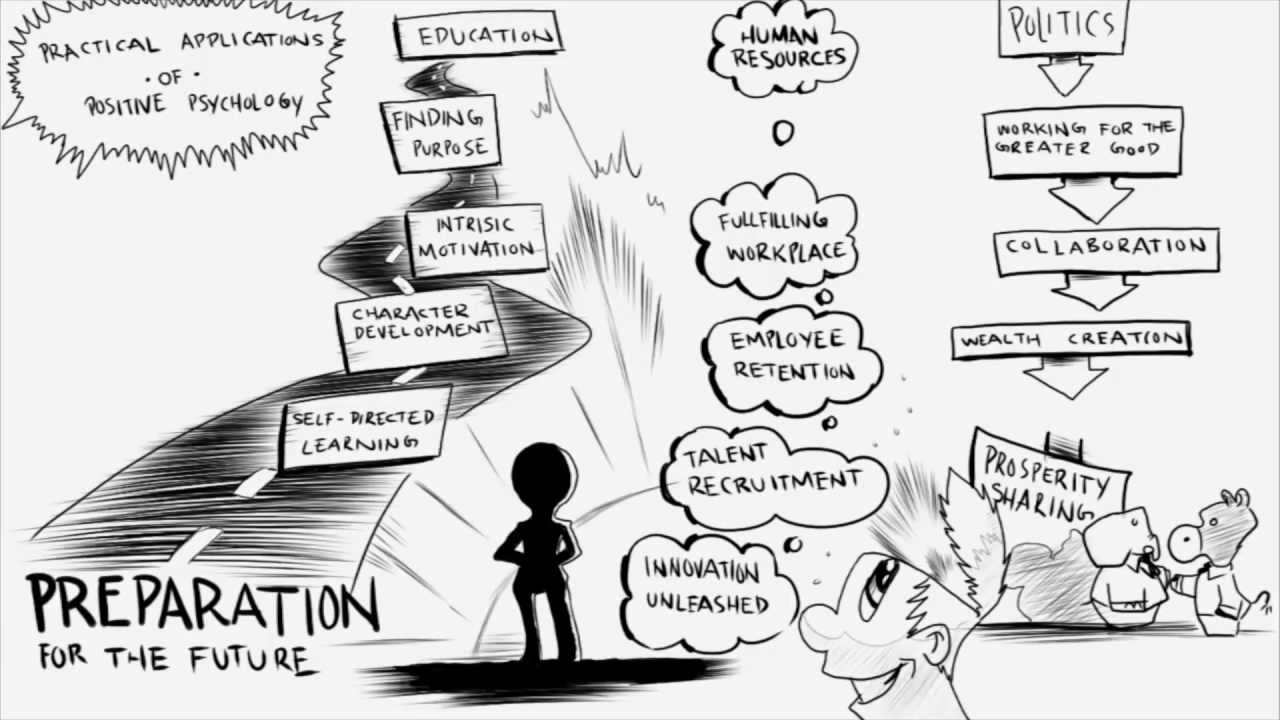
Positive psychology is the scientific study of what makes life most worth living, focusing on both individual and societal well-being. It studies “positive subjective experience, positive individual traits, and positive institutions and aims to improve the quality of life.” A new domain of psychology, positive psychology began in 1998 when Martin Seligman chose it as the theme for his term as the president of the American Psychological Association.
Positive Psychology is a reaction against past practices, which have tended to focus on mental illness and emphasised maladaptive behaviour and negative thinking. It builds on the humanistic movement by Abraham Maslow, Rollo May, James Bugental, and Carl Rogers, which encourages an emphasis on happiness, well-being, and positivity, thus creating the foundation for what is now known as positive psychology. It is a scientific approach to studying human thoughts, feelings, and behaviour, with a focus on strengths instead of weaknesses, building the good in life instead of repairing the bad, and taking the lives of average people up to great instead of focusing solely on moving those who are struggling up to normal.
Positive psychologists have suggested several factors may contribute to happiness and subjective well-being. Social ties with a spouse, family, friends, colleagues, and wider networks; membership in clubs or social organizations; physical exercise; and the practice of meditation can help. Spirituality can also be considered a factor that leads to increased individual happiness and well-being. Happiness may rise with increasing financial income, though it may plateau or even fall when no further gains are made or after a certain cut-off amount.
Positive psychology focuses on eudaimonia, an ancient Greek term for the good life or good spirit and the concept of the reflection on the factors that contribute the most to a well-lived and fulfilling life. Eudaimonia is considered an essential element for the pursuit of happiness and good life and emphasises cherishing that which holds the greatest value in life and other such factors that contribute the most to having a good life. While not attempting a strict definition of what makes up a good life, positive psychologists agree that one must be happy, engaged, and meaningful with their experiences. Martin Seligman refers to the good life as using your signature strengths every day to produce authentic happiness and abundant gratification. Positive psychologists often use the terms subjective well-being and happiness interchangeably.
Positive psychology complements, without intending to replace the traditional fields of psychology and has placed a significant emphasis on fostering positive self-esteem and self-image. The basic premise of positive psychology is that human beings are often driven by the future more than the past. It also suggests that any combination of positive experiences/emotions, past or present, leads to a pleasant, happy life.
Positive psychology isn’t limited to feeling a sense of individual well-being itself, rather proponents of this science often refer to the Three Levels of Positive Psychology which include the Subjective level that centres around feelings of happiness, well-being, optimism, and similar emotions or feelings as they relate to your daily experience, the Individual level that combines the subjective level feelings of well-being with the qualities or virtues that make you a well-rounded person, such as forgiveness, love, and courage and the Group level which focuses on positive interactions with the community, and includes traits like altruism, social responsibility, and other virtues that strengthen social bonds.
Those who practice positive psychology attempt psychological interventions that foster positive attitudes toward one’s subjective experiences, individual traits, and life events to minimise pathological thoughts that may arise in a hopeless mindset and develop a sense of optimism toward life. Positive psychologists seek to encourage acceptance of one’s past, excitement and optimism about one’s future experiences, and a sense of contentment and well-being in the present.
According to Seligman and Peterson, positive psychology addresses three issues: positive emotions, positive individual traits, and positive institutions. Positive emotions are concerned with being content with one’s past, being happy in the present and having hope for the future. Positive individual traits focus on one’s strengths and virtues. And, positive institutions are based on strengths to better a community of people.
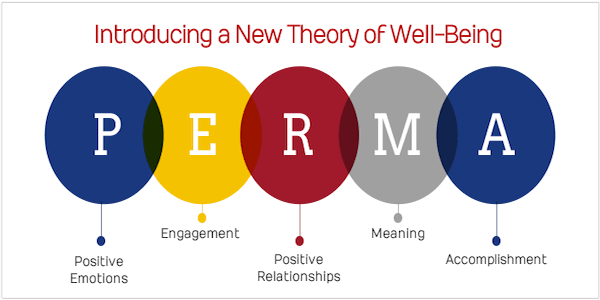
Seligman proposed the PERMA model to explain and define well-being in a broader sense. PERMA is an acronym for the five elements of well-being, and it has become a widely recognised model in the field of positive psychology. In the PERMA model,
P stands for Positive emotions – Experiencing positive emotions has a major impact on boosting well-being. Positive emotions may spring from fostering gratitude and forgiveness about past events, enjoying oneself at the moment, and being optimistic about the future.
E stands for Engagement – To enhance well-being, it is also important to develop a sense of engagement which can be done by completely absorbing oneself while doing something they enjoy and excel at. This sense of engagement produces an experience known as ‘flow’, a sensation one has when their skills are sufficient for a particular challenge with a particular goal in mind. The concept of “flow” was coined by Mihaly Csikszentmihaly, a leading figure in the field of positive psychology.
R stands for Relationships – As social beings, individuals often rely on building connections with other people to thrive, and the support they derive from these connections can give life purpose and meaning.
M stands for Meaning – Experiencing positive emotions alone is not enough to lead a happy life. Seligman suggests that finding meaning is the highest form of happiness. Meaning can be achieved by applying their strengths to the service of something larger — like a social cause — a substantial contribution to a community they’re a part of or a charitable duty.
Lastly, A stands for Accomplishment – There is no doubt that when one achieves their goals and succeeds, they feel a sense of fulfilment. If the drive to accomplish these goals doesn’t exist, a true sense of well-being is difficult to attain.
Positive psychology’s main aim is to encourage people to discover and nurture their character strengths, rather than channelling their efforts into correcting shortcomings. Positive psychology highlights the need for one to shift their negative outlook to a more optimistic view to improve quality of life. Each of us routinely experiences both good and bad outcomes but it often feels easier to focus on the negative outcomes, ignoring the ways we could harness the effect of good things to remedy the bad. Positive psychology is important because discovering what leads people to live more meaningful lives can translate to better strategies for managing mental illness, correcting negative behaviours, and increasing happiness and productivity.
In general, the greatest potential benefit of positive psychology is that it teaches the power of shifting one’s perspective. This is the focus of many techniques, exercises, and even entire programs based on positive psychology because a relatively small change in one’s perspective can lead to astounding shifts in wellbeing and quality of life. Injecting a bit more optimism and gratitude into your life is a simple action that can give you a radically more positive outlook on life.
So how do we incorporate positive psychology into our daily lives?
Practise Gratitude – Gratitude is one of the most popular positive psychology approaches and for good reasons. People who practice gratitude regularly experience more positive emotions, feel more alive, sleep better, express more compassion and kindness, and even have stronger immune systems. I’ve spoken about keeping journals before, so you could incorporate a few things you are grateful for in your daily journal. I started doing this at the beginning of the year, then missed writing my daily gratitude for a few months now, so this is a reminder for me to restart practising daily gratitude. Gratitude is a great buffer against negative emotions because it involves a focus on the present moment and appreciating what is instead of focusing on what could be.
Practise Mindfulness – I’ve written about mindfulness and mindful meditation many times, but one of the easiest ways to incorporate positive psychology daily is to practise mindfulness. Mindfulness meditation is a focus on the present moment achieved through the directing of attention towards one’s immediate experiences, thoughts, feelings, emotions, and sensations. It involves paying attention to thoughts and feelings with a sense of acceptance and non-judgment. In very simple terms it implies that instead of focusing on what one should be feeling or experiencing, they are present and aware of how they are feeling. It is not about trying to change anything, just tuning in to the experience of the moment.
Use more Humour – There’s a reason that videos of laughing babies and goats in pyjamas are so popular, they make us feel better by quickly shifting our focus onto something fun, hopeful, and uplifting. We all know from experience that laughter is good medicine and research confirms that laughter reduces physical pain, improves mood, counteracts stress, and increases resiliency. So, spend some time daily laughing as much as you can, it’s a time well spent!
Smile more – It turns out that one doesn’t need to have a good belly laugh to experience mental and physical health benefits. The simple act of smiling can shift the mood from negative to positive. Smiling not only increases happiness and emotional well-being but also reduces stress, makes one more likeable and appear more competent, and is associated with longer-lasting and more fulfilling marriages. To harness some of the amazing powers of smiling, all one has to do is smile more. Since smiling is contagious, try to spend more time around others who smile often. One can also watch something funny or do something silly to get smiling.
Be more self-compassionate – Most people are incredibly hard on themselves and are judgmental and critical, finding fault with every little imperfection. By fixating on and amplifying mistakes and flaws, they train themselves to focus on the negatives. Not only does this damage their self-esteem and self-confidence, but it also dampens the mood and interferes with their ability to enjoy positive experiences and events in their lives. Self-compassion is the natural antidote for self-criticism. When one treats themselves with kindness and grace, they are acknowledging their imperfections and struggles and loving themselves anyway. People who practice self-compassion are less likely to suffer from depression, insomnia, and physical aches and pains. And self-compassion is associated with greater psychological well-being, motivation, and greater relationship satisfaction.
Visualise success – Another way to stay motivated and think positively is to visualize oneself acting in new ways. This creates a mental picture of success which strengthens their confidence and reinforces optimistic thinking. To do this, find a quiet place to sit, relax the body, and close the eyes. Paint a mental picture of yourself completing the big work assignment or giving a presentation with confidence. Tune in to all the details from the voice and posture to self-talk. Visualisation exercises help to relax the body and mind and create a sense of calm and well-being that can translate into greater confidence and focus and less stress and tension. If this is difficult, visualise a desired state of mind, such as relaxation, contentment, or peace of mind. Imagine yourself in a comfortable, pleasant place someplace that you associate with your desired mood and create a visual image of yourself in this place by imagining every detail and using all your senses. Notice how your muscles relax, you breathe deeply, and you feel a deep sense of peace and contentment. A guided visualisation like this is a mini-vacation for the mind.
Anticipate, Savour and Remember – There are three simple ways to increase the enjoyment of pleasurable experiences. One can boost happiness using anticipation by spending time anticipating the job of an upcoming enjoyable event. All activities leading to the event should be seen as part of the enjoyment rather than as chores. The second part of amplifying happiness is to savour the good times. Life is so rushed that it’s easy to let things pass without fully engaging in them. The idea behind savouring an experience is to be fully present. So put everything aside and enjoy the moment at hand. And the final way to increase pleasure is to look back and reflect on the good times. Most of us do this by looking at photos and retelling stories. One can also make scrapbooks, keep a journal or make videos. Remembering in these ways helps sharpen the memories and allows us to re-experience some of the joy that was felt when the event first occurred.
Other ways one can be happier are focusing less on attaining wealth and spending more on experiences rather than on physical and material possessions. Oxytocin may provoke greater trust, empathy, and morality in humans, meaning that giving hugs or other shows of physical affection may give one a big boost to one’s overall well-being and the well-being of others. Those who intentionally cultivate a positive mood to match the outward emotion they need to display benefit by more genuinely experiencing the positive mood. In other words, putting on a happy face won’t necessarily make one feel happier, but putting in a little bit of effort likely will.
Someone who practices a positive psychological outlook in life is more likely to be successful, be it at home or work. Not only does success make us happier, but feeling happy and experiencing positive emotions increases our chances of success.
Here are a couple of Ted Talks from the people who brought us positive psychology that I hope you will find as interesting and useful that I did.
Derived from the Greek word mousike or the art of the muses, music is the art of arranging sounds in time through the elements of melody, harmony, rhythm, and timbre and is one of the universal cultural aspects of all human societies. Different styles or types of music may emphasise, de-emphasize or omit some of these elements. Music is performed with a vast range of instruments and vocal techniques ranging from singing to rapping and there are solely instrumental pieces, solely vocal pieces like songs without instrumental accompaniment and pieces that combine singing and instruments.
Also known as World Music Day or Make Music Day, the Fête de la Musique is an annual music celebration that takes place on 21 June where people are urged to play music outside in their neighbourhoods or public spaces and parks. Free concerts are also organised, where musicians play for fun and not for payment. World Music Day later became celebrated in 120 countries around the world.
The first all-day musical celebration on the day of the summer solstice was originated by Jack Lang, then Minister of Culture of France, as well as by Maurice Fleuret, a French composer, music journalist, and radio producer who was also the Director of Music and Dance at the ministry. He discovered in a 1982 study on the cultural habits of the French, that in a population of five million people, one young person out of two, played a musical instrument and so began to dream of a way to bring people out on the streets. The first edition of the World Music Festival first took place in 1982 in Paris as the Fête de la Musique. Since then, the festival has become an international phenomenon, celebrated on the same day in more than 700 cities in 120 countries, including India, Germany, Italy, Greece, Russia, Australia, Peru, Brazil, Ecuador, Mexico, Canada, the United States, the UK, and Japan.
The goal of Fête de la Musique, or World Music Day is to provide thousands of free concerts throughout the day with public areas brimming with live music and participatory music-making opportunities. On this day, amateur and professional musicians are encouraged to perform in the streets, under the slogan Faites de la musique or Make music and many free concerts are organized, making all genres of music accessible to the public. Two of the caveats to being sanctioned by the official Fête de la Musique organisation in Paris are that all concerts must be free to the public, and all performers donate their time free of charge.
To mark this day, veterans and budding learners come out to showcase their talent and make music. Every year on this day, free concerts are held across the world to make music accessible to all.
So tomorrow, make some music or if, like me, you do not have any musical talent, then listen to your favourite music and let the magic take you on a wonderful journey!
On Sunday, across most of the world, people will celebrate Father’s Day.
Anyone can father a child, but being a dad takes a lifetime. Fathers play a role in every child’s life that cannot be filled by others. Children look to their fathers to lay down the rules and enforce them. They also look to their fathers to provide a feeling of security, both physical and emotional. Children want to make their fathers proud, and an involved father promotes inner growth and strength. Studies have shown that when fathers are affectionate and supportive, it greatly affects a child’s cognitive and social development as well as instils an overall sense of well-being and self-confidence. A father influences the way the child sees relationships and a daughter will decide who her future partner is based on the relationship between her mother and her father as well as how she sees her father treating others. A son, on the other hand, will model himself on his father’s character because he sees his father as the role model for how an adult male should behave. And this is not just for biological fathers, even father figures play a very important role in a child’s life.
Children with sensitive and supportive fathers have higher levels of social competence and better peer relationships. Children whose fathers provide them with learning materials and speak with them frequently perform better in school and have more advanced language skills. A father also influences a child’s well-being indirectly through his relationship with the child’s mother. Conflicts between parents is detrimental to a child’s well-being, especially if the conflict is hostile and unresolved. Supportive co-parenting relationships, by contrast, are related to better self-regulation and fewer behaviour problems in children.
For centuries, the Eastern Orthodox Church has appointed the second Sunday before Nativity as the Sunday of the Forefathers to commemorate the ancestors of Christ according to the flesh, starting with Adam and emphasising the Patriarch Abraham. This feast can fall between December 11 and 17 and includes the ancestors of the Mother Mary. A customary day for the celebration of fatherhood in Catholic Europe is known to date back to at least 1508. It is usually celebrated on March 19, as the feast day of Saint Joseph, who is referred to as the fatherly Nutritor Domini or the Nourisher of the Lord in Catholicism and the putative father of Jesus in southern European tradition. This celebration was brought to the Americas by the Spanish and Portuguese with the Catholic Church actively supporting the custom of a celebration of fatherhood on St. Joseph’s Day from either the last years of the 14th century or from the early 15th century, on the initiative of the Franciscans. In the Coptic Orthodox Church, the celebration of fatherhood dates back to the 15th century is also observed on St Joseph’s Day, but on July 20.
The day which is mostly celebrated today originated in the United States. This day was not celebrated in that country until the 20th century outside of the catholic traditions. People started celebrating in the early 20th century to complement Mother’s Day by celebrating fathers and male parenting. After Anna Jarvis’ successful promotion of Mother’s Day in Grafton, West Virginia, the first observance of a day honouring fathers was held on July 5, 1908, in West Virginia. In 1911, Jane Addams proposed that a citywide Father’s Day celebration be held in Chicago, but she was turned down. On June 19, 1910, a Father’s Day celebration was held in Washington state by Sonora Smart Dodd to honour her father Willday and felt fathers should also have a similar holiday to honour them. Although she initially suggested June 5, her father’s birthday, the celebration was deferred to the third Sunday in June and on June 19, 1910, the first Father’s Day was celebrated.
However, in the 1920s, Dodd stopped promoting the celebration because she was studying and it faded into relative obscurity, but she started promoting the celebrations again in the 1930s. She had the help of retailers who realised that such a celebration would help promote their products and services, which are specifically targeted at men. In addition to Father’s Day, International Men’s Day is celebrated in many countries on November 19 to honour both men and boys.
Fathers are important to children’s well-being. Sensitive, supportive, and involved fathers contribute to children’s physical, cognitive, emotional, and social adjustment. Fathers also influence children’s well-being in conjunction with mothers and other caregivers, making it important to understand father-child relationships as part of entire family systems.
To all my readers who are fathers and father figures, here’s wishing you a very Happy Father’s Day! And to those who have fathers or father figures, please take some time on Sunday to spend with them and wish them.






/pop-music-57bce3863df78c87634ea806.jpg)




 Memories and Such