World Creativity and Innovation Day

Commemorated annually on 21 April, the World Creativity and Innovation Day raises awareness around the importance of creativity and innovation in problem-solving with the first World Creativity and Innovation Day celebrated on April 21, 2018. The purpose of the day is to encourage creative multidisciplinary thinking at the individual and group levels which has become the true wealth of nations in the 21st century.

April 21 is also a week after the birthday of one of the greatest creative minds we know, Leonardo da Vinci who was an Italian polymath of the High Renaissance active as a painter, draughtsman, engineer, scientist, theorist, sculptor and architect. While his fame initially rested on his achievements as a painter, he also became known for his notebooks, in which he made drawings and notes on a variety of subjects, including anatomy, astronomy, botany, cartography, painting, and palaeontology. Leonardo’s genius epitomised the Renaissance humanist ideal, and his collective works compose a contribution to later generations of artists matched only by that of his younger contemporary, Michelangelo.

The World Creativity and Innovation Day is celebrated in conjunction with World Creativity and Innovation Week which takes place between 15 – 21 April. The theme of the day and week in 2022 is Collaboration and how creativity and collaboration contribute to sustainable development goals. Creative industries are critical to the sustainable development agenda because they stimulate innovation and diversification, are an important factor in the burgeoning services sector, support entrepreneurship, and contribute to cultural diversity.

There is no universal understanding of creativity with the concept open to interpretation from artistic expression to problem-solving in the context of economic, social and sustainable development. According to the findings of the special edition of the Creative Economy Report, Widening Local Development Pathways, co-published by UNESCO and UNDP, creativity and innovation, at both the individual and group levels, have become the true wealth of nations in the 21st century. The creative economy including audiovisual products, design, new media, performing arts, publishing and visual arts, is a highly transformative sector of the world economy in terms of income generation, job creation and export earnings. Culture is an essential component of sustainable development and represents a source of identity, innovation and creativity for the individual and community. At the same time, creativity and culture have a significant non-monetary value that contributes to inclusive social development, to dialogue and understanding between peoples. Therefore cultural and creative industries should be a part of the economic growth strategies. These industries are among the most dynamic sectors in the world economy, generating USD 2.25 billion in revenue and 29.5 million jobs worldwide. So countries are harnessing the potential of high-growth areas of the market for economic returns and poverty alleviation.

Today all of us should embrace the idea that innovation is essential for harnessing the economic potential of nations. And the pandemic has shown us that innovation, creativity and mass entrepreneurship can provide new momentum for economic growth and job creation. It can expand opportunities for everyone, including women and youth, provide solutions to some of the most pressing problems such as poverty eradication and the elimination of hunger.

So to commemorate the day, go ahead and do something creative today. It could be as simple as trying a new recipe or as complicated as finding a solution to a pressing problem. But make sure you do something different, something creative and get out of your comfort zone.

Procrastination: The Grave in which Opportunity is Buried

Today’s blog post is a subject that I am eminently qualified to write about. The idea for this post came to me about 12 to 18 months back and have sat on this post for more than two weeks now. So I know that I am a procrastinator and decided finally to do something about it. This post is a result of my learnings on procrastination and how we can overcome it.

So what is procrastination that all of us succumb to at some point in time or the other? It’s a scenario that’s very familiar – we do many things, some of which are not even important, just so we can avoid doing something we don’t want to do. According to research, about 20% of all adults are chronic procrastinators. This is a percentage that’s higher than depression, phobia, panic attacks and alcoholism and yet procrastination is trivialised and not considered legitimate which the others are.

The tendency to procrastinate is probably as old as the human civilisation with ancient Greek philosophers developing a word to describe this type of behaviour – Akrasia which is the state of acting against your better judgment. It is when you do one thing even though you know you should do something else. Loosely translated, Akrasia is procrastination or a lack of self-control.

So why do we procrastinate? Behavioural psychology research has revealed a phenomenon called time inconsistency, which helps explain why procrastination seems to pull us in despite our good intentions. Time inconsistency refers to the tendency of the human brain to value immediate rewards more highly than future rewards. What it means is that when we set goals, we are working towards something in the future which is something our brains find easy to see the value in our actions for our future benefits. But the future us can only set the goals, it is the present us that must take action to reach those goals. When it’s time to decide on the future, it’s not the future that is making that choice, it’s the present. And the present us likes instant gratification and not a long-term payoff. So there’s this disconnect between the present us and the future us, which is why we start a day feeling motivated and ready for action, but when it comes down to doing it, we tend to fall back into old patterns. Our brains value long-term benefits when they are in the future, but it values immediate gratification when it comes to the now.

We also procrastinate when we assume that we have plenty of time to finish projects whereas we don’t have as much time as we think we do. One of the biggest factors contributing to procrastination is the notion that we have to feel inspired or motivated to work on a task at a particular moment (and I am particularly guilty of this one). But the reality is that if we wait until we’re in the right frame of mind to do certain tasks, especially the undesirable ones, we’ll probably find that the right time simply never comes along and the task never gets completed. Other reasons why people procrastinate include depression, Obsessive-Compulsive Disorders and Attention-Deficit/Hyperactivity Disorders among others.

According to some, there are two main types of procrastination – active and passive procrastination. Active procrastinators delay the task purposefully because working under pressure allows them to feel challenged and motivated while passive procrastinators delay the task because they have trouble making decisions and acting on them. Others define the types of procrastinators based on different behavioural styles of procrastination, including perfectionists who put off tasks out of the fear of not being able to complete a task perfectly, dreamers who put off tasks because they are not good at paying attention to detail, defiers who don’t believe someone should dictate their schedule, worriers who put off tasks out of fear of change or leaving the comfort of the known, crisis-makers who put off tasks because they like working under pressure and the overdoers who take on too much and struggles with finding time to start and complete tasks.

Irrespective of the type of procrastination, pushing off tasks over and over again is a risk factor for poor mental and physical health, according to experts. Chronic procrastinators have higher levels of stress and a greater number of acute health problems than other people. The mental health implications include experiencing general psychological distress and low life satisfaction, particularly concerning work and income, as well as symptoms of depression and anxiety. Those who procrastinate are also more likely to experience headaches, insomnia and digestive issues, and they’re more susceptible to the flu and colds. The association with health problems is best explained by stress, but another factor is that procrastinators often delay preventive treatment, such as regular checkups. Experts say that procrastinating is also linked to heart problems. They found that people with heart disease were more likely than healthy people to self-identify as procrastinators and procrastinators with hypertension and heart disease were less likely to take action to cope with their illness, such as changing their diet or exercising.

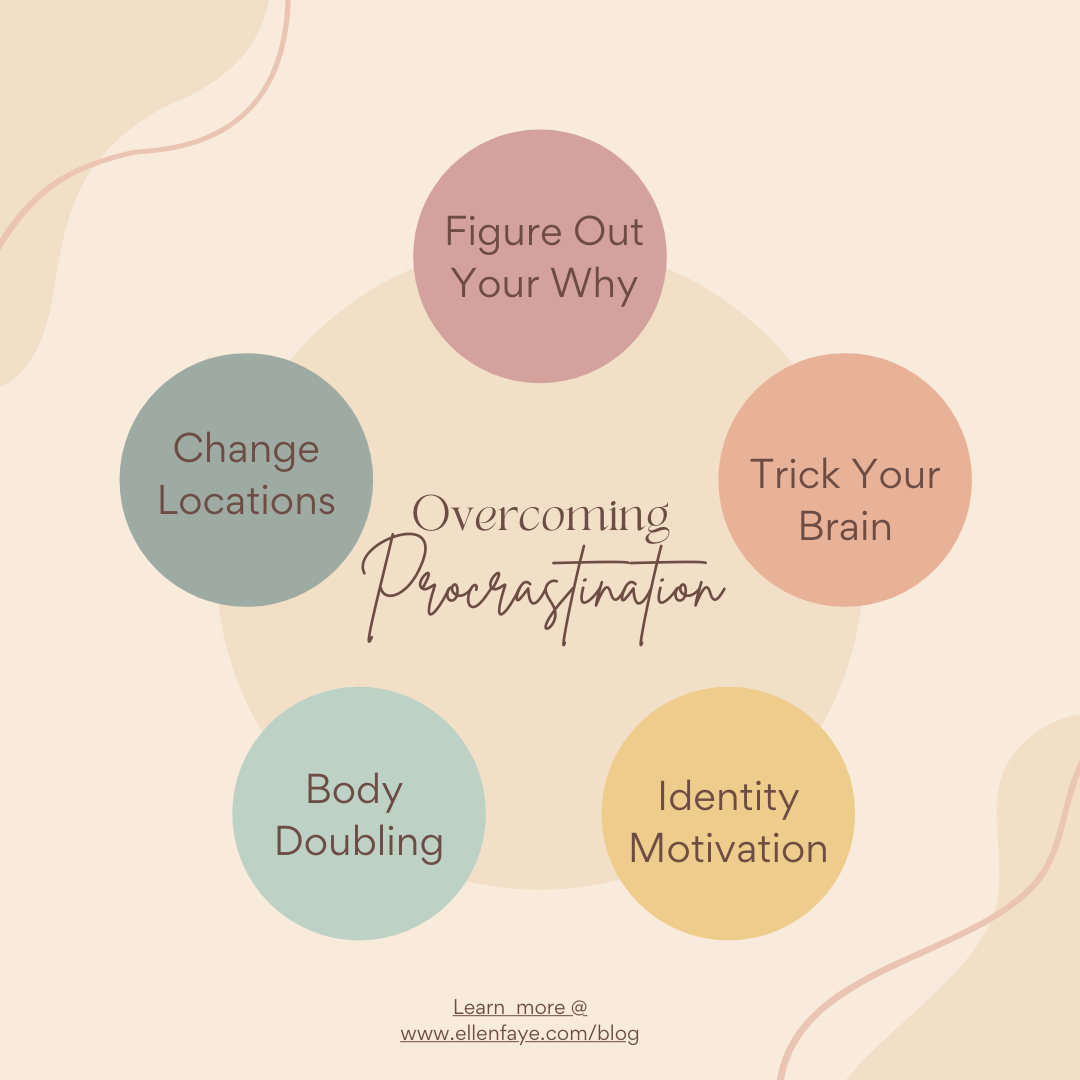
So what can we do to stop procrastinating?

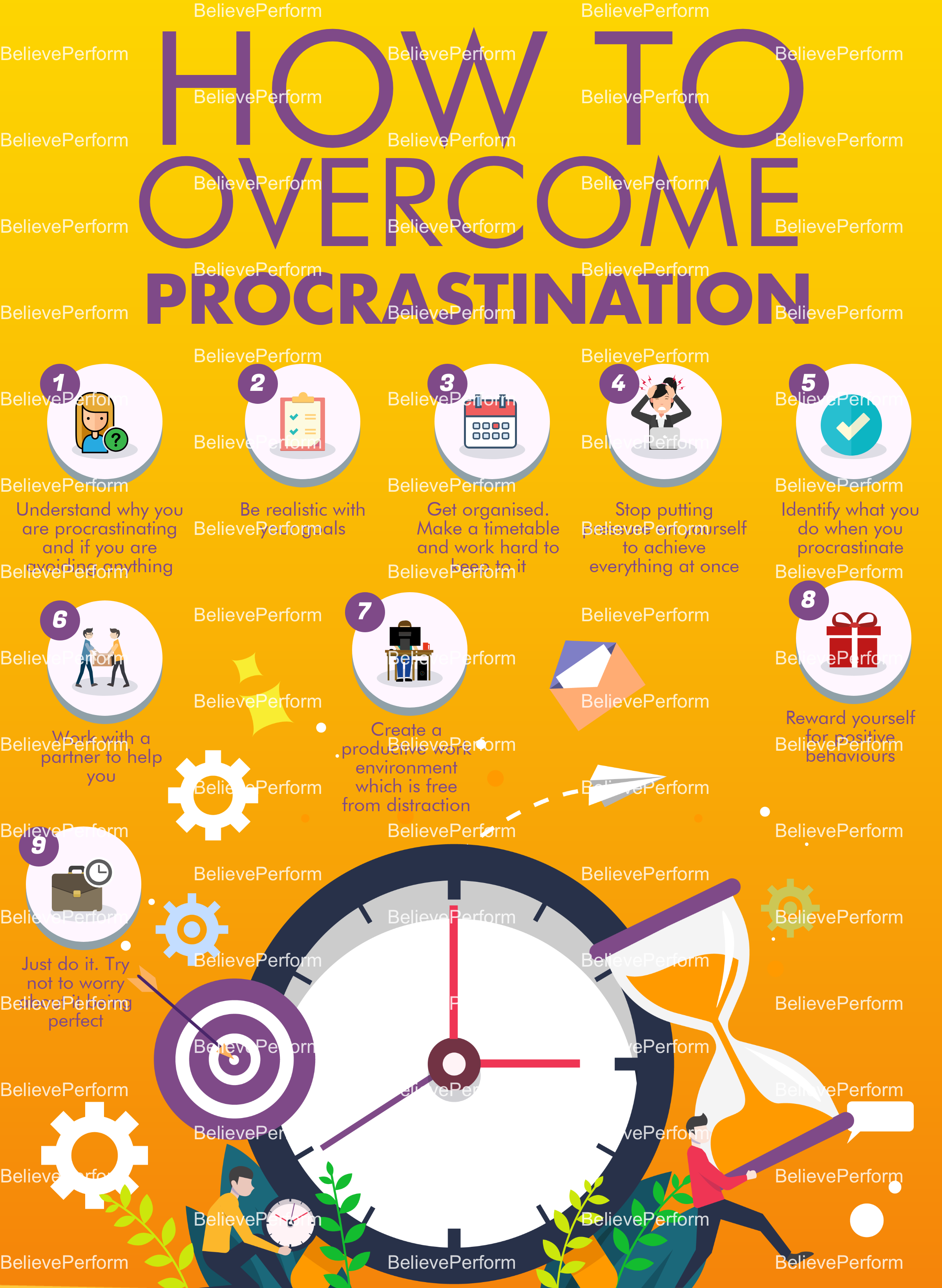
Make to-do lists: I love to-do lists and use them all the time to keep me on top of my tasks. Having such a list and then putting a line across the task when it’s done is such a great feeling. I use a weekly list and put all my tasks for the week in it. So I know what I have to do with a glance. To help keep you on track, consider placing a due date next to each item.

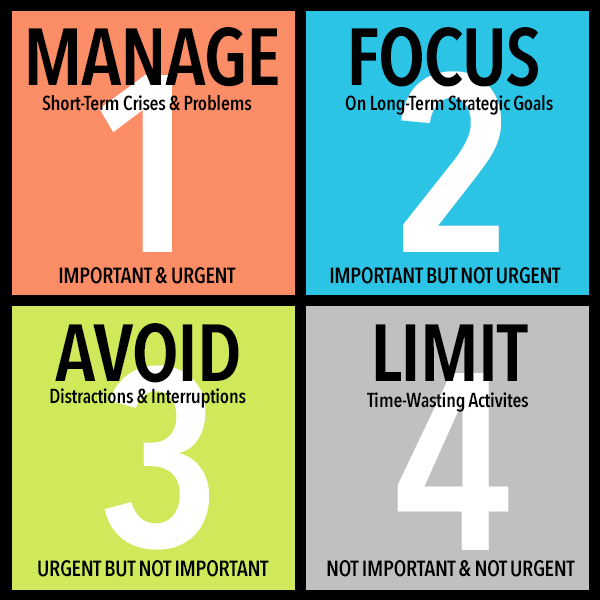
Break down tasks: This is also something I do. Break down each task into smaller parts and use the to-do list to check them off. This way, you are on your way to completing the task and feel the thrill of completing tasks. This works especially well for procrastinators because they become so overwhelmed with the magnitude of the task that they’re paralysed into inactivity. Another tip is to set deadlines for the small steps which allow those who thrive under pressure to replicate the adrenaline rush they get when they wait until the last minute. Some people like to get the most unpleasant tasks out of the way, while others psych themselves up by doing smaller things. As we accrue small, easy accomplishments, we feel ready to do that big one.

Eliminate distraction: Remove what pulls your attention away the most, whether it’s social media, local news, games, your phone or anything else that keeps you away from doing what needs to be done and turn off those sources of distraction. You could also use the Pomodoro Method where you concentrate for about 50 minutes and then spend the last 10 minutes of the hour doing something else. The distractions could also serve as an incentive to get something done first.

Practice self-compassion: Procrastinators are often hard on themselves and might feel guilty about letting others down or be appalled by their slowness. There seems to be a connection between procrastinating and low levels of self-compassion. If this seems familiar, try to counter that by treating yourself with kindness and understanding. Self-compassion doesn’t make people lazy, on the contrary, research has shown that it increases people’s motivation to improve themselves. Focus on doing your best, instead of getting caught in the trap of worrying about what others think.

Attach meaning to the task: One of the best ways to stop procrastinating is to find meaning in the task in question. Write down why it’s important to you and how completing it will be valuable to your personal growth or happiness. Doing so will help you feel more connected to the task and less likely to procrastinate.

Find yourself in a spot that’s interruption-free: This is particularly important for demanding tasks. When we are in the zone, finally getting things done and getting interrupted, it’s so much harder to resume the task you finally started. So try to be someplace where you are not likely be disturbed and can’t focus on what needs to be done.

Be aware of the procrasticlearing trap: This is procrastinators trying to clear and tidy up before starting work on a task. So if you are guilty of falling victim to procrasticlearing, one way to know for sure is if the moment the task you were cleaning ahead of is completed, all desire to tidy and organise vanishes. Being mindful of this tendency can help prevent it from inhaling half your day.

Recognise the warning signs: Pay attention to any thoughts of procrastination and do your best to resist the urge. If you begin to think about procrastinating, force yourself to spend a few minutes working on your task.

Enlist external help: Use your family and friends to keep you focussed on your goals and tasks. Post about them on social media and ask your network to hold you accountable. This way, you will find yourself making sure you complete your tasks so you don’t get taken to task on social media.

Pat yourself on the back: When you finish an item on your to-do list on time, congratulate yourself and reward yourself by indulging in something you find fun. And when you clear everything on your task list for the day, do something that will give you pleasure so you are all excited and motivated for the next day.

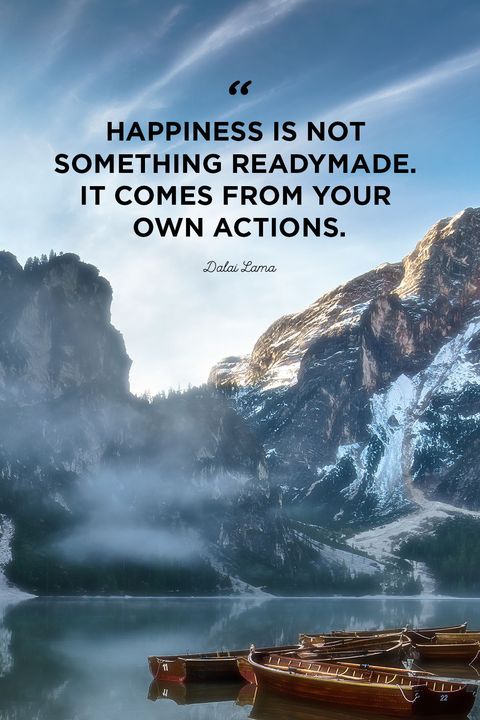
Poem: Happiness

What is happiness, I often ask myself
Is it the state of pure bliss or is it something else
When do we achieve happiness
Or is something elusive we hope to reach

How do we achieve happiness, I wonder
Will it be when are financially secure, or do we need more
Will it be when we have a happy life, or do we ask for more
Or will it be when we have everything, but then we still want more

When do we reach the pinnacle of happiness
What are our parameters for reaching that goal
Each one of us marches to a different beat
What’s happiness for me is pure misery for you

So let us all search for our definition of happiness
Be it small as a good cup of coffee to as big and elusive as a happy and peaceful life
Whatever that may be, may it bring you joy and peace
And you find that happiness every hour and every day

Siblings Day

A sibling is a gender-neutral word for a relative that shares at least one parent. A male sibling is a brother and a female sibling is a sister. A person with no siblings is an only child. Given that most siblings are brought up together, there is usually a very strong emotional bond between them and the relationship between siblings is unique in itself. The word sibling was reintroduced in 1903 in an article in Biometrika, as a translation for the German Geschwister, having not been used since 1425.

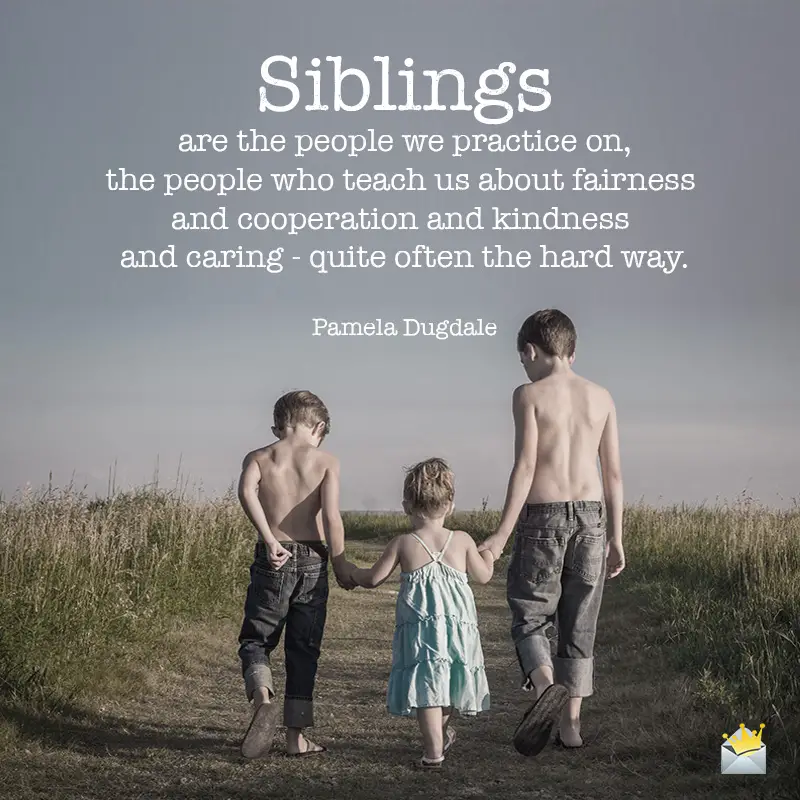
With siblings, we can be ourselves. They know all our secrets and maybe some secrets we don’t even acknowledge to ourselves. Siblings shape the person you become because growing up with people of different attitudes, characters and idiosyncrasies, you learn to get along with people instinctively. And of course, growing up with siblings, you have to learn to communicate and express yourself so your voice is heard. If your sibling is of the opposite sex, then you have a live example of how that sex thinks and works. This will stand you in great stead in life. Having a sibling is one of the best parts of life, you have a built-in companion for life. As Dr Terri Apter, the author of ‘The Sister Knot’ so rightly put it: siblings may not always agree with you or even like you, but they elicit a great interest in you that is difficult to replicate in any other relationship.

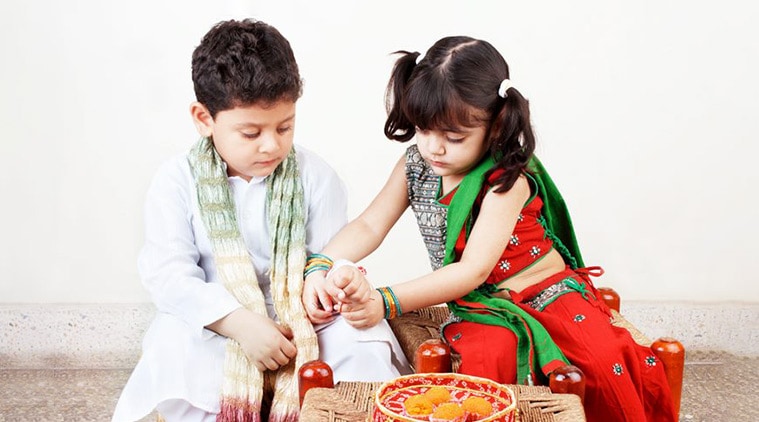
Since siblings have such a huge impact on our lives, should there not be a festival or even a day to celebrate this bond? In India, the beautiful festival of Raksha Bandhan celebrates the love and bonds between a brother and sister. But this festival, the oldest festival in the category, only celebrates the bonds between siblings of the opposite gender. What about siblings who are of the same gender?

That’s when Siblings Day comes into the picture. Siblings Day is a holiday celebrated annually in some parts of the United States and Canada on April 10 and as Brothers and Sisters Day on May 31 in Europe. Unlike Mother’s Day and Father’s Day, it is not federally recognised in the United States, though the Siblings Day Foundation is working to change this.

Siblings Day was conceived by Claudia Evart to honour the memory of her brother and sister, who died at an early age. The Siblings Day Foundation was incorporated in 1997 and achieved non-profit status in 1999. In Europe, was launched in 2014 by the European Large Families Confederation or ELFAC to celebrate siblings’ bonds and relationships. The May 31 feast spread in different ways in the European countries where ELFAC is present. In Portugal, Dia dos Irmãos has become very popular. ELFAC has associate members in several European countries including Austria, Cyprus, Croatia, Czech Republic, Estonia, France, Germany, Greece, Hungary, Italy, Latvia, Lithuania, Portugal, Romania, Serbia and Switzerland.

So if you haven’t already done so, take some time to spend time with your sibling/s and enjoy the day, going back to a time when life was uncomplicated and all you needed was the love of your siblings. Happy Siblings Day!

Short Story: The Red Box

One of my goals this year was to start writing short stories. On my recent trip to India, in the flight from Singapore to Mumbai, I was bored. I didn’t feel like reading or watching something so decided to write something. I had some writing prompts and one of the prompts inspired this story. The story more or less wrote itself and I was able to complete it quite fast. I just edited it slightly for clarity and here it is in all its glory. I would love to hear comments, both good and bad, specially because this is the first time I am attempting this genre.

Short Story: The Red Box

As Caroline left her office, she realised she had forgotten her umbrella again! “Aiyah”!, she thought to herself, “this is Singapore, surely I will be able to get home under a sheltered walkway and not get wet.” Thinking this, she tried to rush to the nearest MRT station when the clouds opened up above her. Spying an HDB block just across the road, Caroline rushed to take shelter in the block’s void deck.

This Singapore weather is so unpredictable. It was sunny when I left the office and now suddenly it is pouring” she muttered to herself. “Now I will be late for the high tea party with Lisa and Veena and they will be upset with me again. This is the second time I will be late”. As she tried to dry herself, unsuccessfully, she tried calling her friends, but soon realised she neither had mobile coverage nor data. Wandering about the void deck, trying to get a signal, she suddenly realised that something was not right. Usually, void decks are busy places with people walking, sitting or even chatting around, but here, she could not find anybody.

While walking around holding her phone in various angles trying to get some sort of signal, from the corner of her eyes, she saw something red lying in a dark corner of the void deck. It was as if someone had tried to hide something, but were not very successful. It was a red rectangular box made of Chinese lacquer that seemed to have some sort of a glow coming from within it. The staid Singaporean in her initially resisted going close to the box. After all, she had been conditioned not to touch or take anything that did not belong to her. But the box continued to emit this strange glow and much as she wanted to stay away, it continued to beckon her.

Caroline looked around to see if there was somebody, anybody who would be the owner of the box, so she can, in good conscience pass it to them. But the area was desolate and soon she found herself creeping closer and closer to the box and then almost without violation, picking it up.

She took the box to the nearest seating area and continued to look at it. Outside the rain continued to pour heavily and visibility was almost nil. She tried to call her friends again but continued to not get any reception, both for mobile and her phone data. “ I must complain to the provider”, she thought as she made a mental note. “Now Lisa and Veena will think I flaked out and didn’t go to meet them without a reason. Lisa was angry at me two weeks back for meeting them late, but at least I had a good excuse then. What shall I tell them now?” Upset, Caroline tried to will the rain to stop and while doing that, opened the box.

As soon as she opened the box, there was a thunder sound and lightning started to strike, just outside the void deck. Caroline visibly jumped and hurriedly closed the box. And as soon as she did that, the rain started to ease. Scared, she hurriedly got up from the seat backed off quickly and go as far as she could from the box. The minute she was as far from the box as it was possible, the rain stopped as suddenly as it started and the sun came out. She even managed to see a double rainbow shimmering just outside the void deck. As she took in this wondrous beauty of nature, she heard a squeal of delight.

My box, my box! See mummy, someone was so kind to keep it here safely”, a high pitched voice that could only belong to a young child pierced her thoughts. She turned around and saw a young girl, probably about 3 years old skip and come forward to pick up the red box. The toddler saw Caroline and asked her, “Jiejie, were you the one who kept my box?” to which Caroline had to assent. By then the toddler’s mum had come up to Caroline along with the child and told her daughter, “Li-San, did you thank the jiejie for keeping your box safely?” Li-San thanked Caroline in a sweet voice and her mother explained, “Li-San thought she had lost her keepsake box while playing here this morning. We looked all around, but could not find it. We were just coming to make another search before we post a notice asking people to look out for it. This box belongs to her Ah Ma who died recently and Li-San is very attached to it because it has items that her Ah Ma gave her. Thank you very much for finding and keeping the box safely

Caroline accepted the mother’s thanks and started to move away from the void deck towards the MRT station. Her phone rang and it was Lisa asking where she was. Caroline started to apologise, but Lisa cut her off and started to apologise instead. “Caro, so sorry hor, I was stuck in the office and could not leave until now. I am now on the way to the hotel and will pick up Veena and meet you there in 30 minutes. Please go ahead and order first, it’s my treat for my promotion”.

Bemused, Caroline made her way to the station and turned around to see the block and void deck. She can’t be certain, but she is sure, she saw an elderly lady sitting on the seat she had just vacated wearing a red cheongsam. The old lady smiled a beatific smile and waved at Caroline who could only wonder if this was a dream or if it happened.