Unconscious Bias

No matter how much we might not want to admit it, unconscious biases influence a vast majority of our decisions. This is due to the fact that our brains can consciously process 40 pieces of information per second, while we unconsciously process 11 million pieces. So, in order to keep up with all of the stimuli around us, we create mental shortcuts that ostensibly make decision-making easier. Unfortunately, many of these shortcuts do more harm than good. A Yale study found that when given the choice between two similar candidates, one from each sex, college faculty preferred hiring male candidates who they perceived to be more competent and worthy of commanding higher salaries. It didn’t matter whether faculty members were male or female; all were biased against women applicants.

Implicit biases or implicit stereotypes are the pre-reflective attributions of particular qualities by an individual to a member of some social out groups. They are thought to be shaped by experience and based on learned associations between particular qualities and social categories, including race and/or gender. Individuals’ perceptions and behaviours can be influenced by the implicit stereotypes they hold, even if they are sometimes unaware, they hold such stereotypes.

Unconscious or implicit bias is an aspect of implicit social cognition, the phenomenon that perceptions, attitudes, and stereotypes can operate prior to conscious intention or endorsement. This bias was first defined by psychologists Mahzarin Banaji and Anthony Greenwald in 1995 and its existence is supported by a variety of scientific articles in psychological literature.
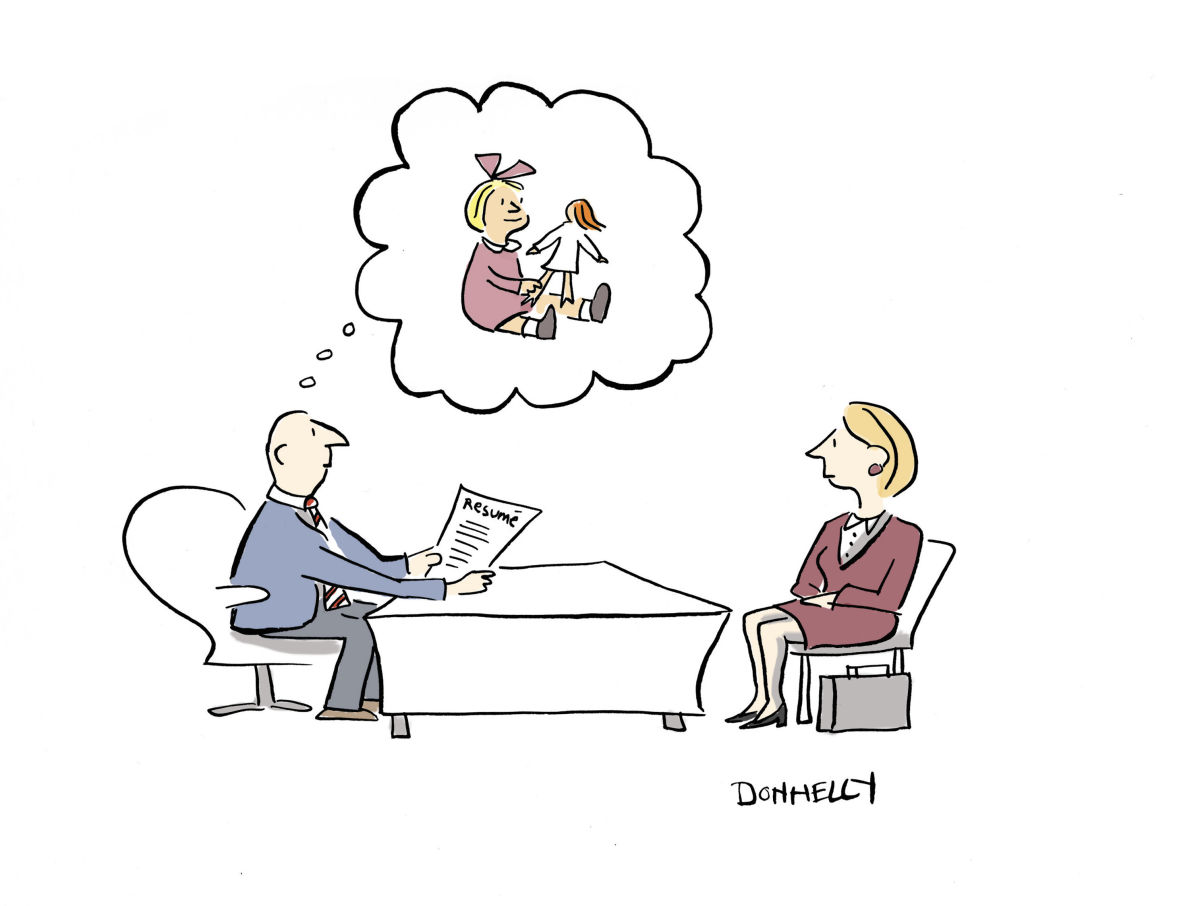
Unconscious biases are thought to be the product of associations learned through past experiences and can be activated by the environment and operate prior to a person’s intentional, conscious endorsement. For example, a person may unwittingly form a bias towards people of a certain race or country because of an unpleasant experience in the past, but the source of association may be misidentified, or even unknown. Here, the unconscious bias may manifest itself as someone being rude to a person of that race or country without actually understanding the reason behind the response. Unconscious bias can persist even when an individual rejects the bias explicitly. These biases can be both positive and negative, and influence the vast majority of our decisions by affecting our behaviour.

Unconscious bias offers a new explanation for why, despite equalities apparently being enshrined in law, society still looks so unfair. Many studies have confirmed the power of racial biases to shape everyday decisions in almost every aspect of life. Neuroscientists have uncovered brain regions involved in racial and gender stereotyping and shown that such stereotypes begin to form early in childhood. Recent work found that the brain responds more strongly to information about ethnic groups who are portrayed unfavourably, suggesting that the negative depiction of minorities in the media can fuel bias. Scientists believe that stereotypes in general serve a purpose because clustering people into groups with expected traits help us navigate the world without being overwhelmed by information. The downside is that the potential for prejudice is hard-wired into human cognition. The evidence is overwhelming that unconscious bias seeps into decisions that affect recruitment, access to healthcare and outcomes in criminal justice in ways that can disadvantage people from ethnic minorities. However, at the individual level, the extent to which such biases are internalised and acted on varies widely and in complex ways. Life experience, such as dating outside your racial group or having a boss from a minority group, can strongly protect against holding negative stereotypes. And there is dispute about the extent to which such biases are truly unconscious.

There are many kinds of unconscious biases we use in our daily lives. Some of the common biases we encounter commonly include the gender bias which is more prevalent in office culture than one may like to admit and occurs when certain traits such as assertiveness or confidence are seen as negative in one gender, and positive in another. A negative gender bias usually leans to the side of women, which can cause the female employees of an office to feel less appreciated and less engaged. Companies that are influenced by gender bias can miss out on many opportunities because of this. The horn or halo effect is one of the most common examples of unconscious bias and occurs when someone’s performance or character is generalised based on just one trait or event. If the trait is a positive one, it’s called the halo effect, and if it’s a negative one, it’s called the horn effect. The similarity bias essentially states that we like working with people similar to us. This could be graduates from specific schools, people who have worked at certain companies, and more. A less common example of unconscious bias, the right-hand bias refers to aspects of the workplace being designed specifically for right-handed people. A well-known example of this was when YouTube first launched the video-upload feature for their app, 5-10% of videos were uploaded upside down. They had failed to take into account that left-handed people would hold their phones differently than right-handed people. This bias can make life more difficult for some people. Another common example of unconscious bias is confirmation bias which exists not only at work, but in everyday life as well. Confirmation bias occurs when we make a decision about something, then actively look for information that supports that decision, while also overlooking any opposing facts and viewpoints. Age bias occurs when assigning tasks to people based on their age. A common example would be a tech-heavy project – the unconscious bias may cause a manager to assume that a younger person would be more apt to handle this job as opposed to an older one. In this case, assuming ones experience or proficiency is based entirely on an opinion that isn’t backed up on fact is a perfect example of unconscious bias. After all, many older people are technologically savvy, so it would be unfair to assume they wouldn’t be right for the job.

If unconscious biases aren’t kept in check, organisations and the employees that power them might let these biases influence their decisions in a way that holds them back. These biases do not have to be permanent and while it is impossible to completely eradicate these biases, we can take steps to reduce the chance that our decisions are less influenced by these biases. So, what can we do to counter these biases, especially in a work environment?

Learn what unconscious biases are. The first step of limiting the impact unconscious biases have is making sure everyone is aware that they exist. Assess which biases are most likely to affect you as an individual by taking tests like the Harvard’s Implicit Association Test to figure out which individual perceptions are most likely to be governed by unconscious biases. Armed with that information, one can take proactive steps to address them on a personal basis. Figure out where biases are likely to affect the organisation as biases tend to affect who gets hired, promoted, get raises and who gets what kind of work, among other things. By knowing where bias is most likely to creep in, management can take steps to ensure that biases are considered when important decisions are made in those areas. In order to make sure that unconscious biases don’t adversely impact hiring decisions, some big changes with respect to hiring would need to be made. Have diversity especially in upper management to have more minority voices so that everyone is represented and multiple viewpoints and voices heard. Encourage employees to speak up about biases because the more people are involved in a decision and the more transparent the decision-making process is, the less likely an organisation will be to be affected by unconscious biases. Creating a culture that encourages open dialogue will go a long way in making sure that when employees realise a decision might have been influenced by unconscious biases, they won’t be afraid to speak up and set the record straight. Hold employees accountable because actions speak louder than words. While someone should not be punished for making a decision influenced by unconscious biases, a track should be kept if such decisions are being made because of such biases. If data reveals bias, someone may need to intervene.

There are. If they aren’t addressed, they can be detrimental to a company. By recognizing them and actively working towards reducing their impact, you can ensure unconscious biases don’t negatively affect your decisions.

All of us are affected by unconscious biases and there are many examples of unconscious bias prevalent in the workplace. The sooner this reality is realised and proactive steps taken to actively working towards reducing their impact and overcome the biases, individuals and organisations become stronger and don’t let such unconscious biases negatively affect decisions.

So which unconscious bias are you guilty of harbouring? I’d love to hear in the comments.
Poem: Friendships and Friends

A friend is someone who probably knows you better than anyone else and we all need a good friend. You don’t need many friends, but a few close ones will have your back come what may.

So here’s a poem to the good friends we all have in our lives.

Friendships and Friends

You have been with me through thick and thin
We’re so alike, we could be a twin

You hold me up when I cry and laugh with me when I am happy
We could be crying one day and on an another crazy laughing with glee

You are only a phone call away, even if we now live far away
Our lives are now separate, but our bond is still weighty

We can go months without being able to speak or meet
And then pick it all up in a heartbeat
Chatting as if those months didn’t happen
Meeting up and chlling out and having a lot of fun!

A friend is family whom you choose
They are there when you are feeling the blues
When life gives you lemons, they are right there
To make lemonade and grin at life together

Let’s raise a cheer to a good friend
To the one who raises your spirits like no other
A good friend is hard to find
So when you find one, cherish and hold them close

World Radio Day

Radio is something that used to be a huge part of our lives, but which sadly today is not much in use. Advances in technology have given people more ways to access an increasing amount of information, but radio still plays a vital role in today’s world. Radio is more than just announcers, news and songs. Radio is about companionship and the emotional connection with the listener. Radio is also a source of innovation that pioneered interaction with audiences and user-generated content decades before they became mainstream and offers a wonderful display of diversity in its formats, in its languages, and among radio professionals themselves.Radio broadcasts provide real-time information, and some that broadcast 24 hours a day, can provide the most recent updates to listeners. Radio has the ability to reach across borders and can become a valuable source of information where reliable news is scarce, and in communities that still do not have a reliable source of television or the internet, it is radio that provides them with news and entertainment. Radio has proved its worth in times of emergency such as when access to the mobile network is down as a result of an overload, or phone lines are cut. Even when there is no electricity, most radio sets can be battery operated or have the ability to be handcranked. In small communities, it also provides an outlet for regular community messaging and activities. More importantly, radio is easy to use, it’s live and it’s human. For more than 80 years, radio has survived and prospered by being the easiest of media to use.

Radio is a powerful medium for celebrating humanity in all its diversity and constitutes a platform for democratic discourse. At the global level, radio remains the most widely consumed medium. This unique ability to reach out the widest audience means radio can shape a society’s experience of diversity, stand as an arena for all voices to speak out, be represented and heard. Radio stations should serve diverse communities, offering a wide variety of programs, viewpoints and content, and reflect the diversity of audiences in their organizations and operations. A low-cost medium specifically suited to reaching remote communities and vulnerable people, radio offers a platform to intervene in the public debate, irrespective of people’s educational level. It also plays a crucial role in emergency communication and disaster relief. Radio is uniquely positioned to bring communities together and foster positive dialogue for change. By listening to its audiences and responding to their needs, radio services provide the diversity of views and voices needed to address the challenges we all face.

In 2011, the United Nations decided to establish a World Radio Day on the basis of a wide consultation process. 13 February was chosen because that was the day United Nations Radio was established in 1946. The objectives of World Radio Day are to raise greater awareness among the public and the media of the importance of radio; to encourage decision makers to establish and provide access to information through radio; as well as to enhance networking and international cooperation among broadcasters.

For World Radio Day 2021, the celebrations are about the event’s 10th anniversary and the more than 110 years of radio. The 2021 theme is New World, New Radio, which recalls how this medium is part of humanity’s history by following the various developments in our society and adapting its services. As the world changes, so does radio. Thus, during the Covid 19 pandemic, radio made it possible, for example, to ensure continuity of learning, to fight against misinformation, and to promote barrier gestures. The theme is divided into three main sub-themes.

The first is Evolution – the world changes and radio evolves which refers to the resilience of the radio and its sustainability. Radio has indeed accompanied historical moments, like moments that are personal to us. Broadcasts and public speaking marked an era. Voices and music have accompanied our daily lives. Debates opened our minds. Radio has been following changes in our world for over a century, evolving with it. Radio remains the world’s witness and relay.

The second sub-theme is Innovation – the world changes and radio adapts and innovates which refers to the fact that radio has had to adapt to new technologies to remain the go-to medium of mobility, accessible everywhere and to everyone. Whereas yesterday’s radio was simply a transistor on our kitchen tables, nowadays the radio follows us on each of our trips thanks to smartphones. Technological progress and digitization have made it possible for the radio to adapt to our new behaviors and lifestyles. Radio is no longer just a sound medium: today, the radio is listened to on TV, and TV is heard on the radio.

The last sub-theme is Connection – the world changes and radio connects with the sub-theme highlighting radio’s services to our society including natural disasters, socio-economic crises and epidemics. No matter the events, radio connects us to forge or maintain links. Public service announcements, alerts, and broadcasts, ensuring the continuity of learning, are examples of services provided and solutions offered by radio to best meet listeners’ needs.

So how can you celebrate World Radio Day? You can remind yourself and others that radio has been part of our media landscape for years and evolves according to events, the sanitary, socio-economic, political, and legislative contexts. You can encourage the connection and maintenance of the link that radio provides thanks to the various services offered, in all circumstances and worldwide. And lastly emphasise the different ways to listen to the radio, anytime and anywhere, making it the number one media for mobility thanks to its adaptation to new technologies.

World Pulses Day

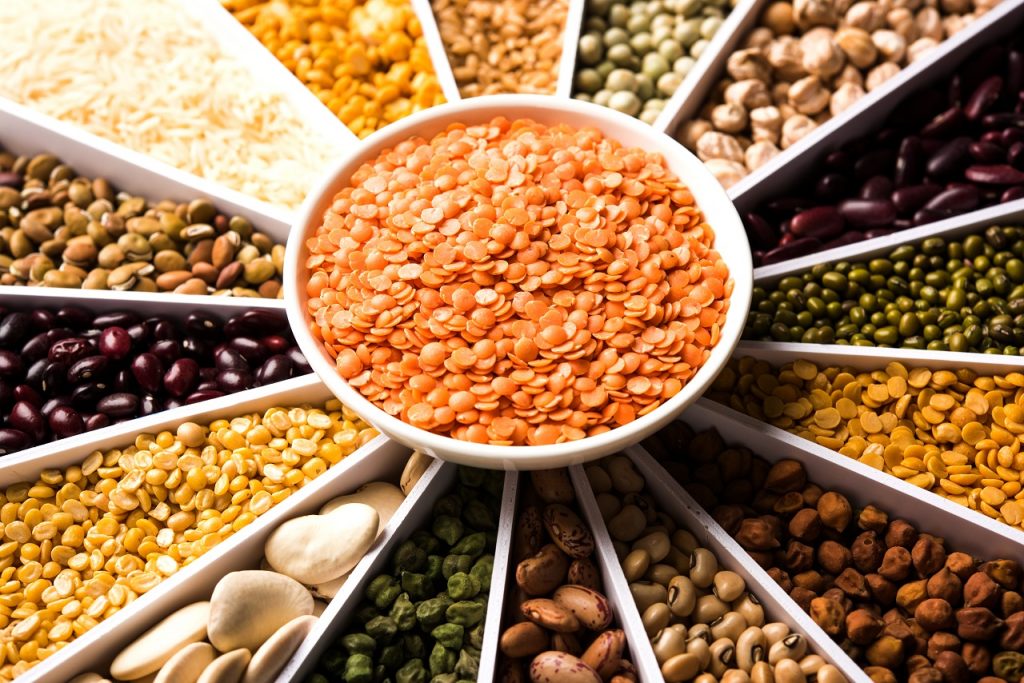
As a vegetarian, pulses are essential to our diet and there is no meal without pulses in some form or the other in our meal. Also known as legumes, pulses are the edible seeds of leguminous plants cultivated for food. Dried beans, lentils and peas are the most commonly known and consumed types of pulses. Pulses do not include crops that are harvested green like green peas and green beans which are classified as vegetable crops. Also excluded are those crops used mainly for oil extraction like soybeans and groundnuts as well as leguminous crops that are used exclusively for sowing purposes like the seeds of clover and alfalfa.

So why are pulses important crops? Pulses are packed with nutrients and have a high protein content, making them an ideal source of protein particularly in regions where meat and dairy are not physically or economically accessible. Pulses are low in fat and rich in soluble fiber, which can lower cholesterol and help in the control of blood sugar. Because of these qualities they are recommended by health organizations for the management of non-communicable diseases like diabetes and heart conditions and pulses have also been shown to help combat obesity.

In addition to the above, pulses are naturally low in fat and contain no cholesterol, which can contribute to reducing the risk of cardiovascular diseases. They are also low in sodium which is a contributor to hypertension. Pulses are a great source of plant-based protein. 100 grams of dry lentils contain a remarkable 25 grams of protein and during cooking, pulses absorb considerable amounts of water, reducing their protein content to around 8 percent. The protein quality of cooked pulses can be increased by simply combining them with cereals in a meal, like lentils with rice, classic Indian food combination. Pulses are a good source of iron and combining them with food containing vitamin C can help optimise optimise the absorption of iron in bodies from pulses, like lemon juice on a dal perhaps. Pulses are high in potassium, which supports heart health and plays an important role for digestive and muscular functions and are often quoted among the top high fibre foods, necessary for supporting digestive health and helping to reduce the risks of cardiovascular diseases as well as an excellent source of folate essential to the nervous system function and especially important during pregnancy to prevent foetal defects. They are low glycaemic index foods and help stabilise blood sugar and insulin levels, making them suitable for people with diabetes and ideal for weight management as well as being naturally gluten-free, they make an ideal food option for coeliacs.

For farmers, pulses are an important crop because they can both sell them and consume them, which helps farmers maintain household food security and creates economic stability. Pulses are also good for the environment because the nitrogen-fixing properties of pulses improve soil fertility, which increases and extends the productivity of the farmland. By using pulses for intercropping and cover crops, farmers can also promote farm biodiversity and soil biodiversity, while keeping harmful pests and diseases at bay. Pulses also contribute to climate change mitigation by reducing dependence on the synthetic fertilizers used to introduce nitrogen artificially into the soil. Greenhouse gases are released during the manufacturing and application of these fertilizers, and their overuse can be detrimental to the environment.

Recognising the value of pulses, the UN General Assembly on 20 December 2013, proclaimed 2016 as the International Year of Pulses which increased the public awareness of the nutritional and environmental benefits of pulses as part of sustainable food production. Building on the success of the International Year of Pulses, Burkina Faso proposed the observance of World Pulses Day and 10 February 2019 was proclaimed as the first World Pulses Day.

Most cultures and cuisines across the world feature pulses in some form or the other. The Indian cusine across states features pulses in different formats from the staple dals and sambars to other dishes like vadas and pakoras. Other dishes include the hummus and falafel from the Mediterranean made of chick peas, to a traditional full English breakfast which usually include baked navy beans, the Bandeja Paisa from Colombia. So try to incorporate some pulses in your daily diet for health!

Introverts, Extroverts and Ambiverts

For as long as I remember, I have been an introvert, preferring books and my own company to other people. But as I grew older and started appreciating people, I realised that I actually like engaging with people some of the time, especially when we are having an interesting conversation. This made me realise while I will never be an extrovert who likes being the centre of attraction, I was not the introvert I was growing up. That’s when I learnt that I may be an ambivert instead.

So, what are all the definitions of such people?

Extroverts are those who tend to enjoy human interactions and to be enthusiastic, talkative, assertive, and gregarious. Extroverts are energised and thrive off being around other people, taking pleasure in activities that involve large social gatherings, including activities like parties, community activities, public demonstrations and business or political groups. They also tend to work well in groups and is more likely to enjoy time spent with people and find less reward in time spent alone as they tend to be energized when around other people, and they are more prone to boredom when they are by themselves.

Extroverts are wired for enthusiasm. Research has found that extroverts are more likely to associate pleasurable feelings with their current environment, according to one analysis of neurological differences between introverts and extroverts. They are more likely to be a leader with research findings showing that most leaders self-identify as extroverts. They are great in groups, large rooms and often have no problem building rapport with anyone. Extroverts are anti-boring and great at pulling out the best from people, be it conversation, energy and confidence as well as more likely to have lots of interesting adventures, fun activities and socialising in their calendars which gives them lots to talk about. Extroverts also tend to be happier with research that found that extroverts tend to be more optimistic, cheerful and better at mood regulation, which means that in a given situation someone can control their moods or emotional responses more easily and allowing them to be social fixers.

Famous extroverts include politicians like Winston Churchill, Margaret Thatcher, Bill Clinton and sports personalities like Muhammed Ali.

Introverts are typically perceived as being more reserved or reflective and some popular psychologists have characterised introverts as people whose energy tends to expand through reflection and dwindle during interaction. Introverts often take pleasure in solitary activities like reading, writing, or meditating and is likely to enjoy time spent alone and find less reward in time spent with large groups of people. Introverts are easily overwhelmed by too much stimulation from social gatherings and engagement, with introversion defined by some in terms of a preference for a quiet, more minimally stimulating external environment. They prefer to concentrate on a single activity at a time and like to observe situations before they participate and are more analytical before speaking. Mistaking introversion for shyness is a common error as introversion is a preference, while shyness stems from distress. While introverts prefer solitary to social activities, they do not necessarily fear social encounters like shy people do.

Studies have found that introverts are humbler than extroverts, an incredibly important and hard to learn trait which makes them more perceptive, more open and less bogged down by ego making them wonderful leaders, managers and friends. Why, because they are wonderful observers who can pick up on social nuances, hidden emotions and team dynamics better than anyone. When they speak, people listen and take their words seriously because they tend to think carefully before speaking and use words carefully. Introverts also make some of the best employees because they are incredible listeners, great at asking the right questions and think before they speak and are very observant so often give the best input.

Some of the most talented people in history have been introverts from Apple co-founder Steve Wozniak to the greatest genius of the 20th century, Albert Einstein. Other super successful introverts include J.K Rowling, Bill Gates and Mahatma Gandhi

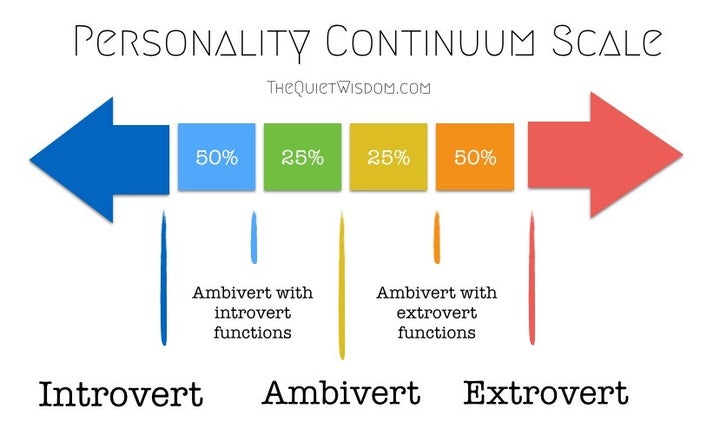
While most people view being introverted or extraverted as mutually exclusive, it is actually part of a single, continuous dimension of personality, with some scoring near one end, and others near the halfway mark. Ambiverts falls more or less directly in the middle. Ambivert are moderately comfortable with groups and social interaction, but also relish time alone, away from a crowd. In simpler words, an ambivert is a person whose behaviour changes according to the situation they are in. In the face of authority or in the presence of strangers, the person may be introverted. However, in the presence of family or close friends, the person may be highly energetic or extroverted.

It is commonly accepted that extroverts excel in jobs that require interaction with people, the best in sales, in leading people and being successful at work, but this fallacy was turned in its head during an analysis by Adam Grant, an associate professor at the Wharton School of the University of Pennsylvania, who analysed 35 separate studies and found the statistical relationship between extroversion and income was basically zero. He conducted a personality survey and collected three-month sales records for more than 300 salespeople, both male and female. The people who ranked right in the middle for extroversion and introversion–ambiverts–turned out to be the best salespeople. Grant theorised that ambiverts seem to strike a balance between the two more extreme personality traits theorising that the ambivert advantage stems from the tendency to be assertive and enthusiastic enough to persuade and close, but at the same time, listening carefully to customers and avoiding the appearance of being overly confident or excited.

There is nothing wrong in being an introvert, extrovert or an ambivert. Each type has its strengths and weaknesses and knowing what personality type you are (and most people know this by the time they get to their teens or latest by their early twenties) will help you amplify your strengths and help you overcome weaknesses.

If you want to know where on the spectrum you lie, here’s a short, ten question quiz from TED to help you find out.

And here are some TED videos about these personality traits. Watch and learn more…