The Global Smart City Index was conceived in 2017 by the International Institute for Management Development or IMD and the Singapore University of Technology and Design or SUTD who joined forces to produce a smart city index offering a balanced focus on economic and technological aspects of smart cities on the one hand, and the “humane dimensions” of smart cities which included things like quality of life, environment and inclusiveness on the other. The Smart City Index ranks cities based on economic and technological data, as well as by their citizens’ perceptions of how “smart” their cities are.
The global smart city index consists of two distinct phases and deliverables. In the first phase, a set of case studies of smart cities at different stages of development, providing a diverse international basis of experience, with the purpose of enhancing the realism and pertinence of the model underpinning the index was proposed. In the second phase, a first iteration of the index methodology was defined, leading to a global ranking of smart cities along that index in 2019. The Global Smart City Index in 2020 is the second edition of the rankings. The 2020 rankings’ key findings is on how technology is playing a role in the COVID-19 era in a way that is likely to remain.
For the 2020 rankings, hundreds of citizens from 109 cities were surveyed in April and May 2020 and asked questions on the technological provisions of their city across five key areas: health and safety, mobility, activities, opportunities and governance. According to Bruno Lanvin, President of the IMD Smart City Observatory, “It is of course too early to draw the lessons from COVID. However, it is clear that we are at a critical juncture, where the sanitary crisis is still very much with us, while the economic and social crisis that it will entail has hardly started. This year’s Smart City Index suggests that the cities that have been able to combine technologies, leadership and a strong culture of ‘living and acting together’ should be able to better withstand the most damaging effects of such crises.”
Singapore continued to maintain the top position, as it did in 2019 with Helsinki and Zurich coming in second and third place in 2020. The reason for this was because of Singapore’s performance in a one year period between the last year’s rankings to this year and Singapore’s continued success with prompt responses to an unexpected challenge where other cities have faltered and the city-state acted quickly and decisively. According to Professor Arturo Bris, director of the World Competitiveness Centre at IMD, “It had a clear road map that it followed but remained flexible. The citizens were kept informed and therefore onboard with the decisions and the loss of freedom that these entailed. The Government was in position to provide adequate compensation to those losing out and did this wisely,”.
The survey findings noted that a central pillar of Singapore’s success has been its resilience and promptness when confronted with the unexpected challenges brought by the pandemic. The index also noted that cities with better technology have managed the pandemic better, but also noted that smart cities are not the solution, but technology helps.
The index also noted that cities in India including New Delhi, Mumbai, Hyderabad and Bengaluru, suffered significant drops in the rankings this year which can be attributed to the detrimental effect that the pandemic has had where the technological advancement was not up to date. Indian cities have suffered more from the pandemic because they were not prepared. Also, a common factor behind the drop in all Indian cities is a general decline experienced by all of them in the quality of infrastructure of the cities despite the technological solutions implemented to advancing it. All four cities highlighted air pollution as one of the key areas that they felt their city needed to prioritise on.
For cities like Bangalore and Mumbai, this was closely followed by road congestion while for Delhi and Hyderabad it was basic amenities.
The index also highlighted that “smart” is a relative term and different cities use technology for different things. This is why we see vast differences in the smartness of cities within the same country. They differ in terms of their economies, inequality levels, for example, access to health and policies. Since countries are no longer economic units, mayors and local authorities increasingly have the power to improve the wellbeing of citizens by implementing technology.
Other than Singapore, Taipei is the other Asian city in the top 10, which moved down one notch to eighth place. Helsinki moved up seven places from 8 in 2019 to 2 in 2020, while the tenth city in 2020, New York moved 28 places up from 38 in 2019. My hometown of Mumbai moved down 15 places from 78 in 2019 to 93 in 2020, while Hyderabad, the top Indian city moved down 18 places from 67 in 2019 to 85 in 2020.
The top 10 Global Smart Cities in 2020 are as below with their rank in 2019 in brackets:
Singapore (1)
Helsinki, Finland (8)
Zurich, Switzerland (2)
Auckland, New Zealand (6)
Oslo, Norway (3)
Copenhagen, Denmark (5)
Geneva, Switzerland (4)
Taipei, Taiwan (7)
Amsterdam, The Netherlands (11)
New York, United States (38)
You can download the index as a PDF file and also read in detail the 2020 profiles of all 109 cities surveyed.
I have always been a voriacious reader, I can’t really remember not having a book in my hand at any point in life. In fact, I was caught in school reading novels, which was not allowed, that’s how much I loved reading. Writing, then, was something I naturally gravitated to. My childhood dream was to become a librarian and a writer, simultaneoiusly! Unfortunately, reality got in the way and I actually studied something else and made a career in another field. But I was always writing.
I am an introvert and have always lived in a world that is unknown to others. I live in my imagination, wrote stories and screenplays in my head and when I was younger, I used to play dress-up and live the lives my favourite characters lived. I was part of the Famous Five and the Five Find-Outers and helped Nancy Drew and the Hardy Boys solve their cases. Closer to home, I was part of the mythological stories my grandmother used to tell us and believe me when I say this – when I was told stories, I could actually see it play out in my head. This is probably why till today, I don’t really like watching a movie when I have already read the book. The movie in my head is way, way better than what I see on screen.
I remember in the late seventies and ealy eighties of India, as a middle-class family, we didn’t really have access to many books and my school library was my favourite place. In my school, there were two libraries, one for the primary students and the other, bigger one, for older students and the adults. I very quickly outgrew my primary library and would rush to the bigger library every day after quickly gobbling down my lunch. Even now, when I write this down, I can remember, rushing from the bigger library to my class when the bell which signalled the end of lunch ran. The bigger library was in level two of another building which was separated from my primary building by our school gymnasium and so I used to run down one flight of stairs, run across the grounds and run up another flight of stairs to hope to make it to my classroom before the teacher came in. I have slipped and fell during the monsoons, resulting in mud stains on my uniform, which I had to explain twice – once in school and once at home! But I still continued reading and then writing. Even when I moved to the secondary section and became friends with the librarian, I quickly started reading books way above my reading level. I remember borrowing books like 1984 by George Orwell when I was like 12 or 13 and when we used to have our library period, I would get special permission to borrow from the adult section, which was usually locked because I had pretty much read everything else. Even after our library period ended in upper secondary, I continued to borrow books, and think I was the only girl in our level who did something like this.
In school, English composition was my favorite period and when we had our English language paper, the first thing I would do would look at the last question which used to be the composition. I would see the choices and decide what I will be writing about and only then go and work on the rest of the paper and by the time I came to the composition, I had an idea on how I will write the essay.
I write because now, if I don’t, it feels as if something is missing that day in my life. I started blogging more than 10 years back, because earlier this year, WordPress informed me that it was my tenth anniversary on the site. Before WP, I had a blog on Blogspot, on which I wrote for a couple of years, so I think I must be blogging for a good dozen years. After reading this, if you are tempted to look for my blog in Blogspot, don’t bother. It was with a different name, and I can’t even remember it myself.
I write because I have so much inside me that I have to share it to a wider audience. I don’t know if I have shared this previously, but since I blog anonymously, I don’t share anything about this blog beyond you people. Nobody beyond my children (and now my husband) know about this space of mine and any readers who decide to stay on do so, hopefully, because my writing brings some value to them. This is why, even though I don’t have a huge readership, I write daily and cherish each and every reader who decides that they like what they read.
Sometimes I think back and wish, I had probably become a writer professionally, maybe for a publication even. Would I have been happier? I really don’t know. I do have hopes of publishing something, someday. Maybe that is a goal I should work towards and see if I can reach in the next few years. But until then, I will work hard on my craft and continue to write and hone my writing to take it to the next level.
Until then thank you for reading my writing, sometimes which verges on rambles and may seem incoherent. And also because writing is fun!
Negativity bias, also known as the negativity effect, is the notion that, even when of equal intensity, things of a more negative nature such as unpleasant thoughts, emotions, or social interactions and harmful or traumatic events have a greater effect on one’s psychological state and processes than neutral or positive things. In other words, something very positive will generally have less of an impact on a person’s behavior and cognition than something equally emotional but negative. We even tend to focus on the negative even when the negative experiences are insignificant or inconsequential. This is why we remember more of the bad or negative things that happened in your life rather than the good or positive things.
Negative experiences tend to affect people more than positive ones. A 2010 article published by the University of California, Berkeley quotes psychologist Rick Hanson, “The mind is like Velcro for negative experiences and Teflon for positive ones.” According to Hanson, a negativity bias has been built into our brains based on millions of years of evolution when it comes to dealing with threats. Our ancestors lived in difficult environments. They had to gather food while avoiding deadly obstacles. Noticing, reacting to, and remembering predators and natural hazards (negative) became more important than finding food (positive). Those who avoided the negative situations passed on their genes.
The negative bias is our tendency not only to register negative stimuli more readily but also to dwell on these events. Also known as positive-negative asymmetry, this negativity bias means that we feel the sting of a rebuke more powerfully than we feel the joy of praise.
This psychological phenomenon explains why bad first impressions can be so difficult to overcome and why past traumas can have such long lingering effects. In almost any interaction, we are more likely to notice negative things and later remember them more vividly. As humans, we tend to remember traumatic experiences better than positive ones, recall insults better than praise, react more strongly to negative stimuli, think about negative things more frequently than positive ones and respond more strongly to negative events than to equally positive ones.
Psychologists Paul Rozin and Edward Royzman proposed four elements of the negativity bias in order to explain its manifestation: negative potency, steeper negative gradients, negativity dominance, and negative differentiation. Negative potency refers to the notion that, while possibly of equal magnitude or emotionality, negative and positive items/events/etc. are not equally salient. With respect to positive and negative gradients, it appears to be the case that negative events are thought to be perceived as increasingly more negative than positive events are increasingly positive the closer one gets to the affective event itself. In other words, there is a steeper negative gradient than positive gradient. Negativity dominance describes the tendency for the combination of positive and negative events to skew towards an overall more negative interpretation than would be suggested by the summation of the individual positive and negative components. Phrasing in more Gestalt-friendly terms, the whole is more negative than the sum of its parts. Negative differentiation is consistent with evidence suggesting that the conceptualization of negativity is more elaborate and complex than that of positivity.
One of the ways negativity bias is evident is that people are risk averse. People tend to guard against losses by giving greater significance to even small probabilities. The negative feelings from losing $50 are stronger than the positive feelings of finding $50. In fact, people will commonly work harder to avoid losing $50 than they will to gain $50. While humans may not need to be on constant high alert for survival like our ancestors, negative bias can still affect how we act, react, feel, and think. For example, an older research points out that when people make decisions, they put greater importance on the negative event aspects than on the positive. This can affect choices and willingness to take risks.
According to a 2014 article, negativity bias can also be found in political ideology. Conservatives tend to have stronger physiological responses and devote more psychological resources to negatives than liberals do. Also, in an election, voters are more likely to cast their vote for a candidate based on negative information about their opponent as opposed to their candidate’s personal merits.
Psychological research suggests that the negative bias influences motivation to complete a task. People have less motivation when an incentive is framed as a means to gain something than when the same incentive will help them avoid the loss of something. This can play a role in your motivation to pursue a goal. Rather than focusing on what you will gain if you keep working toward something, you’re more likely to dwell on what you might have to give up in order to achieve that goal.
Additionally, studies have shown that negative news is more likely to be perceived as truthful. Since negative information draws greater attention, it also may be seen as having greater validity. This might be why bad news seems to garner more attention.
Such differences in the negativity bias might explain why some people are more likely to value things such as tradition and security while others are more open to embracing ambiguity and change.
Even though it appears that negativity is a default setting, we can override it.
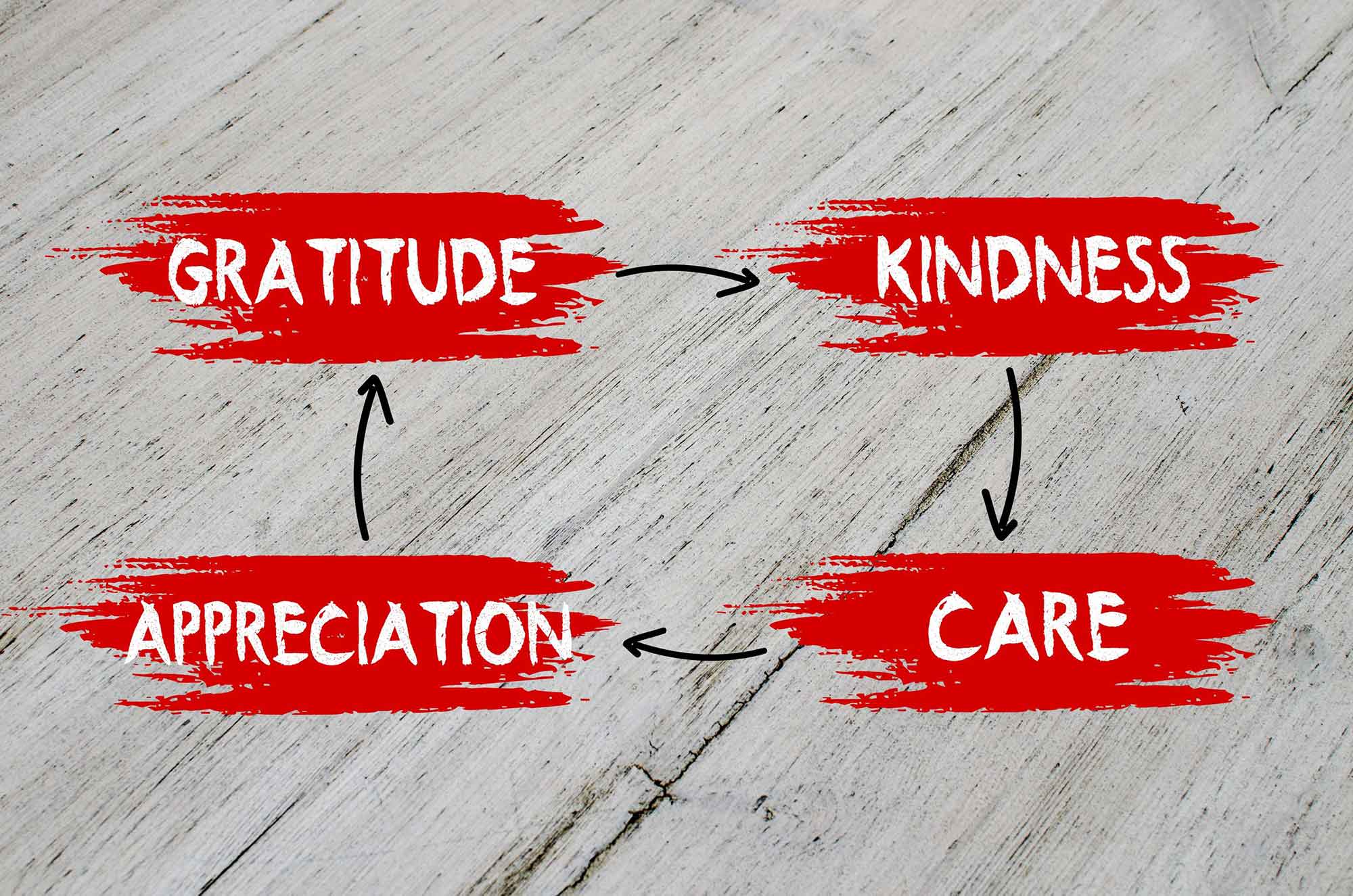
Overcoming our negativity bias is not easy to do. You can increase positivity by being mindful of what is and isn’t important in your life and focus on valuing and appreciating the positive aspects. It’s also recommended that you break the pattern of negative reactions and allow positive experiences to register deeply. You can focus on eliminating the negative rather than cultivating the positive. While both cultivating the positive and eliminating the negative are good, priority should be given to eliminating the negative. But what’s more important is to not do the bad things, but to ride it out and be positive and not fall into the trap of turning negative yourself.
When giving criticism, most of us make the mistake of starting with the good, followed by the bad and then wrap it up with some positive words. But most people would rather just get the bad news out of the way. And, once you give people the bad news, they respond so strongly to criticism that the brain basically forgets the first part and people walk out focusing on that criticism, with all the good stuff forgotten. It’s better to give the bad news early; then the good news can sink in after that. People have got to hear the criticism to know what the problem is, but then you can tell them what they’re good at and let them know how they can improve.
You can also overcome any negativity bias learning to just witness it and not react to it, expand your awareness by spending time with yourself in nature or cultivating a regular spiritual practice. You can also counteract your negativity bias soon as you notice the painful thought. Identify your painful thought and then interrupt the negative momentum with a new better-feeling thought or action and repeat positive affirmations to yourself. You should also avoid the negative stimuli around you which triggers your own negativity bias and appreciate even the smallest pleasures in your life and constantly notice and amplify all that is good there.
Start paying attention to the type of thoughts that run through your mind. After an event takes place, you might find yourself thinking things like “I shouldn’t have done that.” This negative self-talk shapes how you think about yourself and others. A better tactic is to stop those thoughts whenever they begin. Instead of fixating on past mistakes that cannot be changed, consider what you have learned and how you might apply that in the future. How you talk to yourself about events, experiences, and people plays a large role in shaping how you interpret events. When you find yourself interpreting something in a negative way, or only focusing on the bad aspect of the situation, look for ways to reframe the events in a more positive light. This doesn’t mean ignoring potential dangers or wearing rose-colored glasses—it simply means refocusing so that you give fair and equal weight to good events.
When you find yourself ruminating on things, look for an uplifting activity to pull yourself out of this negative mindset. For example, if you find yourself mentally reviewing some unpleasant event or outcome, consciously try to redirect your attention elsewhere and engage in an activity that brings you joy. You can go for a walk, listen to upbeat music, read a good book and savour positive moments in your life
Because it takes more for positive experiences to be remembered, it is important to give extra attention to good things that happen. Where negative things might be quickly transferred and stored in your long-term memory, you need to make more of an effort to get the same effect from happy moments. So when something great happens, take a moment to really focus on it. Replay the moment several times in your memory and focus on the wonderful feelings the memory evokes.
By checking up on yourself throughout the day, you can start to recognize any thoughts that are running through your mind – both helpful and unhelpful ones. You can also look at your own behaviors too, for a better understanding of what’s serving you and what isn’t. From here, you can start to tackle these head-on, challenging them and replacing them with more useful ones. Albert Ellis’ ABC technique is one useful framework you can apply here where once you become aware of your behaviours or its consequences (where B stands for behabiour and C for consciousness in the model, respectively), then you can work backward to think about what led to them which brings you to the A standing for Antecedents. What were you thinking before experiencing anger, resentment, or frustration? Was it negativity bias in action, perhaps? And how can you replace those thoughts with more positive ones?
Practice mindfulness, breathing and meditation where through guided meditations, reflection, and other mindfulness interventions, you can start to observe your feelings and thoughts more objectively. Even more promising evidence comes from a 2011 study by authors Kiken and Shook, who found an increase in positive judgments and higher levels of optimism when participants practiced mindful breathing. Compared to control groups, these participants performed better at tests where they were required to categorize positive stimuli, leading the researchers to suggest that mindfulness practice can have a significant positive impact on the bias.
Negativity biases have also been linked to numerous psychological disorders, such as depression and anxiety and so when you catch yourself taking a negative view of situations, it often helps to practice cognitive restructuring by reframing the event or experience.
In conclusion, it would appear that humans are hardwired with a negativity bias, or the tendency to put greater weight on negative experiences than on positive experiences. In general, there are ways to alter your negativity bias by focusing on the positive aspects of your life. So the next time you experience or create a positive moment, take a little longer than you usually would to enjoy it. Engage fully in the good sensations, happy thoughts, and pleasant emotions that you feel and make a note of what you enjoyed about it. When you go home, why not reflect on what just happened and turn the savoring skill into a habit?
This link from Positive Psychology has about 15 positive psychology Ted talks, so do look at them. And another Ted Talk which gives us a simple tip on how we can improve positive thinking
Staycations, which usually means staying in a hotel or resort which is either in your own town or city and does not involving travel. The traditional meaning does not even include overnight accommodation, but today’s definition does include an overnight stay. Most people replicate a traditional vacation, with a defined start and end date, just without getting on a plane or travelling far from their own town or city. The word is a a portmanteau of stay (meaning stay-at-home) and vacation.
Staycations achieved popularity in the US. during the financial crisis of 2007–2010 and in the UK in 2009 as a weak pound sterling made overseas holidays significantly more expensive. Staycations have been popular in Singapore for many years now and especially in the last decade or so. Today, the staycation holiday has become popular worldwide due to travel restrictions caused by the COVID-19 pandemic.
The earliest reference to the term staycation came from a 2003 article by Terry Massey in The Sun News. The word became widely used in the United States during May 2008 as the summer travel season began with petrol prices reaching record highs, leading many people to cut back on expenses including travel. Merriam-Webster cites the earliest use in the Cincinnati Enquirer on July 18, 1944 and the term was added to the 2009 version of the Merriam–Webster’s Collegiate Dictionary.
So why do people take staycations? Most people take staycations for many reasons.
Staycations are easy. You avoid the hassle of actually going on a holiday by bypassing flights, tickets and the other inconvienances and get straight to enjoying your holiday. There’s also no hassle of packing and unpacking, sometimes multiple times, no jet lag and long drives and endless waiting at airports.
Staycations are also cheaper than a holiday. A hotel accommodation is not just the only cost in a holiday. You have to also factor in transportation costs, food and other living expenses in the destination make any holiday, especially for a family an expensive affair.
Staycations can be quite the experience. You can choose different accommodation, based on your budget and experience life differently, maybe even altering your mood and making you feel you are not in your own city.
Staycations benefit the economy. Staycations benefit local businesses who get customers from locals and boost local economy. Especially in times like this when many cities are in a lockdown and both domestic and international tourism is severely impacted, a staycation can mean a full house for the hotel and the difference between the hotel staying in business and closing down forever.
Staycations are good for the environment. Air travel’s environmental impact is significant. By avoiding travel, a staycation may reduce the carbon emissions associated with travel greatly.
Staycations start earlier and go for longer. Without the hassle of travel, your staycation starts the minute you drive into the hotel which may be less than an hour’s drive from home. Again, since you don’t need to travel back home, you can stay as long as you want, coming home just when you need to.
Staycations allow you to experience affordable luxury. When you travel traditionally, because of budgetary considerations, you may not be able to spend as much on accommodation as you like. But with a staycation, you can afford accommodation at a higher price point than what you would be able to afford at another place and enjoy luxury that otherwise you would not be able to afford.
But contrary to all that I wrote above, I feel a staycation is a waste of your money. Why?
A room in a good hotel in Singapore does not come cheap and is a minimum of $200 per room per night. With this amount, I can easily get a couple of tickets to a southeast Asian destination in say Malaysia, Thailand or even Cambodia.
Here’s what I think I would do with $200 which would be spent in one night in a mid-sized hotel in Singapore. I prefer to sleep in my own bed, so that’s accommodation taken care of. With the money, I don’t have to lift a finger in my own home for a day by ordering food and even a cleaner to come a couple of hours to clean my home. In addition, this money can pay for entertainment like a streaming subscription for year which I can enjoy for a long time. The money will also pay for the entrance fee to local attractions which I have not visited in many years like the Singapore Zoo, Night Safari and River Safari as well as the Art Science Museum, Singapore Flyer, Gardens By The Bay, Marina Bay Sands and Sentosa with the Universal Studios. I can do atleast a few of these attractions with the money I would spend staying one night in a hotel.
So this is why staycations are a Nay from me and I would probably not do a staycation, but rather spend money on experiences. What about you? Are staycations a Yay or a Nay? I would love to read your opinion.
Also called the Day of Girls and the the International Day of the Girl, the International Day of the Girl Child was first declared by the United Nations on 11 October 2012 to increase awareness of the gender inequality faced by girls worldwide and support more opportunity for girls. The inequality faced by girls include areas such as access to education, nutrition, legal rights, medical care, and protection from discrimination, violence against women and forced child marriage. The celebration of the day also reflects the successful emergence of girls and young women as a distinct cohort in development policy, programming, campaigning and research.
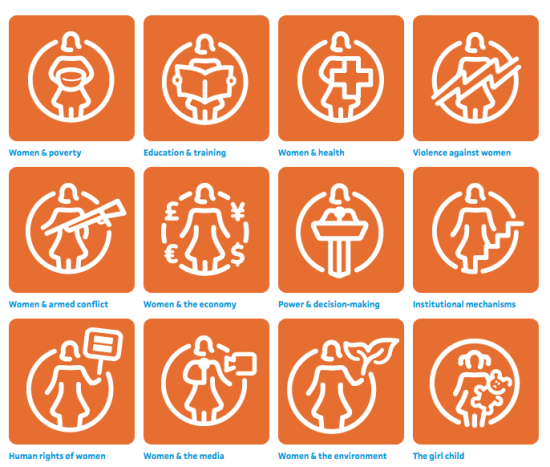
In 1995, before the girls of today were even born,the fourth World Conference on Women made history for the women’s rights agenda with the adoption of the Beijing Declaration and Platform for Action was adopted, the most visionary blueprint for the empowerment of women and girls. The Beijing Declaration and Platform for Action is the most progressive blueprint ever for advancing the rights of not only women but girls. Now, about half a century later, the Platform for Action remains a powerful foundation for assessing progress on gender equality. It calls for a world where every girl and woman can realize all her rights, such as to live free from violence, to attend and complete school, to choose when and whom she marries, and to earn equal pay for equal work. The Platform for Action specifically calls on the global community to eliminate all forms of discrimination against girls; eliminate negative cultural attitudes and practices against girls; promote and protect the rights of girls and increase awareness of their needs and potential; eliminate discrimination against girls in education, skills development and training; eliminate discrimination against girls in health and nutrition; eliminate the economic exploitation of child labour and protect young girls at work; eradicate violence against girls; promote girls’ awareness of and participation in social, economic and political life and strengthen the role of the family in improving the status of girls.
The International Day of the Girl increases awareness of issues faced by girls around the world. Many of the global development plans do not include or consider girls, and their issues have become “invisible.” More than 62 million girls around the world had no access to education, as of 2014, according to USAID. Worldwide and collectively, girls ages 5 to 14 spend more than 160 million hours more on household chores than boys of the same age do. Globally, one in four girls are married before the age of 18. Each year, 12 million girls under 18 are married; 130 million girls worldwide are still out of school; and approximately 15 million adolescent girls aged 15-19 have experience forced sex. The International Day of the Girl Child helps to raise awareness not only of the issues that girls face, but also of what is likely to happen when these problems are solved. For example, educating girls helps reduce the rate of child marriage, disease and helps strengthen the economy by helping girls have access to higher paying jobs.
This day began as a project of Plan International, a non-governmental organisation that operates worldwide through their “Because I Am a Girl” campaign, which raised awareness on the importance of nurturing girls globally and in developing countries in particular. Awareness for the initiative grew internationally and soon the United Nations got involved in this campaign which finally became the International Day of the Girl Child with the inaugural day on October 11, 2012.
The resolution states that the Day of Girls recognises the empowerment of and investment in girls, which are critical for economic growth, the achievement of all Millennium Development Goals, including the eradication of poverty and extreme poverty, as well as the meaningful participation of girls in decisions that affect them, are key in breaking the cycle of discrimination and violence and in promoting and protecting the full and effective enjoyment of their human rights, and recognizing also that empowering girls requires their active participation in decision-making processes and the active support and engagement of their parents, legal guardians, families and care providers, as well as boys and men and the wider community.
Each year’s Day of Girls has a theme; the theme for this year’s celebrations is “My voice, our equal future” where girls, especially adolescent girls will focus their their demands to live free from gender-based violence, harmful practices, and HIV and AIDS; learn new skills towards the futures they choose and lead as a generation of activists accelerating social change
If you want to get involved in the International Day of the Girl Child, you can do so by sharing stories of inspiring adolescent girls or girl-led organisations who are developing innovative solutions or leading efforts towards positive social change, including gender equality, in their communities and nations. Let’s amplify their leadership, actions and impact to inspire others. You can also participate in a youth-led digital activation which will be launched on the 11th. This will be led by young people across the world who are developing a digital activism campaign, aiming to raise the diversity of girls’ voices and their vision for a reimagined future.



:max_bytes(150000):strip_icc()/negative-bias-45896182-74ad5d5a46ea4e15b205531a457926ff.png)








 Memories and Such