

Jelebu
The second largest district in the state, Jelebu borders Seremban to its west and Kuala Pilah to its south, Jempol to its southeast, Bentong and Bera plus Pahang to its east and Hulu Langat in Selangor to the north. Jelebu has a somewhat blossoming semi-agricultural industry with Kuala Klawang the principal town of the district. Jelebu has an infamous recorded history of British and Japanese colonisation as compared to other parts of Negeri Sembilan. Numerous colonial artefacts were discovered in the small semi-agricultural town of Sungai Muntoh, which was once a prosperous mining town a century ago. These artefacts are now displayed in the state museum. The booming tin industry was one of the main reasons for the massacre in Titi, where more than 1,500 people, mainly Chinese, were killed. Altogether, about 5,000 people were killed by the Japanese-led army during World War II.
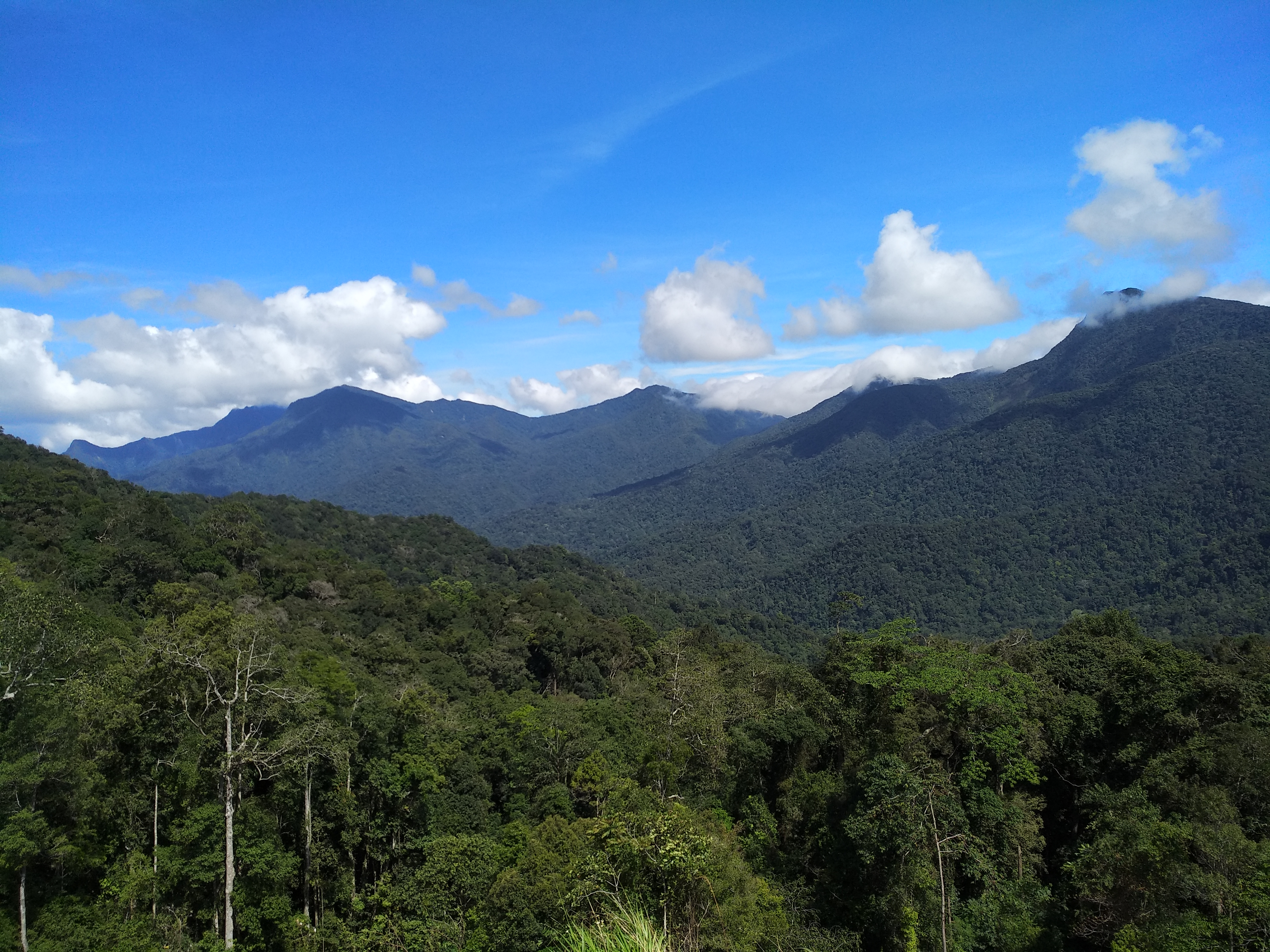
The Titiwangsa Mountains, the longest mountain range in Malaysia, transverses through Jelebu and so most of its terrain is generally heavily forested and mountainous, specifically in its northern and western regions. Jelebu has the warmest climate recorded in Malaysian history. The southwestern part of Jelebu is considered the driest place in Malaysia.

The Pasoh Caves, the southernmost limestone cave complex in Malaysia, is also located in Jelebu. The caves are also known for being the first Paleolithic site in southern Peninsular Malaysia, as well as the southernmost in Malaysia. Some of the artefacts discovered here in an excavation are as old as 14,000 years. The Kenaboi State Park is nestled in the lush million-year-old rainforest amidst peaks of the Titiwangsa Mountains. The nature reserve is famous for being the main entry point to the tallest mountain in Negeri Sembilan, Mount Besar Hantu at 1,462 m and natural landmarks such as Lata Kijang, Lata Dinding and Lata Berungut. The Customs Museum or the Muzium Adat is a museum that exhibits the facets and lifestyle of the people of Negeri Sembilan. It was constructed in 2005 and officially opened on 2 February 2008. The museum is housed in a four-story building, with a giant replica of a Malay headdress at the top of its entrance and consists of four galleries, which include the introduction of customs, life cycle, intellectual tradition, government and power and Pepatih customs.
Seremban
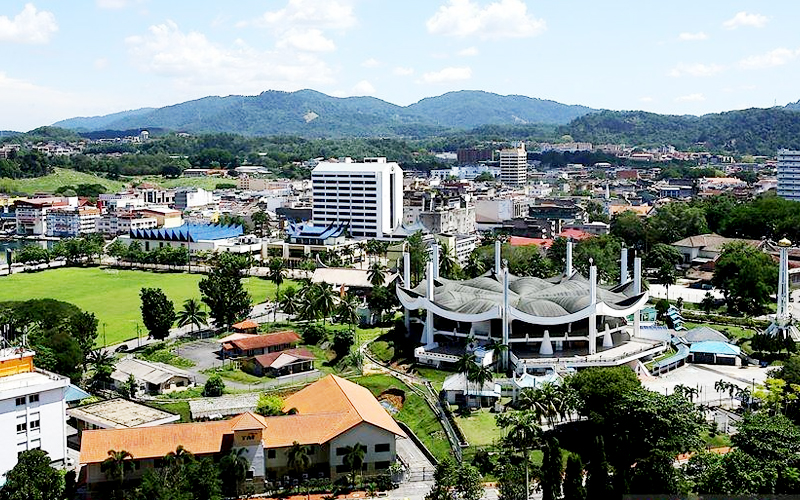
Originally founded as Sungei Ujong, Seremban is the capital of Negeri Sembilan and is named after a nearby river of the same name. The town gained its city status on 20 January 2020. Sungei Ujon still exists as road names and the name of the luak or chiefdom that formed Negeri Sembilan. Among the Chinese-speaking community, the city is known as Fùhyùhng in Cantonese and Fúróng in Mandarin which means hibiscus, which comes from a phonetic approximation of Ujong. Seremban lies about 60 km south of the country’s capital, Kuala Lumpur, about 55 km south of Malaysia’s administrative centre, Putrajaya and 40 km from the Kuala Lumpur International Airport.
Sungai Ujong, or Sening Ujong, as it was originally known, was an ancient settlement. It has been said in the Malay Annals that King Parameswara reportedly visited Sening Ujong after fleeing the kingdom of Singapura before ultimately establishing the Malacca Sultanate. It was also referred to as Sang Hyang Ujong in Javanese accounts, notably the Nagarakretagama, as well as Suneujon in Godinho de Erédia’s cartographic records, which dates back to 1613. Growth took off after the discovery of tin ore in the 1870s and the discovery of tin in Rasah saw an influx of Arab, Malay and Chinese immigrants to work in the mines and trade there.
Renamed Seremban, the town flourished not only as a mining area but also as a business centre. The Linggi River served as the sole outlet to ferry tin and supplies in and out of the town. Revenue came not only from the tin trade but also from the large amount of taxes collected, much to the displeasure of the traders and the British in the neighbouring port of Malacca. Because of the local chieftains were at odds with each other, the British were able to assert their influence and authority in Negeri Sembilan.
Before 2020, Seremban was one of four state capitals that had yet to be elevated to city status; the other three being Kota Bharu in Kelantan, Kuantan in Pahang and Kangar in Perlis. To achieve city status, the Nilai Municipal Council and Seremban Municipal Council were merged to form a new local authority, Seremban City Council.
Seremban is situated about 60 kilometres south of Kuala Lumpur, the capital city of Malaysia, 50 kilometres south of the administrative capital Putrajaya, and about 30 kilometres inland from the coast. Part of the Malaysia Vision Valley corridor and the National Growth Conurbation, Seremban is considered to be the southern limit of the Greater Kuala Lumpur metropolitan area.[14][15] It is located in the Linggi River valley, at the western fringes of the Titiwangsa Mountains. The terrain is generally hilly, and the soil is mostly reddish laterite soil, suitable for the cultivation of rubber and palm oil, thus making Seremban the agricultural centre for the state. Since the establishment of Seremban, the Linggi River has played an important role in the city’s growth. During the boom period of tin mining, the Linggi River served as the major transportation route for tin traders. Today, it is one of the major sources of water for the Seremban metropolitan area and Negeri Sembilan.

Dubbed the fish pond, Seremban Square is an area of open land in the downtown Seremban area which recently been given a new look. From a barren, neglected piece of land which was the breeding ground for mosquitoes, today it is known as Seremban Square, which decorates the main entrance to Seremban. Here, the Malaysian flag is raised on a flagpole standing 100 feet high. Taman Tasik Seremban which is also known as Seremban Lake Garden is one of Seremban’s major attractions. Surrounded by two lakes and a lush green garden, it is a jogging favourite and many local families like to come here, especially over the weekends and public holidays. One of Malaysia’s oldest natural gardens, the garden has a children’s playground and walking tracks as well as a floating stage on the lake which hosts performances over weekends. The Seremban 2 Recreational Park is another popular destination during weekends or school holidays. At this six-acre area, visitors will be greeted with breathtaking landscapes as well as a variety of colourful kite decorations flying freely in the sky.
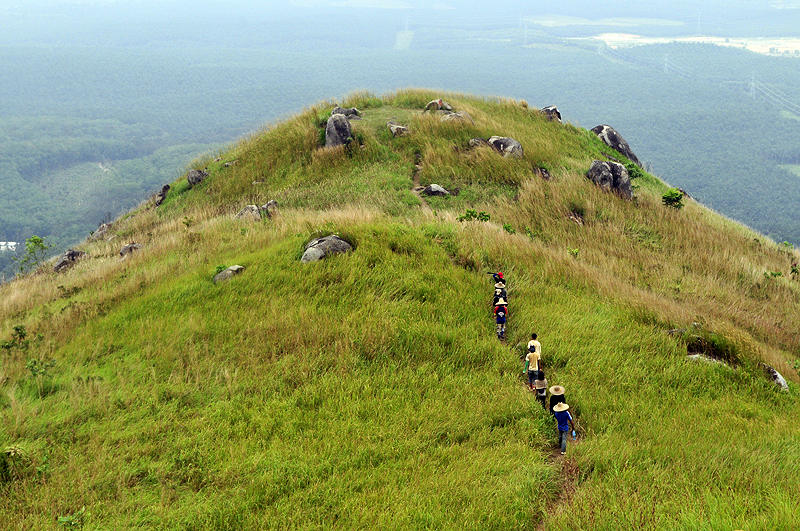
At the border of Selangor and Negeri Sembilan lies the small town of Broga, on which lies the Bukit Broga Hill. The hill is known for its beautiful views covered with lalang grass and palm oil plantations and is famous for its steep and adventurous hike uphill, giving a mesmerising view of sunrise and sunset. To experience the magical view while walking on the trail, walk about ten minutes after which the tiring trail starts being marked by the archway of the RHB Bank. The bank board also provides three halting and viewing points at 880 feet, 1150 feet, and 1312 feet. Over the years there has been an evident amount of damage to the pathway, so one should be careful on the main path and avoid any further damage. And because of this, it is best to avoid the hill during the monsoon season and when it rains as the path gets muddy and slippery as well as during the weekends when it gets crowded. Because it can get tiring in the sun, the best time to visit is between 9:30 am and 12 noon before the day is at its hottest. Proper hiking shoes are necessary as the way to the hill is slanted and it can be difficult to climb without proper shoes and other amenities. Parking is free and the entrance fee is RM 1 per person.

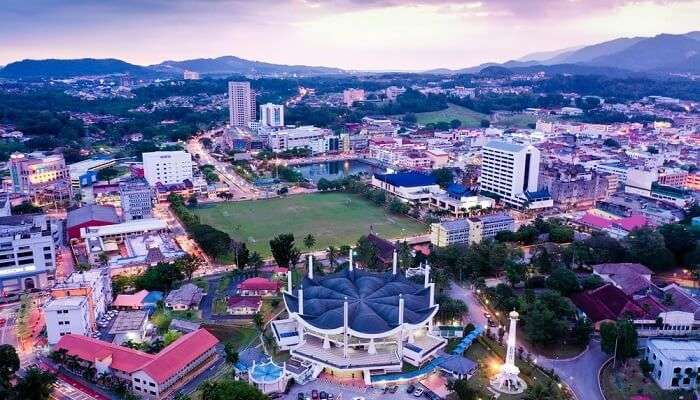
The Masjid Negeri Seremban or the State Mosque is located near the Lake Gardens. The nine pillars of this mosque symbolize the nine original states of Negeri Sembilan. The mosque features modern architectural elements as well as traditional Minangkabau architectural design. It is lit up at night when it is at its best.

The first French missionary church in Seremban, the Church of the Visitation was constructed in 1848 on two acres, surrounded by a tranquil panorama. Inspired by neo-gothic architecture, the church houses a historical Parochial House, Visitation Hall, and Formation Centres. The main hall is decorated with mosaics and stained glass windows. The church’s permanent structure was constructed in 1899 with new additions made over the years. The daily mass takes place on weekdays at 6:45 am while on Saturday, it is at 6 am and 7 am on Sundays.

Perched on top of the Wu Gong Hill in Ulu Temiang, the Centipede Temple or the Then Sze Temple is set atop 264 steps. Centipedes roamed freely in and out of the temple grounds, and it is believed that if one spots a centipede, one can expect some good fortune. The centipede stone statue is the main attraction of this temple. The statue of Lord Yue Lao or the God of Marriage is also housed inside. Several couples hook red strings and lockets here and pray for a long union. Some of the other attractions include the tortoise pool, the Guan Yin statue, a pavilion dedicated to Guan Di, the Datuk Altar, and the Eight Immortals. While the Centipede Temple is a Taoist temple, it also contains Chinese and Buddhist elements. This temple is further adorned with ceiling hangings, a Qing Dynasty bell, beautiful lanterns, a drum, and an intricately decorated door. The temple is open daily between 7 am and 7 pm.
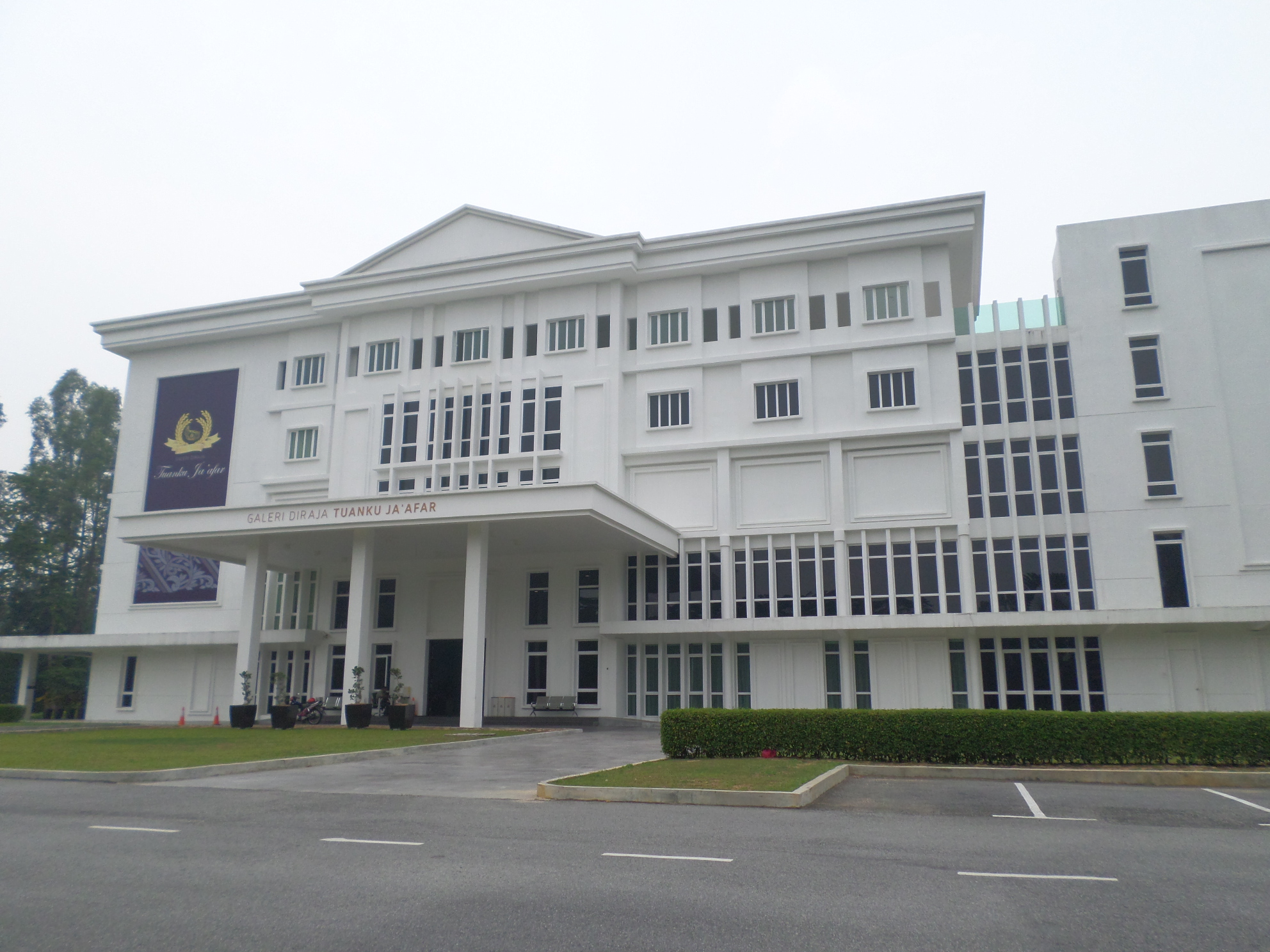
To know more about the former Negeri Sembilan Yang di-Pertuan Besar Tuanku Ja’afar, one must visit the Galeri Diraja Tuanku Ja’afar. He was the 10th Yang di-Pertuan Agong or constitutional monarch who ruled Negeri Sembilan for 42 years. Spanning across 3 storeys, this gallery is adorned with a colonial style of architecture and private collections of the late Malaysian ruler. There are nine exhibition halls, depicting the life of Tuanku Ja’afar inside the gallery. These exhibition halls depict the life of the ruler in chronological order. Some of the details that have been showcased in the gallery include his early life, schooling, higher education, and hobbies. Photographs showcasing his meetings with famous world leaders and politicians are also housed inside the exhibition halls. The gallery also houses paintings made by the ruler himself. The museum is closed on Mondays and other days, it is open between 10 am and 5 pm. Entry fees are RM 10 for adults and RM 5 for children.

The Negeri Sembilan Museum was established in 1953 when the 8th Yamtuan or Ruler of Negeri Sembilan, Tuanku Abdul Rahman gave his consent for the relocation of the Ampang Tinggi Palace from Kuala Pilah to the Taman Bunga at Jalan Dato’ Hamzah, Seremban and this was turned into the State Museum.
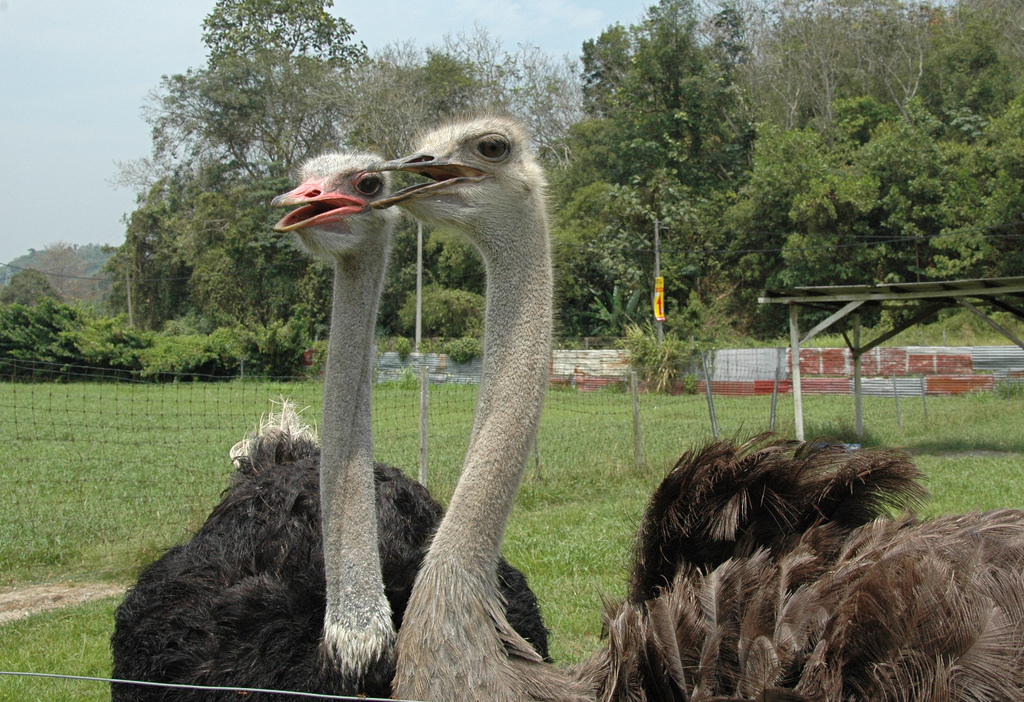
The Jelita Ostrich Farm is Malaysia’s first ostrich farm as certified by the Malaysian Book of Records. It is located on the outskirts of Seremban and is famous for its ostriches. This farm is also a haven for many other animals and birds like goats, geese, ducks, turkeys and horses. A walking tour is available to explore the farm. Visitors can compete in the man-against-egg challenge where visitors bag a chance to stand on the hard-to-break ostrich egg. The farm houses a souvenir shop selling an exclusive range of ostrich oil-based hair and skin care products and some ostrich essence. Entry fees are RM 8 for adults and RM 6 for children and the farm is open daily from 9 am to 5 pm.

Sri Menanti
The royal capital of Negeri Sembilan, Seri Menanti is located 33 km northeast of the state capital of Seremban. The town houses the seat of the Yang Di-Pertuan Besar of Negeri Sembilan or Yamtuan Besar, the ruler of the state. The royal palace is known as Istana Besar. The area under which Seri Menanti is known as the Adat Circle or Adat Lingkungan in Malay. Seri Menanti also governs the surrounding chiefdoms or luaks of Terachi, Gunung Pasir, Ulu Muar, Jempol and Inas, of which they are collectively known as Luak Tanah Mengandung.
The Minangkabau people moved to the wider area of Negeri Sembilan during the 14th century as part of the Minang practice of merantau. Around the 15th century, they moved further inland from Rembau and explored the area that is known today as Seri Menanti. Among the explorers was Datuk Puteh of Pagar Ruyung. According to legend, they found three stalks of fresh green paddy and thus Datuk Puteh christened the area Padi Menanti which means awaiting paddy. Over time the name changed to Seri Menanti. It is believed that the word Seri means the Goddess of rice in the ancient Javanese tradition.

Raja Melewar arrived in Negeri Sembilan in 1773 and was installed and proclaimed as the first Yamtuan Besar in Kampung Penajis in Rembau. He later moved his palace to Seri Menanti which remains the royal town of Negeri Sembilan.
A few traditionally styled houses, a derivative of the Minangkabau design Rumah Gadang remain standing around Seri Menanti and in the adjacent villages. A significant portion of the land in Seri Menanti is Malay Reserve and Malay Customary Land or Tanah Adat.
The incumbent Tunku Besar of Seri Menanti is Tunku Ali Redhauddin, the eldest son of the Yang Di-Pertuan Besar of Negeri Sembilan Tuanku Muhriz ibni Almarhum Tuanku Munawir. The title of Tunku Besar Seri Menanti is the most senior of the Putera Yang Empat or the Four Princes. This is the third time in 120 years that the Tunku Besar Seri Menanti has been appointed. The official palace of the Yang Di-Pertuan Besar Negeri Sembilan is the Istana Besar. Completed in 1932, palace has numerous facilities with gardens that oversee the Straits of Johor. The palace complex consists of the Main Palace, the Throne Room or Balairong Seri, and the Royal Banquet Hall. However, it is not open to the public to visit but instead hosts royal banquets and events. Istana Seri Menanti is a beautiful 4-storied Malay architectural structure that was built without any nails. The palace exhibits costumes, weaponry, bed chambers as well as documents on the royal lineage on display in the museum.
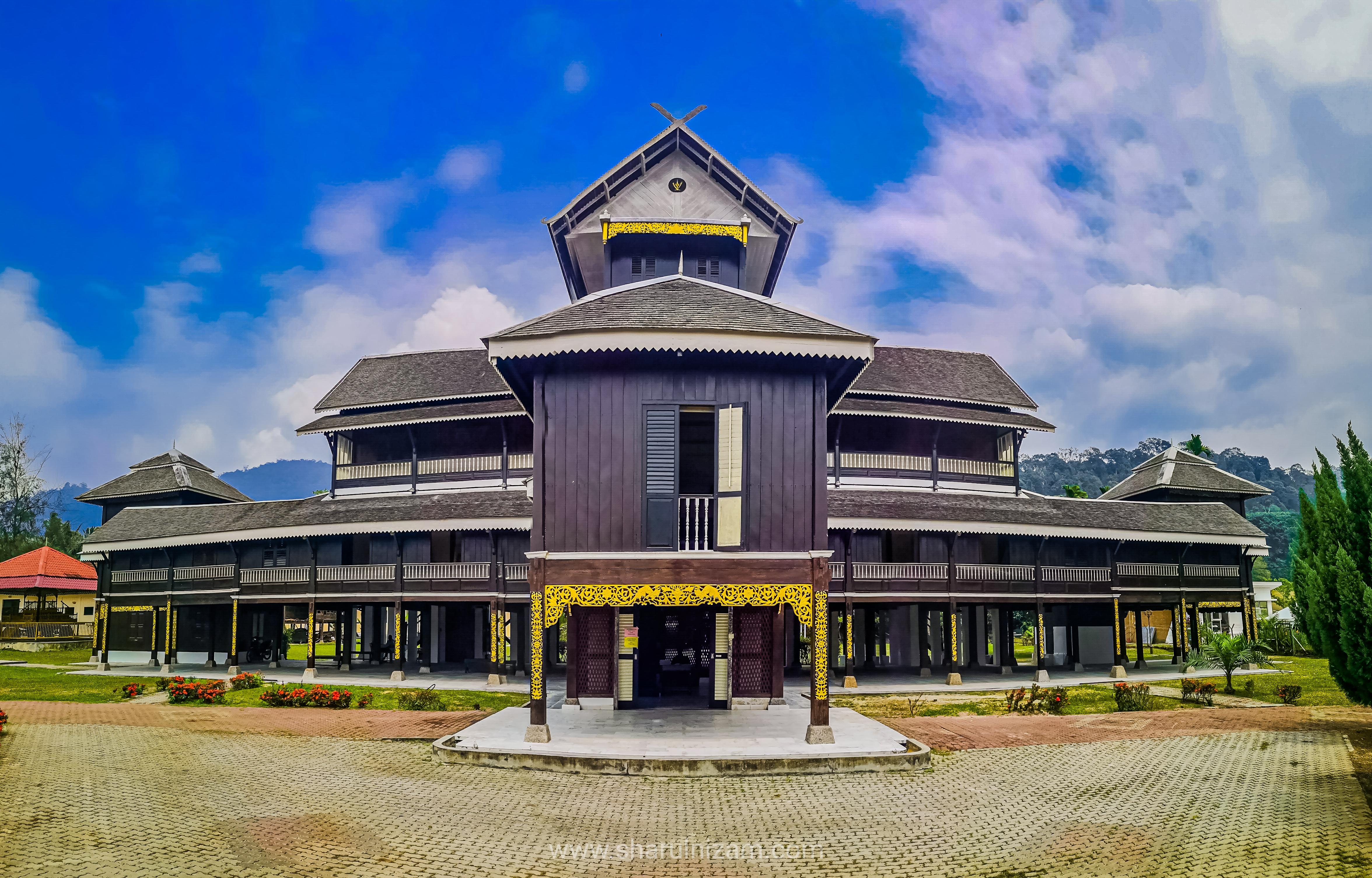
The old wooden palace, known as Istana Lama, was built and officiated during the reign of Yang Di-Pertuan Besar Tuanku Muhammad Shah ibni Almarhum Tuanku Antah who reigned between 1888 and 1933. It is made in part of Chengal or Penak wood Neobalanocarpus and ironwood or Belian wood and held together using only wooden pegs. The palace took six years to build and was completed in 1908 for $45,000. The design has subtle hints of Minangkabau architecture, with five levels rising to a height of sixty-seven feet or approximately twenty meters high and has ninety-nine columns to support the main structure. The Istana Lama was a replacement for the Istana Pulih which was burned down by the British. This palace was used until 1932 after which the Yang Di-Pertuan Besar moved to the Istana Besar. The Istana Lama has been designated as a national heritage site and was converted into a Royal Museum in 1992.

The Tuanku Munawir Royal Mosque, which was built in 1964 is located next to the Royal Palace. The architectural design has been credited to the Mughals, with golden domes roofs, minarets and triangular arches. There is a verandah and a serambi that shows the local intricacies.
And this brings us to the end of this delightful state which has something for everyone. Keep watching this space as we move to explore the state of Pahang next.





 Memories and Such