

Another recipe I made during the nine days of Navratri when I do not use either onions or garlic in my cooking. Again I replaced onions and garlic with a cashew and sesame paste and we did not miss the onions at all. This was a very quick recipe and I made it in less than 30 minutes, start to finish.
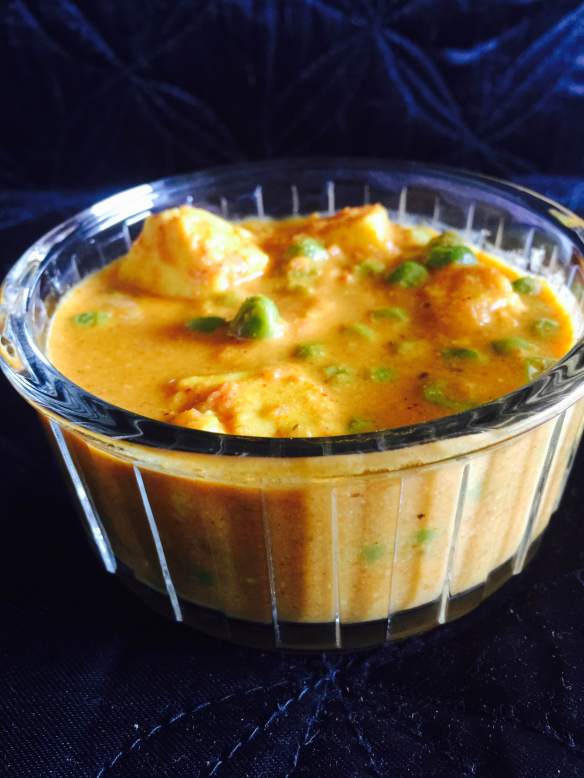
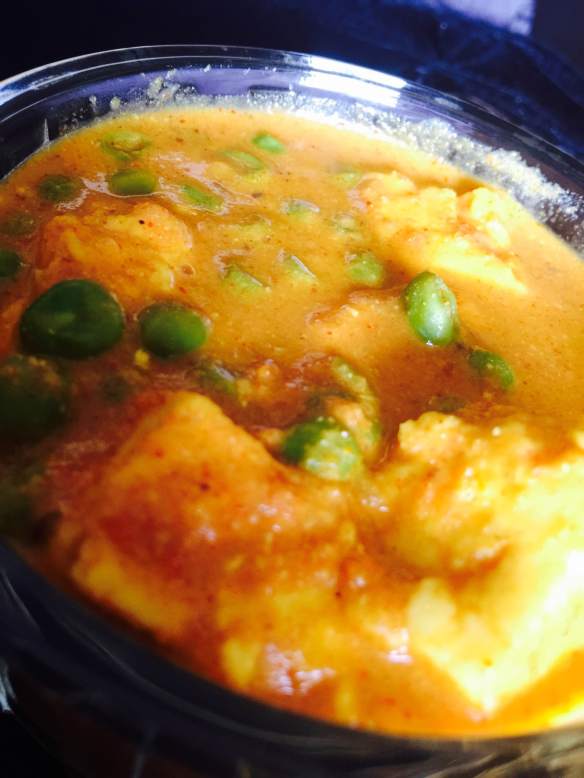
No Onion, No Garlic Matar Paneer
Ingredients:
- 1 cup frozen paneer, refreshed in hot water for 15 minutes and then drained. Keep the water for the gravy
- 1 cup frozen green peas
- 1 tsp cumin seeds
- 8-10 cashew nuts, soaked in hot water for 10 minutes
- 1 tsp white sesame seeds
- 3 medium sized tomatoes
- 1 tsp red chilli powder
- 1/4 tsp turmeric powder
- 1 tsp coriander powder
- 1 tsp cumin seed powder
- 1 tsp garam masala powder
- 3-4 tbsps beaten yoghurt
- Salt to taste
- 2 tsps oil
- Coriander leaves to garnish
Method:
- Blend together the cashew nuts and sesame seeds into a fine paste and keep aside.
- In the same blender, chop the tomatoes and blend well till it becomes a fine puree and keep aside.
- Heat the oil and when warm, add the cumin seeds. When it starts to splutter, add the cashew nut, sesame paste and let it fry for a minute. Then add the tomato puree and let it fry for a minute.
- Now add all the dry spices – turmeric powder, red chilli powder, cumin powder, coriander powder, salt and garam masala and stir well. Add a bit of water if needed and let the masala fry well till the oil starts to come out and it becomes a bit dry.
- Now add around 1 cup of water (here, add the water used to soak the paneer and the cashew nuts) and let it come to a rolling boil.
- When it starts to boil, add the frozen peas and let it continue to boil and cook. The peas should be cooked in around 5-7 minutes and at this point add the paneer.
- Let it cook for another 5 minutes.
- Check for salt and seasoning and add as required.
- Garnish with coriander leaves and serve hot with rice or any rotis.

 In Thrive, Arianna Huffington makes an impassioned and compelling case for the need to redefine what it means to be successful in today’s world.


 On the evening of March 17, 1959, as the people of Tibet braced for a violent power grab by Chinese occupiers—one that would forever wipe out any vestige of national sovereignty—the twenty-four-year-old Dalai Lama, Tibet’s political and spiritual leader, contemplated the impossible. The task before him was immense: to slip past a cordon of crack Chinese troops ringing his summer palace and, with an escort of 300, journey across the highest terrain in the world and over treacherous Himalayan passes to freedom—one step ahead of pursuing Chinese soldiers.

