In My Hands Today…

How to Stand Up to a Dictator – Maria Ressa

What will you sacrifice for the truth?

Maria Ressa has spent decades speaking truth to power. But her work tracking disinformation networks seeded by her own government, spreading lies to its own citizens laced with anger and hate, has landed her in trouble with the most powerful man in the country: President Duterte.

Now, hounded by the state, she has multiple arrest warrants against her name, and a potential 100+ years behind bars to prepare for—while she stands trial for speaking the truth.

How to Stand Up to a Dictator is the story of how democracy dies by a thousand cuts, and how an invisible atom bomb has exploded online that is killing our freedoms. It maps a network of disinformation—a heinous web of cause and effect—that has netted the globe: from Duterte’s drug wars, to America’s Capitol Hill, to Britain’s Brexit, to Russian and Chinese cyber-warfare, to Facebook and Silicon Valley, to our own clicks and our own votes.

Told from the frontline of the digital war, this is Maria Ressa’s urgent cry for us to wake up and hold the line, before it is too late.
In My Hands Today…

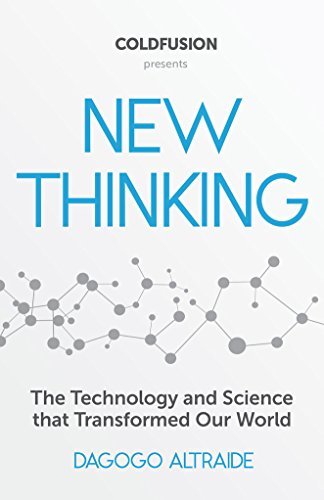
New Thinking: From Einstein to Artificial Intelligence, the Science and Technology that Transformed Our World – Dagogo Altraide

As each new stage of technology builds on the last, advancements start to progress at an exponential rate. In order to know where we’re headed, it’s essential to know how we got here. What hidden stories lie behind the technology we use today? What drove the men and women who invented it? What were those special moments that changed the world forever?

Dagogo Altraide explores these questions in a history of human innovation that reveals how new technologies influence each other, how our modern world came to be, and what future innovations might look like. From the electric world of Tesla and the steam engine revolution to the first computers, the invention of the internet, and the rise of artificial intelligence, New Thinking tells the stories of the men and women who changed our world with the power of new thought.

In My Hands Today…

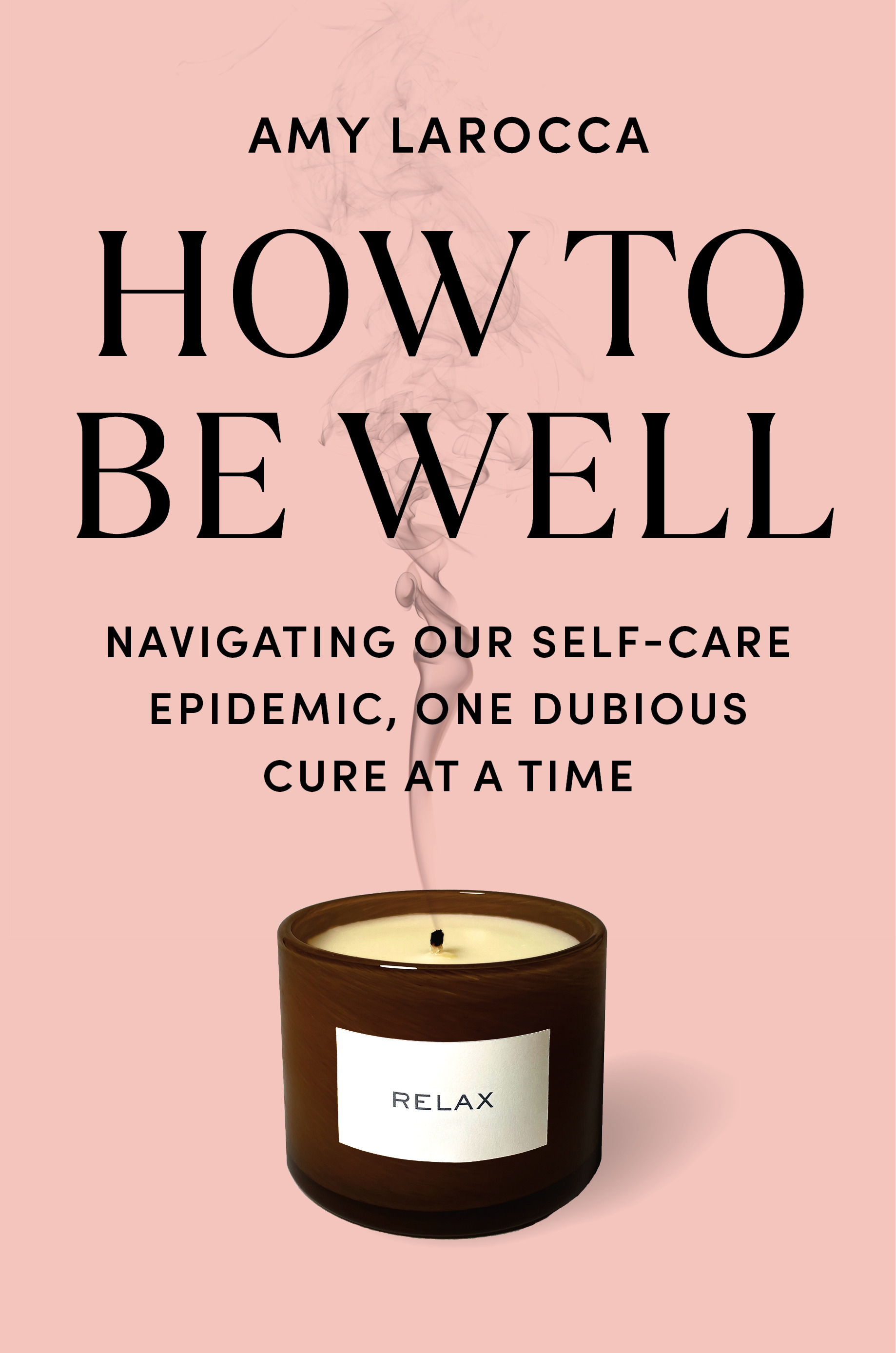
How to Be Well: Navigating Our Self-Care Epidemic, One Dubious Cure at a Time – Amy Larocca

Peleton. Pilates. Biohacking. Colonics. Ashweganda. Today the wellness industry is a $3.7 trillion-dollar behemoth that touches everyone. Journalist Amy Larocca peels back the layers behind the movement and reckons with its promises and profits. How did we get here, and how did the idea of wellness become integrated into people’s lives, especially women’s?

How to be Well takes readers into the communities that swear by their activated-charcoal toothpaste and green-juice enemas, explaining what each of these practices really are—and what the science says. Larocca holds a magnifying glass to alternative medicine and nouveau lifestyle prescriptions, delivering an incisive assessment of how the wellness industry embodies (gendered, class-based, racialized) perceptions of care and self-improvement, and how it preys upon an unshakeable fear of the unknown. She traces the history of how the beauty and fashion industries has peddled snake oil for decades—and why people keep coming back for more.

In My Hands Today…

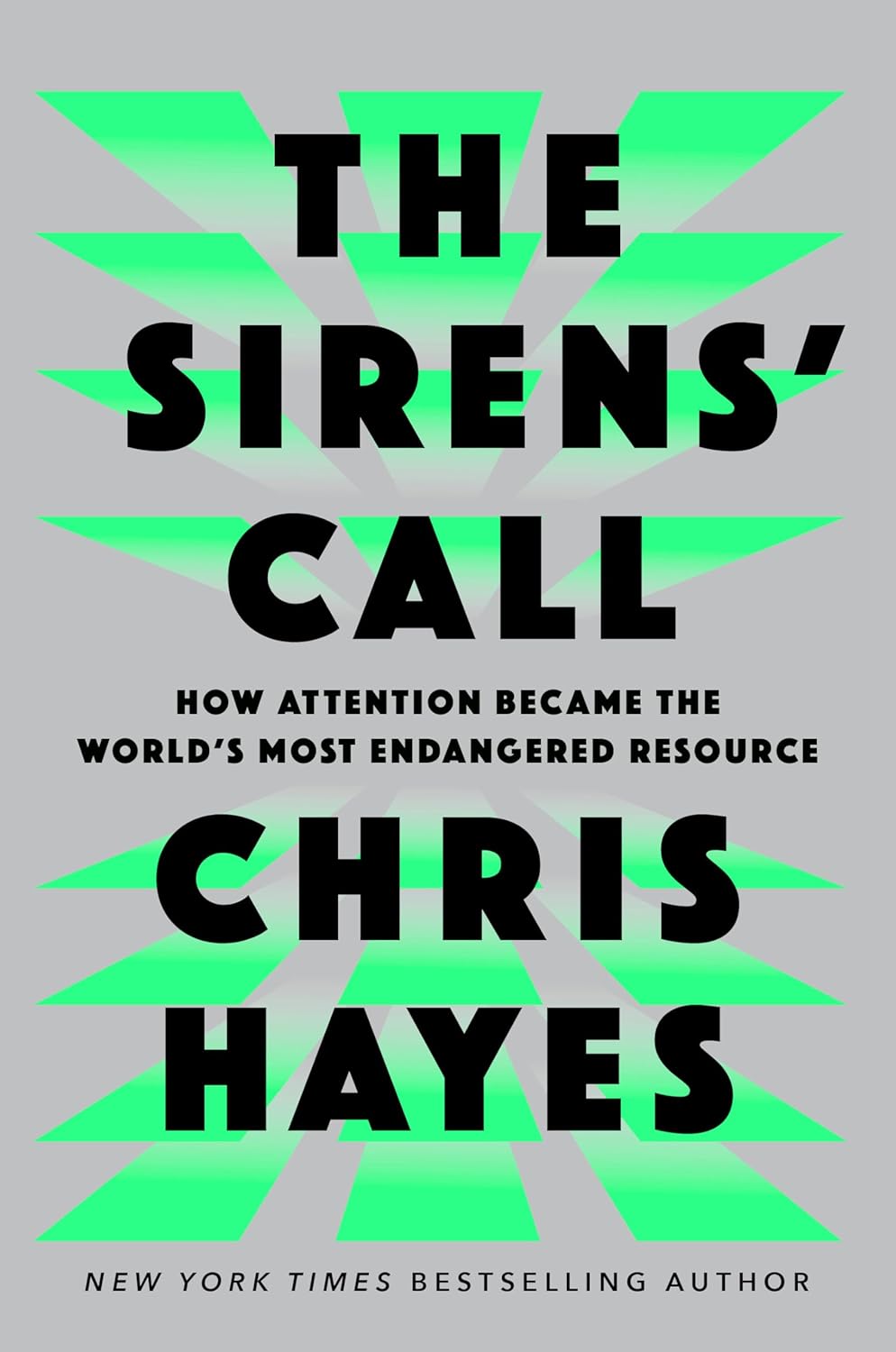
The Sirens’ Call: How Attention Became the World’s Most Endangered Resource – Christopher L. Hayes

We all feel it—the distraction, the loss of focus, the addictive focus on the wrong things for too long. We bump into the zombies on their phones in the street, and sometimes they’re us. We stare in pity at the four people at the table in the restaurant, all on their phones, and then we feel the buzz in our pocket. Something has changed for most of human history, the boundary between public and private has been clear, at least in theory. Now, as Chris Hayes writes, “With the help of a few tech firms, we basically tore it down in about a decade.” Hayes argues that we are in the midst of an epoch-defining transition whose only parallel is what happened to labor in the nineteenth attention has become a commodified resource extracted from us, and from which we are increasingly alienated. The Sirens’ Call is the big-picture vision we urgently need to offer clarity and guidance.

Because there is a breaking point. Sirens are designed to compel us, and now they are going off in our bedrooms and kitchens at all hours of the day and night, doing the bidding of vast empires, the most valuable companies in history, built on harvesting human attention. As Hayes writes, “Now our deepest neurological structures, human evolutionary inheritances, and social impulses are in a habitat designed to prey upon, to cultivate, distort, or destroy that which most fundamentally makes us human.” The Sirens’ Call is the book that snaps everything into a single holistic framework so that we can wrest back control of our lives, our politics, and our future.

In My Hands Today…

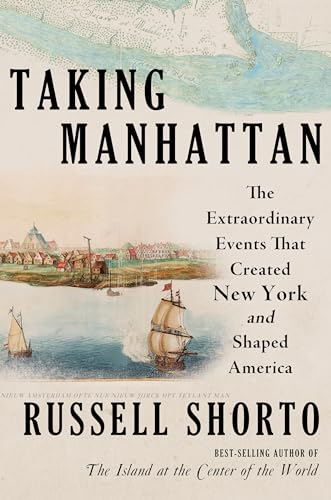
Taking Manhattan: The Extraordinary Events That Created New York and Shaped America – Russell Shorto

In 1664, England decided to invade the Dutch-controlled city of New Amsterdam on Manhattan Island. Charles II and his brother, the Duke of York, had dreams of empire, and their archrivals, the Dutch, were in the way. But Richard Nicolls, who led the English flotilla bent on destruction, changed his strategy once he began parleying with Peter Stuyvesant, the Dutch leader on Manhattan.

Bristling with vibrant characters, Taking Manhattan reveals the founding of New York to be an the result not of an English military takeover but of clever negotiations that led to a fusion of the multiethnic capitalistic society the Dutch had pioneered to the power of the rising English empire. But the birth of what might be termed the first modern city is also a story of the brutal dispossession of Native Americans and of the roots of American slavery. Taking Manhattan shows how the paradox of New York’s origins—boundless opportunity coupled with subjugation and displacement—reflect America’s promise and failure to this day. Russell Shorto, whose work has been described as “astonishing” (New York Times) and “revelatory” (New York magazine), has once again mined newly translated sources to offer a vibrant tale and a fresh and trenchant argument about American beginnings.