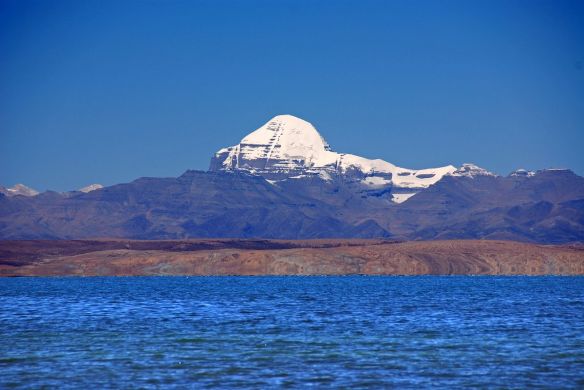
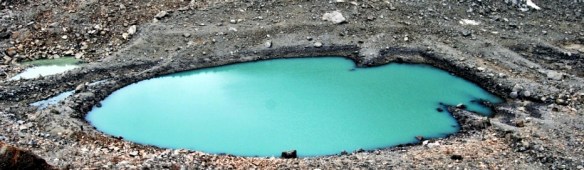
Recently a dear friend of mine moved to the mountainous central Asian country of Kyrgyzstan for work. So my Facebook feed has been filled with gorgeous pictures of amazingly blue skies and picture-perfect pretty lakes and meadows as she settles down in her new home. Seeing those pictures, I got intrigued by this country, whose name I couldn’t even spell and decided to find out more about this gorgeous place.
Wikipedia tells me that Kyrgyzstan is a landlocked, mountainous country in central Asia with a 2,000-year-old recorded history which encompasses a variety of cultures and empires. Because of its highly mountainous terrain, it has been able to preserve its ancient culture and because it has been at the crosswords of several great civilizations as part of the Silk Road, it has also absorbed those cultures which have passed through it. When the Soviet Union came into existence, Kyrgyzstan became a part of it and achieved sovereignty only after the break up of the erstwhile Union in 1991.
 Ethnic Kyrgyz make up the majority of the country’s 6 million people, followed by significant minorities of Uzbeks and Russians. Kyrgyz is closely related to other Turkic languages, although Russian remains widely spoken and is an official language, a legacy of a century of Russification. The majority of the population are non-denominational Muslims. In addition to its Turkic origins, Kyrgyz culture bears elements of Persian, Mongolian, and Russian influence.
The best time to visit Kyrgyzstan is between May and October, with the peak trekking season happening between June and September. The summers are extremely hot and dry, while winters (between November and March) are very cold and snowy. The climate is more moderate in the Issyk Kul Lake region.
Some of the places which are on my bucket list include:
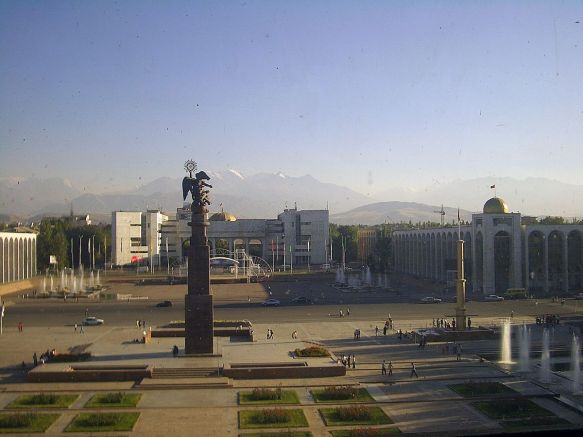 Bishkek: The capital city and the place where my friend is currently based in. Bishkek borders Central Asia’s Tian Shan range. It’s a gateway to the Kyrgyz Ala-Too mountains and Ala Archa National Park, with glaciers and wildlife trails. The city’s arts scene encompasses the monumental State Museum of Fine Arts and the collonaded Opera and Ballet Theater. The vast, central Ala-Too Square features the Manas monument, honouring the hero of the Kyrgyz Epic of Manas. The Soviet-era State History Museum, next to the presidential White House, explores the country’s history and ethnic groups. Dubovy Park is known for its oak trees and sculptures, while the nearby M. V. Frunze Museum preserves the birthplace of Mikhail Vasilievich Frunze, a prominent Soviet military leader who was born in the city. West of here, sprawling Osh Bazaar features traditional costumes and Kyrgyz produce. East of Bishkek, the intricately carved Burana Tower and its adjacent ruins mark the site of the 9th-century city of Balasagun.
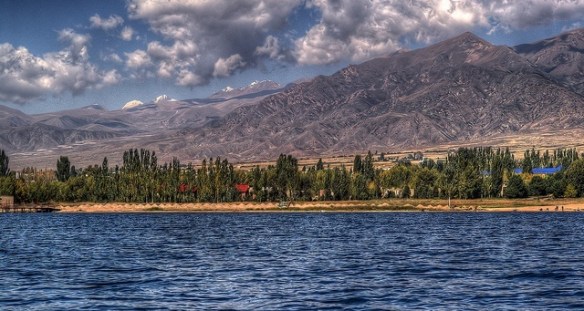 Issy-Kul Lake: Issyk-Kul means “hot lake” translated from Kyrgyz. It is a salty and mineral rich lake that does not freeze even in the coldest of winters. More than a hundred rivers flow into lake yet not one of them flows out. It is the second largest mountain lake in the world, located at an altitude of 1607 meters and at its maximum, a depth of 668 meters. To give you an idea of the scale of the lake, it takes about nine hours to circumnavigate by car. If you take a tour of Issyk Kul, why not stop at Balykchy, Bokonbaevo, Barskon, or Cholpon Ata? Wherever you stop, you can’t fail to notice the stunning backdrop. Issyk Kul is surrounded by the Ala-Too Mountains, part of the Tian Shan range. There are several local legends about how the lake appeared, but we won’t spoil the surprise.
 Ala Archa National Park: Just around half an hour away from Bishkek’s suburbs is a magnificent alpine national park. You can get closer to the mountains that form the backdrop to the city. The highest peak in the national park reaches 4895 meters and the Ala Archa range has more than fifty peaks. It is a favourite local haunt for picnics as well as being popular with tourists looking to do short hikes.
 Burana Tower: Built in the 11th century, the Burana Tower was once part of a flourishing Silk Road city called Balasaghun. Originally the tower was a minaret reaching over 40 meters in height and the earliest of such towers in the whole of Central Asia. Sadly, an earthquake in the 15th century destroyed the top half of the tower. Today it stands just over 20 meters high and you can even climb up it! Near the tower, you can also take a look at the small museum and have a look at some ancient stone carvings known as balbals.
 Song Kul Lake: Song Kol Lake is a vast summer pasture, accessible only from June to September. Nomads graze their animals there as they have been for millennia. It is located at an altitude of 3016 meters, but don’t expect rugged peaks – it actually looks pretty flat. Song Kul is a freshwater lake that stretches for 29 km in length and about 18 km in breadth. Its maximum depth is only about 13 meters. If you head up there, you’ll enjoy sleeping in real yurts and feeling free just like your nomad hosts. Central Asia with yurts
 Tash Rabat: Tash Rabat is a historic stone caravanserai. These were places used by merchants and their caravans on the ancient Silk Road. It is one of the best preserved of such places in Central Asia. You can sleep in yurts nearby or go horse riding. It was originally built as a Nestorian monastery and then turned into a caravanserai.
 Osh: Osh is the oldest city in Kyrgyzstan, celebrating its 3000th anniversary in 2000. It lies in the heart of the fertile Ferghana Valley. The centre of the city is occupied by Sulaiman-Too. This is a sacred mountain that has been continuously worshipped for millennia. You will see women sliding down stones in the belief that this practice will increase their chance of giving birth to healthy children. This is one of those perfect examples of longstanding traditions of the Silk Road, that combine prehistoric, pre-Islamic, Islamic and local beliefs into one holy site. Sulaiman is the local pronunciation of Solomon. It is thought that the throne of Solomon was once located on this mountain; some legends go so far as to say that he was buried there. Another important site in Osh is the 16th-century mosque of Babur, the founder of the Mughal Empire.
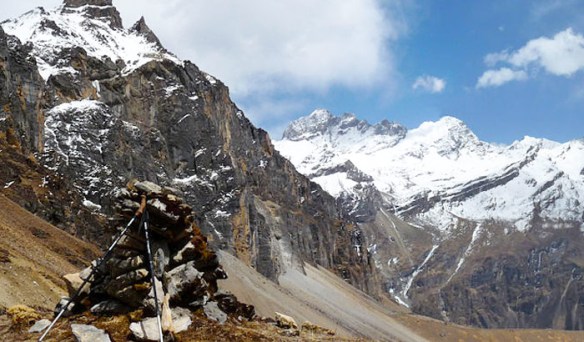
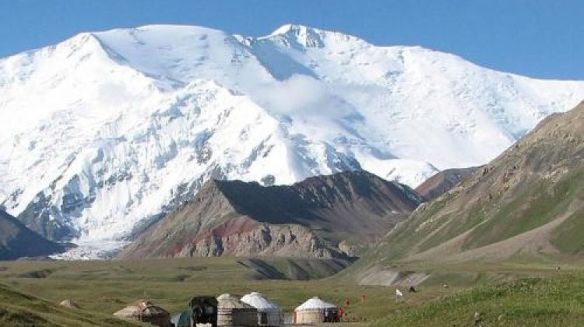 Peak Lenin: Peak Lenin base camp is around one to three hours away from Osh, situated on the border between Kyrgyzstan and Tajikistan. At its highest point, it reaches 7134 meters. It is considered to be one of the easiest ascents to over 7000 meters by climbers. If you cannot get that high it is impressive even to enjoy the view of the peak from the first base camp which can be reached by car. Even in the hottest summers, you can admire the snow-capped peaks of the mountains of the Trans-Alay Range where the Tian Shan & Pamir Mountain systems come together.
 Karakol: Karakol is the administrative centre of the Issyk-Kul region. However although it isn’t located right on the shores of the lake, it’s easy to make day trips to the lake or to the nearby mountains. In the 19th century, it became a strategic point separating the Russian Empire from China and an important Russian military settlement was established there in 1869. It also attracted Chinese Muslims fleeing oppression in China. These two important events of history can be seen in Dungan Mosque and Karakol’s Orthodox Church.
 Djeti Oguz & Altyn Arashan: From Karakol, there are numerous opportunities to go for a hike or go horse riding. Local favourites include the Djety Oguz valley with its red cliff formations and Altyn Arashan that reminds people of Swiss mountain valleys. Djety Oguz means seven bulls. The colourful cliffs are the setting for beautiful and tragic local legends that you can hear during our Kyrgyzstan tour or other Central Asia adventures. Altyn Arashan offers one of the most beautiful Kyrgyz trekking routes and best of all, it’s easy enough that anyone can do it.
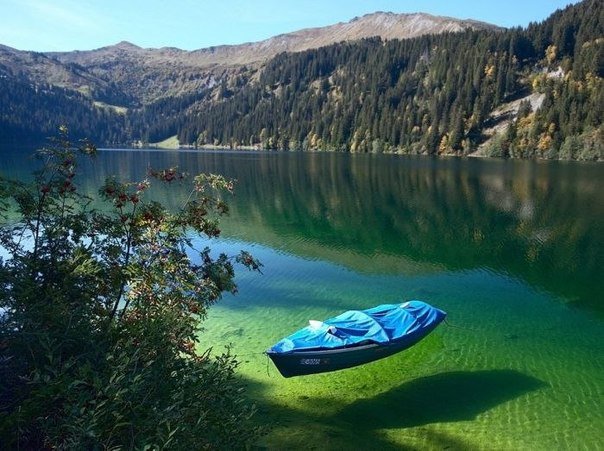 Sary Chelek Biosphere Reserve: Few places hold a candle to the Sary Chelek Biosphere Reserve. This 23.9 sq km piece of wilderness is remote, virginal, and spectacular. Untouched by the rest of the world, Sary Chelek contains 7 pristine alpine lakes, 157 bird species, deer, long-horned mountain goats, porcupines, and wild boar. Sary Chelek is located in the province of Jalal-Abad in between the Chatkal and At Oynok Mountain Ranges.
Writing this post has made me see just how beautiful Kyrgyzstan is. I really want to take a few weeks off and perhaps do some solo travel to this beautiful, but very underrated country. I do want to do this soon, before my friend’s tenure here ends and she goes back home! So are you having a serious case of wanderlust like me?