In My Hands Today…

Hidden Potential: The Science of Achieving Greater Things – Adam M. Grant
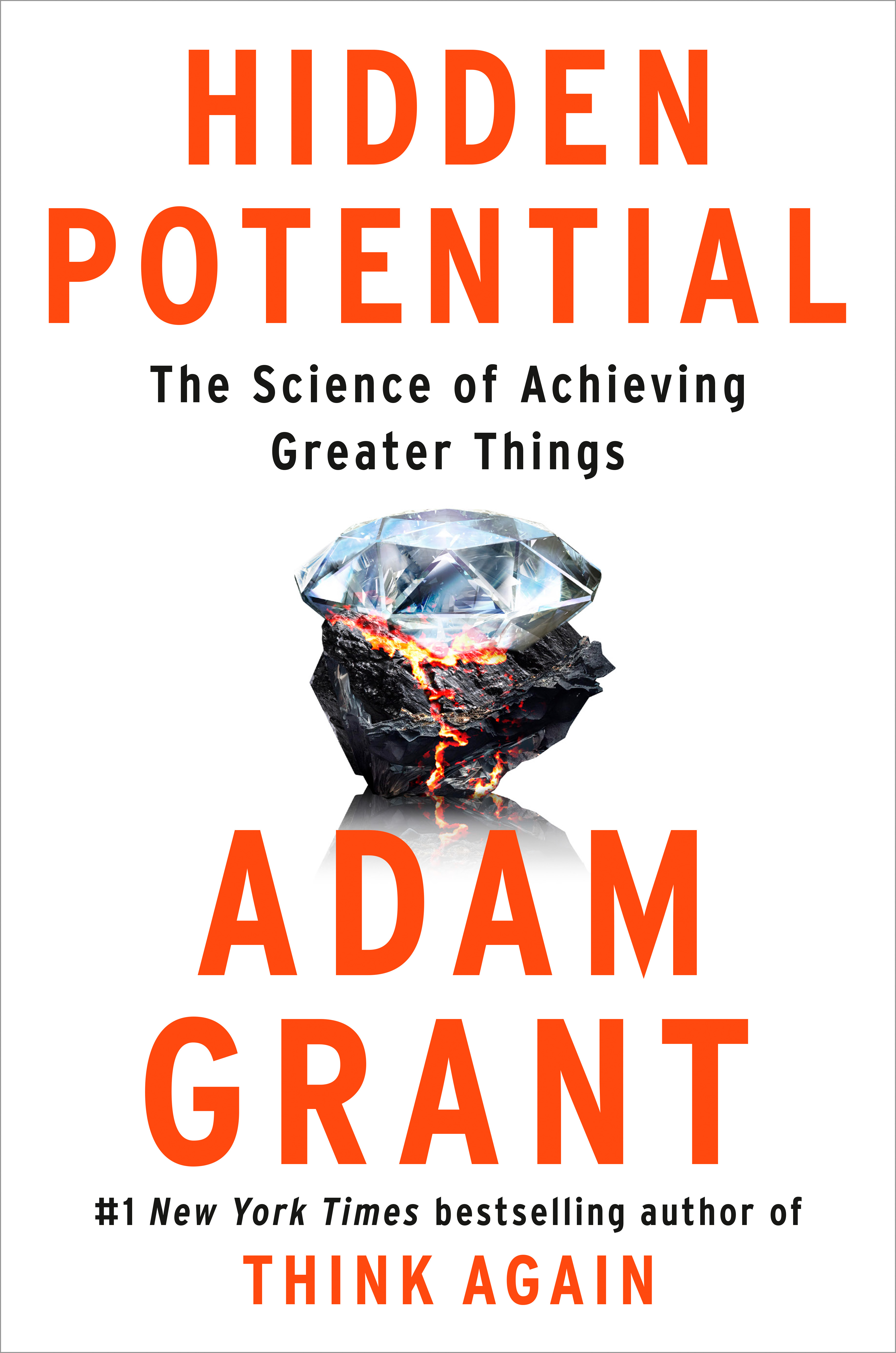
We live in a world that’s obsessed with talent. We celebrate gifted students in school, natural athletes in sports, and child prodigies in music. But admiring people who start out with innate advantages leads us to overlook the distance we ourselves can travel. We underestimate the range of skills that we can learn and how good we can become. We can all improve at improving. And when opportunity doesn’t knock, there are ways to build a door.

Hidden Potential offers a new framework for raising aspirations and exceeding expectations. Adam Grant weaves together groundbreaking evidence, surprising insights, and vivid storytelling that takes us from the classroom to the boardroom, the playground to the Olympics, and underground to outer space. He shows that progress depends less on how hard you work than how well you learn. Growth is not about the genius you possess—it’s about the character you develop. Grant explores how to build the character skills and motivational structures to realize our own potential, and how to design systems that create opportunities for those who have been underrated and overlooked.

Many writers have chronicled the habits of superstars who accomplish great things. This book reveals how anyone can rise to achieve greater things. The true measure of your potential is not the height of the peak you’ve reached, but how far you’ve climbed to get there.
Genres
Nonfiction
Self Help
Psychology
Business
Audiobook
Personal Development
Leadership

In My Hands Today…

Material World: The Six Raw Materials That Shape Modern Civilization – Ed Conway & Edmund Conway

Sand, salt, iron, copper, oil, and lithium. These fundamental materials have created empires, razed civilizations, and fed our ingenuity and greed for thousands of years. Without them, our modern world would not exist, and the battle to control them will determine our future.

The fiber-optic cables that weave the World Wide Web, the copper veins of our electric grids, the silicon chips and lithium batteries that power our phones and though it can feel like we now live in a weightless world of information—what Ed Conway calls “the ethereal world”—our twenty-first-century lives are still very much rooted in the material.

In fact, we dug more stuff out of the earth in 2017 than in all of human history before 1950. For every ton of fossil fuels, we extract six tons of other materials, from sand to stone to wood to metal. And in Material World, Conway embarks on an epic journey across continents, cultures, and epochs to reveal the underpinnings of modern life on Earth—traveling from the sweltering depths of the deepest mine in Europe to spotless silicon chip factories in Taiwan to the eerie green pools where lithium originates.

Material World is a celebration of the humans and the human networks, the miraculous processes and the little-known companies, that combine to turn raw materials into things of wonder. This is the story of human civilization from an entirely new the ground up.

In My Hands Today…

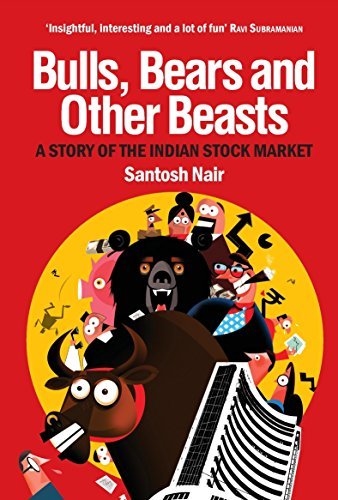
Bulls, Bears and Other Beasts – Santosh Nair

Lalchand Gupta takes you on an exciting journey through Dalal Street in this brief history of the Indian stock market post liberalization.

From tech booms and tax evasion to banks and money laundering; scams and crashes to fixers and investors, Lala has seen it all.

A comprehensive account of the stock market over the last 25 years, it tells you what to watch out for while investing. It also looks at policies that the government needs to revise if the country is to harness domestic capital more effectively.

This is a must-read for all interested in the financial health of the country as well as those who want to know about the sensational events that led up to the far more sterile stock-market operations of the present day.

In My Hands Today…

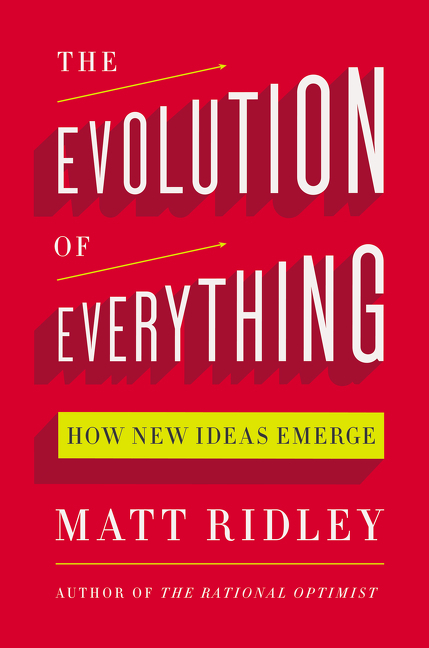
The Evolution of Everything: How New Ideas Emerge – Matt Ridley

The Evolution of Everything is about bottom-up order and its enemy, the top-down twitch—the endless fascination human beings have for design rather than evolution, for direction rather than emergence. Drawing on anecdotes from science, economics, history, politics, and philosophy, Matt Ridley’s wide-ranging, highly opinionated opus demolishes conventional assumptions that major scientific and social imperatives are dictated by those on high, whether in government, business, academia, or morality. On the contrary, our most important achievements develop from the bottom up. Patterns emerge, trends evolve. Just as skeins of geese form Vs in the sky without meaning to, and termites build mud cathedrals without architects, so brains take shape without brain-makers, learning can happen without teaching and morality changes without a plan.

Although we neglect, defy and ignore them, bottom-up trends shape the world. The growth of technology, the sanitation-driven health revolution, the quadrupling of farm yields so that more land can be released for nature—these were largely emergent phenomena, as were the Internet, the mobile phone revolution, and the rise of Asia. Ridley demolishes the arguments for design and effectively makes the case for evolution in the universe, morality, genes, the economy, culture, technology, the mind, personality, population, education, history, government, God, money, and the future.

In My Hands Today…

A Little History of Economics – Niall Kishtainy

What causes poverty? Are economic crises inevitable under capitalism? Is government intervention in an economy a helpful approach or a disastrous idea? The answers to such basic economic questions matter to everyone, yet the unfamiliar jargon and math of economics can seem daunting. This clear, accessible, and even humorous book is ideal for young readers new to economics and for all readers who seek a better understanding of the full sweep of economic history and ideas.

Economic historian Niall Kishtainy organizes short, chronological chapters that center on big ideas and events. He recounts the contributions of key thinkers including Adam Smith, David Ricardo, Karl Marx, John Maynard Keynes, and others, while examining topics ranging from the invention of money and the rise of agrarianism to the Great Depression, entrepreneurship, environmental destruction, inequality, and behavioral economics. The result is a uniquely enjoyable volume that succeeds in illuminating the economic ideas and forces that shape our world.