In My Hands Today…

The PARA Method: Simplify, Organize, and Master Your Digital Life – Tiago Forte

Living a modern life requires juggling a ton of information. But we were never taught how to manage this information effectively so that we can find what we need when we need it. In The PARA Method , Tiago Forte outlines a simple and intuitive four-step system that will help us sort all the information flooding our brains into four major categories—Projects, Areas, Resources, and Archives—allowing us to manage our commitments while achieving our goals and dreams.

  • P rojects are specific, short-term efforts that you are actively working on with a certain goal in mind, such as completing a website or renovating your bathroom.
  • A reas are the larger, ongoing areas of responsibility (health, finances, etc.) that encompass those specific projects.
  • R esources include content on a range of topics you’re interested in or that could be useful for your projects and areas.
  • A rchives include anything from the previous three categories that is now inactive, but you want to save for future reference.

With his easy-to-understand and engaging voice, Forte outlines his best practices and tips on how to successfully implement PARA, along with deep dives on everything from how to adopt habits to stay organized to how to use this system to enhance your focus. The PARA Method can be implemented in just seconds but has the power to transform the trajectory of your work and life using the power of digital organization.

In My Hands Today…

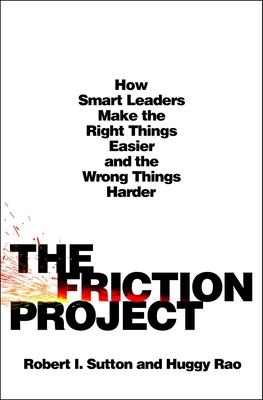
The Friction Project: How Smart Leaders Make the Right Things Easier and the Wrong Things Harder – Robert I. Sutton, Huggy Rao

Every organization is plagued by destructive friction—the forces that make it harder, more complicated, or downright impossible to get anything done. Yet some forms of friction are incredibly useful, and leaders who attempt to improve workplace efficiency often make things even worse. Drawing from seven years of hands-on research, The Friction Project by bestselling authors Robert I. Sutton and Huggy Rao teaches readers how to become “friction fixers,” so that teams and organizations don’t squander the zeal, damage the health, and throttle the creativity and productivity of good people—or burn through cash and other precious resources.

Sutton and Rao kick off the book by unpacking how skilled friction fixers think and act like trustees of others’ time. They provide friction forensics to help readers identify where to avert and repair bad organizational friction and where to maintain and inject good friction. Then their help pyramid shows how friction fixers do their work, which ranges from reframing friction troubles they can’t fix right now so they feel less threatening to designing and repairing organizations. The heart of the book digs into the causes and solutions for five of the most common and damaging friction oblivious leaders, addition sickness, broken connections, jargon monoxide, and fast and frenzied people and teams.

Sound familiar? Sutton and Rao are here to help. They wrap things up with lessons for leading your own friction project, including linking little things to big things; the power of civility, caring, and love for propelling designs and repairs; and embracing the mess that is an inevitable part of the process (while still trying to clean it up).

In My Hands Today…

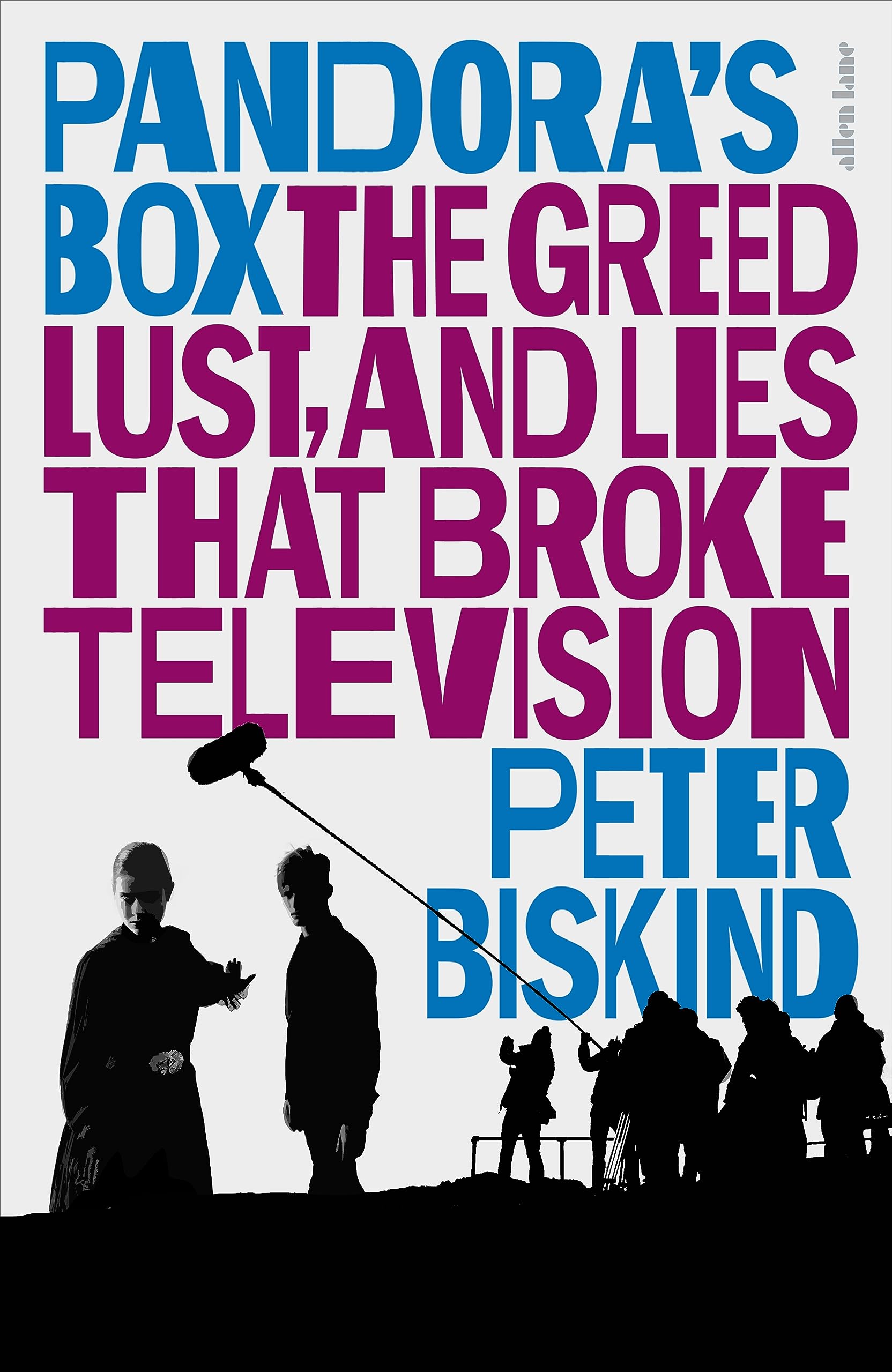
Pandora’s Box: The Greed, Lust, and Lies that Broke Television – Peter Biskind

We are now lucky enough to be living through the era of so-called Peak TV, in which television, in its various formats, has seized the entertainment mantle from movies and dominates our leisure time. How and why this happened is the subject of this book.

Instead of focusing on one service, like HBO, Pandora’s Box asks, “What did HBO do besides give us The Sopranos?” The answer: It gave us a revolution. Biskind bites off a big chunk of entertainment history, following HBO from its birth to maturity, moving on to the basic cablers like FX and AMC, and ending with the streamers and their wars, pitting Netflix against Amazon Prime Video, Max, and the killer pluses—Disney, Apple TV, and Paramount.

Since the creative and business sides of TV are thoroughly entwined, Biskind examines both, and the interplay between them. Through frank and shockingly intimate interviews with creators and executives, Pandora’s Box investigates the dynamic interplay of commerce and art through the lens the game-changing shows they aired—not only old warhorses like The Sopranos, but recent shows like The White Lotus, Succession, and Yellow- (both -stone and -jackets)—as windows into the byzantine practices of the players as they use money and guile to destroy their competitors. With its long view and short takes—riveting snapshots of behind-the-scenes mischief—Pandora’s Box is the only book you’ll need to read to understand what’s on your small screen and how it got there.

In My Hands Today…

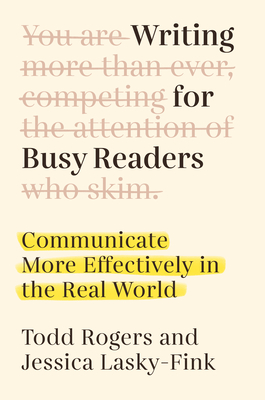
Writing for Busy Readers: Communicate More Effectively in the Real World – Todd Rogers, Jessica Lasky-Fink

Writing well is for school. Writing effectively is for life .

Todd Rogers and Jessica Lasky-Fink offer the most valuable practical writing advice today. Building on their own research in behavioral science, they outline cognitive facts about how people actually read and distill them into six principles that will transform the power of your
Including many real-world examples, a checklist and other tools, this guide will make you a more successful and productive communicator. Rogers and Lasky-Fink bring Strunk and White’s core ideas into the twenty-first century’s attention marketplace.

When the influential guides to writing prose were written, the internet hadn’t been invented. Now, the average American adult is inundated with digital messages each day. With all this correspondence, capturing a busy reader’s attention is more challenging than ever. This is how to do it.

In My Hands Today…

Wiring the Winning Organization: Liberating Our Collective Greatness through Slowification, Simplification, and Amplification – Gene Kim, Steven J. Spear

In this powerful new book, bestselling and award-winning authors Gene Kim and Dr. Steve Spear present a surprisingly simple theory to explain outstanding organizational performance… and show you how to replicate it in your own enterprise.

Each drawing on three decades of research and working with high-performing organizations across almost every industry and phase of value creation, Kim and Spear have come to a surprising winning comes from how leaders deliberately design their management systems around people’s ingenuity and how individuals’ creativity is integrated into a collaborative effort. This liberates the capabilities of the people within the organization, enabling them to continually push the frontiers of performance. These leaders have wired their organizations to win.

This is opposed to leaders who set their focus first on maximizing efficiency and optimizing for functional specialties, relying on planning, scheduling, and expediting, and yet never realizing those goals. Instead, they create high coordination costs and increase the cognitive burden, all of which constrain and sometimes even extinguish people’s ability to contribute. This is how leaders wire an organization for dismal outcomes. These results shouldn’t be surprising.

After all, on an otherwise level playing field, the only source of sustained competitive advantage is how well people’s intellectual capabilities can be engaged. Kim and Spear explain how organizations can move from the danger zone to the winning zone by employing three key slowification, which makes it easier to solve problems; simplification, which makes problems easier to solve; and amplification, which ensures problems are seen and solved.

Using over twenty case studies that span a wide variety of sectors, Kim and Spear present a new theory of performance and management that shows how the decisive factor in high-performing enterprises is organizational wiring that enables innovation, excellence, and greatness to flourish. Wiring the Winning Organization teaches leaders how to move from the danger zone to the winning zone to achieve greater agility, higher quality, faster time to market, greater resilience, and higher employee engagement and profitability.