
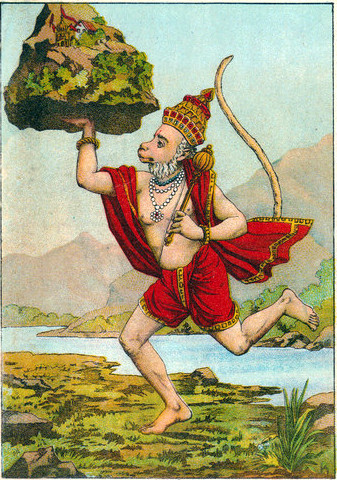
 Tomorrow is Hanuman Jayanthi, the day which is celebrated as the birthday of the Monkey God, Lord Hanuman. The day is observed as per the Hindu calendar and is observed on the full moon (Purnima) or on the 15th day of the Shukla Paksha day of the Hindu month of the Chaitra (March-April) which this year falls on 4th April.
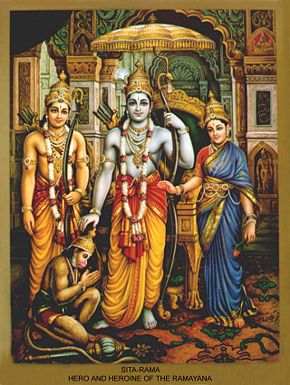
 An ardent devotee of Lord Rama, Lord Hanuman occupies a very important part in the Hindu mythology Ramayana. He is worshipped for his unflinching devotion to Lord Rama and Goddess Sita and is often seen as a symbol of strength, energy and fearlessness. Lord Hanuman is said to be able to assume any form – large or small and can move mountains, fly through the air and seize the clouds.
People worship him as a brahmachari (eternal bachelor) and also the one to turn when assailed by evil spirits. It is the practice to recite the Hanuman Chalisa when scared of anything, as it is said, by the recitation of the Chalisa, you can overcome your fears.
Here’s Hanuman’s birth story, copied from Wikipedia:
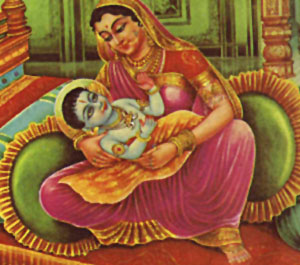
Hanuman was born to the vanaras. His other Anjana was an apsara who was born on earth due to a curse. She was redeemed from this curse on her giving birth to a son.
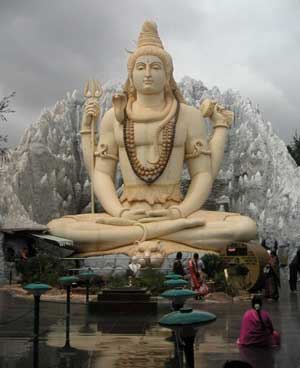
The Valmiki Ramayana states that his father Kesari was the son ofBrihaspati and that Kesari also fought on Rama’s side in the war against Ravana. Anjana and Kesari performed intense prayers to Shiva to get a child. Pleased with their devotion, Shiva granted them the boon they sought. Hanuman, in another interpretation, is the incarnation or reflection of Shiva himself.
Hanuman is often called the son of the deity Vayu; several different traditions account for the Vayu’s role in Hanuman’s birth. One story mentioned in Eknath’s Bhavartha Ramayana (16th century CE) states that when Anjana was worshiping Shiva, the King Dasharatha of Ayodhya was also performing the ritual of Putrakama yagna in order to have children. As a result, he received some sacred pudding (payasam) to be shared by his three wives, leading to the births of Rama, Lakshmana, Bharata, and Shatrughna. By divine ordinance, a kite snatched a fragment of that pudding and dropped it while flying over the forest where Anjana was engaged in worship. Vayu, the Hindu deity of the wind, delivered the falling pudding to the outstretched hands of Anjana, who consumed it. Hanuman was born to her as a result. Another tradition says that Anjana and her husband Kesari prayed Shiva for a child. By Shiva’s direction, Vayu transferred his male energy to Anjana’s womb. Accordingly, Hanuman is identified as the son of the Vayu.
Another story of Hanuman’s origins is derived from the Vishnu Purana and Naradeya Purana. Narada, infatuated with a princess, went to his lord Vishnu, to make him look like Vishnu, so that the princess would garland him at swayamvara(husband-choosing ceremony). He asked for hari mukh (Hari is another name of Vishnu, and mukh means face). Vishnu instead bestowed him with the face of a vanara. Unaware of this, Narada went to the princess, who burst into laughter at the sight of his ape-like face before all the king’s court. Narada, unable to bear the humiliation, cursed Vishnu, that Vishnu would one day be dependent upon a vanara. Vishnu replied that what he had done was for Narada’s own good, as he would have undermined his own powers if he were to enter matrimony. Vishnu also noted that Hari has the dual Sanskrit meaning of vanara. Upon hearing this, Narada repented for cursing his idol. But Vishnu told him not repent as the curse would act as a boon, for it would lead to the birth of Hanuman, an avatar of Shiva, without whose help Rama (Vishnu’s avatar) could not kill Ravana.

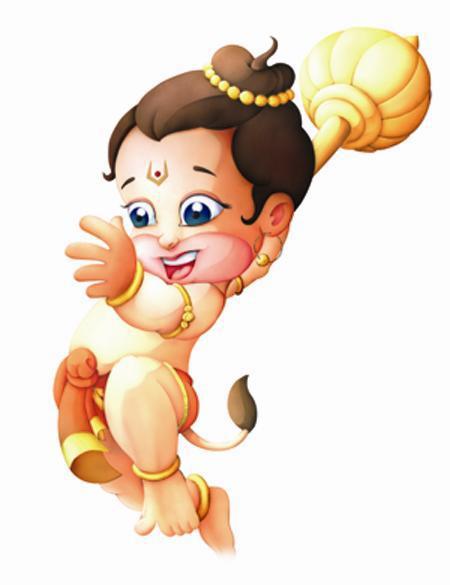
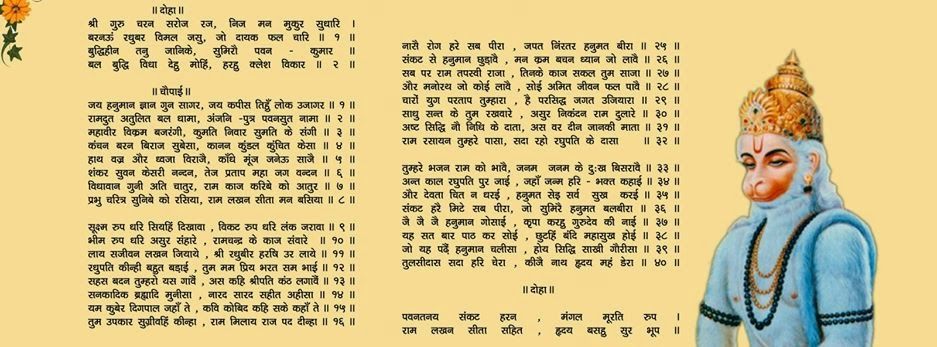 The day is celebrated with people reading and reciting the Hanuman Chalisa and making sweet offerings to Lord Hanuman at home and at the temple. Hanuman is said to be of an orangeish-red colour and this is why every idol will be smeared with a paste of this colour and this paste is usually put on the forehead as a blessing from the Lord.
 Hanuman Jayanti celebration indicates the balanced coexistence of the whole human fraternity with the nature’s incredible creature, Lord Hanuman from Vanara community. People from the Hindu religion worship Lord Hanuman as a divine creature. This celebration has lots of importance to all however Brahmacharis, wrestlers and bodybuilders are specially inclined towards this celebration. There are many names through which Lord Hanuman is famous among his devotees like Bajrangabali, Pavanasuta, Pavankumar, Mahavira, Balibima, Marutsuta, Anjanisut, Sankat Mochan, Anjaneya, Maruti, Rudra and many more.
Hanuman avatar is considered as the 11th Rudra avatar of the Lord Siva with great devotion, strength, knowledge, divine power, bravery, intelligence, spirit for selfless service and etc. He has devoted his life only for his Lord Rama and Mata Sita and never shows his bravery and intelligence without any purpose. The devotees of the Lord Hanuman always pray him for getting blessed with the same for their bright future. He is worshipped in many ways by his devotees; some meditates by repeating his name many times to get power, fame, success and etc in the life whereas some reads the Hanuman Chalisa to get the same.
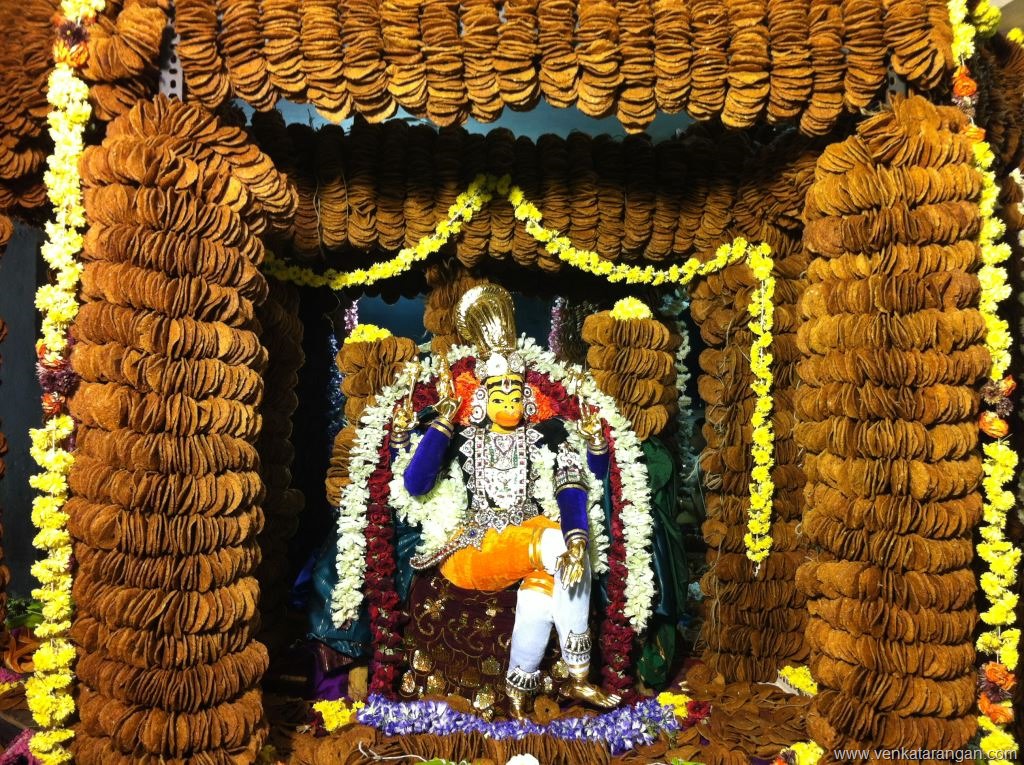 In Tamil homes and temples, in addition to sweet offering, a savory called vadai is made and threaded into a garland, offered to the Lord and then eaten as neividhyam or prasadam.




 Memories and Such