
The Architect’s Apprentice – Elif Shafak
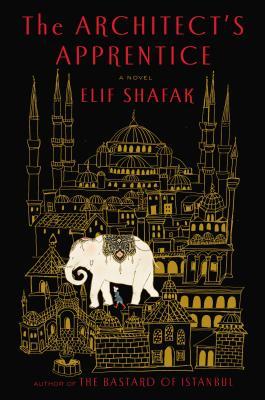 In her latest novel, Turkey’s preeminent female writer spins an epic tale spanning nearly a century in the life of the Ottoman Empire.
In 1540, twelve-year-old Jahan arrives in Istanbul. As an animal tamer in the sultan’s menagerie, he looks after the exceptionally smart elephant Chota and befriends (and falls for) the sultan’s beautiful daughter, Princess Mihrimah. A palace education leads Jahan to Mimar Sinan, the empire’s chief architect, who takes Jahan under his wing as they construct (with Chota’s help) some of the most magnificent buildings in history. Yet even as they build Sinan’s triumphant masterpieces—the incredible Suleymaniye and Selimiye mosques—dangerous undercurrents begin to emerge, with jealousy erupting among Sinan’s four apprentices.
A memorable story of artistic freedom, creativity, and the clash between science and fundamentalism, Shafak’s intricate novel brims with vibrant characters, intriguing adventure, and the lavish backdrop of the Ottoman court, where love and loyalty are no match for raw power.
 In a land where skin colour can determine one’s destiny, fraternal twins Pullamma and Lata are about to embark on a journey that will tear their lives apart. Dark skinned Pullamma dreams of being a wife. With three girls in her family, the sixteen year old is aware there isn’t enough dowry to secure suitable husbands for them all. But a girl can hope. She’s well versed in cooking, pickle making, cow washing — you name it. She’s also obliged her old-fashioned grandmother by not doing well in school. Fair skinned and pretty, her twin sister Lata would rather study medicine than get married. Unable to grasp the depth of Lata’s desire, the twins’ Grandmother formalizes a wedding alliance for the girl. Distraught, Lata rebels, with devastating consequences. As Pullamma helps ready the house for her older sister Malli’s bride viewing, she prays for a positive outcome to the event. What happens next is so inconceivable that it will shape Pullamma’s future in ways she couldn’t have foreseen. Tell A Thousand Lies is a sometimes wry, sometimes sad, but ultimately realistic look at how superstition and the colour of a girl’s skin rules India’s hinterlands.
 In her latest novel, Turkey’s preeminent female writer spins an epic tale spanning nearly a century in the life of the Ottoman Empire.
 The Way Things Were opens with the death of Toby, the Maharaja of Kalasuryaketu, a Sanskritist who has not set foot in India for two decades. It falls to his son, Skanda, to return Toby’s body to his birthplace, “a tin-pot kingdom” not worth “one air-gun salute”, fulfilling Toby’s final wish in returning his ashes to his birthplace.
 The Mahabharata endures as the great epic of India. But while Jaya is the story of the Pandavas, told from the perspective of the victors of Kurukshetra; Ajaya is the narrative of the ‘unconquerable’ Kauravas, who were decimated to the last man.
