Mint Rice

This super easy and yummy rice recipe was lying in my drafts for a longest time. I think I made it around 2 months back and took photos with the intention of blogging about it! Anyways, here it is, better late than never…

Mint Rice

Ingredients:

  • 2 cups Basmati (long grained) rice, soaked for 30 minutes and drained
  • 2 packed cups fresh mint
  • 1 large onion, chopped roughly
  • 4-5 green chillies (depending on the spiciness of the chillies, use more or less)
  • 4 cloves garlic
  • 1 inch piece of ginger
  • 1 cup coriander leaves
  • salt to taste
  • a handful of cashews
  • 1 tsp cumin seeds
  • 2 Bay leaves
  • 1 inch cinnamon stick
  • ¼ tsp cloves
  • 1 tbsp ghee or oil

Method:
In a blender blend together all the following: mint leaves, coriander leaves, garlic, ginger, onion and make it a soft, smooth paste with no lumps.

Next, heat ghee and fry the cashews and keep aside. Leave the leftover ghee in the pan and using that, put the following in the this order: cumin seeds, bay leaves, cinammon, cardamom and saute for around 30 seconds. Then add the mint paste and saute for a minute. Now add the drained rice, add salt to taste and saute till all the grains of rice get coated with the mint paste.

Now transfer this to a rice cooker and add approximately 1.75 cups of water, switch it on and let it cook till done. When the rice is cooked, open and check and add some more water if needed. Leave it closed for a while and then fluff it with a fork.

Sprinkle the cashewnuts just before serving. Serve with a serving of raita.

Minty Benefits

  1. Mint is a very good appetiser and also aids in digestion.
  2. It is also very good for soothing upset  stomachs.
  3. The smell of mint also aids in relieving nausea
  4. Mint is also very good in giving relief to respiratory illnesses, opening up the congestion in the nose and throat etc.
  5. As mint oil is a very good antiseptic, you can use it to get rid of pimples
  6. Last one, promise – Mint is a very good mouth freshener, so after you eat something, if you  pop a few mint leaves of mint in your mouth, it will  leave it smelling fresh and well, minty!
Baby Potatoes in Yoghurt Gravy – Kashmiri Dum Aloo

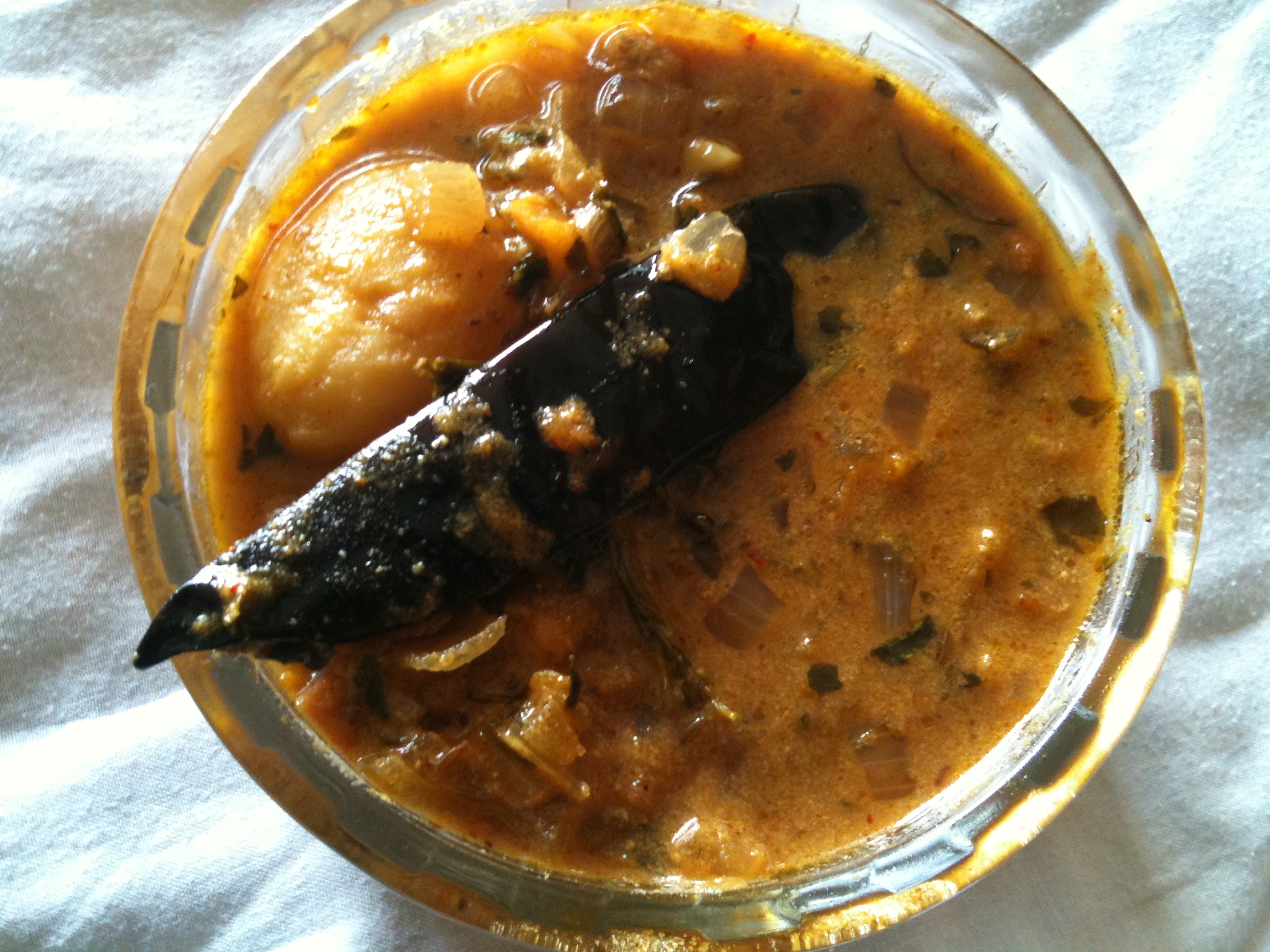
I wanted to make something different for lunch today and searched for an exotic, yet easy to make recipe, something involving potatoes and yoghurt. I came across this yummy recipe by Honey from Honey, what’s cooking. I followed her recipe almost to the tee and so will not show the recipe here, but here’s the link if you want to read/see it. She’s got photos of the entire process so it’s easy even for a non-cook. Here’s how mine came out.

Verdict: It was tasty and not very spicy as I controlled the spice factor in the recipe. BB & S can’t eat spicy food and so all my cooking has to be less spicy than I like. I also made Pudina/Mint rice to go with this and will blog about this soon. I also made it a bit more watery than usual, but this was because I was going to eat this with rice. I would make this more thick if I was to eat it with rotis. This would also be an excellent accompaniment to rotis/chapattis/puris/nans.

In My Hands Today…

The Hundred Foot Journey – Richard C. Morais

The Hundred Foot Journey is the story of Hassan Haji, a boy from Mumbai who embarks, along with his boisterous family, a picaresque journey from London and then across Europe, before they ultimately open a restaurant opposite a famous chef, Madame Mallory, in the remote French village of Lumière. A culinary war ensues, pitting Hassan’s Mumbai-toughened father against the imper \ious Michelin-starred corden bleu, until Madame Mallory realises that Hassan is a cook with a natural talents far superior to her own.

Full of eccentric characters, hilarious cultural mishaps, vivid settings and delicious meals described in rich, sensuous detail, Hassan’s charming account lays bare the inner workings of the elite world of French haute cuisine, and provides us with an affirming and poignant coming-of-age tale

Chow Chow (aka Chayote) Kootu

A kootu is another traditional South Indian food item. Kootus are generally vegetables mixed with a lentil or dal (usually moong, but can be others also) with a coconut/chilli gravy all mixed together. This is another example of Indian meals being complete meals as this kootu will have proteins from the lentils, plus fibre from the vegetables. This is usually eaten with a carbohydrate like rice or roti and you have all the important parts of a meal together.

Today’s recipe is Chayote or Chow Chow Kootu

Chayote is an edible plant belonging to the gourd family, being roughly pear-shaped and light green in colour. The skin is not used in Indian cooking and the flesh has a bland taste. This means it takes on any flavouring that is added to it. The seeds are generally not used in cooking.

Chow Chow Kootu

Ingredients:

  • 3 Chayotes (peeled, seeds removed and diced)
  • ½ cup Moong Dal
  • 3 tbsps Channa Dal
  • ½ tsp turmeric powder
  • salt to taste
  • ½ cup freshly grated cocounut (you can use frozen coconut if you don’t have access to fresh coconut. I have used frozen coconut in this recipe)
  • 4-5 fresh green chillies (this is what I used, but please adjust according to the intensity of the chillies and your spice tolerance level)
  • ½ tsp cumin seeds
  • ¼ tsp mustard seeds
  • 1 tsp oil
  • ¼ tsp urad dal
  • A small sprig of curry leaves
  • A pinch of asafetida

Method:

In a pressure cooker, cook the moong dal and 2 tbsps of the chana dal with ¼ tsp of turmeric powder. While the dals are cooking, peel the chow chow, remove the seeds and chop into small, bite-sized cubes. Cook the chow chow in a pan with very little water, ¼ tsp of turmeric powder and some salt.

In a mixer, add the coconut, cumin seeds and chillies and grind it to a fine paste without adding too much water. Some people prefer to add yoghurt here, but I don’t, preferiing to add water to provide the moisture to grind it.

Once the Chayote is cooked but firm, add the dal to it along with the coconut mixture. Adjust the salt and let it boil for a while, around 5-7 minutes. Then turn off the gas and start the tempering to finish the dish.

In a smaller skillet, pour 1 tsp oil oil and wait for it to heat up. Once heated up, put the mustard seeds and wait for it to pop. Once it pops, add the urad dal, curry leaves and asafetida and lightly stir. When the urad dal starts to brown remove from flame and add it to the kootu. Mix well and serve with rice or rotis.

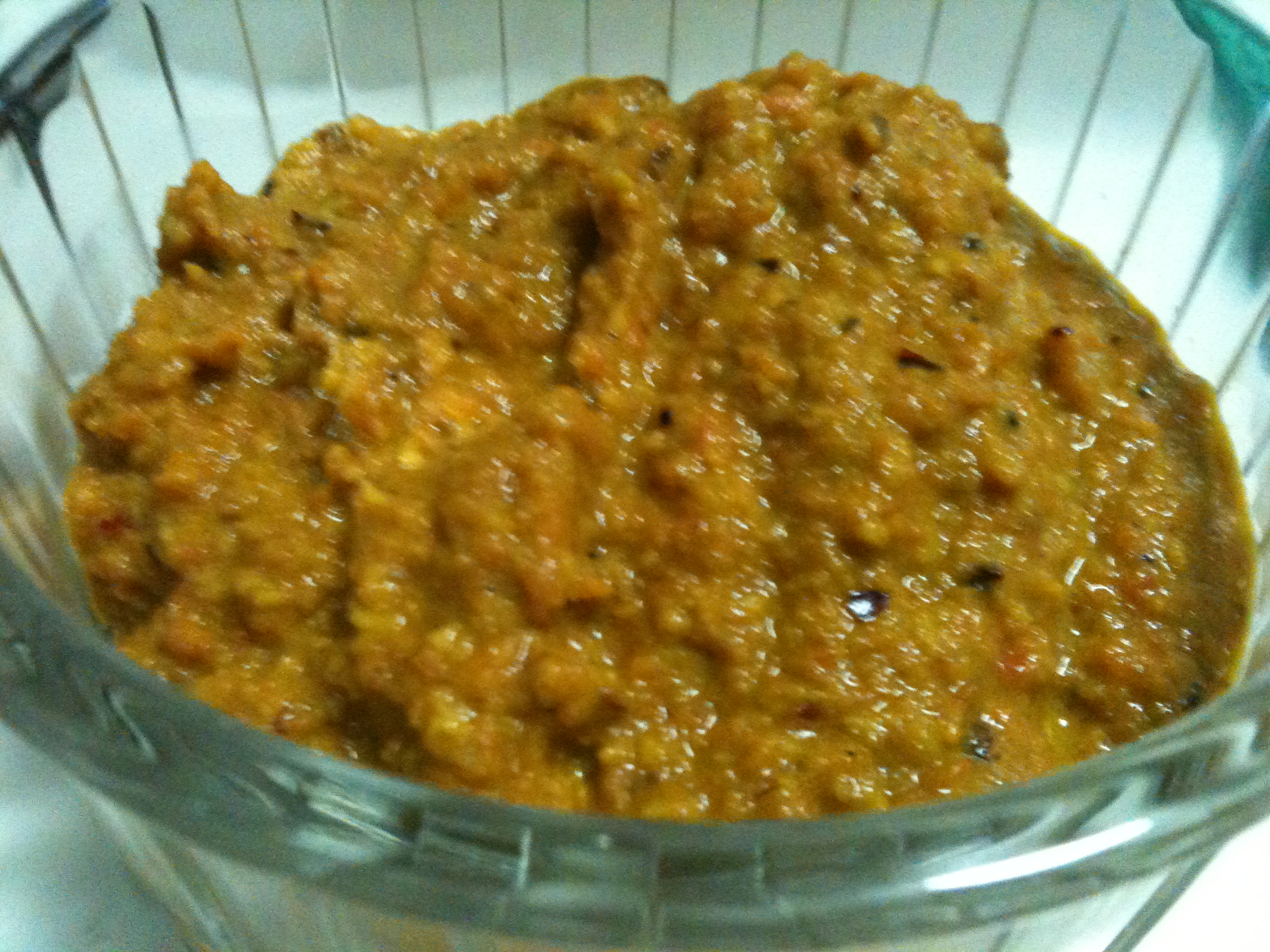
Carrot Chutney/Thuvaiyal

My definition of a Thuvaiyal is a chutney to which coconut has been added. A chutney is a mixture of vegetables and spices. A thuvaiyal, on the other hand, has in addition to the chutney ingredients, coconut to give it some body.

I had some carrots which were slightly bitter to taste. I didn’t know what to do with them, then remembered this thuvaiyal that my mom used to make. This thuvaiyal  can be eaten with idli/dosa/bread or even mixed with rice. My mom used to make thuvaiyals to be eaten with rice when she didn’t want to cook much that day.

Carrot Thuvaiyal

Ingredients:

  • 1 cup chopped carrots
  • 1/2 cup grated coconut
  • 1 tsp mustard seeds
  • 4-5 dried red chillies
  • 1 tsp urad dal
  • a pinch of asafoetida
  • a small lime-sized ball of tamarind
  • 1 tsp oil
  • Salt to taste
Method:
Heat oil in a pan and put in the mustard seeds. When they pop, add the urad dal, asafoetida and red chillies. Stir for a few seconds and then add the carrots and tamarind. Fry for a while till the carrots a bit soft and the raw smell goes away. You do not need to cook the carrots, but they do need to lose the raw hardness. When the carrots soften, remove from the fire and let it cool.
When the carrots mixture are cool, blend it in a mixer with coconut adding water if needed. Since my carrots were a bit bitter, I added some jaggary to this, but if you have sweet carrots, you can omit this. Once the carrot-coconut mixture is finely ground, add salt to taste and transfer to a serving bowl. This can be eaten mixed with rice when you don’t want to cook or eaten with idli, dosa or even with bread. This keeps for upto a week in the fridge.