

India has so many festivals that any attempt to neatly list them feels foolish almost immediately. Just when we think we know the major ones, another festival appears from another region, another community, another temple town, another harvest cycle, another riverbank, another story. Some are celebrated by millions in streets bursting with colour, sound, lights, music, food, and crowds. Others unfold quietly in homes, courtyards, kitchens, temple corridors, village squares, and agraharams, known deeply by those who belong to them and barely noticed by the rest of the world.
This difference has always fascinated me. Why do some festivals become famous while others remain invisible? Why do some become tourist attractions, public holidays, mall decorations, school assemblies, and Instagram reels, while others remain tucked away in the memory of a community? Who decides what becomes heritage and what remains “local”? Who gets seen, and who keeps celebrating even when no one is watching?
At first, the answer seems simple. Some festivals are famous because they are large. Diwali, Holi, Christmas, Chinese New Year, Durga Puja, Ganesh Chaturthi, Pongal, Navaratri, and Hari Raya all have scale, visibility, and public recognition. They spill into streets, schools, offices, shops, and calendars. They come with colour, food, clothes, lights, music, greetings, and, increasingly, shopping discounts. They are hard to miss.
But that is only part of the story.
A festival becomes famous not only because it is meaningful but also because it is visible. And visibility has its own logic. It favours the spectacular, the photogenic, the easily explained, the publicly performed, the commercially useful, and the politically or culturally dominant. A festival that can be photographed well has an advantage. A festival that produces colour, crowds, and dramatic visuals travels faster than one built around quiet prayer, lamps, food, rivers, ancestors, or a small family gathering.

This does not mean famous festivals are shallow. Far from it. Many of them are deeply meaningful when celebrated within families and communities. Diwali at home, for instance, is not just lights and shopping. It is cleaning, preparing, remembering, praying, wearing new clothes, eating familiar foods, and feeling that the year has turned in some inner way. Holi, at its best, is not just colour thrown in the air for photographs. It is play, spring, release, community, and a temporary loosening of social formality. Navaratri is not merely about outfits, garba reels, and themed décor. It is about feminine divinity, learning, music, community, and, in many homes, the careful setting up of the golu.
Yet once a festival becomes famous, something happens to it. It begins to serve many audiences. The community that celebrates it remains one audience, but tourists, media, brands, governments, and social media platforms become audiences too. The festival is no longer only lived, it is also displayed.
That is where the tension begins. Growing up in Mumbai, I saw festivals at many levels. Some belonged to the streets. Ganesh Chaturthi, for instance, was public, loud, elaborate, and impossible to ignore. Pandals appeared. Processions moved through the city. Music, devotion, traffic, crowds, and community life all merged into one unmistakable season. Diwali too belonged both to homes and to the city. The lights, firecrackers, sweets, visits, and new clothes made it feel expansive.
But other festivals belonged mostly inside homes, kitchens, and puja rooms. In my Tamil Brahmin family, Navaratri was important, especially Saraswati Pooja and Vijaya Dashami. Avani Avittam was significant in the community, though the rest of the city might have been far more aware of Raksha Bandhan on the same day or around the same time. The star birthday mattered. Temple utsavams mattered. The rituals of the thread ceremony mattered. In agraharams, many of these festivals would have had a public rhythm. In a city like Mumbai, they often became quieter, held within families and community networks.
This taught me something important. Even within “Indian festivals,” visibility is unequal. Some regions, languages, and communities dominate the public imagination. Others remain footnotes, even when their practices are old, rich, and meaningful. South Indian festivals, for instance, are often less visible in mainstream Indian and global narratives than North Indian ones. The idea of “Indian culture” is too often presented through a narrow lens: Hindi-speaking, North Indian, Bollywood-adjacent, visually familiar, and easy to package.

This is not necessarily done with malice. Sometimes it is simply the result of media habits, language dominance, population, politics, and market logic. English-language media also play a role. Festivals whose stories are told in English, Hindi, or through national media travel further. Festivals whose meanings live in regional languages, oral traditions, temple lore, folk memory, or community practice often remain less visible.
And so Karthigai Deepam, Aadi Perukku, Varalakshmi Vratam, Avani Avittam, and countless temple utsavams may be deeply meaningful to those who celebrate them but remain largely unknown outside their communities. Beyond my own culture, there are festivals like Theyyam, Bastar Dussehra, Medaram Jatara, Chemrey Wangchok, local harvest festivals, village rituals, and community-specific observances that deserve far more curiosity and respect than they usually receive.
Yet invisibility is not always the same as absence. Some festivals are invisible to outsiders but deeply alive within the community. They do not need television coverage to exist. They do not need tourists to validate them. They do not need an official hashtag. They survive because people continue to wake up early, clean, cook, pray, gather, sing, decorate, remember, teach, and repeat. Their power lies not in spectacle, but in continuity.
There is something beautiful about that. At the same time, invisibility has a cost. When festivals stay invisible, they can lose documentation. Younger generations may not understand them. Cultural pride can fade. Historical memory can weaken. Artisans, performers, priests, cooks, musicians, and local communities may not receive recognition. When practices are not written about, photographed respectfully, recorded, explained, and passed on, they become vulnerable.
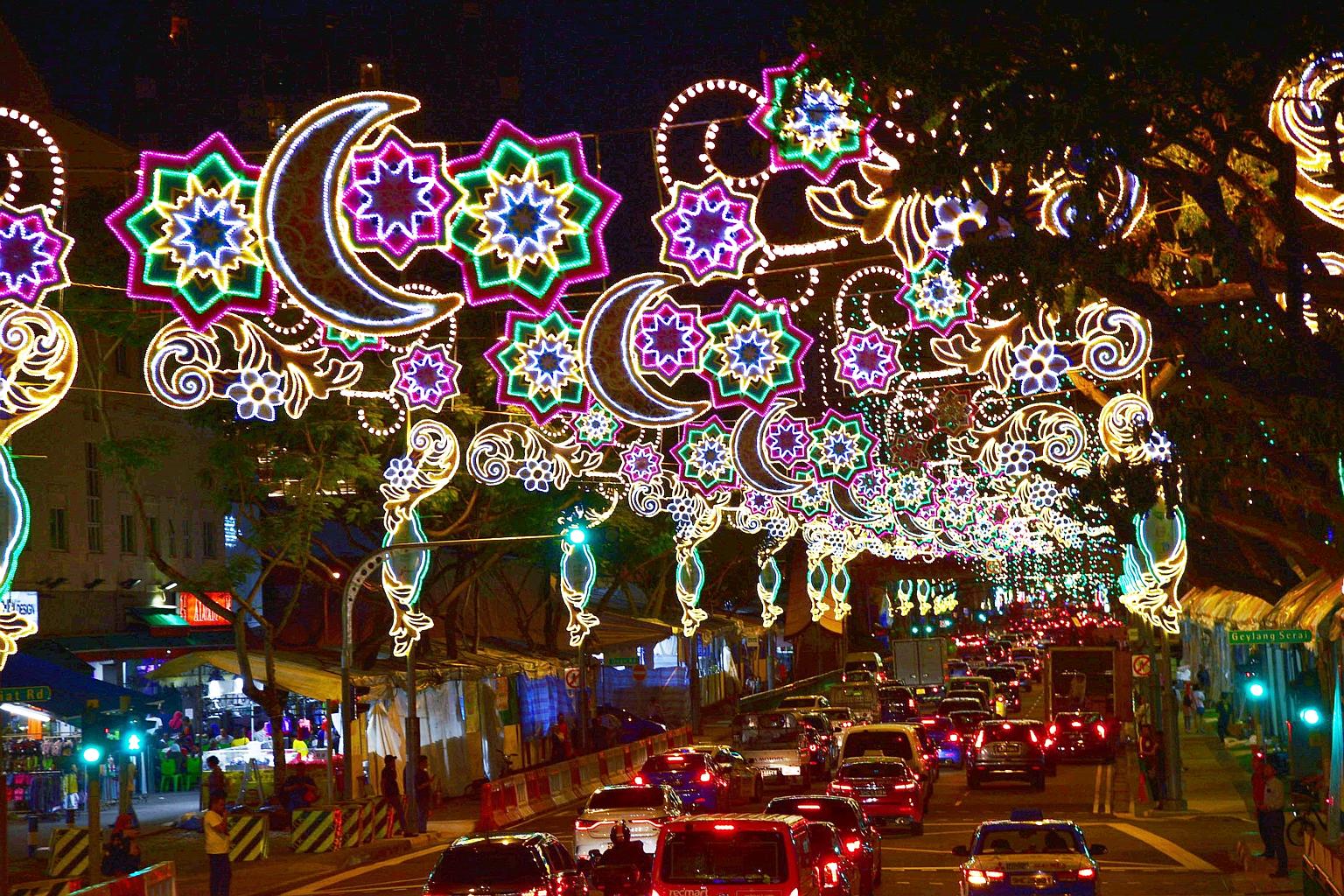
This is especially true in the diaspora. When one lives away from India, festivals do not simply happen around us in the same way. We have to recreate them. We have to remember dates, gather ingredients, explain meanings, adapt rituals, and decide what matters enough to continue. In Singapore, the larger ethnic festivals are visible: Chinese New Year, Hari Raya, Deepavali, and Christmas. There are light-ups, mall decorations, school celebrations, public holidays, and community events. Singapore tries, within its multicultural framework, to give visibility to major festivals across communities. But with so many communities in the country, equal visibility is nearly impossible.

Some festivals become decorative rather than deeply understood. Chinese New Year becomes red packets, pineapple tarts, reunion dinners, and lion dances. Hari Raya becomes lights, outfits, and visiting. Deepavali becomes Little India’s lights, sweets, and lamps. Christmas becomes Orchard Road decorations and shopping. These are not wrong, but they are incomplete. Public visibility often simplifies.
Public holidays also matter. A festival that receives a public holiday enters the national consciousness. People may not understand it, but they know it exists. It affects school, work, transport, shopping, and travel. A festival without a public holiday remains much easier to ignore. In that sense, the calendar itself decides whose culture matters visibly. It does not decide meaning, but it certainly shapes awareness.
Scale matters too. Large festivals demand attention. Holi has colour. Diwali has lamps. Ganesh Chaturthi has processions. Durga Puja has pandals. Thaipusam has kavadi and visible acts of devotion. Chinese New Year has red, food, lion dances, and family reunion rituals. These festivals occupy space. They create images. They produce sound. They are easy to photograph, broadcast, and remember.
But what happens to quieter festivals? Those centred on a lamp lit at dusk, a river honoured at a particular season, a special dish made once a year, a thread changed, a book placed before the goddess, a small group of women gathering for a vratam, or a temple procession through a street known mainly to residents?
They remain in the margins, not because they are less important, but because they are less visible.
Social media has intensified this imbalance. “Seen” increasingly means “photographed.” A festival that photographs well becomes more shareable. A festival that produces dramatic images becomes more likely to go viral. Colour, costume, symmetry, crowds, lights, fire, music, and movement all help. Quiet rituals are disadvantaged. A simple lamp, a whispered prayer, a homemade sweet, or an elder telling a story does not compete easily with drone shots of thousands gathered in celebration.
This does not mean we should not photograph festivals. Photography can preserve, educate, and celebrate. But there is a difference between seeing and consuming. Respectful curiosity asks questions. It reads beforehand. It attends with humility. It avoids photographing certain rituals if they are private, sacred, or sensitive. It supports local artisans. It listens to the people to whom the festival belongs. It does not reduce everything to content.
Too often, when outsiders attend festivals, the camera arrives before the understanding. The festival becomes a backdrop. Participants become subjects. Devotion becomes spectacle. Culture becomes aesthetic.
Tourism plays a similar double role. It can help preserve festivals by bringing funding, visibility, infrastructure, and recognition. A festival that becomes a “must-see event” may gain protection and economic support. Local performers, artisans, guides, cooks, and communities may benefit. But tourism can also change the festival itself. Once an event is packaged for visitors, it may begin to orient itself towards what tourists expect to see, rather than what the festival originally meant.
I have thought about this while writing about festivals such as Hampi Utsav and Konark Dance Festival. These events are beautiful, and the settings are extraordinary. But when a festival is staged for an audience, especially an outside audience, the balance shifts. The question becomes, is this still primarily a community practice, or has it become a cultural performance? The answer is not always either-or. It can be both. But the tension is real.
The same applies to class. This is an angle we do not always think about, but we should. Some festivals are easier for middle-class and upper-middle-class people to package beautifully. Curated décor, coordinated clothes, catered food, professional photography, travel packages, and social media-friendly spaces all make certain celebrations more visible. A family with financial comfort can celebrate multiple festivals with abundance. A poorer or lower-middle-class family may save all year to celebrate one.

Elite cultural festivals often receive more attention than folk, village, tribal, or working-class festivals. The former are easier to sponsor, brand, and attend. The latter may be older, more rooted, and more community-driven, but they are not always given the same respect. The danger is that we begin to mistake polish for importance.
Religion and politics also shape visibility. Festivals that align with dominant religious or political narratives often gain prominence. Minority festivals, especially in places where minorities are numerically small, can remain invisible because they do not fit the mainstream story. This does not need to be handled loudly to be acknowledged. Culture is never separate from power. What is celebrated publicly, funded, televised, or declared significant is rarely neutral.
And then there is gender. Many festivals remain invisible because women carry them. Home-based festivals are kept alive by women who remember the dates, clean the house, prepare the offerings, cook the food, decorate the space, invite people, dress the children, teach the stories, and absorb the pressure of “doing it properly.” These festivals happen inside homes, and because women’s work inside homes is often undervalued, the festivals themselves can seem less visible.
Take the golu during Navaratri. To an outsider, it may seem like a decorative display of dolls. But anyone who has grown up with it knows it is much more. It is memory, creativity, devotion, storytelling, community, feminine divinity, learning, music, visits, sundal, and the careful annual act of bringing something out of storage and giving it life again. Saraswati Pooja is not simply placing books before the goddess. It is a reverence for learning. Vijaya Dashami is not only an auspicious day. It is a reminder that beginnings matter.

Karthigai Deepam is another festival, I wish more people understood. It is not just about lighting lamps. It is about light, guidance, memory, and the small but profound act of placing brightness at the threshold. The lamp is both symbolic and practical. It welcomes, protects, and shows the way. In an age where everything must be large to matter, a row of small lamps insists that quiet light is still light.
Even the Hungry Ghost Festival in Singapore deserves a deeper understanding. To the unfamiliar eye, it may appear only as offerings, incense, and performances in neighbourhood spaces. But beneath that is a worldview that acknowledges ancestors, unseen presences, obligations across worlds, and the idea that the living and the dead remain connected through care. Whether one believes in the theology or not, the emotional structure is powerful.
Food is one of the easiest ways festivals travel across communities. Mooncakes, modaks, murukku, pineapple tarts, ketupat, biryani, pongal, hot cross buns, turkey, bak chang, sweets, savouries, and festive meals often introduce people to celebrations before they understand the stories behind them. Food opens the door. Explanation can follow.

From my own community, Adhirasam deserves more visibility. It is not as instantly famous as modak or murukku, but it carries its own deep festive association. Like many traditional foods, it is labour-intensive, memory-rich, and often made by women whose skill is admired in the moment but not always documented. Recipes, too, are cultural archives. When festival food disappears, it is not only the taste that is lost, a whole set of gestures disappears with it.
Famous festivals also face another problem: environmental harm. Visibility can bring scale, and scale can bring waste. Firecrackers, plastic decorations, food waste, water pollution, crowding, noise, tourism pressure, and over-consumption can all distort the original spirit of celebration. A festival meant to honour light, abundance, nature, devotion, or community can become an exercise in excess. This does not mean the festival itself is the problem. The problem is how we celebrate when spectacle becomes more important than sensitivity.
So what do we lose when festivals become famous? We can lose intimacy. We can lose the original meaning. We can lose local control. We can lose spiritual depth. We can lose environmental sensitivity. We can lose the difference between participant and spectator. A festival that once belonged to a community can become an event managed for outsiders.
And what do we lose when festivals stay invisible? We lose documentation. We lose the younger generations’ interest. We lose cultural pride. We lose historical memory. We lose recognition for the many people who make festivals happen: artisans, performers, priests, cooks, musicians, flower sellers, potters, weavers, storytellers, and families who keep showing up year after year.
This is the paradox. Fame can distort, and invisibility can erase. Perhaps the answer is not to make every festival famous. Not everything needs to become a tourism product or Instagram moment. Some things deserve to remain intimate. But invisible should not mean ignored. “Local” should not mean “lesser.” Quiet should not mean unimportant.
We need a better way of seeing. We need to approach festivals with curiosity, not consumption. To ask not only “What can I photograph?” but “What does this mean?” To recognise that a small ritual in a kitchen may carry as much cultural weight as a grand procession. To understand that a festival celebrated by a few thousand people in a village may hold centuries of memory. To accept that what is famous is not always what is deepest, and what is invisible is not always fading.

Personally, I enjoy both. I love the energy of big public festivals. As a traveller, I am drawn to spectacle. There is something unforgettable about colour, music, movement, and a community celebrating in full public view. But as a participant, I often return to quieter meanings. The lamp, the food, the prayer, the arrangement of books, the visit, and the story told again. The small domestic act that says we are still here.
For younger generations, this matters. I do worry that festivals may become only holidays, clothes, food, photos, and social media posts. Those are not unimportant, but they are not enough. I want BB, GG, and future generations to understand the beauty of festivals, irrespective of where they come from. Festivals are anchors. They root us in time, place, community, and memory. They remind us that life is not only work, school, bills, and deadlines. There are seasons to mark, people to remember, gods to thank, food to share, stories to retell, and lights to kindle.
They do not need to follow every ritual. That is not the point. But I hope they understand the meaning before choosing what to keep and what to let go. Because when we only celebrate what is visible, we lose what lives inside us. We lose the small lamps that do not make the news. The recipes that are not written down, the women who remember the dates, the local songs sung in languages the mainstream does not understand, the village procession that continues without cameras, the temple festival known only to those who return each year. The quiet home ritual that has no sponsor, no stage, no media coverage, and no need for applause.
Famous festivals deserve wonder. Invisible ones deserve attention.
Perhaps the next time we see a festival, whether in a crowded street, a decorated mall, a village square, a temple courtyard, a neighbour’s home, or our own kitchen, we can pause before reducing it to what is visible. We can ask what it carries. Who keeps it alive? What has been simplified? What has been forgotten? What remains sacred? What has changed? What still matters?
And maybe somewhere, in a home that the world will never photograph, a lamp will be lit. A sweet will be made. A story will be told. A child will ask why. An elder will answer as best as they can. The festival will continue, quietly and stubbornly, not because it is famous, but because it is loved. That, too, is heritage.

