In My Hands Today…

Bottoms Up and the Devil Laughs: A Journey Through the Deep State – Kerry Howley
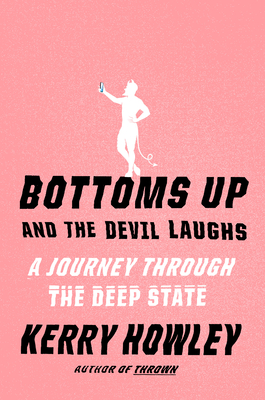
Who are you? You are data about data. You are a map of connections–a culmination of everything you have ever posted, searched, emailed, liked, and followed. In this groundbreaking work of narrative nonfiction, Kerry Howley investigates the curious implications of living in the age of the indelible. Bottoms Up and the Devil Laughs tells the true story of intelligence specialist Reality Winner, a lone young woman who stuffs a state secret under her skirt and trusts the wrong people to help. After printing five pages of dangerous information she was never supposed to see, Winner finds herself at the mercy of forces more invasive than she could have possibly imagined.

Following Winner’s unlikely journey from rural Texas to a federal courtroom, Howley maps a hidden world, drawing in John Walker Lindh, Lady Gaga, Edward Snowden, a rescue dog named Outlaw Babyface Nelson, and a mother who will do whatever it takes to get her daughter out of jail. Howley’s subjects face a challenge new to history: they are imprisoned by their past selves, trapped for as long as the Internet endures. A soap opera set in the deep state, Bottoms Up and the Devil Laughs is a free fall into a world where everything is recorded and nothing is sacred, from a singular writer unafraid to ask essential questions about the strangeness of modern life.

In My Hands Today…

Some People Need Killing: A Memoir of Murder in My Country – Patricia Evangelista

My job is to go to places where people die. I pack my bags, talk to the survivors, write my stories, then go home to wait for the next catastrophe. I don’t wait very long.”

Journalist Patricia Evangelista came of age in the aftermath of a street revolution that forged a new future for the Philippines. Three decades later, in the face of mounting inequality, the nation discovered the fragility of its democratic institutions under the regime of strongman Rodrigo Duterte.

Some People Need Killing is Evangelista’s meticulously reported and deeply human chronicle of the Philippines’ drug war. For six years, Evangelista chronicled the killings carried out by police and vigilantes in the name of Duterte’s war on drugs—a war that has led to the slaughter of thousands—immersing herself in the world of killers and survivors and capturing the atmosphere of fear created when an elected president decides that some lives are worth less than others.

The book takes its title from a vigilante whose words seemed to reflect the psychological accommodation that most of the country had “I’m really not a bad guy,” he said. “I’m not all bad. Some people need killing.”

In My Hands Today…

Cobalt Red: How the Blood of the Congo Powers Our Lives – Siddharth Kara

Cobalt Red is the searing, first-ever exposé of the immense toll taken on the people and environment of the Democratic Republic of the Congo by cobalt mining, as told through the testimonies of the Congolese people themselves. Activist and researcher Siddharth Kara has traveled deep into cobalt territory to document the testimonies of the people living, working, and dying for cobalt. To uncover the truth about brutal mining practices, Kara investigated militia-controlled mining areas, traced the supply chain of child-mined cobalt from toxic pit to consumer-facing tech giants, and gathered shocking testimonies of people who endure immense suffering and even die mining cobalt.

Cobalt is an essential component to every lithium-ion rechargeable battery made today, the batteries that power our smartphones, tablets, laptops, and electric vehicles. Roughly 75 percent of the world’s supply of cobalt is mined in the Congo, often by peasants and children in sub-human conditions. Billions of people in the world cannot conduct their daily lives without participating in a human rights and environmental catastrophe in the Congo. In this stark and crucial book, Kara argues that we must all care about what is happening in the Congo ― because we are all implicated.

In My Hands Today…

Eve: How the Female Body Drove 200 Million Years of Human Evolution – Cat Bohannon

How did the female body drive 200 million years of human evolution?

  • Why do women live longer than men?
  • Why are women more likely to get Alzheimer’s?
  • Why do girls score better at every academic subject than boys until puberty, when suddenly their scores plummet?
  • Is sexism useful for evolution?
  • And why, seriously why, do women have to sweat through our sheets every night when we hit menopause?

These questions are producing some truly exciting science—and in Eve, with boundless curiosity and sharp wit, Cat Bohannon covers the past 200 million years to explain the specific science behind the development of the female sex: “We need a kind of user’s manual for the female mammal. A no-nonsense, hard-hitting, seriously researched (but readable) account of what we are. How female bodies evolved, how they work, what it really means to biologically be a woman. Something that would rewrite the story of womanhood. This book is that story. We have to put the female body in the picture. If we don’t, it’s not just feminism that’s compromised. Modern medicine, neurobiology, paleoanthropology, even evolutionary biology all take a hit when we ignore the fact that half of us have breasts. So it’s time we talk about breasts. Breasts, and blood, and fat, and vaginas, and wombs—all of it. How they came to be and how we live with them now, no matter how weird or hilarious the truth is.”

Eve is not only a sweeping revision of human history, it’s an urgent and necessary corrective for a world that has focused primarily on the male body for far too long. Picking up where Sapiens left off, Eve will completely change what you think you know about evolution and why Homo sapiens has become such a successful and dominant species.

In My Hands Today…

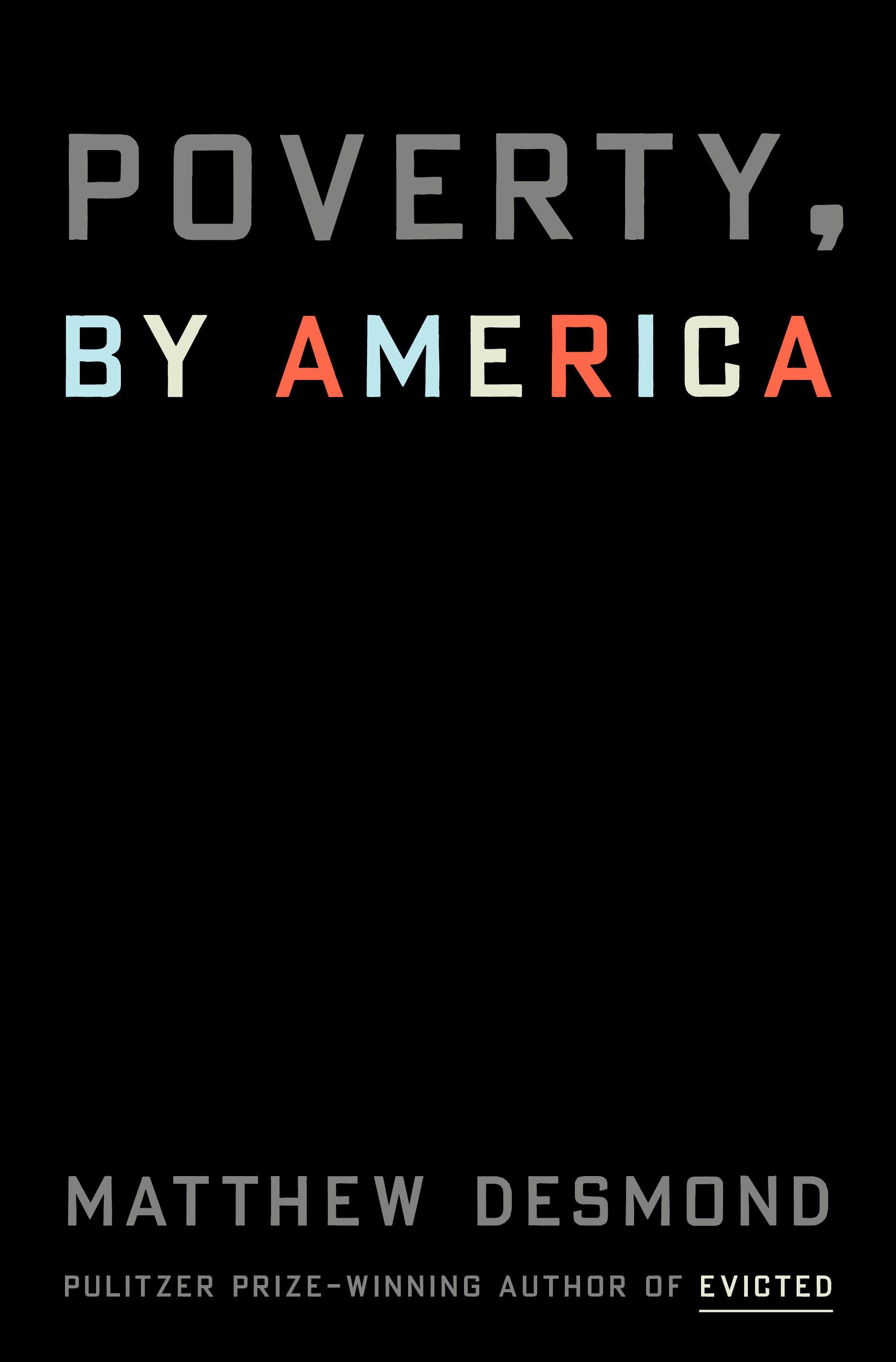
Poverty, by America – Matthew Desmond

The United States, the richest country on earth, has more poverty than any other advanced democracy. Why? Why does this land of plenty allow one in every eight of its children to go without basic necessities, permit scores of its citizens to live and die on the streets, and authorize its corporations to pay poverty wages?

In this landmark book, acclaimed sociologist Matthew Desmond draws on history, research, and original reporting to show how affluent Americans knowingly and unknowingly keep poor people poor. Those of us who are financially secure exploit the poor, driving down their wages while forcing them to overpay for housing and access to cash and credit. We prioritize the subsidization of our wealth over the alleviation of poverty, designing a welfare state that gives the most to those who need the least. And we stockpile opportunity in exclusive communities, creating zones of concentrated riches alongside those of concentrated despair. Some lives are made small so that others may grow.

Elegantly written and fiercely argued, this compassionate book gives us new ways of thinking about a morally urgent problem. It also helps us imagine solutions. Desmond builds a startlingly original and ambitious case for ending poverty. He calls on us all to become poverty abolitionists, engaged in a politics of collective belonging to usher in a new age of shared prosperity and, at last, true freedom.