In My Hands Today…

Africa Is Not a Country: Notes on a Bright Continent – Dipo Faloyin
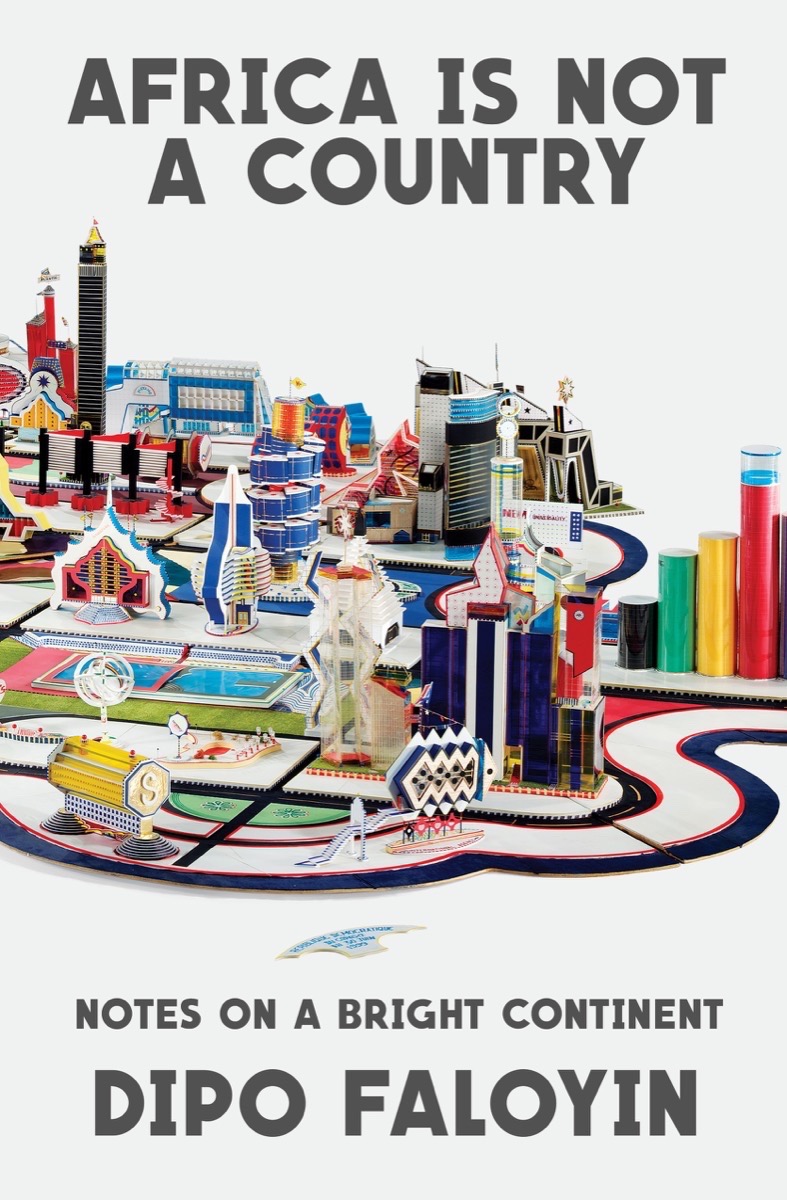
Africa Is Not A Country is a bright portrait of modern Africa that pushes back against harmful stereotypes to tell a more comprehensive story.

You already know these stereotypes. So often Africa is depicted simplistically as an arid red landscape of famines and safaris, uniquely plagued by poverty and strife.

In this funny and insightful book, Dipo Faloyin offers a much-needed corrective. He examines each country’s colonial heritage, and explores a wide range of subjects, from chronicling urban life in Lagos and the lively West African rivalry over who makes the best Jollof rice, to the story of democracy in seven dictatorships and the dangers of stereotypes in popular culture.

By turns intimate and political, Africa Is Not A Country brings the story of the continent towards reality, celebrating the energy and fabric of its different cultures and communities in a way that has never been done before.
In My Hands Today…

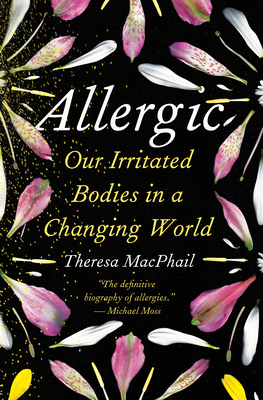
Allergic: Our Irritated Bodies in a Changing World – Theresa MacPhail

An eye-opening exploration of allergies, from their first medical description in 1819 to the cutting-edge science that is illuminating the changes in our environment and lifestyles that are making so many of us sick

Hay fever. Peanut allergies. Eczema. Either you have an allergy or you know someone who does. Billions of people worldwide—an estimated 30 to 40 percent of the global population—have some form of allergy. Even more concerning, over the last decade the number of people diagnosed with an allergy has been steadily increasing, placing an ever-growing medical burden on individuals, families, communities, and healthcare systems.

Medical anthropologist Theresa MacPhail, herself an allergy sufferer whose father died of a beesting, set out to understand why. In pursuit of answers, MacPhail studied the dangerous experiments of early immunologists as well as the mind-bending recent development of biologics and immunotherapies that are giving the most severely impacted patients hope. She scaled a roof with an air-quality controller who diligently counts pollen by hand for hours every day; met a mother who struggled to use WIC benefits for her daughter with severe food allergies; spoke with doctors at some of the finest allergy clinics in the world; and discussed the intersecting problems of climate change, pollution, and pollen with biologists who study seasonal respiratory allergies.

This is the story of what they are, why we have them, and what that might mean about the fate of humanity in a rapidly changing world.

In My Hands Today…

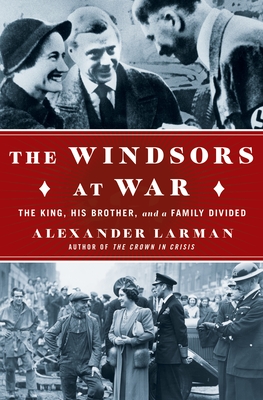
The Windsors at War: The King, His Brother, and a Family Divided – Alexander Larman

At the beginning of 1937, the British monarchy was in a state of turmoil. The previous king, Edward VIII, had abdicated the throne, leaving his unprepared and terrified brother Bertie to become George VI, surrounded by a gaggle of courtiers and politicians who barely thought him up to the job.

Meanwhile, as the now-Duke of Windsor awaited the decree that would allow him to marry his mistress Wallis Simpson, he took an increased interest in the expansionist plans of Adolf Hitler. He may even have gone so far as to betray his country in the process. And as double agents and Nazi spies thronged the corridors of Buckingham Palace, the only man the King could trust was his Prime Minister, Winston Churchill. But they faced a formidable, even unbeatable, adversary: his own brother.

The Windsors at War tells the never-before-told story of World War Two in Britain and America with a fresh focus on the royal family, their conflicted relationships, and the events that rocked the international press. How did this squabbling, dysfunctional family manage to put their differences aside and unite to help win the greatest conflict of their lifetimes? Alexander Larman, author of The Crown in Crisis, now chronicles the Windsor family at war with Germany―and each other.

In My Hands Today…

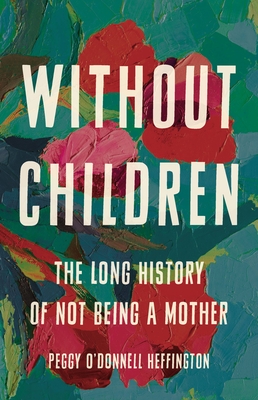
Without Children: The Long History of Not Being a Mother – Peggy O’Donnell Heffington

A historian of gender explores the complicated relationship between womanhood and motherhood In an era of falling births, it’s often said that millennials invented the idea of not having kids. But history is full of women without some who chose childless lives, others who wanted children but never had them, and still others—the vast majority, then and now—who fell somewhere in between. Modern women considering how and if children fit into their lives are products of their political, ecological, and cultural moment. But history also tells them that they are not alone.

Drawing on deep research and her own experience as a woman without children, historian Peggy O’Donnell Heffington shows that many of the reasons women are not having children today are ones they share with women in the a lack of support, their jobs or finances, environmental concerns, infertility, and the desire to live different kinds of lives. Understanding this history—how normal it has always been to not have children, and how hard society has worked to make it seem abnormal—is key, she writes, to rebuilding kinship between mothers and non-mothers, and to building a better world for us all.

In My Hands Today…

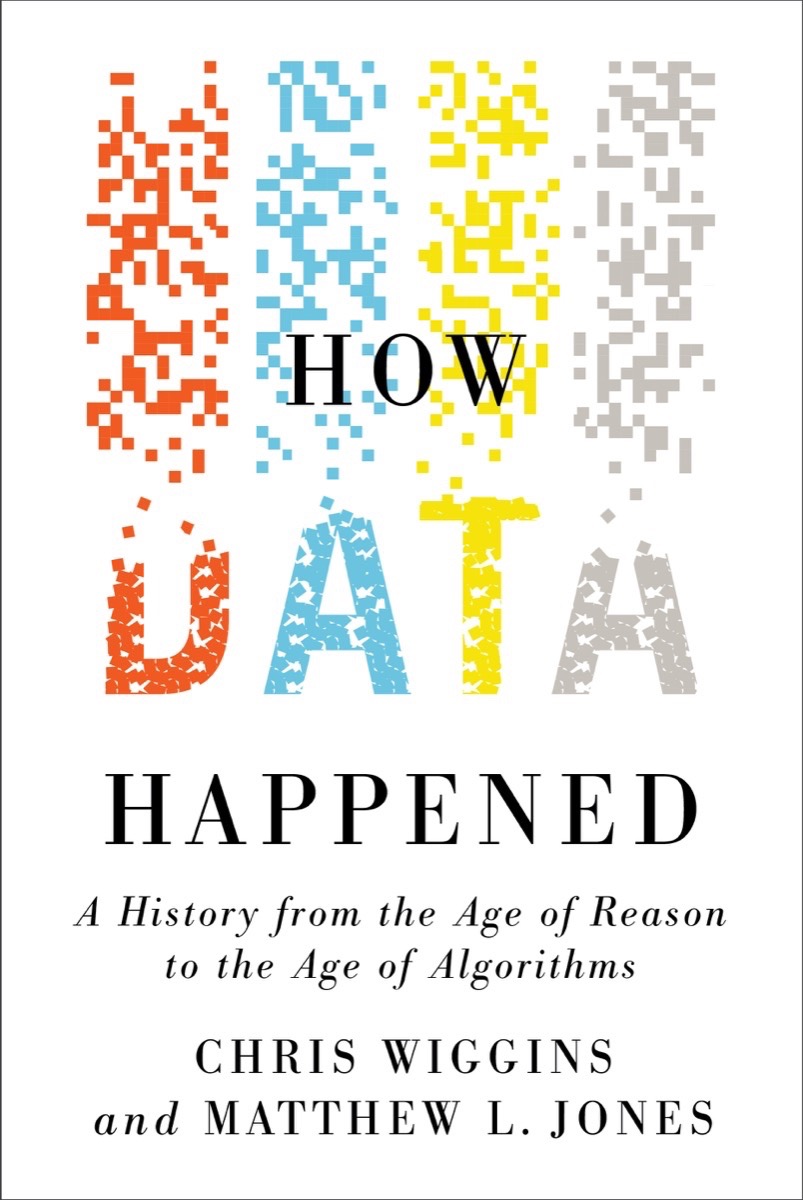
How Data Happened: A History from the Age of Reason to the Age of Algorithms – Chris Wiggins and Matthew L. Jones

From facial recognition—capable of checking us onto flights or identifying undocumented residents—to automated decision systems that inform everything from who gets loans to who receives bail, each of us moves through a world determined by data-empowered algorithms. But these technologies didn’t just appear: they are part of a history that goes back centuries, from the census enshrined in the US Constitution to the birth of eugenics in Victorian Britain to the development of Google search.

Expanding on the popular course they created at Columbia University, Chris Wiggins and Matthew L. Jones illuminate the ways in which data has long been used as a tool and a weapon in arguing for what is true, as well as a means of rearranging or defending power. By understanding the trajectory of data—where it has been and where it might yet go—Wiggins and Jones argue that we can understand how to bend it to ends that we collectively choose, with intentionality and purpose.