Festivals of India: Behdienkhlam

India is a land of diverse cultures, traditions, and festivals. Every region and state has their special festival and the Behdienkhlam festival holds a special place in the hearts of the people of Meghalaya, the Pnars. This vibrant festival showcases the rich cultural heritage of the region and serves as a testament to the spirit of unity and harmony.

The Behdienkhlam Festival or Chasing away the Demon of Cholera is celebrated annually in July after the sowing period and is the most important dance festival of the Jaintia tribes. This festival is also an invocation to God, seeking his blessings for a bumper harvest. Women however do not participate in the dancing, as they offer sacrificial food to the spirits of their forefathers. The festival held at Jowai is one of the most well-known recreational festivals in Meghalaya. Derived from the Khasi language, Behdienkhlam translates to driving away the plague. Historically, the festival was initiated as a means to ward off epidemics and promote good health and prosperity within the community. Over time, it has evolved into a celebration of unity, agricultural abundance, and the overall well-being of the Khasi people.

The Behdienkhlam festival takes place annually in July, after the sowing of paddy fields and before the harvest season. It spans several days, typically lasting for a week. The festival culminates on the fourth day with the most significant events and rituals.

The preparation for the festival begins weeks in advance with the construction of raths or chariots. These elaborately decorated structures are carried by the villagers in a procession, symbolising the collective strength and unity of the community.

A series of religious rites are being performed by the Daloi or the chief with young men making a symbolic gesture of driving away the evil spirit, plague and disease by beating the roof of every house with bamboo poles. The Pomblang ceremony is a crucial aspect of the festival involving the sacrifice of goats and cocks to appease the deities and seek their blessings. The sacrificial animals are chosen based on specific criteria, and the rituals are performed by designated priests. One of the prominent highlights of the festival is the Nongkrem dance, performed by young men and women from the community. This captivating dance is a rhythmic display of synchronised movements accompanied by traditional musical instruments. It is believed to invoke blessings from the deities for a prosperous harvest season. Behdienkhlam is known for its unique sporting events that reflect the physical prowess and camaraderie of the participants. The most notable among these is the Dewanshah, a game that involves the throwing of a wooden ball and another popular sport is Khnong Lum, a race where participants carry large wooden posts on their shoulders. The climax of the celebration is the fight for a large undressed beam by two groups of people in opposition to each other. This leads to the heavy beam getting across a muddy ditch called Wah-eit-nar and a lot of horseplay enters into this part of the event when mud is smeared by the participants on each other.

On the last day, in the afternoon people would gather in a place called Aitnar and both young and old would dance to the tunes of the pipes and drums. The dancers are highly emotional when tall-decorated structures called rots and wooden post-called khnongs would be brought into the pool with rain expected on the last day of the festival. On the last day, people dressed up in their best attire converge in Mynthong to witness a game similar to football, called dad-lawakor. The game is played with a wooden ball between the Northerners and the Southerners with the side winning the match signifying that in the following year, there would be a bumper harvest in that particular region.

The Behdienkhlam festival is a community-driven celebration that fosters a sense of belonging and solidarity. It brings people together, transcending caste, creed, and social barriers. This collective engagement strengthens the social fabric and reinforces the cultural identity of the Khasi people. The festival plays a crucial role in preserving the indigenous cultural heritage of the Khasi community and serves as a platform for the transmission of traditional knowledge, rituals, and values to younger generations. The festival has also become a major tourist attraction, drawing visitors from across India and around the world. Despite its significance and popularity, the Behdienkhlam festival faces certain challenges in the modern era. Rapid urbanisation, changing lifestyles, and the influence of globalisation have impacted the traditional practices associated with the festival.

Instagram Interludes

While we were in Bengaluru, we made a half day trip to the Bangalore Bannerghetta National Park and Zoo. I felt the park is worth visiting, especially if you have young children. I especially enjoyed the safari, which if you do nothing else at the park, you must do. Here are some photos from the safari. The highlight of our safari was seeing a tiger stroll down the road while we were parked. That was so beautiful. I did capture that as a short reel, but since I can’t post that here, you have to be content with a photo of the tiger.

Deer
An elephant at the bathing point
Two jeuvenile bears playing
The tiger walking towards us
A lion and lioness having a siesta

In My Hands Today…

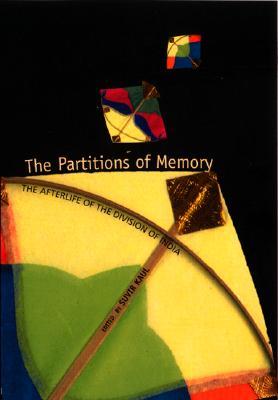
Changing Homelands: Hindu Politics and the Partition of India – Neeti Nair

Changing Homelands offers a startling new perspective on what was and was not politically possible in late colonial India. In this highly readable account of the partition in the Punjab, Neeti Nair rejects the idea that essential differences between the Hindu and Muslim communities made political settlement impossible. Far from being an inevitable solution, the idea of partition was a very late, stunning surprise to the majority of Hindus in the region.

In tracing the political and social history of the Punjab from the early years of the twentieth century, Nair overturns the entrenched view that Muslims were responsible for the partition of India. Some powerful Punjabi Hindus also preferred partition and contributed to its adoption. Almost no one, however, foresaw the deaths and devastation that would follow in its wake.

Though much has been written on the politics of the Muslim and Sikh communities in the Punjab, Nair is the first historian to focus on the Hindu minority, both before and long after the divide of 1947. She engages with politics in post-Partition India by drawing from oral histories that reveal the complex relationship between memory and history–a relationship that continues to inform politics between India and Pakistan.

In My Hands Today…

Ants Among Elephants: An Untouchable Family and the Making of Modern India – Sujatha Gidla

Like one in six people in India, Sujatha Gidla was born an untouchable. While most untouchables are illiterate, her family was educated by Canadian missionaries in the 1930s, making it possible for Gidla to attend elite schools and move to America at the age of twenty-six.

It was only then that she saw how extraordinary — and yet how typical — her family history truly was. Her mother, Manjula, and uncles Satyam and Carey were born in the last days of British colonial rule. They grew up in a world marked by poverty and injustice, but also full of possibility. In the slums where they lived, everyone had a political side, and rallies, agitations, and arrests were commonplace. The Independence movement promised freedom. Yet for untouchables and other poor and working people, little changed.

Satyam, the eldest, switched allegiance to the Communist Party. Gidla recounts his incredible life — how he became a famous poet, student, labor organizer, and founder of a left-wing guerrilla movement. And Gidla charts her mother’s battles with caste and women’s oppression. Page by page, Gidla takes us into a complicated, close-knit family as they desperately strive for a decent life and a more just society.

A moving portrait of love, hardship, and struggle, Ants Among Elephants is also that rare thing: a personal history of modern India told from the bottom up.

In My Hands Today…

Memoirs of a Rebellious Princess – Elaine Williams

A combination of Princess Diana and Kim Kardashian, the bejeweled Maharani of Kapurthala, Princess Brinda Devi lived a whirlwind life in Europe even as she struggled with the demands of marriage and motherhood at home.

A brilliant study of contrasts, Princess Brinda’s story revels in the luxuries of 1920s India but does not look away from the rickety shacks of its most destitute. All while she searches for true love.