Travel Bucket List: India – Andhra Pradesh Part 6

After Kurnool, Mantralayam, Gandikota, Tadipatri, Anantapur and Puttaparthi, in this last part about Andhra Pradesh, we will visit some interesting places, including the world famous Tirupati temple.
Lepakshi
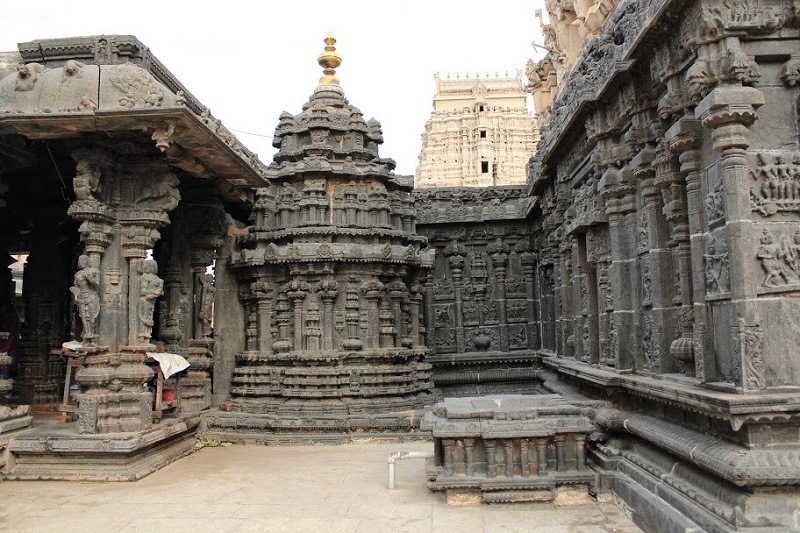
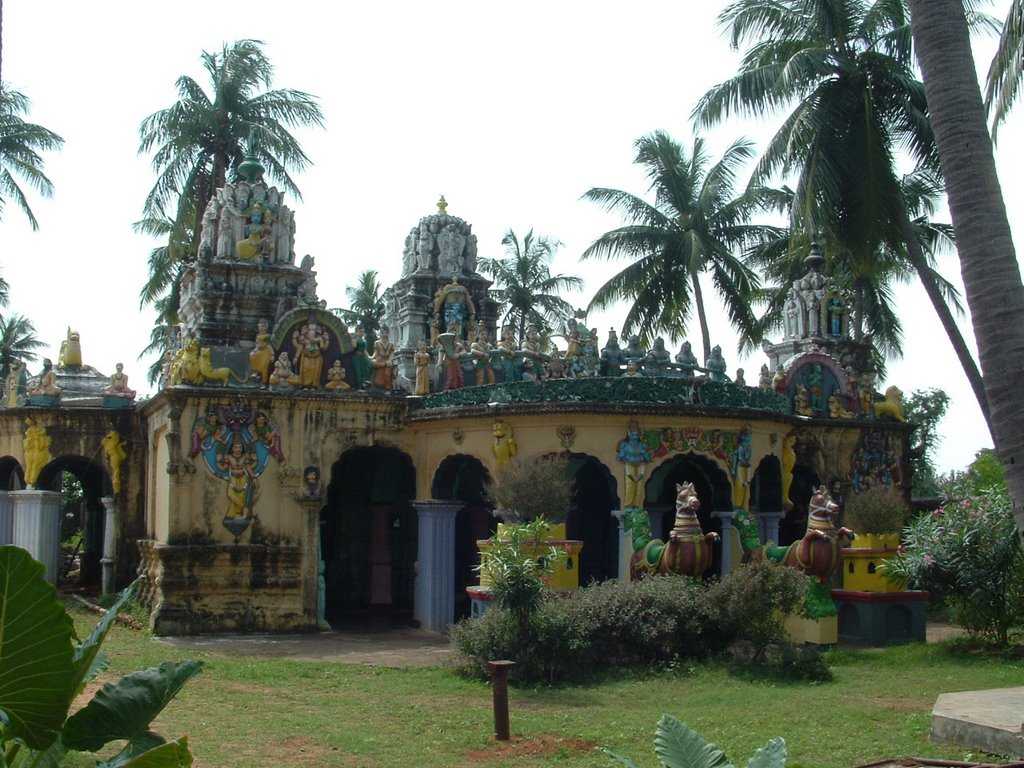
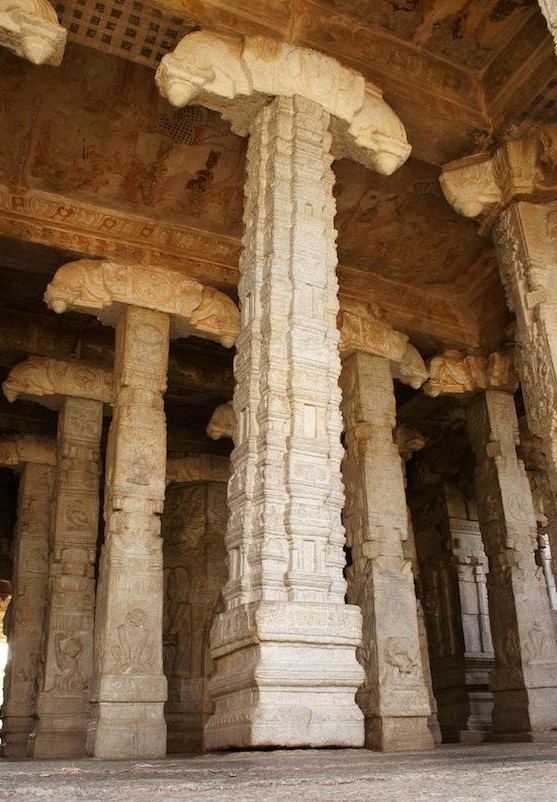
A small quaint village, Lepakshi is located at a distance of 120 km from Bangalore. Founded in 1535 AD by Maharaja Aliya Rama Raya of the Vijayanagara empire, Lepakshi is a trove of several fascinating archaeological sites, beautiful ancient temples and rich culture. Each structure narrating a story of its own, this enchanting village also derives its name from the Sanskrit language meaning rise o bird and has folklore attached to it. Locals believe that according to the legend of Ramayana, Jatayu fell in Lepakshi after getting injured by Ravana. The village is most famous as being home to the Lepakshi Temple, known for the stunning Vijaynagar style of architecture and hanging pillars. A magnificent example of timeless art and architecture, the temples of Lepakshi celebrate the might of Lord Shiva, Vishnu and Veerabhadra. Apart from richly carved temples with inscriptions in Kannada and hanging pillar, the most striking feature of Lepakshi is the largest monolithic idol of Nandi Bull in the entire subcontinent made of granite. Lepakshi is a treasure trove of a fascinating range of art forms and traditional crafts. Visitors should make sure to stop and should shop for the handicraft items which Lepakshi is famous for, including things like banjara embroidery, brassware, cotton and jute durries, kalamkari paintings, Kondapalli toys, cherial scroll paintings and Bidricraft.
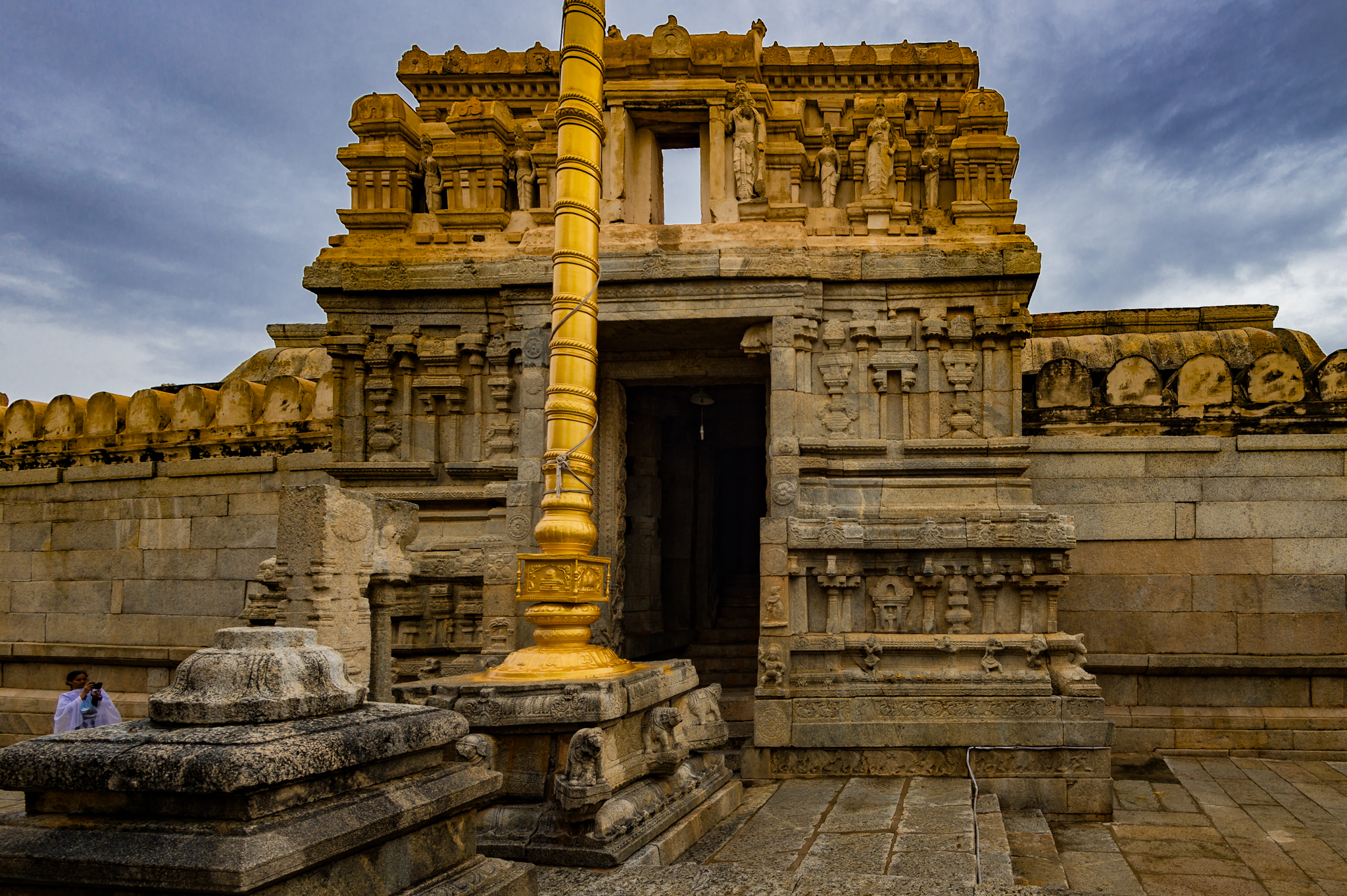
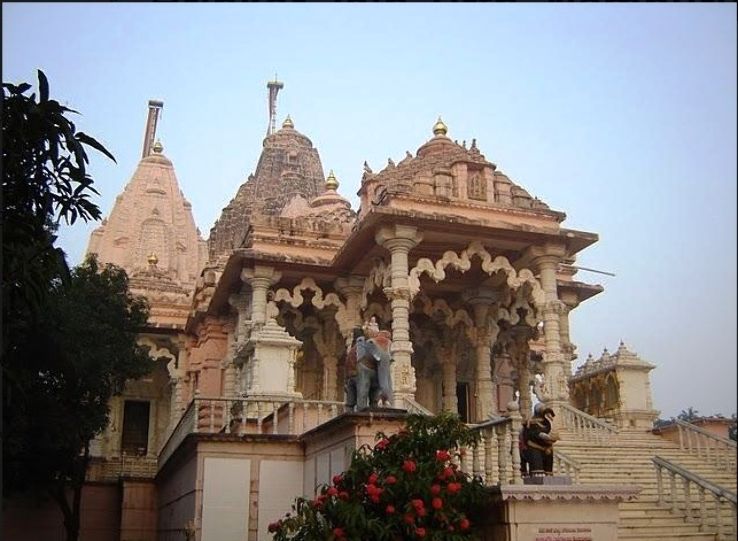
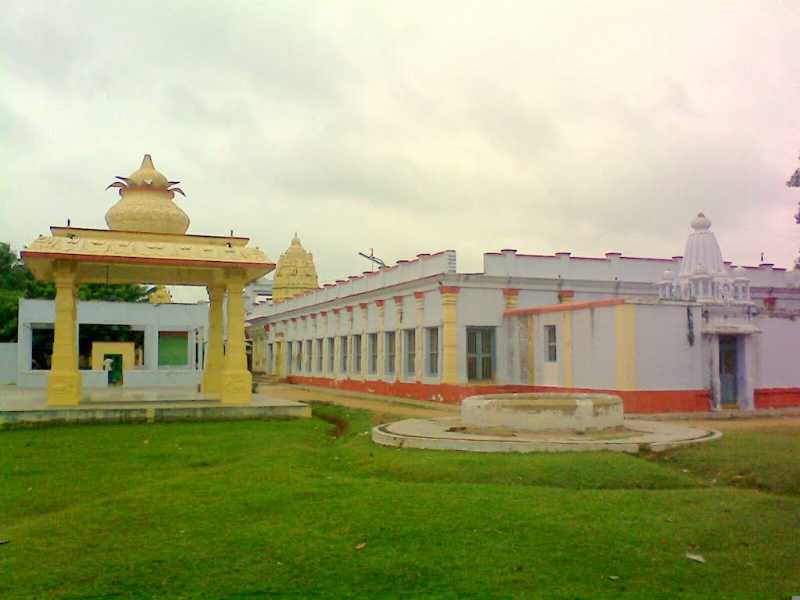
The Veerabhadra temple is dedicated to Lord Veerbhadra and built back in the 16th century. Also known as the Lepakshi temple, it is famous for its architecture characterised by hanging pillars and cave chambers. Another thing that makes the temple unique and a place to must visit is a footprint that is believed to be of Goddess Sita. As soon one steps inside the temple, they get glimpses of the history of Vijayanagara kingdom by way of pictorial representations. From the figures of musicians and saints to that of Parvati and Lord Shiva, the Lepakshi Temple has everything. Apart from the architectural importance, the temple according to Skanda Purana, is a divyakshetra, in other words, an important pilgrimage destination of Lord Shiva. The highlight of the temple is the Statue of Nandi Bull, made from a single granite stone. The temple is open daily between 5 am and 9 pm.

Located near the Veerbhadra Temple is another striking feature of the village, the idol of the Nandi Bull and paintings. This monolithic sculpture of Nandi crafted out of granite stone measures 4.5m in height and 8.23 m in length and is believed to be the largest statue in India. Other than this, another brilliant craftsmanship in form of sculptures and mural paintings can be seen on the walls of Natya and Kalyana Mandapams which are also popularly referred to as dance and wedding halls. In fact these incredible carvings are regarded as the finest specimen of Vijayanagara style of architecture.
Horsley Hills
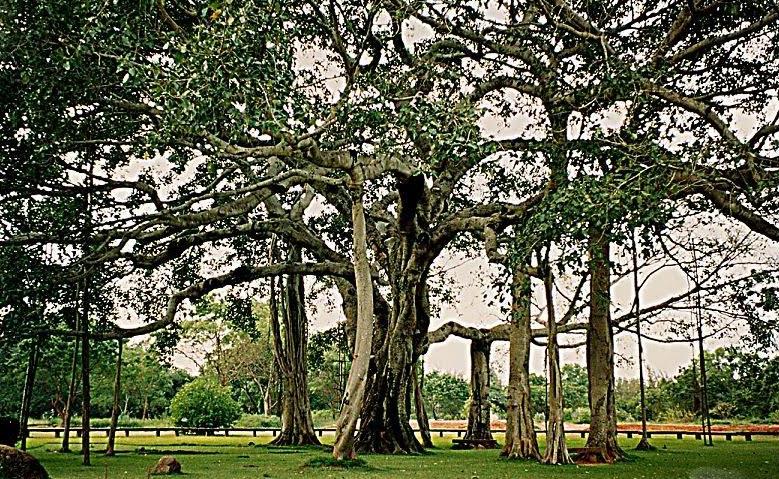
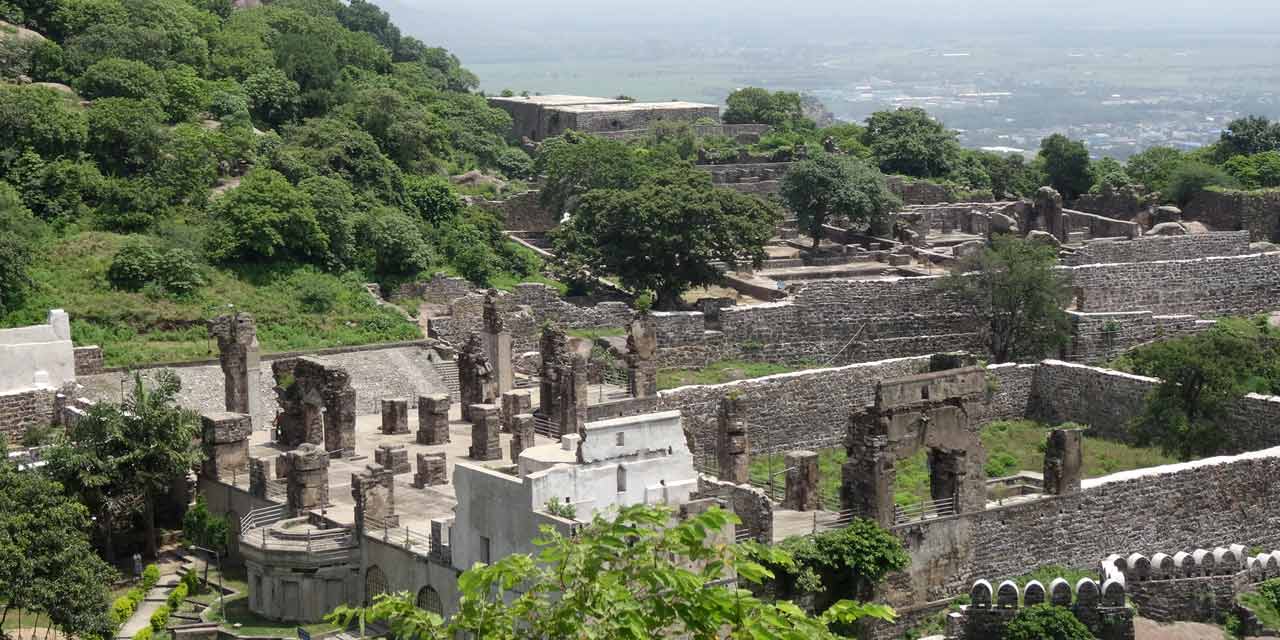
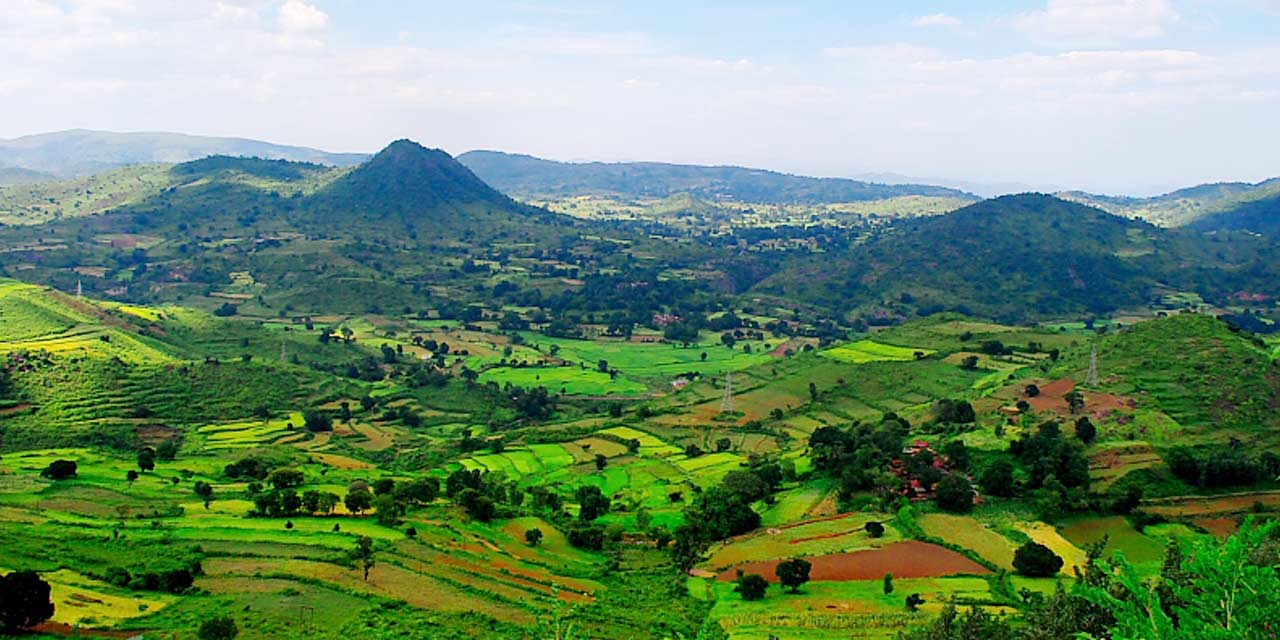
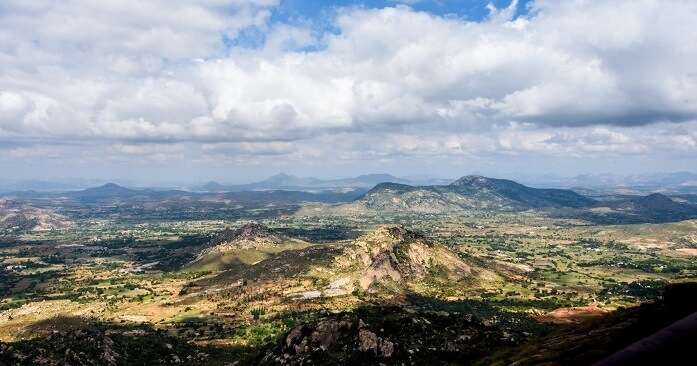
Located near the southwestern border between Andhra Pradesh and Karnataka, Horsley Hills is a hill station that is often called the Ooty of Andhra. Located at a height of 4312 metres and is well-known for its breathtaking landscapes, Horsley Hills is also called as Yenugulla Mallamma Konda. The picturesque landscape of Horsley Hills also doubles up as a destination for adventure sports and activities such as trampoline, shooting, bow and arrow, wall climbing, water walking, rappelling, swimming pool, fish spa and a mini zoo. In addition to its tranquil natural charms, it is also the land of Kalyani, the oldest known eucalyptus tree which is believed to be around 148 years and one is at it, visit the Thimmamma Marrimanu banyan tree which is said to be the world’s largest banyan tree spread covering an area of 8 acres. The highest point of the hills offers a mesmerising view of the surrounding foliage, and the sight is serene against the backdrop of the sapphire sky. Situated closeby is the Horsley Hills Environment Centre which is home to a number of animals such as deer and crocodiles. The Gurramkonda Fort and Governor’s house are other fascinating pieces of history should be a part of a weekend getaway. A part of the Eastern Ghats, the hills in the region are believed to be one of the oldest in terms of geological existence. How the hills came to be known as Horsley Hills is a story, it is said that there was once a horse that guarded the Gurramkonda fort situated closeby with such ferocity that as long as it remained there, no one dared to attack the fort. The title of the hills near the fort was hence dedicated to the selfless service of the horse, and the name Horsley Hills or Horsley Konda came to be. Some others believed that it is named after a British General with the same name who built a bungalow here.

Chittoor
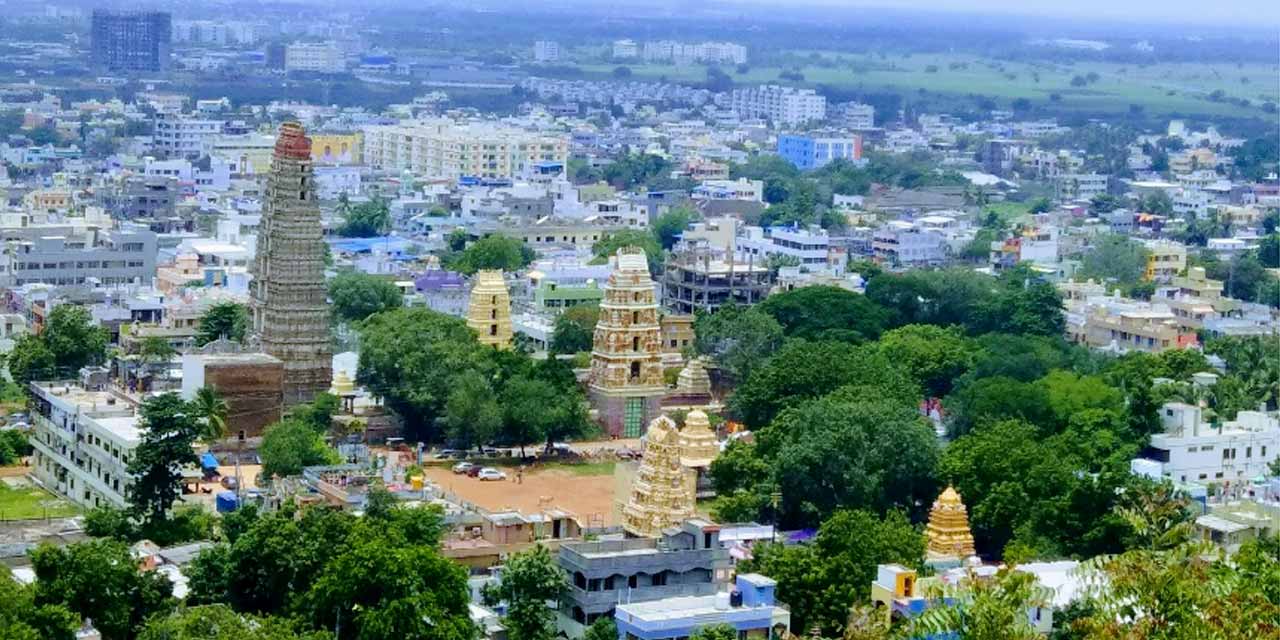
Steeped in religion, devotion and architecture, Chittoor is blessed with scenic beauty, cascading waterfalls and a beautiful hill station. Also known as the Mango City, Chittoor offers multiple varities of mangoes to please its visitors.

The Kanipakkam Vinayaka Temple was designed and constructed in the 11th century by Kulothunga Chola I, a revered Chola king. It was then rebuilt in 1336 by the Vijayanagara rulers. The name Kanipakam itself breaks into Kani meaning wetland and pakam meaning the flow of water into the wetland due to its presence next to river Bahuda. A Siva Temple was also created in the complex when Kulothunga Chola expanded the temple. It was to show his devotion to Lord Shiva as well as Lord Ganesha. What makes the Kanipakam temple unique is the fables and legends associated with it. It is reported that the idol of Vinayaka or Lord Ganesha grows every year so much so that the armour offered to the deity 50 years ago does not fit anymore. This historical temple with Ganesha as its primary deity is also known as Shrine of Water and is in Irala Mandal. The regal Kanipakam temple has immense religious significance and importance because of its miraculous idol. The water found in the complex is believed to be holy and can cure various deformities. Pilgrims visit this temple before going to Tirupati since it is a Vinayaka Temple. The Kanipakam temple is very well maintained by the authorities despite being a major crowd puller and is a rapidly developing complex. This unique sanctuary of Ganesha is in the middle of a river. Its significance lies in its purity and rich heritage.
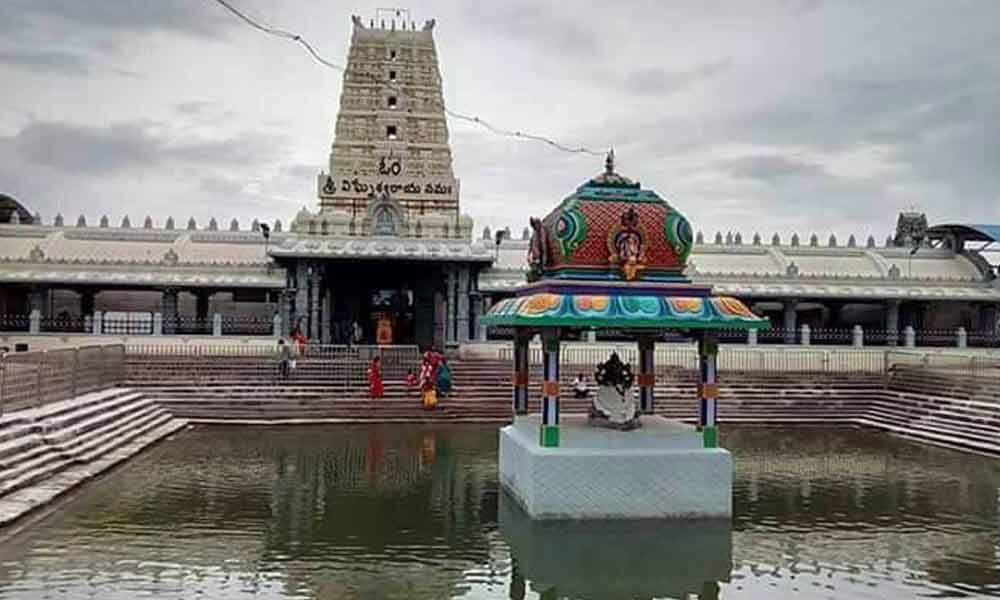
The famous idol which led to the construction of the Kanipakam Vinayaka Temple has many stories linked to it. The most famous legend speaks of three farmers who were dumb, blind and deaf by birth. They needed water to irrigate their fields. They found a dried-up well and decided to dig it more. One of them started the work and was surprised to see his iron implement hitting a stone-like formation. As he continued to dig, he found that blood was oozing out of the stone. Soon the whole water had turned red because of the blood. He called out to the other two farmers to witness the event. As they had been present for such divine intervention, their deformities had disappeared. When the villagers found out about their miracle, they thronged to the well and decided to deepen it. However, they couldn’t as a self-manifested idol of Vinayakar emerged from the waters of that very well. Even today, the idol resides in the well, and its water branches are perineal and eternal. During the monsoon season, the well overflows and the water is provided to the devotees as Tirtham, holy water. The river of Bahuda, along with the banks of which the temple is built, also has a very popular story. Two brothers Sanka and Likhita were on a pilgrimage when the younger brother Likhita felt hungry. Ignoring his elder brother’s advice, he plucked a mango from the nearby mango grove and ate it. Sankha felt betrayed and reported his actions to the ruler, who in punishment deprived Likhita of both his arms. Later, when Likhita was taking a dip in the Bahuda river, a miracle occurred. Both his arms were restored! Hearing this, the ruler renamed the river as ‘Bahuda’ meaning human arm. The temple is open from 4 am to 9:30 pm with darshan timings from 6 am to 1 pm and then from 4 to 8 pm. The various poojas and sevas vary in fee from INR 116 to INR 7500 depending on the type of ritual devotees wish to perform at the temple
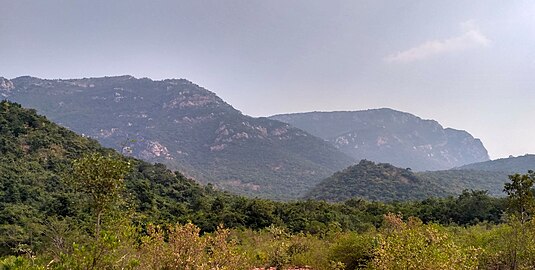
Hidden like a jewel behind the lush green forests of Andhra Pradesh lies a serene and tranquil place named Nagalapuram. Also known as Nagala Hills, it is famous for the various adventurous activities proffered in this scenic village. Nagalpuram is also known for housing the Nagalpuram Falls. A group of 3 waterfalls, it offers a great trekking opportunity and a stunning panoramic view. The trek to the waterfalls starts from the Arai Village where the journey starts from Nagala Dam. The dam welcomes the trekkers with a serene view and shows the way towards the waterfalls. The trek starts off on the simple plain ground until the water stream. The water stream is where the difficulty level elevates considerably and trekkers need to concentrate on every step there onwards. The nature of water as we know it is beautiful but also harsh at the same time. The intermittent positioning of the waterfalls and their pools are of great help to the trekkers and especially when the sun is right above the head. After sweating throughout the path, the sight of a cold water pool gives a joy uncomparable. Throwing the backpack down and getting rid of the shoes while running towards the pool and then taking off in the air to hit a perfect dive is not something that can be experienced often. Nagalapuram was built by King Krishna Deva Raya, the ruler of the Vijayanagar empire. He named the place Nagalapuram in the loving memory of his mother, Nagamamba.
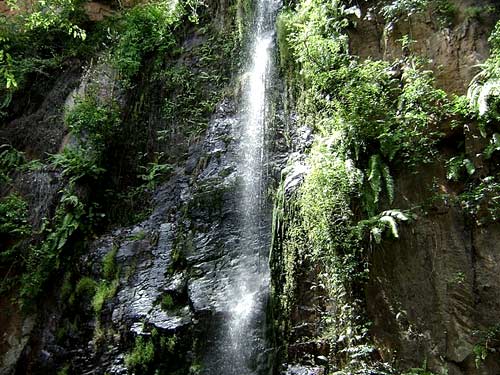
Situated in Nagari Valley near Tirupati, the Kailasakona waterfalls are a beautiful perennial waterfalls with an interesting story behind them. Legend has it that Lord Kailasanatheshwara performed the marriage of Lord Venkateshwara Swami and Goddess Padmavati and later performed penance here. The water here at the Kailasakona waterfalls is crystal clear and is rich with minerals and is believed to have medicinal properties and healing effect. The foot of the waterfall can be reached and one can only gape at the awe-inspiring sight. To reach the waterfall, look out for the 10 km milestone on the way to Puttur and take a left deviation and drive for about 2 km.
Source

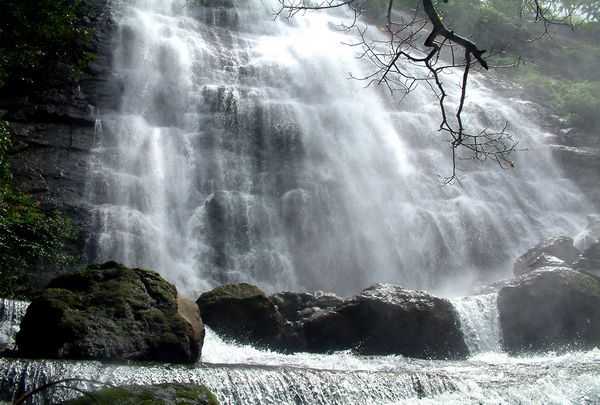
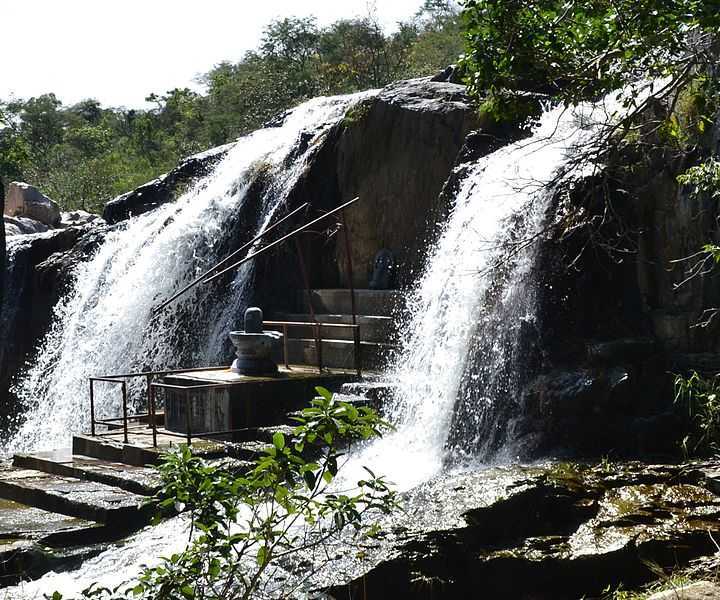
The Kaigal fall is nestled amidst the Koundinya Wildlife sanctuary and derives its name from the village Kaigal, that surrounds it. Locally known as the Dumukurallu waterfalls which is a Telugu word used for a sound resembling the sound of falling stones from above, the Kaigal falls are perennial. The waterfall is subdivided into three cascading falls and water falls from a height of approximately 40 ft. The water forms several small pools at the bottom.

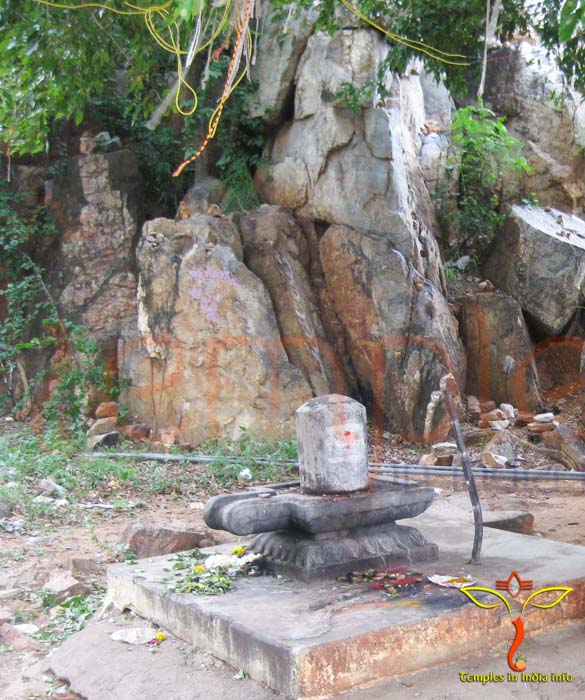
The Koundinya Wildlife Sanctuary is a wildlife sanctuary plus elephant reserve, housing exotic Asian elephants. There are around 78 elephants here, currently with an an abundance of flora and fauna. Acacia and bamboo are the two common plants that are found here. Several species of birds can be found here with the sanctuary being a popular attraction around April. There is a beautiful forest guest house which can be stayed in. The sanctuary is around 52 kms away from the Kaigal falls and will take about an hour or so to reach the sanctuary from Kaigal. High hills and deep valleys surround this immensely beautiful wildlife sanctuary. There is a shivalinga installed near the falls which the locals visit on special occasions like Shivaratri. The waterfall splits into three singular falls, one of which flows over this Shivalinga and it is a beautiful sight to view water cascading over the Shivling.

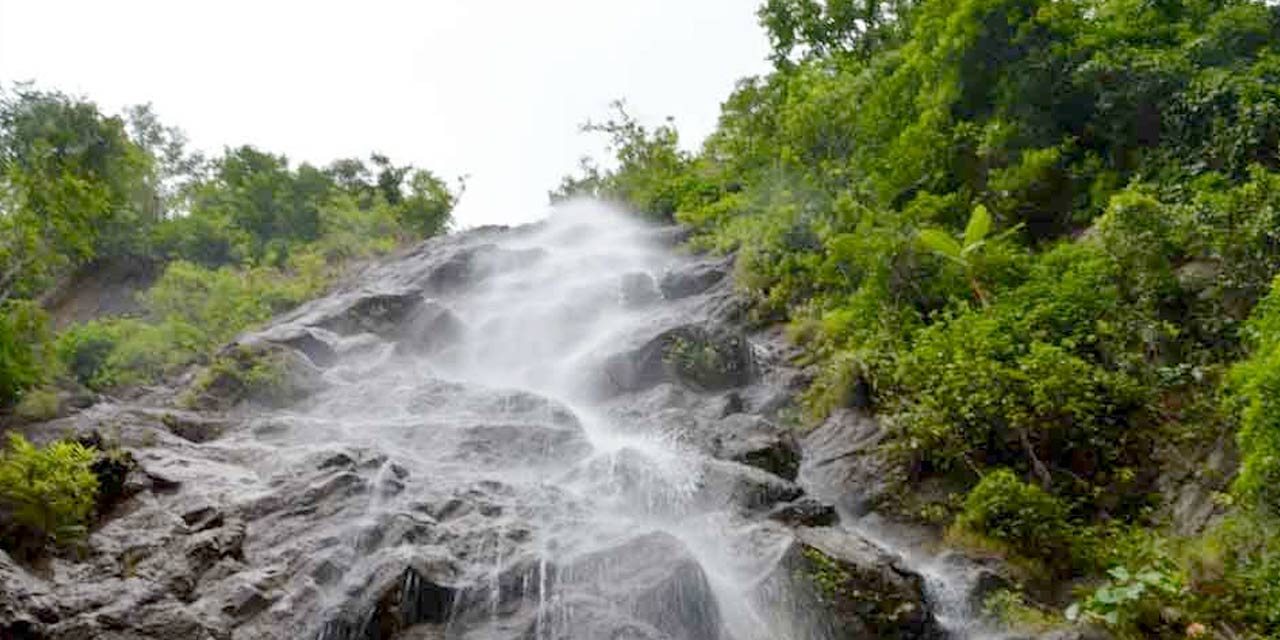
Also known as the Ubbalamudugu Falls, the Tada Falls is a gorgeous waterfall located near the near the Tricity and Oneness temple. Cascading from a towering height of around a 100 m, the crystal clear waterfall falling down the rocks is a visual delight and a sight to behold. The Siddulaiah Kona forest is nearby which is an ideal place for trekking, hiking and other foresty activities. Besides, Tada Falls is known for its an incredible landscape, lush greenery and ethereal hillocks. Also close by is the stunning Pulicat Lake and Shiva temple. Since the waterfalls are located in the woods, trekking is the most common way to reach the falls. Vehicles can be parked at the parking lot which is 10 km away from the falls before the trek. There is also a 3 km trek that goes along a clear stream for novice trekkers as well as a mid level trek up along some boulders to the base of Tada Falls. This trail is laden with dainty streams and lush green landscape sprawling all over, offering a pleasant experience and a gorgeous view.
Srikalahasthi
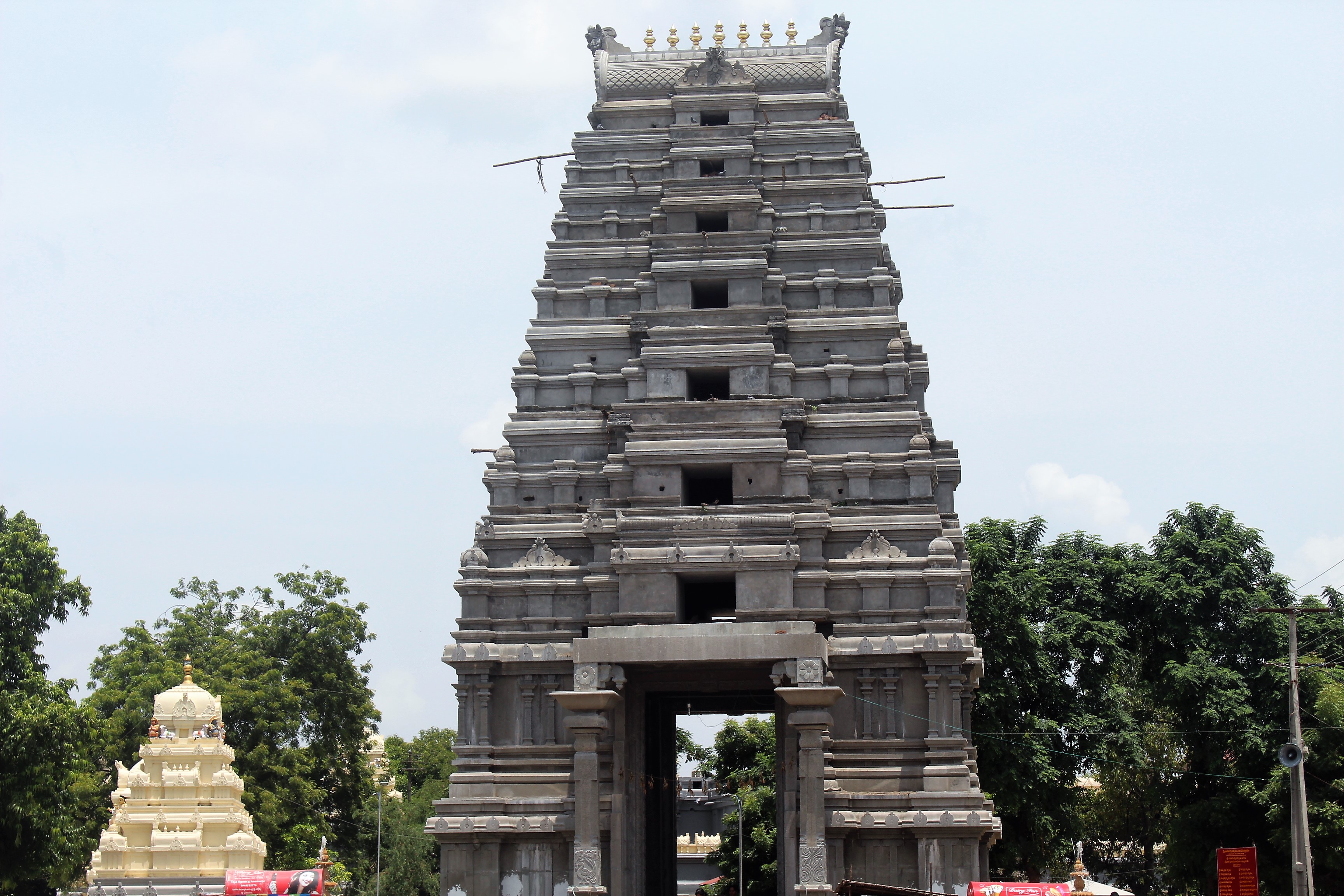
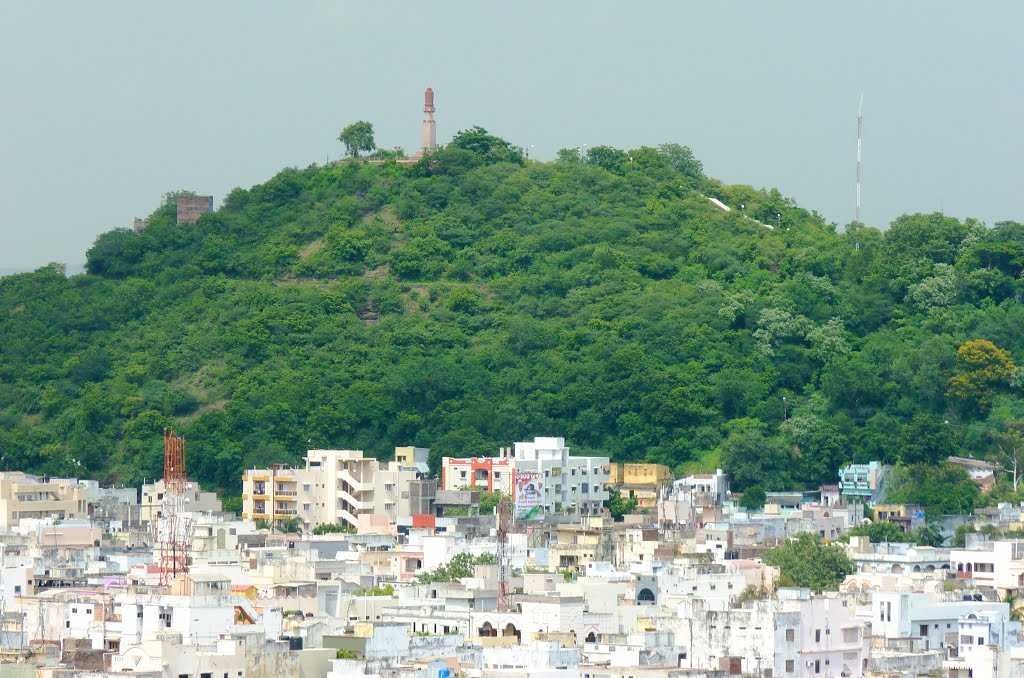
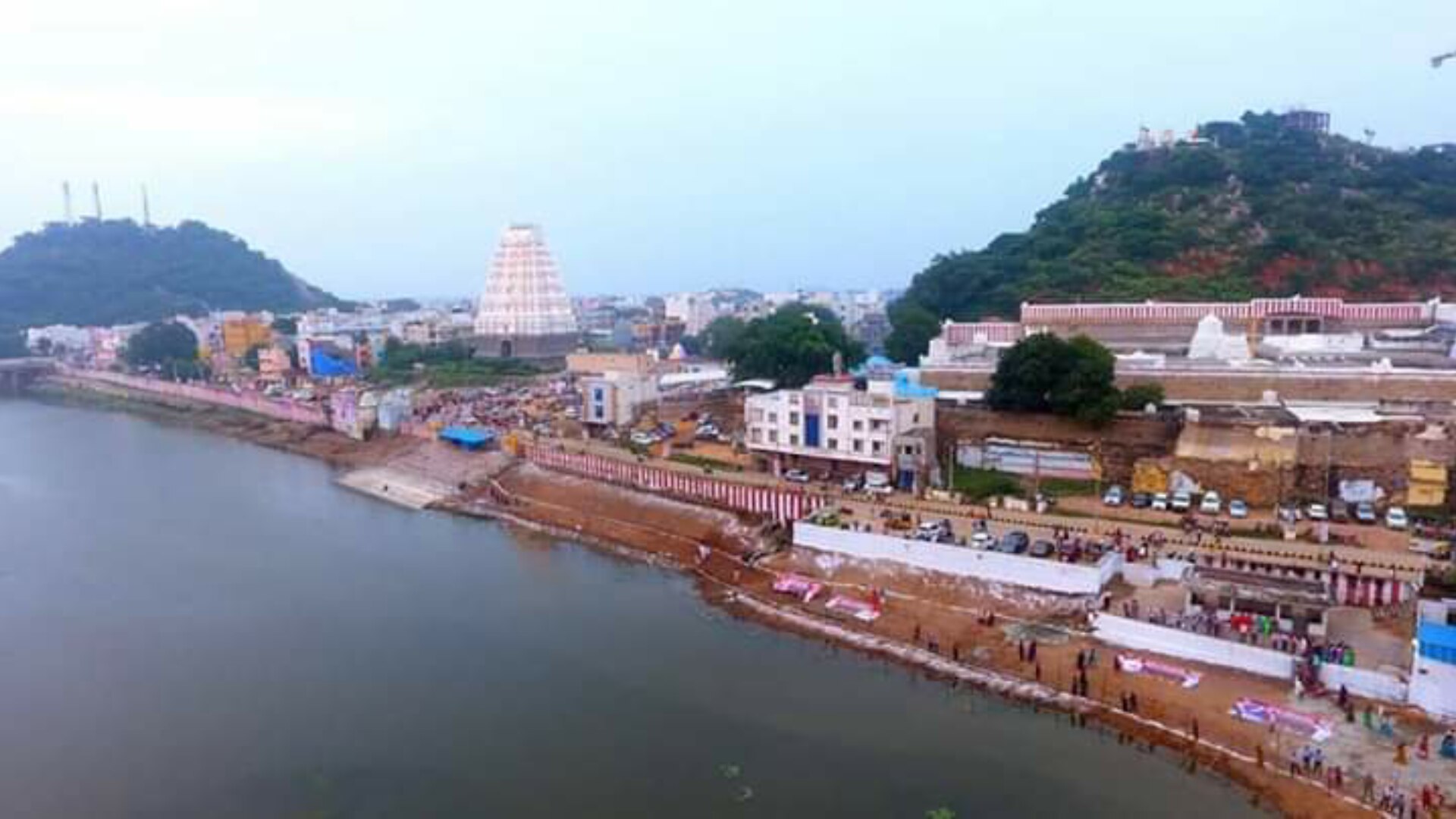
Located 37 km from Tirupati, the holy city of Srikalahasti is famous for the Srikalahasti temple. It is one of the most important Shiva temples of south India built during the ancient Pallava dynasty. The place is an excellent example of south Indian architecture with highly adorned gopurams and extensively carved interiors that unfold the charms of Dravidian style pf architecture.

The Srikalahasti temple is dedicated to Lord Shiva and was constructed in 1516 by King Krishnadevraya of the Vijayanagara empire. The elaborate structure of the temple complex is a breathtaking view right from the entrance. It has intricate carvings of numerous mythological illustrations that one can explore in the divine surroundings. This magnificent temple is often referred as the Kailasa and Kashi of the south and represents one of the five elements or the pancha bhootas, vayu or air. The temple is open from 6 am to 9 pm daily and the Rahu Kethu Sarpa Dosha Nivarana Puja which takes place in the outer courtyard costs between INR 300 – 500 while within the temple premises, it costs between INR 1500 to 2500
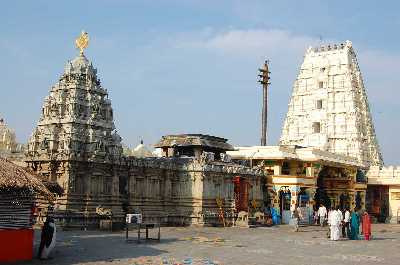
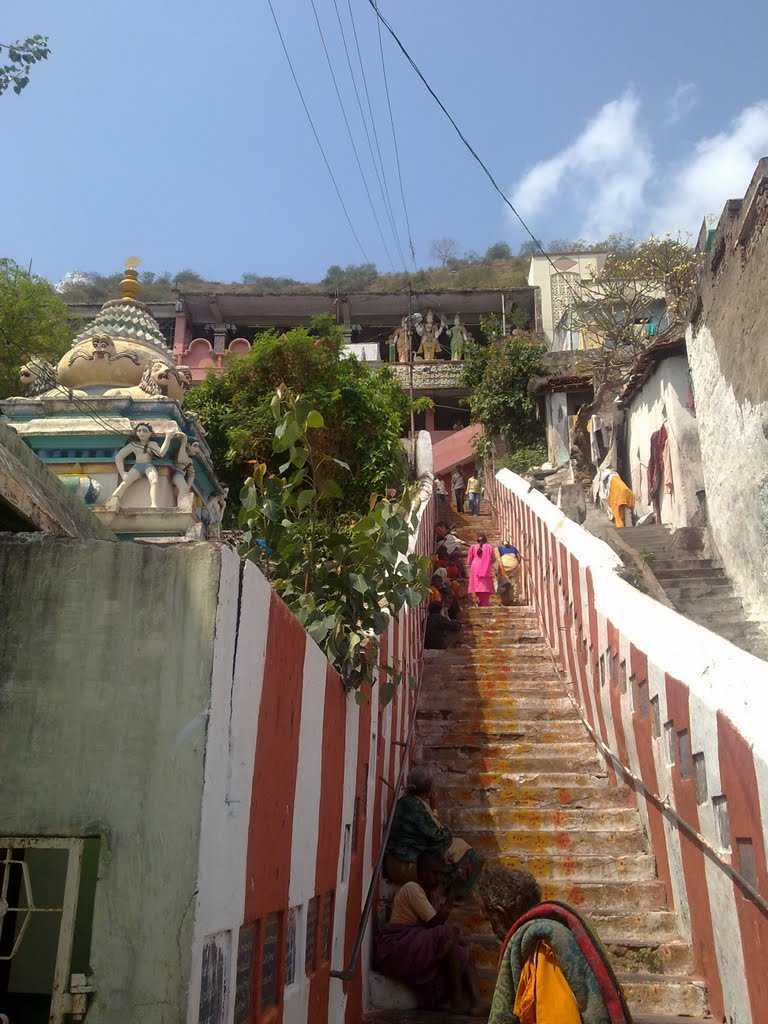
At the centre of the city, is a significant temple dedicated to Lord Murugan known as the Subrahmanya Swamy temple. A modest climb of 150 steps take you to the temple, surrounded by flattering views of the city. The temple gathers much festivity and glitter during a 8-day festival called the Aadi Krithika festival. During this time a procession is carried out where Lord Subrahmanya Swamy and his consorts Sri Valli and Devasena are taken out on various vahanams.

With hills and streams around, the Bharadwaja Tirtham is a religious site with some of the most beautiful surroundings. The statue of Vinayaka with water all around, makes the spot all the more enchanting. One of the popular attractions of the town, this is a must visit area.
The Bhakta Kannappa temple houses an idol of Bhakta Kannappa and is tied to the legend that a tribal youth called Bhakta Kannappa gave his eyes to the Lord Shiva idol in the temple. Respecting his devotion, offerings are made to Bhakta Kannappa before they are to Shiva Linga, in this temple.

Steps through a hillock, surrounded by wide views takes one to a an ancient dedicated to Goddess Durgambika. Like most areas in the area, this one too finds itself a scenic backdrop and much natural beauty around.

Literally translating into ‘the valley of the thousand lingas’, the Veyilingala Kona Waterfall is a local favourite and one that visitors also gravitate to. The water here is said to have properties that can cure skin diseases and it is believed that a dip into the pristine water here can grant one salvation and is one of the most beautiful spots in the town.
Tirupati
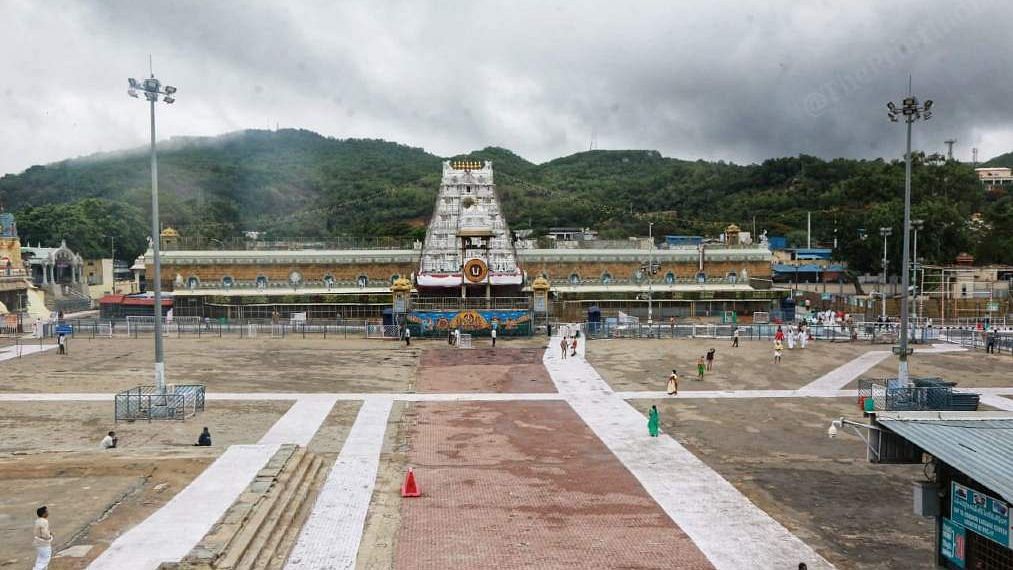
Situated in the Chittoor district of Andhra Pradesh, Tirupati is known for Lord Venkateshwara Temple, one of the most visited pilgrimage centres in the country. Tirumala is one of the seven hills in Tirupati, where the main temple is located. The temple is believed to be placed where Lord Venkateshwara took the form of an idol and is hence home to the diety Govinda. Tirupati is one of the oldest cities of India and finds mention in plenty of ancient Vedas and Puranas.

The non-stop chanting of ‘Om Namo Venkatesaya’, the mad pilgrim rush and the 8-feet tall idol of Lord Venkateshwara – everything about the Sri Venkateshwara Temple is majestic. Spread over an area of 26 kilometres and visited by nearly 50,000 pilgrims every day, the temple is also commonly referred to as the Temple of Seven Hills.

There are other temples in Tirupati too that you can visit, including the Sri Kalahasti temple, Sri Govindarajaswami Temple, the Kondandarama Temple, the Parashurameshwara Temple, and the ISKCON temple. Tirupati is home to a unique geological wonder that you shouldn’t miss out on! The Silathoranam is a natural arch formed out of rocks and is located at the Tirumala Hills.

Home to the most famous and important Vaishnavite shrine of Tirumala Venkateswara Temple and other historic temples and is referred to as the spiritual capital of Andhra Pradesh, Tirupati is one of the eight Swayam vyaktha kshetras dedicated to Lord Vishnu. Tirumala is one of the seven hills in Tirupati, where the main temple is located. The temple is believed to be placed where Lord Venkateshwara took the form of an idol and is hence home to the diety Govinda. Tirupati is one of the oldest cities of India and finds mention in plenty of ancient Vedas and Puranas. Spread over an area of 26 kilometres and visited by nearly 50,000 pilgrims every day, the temple is also commonly referred to as the Temple of Seven Hills. In Dravidian translation, Tiru means the sacred or Goddess Lakshmi and pathi means abode or husband. Tirupati or Tirumala is referred to as Pushpa-mandapa in the Acharya-Hridayam from the 13th century. According to the Varaha Purana, during the Treta Yuga, Lord Rama resided here along with Goddess Sita and Lord Lakshmana on his return from Lankapuri. As per the Purana, a loan of one crore and 11.4 million gold coins was sought by Lord Balaji from Kubera for his marriage with Padmavathi. To pay back the loan, devotees from all over India visit the temple and donate money.

The city became great Vaishnava centre during the time of Ramanujacharya in the 11th century, from where Srivaishnavism spread to other parts of the Andhra Desa. Tirupati survived the muslim invasions and during the early 1300s during the muslim invasion of south India, the deity of Sri Ranganathaswamy Temple in Srirangam was brought to Tirupati for safekeeping. The first temple at Tirumala Tirupati was built by King Thondaiman, the Tamil ruler of ancient Thondaimandalam who is said to have built the original Gopuram or tower and the Prakhara in the 8th century. The temple town for most of the medieval era part of Vijayanagara empire until the 17th century and its rulers contributed considerable resources and wealth to the temple. The city has many historical temples including the Venkateswara Temple which bears 1,150 inscriptions in Sanskrit, Tamil, Telugu and Kannada languages which specify the contributions of the Pallava Kingdom around the 9th century, the Chola kingdom around the 10th century and the Vijayanagara empire in the 14th century.

There was no human settlement at Lower Tirupati until 1500, but with the growing importance of Upper Tirupati, a village was formed at the present-day Kapilatheertham Road area and was named Kotturu. It was later shifted to the vicinity of Govindarajaswamy Temple which was consecrated around the year 1130. Later the village grew into its present-day form around the Govindaraja Swamy temple which is now the heart of the city. In 1932, the Tirumala Venkateswara Temple was handed over to Tirumala Tirupati Devasthanams by the TTD Act of 1932.

The Sri Venkateshwara temple is dedicated to Lord Venkateswara, a form of Vishnu, who is believed to have appeared here to save mankind from the trials and troubles of the Kali Yuga. Hence the place is also known as the Kaliyuga Vaikuntha and the Lord here is referred to as Kaliyuga Prathyaksha Daivam. The Tirumala hills are part of Seshachalam Hills range and are 853 metres or 2,799 ft above sea level. The Hills comprises seven peaks, representing the seven heads of Adisesha with the temple lying on the seventh peak, Venkatadri, on the southern banks of Sri Swami Pushkarini, a holy water tank. Hence the temple is also referred to as Temple of Seven Hills. The Temple is constructed in the dravidian architectural style and is believed to be constructed over a period of time starting from 300. The Garbagruha or sanctum sanctorum is called the Ananda Nilayam. Lord Venkateswara is in a standing posture and faces east in the garbha gruha. The temple follows the Vaikhanasa Agama tradition of worship and is one of the eight Vishnu Swayambhu Kshetras and is listed as 106th and the last earthly Divya Desam. The temple premises had two modern queue complex buildings to organise the pilgrim rush, the Tarigonda Vengamamba Annaprasadam complex for free meals to pilgrims, the Vaikuntam queue complex which is a series of interconnected halls that leads to the main temple, hair tonsure buildings and a number of pilgrim lodging sites. It is the richest temple in the world in terms of donations received and wealth. The temple is visited by about 50 to 100 thousand pilgrims daily or 30 to 40 million people annually on an average, while on special occasions and festivals, like the annual Brahmotsavam, the number of pilgrims shoots up to half a million making it the most-visited holy place in the world.

Standing to the north of Sri Venkateswara Temple is the Sri Varahaswami Temple which according to legend is said to belong to Sri Adi Varahaswami. It is advised to first pay a visit to this temple before visiting the Venkateswara temple, the reason being that Sri Varahaswami owned the seven hills on which the Venkateshwara temple stands. He agreed to hand the hills over to Sri Venkateswaraswami, on the condition that he too, should be worshipped. Hence, Sri Venkateswaraswami asked his devotees, to first pay a visit to Sri Varahaswami and then to him.
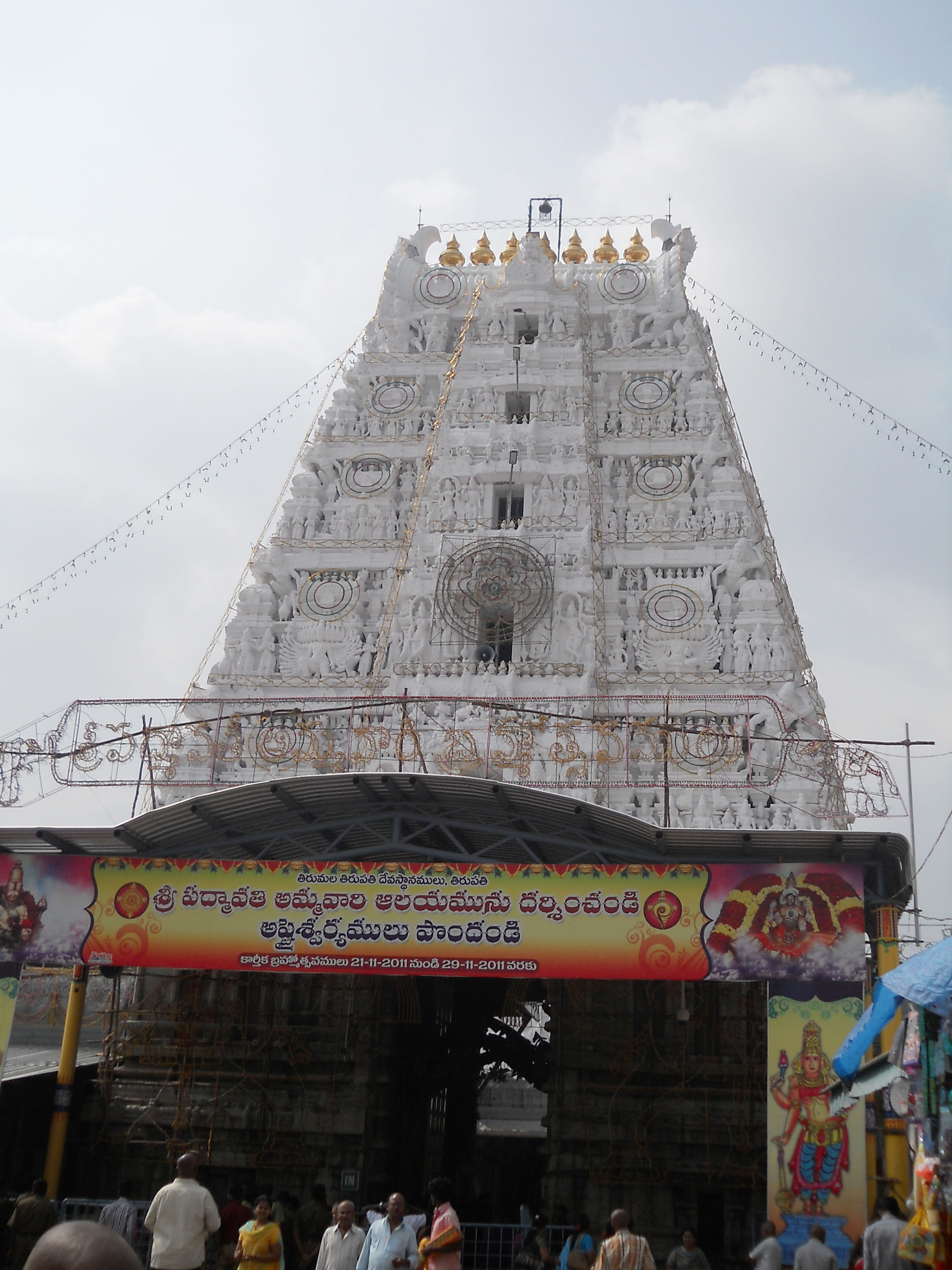
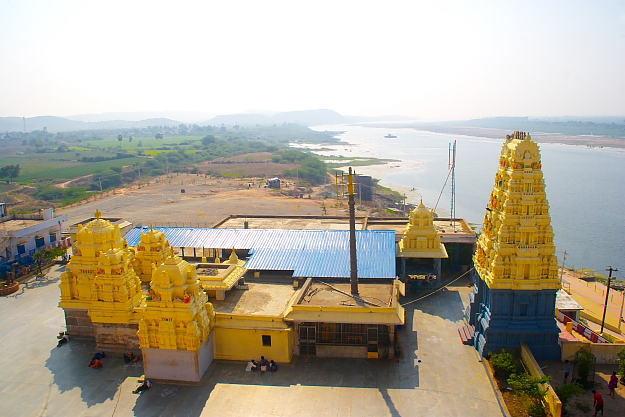
At a distance of about 5 km from the Tirumala temple in Tiruchanur, is the Sri Padmavathi Ammavari Temple dedicated to Goddess Padmavathi, also administered by the Tirumala Tirupati Devasthanam. Legend has it that while Akasha Raja of Thondamandalam was having a great yagna performed and had the earth ploughed, he found a little girl in a lotus flower, and hence the name, Padmavati. A voice from the skies asked him to love and bring up the child. As she grew up, she was married to Lord Venkateshwara. The temple is frequently visited by the devotees on their spiritual trail around the town.
Source

The Vedadri Narasimha Swamy temple lies at a distance of 70 km from Tirupati and was constructed by Sir Krishna Deva Raya of Vijayanagar. It holds great mythological importance and is believed to be the site where Lord Vishnu battled with the demon rasksash Somakadu, won and took over the vedas from him.

The Sri Govindarajaswami temple is a 12th century Hindu Vaishnavite shrine built by Saint Ramanujacharya and is one of the biggest temple complexes in the district. The presiding deity is Lord Vishnu, also called Govindarajaswami. The beautiful traditional Dravidian architecture and its rich culture attract tourists in quite a large number every year.

A little away from the city of Tirupati, the Sri Venugopalaswami temple is devoted to Lord Venugopalan with the idol of Sri Sita Ramula Pattabhishekam. Some of the main festivals celebrated in this temple are Annual Bhramotsava, Ugadi Asthanam and Sankranti Utsavam.
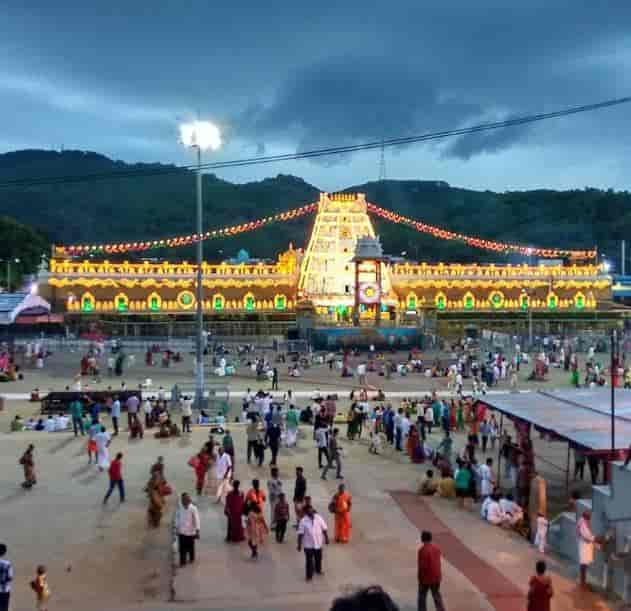
The Sri Bedi Ananjaneyaswami Temple is dedicated to Lord Hanuman. A legend states that Lord Hanuman wanted to go searching for a camel but his mother tied him with bedis and went back to the Akash Ganga. Many believe Lord Hanuman can be seen even today standing at that very location.
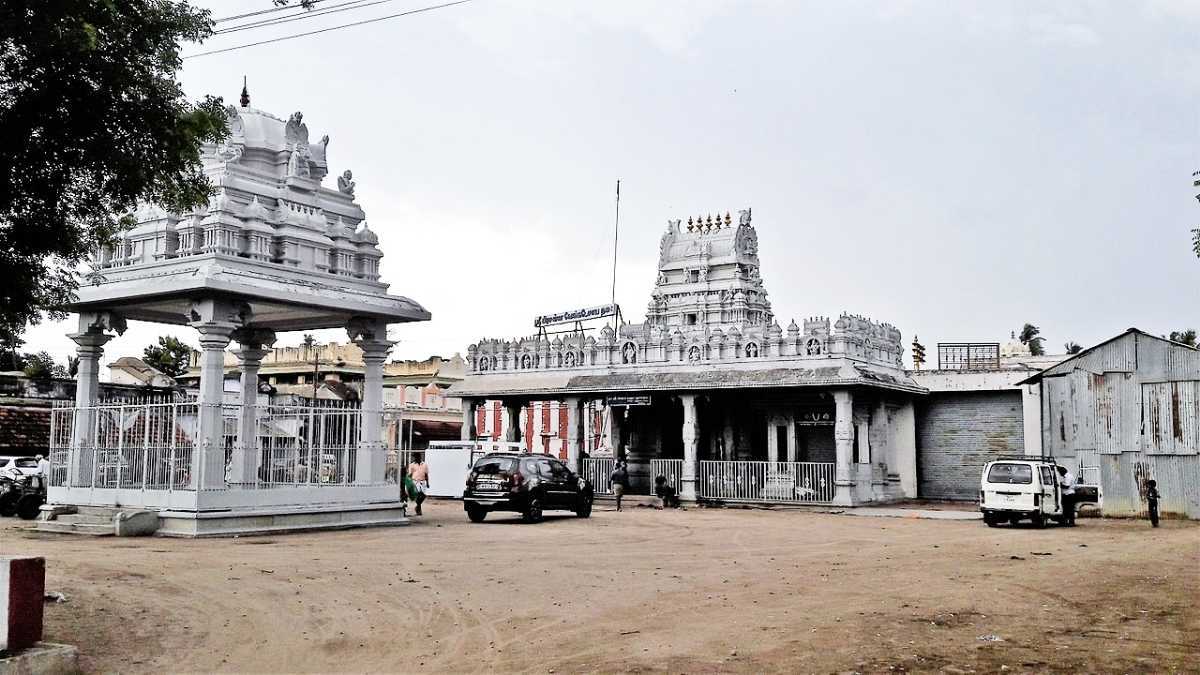
Dedicated to the Lord Vishnu, the Sri Veda Nayaranaswami temple is one of the few temples in the country that depict the incarnations of Lord Vishnu whose prime form, Matsya or the fish is also depicted. This is the place where Vishnu defeated demon Somaka and took the form of a fish to retrieve the Vedas thrown in the water by the demon.
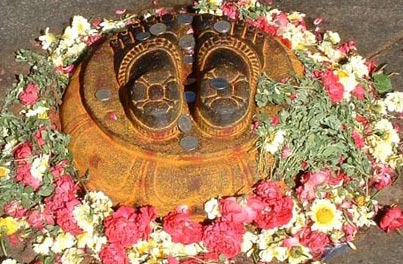
Situated on top of Narayangiri Hill amidst beautiful scenery, the Srivari Padalu temple is believed to be the place where Lord Narayan first set his foot on earth. It is an important pilgrimage and visitors flock in large numbers to offer prayers to the footprints of Lord Narayan.

The Sri Kalyana Venkateswaraswami temple is an ancient Vaishnavite temple, also considered an archaeologically important monument in India. The presiding deity is Lord Venkateswara, who is considered to be highly powerful and can absolve one of their sins, doshas and get rid of any obstacles they face in their lives.

An ancient shrine dedicated to Lord Venkateswars, the Sri Prasanna Venkateswaraswami temple is a dravidian architectural splendour with a magnificent idol of the presiding deity. It is a believed that offering prayers to the deity here relieves one of doshas or sins and removes obstacles one faces while achieving their goals.
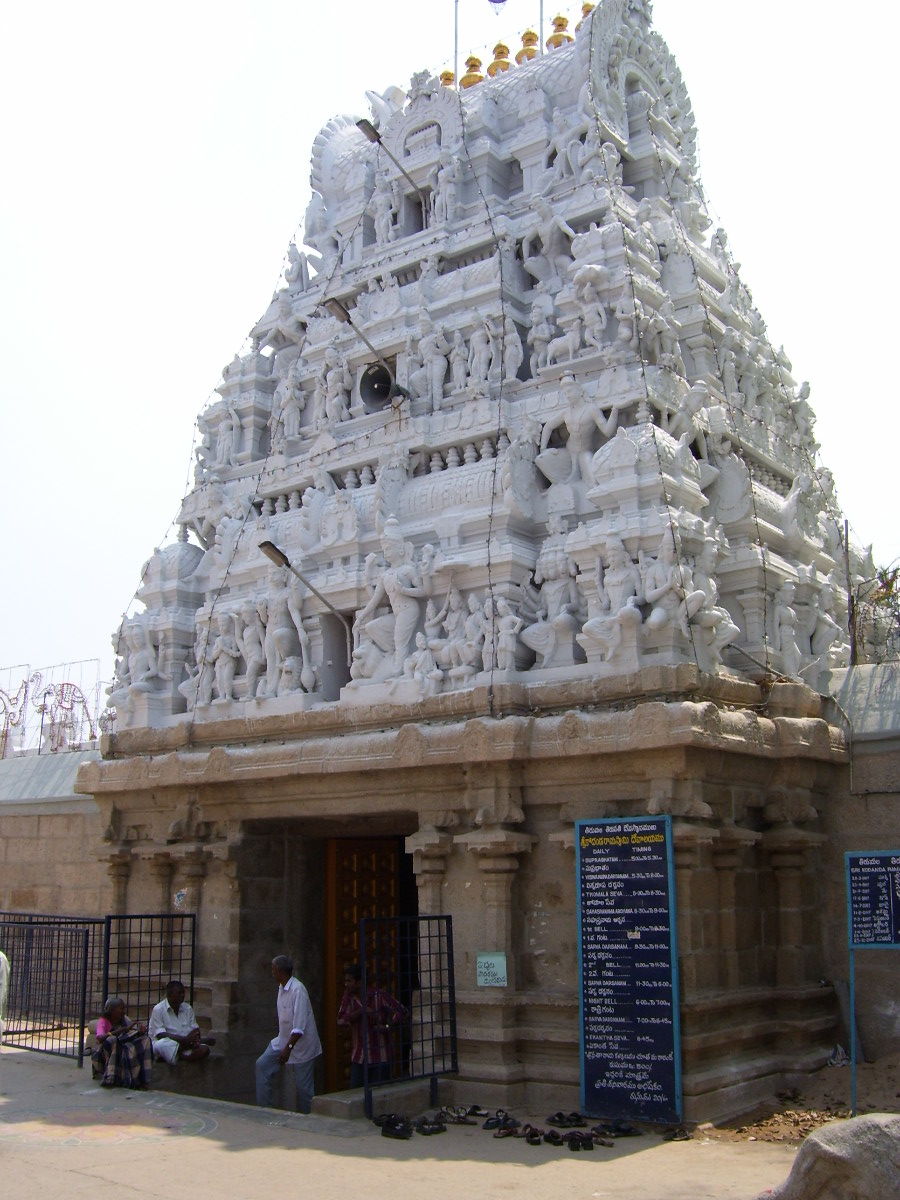
The Sri Kodandarama Swamy temple or the Kodandarama temple is a temple in the heart of Tirupati, dedicated to Lord Rama. The Varaha Purana suggests that Lord Rama, Sita Devi and Lakshmana stayed here when returning to Ayodhya from Lanka. Built by the Cholas in the tenth century, this temple commemorates their stay here. While Ugadi and Ram Navami are celebrated on a grander scale, the Brahmotsav is also celebrated here every year. There is a sub-shrine dedicated to Anjaneya or Lord Hanuman, Lord Rama’s most devoted devotee.

Kanipakam is a village most famous for the Kanipakam Vinayak temple, built in the 11th century by King Mahavarman Sundara Pandian and for the Shiva temple which was built by King Kullotunga Chola. The rich religious significance of the temples and the stunning ancient architecture attracts visitors in large numbers each year.
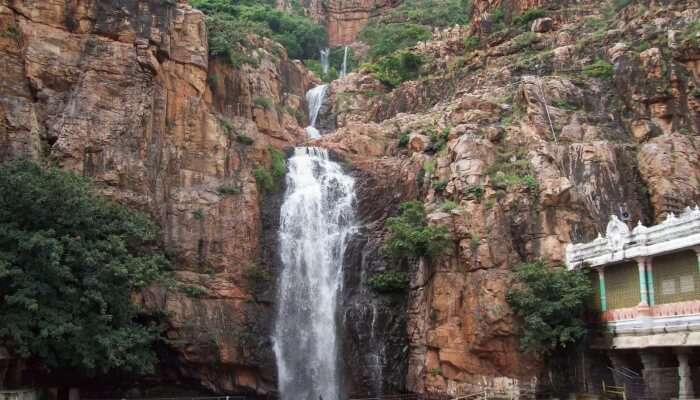
The Akasha Ganga Teertham is a waterfall, located at a distance of 3 km from the main temple which has water flowing all throughout the year and holds immense religious significance. Pilgrims can also pay homage to the Devi temple situated very close to the waterfall which is beautiful sight to see during the monsoon season. A sacred lake located amidst dense natural vegetation, the waters of the Tumbhuru Teertham is believed to have magical powers and can absolve one’s sins and help them attain moksha. The attraction is also famous for its natural beauty and is frequented by nature lovers for nature walks. A Shaivite temple, the Kapila Teertham is a famous pilgrimage in the city located at the entrance of a mountain cave at the foothills of Tirumala Hills and is a marvellous example of Dravidian architecture. The presiding deity is Lord Shiva who is locally known as Lord Kapileshwara and the idol of the deity was installed by Kapila Muni. Japali Teertham is dedicated to Lord Hanuman and is situated amidst dense forests. It is believed that Lord Hanuman used to visit the location often to quiet his mind and soak in peaceful atmosphere. It is also believed that Lord Rama and Goddess Sita also stayed here. The water of the Teertham is said to have magical powers and can wash away all the sins a human has made. It is believed that taking a dip in the holy Papavinasam Teertham can absolve one of their sins. It is also famous for its scenic beauty with the route going to the falls going through uneven rocky trails amidst beautiful surroundings making it a perfect location for nature walks.
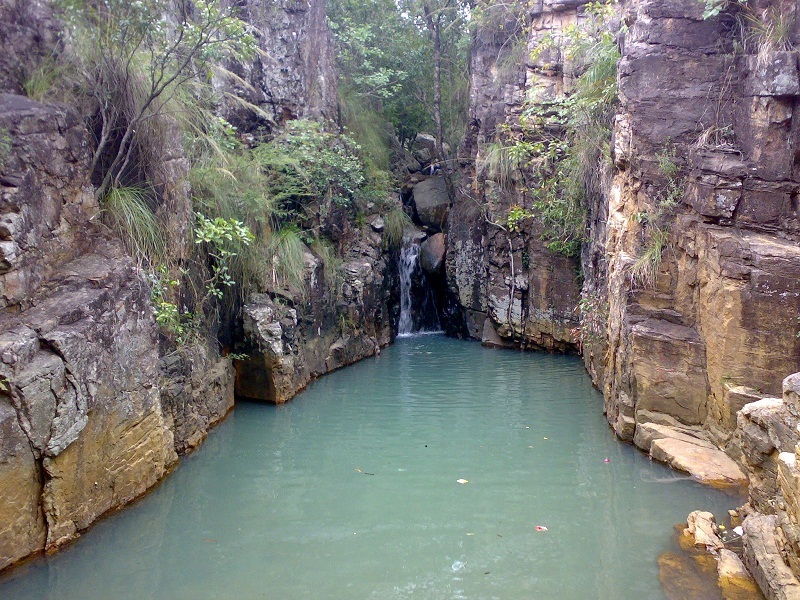
The Chakra Teertham waterfall is a famous water body considered to have high religious importance. It is believed that Lord Brahma performed penance at this location which was later cleansed by Lord Vishnu with his Sudarshan Chakra. The place where his Chakra fell is known as Chakra Teertham. The water is said to have healing powers and can absolve one of their sins. Considered a sacred waterfall, the Vaikuntha Teertham is associated with the legend of Ramayana. It is believed that Lord Rama’s vanarsena or monkey army located the teertham. A dip in the holy waters is considered to bring luck, good fortune and absolve one of their sins. At a distance of 4 kms from the city centre, the Kapila Theertham is a popular waterfall situated inside the premises of the Kapileswara Swamy temple at the base of the Sheshadari Hills. The water cascading down of 100 metres to form a pool at the base is a gorgeously enchanting sight to see. Located in Sri Venkateswara National Park, the Talakona Waterfalls is the highest waterfall in the region and a famous picnic spot. The water is believed to have medicinal properties and comes from an unknown underground stream. The attraction is also famous for trekking and has several trekking routes running around it amidst the scenic natural surroundings.

Also known as the Natural Arch, the Silathoranam is a notified National Geo-heritage Monument and a distinctive geological feature 1 km north of the Tirumala hills temple, near the Chakra Teertham. One of only three of this kind in the world, the arch measures 8 m in width and 3 m in height, and is naturally formed in the quartzites of Cuddapah Supergroup of Middle to Upper Proterozoic due to natural erosive forces. Silathoranam comes from two Telugu words, which comes from sila meaning rock and thoranam meaning a garland. Thus it means a garland strung over a threshold, connecting two vertical columns or an ‘arch’ as in this case. Mythology related to the arch, linked to the famous Tirumala hills temple of Lord Venkateswara, has three versions. According to one version, the arch resembles the hood of a serpent, a conch and a discus, all symbols of worship in Hindu religion and considered to be the source of the idol of Lord Venkateswara or Lord Balaji at the temple. The second version is that the main deity in the Tirumala temple is of the same height as the height of the arch. The third version is that Lord Vishnu, known as Balaji or Venkateswara at the Tirumala temple town, is supposed to have put his first foot down at a place called Padalu or Sreevaripadalu which is the highest point of Tirumala hills, the second step at the location of the arch. Thereafter, the next step is stated to have been placed where his idol is now worshipped in the temple at Tirumala.
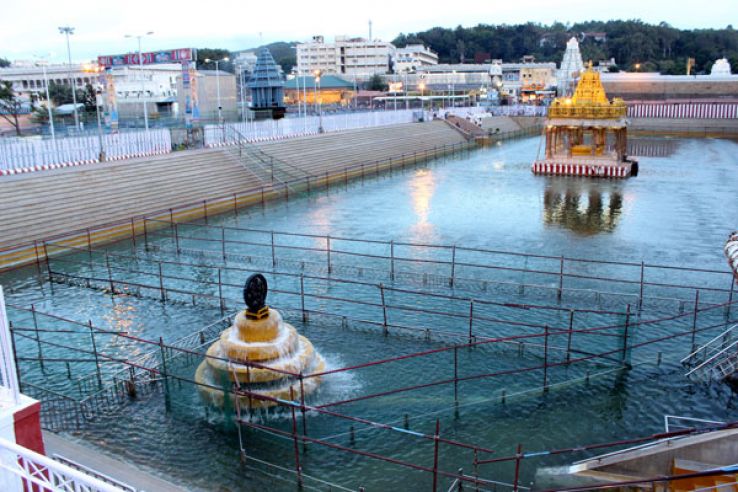
Almost neighboring the Sri Venkateshwara Temple, is Swami Pushkarini Lake. According to the legends, the lake belonged to Lord Vishnu and was located in Vaikuntham, his divine abode. It was brought to the earth by Garuda, for the sport of Sri Venkateshwara. Extremely holy, the pilgrims usually take a dip in the waters of this lake before proceeding to the main temple.
Source

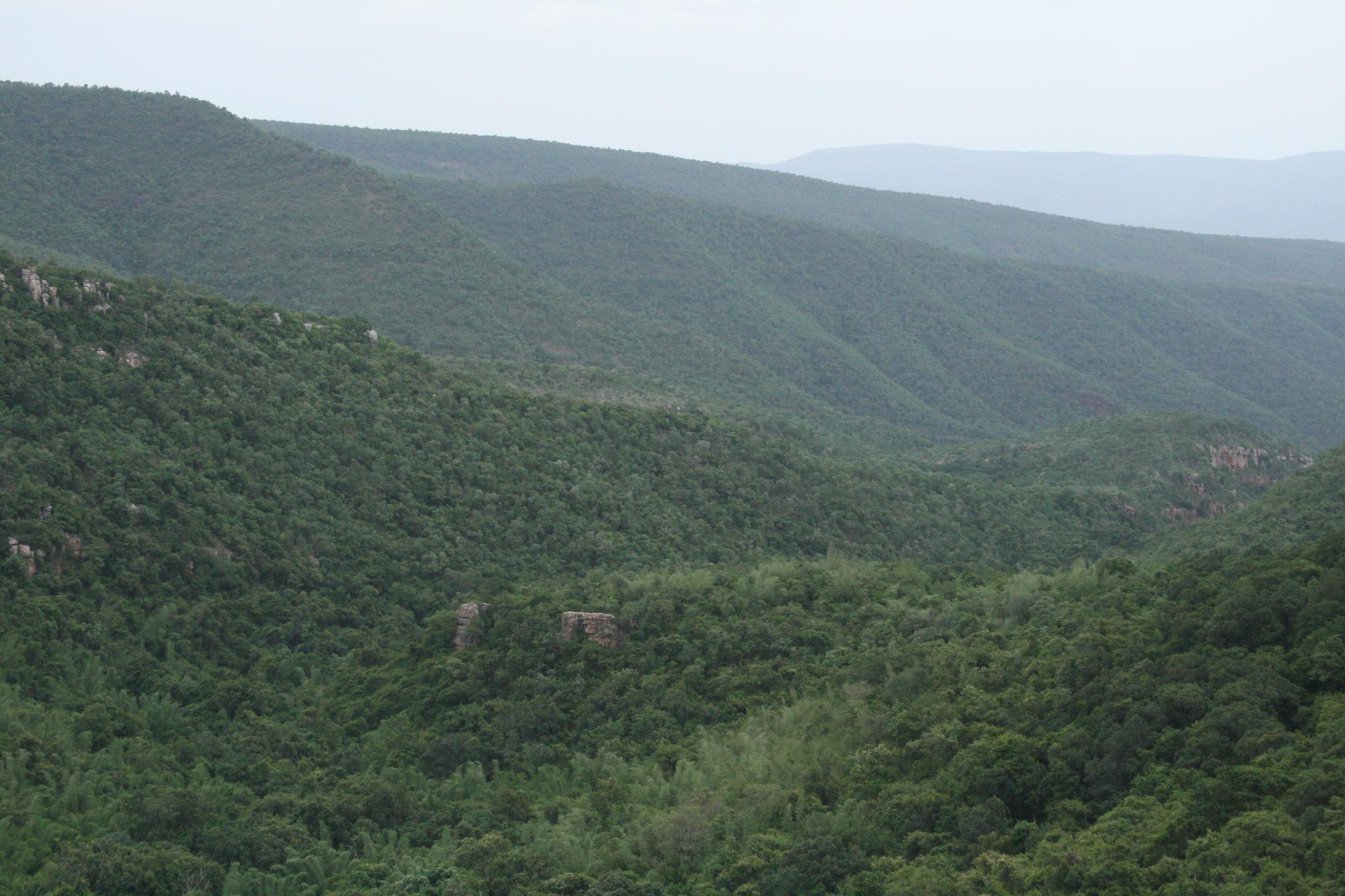
Located about 10 km from Tirupati and on the Eastern Ghats, the Venkateshwara National Park with an area pf 353 sq km and a biosphere reserve is home to endemic plant species and interesting fauna species like Slender Loris, Tree shrew, Wild dog etc. Bird watchers are also in for treats like the crested serpent eagle, the Indian roller and kingfishers etc. But the main attraction of this national park are the three waterfalls, viz, Talakona, Gundalakona and Gujana. The park is open on all days from 9 am to 5 pm with an entry fee of INR 50 for adults and INR 10 for children. The best time to visit the park is between December to March and August to November.

Located amidst the beautiful natural surroundings, the Deer Park in Tirupati houses a large number of deer and other regional flora and fauna. Tourists on their way to Tirumala often take a pit stop here and spend a few hours in the company of the deer, feed them and also watch them thrive in their natural habitat.
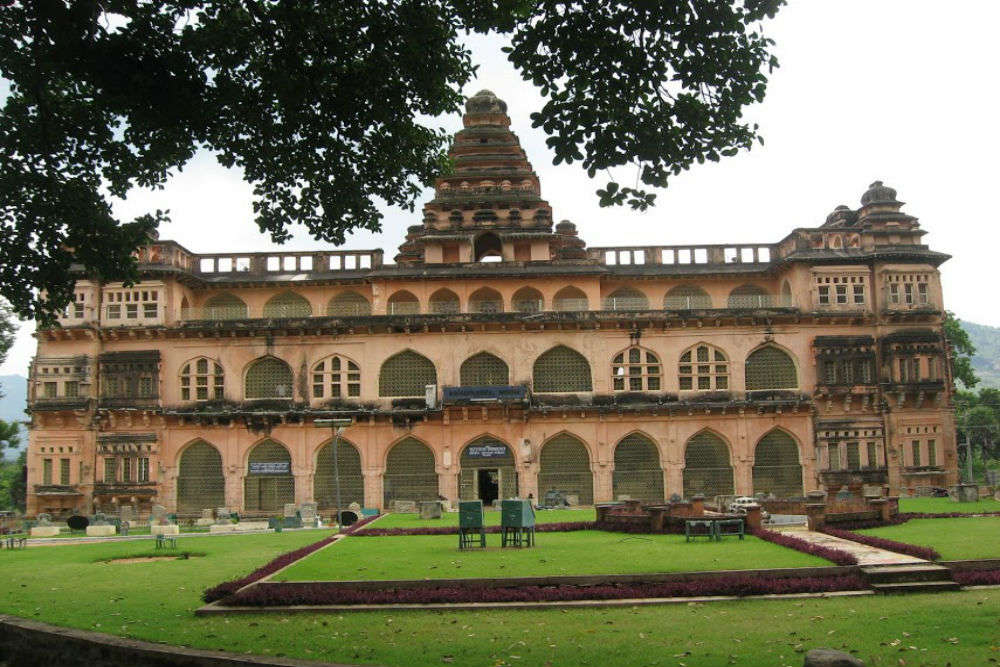
The Chandragiri Palace & Fort is a 11th century monument built by the Yadav Naidu kings and is also associated with the Vijayanagara Kingdom. The stunning structure is a perfect example of Vijayanagara architecture. Tourists are drawn by its rich history and heritage value. The attraction has fortnightly light and sound shows and the annual celebration of Madras Day.
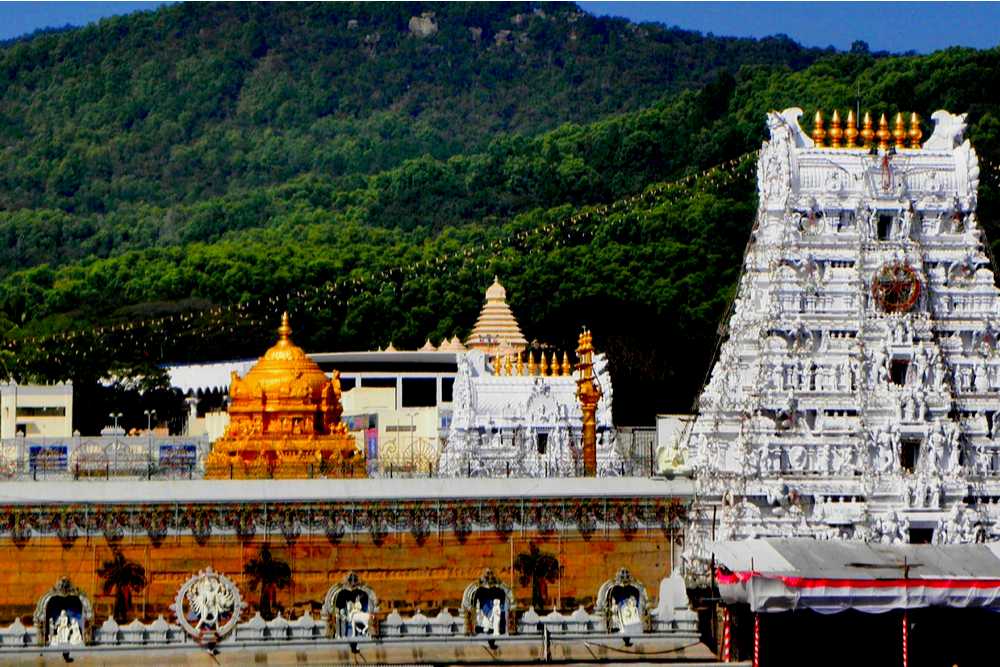
Established in the year 1980, the Sri Venkateswara Dhyana Vignan Mandiram in Tirupati is a museum that houses some of the most traditional articles that are used to perform Puja. There are many stone and wood carved items that can be found here. The museum is extremely beautiful and fills into you a sense of religious faith not easy to describe.
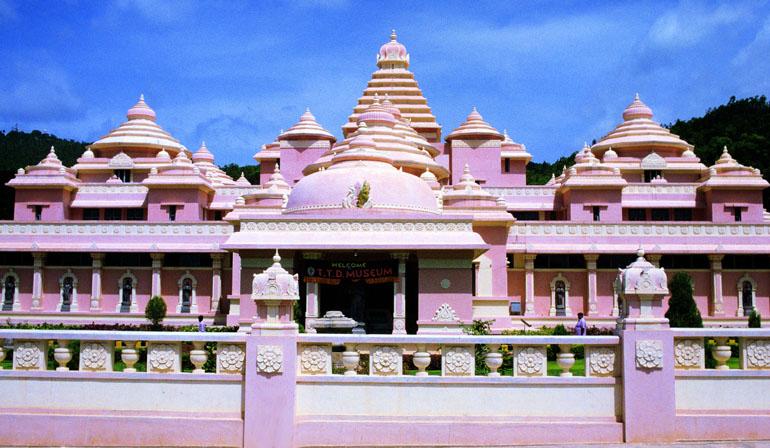
The Sri Vari Museum is where one can get a glimpse into the religious history of the region. The museum has an impressive collection of artefacts that give insights into the ancient history and architecture of the temple that includes sculptures, photographs, scriptures, temple and pooja utensils, etc.
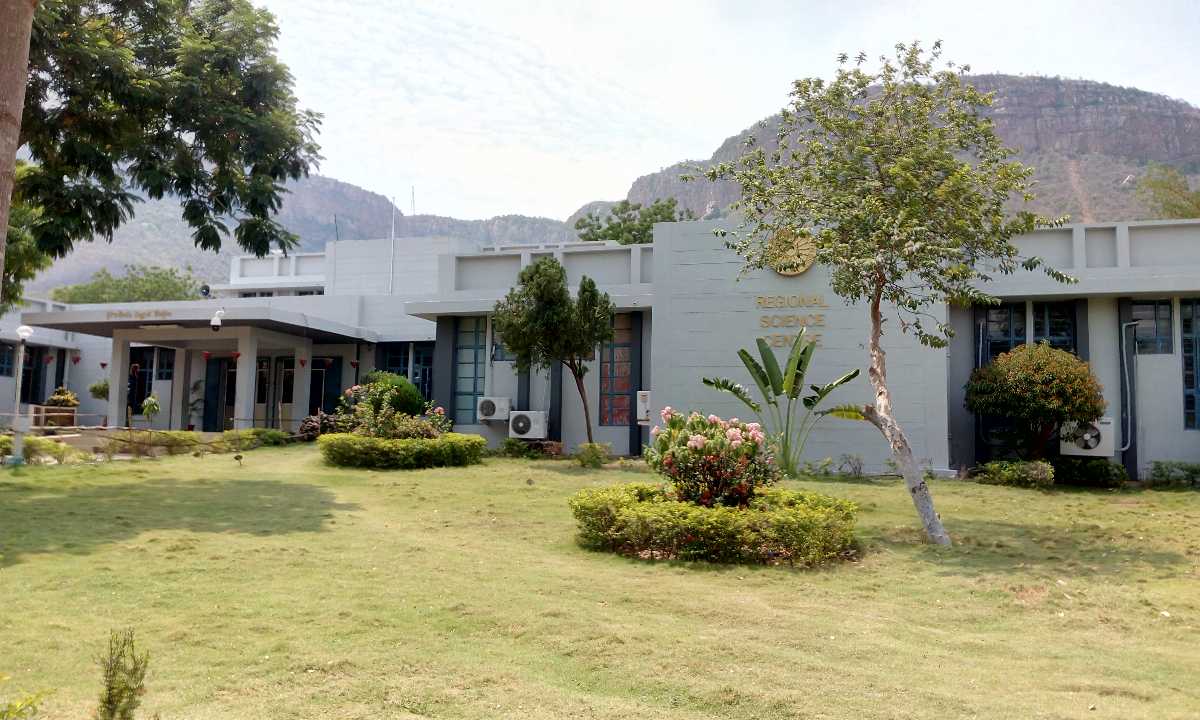
Regional Science Centre at Tirupati is a famous planetarium with a marvellous sky observation deck, galleries, parks and equipment of the highest quality. The centre also holds several demonstrations, exhibitions and shows in schools and institutes through their mobile science exhibition.

We have come to the end of our travel around Andhra Pradesh and I hope you have had as much fun reading it as I did researching and writing it. We will soon explore another state of India, so keep reading!
Travel Bucket List: India – Andhra Pradesh Part 5

After Guntur, Chirala, Nagarjunakonda, Srisailam, Cumbum and Nellore, let head south to tKarnataka.

Kurnool
The judicial capital of Andhra Pradesh, Kurnool is the state’s 5th largest city and is also known as the Gateway of Rayalaseema. Although the area has been inhabited for thousands of years, modern Kurnool was founded in the 16th century with the construction of the Konda Reddy Fort. Derived from the names Kandanavōlu or Kandanōlu, Kurnool used to be a crossing on the Tungabhadra River, where the bullock cart caravans are believed to have greased their wheels with kandana being a reference to grease. The Belum Caves have historical importance in the city as well as the Ketavaram rock paintings which are dated back to the Paleolithic era.

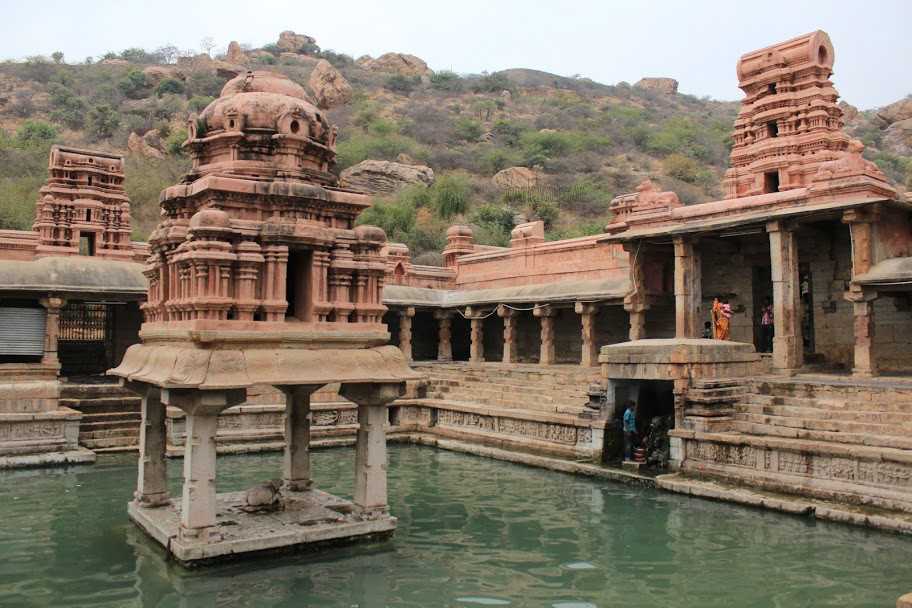
Yaganti, is famous for its temple of Sri Yagantiswamy, dedicated to Lord Shiva and is also known as the Uma Maheshwara temple. This ancient temple dates back to the 5th and 6th centuries and houses the idol of Shiva and Parvathi fused together, called Ardhanareeswara carved out of a single stone. The temple is not only of religious significance but also because it has many striking and unusual features. To begin with, Yaganti is perhaps the only temple dedicated to Lord Shiva, where he is worshipped in the form of an idol, instead of the Shiva Linga. The temple also has the Agastya Pushkarni, where water flows from the bottom of the hill, throughout the year. Worshippers take a dip in the holy water as a form of worship to the deity. There are different stories revolving around the origins of the temple. According to one story, the sage Agastya wanted to build a temple for Lord Venkateswara here but for some reason, the statue of the Lord could not be installed be here, and the sage then penanced for Lord Shiva. When Lord Shiva appeared, the sage realised that the place suited him better and then requested Lord Shiva to appear in the Ardhanareeswara form, to which he obliged, and which is present form worshipped here. According to a second story, when a devotee of Lord Shiva, known by the name of Chitteppa, was worshipping the Lord, the latter appeared to him in the form of a tiger. Chitteppa recognised that it was Lord Shiva in the tiger form, and he exclaimed Neganti Shivanu ne kanti, which means I saw Shiva. . The festival of Maha Shiv Ratri which falls around October or November each year is celebrated with great pomp and show at the temple. The numerous natural caves in the hills around the temple were home to several saints throughout the ages, prominent caves include the Agastya cave, which is believed to be the place where saint Agastya performed penance to get Lord Shiva’s blessings; the Veera Brahmam cave, the site where Potuluri Veera Brahmam, who is known as India’s Nostradamus, wrote some chapters of his prophecies in the Kala Gnanam and the Venkateswara Cave. All these caves are open for worship from dusk to dawn. A fantastic feature of the temple is its Pushkarini, a water stream with very pure water with no one being able to figure out the exact reason of how the water flows into Pushkarini in all the seasons and a bath in the holy Pushkarini before visiting Shiva is considered to be highly beneficial. Also according to legend, crows do not fly in Yaganti because when sage Agastya was meditating here, Kakasura, the king of crows had disturbed him from his meditation. The sage, in turn, cursed the crows not to enter the premises and since the crow is considered the vehicle of Lord Shani, he cannot enter the temple. Perhaps the most famous legend associated with the temple, is the growing Nandi. Not just a belief, by documented by the Archaeological Survey of India which says that it is because the rock has a growing nature associated with it.

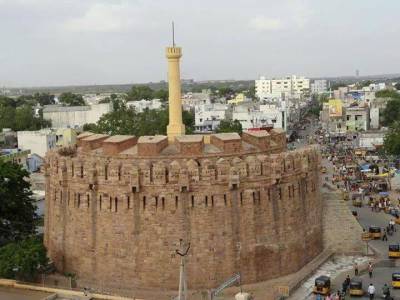
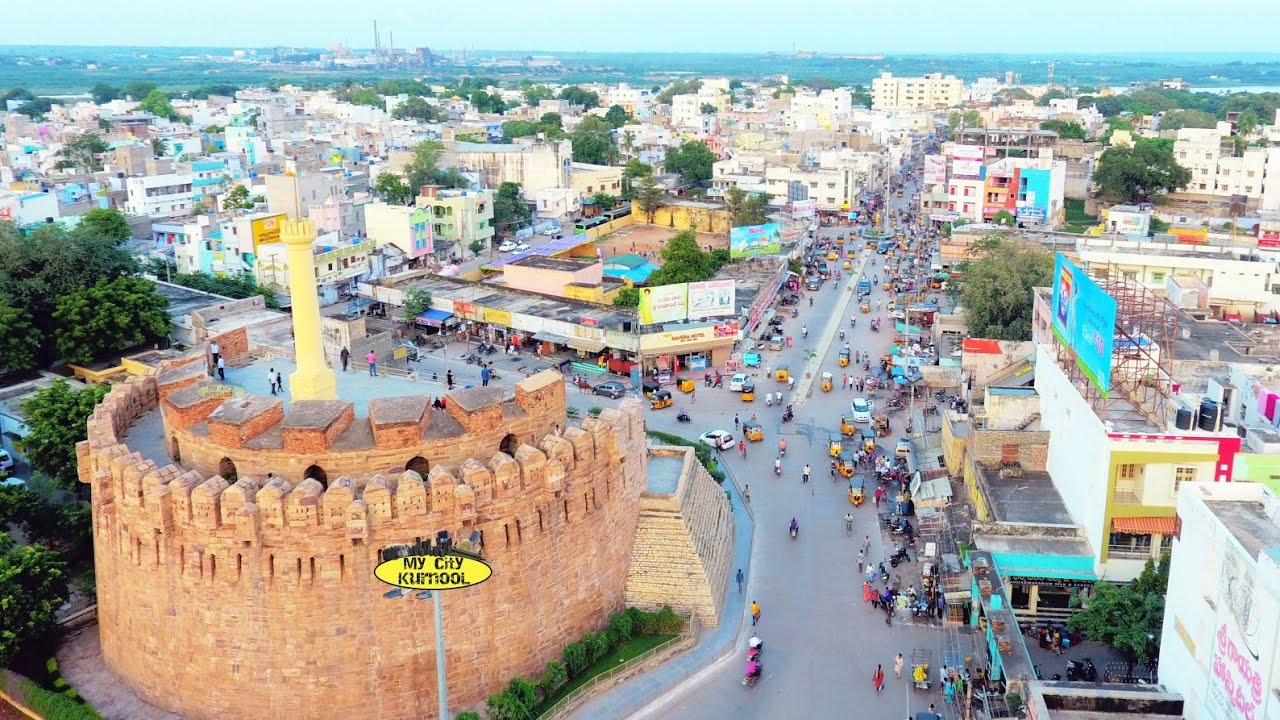
Konda Reddy Fort, also known as the Kurnool Fort or Kondareddy Buruju, is located 2 km from Kurnool railway station. In ruins today, the structure was built by the rulers of the Vijayanagar Empire. The modest looking structure, once housed a tunnel that passed from under the Tungabhadra river and still holds a majestic watch tower, looking over to the city that grew around it.

The Adoni Fort is a 15th century monument built during the reign of the Vijayanagara dynasty and served as a military base with its walls stretching over 50 km making it the largest fort in the country. After the downfall of the Vijayanagara empire, the fort was in the possession of the Bijapur Sultanate and later, after the defeat of Tipu Sultan, came under the British rule.

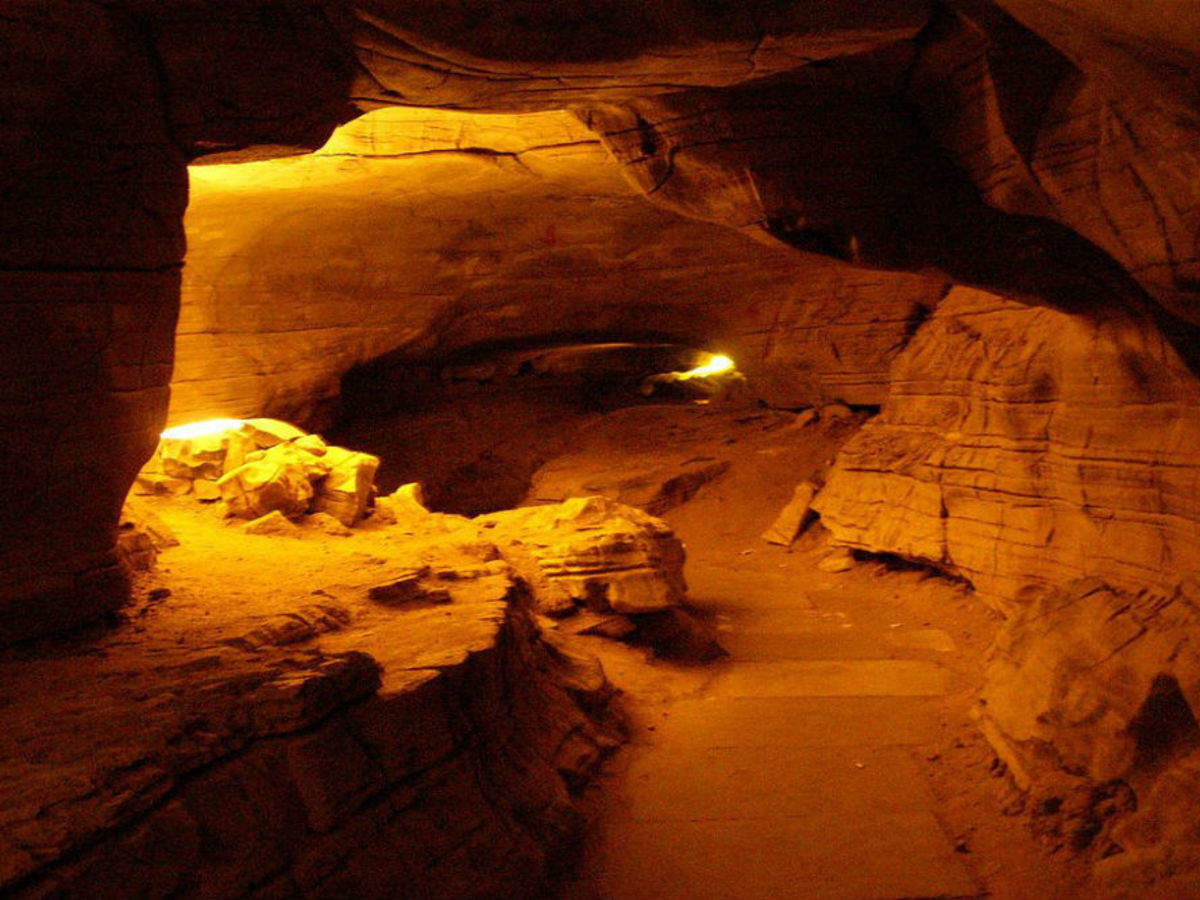
The Belum Caves are black limestone caves which are the largest and longest cave system in India famed for their unique formations such as stalactite and stalagmite formations and formed over many million years. A centrally protected monument of national importance, the Belum Caves has numerous pathways with intricate patterns of water streams on limestone. One of the most striking features of the cave is the stunning rock formations called Saptasvarala Guha (the chamber of seven notes). Here, you can hear the musical sound when struck with the wood, bamboos or knuckles. Simhadwaram, which means doorway for gods is a breathtaking archway giving an illusion of a lion’s head. The Kotilingalu Chamber contains thousands of naturally made lingams. The lingams are formed of stalactites. Voodalamari is another stalactite formation resembling a banyan tree. Thousand hoods, yet another stalactite formation is shaped in the hood of thousands of cobras. Dhyan Mandir is an interesting rock limestone formation shaped as a bed with pillow, local legend suggests this place was used as the meditation centre by all saints. Today more than three and a half km of the cave has been successfully explored of which only a kilometer and half is accessible to tourists. In some places, the depth of the caves goes as deep as 46 m, this point is known as Pataalaganga. An underground stream flows all year at this point, gliding over the rocks and hiding beneath the surface again. The cave consists of various long passages, galleries, large cavities with fresh water and water tunnels and three spectacular sinkholes. A major structure of the caves is dedicated to the period when it was invaded by the Jain and Buddhist monks. Evidence of the Jain and Buddhist remains have been found in the caves. A meditation den, saint’s bed, and several relics were discovered from the cave. Few relics found inside the caves could be dated back to 4500 BC. An enormous forty feet high statue of Lord Buddha was installed outside the caves to commemorate the roles of monks in the caves. The base of the statue consists of a lotus which also has a huge room within but does not have such a good condition. The caves are open from 10 am to 5 pm with Indians paying INR 50 and foreigners INR 300 as entry fees.

A scenic village, Mahanandi is surrounded by dense forestation with the Nallamala Hills located to its west. The village has one of the nine shrines dedicated to Lord Nandi, also called Nava Nandulu and famous for a 10th century ancient temple, the Mahanandiswara Swami temple which draws pilgrims every year on the occasion of Mahashivratri.

Dedicated to Lord Narasimha Swami, the Ahobilam or the Nava Narsimha temple is the only temple where all the nine forms of the deity are worshipped. Ahobilam is believed to be the middle of Adishesha who expands all over the Nalmalla Hills. The temple was built according to the Vijayanagara style of architecture and houses idols of all the nine forms of Lord Narasimha Swami. The temples are are distributed all over the hill and have idols of the deity in their respective forms made of stone and most devotees cover all the temples in one trip to the region.

The Sai Baba Temple located on the banks of the river Tungabhadra is a beautiful star-shaped structure with a traditional Shikhara in the centre on the top. The sanctum sanctorum has an idol of Sai Baba made of pristine white marble. The complex also houses a meditation hall that can accommodate about 800 people.

The Sri Mahayogi Laxmamma Avva Temple is dedicated to Lakshmamma, also known as Avva. She was born in a poor Dalit family, had nothing to live off of and was considered insane because she was always found muttering to herself. Some believed in her powers and offered her food and clothing till she was alive. According to a legend, Avva’s limbs were mutilated but the next day she was seen doing her regular chores and after many such miracles she has been considered an avadhoot.

The Sri Ranganayaka Swamy temple is an 18th century temple built by Krishnadvaraya of the Vijayanagara dynasty who wanted to build a temple similar to the one he visited in Srirangam. He later dreamt of Lord Vishnu telling him that an eagle will direct him to the location where the temple must be built and the beautiful Vijayanagara structure is an architectural treat.

An important pilgrim centre dedicated to Goddess Saraswati, at the Kolanu Bharathi Saraswathi temple the century-old tradition of Aksharabhyasam is performed at this ancient temple. It is also considered to be the abode of Goddess Sri Bharati. The temple complex also has a Shivalinga, known as the Sapta Linga Kshetram, and a statue of Kaala Bhairav who protects the region.

A 19th century shrine dedicated to Lord Satyanarayana, the Satyanarayana Swamy temple is famous for its splendid architecture with a magnificent entrance and beautiful bas-relief and sculpture work on the gopuram.

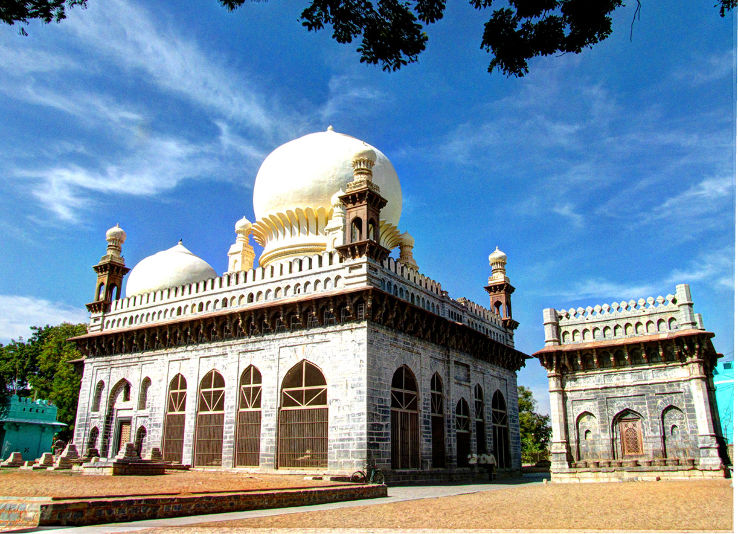
On the banks of River Handri is a 17th century structure known as the Tomb of Abdul Wahab. A monument with elaborate workmanship, two majestic domes, verandahs, arches and more, the tomb was built after the death of Abdul Wahab Khan, the first Nawab of Kurnool. The tomb located near Osmania college and also known as Gol Gummaz as it slightly resembles Gol Gumbaz of Bijapur was recently renovated and is now in a much better condition.

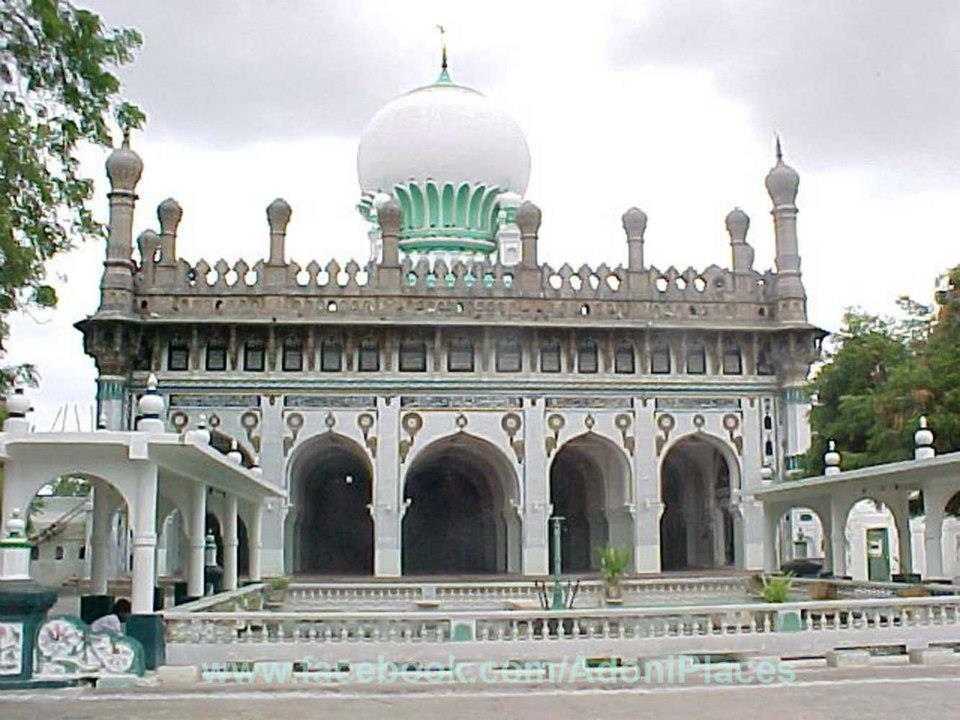
The Jumma Masjid in Kurnool is a 17th century mosque built by Madu Qadiri who was a governor under Adil Shah. The splendid architecture of the mosque includes beautiful minarets, magnificent domes and spacious prayer halls making it a tourist attraction as well.

The Nallamala Forest is over a vast region of the Eastern Ghats and is home to a wide variety of flora and fauna including antelopes, neelgais, chinkaras and leopards. The forest area also includes the Nagarjunasagar – Srisailam Tiger Reserve. The natural landscape, the dense forestation with several stupendous waterfalls and other water bodies, make the attraction perfect for nature lovers.

A park with igneous rock formations, the Oravakallu Rock Garden has a restaurant, small ponds, boating facilities and a cave museum.

Ranamandala Konda is a religiously important attraction in the region as it is believed, this was the place where, during their exile, Lord Rama shot an arrow and it formed a lake to provide water to Goddess Sita. This is also where Lord Hanuman is believed to have fought demons while Rama was sleeping to ensure he doesn’t get disturbed. The attraction also has the famous Ranamandala Anjaneya Swamy temple which is a shrine with no roof.

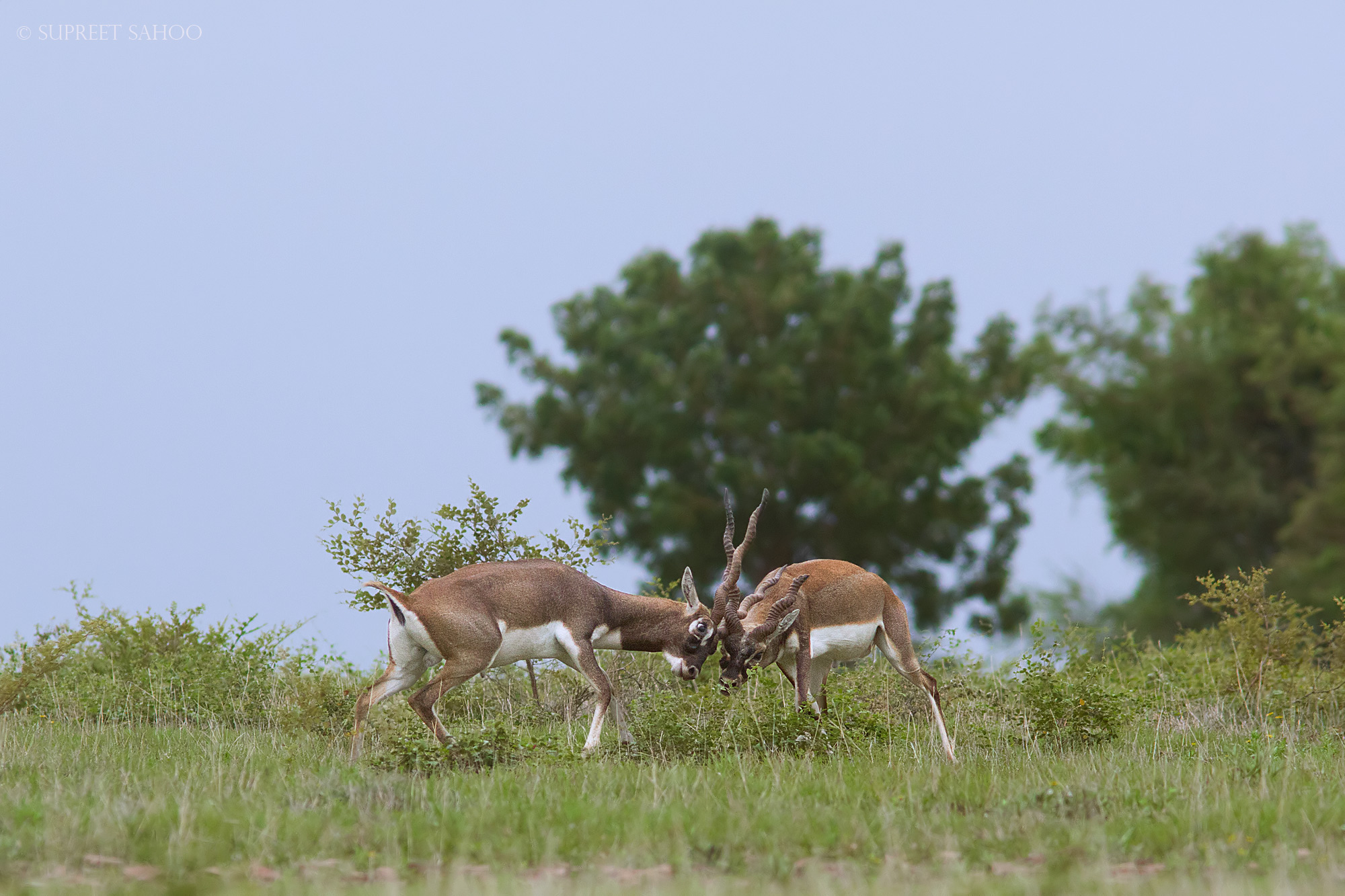
A wildlife sanctuary spread across an area of 614sq kms, the Rollapadu Wildlife Sanctuary offers its visitors a journey into the wild, close to nature, amidst a number of diverse species of flora and fauna. Established in 1988, Rollapadu is especially known for being the home to the endangered species of the Great Indian Bustard and Lesser Florican. The wildlife sanctuary, spread across the huge area is the home to many birds and reptiles. With the Rollapadu village nearby, a man-made water reservoir, preserved for the consumption of wildlife, another reservoir for the collection of rainwater, Rollapadu Wildlife Sanctuary also sets a very good example of the mutual coexistence of mankind and nature. The sanctuary is open from 7 am to 6 pm.

Mantralayam
A holy town, Mantralayam is located 74 km from Kurnool on the banks of the Tungabhadra river near the border with Karnataka. The town is known for Sri Guru Raghavendra Swami, a follower of the Vrindavant cult of Lord Krishna and a saint who entered into a samadhi alive in front of his disciples in the 17th century, a Madhwa saint who is considered to be a reincarnation of Prahlada who was a daitya king saved by Lord Vishnu’s Narasimha avatar. The temple and the Mutt complex are the main attractions here. The temple elephants and chariots carrying the deity around the temple on special occasions are spectacular as is the Tungabhadra river. The temple is open from 6 to 8:30 am, 9:30 am to 2 pm and between 4 to 9:30 pm though the best time to visit is during the evening aarti at 7 pm. Other sites worth visiting in the vicinity of the complex are the Panchmukhi Anjaneya Temple, the Lakshmi Venkateshwara Temple & the Vedic Pathshala or school.

Gandikota
Known as the Grand Canyon of India, Gandikota is a small village near Kadapa flanked by the Pennar river on the right. The village is popular for the spectacular gorges formed by the river cutting through the Erramala hills. The narrow valleys with streams running between them and the steep rocky walls to give them company remind one of the Grand Canyon and requires a walk of almost a km from the main gate to reach the boulder from where you can observe the mesmerising view from the viewpoint near the fort. Located 1.5 hours away from the Belum Caves, the ruins of the Gandikota Fort built in the 13th century and flanked by the Pennar gorges on both sides and protected by a majestic 5-mile wall is spectacular. Built in red sandstone, the fort boasts of beautiful, intricate carvings in the interior. It also offers sweeping views of the hills and valleys below. In addition to a granary, jail and ruins of some temples, there are several structures within the fort that one can visit. The Raghunathaswamy temple is a unique temple inside the Gandikota Fort housing no idols but has airy corridors, complex hallways and is flanked by an array of towering pillars. The Madhavaraya temple on the other hand, has several idols and is a living masterpiece of ancient architecture. Boasting of several sculptures, the temple is a local favourite. The beautiful Jumma Masjid mosque situated within the premises called the Jamia Mosque, has a beautiful architecture, similar to that of the Charminar mosque in Hyderabad and is a popular camping spot because of the green cover in the vicinity.

Tadipatri
An ancient temple town, Tadipatri was built during the golden years of the Vijaynagar empire. The Chintala Venkataramana temple is home to numerous, yet rare imagery of gods and their sculptures. Walking inside will reveal to an image of Lord Vishnu with multiple arms. This image of the deity is supposed to take on the forms of many other gods, such as one set of hands showing Lord Ram with a bow and arrow, while another set of arms shows Lord Krishna with a flute he. Built-in the shape of a chariot, the Chintala Venkataramana temple’s shrine dedicated to Garuda is made out of granite and carved with great detail. And it is similar to the Vittala Temple at Hampi which holds the Garuda mandapa. A protected heritage site from the 16th century, it is believed that the Bugga Ramalingeswara temple had been constructed between the years of 1490 and 1509 and is without any doubt, a must-visit for everyone. As one enters the temples, they are greeted with skilfully carved sculptures, towering gopurams and musical stone pillars. Sunsets are amazing with the temple as a backdrop. The temple is very distinct because of the occurrence of a natural underground spring, from where water creeps into the Garbha Griha. The water automatically drops onto the place where the Lingam is installed. It is believed that Saint Parasurama lived here and did extensive meditation here. The entire Shiv Purana is written on the temple walls. A beautiful village and mandal located within the heart of Bathalapalli, Anantasagram is a destination for nature lovers because of the huge amount of greenery and water from the riverbanks.

Anantapur
A town in transition, Anantapur is at the confluence of the past and the future and reverberates with flashes of India’s glorious history and the true ethnic traditions and values. Anantapur also receives the second-lowest rainfall in India. It is said that the place has derived its name from Anaatasagaram, a big tank, which translates into endless ocean. Chikkavodeya, the minister of the Vijayanagar King, Bukka-I constructed the town of Anaatasagaram and Bukkarayasamudram.

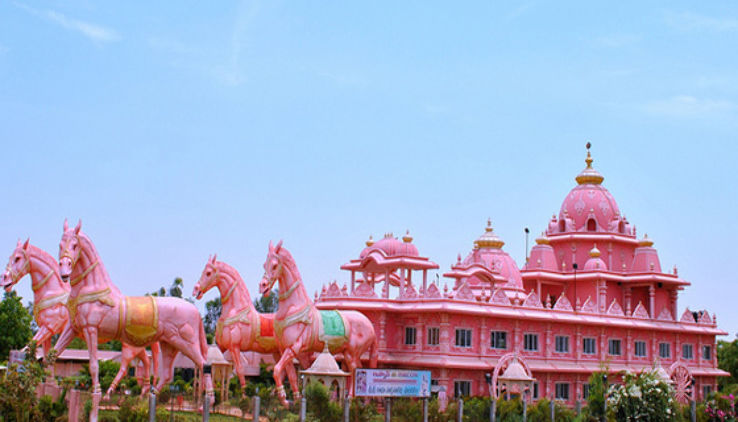
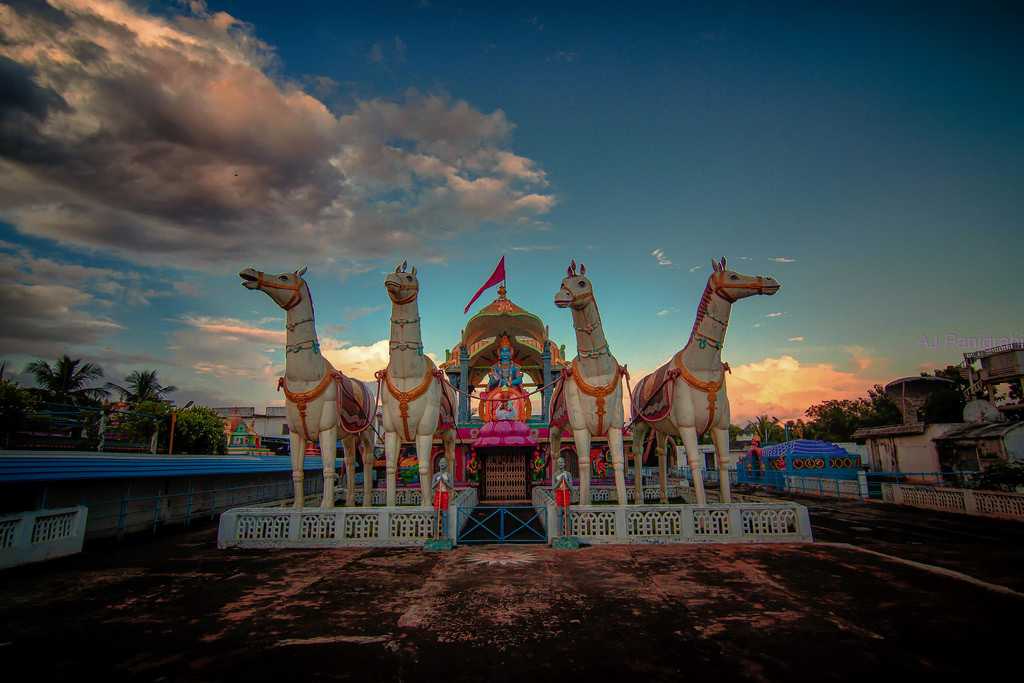
Like all other ISKCON temples, the one at Anantapur, located at Somaladoodi village on the outskirts of Anantpur, is just as beautiful. The temple is in the shape of a horse-drawn chariot, with statues of four huge horses at the entrance. This temple is known as the Radha Parthasarathi Temple and was inaugurated in February 2008 and has a restaurant attached to it. The beautiful temple looks even more scintillating at night when lights illuminate its walls. The most cherished festival is Janmashtami, the birthday of Lord Krishna. The temple is open daily from 4 am to 12 noon and from 4:30 to 8:30 pm.

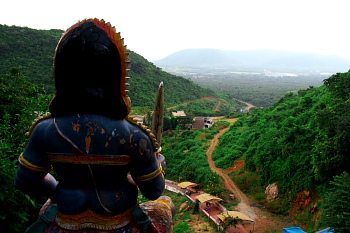
A recent addition, the Hanuman statue at Mounagiri is built several feet high and can be seen from several km afar as well as a temple, for those who wish to pray. The 37 feet tall Hanuman statue is made up of a single stone and was completed in the year 2010.

Source

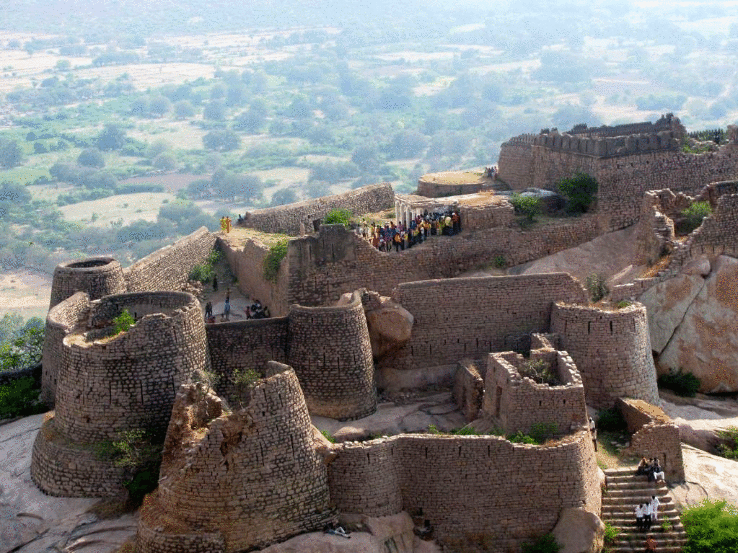
The Penukonda fort is located at a distance of nearly 70 km from Anantapur. Previously known as Ghanagiri, the name of the fort is derived from the word Penukonda, which literally means big hill. This historic fort was once the second capital of the Vijayanagar empire. According to archaeologists, the fort was built by Vira Virupanna Udaiyar’s rule, the son of King-Bukka I of Vijayanagar. A huge idol of Lord Hanuman is placed inside the fort. The 11-feet tall Penukonda Fort houses multiple mosques inside among which the Sher Khan Mosque is the most important. The Gagan Mahal, a palace inside the fort, was built back in the 16th century. Another palace, the Babayya Darga was constructed to symbolise harmony between Hindus and Muslims.

Situated 300 meters above sea level, the Gooty fort is one of the oldest hill forts in the state and the country. The name Gooty is derived from the town’s previous original name, Gowthampuri. Having been designated as a monument of national importance, the fort has been the stronghold of the Chalukyas, Mughals, Marathas, East India Company as well as the Vijayanagara empire before the Qutb Shahi dynasty took over. It is mentioned as the King of Forts according to various historical inscriptions found here. The mammoth Gooty Hill covers a vast area is surrounded by the town on three sides and the westernmost point housing the citadel of the fort. The ruins of the fort are dotted by numerous different buildings and spaces such as granaries, bastions, gunpowder magazine, ramparts, storerooms and temples. The fort is open daily from 9 am to 6 pm and there is no entry fee.

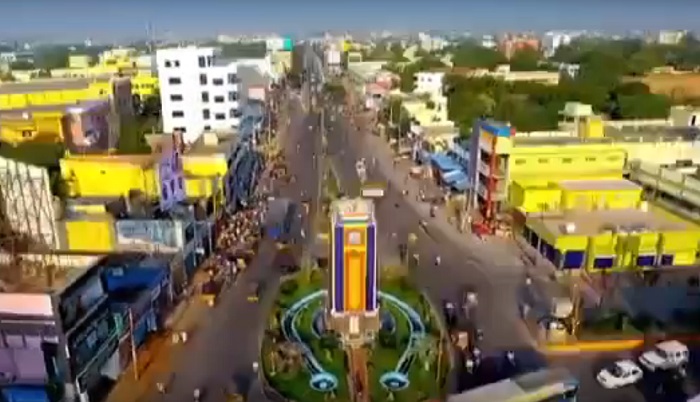
The Anantapur Clock Tower is the landmark in the town innagurated in 1947 and stands 71 m tall in the middle of the town and is well maintained.

Thimmamma Marrimanu is a huge banyan tree located at about 70 Km from Horsely Hills. This historical Marrimanu tree is has been preserved since ancient times with the word marri meaning banyan and manu meaning tree in the Telugu language.

Puttaparthi
The holy abode of the Sathya Sai Baba, Puttaparthi is a town which takes you back to the days of ashrams. A tiny town, Puttaparthi has gained global fame as a religious centre offering modern approaches to religion, for being a unique village with urban facilities. Though Puttaparthi does not have many natural marvels or traditional tourist attractions, its richness and substance lie in its spiritual significance.

The main attraction here is the Sathya Sai Ashram known as Prashanti Nilayam, literally translates into the abode of peace. In the ashram one finds sprawling and beautiful educational institutions, stadiums, museums, hospitals and all the modern facilities capable of accommodating thousands of devotees at a time. The most discernible part of this ashram is the assembly hall where Sathya Sai Baba used to give his darshan. Inside the ashram is a banyan tree which was planted by by Sai Baba himself and is a silent zone for meditation in the ashram and is known as the Meditation Tree. A thick metal plate placed at the root of the tree is said to be joined by Sathya Sai Baba to boost the spirits amongt those who meditate here. The area is divided into separate parts for men and women. However, women are not allowed to visit before sunrise and after sunset for safety reasons. It is also believed that banyan trees have the power to purify the air all around, making the environment of the ashram all the more pristine. There is also an old tamarind tree in the ashram known as the Wish Fulfilling Tree. It is believed, that as a kid Sai Baba would take his friends up to this tree and ask them to think and wish for any fruit that they want to have, and the tree would give theme the same. The tree is located on the slope of a hill shadowing the Chitravathi river below.

The Shiva temple stands today where birthplace of Sathya Sai Baba is believed to be. One of the significant religious centre of the town, the Anjaneya Swamy Temple, dedicated to Lord Hanuman, houses a Siva Linga, believed to be brought by Sathya Sai Baba from Kasim, and a beautiful deity, which too shares a legend with Sathya Sai Baba. It is believed that as he was about to carry out the ritual of walking around the diety to worship and pay respects, the diety stopped him by saying that it is it, who should pay respect to him instead. At the foot of this deity one finds a pool of water which devotees believe to depict Lord Hanuman’s tears as his devotion to Lord Rama. The only temple in India dedicated to Sathyabhama, a lover and consort of Lord Krishna is here in Puttaparthi. The beautiful temple finds its origin to a dream that Sai Baba’s grandfather had where Sathyabhama appeared and asked him for an abode. The temple is adorned with various images of Lord Krishna. The Gopuram is a large and decorative gate devoted to Ganesh the elephant god. Built in 1975 as a birthday commemoration to Sai Baba, the gate is adorned with many multi-colored idols and stands over the entrance to his Ashram. Close to the Gopuram, is the Samadhi shrine, a cenotaph dedicated to Sai Baba’s parents. Morning prayers are carried here between 9:30 am and 11:30 am and the evening prayers are carried out between 4:30 and 6:30 pm. The area is also the site of an annual festival observed on Easwaramma Day, that is the death anniversary of Sai Baba’s mother. The festival is carried out with bhajans and special prayers and distributing food.

One of the most beautiful structures in Ashram, is the Chaitanya Jyoti Museum, which houses all stories and incidents of the life of Sai Baba, all the way from his early childhood. Visitors are introduced to the godliness and divinity of Sai Baba through multimedia presentations and more. The structure too, is a specimen of fine architecture and design which combines Chinese roofs, Moorish Spires, Gothic arches and Japanese and Thai styles. The museum was designed by a NASA scientist, Art-ong Jum Sai.

Inside the Ashram, one also finds a fascinating Planetarium known as the Sri Sathya Sai Space Theatre which on every Thursday conducts a show on space and astronomy with the idea to educate and create more awareness amongst the masses about the disciplines of Physics, Astronomy and Mathematics. There is a Spitz Space System which is used to get some amazing views of the night sky. The theatre can hold a maximum of 200 people at a time and tickets for the shows are given on a first come first basis. The show is available in both English and the Hindi, with the English show taking place between 10 and 10:45 am and the Hindi one between 11 and 11:45 am.

Close to the University in the ashram is the Spiritual Museum which showcases the foundation of one of Sai Baba’s main teachings, that is the unity of religions. The museum is constructed in a Shikhara style of architecture and the design also derives inspiration from North India’s Jain temples. The museum holds replicas, idols, artifacts and other instances of religions from all over the world. It also depicts and displays teachings of a number of saints and major religious convictions.

In our next part, which is the last one, we see Lepakshi, the hill station of Horsley Hills, the town of Chittoor which is a blend of old and new and the temple towns of Srikalahasthi and the world famous town of Tirupati

Travel Bucket List: India – Andhra Pradesh Part 3

After having seen what Araku Valley, Vizianagaram, Annavaram, Samalkot, Kakinada and Rajahmundry has to offer, let’s move a bit more south within the state

Amaravathi
Known as the capital of Andhra Pradesh, Amaravathi is a planned city on the banks of the river Krishna and is renowned for being a site of a Buddhist Stupa that is a semi-hemispherical structure containing Buddhist relics and often called the Abode of God. The original structure was established during the reign of Emperor Ashoka which is now a meditation site in the city. Being built on a 217 km riverfront, the city is designed to have 51% of green spaces and its foundation stone was laid on 22 October 2015. The word Amaravathi in itself was derived from the ancient capital of Satavahana dynasty and was founded by Raja Vasireddy Venkatadri Nayudu in 1790s as the new capital of his zamindari estate. He moved there from his former capital Chintapalli in protest of alleged mistreatment by the British East India Company. Amaravathi is named after the ancient Amaravati Stupa, which was unearthed in the process of the town’s construction and is adjacent to the ancient Satavahana capital Dhanyakataka, which is now called Dharanikota. The word Amaravathi translates as the place for immortals.

The Amaralingeswara temple in the village is one of the Pancharama Kshetras for the Hindus and is devoted to Lord Shiva, the destroyer of the Universe. The temple has a 15 feet high marble shiva linga and it is believed that Lord Shiva is present in the structure of five lingams – Pranaveswara, Agasteswara, Kosaleswara, Someswara and Parthiveswara. Constructed in the Dravidian style of architecture, the temple has a lot of myths behind its creation. Maha Shivaratri or Magha Bahula Dasami is the main festival which is celebrated in a big way. An interesting fact about the Amareswara Temple is that it is situated at a point where the river alters its route. The temple is open daily between 6 am and 1 pm and then again from 4 to 8 pm

The Dhyana Buddha Statue is a gigantic statue of Lord Buddha and is known to be among the tallest Buddha statues in India, With a towering height of 125 feet, the Dhyana Buddha Statue was commissioned in 2003 and was completed in 2015. The status sits facing the pristine River Krishna and sprawls over a humongous green space covering 4.5 acres of land. The Dhyana Buddha Park, built around the statue is where people can visit and relax. The complex also houses a seminar hall and 20 luxury suites for Buddhist tourists visiting from all over the world. The statue and complex is open daily from 8 am to 6 pm and has an entrance fee of INR 20.

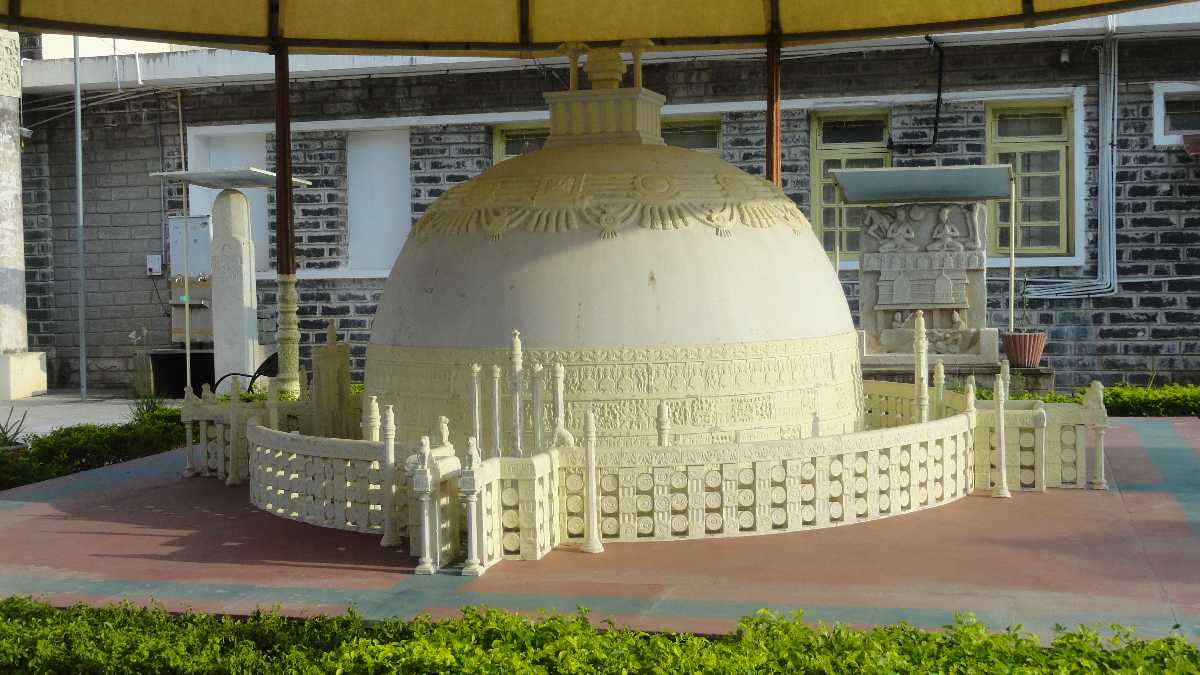
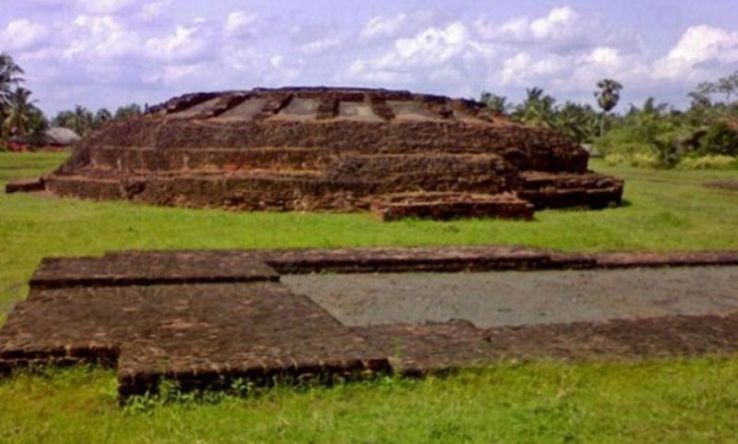
The Amaravati Stupa is a heritage monument and ancient Buddhist stupa under the protection of the Archaeological Survey of India. Popularly known as the Mahachaitya, Deepaladinne or the Great Stupa of Amaravati, this is among the largest stupas in India. Built in two phases between the 3rd century and 250 AD, under the ageis of Emperor Ashoka, the premises also have an Archaeological Museum. With a height of 27 m and a diameter of 50 m, the monument has a circular vedika built with bricks and protruding rectangular Ayaka platforms for the four directions and houses Lord Buddha in a human form seated over an elephant. The five pillars of the platform represent the five main events from the life of Lord Buddha – the birth, the great renunciation, enlightenment, the first sermon and the final extinction. These platforms also have some crystal and one Ivory casket which have bone-pieces, precious stones, pearls and gold flowers. Boasting of the Mauryan style of architecture, the stupa has a semi circular spherical dome that is mounted on a circular drum like platform and has tales from Buddha’s life and the Jataka tales as well as animal and flower drawings. This entire structure was surrounded by pillars which form a railing. These pillars are separated by cross bars. The sculptures have been removed from the site but some ruins of the pillars remain. The stupa is open from 8 am to 6 m daily except Fridays when it is closed. Entry fees for Indians is INR 20 while foreigners need to pay INR 250.

The Amaravati Museum is a small but interesting archaeological museum which displays exhibits that range between 3rd century BC and 12th century AD and is currently run and by the Andhra Pradesh Tourism Board. Some of the exhibits include statues of the Buddha with lotus symbols on his feet, curled hair and long ear lobes. Apart from this, there are also limestone sculptures of the goddess Tara and Bodhisattva Padmapani. Many of these Buddhist sculptures were excavated from here and now adorn the Chennai Government Museum and the British Museum in London. The museum is open daily from 10 am t0 5 pm and people above the age of 15 need to pay an entrance fee of INR 5 per person.

Vijayawada
Also known as Bezawada, Vijayawada lies on the banks of river Krishna surrounded by the hills of Eastern Ghats known as Indrakeeladri Hills. Geographically lying in the centre of Andhra Pradesh, the city, the second largest in the state has been described as the commercial, political, educational and media capital of Andhra Pradesh. Vijayawada is also considered a sacred place because of the Kanka Durga Temple dedicated to Goddess Durga and serves as the ritual host of the Pushkaram, a river worshipping ritual of the river Krishna. There is a legend which says that Arjuna, one of the heroes of the Indian epic Mahabharata, prayed on top of the Indrakeeladri Hill in the city and won the blessings of Lord Shiva to get the Pashupatastra to win the Kurukshetra War. It was called Vijayavatika or the Land of Victory in Telugu when Goddess Durga killed the demon Mahishasura and rested on the Indrakeeladri Hill by the River Krishna establishing the victory over evil hence the place got its name Vijayavatika, with Vijaya meaning victory and Vatika meaning Place or land in Telugu. Over the years Vijayavatika’s name was changed to Rajendra Chola Pura during the Chola dynasty, Bezawada during the British colonial rule and eventually to Vijayawada. The city is also the third most densely populated urban built-up areas in the world.

Vijayawada was founded around 626 A.D. by the Paricchedi Kings. History reveals that Vijayawada was ruled by King Madhava Varma, a king of the Vishnukundina dynasty. Chinese Buddhist scholar Xuanzang stayed a few years here around 640 AD to copy and study the Abhidhamma Pitaka, the last of the three pitakas, Pali for baskets constituting the Pali canon, the scriptures of Theravada Buddhism. In the early 16th century, during the reign of Qutb Shahi dynasty, also known as the Golconda Sultanate, diamond mines were found near Vijayawada on the banks of the Krishna river.

Resting atop a small hillock in the southeast corner of Vijayawada is the Sri Ramalingeswara Swami vari Devasthanam, dedicated to Lord Shiva and is decorated like a bride, come Mahashivratri. Visitors also be treated to a breathtaking view of the colourful city and the River Krishna from here.

The Kanaka Durga Temple is a famous shrine dedicated to the Goddess Durga built in the Dravidian fashion. The temple is surrounded by the hills of Inrakeeladri, right along the banks of the Krishna River and finds mention in many sacred texts and Vedic literature. The Kanaka Durga temple is one of the many Shaktipeethas with the Goddess appearing in her Mahishasurmardini form here, along with the image slain demon king Mahishasura. It is believed that the deity is Swayambhu or self-manifesting. The deity’s face and body colour are of molten gold shade and the idol is bedecked with golden jewellery from which the temple gets its name Kanaka Durga, Kanaka in Sanskrit meaning gold. There are many legends about the temple. One legend says that this region was once strewn with mighty rocks which inhibited the flow of the Krishna river, leaving this area uninhabitable. To put an end to this problem, Lord Shiva was called upon and directed the hills to make way for the unobstructed flow of the river. The flow of the river gained strength through the tunnels or Bejjam, and hence the name Bezawada was born, which later got modified to Vijayawada. Another legend claims that Arjuna prayed to Lord Shiva on the top of the Indrakeela Hill to bless him and he was successful in passing the test that Lord Shiva had posed for him and gifted the Pandava with the Pasupat weapon, and hence the name Vijayawada was coined. The most famous legend obviously has Goddess Durga at its centre. It has two versions. One follows that the goddess visited the mountaintop where the temple is perched upon being worshipped and called by sage Indrakila, who is the inspiration behind the name of the hill range. The sage was tormented by the increasing menace of demons, led by Mahishasura and Durga responded to his plea, slew the demon king and made Indrakeeladri her permanent abode. Another one is that a Yaksha by the name Keela got a boon from Devi Durga that she would always remain in his heart. Granting him the boon, she said that he would be a mountain and she would perch in the temple nestled within the mountain range when the time comes. After killing Mahishasura, she kept her promise and made her home at Indrakeeladri. The main sanctum’s construction is in the form of a pyramid, with the surface embellished with delicate stone carvings. The most impressive aspect of the Kanaka Durga Temple is perhaps its golden crown, which can be spotted from miles away. There is also a shrine to Lord Shiva near the temple premises that goes by the name Malleswara Swamy temple. This temple is probably the only one in the world where the female deity is located on the right side of the male one, as against the traditional left side seat of the female consort. This is significant as this actually shows that the Shakti or feminine power of the cosmic universe is predominant here. The temple is open from 5 am to 9 pm on all days except on Thursdays when it is closed from 1 to 5 pm. However, there are separate timings for idol visits and other personalised pujas.

Dedicated to the Lord of serpents Kartikeya, the Subramanya Swamy temple is a shrine located on the foot of the Indrakiladari Hills. The temple worships all three forms of Lord Subramanya: Sri Dandayudhapani Swamy as a boy, Sri Valli Devayanai- his original form and lastly in the form of a serpent. It is carved out of sparkling white stone with intricate stonework embellishing the facade. The temple also houses a silver covered Garuda pillar as well as an anthill by the temple, the natural habitat of snakes. Visitors have to take a holy dip in the Kumaradhara river to reach the temple gates. The entrance to the temple is at the back, from where one can walk around the deity. Beyond the Garuda, the pillar is the main sanctum of the temple where the presiding deities, Subramanya and Shesha reside and worshipped on a daily basis. Legend says that after killing the demon ruler Tharaka, Shurapadmasura and Lord Shanmukha reached Kumara Parvatha with his brother Ganesha. He was received by Indra and his followers, who offered his daughter Devasena’s hand to Lord Kumar. The wedding ceremony took place on Margashira Shudha Shashti at Kumara Parvatha. Waters of several holy rivers was brought down for this ceremony, and with these waters, Mahabhishek also descended which later came to be known as Kumaradhara. The serpent king Vasuki performed penance for several years in the Biladwara caves of Subrahmanya to avoid the attack of Garuda. Shanmuka appeared to Vasuki and declared him his primary devotee. Hence, the prayers offered to Vasuki are nothing but the prayers to Lord Subrahmanya. The temple is open from 6:30 am to 1:30 pm and then again between 3:30 to 8 pm.

One of the most renowned Jain temples, the Hinkar Thirtha houses the only Jain shrine in the area. Adorned with Jain style of architecture, this is also one of the most beautiful structures n town. Somewhere amongst the hills of Krishna District, is the St Mary’s Church, also known as the Gunadala Matha Shrine. One finds an iron cross, erected on the top of a hill, and a museum housing holy relics. Also, the area is a centre of much festivity and devotion when it hosts the Annual Feast of Our Lady of Lourdes. The dazzlingly white Hazratbal Mosque is a sight for sore eyes. This mosque which has pilgrims from all religions to pray at the relic of Prophet Mohammad which is on display once a year and it is said having seen this relic will rid you of all the stubborn problems of life.

The Mogalarajapuram Caves are an ancient caves, dating to the 5th century and though a lot has been lost to ruins, the caves still hold religious and spiritual value as they house idols of Lord Nataraja and Lord Vinayaka amongst many more, a few cave temples and a shrine for Goddess Durga. The carvings here also hold amongst themselves, a carving of Ardhanariswara, which is said to be the only one of its kind across the whole of South India.

A monolithic example of Indian rock-cut architecture, the Undavalli Caves are carved out of a solid sandstone on a hillside and date back to the 4th to 5th centuries. This cave was originally Jain, but was later converted into a Hindu temple. Regarded as one of the earliest examples of the Gupta architecture, the Undavalli Caves is an an architectural marvel. From the outside, it looks like rows of cells arranged in different positions. There are three levels in the cave. The lower level resembles the Jain abode with many chambers and Thirthankara sculptures. The second level has a statue of a reclining God whose identity is still unknown, but locale believe the statue is that of Lord Vishnu and there are sculptures of lions and elephants on the walls. When one reaches the top of the cave, they can see a breath-taking view of the lush green surroundings and hills as well as the Krishna river flowing behind the caves. Tourists can even take the boat ride on the river enjoying the natural beauty. The caves are open daily from 9 am to 6 pm and entry is free.

The Kondapalli Fort is a marvellous 14th century fort located in the village of Kondapalli. The fort is considered of great historical importance and is just 23 km from Vijayawada. The village is famous for wooden toys, especially the Kondapalli Dolls. The Kondapalli fort is also called as Kondapalli Kota and was built by the Musunuri Nayaks. It served as a military fortification during the British era and was said to have been built as a centre of recreation, business and trade during the 14th century. The Kondapalli fort has three entry gates, with the first one built with one block of granite. This gate is called the Dargha Darwaza, and it is about 12 feet wide and 16 feet high. The second entrance is on the other side of the hill and is called the Golconda Darwaza. This entrance leads to the village of Jaggaiahpet. The striking fort has several towers and battlements, a reservoir with a spring and some water tanks. The Tanisha Mahal is located at the far end of the fortress perched in between two hills. The palace has several rooms or chambers and a vast Durbar Hall. The fort also has an English Barrack with eight rooms and an English cemetery. A colony in Kondapalli, known as the Bommala Colony or the Toys Colony is well known for crafting these toys which is a 400-year-old tradition in the region. This form of arts and crafts is believed to have started by a sage named Muktharishi who was blessed with the skills by Lord Shiva. It is believed that artisans migrated from Rajasthan to learn this art from Muktharishi in the 16th century. These artisans are now called Aryakhastriyas or Nakarshalu. References to these names have been found in the Brahmanda Purana. The toys are made of Tella Poniki which is a type of softwood found in abundance on the Kondapalli Hills. The artisans meticulously carve the wood into the required shape, soften the edges carefully and give a base coat of enamel paint. To colour the toys, they either use water-colours mixed with oil or vegetable dyes. These toys are mostly about mythological figures, art forms, animals and birds for children to play with and stay connected with nature and our culture.

Source

A museum of the Archaeology Department, the Victoria Museum is a walk through imprints of time and all it left behind. Browse through a rich and ancient collection of sculptures, idols, inscriptions, paintings, cutlery and weapons. The large Buddha statue in the museum from Alluru will leave visitors fascinated.

Standing on a whopping 160 pillars and offering an astounding view of the holy Krishna river, the Prakasam Barrage does a lot more than just looking majestic. This bridge connects the Kolkata – Chennai highway and facilitates the irrigation of over 1.2 acres of farm land. The entire bridge is lit up with soft yellow lights and is an amazing sight to witness.

Source

Being one of the 8 Mahakshetrams or sacred destinations of the country, Mangalagiri which literally translates to the auspicious hill is a charming town and one of the eight important Mahakshetrams or sacred destinations in the country. It is believed that Lord Vishnu manifested himself in the soil of Mangalagiri and that Lakshmi Devi has performed penance on its hilltop.

Looking over Vijayawada city from a height of 500 feet, Gandhi Hill was the first to have a ginormous stupa dedicated to Mahatma Gandhi. Around the stupa, you will find six shrines dedicated to Gandhiji, a fully stocked library and the city’s only planetarium. The memorial hosts a breathtaking light and sound show in the evenings elucidating Gandhiji’s eventful life. A huge Gandhi structure of 15.8 meter height was inaugurated in 1968 and it is the first Gandhi Memorial in India constructed on a hillock. The panorama from Gandhi hill is mesmerizing and gives an enchanting view of Vijayawada city.

Bhavani island is one of the largest islands on a river and is located over the Krishna river at Vijayawada. The vast expanse of the island is the perfect place for a relaxing weekend. If one likes aventure sports and water slides, this is the place to be in. It is named after the Goddess Bhavani or Kanaka Durga whose temple is on the Indrakeeladri hill close to the island. Bhavani island can be reached by boat from the banks of Krishna river. Approaching the island from the banks, visitors will enjoy the lush green surroundings and beauty of the Krishna river. If you are on the island especially during sunrise, you have the most spectacular view of the sunlight dancing on flowing waters of the river. There are also numerous activities to pursue on the island- like water-skiing, kayaking, parasailing, as well as opportunities to enjoy some leisurely time snoozing on hammocks, fishing and picnicking. The Andhra Pradesh Tourism Development Corporation has converted a barren island to an exciting tourist spot. A recently introduced attraction is the Tanvi boat cruise by Champions Yacht club on Bhavani island where visitors can cruise on the river at sunset or sunrise, and enjoy the cool breeze over the flowing water and these can be enjoyed for a small fee ranging from INR 50 to INR 300. To reach Bhavani island from Vijayawada, a five minute ferry has to be taken from the Punnami ghat.

Machilipatnam
Nestled on the banks of the Krishna river, the port town of Machilipatnam is steeped in a rich historical past with the town still reflecting the footprint of several foreign invaders in the country. In fact, Machelipatnam is believed to be one of the first colonial settlements of the British along the Coromondal Coast on the Indian subcontinent. Once served as a prominent port town, it later changed hands with several invaders including British, Arab, French and Dutch. This town has been known as Masulipatnam, Masula and Bandar. Masuli or Machili means fish and Patnam means city. Masula and Bandar which port in Persian and was also referred with the name Maesolia in ancient times.

Once serving as a major port, Manginapudi is today a fishing village located on the shores of a beach nearly 11 km from Machilipatnam. This beautiful natural beach is unique for its black soil and also a natural bay comprising shallow water level. A dance school on the beach side is famous for its classical dance courses of Kuchipudi. Apart from that, the beach also attracts huge crowds during the Maghapoornami festival when people come here to take a dip in the sea water. Another popular festival of Krishna Utsav held during the month of February or March see a flock of devotees on the beachside.

Hamsaladeevi is a tiny village near Machilipatnam and is situated at the confluence where the river Krishna merges into the Bay of Bengal. This point is known as Sagara Sangamam and is an important tourist attraction where the water can be seen in three different shades. The village also has a beach where visitors can enjoy gorgeous sunsets. The old Venugopalaswamy temple dedicated to Lord Krishna is believed to be really old that was constructed during the reign of the Chola kings and is one of the 108 Vishnu temples. The most important festival held from Magha Suddha Navami to Bahula Padyami, is celebrated in the honour of this deity.

This beautiful ancient temple of the Panduranga Swamy temple spread across an area of six acres is dedicated to Lord Panduranga Vithal and houses a statue of the lord that measures 3 feet in height and resembles the childhood appearance of Lord Krishna. The idol of the lord is beautified with a diamond studded crown and other ornaments. There is also a statue of Abhayanjaney Swamy lying in front of the lord’s idol. While the main entrance features a tower, the prakaram flanked on the three sides displays the descriptions of disciples of Lord Vithal. The temple is open to all with another temple dedicated to Goddess Rukmini, Radha and Satyabhama located just besides the entrance of this temple.

Dattashram is a holy site nestled along the sea housing an ancient temple dedicated to Lord Shiva with another temple built recently situated nearby dedicated to Lord Datta. Owing to the sanctification of nine wells for bathing, Manginapudi is also referred to as Datta Rameshwaram being similar to the one in Rameshwaram. Another important shrine is the Machilipatnam Church quite popular among tourists and devotees built in the 19th century and comprises of prayer halls that were crafted by an Englishman.

A 50 m high lighthouse on Machilipatnam Beach is a sight of grace and beauty. Coloured with bands of black and white, this light house was renovated to the present form in 1982 and in February 1996, the old ‘D’ lamps were replaced by the 100W 24V halogen lamps.

Moving further south, in our next part we will explore Guntur, Chirala, Nagarjunakonda, Srisailam, Cumbum and Nellore

Travel Bucket List: India – Andhra Pradesh Part 2

After learning a bit more about the state and the current capital of Vishakapatanam, let’s go visit more places in this part

Araku Valley
A comparatively unexplored hill station close to Vizag and a local weekend getaway favourite, Araku Valley is situated some 120 kilometres away from the city. Located in the gentle hills of Eastern Ghats, Araku Valley is also home to a number of tribes, few tribal caves and the Museum of Tribal Arts. The valley is quite famous for its exquisite coffee, and beautiful vistas where one can try their hand at a number of adventure sports.

Fondly called the Kashmir of Andhra Pradesh, Lambasingi is a quaint hamlet nestled in Chintapalli Mandal in the richly forested Arakku Valley at an elevation of 1025 m above the sea level. On of the best kept secrets of Andhra Pradesh, the dainty village is known for its majestic hills, apple orchards and panoramic views of the adjoining valleys. Also known as Korra Bayalu, the village is the only place in all of South India that experiences snowfall as the temperatures drop significantly in winters. Besides abundant natural beauty and the gorgeous views of towering hills and meandering rivers, the village also offers a plethora of adventure activities. The best time to visit Lambasingi is definitely during the winter months, between November and January, when you can experience snowfall in the otherwise plain area. Located at a distance of just 6 kms from Lambasingi, the Thajangi Reservoir is the most visited spot here with majestic hills in the backdrop and a mighty river flowing across. The Kothapalli waterfalls is another hidden gem with its gorgeous water cascading down in all its glory amidst natural environment with little or zero human interaction. The Susan Garden is located en route to Lambasingi and has beautiful yellow and black flowers and is a beautiful place in which to view the sunset.

Source

Located in the Ananthagiri hills of the Araku Valley the Borra Caves are part of a breath taking hilly terrain, beautiful landscape, semi-evergreen moist deciduous forests, and wild fauna. A marvellous creation of nature, the Borra caves were formed when river waters flowed through a limestone area, and the calcium carbonate turned into calcium bicarbonate, easily washed out by the running water. The most striking feature of the caves is its exquisite variety of speleothems ranging in size. The caves are deemed to be among the largest in the country and are perched at a whopping elevation of about 705 metres. They are basically karstic limestone structures extending to a depth of 80 m and are considered to be the deepest cave in India. The combination of sunlight and dark conjures amazing dancing shaped in the depths of the Borra Caves, which is a sight in itself. Natural skylights in the caves make way for colourful imagery that imparts them a unique enigma of their own. The legend of Borra Caves is rich with narrations from tribal communities such as Jatapu, Porja, Kondadora, Nookadora and Valmiki, who inhabit the villages in the region. One such legend dictates that a cow dropped through a hole in the caves as it was grazing the nearby fields. Soon, people came looking for it and discovered a stone in the caves which resembled a Shiva Lingam. The cow returned safe and sound and the well-being of the animal was attributed to the Lingam. A small temple was soon built around the caves and people flocked the area to seek the blessings of the Lord. The history of Borra Caves is perhaps as old as that of the Araku Valley itself. Believed to have been formed as a result of perennial water flows over millions of years, the caves were discovered by British geologist William King in 1807. The process of the formation of the Borra Caves is quite intriguing as well with humic acid in the water reacting with the calcium carbonate in the limestone and dissolving the minerals breaking the rock gradually. As a result of this, varied rocks and shapes are formed in the caves. The total length of the Borra Caves is about 200 meters and the Dandakaranya – Bolangir – Kibur train track passes over the caves. Anthropologists have also found stone tools of middle Paleolithic Age dating back to 30000 to 50000 years indicating human habitation in the Borra Caves. Visitors will need about two to three hours to explore the caves which are open from 10 am to 5 pm every day. Entry fee are INR 40 for adults and INR 30 for children and there is a camera fee of INR 25.

The Katiki Falls originates from the river Gosthani and is located near the Borra Caves. The natural landscape surrounding the waterfall is lush green and goes through an uneven path that adds an element of adventure to the visitors trekking their way to the waterfall. The cool breeze, the greenery and the soothing sounds of the Katiki Waterfall will calm the mind and the 50 feet high natural formation is a breathtaking sight from a distance. Monsoons in the falls, in particular, are extremely beautiful. Visitors should try reaching as early as possible in the day to get enough daylight to explore. September to February is the best time to visit the waterfall as the forest is lush green, the weather stays cool and dry throughout the day, making the climb up to the waterfall pleasant.

The Tadimada Waterfalls is a beauty that is also commonly known as the Ananthagiri Waterfalls. The waters splashing from 100 ft above creates a majestic view and soothes one’s soul. The falls are best visited just after the monsoon season from August to October and the falls are open dailt between 9 am to 5 pm. At a dustance of just 13 km from Araku, the Chaparai or Dumbriguda waterfalls is one of the most popular weekend destinations and a popular Telugu film industry shooting spot. The best time to visit the falls would be at sunrise or sunset and after the monsoon season between October to March when the falls are not too dry and not slippery either. There is an entry fee of INR 10 per person.

Popularly known as the fish pool, the Matsyagundam near Paderu harbours a variety of fishes and is home to a century-old temple known as Sri Matsyalingeshwara Swamy Temple. It is believed that there was a massive fight between Singarajulu or snakes and the Matsyarajulu or fish in a place known as Gemmili after which the Mother Fish rescued all the fishes and brought them here. Later on, the hamlet came to be known as Matsya Gundam. Till day, owing to this belief, the natives do not kill or consume fish. The best time to visit Matsyagundam is during the festival of Mahashivaratri.

The Padmapuram Gardens is known to be a local favourite boasting variety of species of flora, an exquisite rose garden, treetop huts and a fun toy train for rides around it. The garden was built to supply food and vegetables to soldiers of World War II in 1942 in a plot of 26 acres and later on, converted into a horticulture nursery with a training centre. The range of flower species and trees is a visual feast, which can be enjoyed even more if one decides to stay in one of the hanging cottages ten feet above the ground. The gardens are pen from 9 am to 6 pm daily and has an entry fee of INR 40 for adults and INR 20 for children.

Opened in 1996 the Araku Tribal Museum depicts the tribal culture of Andhra Pradesh. From utensils, jewellery, hunting tools to wedding photographs, the museum gives a taste of what traditional tribal lives look like. Located 200 metres from the Araku bus station, the museum is not historical but has been constructed to enlighten people about the tribal way of life, with the display of the lifestyle of about 19 tribes living in the vicinity. While tribal artworks adorn the walls, local Mayur and Dhimsa dances are exhibited at one of the sections on the museum. Interestingly, the museum is home to a fortune teller with a parrot who speaks only the local language and whose predictions are believed to be accurate. The two-storied building is an excellent place to get souvenirs; the money for which goes to the locals as one of their sources of employment. Open from 10 am to 6 pm daily, there is an entry fee of INR 40 for adults and INR 20 for children.

The Bheemili Beach is located at the origin of River Gosthani in Bheemunipatnam. Remnants of 17th century British and Dutch settlements can be seen here, including a fort and cemetery. The beautiful Bheemli beach also has a lighthouse and a minor port. Recently, a beach-park has been developed on the Vishakhapatnam – Bheemili beach road as a tourist attraction. This scenic beach also offers water sports. In the colonial era, both East India Companies had their trading ports here.

The native tribal community of Araku Valley celebrates a hunting festival during April called Itika Pongal similar to hunting festivals of other tribal communities. The festival serves as a perfect occasion to witness the tribal culture of the state when the women of the tribe perform their traditional dance forms like Dhimsa and Mayur which is performed in groups and only women take part in the celebrations.

Vizianagaram
Lying close to the coastline of the Bay of Bengal on the eastern ghats, Vizianagaram is a city deriving its name from the princely district of Vizianagaram with the name of the city meaning the City of Victory. Bounded by Vishakhapatnam on the west and south, and the Bay of Bengal on the northwest, Vizianagaram is known for the wholesale textile market to the neighbouring towns as well. Steeped by a glorious past, the region is known to be strongly linked with a rich history of Kalinga. The city has also been witness to a war between the French and English. Today the city is adorned with temples, majestic forts, beautiful neighbouring cities and bounty of nature. The major rivers that flow through the city are Nagavali, Gomukhi, Vegavathi, Chempavathi, Suvarnamukhi, and Gostani.

The Vizianagaram Fort was founded by Vijayarama Raju I in 1713. The main entrance to this fort was the Victory Arch but the main entrance has been changed to the East Gate. The Victory Arch has a temple of Lord Hanuman on one side and a temple of Goddess Lakshmi on the other who is also popular by the name of Kota Shakti. It is believed that the Raja of Vizianagaram would especially seek blessings of this goddess before going to war. The palace at the fort was constructed in 1869 as the king’s court. Two exquisite marble statue welcomes visitors at the entrance of the mahal and the first floor of the building is today used as a college for women as well as a museum.

Situated about 10 km from Vizianagaram, the Jami Vruksham is a tree lying on the banks of the River Gowthami. As per the legend, it is said that while on exile, Pandavas hid their weapons in this tree. Almost at the same time, two idols of Lord Vishnu in form of Sri Jannardhana Swami and Sri Tripuranatha Swami were installed at Jami by Dharma Raja and Kunti Devi. The idol of Lord Venu Gopala Swami, on being discovered by the locals in the 14th and 15th centuries was installed in between the two shrines. According to another legend, people in order to shift the temple tried to uproot the lingam which is 179 m long and fixed deep in the earth but failed.

A sacred site with one of the oldest Shiva temples, Punyagiri is located about 25 km from Vizianagaram. The most prominent feature of the temple is that the lingam enshrined in the temple is bathed by an underground water source. Close to the temple is a cave where three lingams are installed with water falling on them constantly. However, it is during the festival of Maha Shivaratri that devotees flock the place in large number. As per the legend, going for the darshan of the lingam after a bath in a nearby waterfall helps you achieve moksha or salvation.

The Venkateswara Alayam Govindpuram situated around 20 km from Vizianagaram is village housing a temple famous for its magnificent sculpture of Lord Krishna on a chariot with the most striking feature of the place being a Gita Mandir which is flocked by devotees from all around the globe. The spectacular structure of the temple measures as 90 feet long, 45 feet wide and 63 feet high.

Saripalli is a small village situated on the banks of Champavathi river and lies in the Nellimarla mandal and is mainly renowned for its beautiful temple of Dibbi Lingeswara Swami temple which is said to be built under the reign of Chalukyas.

Kumili, situated about 20 km from Vizianagaram is a small quaint village which is famous for its bunch of beautiful temple all clustered in a complex. These temples were established about 10 years ago by a local devotee. Each temple is adorned with intricately carved sculptures, idols and paintings on the walls. The complex comprises of temple dedicated to Kalika Devi, Satyanarayana Swamy, Navagrahalu and Lord Ganapathi. Devotees will also find temple devoted to Anjaneya Swamy, Lord Subramanyeswara, Lord Venu Gopalaswamy and Seetharamaswamy.

Raamateertham is located nearly 13 km away from Vizianagaram on the Bavikonda Hill and is renowned as a site adorned with a 1000 year old Lord Rama temple, established during the 16th century under the reign of the Pashupati kings. The most striking feature of the temple is that it exists on a massive rock. Situated in the proximity of the temple is also a lake called Koneru. Another major tourist spot in the area lying close to the temple is the ruins of Buddhist Mahasthupa situated on a hilltop called Gurubukhatakonda. Crafted with bricks, the shrine measures to be 19 feet tall and 65 feet in diameter and is adorned with carvings of Jain Thirtankaras.

Founded during the 17th century by Pedda Rayudu, the town of Bobbili was initially named Pedda-Puli which means the big tiger after Sher Muhammad Khan, the Nawab of Srikakulam. He had granted it as a present to Maharaja of Venkatgiri for his services in his southern campaign. Over the period of time, the town came to be known as Pebbuli, then Bebbuli and finally, Bobbili. The Battle of Bobbili fought in 1757 by the Vizianagaram Kings with the help of French General Marquis de Bussy, is one of the most significant events in the history of Andhra Pradesh. Apart from this battle, the town is also famous for the fort of Bobbili and the Venugopala Swami Temple. The town is popular for the manufacturing of the Veena and the unique style to play it which was developed over three centuries and is known as Bobbili Veena Sampradayam.

Annavaram
Located in the East Godavari district, Annavaram is a small hamlet on the banks of the river Pampa. It is on the hilltop of Ratnagiri, with the temple village being famous for its shrine of Sri Veera Venkata Satyanarayana Swamy, a form of the Hindu deity, Lord Vishnu. The Annavaram Devasthanam is a sacred pilgrim centre that’s thronged by devotees every month, most of them who come to perform the special prayer or vrata, of Satyanarayana Vratam to please Lord Vishnu. The prayer is mostly performed before housewarming ceremonies and wedding functions. Considered second to only Tirupati, the temple village of Annavaram rests on the belief that its name is derived from Anna, meaning whatever you desire and Varam, which means Godsent. The deity will bestow you with whatever you desire goes a common refrain. The temple situated on the top of the Ratnagiri hills is almost an entire kilometre away from its base and can either be reached by the steps on the Ghat Road or trekked via a stone path with about 460 steps. Constructed in 1891 by a landlord of the time, Raja Ramanarayana, the main temple was constructed in the form of a chariot with four wheels at each of the four corners. The Pampa river encircles the Ratnagiri hill on which the Satyaranayana Swamy temple is located. There is a barrage built on the Pampa river which has a boating facility. The beauty of the Pampa river and the towering Ratnagiri makes boating here a memorable experience.

Samalkot
A small quaint town with a rustic charm, Samalkot is located in the East Godavari district and is regarded as holy by the devotees of Lord Shiva. It is renowned as a site of one of the Pancharama Temples, Pancharama being one of the forms of Lord Shiva known as Sri Kumararama Bheemeshwara Swami. Also known as Samarlakota, this beautiful town sees an influx of devotees in large number especially during the festivals like Shivaratri. Besides its great religious significance, Samalkot in recent time has witnessed a boom in industrialization and is home to several big names of Indian industries. The Kumararama Bheemeshwara Swamy temple is a specimen of the Dravidian style of architecture and is regarded as the main landmark of Samalkot. Dedicated to Lord Shiva, this temple features 100 pillars that support the whole structure of the temple comprising of two stories. A monolithic statue of Nandi is placed at the entrance guarding the Shiva lingam. On the ground floor of the temple the idol of Goddess Bala Tripura Sundari the incarnation of Goddess Parvati is installed. The temple’s main entrance is known as Surya Dwaram while the main shrine of the temple lies in the middle of the inner sanctum and is a rectangular structure enshrined with the 14 feet tall limestone lingam that begins from the podium on the ground floor and rises till second floor piercing through roof where the presiding deity is Lord Rudrabhaga. Devotees can offer their prayer to lingam from first floor which has been recently renovated detailed with intricate designs of flat leaves, lotuses, salas, kalasa and row of geese kutas. From the east side of the temple, where mandapam called Koneti is situated one can witness the Pushkarni Lake.

Thalupulamma Thalli is nestled in between a hill amid the panoramic vistas of nature with the temple quite famed as almost everybody in the state visits here to offer prayers to the Goddess after owning a new vehicle. Devotees offer goats and chicken as a part of the worshipping. Featuring a captivating colourful and intricately carved structure, the temple apart from being an important religious center, also makes for a popular picnic spot owing to its magnificent scenic location.

Kakinada
A city with a perfect blend of new and old, Kakinada is often referred to as the fertilizer city. Known as Kaki Nandiwada when it was a Dutch settlement, the city used to store and export Sarees known as Coca or Koka in Telugu and allied products and hence it came to be known as Coca-nada. There is also a theory that when the British East India Company ruled this city, they had difficulty in pronouncing the city’s name Coca-nada, so they changed it as Co-Canada for their convenience. It is even referred to as Coringa by the Britishers because of the proximity of its sea port to the river Koringa. After Independence, it became Kakinada with some theories suggesting that Kakasura’s losing his eye by an arrow of Lord Rama gave the name Kakinada or that Kaki Nandivada is derived from Kaka, an Ikshvaku king who built the town. Another theory says that it is Kakulavada, an abode of crows – for catching fish on the shore.

Pithapuram is a temple town, highly revered for being the site of a number of temples with Shripada Shri Vallabha, believed to be an incarnation of Lord Dattatreya, having resided here. The whole town is full of stories, legends, history and stunning architecture. Devotees also maintain that a part of Goddess Parvati’s body, her left hand fell here, and it is a Shakti Peetha as well. The Shri Bhavanarayana Swamy temple in Sarpavaram is dedicated to Lord Vishnu in form of Lord Bhavanarayan and is believed to have been visited by ancient sages like Vyasa and Agastya.

Located on the eastern bank of the Godavari, the Draksharamam temple is one of the five most powerful and prominent temples dedicated to Lord Shiva in the country. Dating back to the 11th century, the temple and the area surrounding it is also known as Dakshin Kashi or southern Kashi, signifying its importance as a place of immense religious importance. The architecture of the ancient temple is fascinating as it adorns many inscriptions, symbols and visuals carved on them. There are several stories which go around the formation of this temple and the Sapta Godavari Kundam near the temple. The temple is open every day between 6 am and 7:30 pm.

One of the safest and mesmerising beaches on the eastern coast of India, Uppada Beach has an extensive shoreline, offering the perfect spot to catch sunrises and sunsets. The beach is an ideal shore for deep water fishing.

A place of several excavated monuments, Adurru is situated in the Razole taluk with several excavated ruins found in 1953 including Buddhist Stupas, chaityas and Viharas. Another major attraction of the place is the Mahastupa which is crafted like a wheel on a raised dais with a diameter of 17 feet. The digging in the area also lead to plethora of ancient artifacts such as jars, dishes, bowls of kaolin, troughs and red pottery. Among the local residents of the village, Adurru mound is known as Dubaraju Gudi.

Located at a distance of 22 km away from the Kakinada Beach, the Coringa Wildlife Sanctuary spread over 235 sq km is not just a wildlife sanctuary but also an estuary. It is home to as many as 35 species of mangrove plants, 120 species of rare birds and innumerable species of flora. This sanctuary is also famous for being home to the critically endangered white-backed vulture and long-billed vulture. Since it is an estuary, visitors can also get a stunning view of the spot where the sea meets the river. The sanctuary has wide wooden bridges built through the dense forest lands that allow visitors to walk through the forest looking at the flora and fauna. Being an estuary of the River Godavari, the sanctuary has mangrove vegetation and there are 35 species of plants here which belong to 24 different families. The mangrove vegetation of the sanctuary provides the feed for the significant number of birds residing here with the Coringa Wildlife Sanctuary housing many critically endangered and endangered species of animals like the long-billed vulture, white-backed vulture, Oriental white ibis, painted stork and spot-billed pelican. Almost 120 different species of birds have made this sanctuary their home. The climate here is mostly hot and humid with temperature going as high as 47 degrees celcius during the summer months of May to June and falling to 14 degrees celcius during winter months of December to January and the best time to visit is between October to May. Boating is available from the sanctuary to the mouth of the river Godavari which is a must try activity here. The boat rides available here include Jet Ski for 1 person, Speed Boat for up to 4 people and Slow Speed Boat for 10 to 50 people. Another major attraction in the sanctuary is the wooden walkway installed in the middle of the mangrove with a breathtaking view of the sea intermingling with the river. Closed on Tuesdays, the sanctuary is open from 9 am to 5 pm on all other days. Keep aside at least half a day for the sanctuary which has an entry fee of INR 10 for adults and INR 5 for children. Boating prices vary depending on the number of people.

Source

Rajahmundry
Located on the banks of the Godavari river, and officially known as Rajamahendravaram, Rajahmundry is the biggest city of the east and west Godavari district. Touted to be one of the oldest cities in India, Rajahmundry was founded in the 11th century by the Chalukya King, Raja Raja Narendra from whose name the city’s name was derived. The city was earlier called Rajamahendravaram, derived from the Sanskrit name Rajamahendrapuram or the city of King Mahendra. Also meaning the same, it is also referred to as Rajamahendri, which during the British colonial era became Rajahmundry. Rajahmundry was established by Ammaraja Vishnuvardhana the First who ruled between 919–934. The city as a prominent settlement can be traced back to the rule of the Eastern Chalukya king Rajaraja Narendra, who reigned around 1022 AD. Rajahmundry is believed to be the birth city of the Telugu language and is primarily known to be a pilgrimage spot for Hindus, owing to the presence of several places of worship, the most famous of which is the Sri Veerabhadra Swamy Temple. The Pushkara ghats, located along the banks of the river Godavari, is where the grand Pushkara festivals are held every 12 years.

Situated at a distance of 94 km from Rajahmundry, the Dwaraka Tirumala is an ancient holy town and a popular pilgrimage spot. The highlight of the village is the revered shrine dedicated to Lord Venkateshwar with a colossal statue of the Lord at the back of the temple and the temple is also called Chinna Tirupati or Little Tirupati after the presiding deity.

Known as the second-largest ISKON temple in southern India, after the temple in Bengaluru, the ISKON temple is also known as Gowthami Ghat and is a popular worship spot. Built across 2 acres of land on the banks of the Godavari River, this temple is primarily dedicated to Lord Krishna. The temple is open from 7:30 am to 1 pm and then 4:30 to 8:30 pm daily. The Goutami Ghat is one of the premier recreational spots housing the ISKCON Temple, Riverbay Resorts and Water park, Ayyappa Temple and Kailash Bhoomi.

Spanning across 2.1 km atop the river Godavari, the Godavari Bridge is India’s third largest rail cum road truss bridge. Also known as the Kovvur – Rajahmundry Bridge, the bridge is also a major source of tourism as it offers picturesque views of the golden sun setting in the horizon and merging with the shining water of the Godavari. Known to be synonymous with the arts and culture of the city, the bridge has a road deck over a single track rail deck.

Constructed in 1988, the Sir Arthur Cotton Museum is dedicated to the memory of Sir Arthur Cotton who was the mastermind behind the transformation for the ferocious Godavari river into a tame force useful for irrigation and water supply. He is popularly known as the Delta Architect of the Godavari district and the museum chronicles his work through pictures.

The Papikondalu mountain range runs along the River Godavari on its western side and is a sheer fest to the eyes in terms of its scenic beauty. As the hills become closer and closer to the visitor, the width of the mighty Godavari becomes narrower. In accordance with this view resembling the middle partition of a woman’s hair, it was initially named as Papidi Kondalu, Paidi in Telugu means the middle partition of a woman’s hair and later, it came to be known as Papikondalu in the local language. The river narrowing, its twists and turns along with the Papi Hills form a breathtaking visual experience. Its beauty is often compared to that of Kashmir as the area around the ranges is quaint and bountiful with nature. The ranges also boast of waterfalls at Munivaatnam. The Gandi Pochamma Temple, Perantpali village with the Ramakrishna Muni Vatika ashram and Swami Veereswara temple and Kolluru village where you could get a bamboo hut to spend a night are must see places here.

Part of one of the premium eco-tourism projects of the country, Maredumilli is a terrain of undulating plains, evergreen forests and rich biodiversity, located in the East Godavari district, which is known for its rivers, ravines and lush greeneries, With dense woods and the smell of the wild enveloping the region, an exploding count of flora and fauna, sparkling rapids gushing down the slopes and crevices and exciting campsites to explore, Maredumilli is sincerely one of the best destinations to spend a weekend away from the madding city crowds and the monotony of everyday life. Maredumilli is known for its extensive collection of medicinal plants, and this site is only a further effort to spread public awareness about the benefits of indigenous medicinal plants. Visitors can also pay a visit to the APFDC coffee and pepper plantations, which are located near Nandanavanam where one can see from close quarters how our favourite spice and beverage are grown, cultivated and reaped in a perfectly scientific manner. Located deep in the forests of Maredumili, along the Valamuru river, is the Jungle Star camping site which has a historical and mythological significance as well. It is believed that this place is said to the ground where Bali and Sugriva from the Ramayana battled for the throne of Kishkindha. The Bali-Sugriva Konda is a major attraction here, and there are also opportunities of trekking through the woods, enjoying tribal music and dance performances or just enjoy the serenity of the jungle in the bosom of nature.

Located at a distance of 40 km from Rajahamundry, Pattiseema is a dreamy rustic hamlet enveloped in the dense green forests of the Papikondalu hill range and the Eastern Ghats. Owing to its beauty, picturesque landscape and a pleasant ambiance, the village has lately gained tourism potential and also lures filmmakers to capture the beauty of the place. Flanked by the gorgeous and gleaming Godavari river, the village is like a green oasis in the centre of city chaos and cacophony and is widely visited by tourists seeking solitude and peace. The highlight of the village is the Sri Veerabhadra Temple which is perched atop the hillock and is dedicated to Lord Shiva. The temple also has a separate shrine of Goddess Bhadrakali which is highly revered by the Hindus. There is only one way to get to this temple, which is through the river in a boat amidst picturesque surroundings. There is also another temple that is dedicated to Sri Bhavananarayana Swamy.

Moving along, our next part will detail what one can expect in Amaravathi, Vijayawada, and Machilipatnam

Travel Bucket List: India – Andhra Pradesh Part 1

A state in the south-eastern coastal region, Andhra Pradesh is the seventh-largest state by area and tenth-most populous state of India. It is bordered by Telangana to the north-west, Chhattisgarh to the north, Odisha to the north-east, Tamil Nadu to the south, Karnataka to the west and the Bay of Bengal to the east. Andhra Pradesh has the second longest coastline in India after Gujarat and was the first state to be formed on a linguistic basis in 1953. Once a major Buddhist pilgrimage site and Buddhist learning center, the state is also known as the land of the world-famous diamond Koh-i-Noor due to the Kollur Mine and the rice bowl of India because of its status as a major producer of rice.

The state comprises two major regions, Rayalaseema in the south-west and coastal Andhra bordering the Bay of Bengal in the east and north-east. The state is unique because it is the only state with three capitals – Visakapatanam, the largest city and commercial hub of the state being the executive capital, and Amaravati and Kurnool serving as the legislative and judicial capitals respectively. The state has the seventh-largest state economy in India with a higher than national average per capita GDP. The Tirumala Venkateswara Temple in Tirupati is one of the world’s most visited religious sites, with 18.25 million visitors per year. The region is also home to a variety of other pilgrimage centres, such as the Pancharama Kshetras, Mallikarjuna Jyotirlinga and Kodanda Rama Temple. The state’s natural attractions include the beaches of Visakhapatnam, hill stations such as the Araku Valley and Horsley Hills, and the delta of Konaseema in the Godavari River delta.

The early inhabitants of the state were known as the Andhras, tracing their history to the Vedic period when they were mentioned in the 8th century BC Rigvedic text Aitareya Brahmana. According to the Aitareya Brahmana, the Andhras left North India from the banks of river Yamuna and migrated to South India. The region also derives its name from the Satavahanas who are also known as the Andhras, the earliest kings of Andhra Pradesh and India. The Satavahanas have been mentioned by the names Andhra, Andhrara-jateeya and Andhrabhrtya in the Puranic literature. They did not refer themselves as Andhra in any of their coins or inscriptions; it is possible that they were termed as Andhras because of their ethnicity or because their territory included the Andhra region.
The state was ruled by Satavahanas, Eastern Chalukyas, Andhra Ikshvakus, Vijayanagara Empire, Mauryan Empire, Cholas, Pallavas, Salankayanas, Vishnukundinas, Kakatiyas and Rashtrakutas.

The Assaka Mahajanapada, one of the sixteen Vedic Mahajanapadas, included Andhra, Maharashtra and Telangana. Archaeological evidence from places such as Amaravati, Dharanikota, and Vaddamanu suggests that the Andhra region was part of the Mauryan Empire. Amaravati might have been a regional centre for the Mauryan rule. After the death of Emperor Ashoka, Mauryan rule weakened around 200 BC and was replaced by several smaller kingdoms in the Andhra region. The Satavahana dynasty dominated the Deccan region from the 1st century BC to the 3rd century BC. The later Satavahanas made Dharanikota and Amaravathi their capital, which according to the Buddhists is the place where Nagarjuna, the philosopher of Mahayana lived in the 2nd and 3rd centuries. The Andhra Ikshvakus, with their capital at Vijayapuri, succeeded the Satavahanas in the Krishna River valley in the latter half of the 2nd century. The Pallavas, who were originally executive officers under the Satavahana kings, were not a recognised political power before the 2nd century and were swept away by the Western Chalukyan invasion, led by Pulakesin II in the first quarter of the 7th century. After the downfall of the Ikshvakus, the Vishnukundinas were the first great dynasty in the 5th and 6th centuries, and held sway over the entire Andhra country, including Kalinga and parts of Telangana. They played an important role in the history of Deccan during the 5th and 6th century, with Eluru, Amaravathi and Puranisangam.

The Salankayanas were an ancient dynasty that ruled the Andhra region between Godavari and Krishna with their capital at Vengi which today is modern Pedavegi from 300 to 440. The Eastern Chalukyas of Vengi, whose dynasty lasted for around five hundred years from the 7th century until 1130, eventually merged with the Chola Empire and continued to rule under the protection of the Chola Empire until 1189 when the kingdom succumbed to the Hoysalas and the Yadavas. The Kakatiyas ruled Andhra Pradesh state for nearly two hundred years and constructed several forts and were succeeded by the Musunuri Nayaks. The Reddi kingdom was established in the early 14th century, ruled from present day Kondaveedu and constructed the Kondaveedu Fort before it was taken over by the Gajpathis of Orissa, and later ravaged by the Muslim rulers of the Bahmani kingdom in 1458 and which the Vijayanagara emperor Krishnadevaraya captured it in 1516. The Golconda Sultans fought for the fort in 1531, 1536 and 1579, and Sultan Quli Qutb Shah captured it in 1579, renaming it Murtuzanagar. It was reconquered by Vijayanagara who overthrew sultanate rule across the entirety of modern-day Andhra Pradesh, excluding Telangana. After this rebellion, the Bahmani sultans launched no further military campaigns outside their kingdoms, because the Maratha empire soon emerged as the strongest power in India. Today efforts are in progress to classify Kondaveedu Fort as a UNESCO World Heritage Site.

The Vijayanagara Empire originated in the Deccan Plateau region in the early 14th century. The empire’s patronage enabled fine arts and literature to reach new heights in Kannada, Telugu, Tamil, and Sanskrit, while Carnatic music evolved into its current form. During the Vijayanagara Empire, the Pemmasani Nayaks controlled parts of Andhra Pradesh and had large mercenary armies that were the vanguard of the Vijayanagara Empire in the sixteenth century. The Lepakshi group of monuments are culturally and archaeologically significant as it is the location of shrines dedicated to Shiva, Vishnu, and Veerabhadra which were built during the Vijayanagara Kings’ period. The temples are the location of mural paintings of the Vijayanagara kings, Dravidian art, and inscriptions. Near the temple complex is a large granite Nandi bull and on a hillock known as Kurma Saila or tortoise-shaped hill are other temples dedicated to Papanatheswara, Raghunatha, Srirama, and Durga. The Government of Andhra Pradesh has taken the initiative to include Lepakshi Group of Monuments among the UNESCO World Heritage sites in India.

The Qutb Shahi dynasty held sway over the Andhra country for about two hundred years from the early part of the sixteenth century to the end of the seventeenth century. In the early nineteenth century, Northern Circars was ceded to the British East India Company and became part of the Madras Presidency. Eventually, this region emerged as the Coastal Andhra region. Later the Nizam rulers of Hyderabad ceded five territories to the British that eventually became the Rayalaseema region. The Nizams retained control of the interior provinces as the princely state of Hyderabad, acknowledging British rule in return for local autonomy. However, Komaram Bheem, a tribal leader, started his fight against the erstwhile Asaf Jahi Dynasty for the liberation of Hyderabad State. Meanwhile, the French occupied Yanam, in the Godavari delta, and save for periods of British control would hold it until 1954. In 1947, Vizianagaram was the largest Hindu princely state in Andhra Pradesh.

After India’s independence in 1947, the Nizam wanted to retain the independence of the princely Hyderabad State from India, but the people of the region launched a movement to join the Indian Union. The state of Hyderabad was integrated into the Indian Union with Operation Polo in 1948. In an effort to gain an independent state based on linguistic identity, Potti Sreeramulu fasted to death in 1952 and after his death, the Telugu-speaking area of Andhra State was carved out of Madras State on 1 October 1953, with Kurnool as its capital city. On the basis of the gentlemen’s agreement of 1 November 1956, the States Reorganisation Act formed a combined Andhra Pradesh by merging Andhra State with the Telugu-speaking areas of the already existing Hyderabad State and Hyderabad was made the capital of the new state. The Marathi-speaking areas of Hyderabad State merged with Bombay State and the Kannada-speaking areas were merged with Mysore State. In February 2014, the Andhra Pradesh Reorganisation Act, 2014 bill was passed by the Parliament of India for the formation of the Telangana state comprising ten districts. Hyderabad would remain as a joint capital for a period not exceeding ten years and the new state of Telangana came into existence on 2 June 2014.

The state has varied topography ranging from the hills of Eastern Ghats and Nallamala Hills to the shores of Bay of Bengal that support varied ecosystems, the rich diversity of flora and fauna. There are two main rivers namely, Krishna and Godavari, that flow through the state. The coast of the state extends along the Bay of Bengal from Srikakulam to Nellore district. The plains to the east of Eastern Ghats form the Eastern coastal plains. The coastal plains are for the most part of delta regions formed by the Godavari, Krishna, and Penner Rivers. The Eastern Ghats are discontinuous and individual sections have local names. The Eastern Ghats are a major dividing line in the state’s geography. The Kadapa Basin formed by two arching branches of the Eastern Ghats is a mineral-rich area. Most of the coastal plains are put to intense agricultural use and the Rayalaseema region has semi-arid conditions.

We will start with Andhra Pradesh’s biggest city Vishakhapatanam which lies to the north of the state and work our way down to the south to the one of the wold’s holiest temples of Tirupati.

Vishakhapatanam
Also known as Vizag, Visakhapatnam is the executive capital of Andhra Pradesh and its most populated and largest. It lies between the Eastern Ghats and the coast of the Bay of Bengal and is the third largest city in the Indian east coast after Chennai and Kolkata and the fourth largest city in South India and serves as the headquarters for the Eastern Naval Command.

The city is home to the oldest shipyard and the only natural harbour on the east coast of India with the Visakhapatnam Port being the fifth-busiest cargo port in India. Nicknamed the City of Destiny and the Jewel of the East Coast, Vishakhaptanam was third cleanest city in India in 2017, the seventh cleanest in 2018 and 23rd in 2019. Visakhapatnam is surrounded by ancient Buddhist sites, most of which have been excavated recently and illustrate the legacy of Buddhism in the region.

With a history stretching back to 6th century BC, when it was considered a part of the Kalinga Kingdom, Vishakhapatanam was later ruled by the Vengi, the Pallava and the Eastern Ganga dynasties and was historically considered part of the Kalinga empire. Archaeological records suggest that the present city was built around the 11th and 12th centuries with control over the city fluctuating between the Chola Dynasty and the Gajapati Kingdom, until its conquest by the Vijayanagara Empire in the 15th century. Conquered by the Mughals in the 16th century, European powers eventually set up trading interests in the city, and by the end of the 18th century it had come under French rule. Control passed to the British Raj in 1804 and it remained under British colonial rule until India’s independence in 1947.

According to local belief, a 4th century king during a pilgrimage, halted at Lawson’s Bay and built a temple dedicated to his family diety Vaisakha, which was submerged under the sea, but the settlement which formed around the temple was named Vishakhapatanam after the Goddess. Another legend says the city is named after Sri Visakha Varma. Legend has it that Radha and Viśakha were born on the same day and were equally beautiful. Sri Visakka Sakhi was the second most important gopi of the eight main gopis and carried messages between Radha and Krishna and was the most expert gopi messenger. Another theory is that it is named after a woman disciple of Buddha named Visakha. The other names the city was known were Kulotungapatnam, named by the Chola King Kulotun I; Ishakapatnam, based on a Muslim Saint, Syed Ali Madani or Ishak Madani; Vizagapatam and Waltair during the British colonial rule.

The Rishikonda Beach also known as Rushikonda Beach is a stunning shoreline which remains unspoilt. It is also known as the Jewel of the East Coast and is located in the midst of a frothy blue sea and emerald greenery. A favourite among water sports enthusiasts due to the range of activities offered here, Rushikonda Beach is one of the few beaches that offers swimming under expert supervision. There is also a ropeway to the Kailashgiri hilltop from the beach from where visitors can enjoy a toy train ride. The Rishikonda Beach also houses the Iskcon Temple.

The Yarada Beach is an entrancing place which is surrounded by hills on three sides and the Bay of Bengal on the fourth and is covered with lush greenery and soft golden sands all over. It is an ideal location to view enchanting sunrise and sunsets. The beach is located about 15 km from Visakhapatnam and is not very crowded and is covered with coconut and banana plantations. Though there is no entry fee a charge of INR 30 is charged for entering the Arigold property and accessing the shops as well as restaurants there.

Very similar to a dolphin’s nose, Dolphin’s nose is a 174 m high rocky headland situated in the south of Vizag. The nose seems to be protruding out towards the Bay of Bengal giving it a rather fascinating look. A renowned powerful light house with a light beam that can be seen as far as 64 km out at sea is nearby. There is also a hill nearby named the Dolphin hill and is a restricted armed forces residential area. The back of the hill has a scenic, beautifully placed, secluded beach called Yarada.

The Lawson’s Bay beach is often considered an extension of Ramakrisha Beach and is a calm, serene and secluded stretch with lush greenery and whitish sands. The majestic sea with shallow crystal clear water and calm waves here is ideal for swimming, sun bathing and surfing.

Havi Konda, Thotla Konda, Bojjana Konda, and Salihundam located around the city were places of Buddhist excavations. The excavations of 1906 that took place have brought out many Buddhist monuments such as stupas and chaityas. It is believed that some of the corporal remnants of the Buddha were conserved at these sacred Buddhist places. Dantapuram, another Buddhist excavation site, has been beautifully placed at the confluence of river Vamsadhara with the Bay of Bengal. The excavations in this holy place have exposed many stupas and antiquities.

Bojjannakonda is a small group of six rock-cut caves on Bojjannakonda hill that date back to the 4th century AD when Buddhism was flourishing in the region. The caves have beautifully carved statues of Gautam Buddha which draw tourists and believers for its aesthetic and religious importance. The caves nearby also have stupas where Buddhist monks would meditate. The caves form a notable establishment of Buddhists in the region and stand out for its large group of monolithic stupas that surround a Maha Stupa which has a dome made of bricks. The three phases of Buddhism – Mahayana, Hinayana and Vajrayana are featured on the caves, chaityas and the monasteries. Bojjannakonda has six rock-cut caves, a group of stupas surrounding a maha stupa and chaityas surrounding the maha stupa. The caves have panels that have been meticulously sculptured. The main cave is comparatively larger and has sixteen pillars. It has a monolithic stupa right in the centre, creating a pathway around the stupas for pradakshina. The dome of several stupas is made of bricks. Two of these brick stupas hold stone relic caskets or miniature stupas. An umbrella is carved on the ceiling over the stupa. This umbrella was originally connected to the top of the stupa. However, after years of weathering the shaft that connected the umbrella to the stupa is no longer seen. The cave has two levels – the top level has a carving of Gautam Buddha where he can be seen sitting in a lotus position/ meditating posture with attendants around him. At the foothills, an image of a Buddhist Monk, Harati, can also be found.

Bojjannakonda marks one of the most significant Buddhist establishments in Andhra Pradesh during between the 4th and 9th centuries. During that time, the village, Sankaram, was known as Sangharam, meaning Boudha-Arama or Vihara. Between 4th and 9th centuries, Mahayana, Hinayana and Vajrayana flourished in Andhra Pradesh. The caves were found only after an excavation that was carried out in 1907 – 1908 where . items like mud utensils, seals, pots, terracotta beads, gold, lead and copper coins, and metal figures were recovered from the caves. An idol of Kalabhairav and an image of Harati were also later on discovered during the excavation. Open daily from 9 am to 6 pm, the caves come under the Archaeological Survey of India

The Victory at Sea War Memorial is located on Beach road and has a pyre lit permanently in honour of Indian martyrs. Missiles, fighter plane models and tankers are also kept around the memorial which can be seen from the main road itself when on the way to the beach. The monument was built in 1996 to honour the brave sailors of Indian Navy and the Eastern Naval Command who fought the Indo-Pak War and sunk PNS Gazi, a Pakistani submarine when Pakistan targeted the Visakhapatnam Port to destroy INS Vikrant, an Indian aircraft carrier.

The Submarine Museum is a museum inside an actual submarine, INS Kurusura, which was India’s 5th submarine. The museum is situated on RK beach, near the War Memorial and the beautiful scenery with clear blue waters and golden sand serves as a perfect location for the museum. The museum has artefacts, pictures and articles that share stories of strength and sacrifice of the sailors. The INS Kurusura served the Indian Navy for 31 years before it was decommissioned in 2001. The submarine was included on a key patrol mission in 1971 during the Indo-Pak war and has been an important participant in numerous naval exercises and goodwill visits. The submarine is 91.3 metres long and 8 metres wide. This USSR make, class I-641 submarine has a displacement of 1945 tons. Its diving depth is 280 metres and can accommodate about 77 sailors at a time. It has 22 torpedoes, 3 diesel engines, 448 batteries and reaches a speed of 15.5 knots. Post decommissioning, it was used a museum to spread awareness about Indian Naval Forces, the technology used and its development in India. It is a one of a kind project that was launched by the Eastern Naval Command. The only submarine museum in Asia, the interiors of the submarine has been re-arranged to allow a clear view to visitors. There are Naval Officers that serve as guides at the venue and they share their stories, experiences and the history of the submarine to the visitors. The Dressing Ship Honour has been awarded to the submarine despite being a de-commissioned submarine. The museum is closed on Mondays and on other days it is open from 2 to 8:30 pm. Children pay an entry fee of INR 20 while adults pay INR 40. You need to pay INR 50 for a camera and INR 500 for a video camera.

The Indira Gandhi Zoological Park is set amidst the Eastern Ghats and is a part of the Kambalakonda Forest Reserve. It acts as a home for approximately eighty different species of animals spread over an area of 625 acres and is one of the largest zoological parks in Andhra Pradesh. The Bay of Bengal is situated close by, which makes it an ideal destination to study flora and fauna right beside each other. This park also has a separate section for butterflies and moths, and this part of the park is open only during the day, as moths and butterflies cannot fly during the late hours of the day. The walls are adorned with pictures and information about these gentle creatures to spread awareness about them. The animal population here is perfectly complemented by the surrounding foliage of the Eastern Ghats, which surrounds this place on three sides. The area of the entire park sums to about 625 acres. There is even a mini train inside the park to view all of its premises. Entry fee for adults cost INR 10 and for children INR 5. There is separate ticket if you want to enjoy the mini train ride. For adults, the ticket price for the mini train is INR 15, and for children, it is INR 10. The park is open daily except Mondays from 9 am to 5 pm.

Kailasagiri is a hill top park at 360 feet and overlooks beaches, forests & the city with one of the best spots for a bird’s eye view of the bay. The park is well known for its panoramic view, peaceful atmosphere and scenic beauty, and offers plenty of leisure activities. The park is open from 11 am to 8 pm with the winters being the best time to visit. Entry fee is INR 5 and a round trip on the cable car costs INR 75 for an adult and INR 40 for children.

The Simhachalam temple is an ornate shrine revered to be one of the most important temples in the region. The temple is perched atop a hill 800 metres above and is dedicated to Lord Narasimha, an incarnation of Lord Vishnu. The temple is embellished with extremely detailed stone carvings and design and can be spotted from a distance. This is the only temple in the country where Shri Varaha Lakshmi Narasimha Swami, a combination of the third and fourth incarnations of Lord Vishnu, appears. Lord Narasimha appears here in the tribhanga posture and has two hands with the head of a lion on a human torso. The shrine follows strict discipline, and has detailed prayer routines for all days of the year undisturbed by the influx of pilgrims. This place is a treasure of traditional Vaishnavite culture. Interestingly, the statue of the deity appears in its true form only for 12 hours per year on the day of Akshaya Tritiya. On any other occasion, the idol is covered with sandalwood paste. The temple is open from 7 am to 4 pm and then again between 6 to 9 pm.

Ross Hill Church is one of the few locations that can be climbed to get a fabulous view of the quaint city and the port area. The attraction is frequently visited by photographers and nature lovers especially to view the beautiful sunrises and sunsets. The church a beautiful architecture and a serene vibe with the hill atop which the church stands being the highest and the central hill in the region. Ross Hill Chapel was once the house of an Englishman and local judge, Monsieur Ross. The house was built in 1864 and was converted into a chapel in 1867. The region was severely affected by cyclones in 1870 and 1876 and in 1877, the church was renovated, and a new statue of Our Lady of the Sacred Heart was installed. Since then, the church has been through several modification and renovations to accommodate more devotees. When the Japanese raided Visakhapatnam in 1942, a procession was taken to Ross Hill Church to keep the city and the inhabitants safe from the enemy. It is said that no raid has happened ever since. The church is open between 9 am and 6 pm daily.

In the next part, we will visit Araku Valley, Vizianagaram, Annavaram, Samalkot, Kakinada and Rajahmundry