Travel Bucket List: India – Mizoram Part 1

Known as the Songbird of India and one of India’s easternmost states, Mizoram is the southernmost of the seven sister states, sharing borders with the Indian states of Tripura, Manipur and Assam and also international borders with Bangladesh and Myanmar.

The name of the state is derived from Mizo, the self-described name of the native inhabitants, and Ram, which in the Mizo language means land. Thus Mizoram means the land of the Mizos. A landlocked state, Mizoram is India’s fifth smallest state with the Tropic of Cancer running through the state nearly to its middle.

Like several other northeastern states of India, Mizoram was previously part of Assam until 1972, when it was carved out as a Union Territory. In 1986 the Indian Parliament adopted the 53rd amendment of the Indian Constitution, which allowed for the creation of the State of Mizoram on 20 February 1987, as India’s 23rd state. Mizoram is the 2nd least populous state in the country and covers an area of approximately 21,087 sq km, of which approximately 91% is forested.
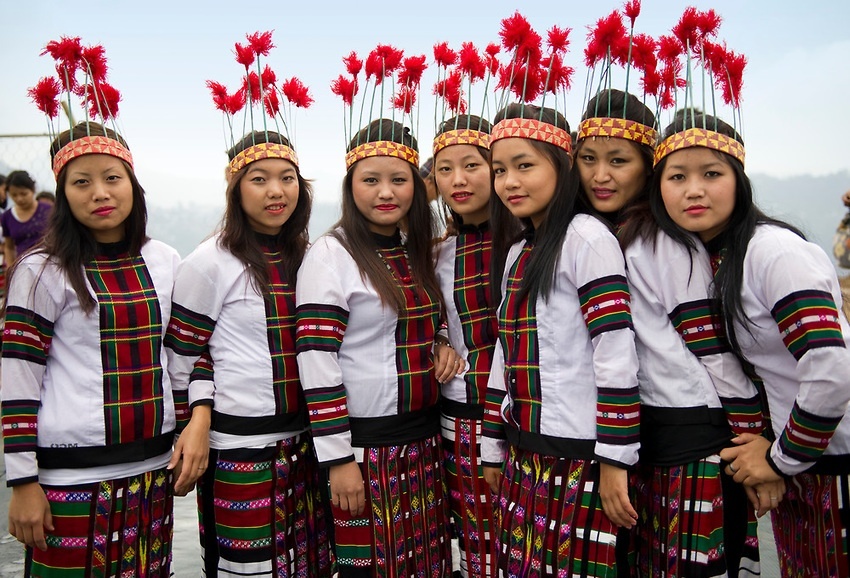
About 95% of Mizoram’s population descends from a diverse tribal origin. Mizos first began to settle in the area in the 16th century, coming in waves of immigration from Southeast Asia. This immigration lasted through the 18th century. Mizoram has the highest concentration of tribal people in India and the people of Mizoram are protected under the Indian constitution as a Scheduled Tribe. Mizoram is one of three states in India with a Christian majority with about 87% of the population following Christianity with people belonging to various denominations, mostly Presbyterians in the north and Baptists in the south. Mizoram is a highly literate agrarian economy with about 20% of the state’s population living below the poverty line.

Because of the sensitive nature of the state, so close to international borders, Indians need an Inner Line Permit or ILP to enter the state which cost INR 170 for a 15-day permit. The process to get an extension is slightly difficult. One can also get ILP documentation done at the Lengpui Airport in Aizwal.

Mizoram is derived from two Mizo words, Mizo and Ram where Mizo refers to native inhabitants and Ram means land. There is a dispute on the term zo. According to one view, zo means a highland or hill and Mizoram means the land of the Mizo people. There is also a view that says zo may also mean a cold region and therefore, Mizo may also signify people of the cold region. As with other tribes of northeastern India, the origin of the Mizos is shrouded in mystery. The people living in the Mizo Hills were generally referred to as the Cucis or Kukis by their neighbouring ethnic groups which was also a term adopted by the British. The majority of the tribes classified as Mizo today most likely migrated to their present territories from the neighbouring countries in several waves, starting around 1500. Before the British colonial rule, the various Mizo clans lived in autonomous villages with the tribal chiefs enjoying an eminent position in the gerontocratic Mizo society. The chiefs were the absolute rulers of their respective clans’ territories, although they remained under the nominal political jurisdictions of the Rajas of Manipur, Tripura and Burma.

The Mizo Hills formally became part of British India in 1895, and practices such as head-hunting were banned in Mizoram as well as neighbouring regions. The northern and southern Mizo Hills became the Lushai Hills, with Aizawl as their headquarters by declaring the whole area as an excluded area till Indian independence. After Christian missionaries arrived, the majority of the population became Christians in the first half of the 20th century.

Post-Indian independence, the number of tribal chiefs had increased to over 200 with the educated elites campaigning against the tribal chiefdoms under the banner of the Mizo Union. As a result, the hereditary rights of the 259 chiefs were abolished under the Assam-Lushai District Act, 1954. Village courts were re-implemented in the Mizo region along with other parts of Assam.
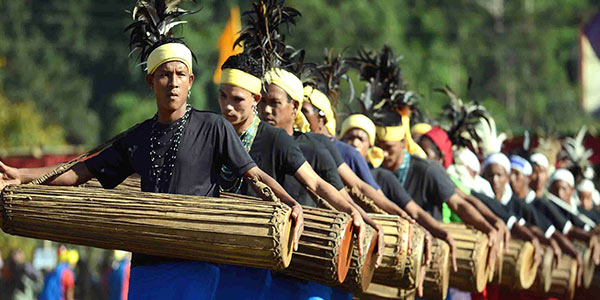
A period of protests and armed insurgency followed in the 1960s, which resulted in the Mizo National Front or MNF seeking independence from India which failed to garner public support or participation. In an attempt to counter these insurgency threats, the Indian government bombed state areas affected by insurgency, which is the only known bombing of India on its soil on 5 March 1966. In 1971, the government agreed to convert the Mizo Hills into a Union Territory, which became Mizoram in 1972. Following the Mizoram Peace Accord of 1986 between the Government and the MNF, Mizoram became a full-fledged state of India in 1987.

Geographically, Mizoram is a land of rolling hills, valleys, rivers and lakes. As many as 21 major hill ranges or peaks of different heights run through the length and breadth of the state, with plains scattered here and there. Phawngpui Tlang also known as the Blue Mountain, situated in the southeastern part of the state, is the highest peak in Mizoram at 2,210 m or 7,250 ft. About 76% of the state is covered by forests, 8% is fallow land, 3% is barren and considered uncultivable area, while cultivable and sown area constitutes the rest. Slash-and-burn or jhum cultivation, though discouraged, remains in practice in Mizoram and affects its topography. According to the Ministry of Environment, Forest and Climate Change, as of 2021, Mizoram has the highest forest cover as a percentage of its geographical area of any Indian state, at 84.53% forest.
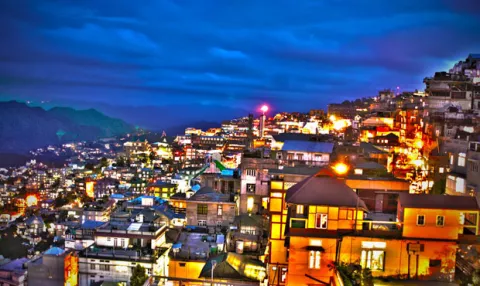
Aizwal
Mizoram’s capital, Aizawl was officially established on 25 February 1890 and is the largest city in the state as well as the centre of administration, the state assembly house and the civil secretariat. Located north of the Tropic of Cancer in the northern part of Mizoram, Aizwal is situated on a ridge 1,132 m above sea level, with the Tlawng river valley to its west and the Tuirial river valley to its east.

In 1871–72, the disorderly conduct of Khalkom, a Mizo chief, compelled the British to establish an outpost that later became Aizawl village about 14 km from Sairang from where one could travel by flat-bottomed boat. In 1892-95 Aizawl became accessible from Silchar by a fair-weather road. The Indian Air Force carried out air strikes on the town during the March 1966 Mizo National Front uprising, following which the MNF withdrew to Lunglei. Until 1966, Aizawl was a large village but the regrouping of Mizo villages after the uprising made it become a larger town and then a city. Aizawl has become the centre of the Mizoram road network connecting the north and south, east and west of the state. More than 25% of the state’s population resides in Aizawl.

Primarily dominated by the Mizo Tribe, Aizawl and its surrounding areas are lush with rolling hills and abundant greenery. An Inner Line Pass or ILP is required for entry into Mizoram which is available in Guwahati, Silchar, Shillong, New Delhi, and Kolkata.

The Durtlang Hills is located in the northern part of Aizawl and is a popular attraction with viewpoints offering panoramic views of the capital city. One can drive to the destination and once there engage in a bit of light hiking and trekking. The best time to visit the Durtlang Hills would be in the morning when the sun is not as harsh as it would be during the afternoon.

Located in Kidron Valley, the Solomon Temple is a grand church constructed by the religious group Kohhran Thianghlim, as The Holy Church. The church was founded in 1984 and is one of the largest in the state. The Temple is a square site measuring 180 ft on each side with the interior measuring 120 ft. A verandah 30 ft wide is attached to the exterior of the main hall on all four sides and is called the porch of Solomon’s Temple. The main building has twelve main doors and above the porch are four pillars, each carrying seven stars of David, meant to represent the seven churches of the Book of Revelation. On each of the pillars is a picture of the Cross of Jesus Christ and the emblem of the Holy Church is embedded. Atop the porch is an idol of two Angels blowing trumpets which face the top of the pillar and flank the northern side of the pillar, which is now used as the main entrance. The temple has four towers, one on each corner with each tower topped with a crown, representing the Crown of Salvation, the Crown of Righteousness, the Crown of Life and the Crown of the Overcomer. Two intersecting horizontal ridges cross in the middle of the pitched roof such that when viewed from the air they form a cross, representing the new covenant. There is a park with the complex as well as a restaurant, an educational institute and a social service centre. The Salvation Army Temple has wonderful bell chimes and these can be heard throughout the city on quiet mornings.

A popular picnic spot, the Berawtlang Tourist Complex is located around 7 km from Aizwal and hosts multiple ceremonial functions and houses cottages as well as restaurants. Fairs are frequently conducted here, with various cultural activities, serving as a recreational centre. This place is
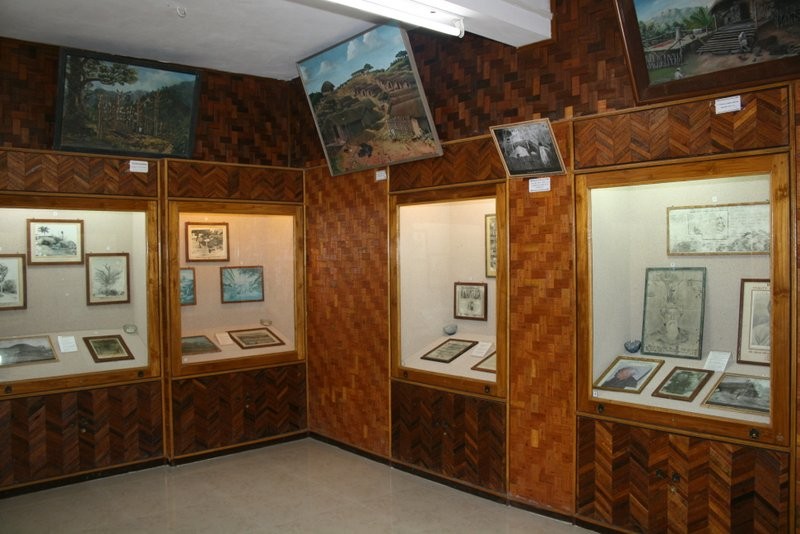
Located right in the centre of the city, the Mizoram State Museum displays the rich heritage of Mizoram. Along with the numerous archaeological artefacts, photographs and natural history specimens, an entire gallery here is dedicated to the Mizo tribes. An ethnographic museum with multipurpose collections on display, the museum has five galleries, namely the Textile Gallery, Ethnology, History, Anthropology, Natural History, and an Archaeology Terrace occupying four floors. The museum was established in April 1977 by the Tribal Research Institute under the Education Department. In 1989, it came under the Art and Culture department. The museum was earlier housed in a rented building but on 14 July 1990, it was moved to a new building.
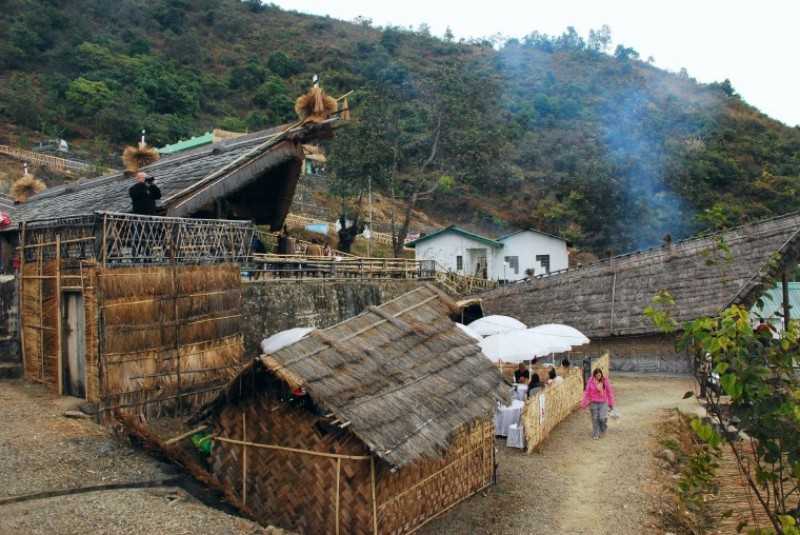
Falkawn Village
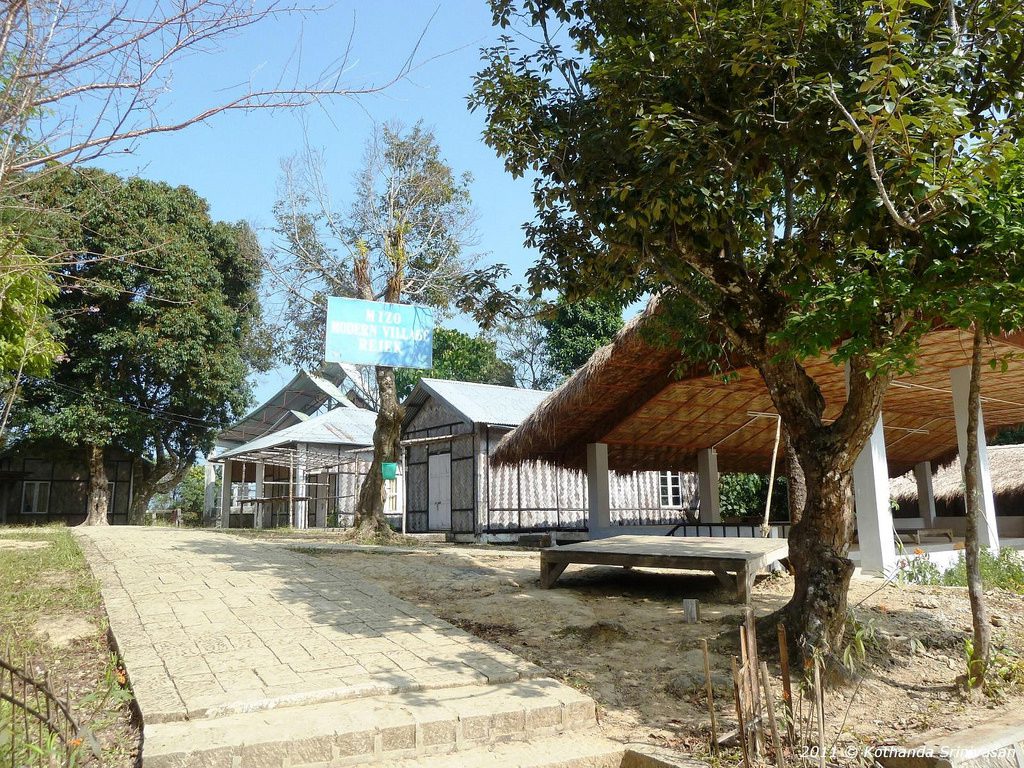
Located just 18 km south of Aizwal, Falkawn Village is a model village depicting the lifestyle of the Mizo people and is frequented by tourists. A unique cultural extravaganza for first-time visitors to Mizoram. Falkawn village depicts the livelihood and culture of the Mizo people, who form the biggest tribe in the state. The Art & Culture Department of the state government has set up a Cultural Centre or Zokhua at Falkawn in 1992 which is a mini live museum where the Zawlbuk or the dormitory, the Lal In or the Chief’s House, the Pum or the Blacksmith and other typical Mizo houses are erected. There are freedom fighter memorial stones and a Taitesena commemoration stone. Entry fees are INR 20 for adults and INR 10 for children.

Travel Bucket List: Northeast India Part 2

After having visited Assam, Arunachal Pradesh and Meghalaya in Part 1, let’s turn our attention to the remaining states. Today we will visit the Himalayan state of Sikkim and the most north-eastern states of India which are Manipur, Mizoram, Nagaland and Tripura.

Source

Shri Govindaji Temple, Manipur
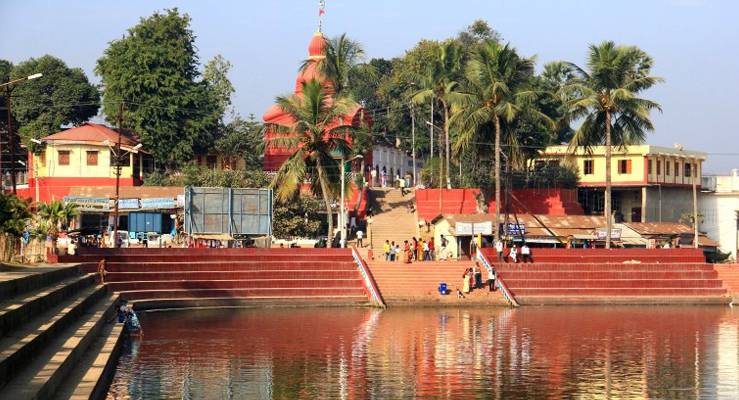
A shrine to Lord Krishna, it is believed that the temple absolves you of your guilt, worries, and stress. The simple architecture makes it stand apart from any other temple in the region, making it amongst the top places to see in North East India. The temple stands in the capital city of Manipur, and is quite accessible for the tourists. The temple is dedicated to Lord Krishna and Lord Jagannath and dates back to the year 1876, almost 130 years old. The beauty of this ancient temple is dotted with two small ponds named Radha Kunj and Krishna Kunj. The Golden domes of the temple are visible from quite a distance and you are even allowed to photograph this place. If you are interested in history and architecture, it can be an informative stopover which is situated right next to Kangla Fort.

Source

Loktak Lake, Manipur
This lake is famous for its numerous small floating islands which are locally famous as ‘Phumdis.’ Loktak lake is one of the largest freshwater lakes in North East India and is home to the world’s only floating National park – Keibul Lamjao National Park. It is located in the Bishnupur district of Manipur and the floating swamps can be toured on a fisherman’s boat. It is a nature lover’s paradise where you can indulge in birdwatching, witnessing he endangered Manipuri brow-antlered deer, Sangai and photographing more than 425 species of animals and 100 species of birds. It is one of the must-go places to visit in North East India.

Source

Imphal Valley, Manipur
This oval shaped canyon is situated an hour drive away from the city and is incredibly scenic. This valley owes its beauty to the confluence of several small river streams from the neighbouring hills, giving a unique colour to the river and scenery. The famous Loktak lake is one of the lakes and swamps of the Southern side of the valley. The valley is picture-perfect and you can click endless selfies, the frame will always look bright and beautiful.

Source

Dampa Tiger Reserve, Mizoram
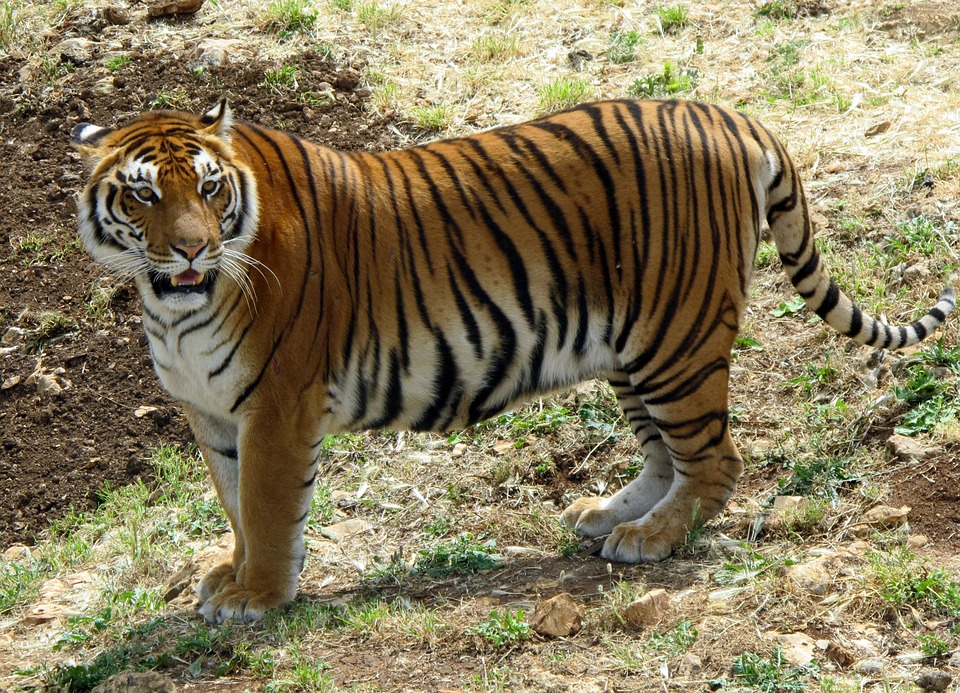
Spread over an immense 550 square kilometres, the Dampa Tiger Reserves have some beautiful tigers that you can catch sight, and capture pictures of. There is no doubt that the sight of a tiger is an experience in itself to cherish for lifelong. The royal look of a tiger, and their menacing yet elegant ways are best experienced in person, and that is why visiting this place is a must.

Source

Reiek Heritage Village, Mizoram
This hilltop village is a birdwatcher’s delight and photographers favourite spot. Mizo hills in the background give ample opportunities for trekking. Among the many North East India tourist places, Mizoram is an underrated hill station and Reiek Heritage village is now breaking the barriers with its contrasting landscape of the steep rocky cliffs and the virgin forests. It is well connected with cities like Aizawl, Silchar, Guwahati etc.

Source

Vantawng Falls, Mizoram
Vantawng fall is a well-kept secret of the hilly state of Mizoram and is the highest waterfall of the state. It is one of the best sites in Mizoram and a testament to the hidden treasures of Northeast. It originates from Vanva River near Thenzawl and is tucked away in a green setting of valleys and mountains, almost over a hundred kilometres from the city of Aizawl.

Source

Kohima Museum, Nagaland
If you are interested in knowing the history, culture, lifestyle, and tribes of Nagaland than there is no better place than visiting Kohima Museum. Furthermore, there are antiques, crafts, and gadgets used by the tribes to meet their daily chores on exhibit. The different types of huts are on display of different tribal settlements. The dialects used by different tribes and clan motifs, along with musical instruments and utensils made of Buffalo horns and bamboos are some of the interesting things in Kohima Museum.

Source

Shilloi Lake, Nagaland
The Shilloi Lake is one of the major highlights of the state of Nagaland. It is situated in the town of Phek, and is looked over by some of the most glorious mountain peaks. The lake also has an interesting story and customs associated with it, and the surroundings are just as interesting, which makes it a great place to visit for a surreal holiday experience. For northeast India tourism, best time to visit is after the monsoons.

Source

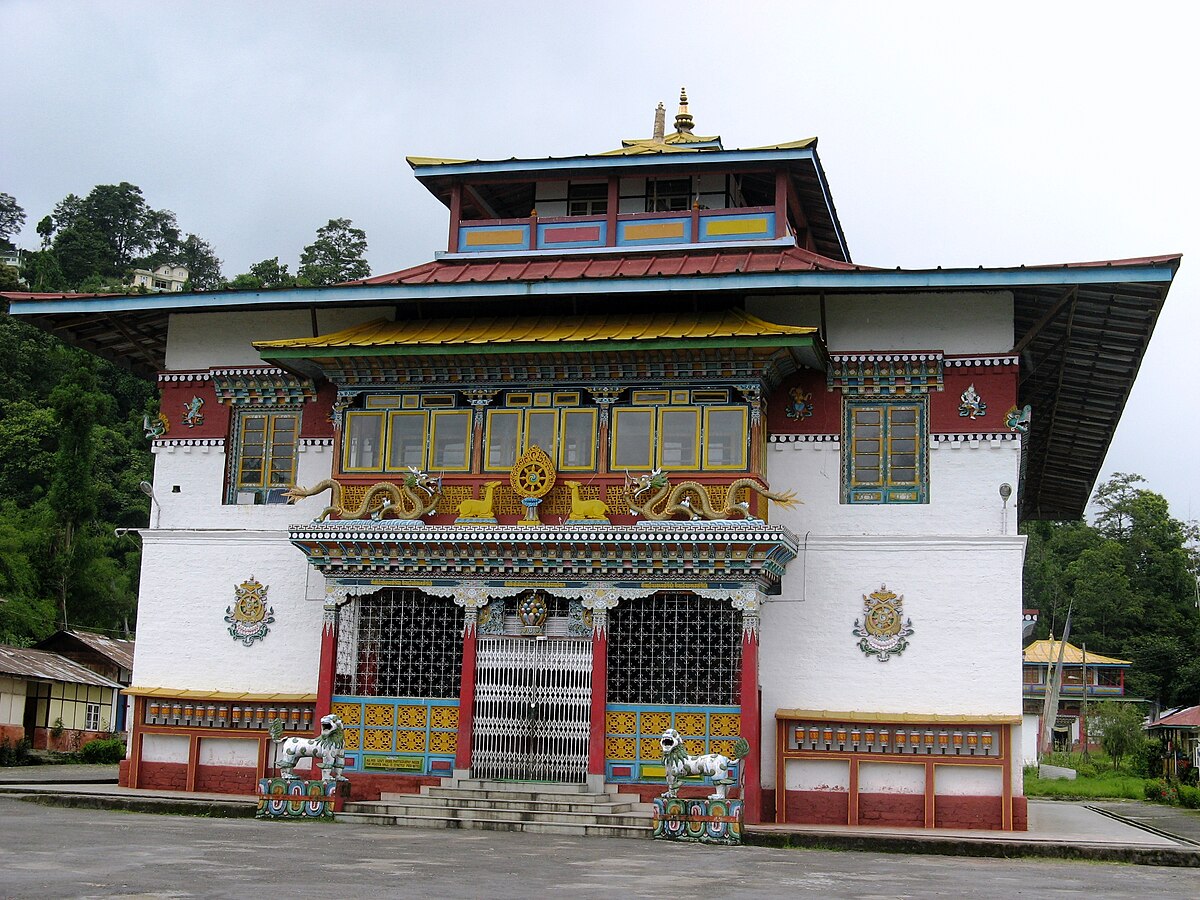
Phodong Monastery, Sikkim
The Phogong Monastery dates back to the 18th century, and is one of the most religious places for the Kagyu sect of Buddhists, and even for tourists. There are indications that the structure dates back even more than the 18th century, with the secluded location making it even more wonderful for an enriching experience.

Source

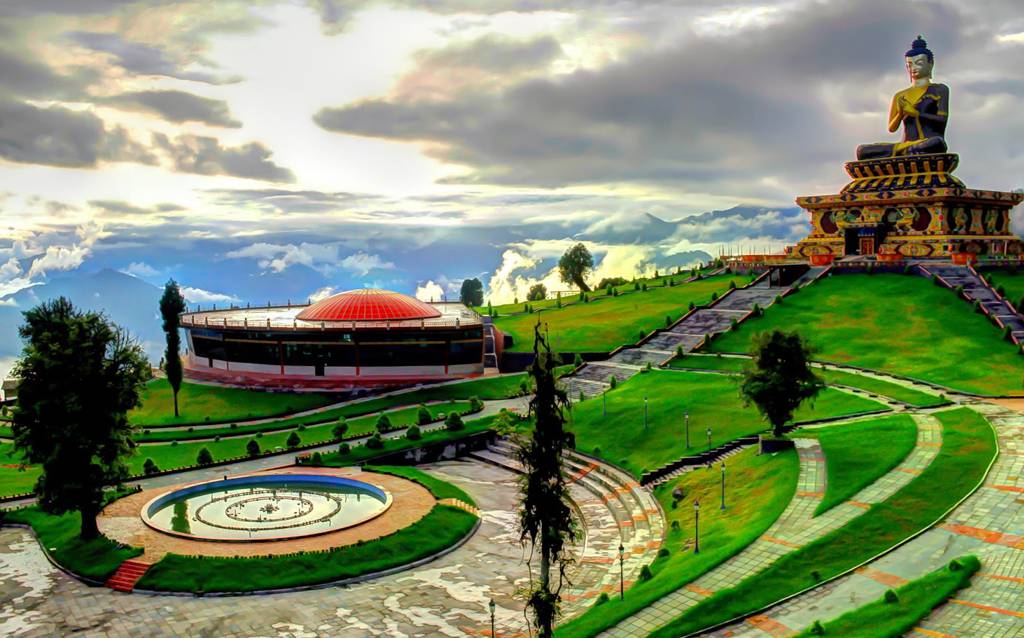
Ravangla, Sikkim
A tourist attraction in the southern part of Sikkim, this little town is a recluse for anyone who is looking for one. It lets you stand alone in a crowd, surrounded by the serenity of the flowers in the summer and the snow-clad peaks in the winters. The birdwatchers have a merry time with the Himalayan migratory birds.

Source

Gangtok, Sikkim
This cloudy paradise is simply enticing, exuberant and the gateway to Northeast. Gangtok is the capital of Sikkim and a trekking hub. The site of Mt. Kanchenjunga is cherished from Gangtok, and mountaineers who are on their expedition to climb the Eastern Himalayas make it a base town. Travellers can also spot the pristine site of river Teesta and can travel to many points like the famous Tsomgo Lake, Rumtek monastery, Nathula Pass, Tashi viewpoint and Ban Jhakri falls etc. The view of Kanchenjunga during sunrise or sunset is commendable, it shines like a series of Golden Peaks.

Source

Pelling, Sikkim
Pelling is gaining popularity with each passing year and the next big attraction after Gangtok. Pelling is a town in the West district of Sikkim at an elevation of 2000 meters and is a paradise for peace-seekers. You can indulge in activities like rock climbing, mountain biking, village walks etc. It is becoming one of the places to visit in North East India to enjoy some of the breathtaking views of the Himalayas. There are various places in Pelling that you should definitely visit when you go to North East.

Source

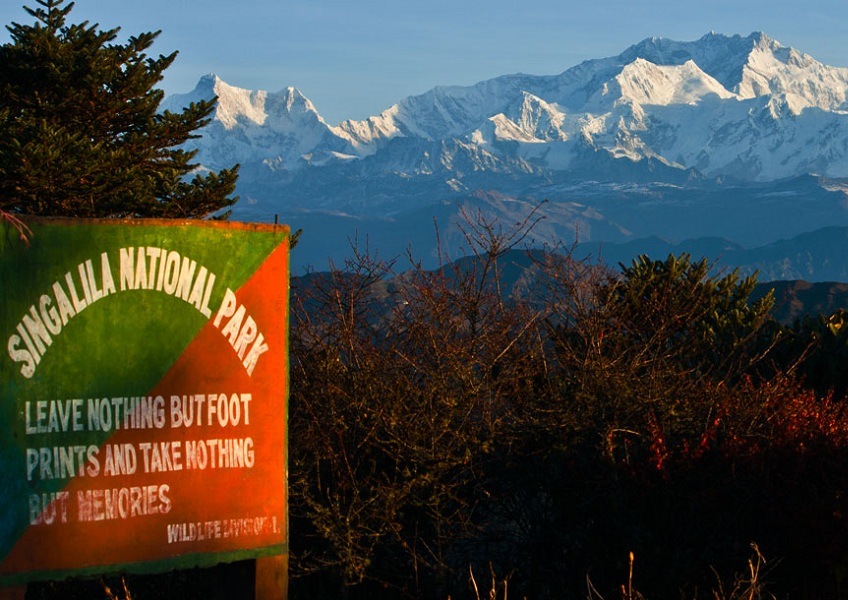
Singalila National Park, Sikkim
This alluring National Park is situated at a height of 7000 feet above the sea level, covering an area of 79 sq km of land. The Rhododendron forests, rare species of Orchids and Alpine trees are home to a plethora of species in plants and animals like Himalayan Leopard, Elephant, Pangolin, Chinkara along with Primula, Bamboo, Magnolia, Oak, Rhododendron etc. It is a famous trekking destination as it makes a major part of the Singalila range and can be best traversed on a Jeep Safari.

Source

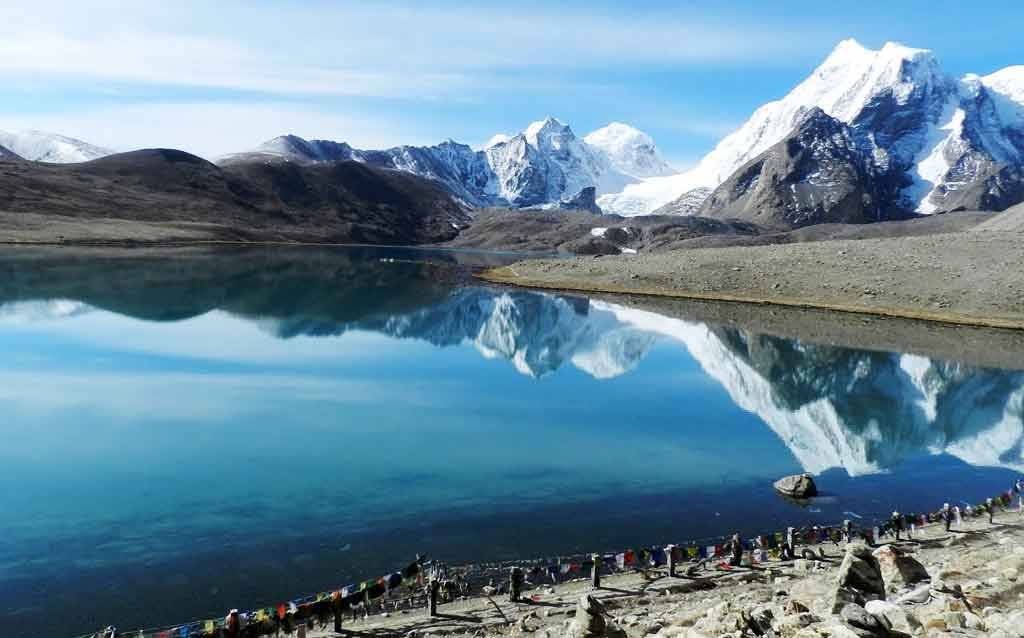
Tsomgo Lake, Sikkim
The winding roads which make a 38 km long journey from Gangtok to reach an altitude of 12,400 ft are ethereally beautiful. The lake at such an elevation flaunts its stillness in the most surreal settings of Himalayan peaks encircling it. The snow-clad mountains are the main source for the water in Lake as it melts from the mountains. In winters, this placid lake can also be snow-covered and while you travel to Tsomgo, do not forget to learn the stories which are linked to this lake. It is a different experience altogether.

Source

Nathula Pass, Sikkim
The old silk road that once used by merchants and traders is at an elevation of 14450 ft. above sea level on the Indo-Tibetan border. The temperature at Nathula is always freezing regardless of the season and the entire region is rich in Himalayan flora and fauna. It is one of the famous places to visit in North East India can be easily travelled from the capital city Gangtok. The name of the pass translates to “listening ears”. The trek on the Nathu La pass is one of the major highlights of the North East tourism as it gives an invigorating feeling to every traveler who experiences it. During the trek, you are treated to the views that remain ingrained in your memory for a lifetime, and you get to spot some beautiful lakes on the way. The best time to visit is during the summers when the temperatures are at a bearable 15 degrees. In the winters, it falls down to -25 degrees.

Source

Dzongri, Sikkim
A safari on an animal as huge and peaceful as the yak holds something magical in itself. The surrounding views while riding the majestic creature form a feeling of unity that you can seldom experience anywhere else, which is why this is one of the best things to do in North East. You can also get pictures captured to take back home as sweet memories.

Source

Tripura Sundari Temple, Tripura
This old Hindu shrine is situated around 56 km from Agartala town and is said to be one of the 51 Shakti Peethas. The outer upper edifice is a dome structure where the square type sanctum is worshipped, more like a typical Bengali hut. Flocks of tourists and locals visit this temple in lakhs during Diwali every year. It is one of the religious places to visit in North East India and one of the few temples of Goddess Kali in India.

Source

Ujjayanta Palace, Tripura
The entire city of Agartala unfurls around this lavishly designed architectural marvel of the Northeastern part of India. Ujjayanta Palace dates back to the year 1901 and from the public halls to the reception hall, from the library to the Chinese rooms; every edge gives a true sense of royalty. The lush greenery of vast gardens is well complemented with a rippling lake. It serves as a pretty museum to the travellers who come to Tripura all the way from their homes.

Source

Jagannath Temple, Tripura
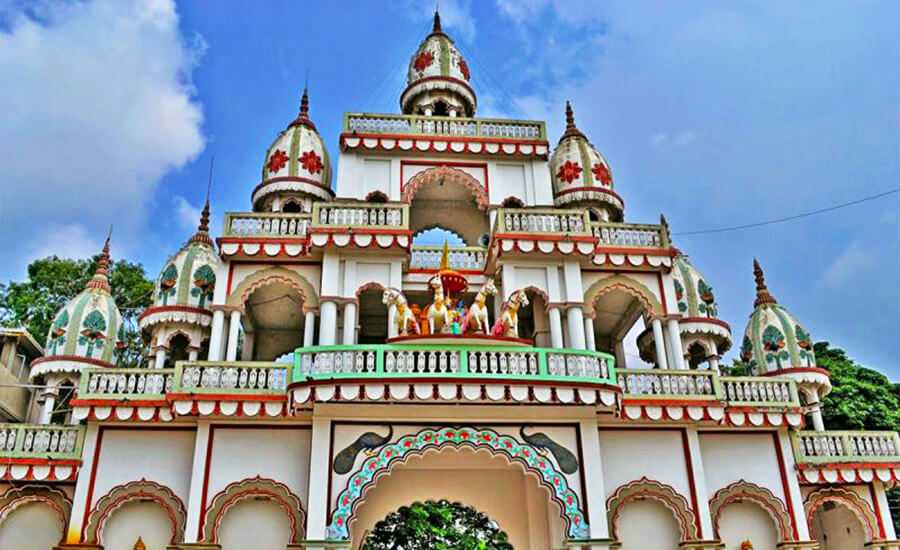
This is a famous temple in Tripura which dates back to the 19th century and was built by Manikya Dynasty. The temple is dedicated to God Jagannath, Balabhadra, and Subhadra. It is suggested to go during the month of June to witness the famous Rath Yatra. Keep your camera handy because this temple is a sight to the sore eyes. The best time to visit is in June to witness the famous Rath Yatra celebrated at the temple.

Source

Sepahijala Wildlife Sanctuary, Tripura
Sepahijala Wildlife Sanctuary is said to be the biodiversity heaven of Tripura for the plethora of animals and plants that dwell within this protected belt. There is a bio-complex, a zoo, a deer park and a Botanical garden within the sanctuary premises. It has around 456 species of plants, with animal species like Barking Deer, Pigtailed macaque, Rhesus macaque, Capped langur, Spectacled monkey, Slow loris, Clouded leopard, Civets, Jungle fowl, Wild pig, etc.

After reading both parts of this wonderful part of India, does it not invoke a desire to visit these places? It sure does for me!

If you have already visited these places, do let me know if there are any must-see places in the northeast that I have missed?