In My Hands Today…

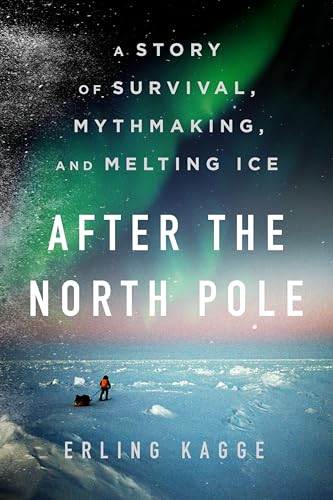
After the North Pole: A Story of Survival, Mythmaking, and Melting Ice – Erling Kagge

The North Pole looms large in our collective psyche—the ultimate Otherland in a world mapped and traversed. It is the center of our planet’s rotation, one of the places that is most vulnerable in an epoch of global climate change. Its sub-zero temperatures and strange year of one sunset and one sunrise make it an eerie, utterly disorienting place that challenges human endurance and understanding.

Erling Kagge and his friend Børge Ousland became the first people “to ever reach the pole without dogs, without depots and without motorized aids,” skiing for 58 days from a drop off point on the ice edge of Canada’s northernmost island.

In magisterial prose, Erling narrates his epic, record-making journey, probing the physical challenges and psychological motivations for embarking on such an epic expedition, the history of the territory’s exploration, its place in legend and art, and the thrilling adventures he experienced during the trek. It is another example of what bestselling author Robert MacFarlane has called “Kagge’s extraordinary life in wild places,”

Erling offers surprises on every page while observing the key role that this place holds in our current climate and geopolitical conversations. As majestic, mesmerizing, and monumental as the terrain it captures, The North Pole is for anyone who has gazed out at the horizon—and wondered what happens if you keep going.

In My Hands Today…

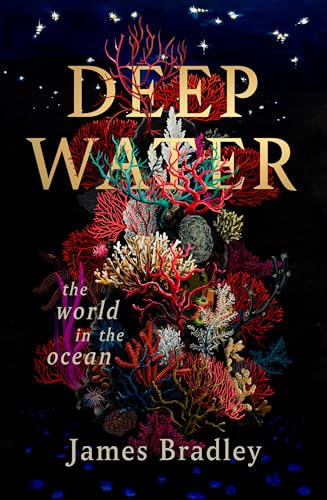
Deep Water: The World in the Ocean – James Bradley

The ocean has shaped and sustained life on Earth for billions of years. Its waters contain our past, from the deep history of evolutionary time to exploration and colonialism; our present, as a place of solace and pleasure, and as the highway that underpins the global economy; and – as waters heat and sea levels rise ever higher – our future.

Deep Water is both a hymn to the beauty, mystery and wonder of the ocean, and a reckoning with our complex relationship to the natural world. It is a book shaped by tidal movements and deep currents, and lit by the presence of other minds and other ways of being. Weaving together science, history and personal reflection it explores the way the ocean connects every living being on Earth, the origins of the environmental catastrophe that is overtaking us and the question of what lies ahead.

Immense in scope but also human and intimate, Deep Water offers new ways of understanding not just our relationship with the planet, but the past – and perhaps most importantly, the future.

In My Hands Today…

The Light Eaters: How the Unseen World of Plant Intelligence Offers a New Understanding of Life on Earth – Zoë Schlanger

Award-winning environment and science reporter Zoë Schlanger delivers a groundbreaking work of popular science that probes the hidden world of the plant kingdom and reveals the astonishing capabilities of the green life all around us. It takes tremendous biological creativity to be a plant. To survive and thrive while rooted in a single spot, plants have adapted ingenious methods of survival. In recent years, scientists have learned about their ability to communicate, recognize their kin and behave socially, hear sounds, morph their bodies to blend into their surroundings, store useful memories that inform their life cycle, and trick animals into behaving to their benefit, to name just a few remarkable talents.

The Light Eaters is a deep immersion into the drama of green life and the complexity of this wild and awe-inspiring world that challenges our very understanding of agency, consciousness, and intelligence. In looking closely, we see that plants, rather than imitate human intelligence, have perhaps formed a parallel system. What is intelligent life if not a vine that grows leaves to blend into the shrub on which it climbs, a flower that shapes its bloom to fit exactly the beak of its pollinator, a pea seedling that can hear water flowing and make its way toward it? Zoë Schlanger takes us across the globe, digging into her own memories and into the soil with the scientists who have spent their waking days studying these amazing entities up close.

What can we learn about life on Earth from the living things that thrive, adapt, consume, and accommodate simultaneously? More important, what do we owe these life forms once we come to understand their rich and varied abilities? Examining the latest epiphanies in botanical research, Schlanger spotlights the intellectual struggles among the researchers conceiving a wholly new view of their subject, offering a glimpse of a field in turmoil as plant scientists debate the tenets of ongoing discoveries and how they influence our understanding of what a plant is.

We need plants to survive. But what do they need us for—if at all? An eye-opening and informative look at the ecosystem we live in, this book challenges us to rethink the role of plants—and our own place—in the natural world.

In My Hands Today…

Our Fragile Moment: How Lessons from Earth’s Past Can Help Us Survive the Climate Crisis – Michael E. Mann

For the vast majority of its 4.54 billion years, Earth has proven it can manage just fine without human beings. Then came the first proto-humans, who emerged just a little more than 2 million years ago—a fleeting moment in geological time. What is it that made this benevolent moment of ours possible? Ironically, it’s the very same thing that now threatens us—climate change. The drying of the tropics during the Pleistocene period created a niche for early hominids, who could hunt prey as forests gave way to savannahs in the African tropics. The sudden cooling episode known as the “Younger Dryas” 13,000 years ago, which occurred just as Earth was thawing out of the last Ice Age, spurred the development of agriculture in the fertile crescent. The “Little Ice Age” cooling of the 16th-19th centuries led to famines and pestilence for much of Europe, yet it was a boon for the Dutch, who were able to take advantage of stronger winds to shorten their ocean voyages.

The conditions that allowed humans to live on this earth are fragile, incredibly so. Climate variability has at times created new niches that humans or their ancestors could potentially exploit, and challenges that at times have spurred innovation. But there’s a relatively narrow envelope of climate variability within which human civilization remains viable. And our survival depends on conditions remaining within that range.

In this book, renowned climate scientist Michael Mann will arm readers with the knowledge necessary to appreciate the gravity of the unfolding climate crisis, while emboldening them—and others–to act before it truly does become too late.

In My Hands Today…

Dinosaurs at the Dinner Party: How an Eccentric Group of Victorians Discovered Prehistoric Creatures and Accidentally Upended the World – Edward Dolnick

In the early 1800s the world was a safe and cozy place. But then a twelve-year-old farm boy in Massachusetts stumbled upon a row of fossilized three-toed footprints the size of dinner plates—the first dinosaur tracks ever found. Soon, in England, Victorians unearthed enormous bones—bones that reached as high as a man’s head.

Outside of myths and fairy tales, no one had imagined that creatures like three-toed giants once lumbered across the land. And if anyone conjured up such a scene, they would never imagine that all those animals could have vanished hundreds of millions years ago. The thought of sudden, arbitrary disappearance from life was unnerving and forced the Victorians to rethink everything they knew about the world. Celebrated storyteller and historian Edward Dolnick leads readers through a compelling true adventure as the paleontologists of the first half of the 19th century puzzled their way through the fossil record to create the story of dinosaurs we know today.