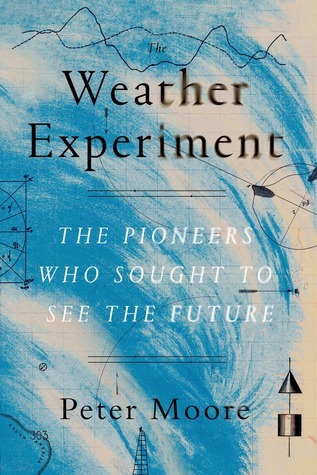
In 1865 Admiral Robert FitzRoy locked himself in his dressing room and cut his throat. His grand meteorological project had failed. Yet only a decade later, FitzRoy’s storm warning system and “forecasts” would return, the model for what we use today.
In an age when a storm at sea was evidence of God’s wrath, nineteenth-century meteorologists had to fight against convention and religious dogma. Buoyed by the achievements of the Enlightenment, a generation of mavericks set out to decipher the secrets of the atmosphere and predict the future. Among them were Luke Howard, the first to classify clouds; Francis Beaufort, who quantified the winds; James Glaisher, who explored the upper atmosphere in a hot-air balloon; Samuel Morse, whose electric telegraph gave scientists the means by which to transmit weather warnings; and FitzRoy himself, master sailor, scientific pioneer, and founder of the U.K.’s national weather service.
Reputations were built and shattered. Fractious debates raged over decades between scientists from London and Galway, Paris and New York. Explaining the atmosphere was one thing, but predicting what it was going to do seemed a step too far. In 1854, when a politician suggested to the Commons that Londoners might soon know the weather twenty-four hours in advance, the House roared with laughter.
Peter Moore’s The Weather Experiment navigates treacherous seas and rough winds to uncover the obsession that drove these men to great invention and greater understanding.
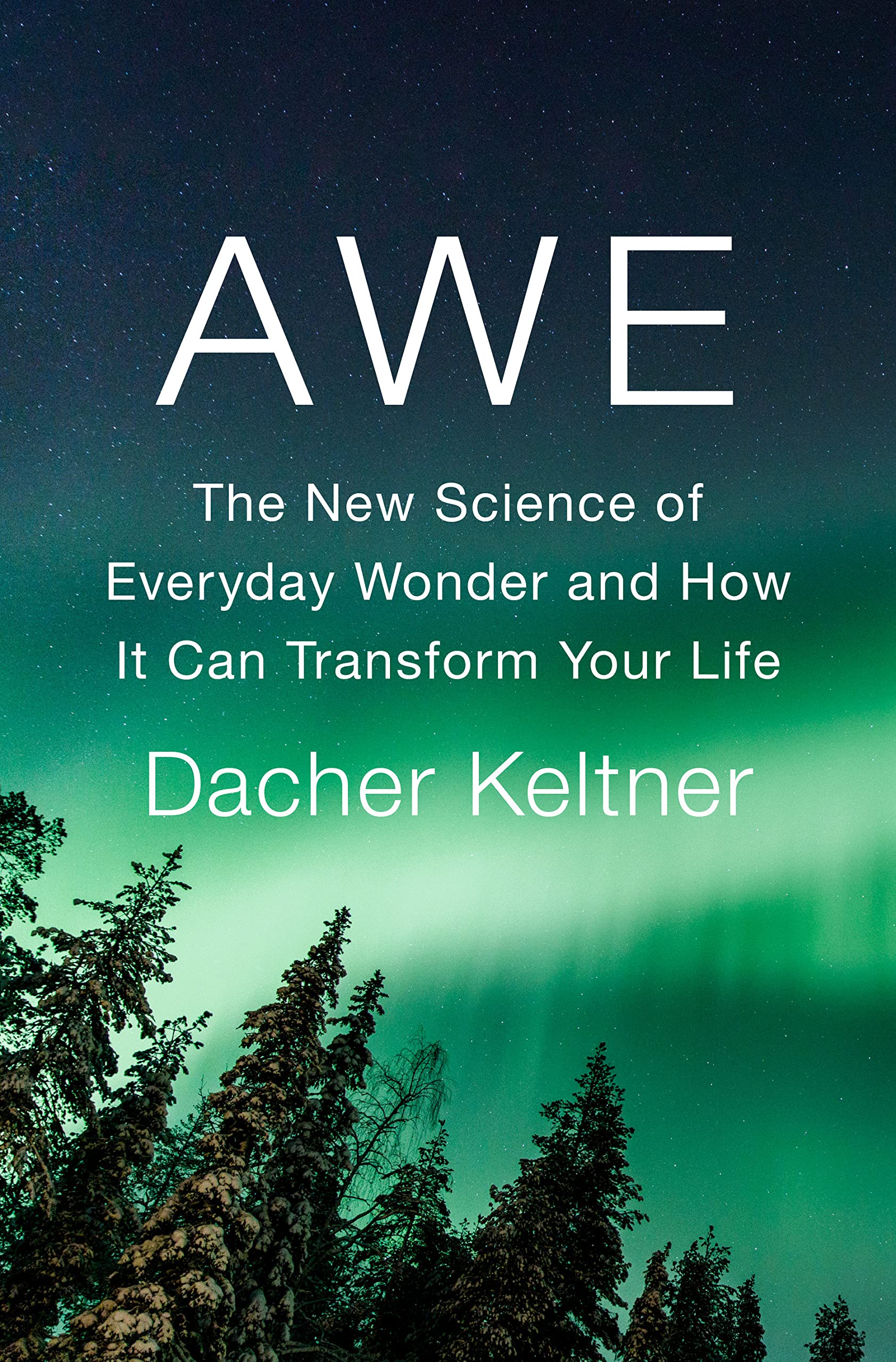
Awe: The New Science of Everyday Wonder and How It Can Transform Your Life – Dacher Keltner
Awe is mysterious. How do we begin to quantify the goose bumps we feel when we see the Grand Canyon, or the utter amazement when we watch a child walk for the first time? How do you put into words the collective effervescence of standing in a crowd and singing in unison, or the wonder you feel while gazing at centuries-old works of art?
Up until fifteen years ago, there was no science of awe, the feeling we experience when we encounter vast mysteries that transcend our understanding of the world. Scientists were studying emotions like fear and disgust, emotions that seemed essential to human survival. Revolutionary thinking, though, has brought into focus how, through the span of evolution, we’ve met our most basic needs socially. We’ve survived thanks to our capacities to cooperate, form communities, and create culture that strengthens our sense of shared identity—actions that are sparked and spurred by awe.
In Awe, Dacher Keltner presents a radical investigation and deeply personal inquiry into this elusive emotion. Revealing new research into how awe transforms our brains and bodies, alongside an examination of awe across history, culture, and within his own life during a period of grief, Keltner shows us how cultivating awe in our everyday life leads us to appreciate what is most humane in our human nature. And during a moment in which our world feels more divided than ever before, and more imperiled by crises of different kinds, we are greatly in need of awe. If we open our minds, it is awe that sharpens our reasoning and orients us toward big ideas and new insights, that cools our immune system’s inflammation response and strengthens our bodies. It is awe that activates our inclination to share and create strong networks, to take actions that are good for the natural and social world around us. It is awe that transforms who we are, that inspires the creation of art, music, and religion. At turns radical and profound, brimming with enlightening and practical insights, Awe is our field guide, from not only one of the leading voices on the subject but a fellow seeker of awe in his own right, for how to place awe as a vital force within our lives.
The Earth Transformed: An Untold History – Peter Frankopan
Global warming is one of the greatest dangers mankind faces today. Even as temperatures increase, sea levels rise, and natural disasters escalate, our current environmental crisis feels difficult to predict and understand. But climate change and its effects on us are not new.
In a bold narrative that spans centuries and continents, Peter Frankopan argues that nature has always played a fundamental role in the writing of history.
From the fall of the Moche civilization in South America that came about because of the cyclical pressures of El Nino to volcanic eruptions in Iceland that affected Egypt and helped bring the Ottoman empire to its knees, climate change and its influences have always been with us.
Frankopan explains how the Vikings emerged thanks to catastrophic crop failure, why the roots of regime change in Eleventh-Century Baghdad lay in the collapse of cotton prices resulting from unusual climate patterns, and why the western expansion of the frontiers in North America was directly affected by solar flare activity in the eighteenth century. Again and again, Frankopan shows that when past empires have failed to act sustainably, they have been met with catastrophe. Blending brilliant historical writing and cutting-edge scientific research, Climate will radically reframe the way we look at the world and our future.
While we were in Bengaluru, we made a half day trip to the Bangalore Bannerghetta National Park and Zoo. I felt the park is worth visiting, especially if you have young children. I especially enjoyed the safari, which if you do nothing else at the park, you must do. Here are some photos from the safari. The highlight of our safari was seeing a tiger stroll down the road while we were parked. That was so beautiful. I did capture that as a short reel, but since I can’t post that here, you have to be content with a photo of the tiger.
Our planet is at a turning point. The massive global migration underway now from countryside to cities demands huge investments in energy, water, materials, waste, food distribution and transportation. At the same time, we are dealing with the fight against carbon emissions, climate change, air pollutants, marine debris and contaminated ground water.
Today, the 22nd of April is celebrated as International Mother Earth Day. This day is a globally celebrated holiday that often extends into Earth Week – a full seven days of events focused on green awareness. Typically on April 22 men, women, and children around the world will collect garbage, plant trees, clean up coral reefs, show movies, sign petitions, and plan for a better future for our planet.
Mother Earth is a common expression for the planet Earth in a number of countries and regions, which reflects the interdependence that exists among human beings, other living species and the planet we all inhabit. The Earth and its ecosystems are our home. In order to achieve a just balance among the economic, social, and environmental needs of present and future generations, it is necessary to promote harmony with nature and the Earth.
International Mother Earth Day is celebrated to remind each of us that the Earth and its ecosystems provide us with life and sustenance. It promotes the view that the Earth as an entity sustains all living things found in nature. Shared responsibilities and inclusiveness is at the heart of this day which allows us to rebuild man’s troubled and fractured relationship with nature. This cause can also unite people across nations as it is a common cause not dependant on existing strife and enemity. Today, more than ever, we need to remember what the Earth does for us and what we have given back to the Earth.
This Day also recognizes a collective responsibility, as called for in the 1992 Rio Declaration, to promote harmony with nature and the Earth, to achieve a just balance among the economic, social and environmental needs of present and future generations of humanity. The International Mother Earth Day provides an opportunity to raise public awareness around the world to the challenges regarding the well-being of the planet and all the life it supports.
The United Nations designated 22 April as International Mother Earth Day through a resolution adopted in 2009, joining civic groups that celebrated Earth Day earlier. The resolution recognises that “the Earth and its ecosystems are our home” and that “it is necessary to promote harmony with nature and the Earth.” The term Mother Earth is used because it “reflects the interdependence that exists among human beings, other living species and the planet we all inhabit”
In fact, the original roots go back to 1970 with the first American protests against air pollution due to amounts of leaded gas through massive and inefficient automobiles and irresponsible industries. Environmental protection was not a priority of the political agenda. Soon awareness of environment grew and the movement went global, especially during the nineties, with more than 140 countries joining the initiative through different environmental platforms. In 1992, the Rio Declaration on Environment and Development, and the Statement of principles for the Sustainable Management of Forests were adopted by more than 178 Governments at the Rio de Janeiro Earth Summit, the first major conference in which Sustainable Development was the main issue discussed by member states.
Today many companies are implementing strategic ecological thinking as part of their strategy to be responsible global businesses. How can all of us be ecological warriors in our own small ways?
We should avoid driving and take public transportation when we leave our homes. Organisations should also allow employees to work remotely, which is what is happening in a huge way today. I really hope that once organisations see how effective remote working is, they do this even after we beat Covid-19 and lockdowns across the world are lifted. Building authorities across the world should look and mandate green materials when building or renovating. Everyone should avoid printing unnecessarily and if you do need to print anything, print it on both sides of the paper and also use paper that has been certified as being made from recycled paper. Recycle and upcycle everything you can including paper, clothes, bottles and cans. Save energy by turning off computers monitors, printers, copiers and lights at the end of each working day in your workplace and all switches which are not being used at home. You should also remove plugs when not needed. If you are using airconditioning, make sure you don’t keep the thermostat lower than 24 or 25 degrees celcius and also use a timer to maximise efficiency.
Did you know? Recycling one aluminum can saves enough electricity to run a TV for 3 hours Recycling one glass bottle or jar saves enough electricity to light a 100-watt bulb for four hours Recycling one ton of plastic saves the equivalent of 1,000–2,000 gallons of petrol More than 30 million trees are cut down to produce a year’s supply of newspapers Recycling a pound of steel saves enough energy to light a 60-watt light bulb for 26 hours. One drip per second from a faucet wastes 540 gallons of water a year. It takes between 400 and 500 years for a Styrofoam cup to decompose. It takes an orange peel six months to decompose. Using recycled glass uses 40% less energy than making products from all new materials.
A ton of paper made from recycled paper saves: 7,000 gallons of water Between 17 and 31 trees 60 pounds of air pollutants
There’s an old Cree Indian proverb which is very apt here as an ending to this post – Only after the last tree has been cut down; Only after the last river has been poisoned; Only after the last fish has been caught; Only then can you find that money can’t be eaten. Remember we don’t have a Planet B!




 Memories and Such