Festivals of India: Baisakhi

Today marks the beginning of the Hindu solar new year and this means its festival time! The new year is set in sync with the solar cycle of the lunisolar Hindu calendar and it falls on or about 14 April every year according to the Gregorian calendar. Across the Indian subcontinent, various communities celebrate the day as their new year. It is the New Year’s Day for Hindus in Assam, Bengal, Bihar, Himachal Pradesh, Haryana, Kerala, Odisha, Punjab, Tamil Nadu, Uttar Pradesh, Uttrakhand and other parts of India. However, this is not the universal new year for all Hindus. For some, such as those in and near Gujarat, the new year festivities coincide with the five-day Diwali festival. For others, the new year falls on Cheti Chand, Gudi Padwa and Ugadi which falls a few weeks earlier. Essentially a spring harvest festival, in the state of Punjab, it is known as Baisakhi, Vaisakhi or Vaisakha Sankranti as it marks the first day of the month of Vaisakha.

Baisakhi is a historical and religious festival in both Hinduism and Sikhism. For Hindus, the festival is their traditional solar new year, a harvest festival, an occasion to bathe in sacred rivers such as the Ganges, Jhelum, and Kaveri, visit temples, meet friends and take part in other festivities. For the Sikhs, Vaisakhi observes major events in the history of Sikhism and the Indian subcontinent that happened in the Punjab region.

The significance of Baisakhi as a major Sikh festival marking the birth of the Sikh order started after the persecution and execution of Guru Tegh Bahadur for refusing to convert to Islam under the orders of the Mughal Emperor Aurangzeb. This triggered the coronation of the tenth Guru of Sikhism and the historic formation of the Khalsa, both on the Vaisakhi day. The Khalsa tradition started in the year 1699, as it is on this day that the 10th Guru of the Sikhs, Guru Gobind Singh laid down the foundation of the Panth Khalsa, that is the Order of the Pure Ones, by baptising Sikh warriors to defend religious freedoms. This gave rise to the Vaisakhi or Baisakhi festival observed as a celebration of Khalsa Panth formation and is also known as Khalsa Sirjana Divas and Khalsa Sajna Divas. The Birth of the Khalsa Panth was probably on 30 March 1699. Since 2003, the Sikh Gurdwara Prabhandak Committee named it Baisakh or Vaisakh, making the first day of the second month of Vaisakh according to its new Nanakshahi calendar. A special celebration takes place at the Talwandi Sabo, where Guru Gobind Singh stayed for nine months and completed the recompilation of the Guru Granth Sahib, in the Gurudwara at Anandpur Sahib the birthplace of the Khalsa, and at the Golden Temple in Amritsar.

Ranjit Singh was proclaimed as Maharaja of the Sikh Empire on 12 April 1801, which was the Baisakhi day, creating a unified political state with Sahib Singh Bedi, a descendant of Guru Nanak dev, conducting the coronation. Vaisakhi was also the day when the British colonial empire official, General Reginald Dyer, committed the Jallianwala Bagh massacre on a gathering, an event influential to the Indian movement against colonial rule.

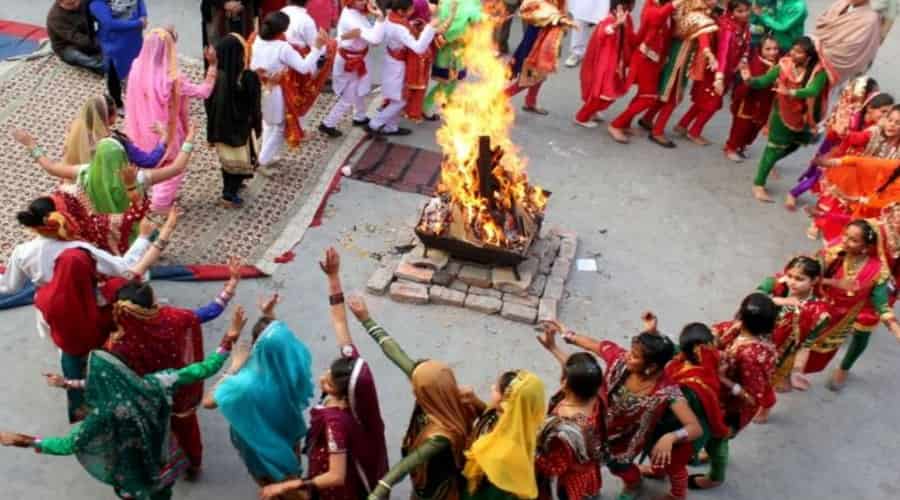
On Baisakhi, Mandirs and Gurdwaras are decorated. Hindus perform a mandatory daan or charity especially of hand fans, water pitchers and seasonal fruits. A ritual dip in the Ganga river or other holy water bodies is often performed and community fairs are held at Hindu pilgrimage sites and in many areas, a procession of temple deities is taken out. Sikhs hold kirtans, visit local Gurdwaras, community fairs and Nagar kirtan processions are held, and people gather to socialise and share festive foods.

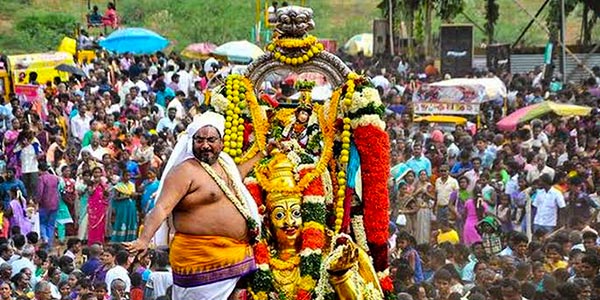
The tradition of celebrating Baisakhi among Punjabi Hindus predates the birth of Sikhism. In undivided Punjab, before India’s partition, the Hindu shrine of Katas Raj was known for its Baisakhi fair which was attended by around 10,000 pilgrims, mostly Hindus. Similarly, at the shrine of Bairagi Baba Ram Thaman, a Baisakhi fair was held annually since the 16th century, which is today in Kausar in Pakistan’s Punjab, which was attended by around 60,000 pilgrims and Bairagi saints from all over India used to throng the shrine. The most spectacular gathering of the Baisakhi fair is at Thakurdwara of Bhagwan Narainji at Pandori Mahatan village in Gurdaspur district of Punjab where the fair lasts for three days from the 1st day of Vaisakha to the 3rd day of Vaisakha. The celebrations start in form of a procession on the morning of the 1st day of Vaisakha, carrying the Mahant in a palanquin by Brahmacharis and devotees. After that, the Navgraha Puja is held and charities in money, grains and cows are done. At sunset, the Sankirtan is held in which the Mahant delivers religious discourses and concludes it by distributing prasad or holy offerings of Patashas or candy drops. Pilgrims also do the ritual bath at the sacred tank in the shrine.

According to the Khalsa Sambat, the Khalsa calendar started with the creation of the Khalsa which was 13 April 1699 and accordingly, Baisakhi has been the traditional Sikh New Year. The alternative Nanakshahi calendar begins its year a month earlier on 1 Chait which generally falls on 14 March and begins with the birth year of the Guru Nanak Dev in 1469.

Vaisakhi is an important festival among Dogra Hindus of the Jammu region. On this day, people get up early in the morning, throng the rivers, canals, and ponds and take a ritual dip on this occasion. In Dogra households, a puja or prayer is performed then and part of the food crop is offered to the deities. New fruits of the year are enjoyed with the ritual bath at the Tawi river being common in Jammu. Baisakhi is celebrated at Udhampur on the banks of the Devika river where for three days devotees enjoy folk songs. At Sudhmahadev, this festival is celebrated with great pomp and show where folk singers come down and competition of folk songs is held. You will find vendors with stalls of eatables and games during this time. People also go to the Nagbani temple near Jammu to witness the grand new year celebration. The occasion is marked by numerous fairs and people come by the thousands to celebrate the festival.
In Himachal Pradesh, Baisakhi is an important festival for the Hindus. People get up early in the morning and have their ritual bath. Two earthen lamps are lit on this day, one with oil and the other with ghee and kept in a large saucer along with a water pot, blades of evergreen turf, Kusha, Incense, sandal, vermillion and money and the household deities are worshipped with all these items. Alms are given in form of rice and pulses with small coins called Nasrawan. Fried cakes of black gram prepared a day in advance are distributed to neighbours after the prayers and other special delicacies are prepared. In the evenings’ people enjoy the many fairs organised for three days.

In the state of Haryana, Baisakhi is celebrated with a fair in Kurukshetra at Baan Ganga Tirtha, which is associated with Lord Arjuna of the Mahabharata. There is a Vaisakhi tradition of a ritual bath at the sacred tank of Baan Ganga Tirtha and a fair is held annually on Baisakhi. The Haryana government also organises a Baisakhi festival in Pinjore Gardens to commemorate this festival.

In the state of Uttar Pradesh, Baisakhi is also known as Sattua or Satwahi, as Sattu, made by dry roasting and finely grinding grams is donated and consumed on this day. The common rites during this festival are bathing in a river or pond and eating sattu and jaggery.

Wishing everyone who celebrates this festival a very Happy New Year! Enjoy this day and especially the yummy food, though socialising may still not be allowed under social distancing norms in most countries.


Poetry: Happy New Year

Like most of the poetry I write, this too came by unbidden while I was writing my reflections for 2020 and resolutions for 2021. While I have made my new year resolutions, we are still living in an uncertian world and I for one, am hopeful that 2021 will be a much better year for all of us.

Happy New Year

Out with the old, in with the new
Isnt that how we greet a new year anew?

2021 stretches before us, like a blank piece of paper
A new beginning, a chance to get our act together
Resolutions are made and promises sworn as we cheer
Learning from past mistakes, we vow to do better this year

2020 was a tough year for sure as we all know
We’ve still not come out of the woods, the process will be long and slow
But the end of the year did bring some good news
Maybe this will chase off the year-end blues

My hope for 2021 is just this wish, small but true
May all your dreams come true, find hope and peace in all that you do
May the year be the one where you shine like a star
Win that war inside yourself, be a superstar

My wish for 2021 is that our world goes back to a semblance of normal
We are able to meet our loved ones and life again becomes dull
Here’s wishing you all loads of happiness, peace and much more
Happy New Year and peace and joy more than you have ever known before!

Festivals of India: Tamil New Year

Tomorrow is the first day of year on the Tamil calendar and is set in sync with the solar cycle of the lunisolar Hindu calendar, as the first day of the Tamil month Chithirai. It therefore falls on or about 14 April every year on the Gregorian calendar. The same day is observed by Hindus elsewhere as the traditional new year, but is known by other names such as Vishu in Kerala, and Vaisakhi or Baisakhi in central and northern India. The Tamil calendar follows a 60-year cycle which is also very ancient and is observed by most traditional calendars of India and China. According to popular belief it is related to 5 revolutions of Jupiter around the Sun, and also to 60-year orbit of Nakshatras or stars as mentioned in Surya Siddhanta. The 2020 Tamil New Year is called Saarvari.

The day is observed as a family time and before this day, households clean up the house, prepare a tray with fruits, flowers and auspicious items, light up the family Puja altar and visit their local temples. People wear new clothes and children go to elders to pay their respects and seek their blessings, then the family sits down to a vegetarian feast.

The Tamil New Year follows the spring equinox and generally falls on 14 April of the Gregorian year. The day celebrates the first day of the traditional Tamil calendar and is a public holiday in both Tamil Nadu and Sri Lanka. The same date is observed as the traditional new year by many Hindus in Assam, West Bengal, Kerala, Manipur, Tripura, Bihar, Odisha, Punjab, Uttar Pradesh, Uttarakhand, Himachal Pradesh, Haryana, Rajasthan as well as by Hindus in Nepal and Bangladesh. Several Buddhist communities in Myanmar, Cambodia, Laos, Thailand, and Sinhalese in Sri Lanka also celebrate the same day as their new year, likely an influence of the shared culture between South and Southeast Asia in the 1st millennium. The day is celebrated as Vishu in Kerala, Vaisakhi or Baisakhi in central and north India, Pohela Sankranti in Odisha, Pohela Boishakh in West Bengal, and Bangladesh, Rongali Bihu in Assam, Bikram Samwat or Vaishak Ek in Nepal, Aluth Avuruthu in Sri Lanka as the Sinhalese New Year, Songkran in Thailand, Pi Mai in Laos, Choul Chhnam Khmer in Cambodia and Thingyan in Myanmar

There are several references in early Tamil literature to the April new year. Nakkirar, the Sangam period author of the Neṭunalvāṭai, wrote that the sun travels from Mesha/Chitterai through 11 successive signs of the zodiac. Kūdalūr Kizhaar refers to Mesha Raasi/Chitterai as the commencement of the year in the Puṟanāṉūṟu. The Tolkaapiyam is the oldest surviving Tamil grammar that divides the year into six seasons where Chitterai marks the start of the Ilavenil season or summer. The Silappadikaaram mentions the 12 Raasis or zodiac signs starting with Mesha/Chitterai or roughly Aries as per the western zodiac. The Manimekalai alludes to the Hindu solar calendar as we know it today. Adiyarkunalaar, an early medieval commentator or Urai-asiriyar mentions the twelve months of the Tamil calendar with particular reference to Chitterai. There were subsequent inscriptional references in Pagan, Burma dated to the 11th century and in Sukhothai, Thailand dated to the 14th century to South Indian, often Vaishnavite, courtiers who were tasked with defining the traditional calendar that began in mid-April

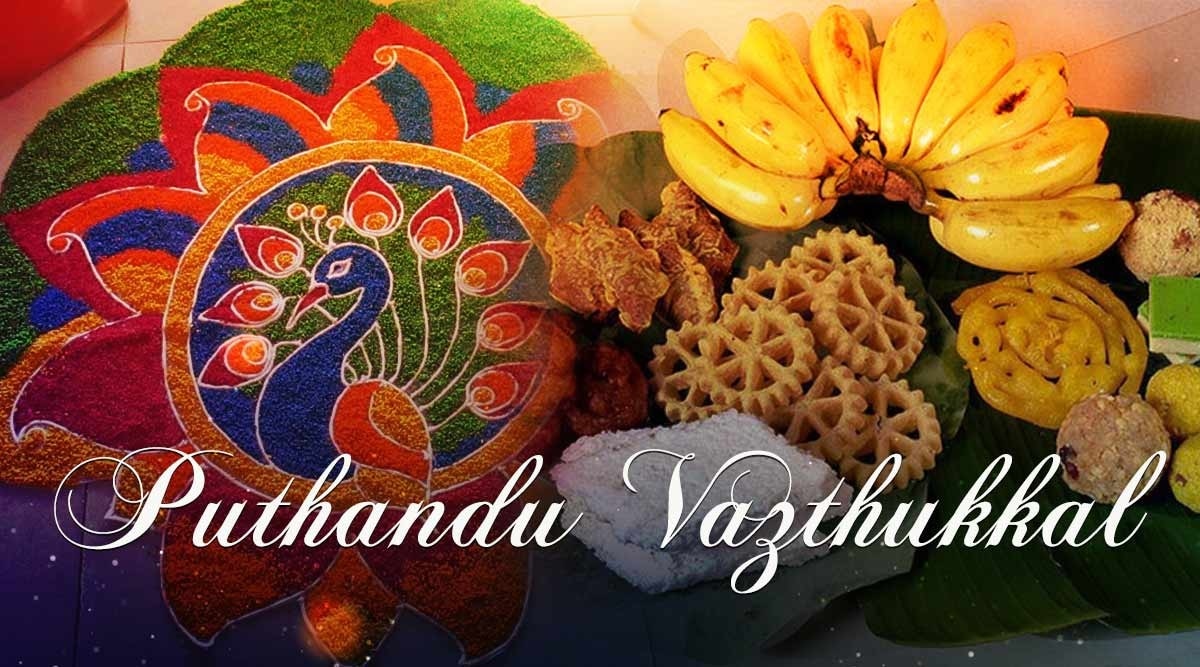
On the eve of the New Year or Puthandu, a tray arranged with three fruits (mango, banana and jack fruit), betel leaves and arecanut, gold/silver jewellery, coins/money, flowers and a mirror. This is similar to the Vishu new year festival ceremonial tray in Kerala. According to the Tamil tradition, this festive tray is auspicious as the first sight upon waking on the new year day. Home entrances are decorated elaborately with colored rice powder designs called kolams.

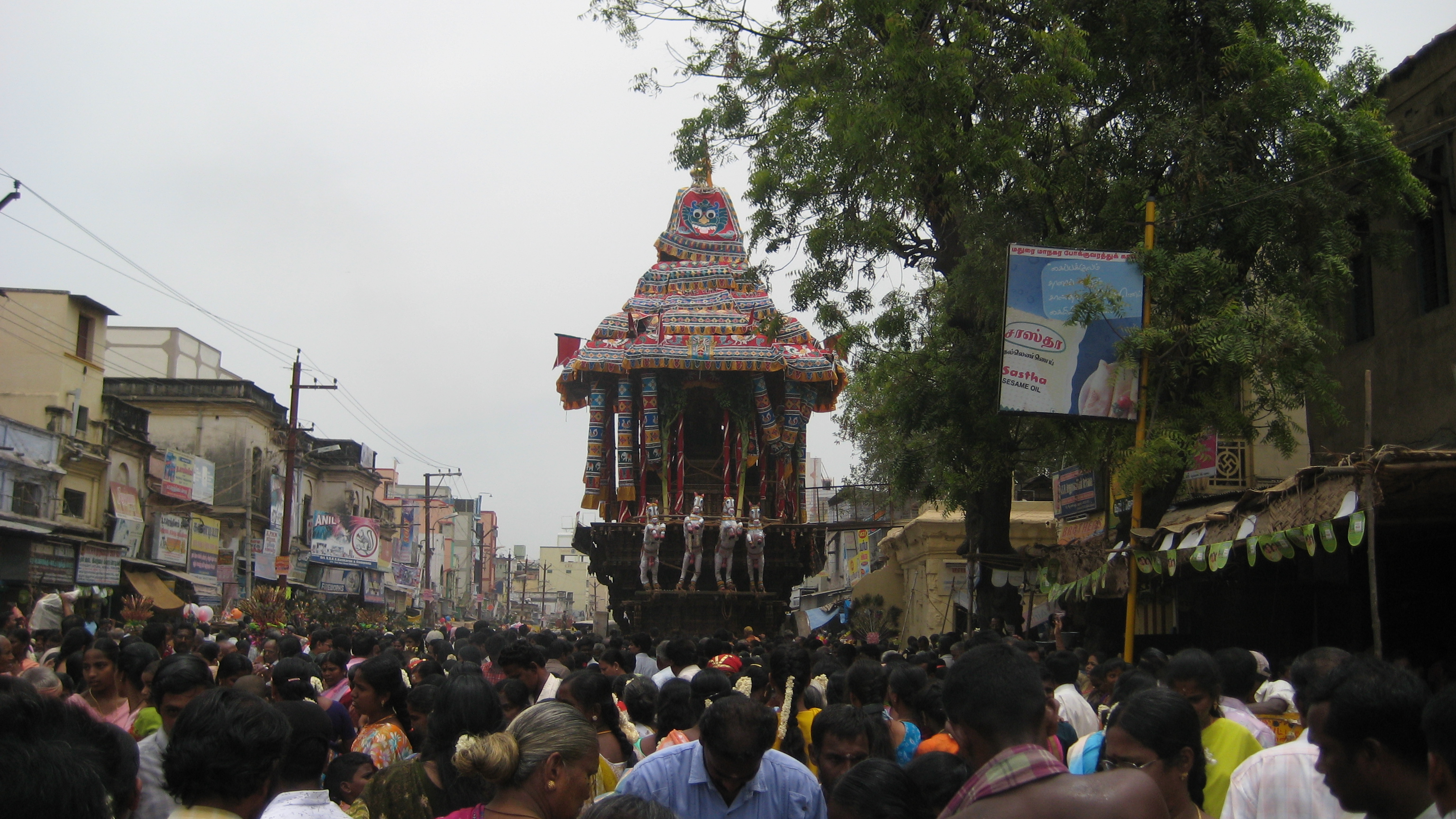
In the temple city of Madurai, the Chitterai Thiruvizha is celebrated in the Meenakshi Temple. A huge exhibition is held, called Chitterai Porutkaatchi. On the day of the Tamil New Year, a big Car Festival is held at Tiruvidaimarudur near Kumbakonam. Festivals are also held at Tiruchirapalli, Kanchipuram and other places.

In Sri Lanka, the Tamils observe the traditional new year in April with the first financial transaction known as the Kai-vishesham. In this transaction children go to elders to pay their respect, and elders give their blessings and gift pocket money to the children in return. The event is also observed with the ‘arpudu’ or the first ploughing of the ground to prepare for the new agricultural cycle. The game of ‘por-thenkai’ or coconut wars between youth is played in villages through the Tamil north and east of the island while cart races are also held. The festive Puthandu season in April is a time for family visits and the renewal of filial bonds. It also coincides with the Sinhalese new year season and so is a time of joy and celebration throughout the island.

During the festive lunch that day, families eat dishes which are a combination of all flavours – sweet, sour, bitter and pungent. This is usually in the form of a mango pachadi or salad since mangoes would have started to come into season by this time. These traditional recipes combining different flavours are a symbolic reminder that one must expect all flavors of experiences in the coming new year, that no event or episode is wholly sweet or bitter, experiences are transitory and ephemeral, and to make the most from them.

In our temple in Matunga, we also have the head priests of the temple reach the annual Panchangam or calendar or alamanc for the coming year. The priest will also interpret any interesting configurations of the stars and planets and let know know which nakshatras or stars and rashis or zodiac signs would likely to be affected or blessed in the coming year. This is only a very general and cursory reading, but is something my parents look forward to each year. This year, with the country under lockdown, they will not be partaking in this activity.

To everyone celebrating their new year these days, here’s wishing you a very Happy New Year and may the coming year put to rest all the calamities of the old year and bring you and your families happiness and prosperity!

Festivals of India: Gudi Padwa

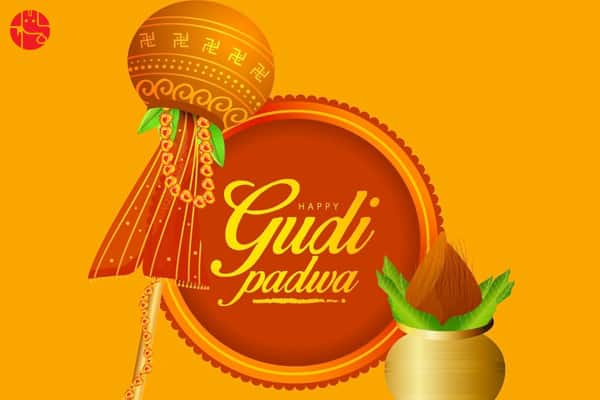
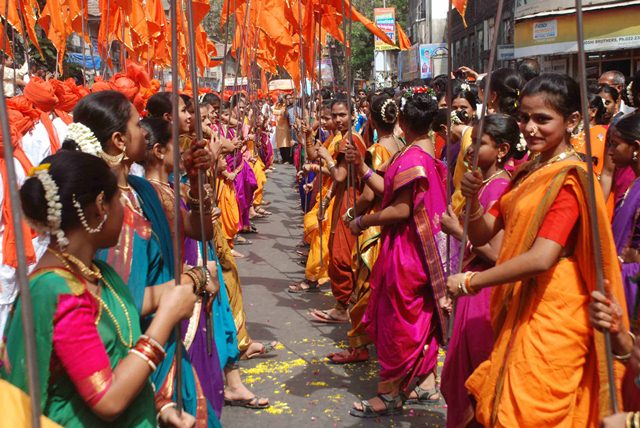
Spring is in the air and this means that various Indian communities will start celebrating their new year. The first is usually Gudi Padwa, a spring-time festival that marks the traditional new year for Marathi and Konkani Hindus. It is celebrated in and near Maharashtra and Goa on the first day of the Chaitra month to mark the beginning of the New year according to the lunisolar Hindu calendar. The word Padwa comes from the Sanskrit word Pratipada, which refers to the first day of a lunar fortnight. The festival is observed with colorful floor decorations or rangoli, a special Gudi flag which is garlanded with flowers, mango and neem leaves and topped with an upturned silver or copper vessel, street processions, dancing and festive foods.

Gudi Padwa marks end of one harvest season and beginning of a new one for farmers and so is also celebrated as a harvest festival in the region. On this day the position of the Sun is above the point of intersection of the equator, which according to the Hindu calendar marks the commencement of the Spring Season.

In India, this day which is the first day of the bright phase of the moon is called Gudi Padwa in Marathi, Ugadi in Telugu, and Yugadi in Kannada. The Sindhi community celebrates this day as Cheti Chand as the new year and observed as the emergence day of Lord Jhulelaal. Prayers are offered to Lord Jhulelaal and the festival is celebrated by making delicacies. However, this is not the universal new year for all Hindus. For some, such as those in and near Gujarat, the new year festivities coincide with the five day Diwali festival. For many others, the new year falls on Vaisakhi between 13 and 15 April, according to the solar cycle part of the Hindu lunisolar calendar, and this is by far the most popular not only among Hindus of the Indian subcontinent but also among Buddhists and Hindus in many parts of southeast Asia.

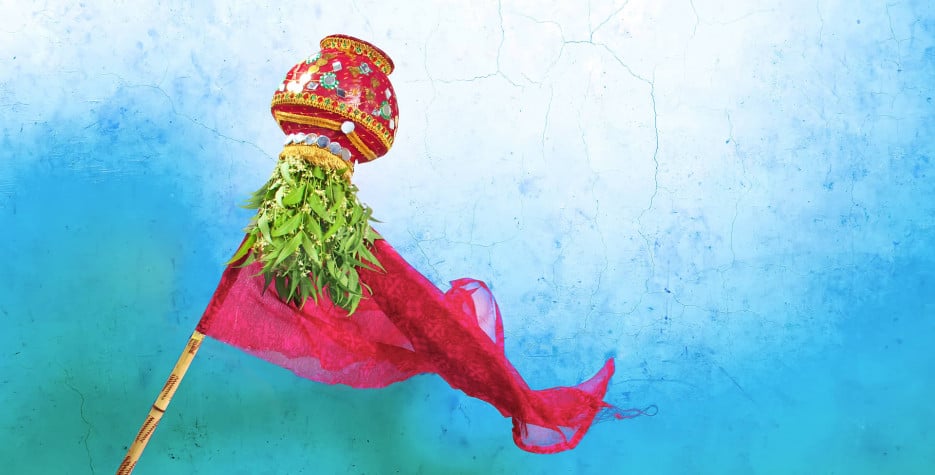
It’s really fascinating on the day of Gudi Padwa to see many Gudis arrangements in the windows and doors of Maharashtrian and Konkani households. The Gudi is a bright colorful silk scarf-like cloth tied to the top of a long bamboo pole. On the top of the pole, one or more boughs of neem leaves and mango leaves are attached along with a garland of flowers. This arrangement is capped with a silver, bronze or copper pot called handi or kalash in Marathi signifying victory or achievement. The whole arrangement is hoisted outside each household, typically to the right and is visible to everybody. Villages or neighborhoods also come together and host a community Gudi Kavad, which they carry together to the local Shiva temple. Some temples are located on the top of hills, and groups work together to help reach the kavad to the top.

There are many historical legends and beliefs associated with this festival. One of these comes from the Brahma Purana which states that Lord Brahma recreated the world after a raging deluge in which all time had stopped and all the people of the world, destroyed. On Gudi Padva, time restarted and from this day on, the era of truth and justice, known as Satyug began. Therefore, Lord Brahma is worshipped on this day and the Gudi symbolises the Brahmadhvaj.

Another popular legend about the origin of this festival revolves around the return of Lord Rama to Ayodhya along with his wife Sita and his brother Laxman from exile. The ‘Brahmadhvaj’ is hoisted in memory of the coronation of Lord Rama. The Gudi is hoisted at the entrance of the household in commemoration of the Gudi that was hoisted in Ayodhya as a victory flag. It is also believed that Lord Rama was victorious over King Bali on this day, marking this occasion.

For the people of Mahrashtra, there is an added significance to this festival. It is believed that Chhattrapati Shivaji Maharaj, celebrated leader of the Maratha clan, led the troops to victory and attained freedom for the kingdom from the dominion of the Mughals in that area. The Gudi then is a symbol of victory and prosperity.

It also symbolizes the victory of King Shalivahana and was hoisted by his people when he returned to Paithan (near current day Aurangabad).

The Gudi is believed to ward off evil, invite prosperity and good luck into the house. Many businessmen inaugurate their ventures on this day as it is considered an auspicious day.

On this day, courtyards in village houses will be swept clean and plastered with fresh cow-dung. Even in urban areas, even if they don’t do it everyday, on this day people take the time out to do some spring cleaning and women work on intricate rangoli designs on their doorsteps, the vibrant colours mirroring the burst of colour associated with spring. Everyone dresses up in new clothes and it is a time for family gatherings. Traditionally, families prepare a special dish that mixes various flavors, particularly the bitter leaves of the neem tree and sweet jaggery. Additional ingredients include sour tamarind and astringent dhane seeds. Most communities prepare something similar which is a reminder of life’s sweet and bitter experiences, as well as a belief that the neem-based mixture has health benefits.

Here’s wishing all those celebrating Gudi Padwa, Ugadi, Cheti Chand and Yugadi a very happy new year and to enjoy your celebrations and the yummy food that follows!

How to Keep New Year Resolutions

Most of us, either on the evening of the 31st of December, or on the 1st of January look back on our year and make some resolutions for the new year. Somehow the start of a new year becomes a catalyst for people to start thinking of changing their lives. But as we all know, the majority of resolutions start to fade out by the end of January and by February, most of us abandon our resolutions. So what can we do to ensure that we stick with our resolutions and end 2020 on a high note? Here are seven steps you can use to keep your resolutions. Read on…

Keep it Small and Simple
Sometimes we want to completely change our lives and do a 360 degree lifestyle change. This simply put, does not work and you will only set up yourself for disappointment. Instead focus on a few important goals and work towards them in the year. Change a couple of specific behaviours at a time and you will succeed.

Talk about it
Share your experiences with family and friends. Blog about it if you are a blogger. Once your goals become public, then you become accountable about them. The more public your resolutions are, the higher the chances of it becoming a reality. You can also put the resolutions in writing and share it with family and friends and ask them to keep you accountable about it. Consider joining a support group to reach your goals, such as a workout class at your gym or a group of coworkers quitting smoking. Having someone to share your struggles and successes with makes your journey to a healthier lifestyle that much easier and less intimidating.

Don’t beat yourself up
Perfection is unattainable. Remember that minor missteps when reaching your goals are completely normal and OK. Don’t give up completely because you ate a brownie and broke your diet, or skipped the gym for a week because you were busy. Everyone has ups and downs; resolve to recover from your mistakes and get back on track.

Be realistic
Don’t aim too high and ignore the ground realities. If you have made a similar resolution previously, then look back and take stock on why you failed earlier. Learn from past failures so that this time you are able to succeed where you failed before. Set realistic goals this time around and you will surely succeed where you failed.

Create Mini Resolutions
Building up to your resolution, you could also create mini resolutions leading to the big one. Say you want to lose 10 kgs in a year, then break that down to 1 kg a month or even 250 gms each week, which looks very achieveable as opposed to losing 10 kg which feels unsurmountable.

Celebrate Successes
Celebrate all achievements, however small they may be. If you manage to tick off a small aspect of your resolution, then do something to celebrate it. Continuing from the previous example, if you managed to lose a kg, then do something for yourself – go for a spa treatment, buy a book or even some clothes for yourself. This way, you are constantly cheering yourself up and you have something to look forward to when you hit your mini milestones. You could also plan for celebrations for each milestone achieved and this will then further motivate you.

Dont Give Up
During the year, you will slip-up. But don’t berate yourself and slip back into your old and wrong habits when that happens. Reflect on your past achievements, brush off the slip-up and get back into track again.