Short Story: Breaking Barriers

In the bustling city of Lahore, Pakistan, Amina Khan grew up in a modest household, deeply influenced by her mother, a dedicated schoolteacher. From an early age, Amina learned the value of education and the importance of fighting for one’s rights. Her mother’s stories of struggle and perseverance instilled in her a desire to make a difference.

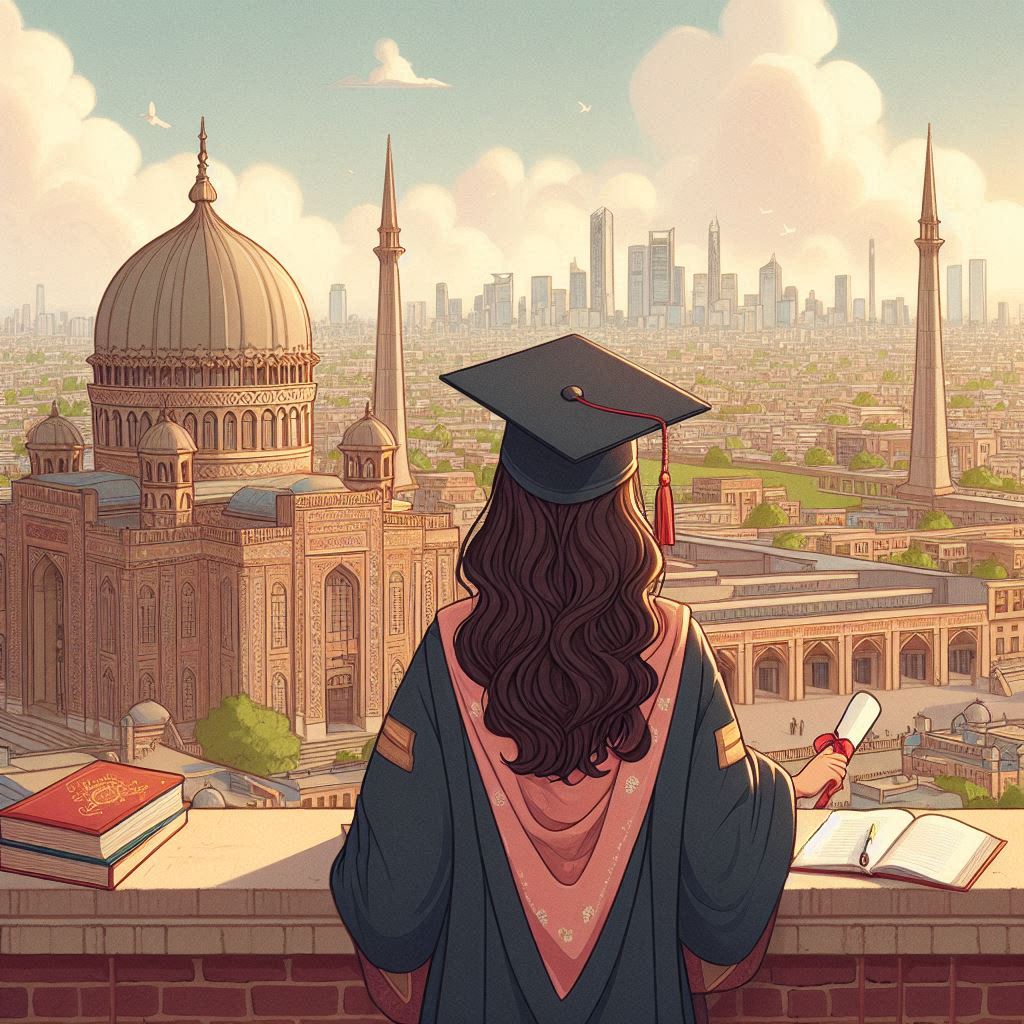
Despite societal pressures to conform to traditional roles, Amina pursued her studies with determination. She earned a degree in sociology from the University of Punjab, where her passion for women’s rights blossomed. It was during her university years that she first participated in the Aurat March, an annual event advocating for gender equality. This experience opened her eyes to the systemic issues faced by women across Pakistan; issues that were often silenced or ignored.

One fateful day, while volunteering at a local women’s shelter, Amina met Fatima, a victim of domestic violence. Fatima’s harrowing story of abuse and resilience struck a chord with Amina. Inspired by Fatima’s bravery in seeking help, Amina decided to take action. She organised workshops at the shelter focusing on legal rights, self-defence, and mental health support for women like Fatima. As word spread about these workshops, more women began to attend—not just to learn but also to share their stories. The shelter transformed into a safe haven where women could reclaim their narratives and find strength in the community.
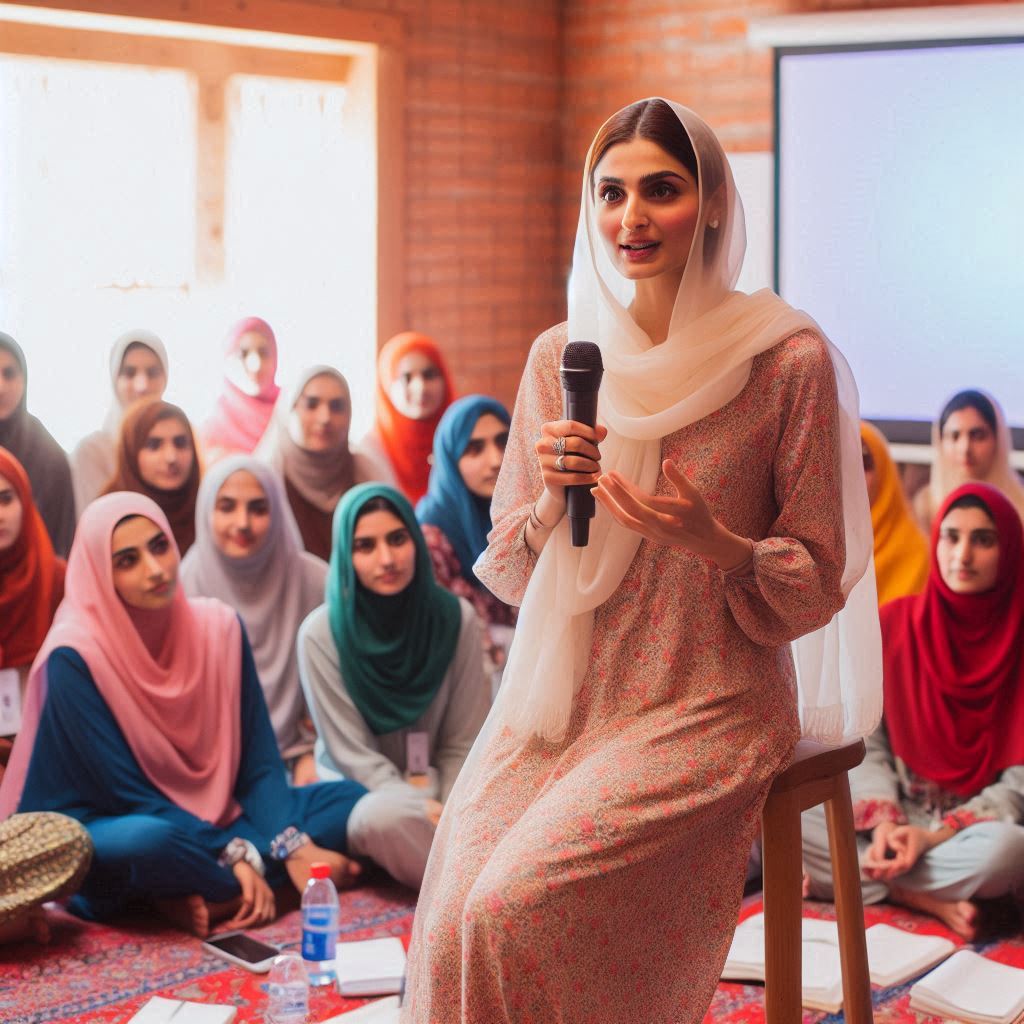
Amina’s initiative quickly gained traction. She began speaking at community events, sharing her vision for women’s empowerment. Her passion resonated with many, and soon she found herself leading a grassroots movement in Lahore. However, not everyone welcomed her efforts. Traditionalists viewed her activism as a threat to societal norms.

During a heated community meeting, an elder accused her of “spreading Western values.” Undeterred, Amina responded with grace: “Empowerment does not mean abandoning our culture; it means enriching it by ensuring every woman has the right to choose her path.” This moment marked a turning point for Amina. Her words sparked discussions among community members about adapting cultural practices to promote equality rather than suppress it.

Despite her growing influence, Amina faced significant personal challenges. Balancing activism with familial expectations weighed heavily on her shoulders. Her father often questioned her choices, fearing that her public persona would bring shame to their family.

In one poignant conversation, he expressed his concerns: “Amina, this path is fraught with danger. You risk everything for these women, who may never appreciate your efforts.” Amina listened but remained resolute. She understood that change required sacrifice and that true empowerment often came at a personal cost.

Recognising the need for broader support networks, Amina initiated partnerships with universities and businesses to create mentorship programs for young women entering the workforce. She believed that economic independence was crucial for women’s empowerment.

Through these programs, young women learned essential skills such as coding, entrepreneurship, and financial literacy. The initiative attracted attention from local media, further amplifying Amina’s message. During one mentorship session at a local tech hub, Amina met Sara, a talented coder who had faced discrimination in her job search due to her gender. Inspired by Sara’s resilience and talent, Amina encouraged her to apply for tech competitions aimed at women.

Sara’s success in securing a scholarship for an international coding boot camp became a symbol of hope within their community—a testament that with support and guidance, women could excel in fields traditionally dominated by men.

As Amina’s movement gained momentum, backlash intensified. Threatening messages began appearing on social media aimed at silencing her voice. During one particularly tense week leading up to International Women’s Day, she received anonymous threats warning her to stop her activism or face dire consequences.

Instead of retreating in fear, Amina organised a rally to coincide with International Women’s Day—a celebration of achievements and a call to action against ongoing struggles faced by women in Pakistan. On the day of the rally, thousands gathered despite threats from extremist groups attempting to intimidate participants. The atmosphere was electric as speakers shared their stories of resilience and hope.

“We will not be silenced,” Amina declared from the stage. “Our voices are our strength!”

The rally garnered national attention and sparked discussions about women’s rights across various platforms.

In recognition of her work, Amina received an award from an international human rights organisation for her contributions to women’s empowerment in Pakistan. This acknowledgement brought new opportunities; she was invited to speak at conferences around the world about grassroots movements and the importance of local solutions in addressing global issues. However, she remained grounded in her mission: empowering women within her community first and foremost.

Years later, as Amina looked back on her journey during an anniversary celebration of the Aurat March in Lahore, she reflected on how far they had come together as a community. More people were discussing women’s rights openly and local governments began implementing policies aimed at protecting women’s rights. Many women who attended her workshops started their initiatives or entered leadership roles within their communities. Amina recognised that while challenges such as systemic misogyny and economic disparities remained, her work had planted seeds of change that would continue to grow long after she was gone.

Amina Khan’s story is one of resilience against adversity, a testament to what can be achieved when individuals dare to challenge societal norms in pursuit of justice and equality. In Pakistan today, as more women like Amina rise up against oppression and advocate for their rights, they embody the spirit of empowerment that is crucial for building a more equitable society. Through education, advocacy, and unwavering determination, these women are reshaping their destinies and inspiring future generations to continue the fight for gender equality in a fight that transcends borders and resonates globally on International Women’s Day and beyond.
In My Hands Today…

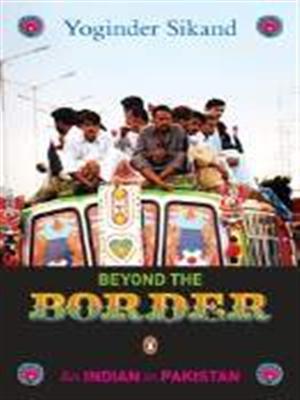
Beyond the Border: An Indian in Pakistan – Yoginder Sikand

Beyond the border, based on two journeys that yoginder sikand undertook to pakistan, covering lahore, multan, hyderabad (sindh), moenjo daro, bhit shah, and Islamabad, among others, is a strikingly unconventional account of what life is like for ordinary pakistanis the pakistan he discovers only remotely resembles the stereotypical muslim nation of the hindu imagination from shiela, the daughter of a feudal lord, named after her mother’s Indian best friend, to a rundown, local eatery owner who offers the author free food because sikand is the first indian to visit his stall, encounters with pakistanis from all walks of life draw up a very different picture: Pakistan is a country as diverse, paradoxical and rich in narratives as india departing from the fiercely polemical rhetoric common in indian and pakistani accounts of each other, yoginder Sikand not only gives lie to the strategist s view of the India-Pakistan divide but also dispels the myths that have filtered into the indian psyche about pakistan being the terrible other in this brilliantly perceptive and quirky travelogue, he illuminates the pakistani side of the story, while telling his own tale of exploration and self-discovery

In My Hands Today…

Magnificent Delusions: Pakistan, the United States, and an Epic History of Misunderstanding – Husain Haqqani

The relationship between America and Pakistan is based on mutual incomprehension and always has been. Pakistan—to American eyes—has gone from being a quirky irrelevance to a stabilizing friend, an essential military ally, and a seedbed of terror. America—to Pakistani eyes—has been a guarantee of security, a coldly distant scold, an enthusiastic military enabler, and is now a threat to national security and a source of humiliation.

The countries are not merely at odds. Each believes it can play the other—with sometimes absurd, sometimes tragic, results. The conventional narrative about the war in Afghanistan, for instance, has revolved around the Soviet invasion in 1979. But President Jimmy Carter signed the first authorization to help the Pakistani-backed mujahedeen covertly on July 3—almost six months before the Soviets invaded. Americans were told, and like to believe, that what followed was Charlie Wilson’s war of Afghani liberation, with which they remain embroiled to this day. It was not. It was General Zia-ul-Haq’s vicious regional power play.

Husain Haqqani has a unique insight into Pakistan, his homeland, and America, where he was ambassador and is now a professor at Boston University. His life has mapped the relationship of the two countries, and he has found himself often close to the heart of it, sometimes in very confrontational circumstances. This has allowed him to write the story of a misbegotten diplomatic love affair, here memorably laid bare.

In My Hands Today…

Spy Stories: Inside the Secret World of ISI and Raw—Adrian Levy and Cathy Scott-Clark

From 9/11 to 26/11, Burhan Wani to Kulbhushan Jadhav—the India-Pakistan relationship told from the perspective of the R.A.W. and the I.S.I.

With unprecedented access to the R.A.W. and the I.S.I., the world’s most inscrutable spy agencies, Adrian Levy and Cathy Scott-Clark describe the workings of bitter rivals, mapping their complicated history from the 1960s to the present day. From the Parliament attacks to Pulwama, 9/11 to Osama bin Laden’s assassination, the rise of terror’s shadow armies to the fall of Kulbhushan Jadhav, here are some of the key events that have shaped the region, told from the split viewpoints of duelling enemies.

Levy and Scott-Clark also uncover a darker seam—the destructive impact of C.I.A. interference and how the I.S.I. fought for its life against dark forces it once funded, while the R.A.W. created ghost enemies to strengthen its hand.

In My Hands Today…

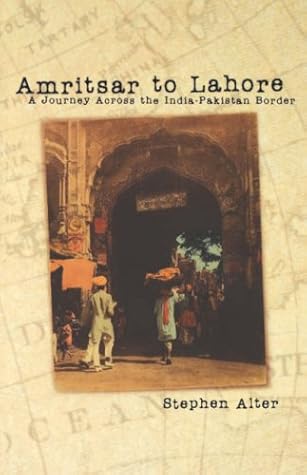
Amritsar to Lahore: A Journey Across the India-Pakistan Border – Stephen Alter

“During the course of my journey, many of the people I met in Pakistan and India expressed a curious combination of affection, indifference, and animosity toward their neighbors across the border. . . . The border divides them but it is also a seam that joins the fabric of their cultures.”

On 15 August 1947, in what some have argued was the final, cynical act of a collapsing empire, the British left India divided. Arbitrary borders that have profoundly affected the recent history of the subcontinent were drawn upon the map of India. In the violence that accompanied Partition, it has been estimated that close to a million people were killed and more than ten million uprooted and displaced. The hatreds created by what was one of the largest mass migrations in history only exacerbated the religious tensions that originally led to Partition. Since then, India and Pakistan have fought three devastating wars, and the danger of armed conflict is constant.

A sensitive and thoughtful look at the lasting effects of Partition on everyday people, Amritsar to Lahore describes a journey across the contested border between India and Pakistan in 1997, the fiftieth anniversary of Partition. Setting out from and then returning to New Delhi, Stephen Alter crossed the border into Pakistan, retraced the legendary route of the Frontier Mail toward the Khyber Pass, and made his return by bus along the Grand Trunk Road, stopping in major cities along the way.

During this journey and another in 1998, Alter interviewed people from all classes and castes: Hindus, Muslims, and Sikhs, men and women. In candid conversation, the older generation who lived through the events of 1947 shared their memories and opinions of that pivotal moment of Partition, while youths who have inherited the fragments of that past reflected upon the meaning of national identity. In an engaging account of peoples and places, Alter documents in evocative detail his meetings with varied individuals. He recalls the Muslim taxi driver who recognizes an air of confidence with which men in Pakistan walk the streets dressed in salwar kameez; the brigadier who saved the brass insignia of the British crown from Lord Mountbatten’s Rolls Royce; gold merchants, customs officers, fellow travelers, musicians, and many others.

Alongside these diverse and vivid interviews, chance conversations, and oral histories, Alter provides informed commentary to raise questions about national and individual identity, the territorial imperatives of history, and the insidious mythology of borders. A third-generation American in India, where he has spent much of his life, Alter reflects intimately upon India’s past and present as a special observer, both insider and outsider. His meaningful encounters with people on his journey illustrate the shared culture and heritage of South Asia, as well as the hateful suspicions and intolerance that permeate throughout the India-Pakistan frontier. Also woven into the narrative are discussions of the works of South Asian novelists, poets, and filmmakers who have struggled with the issue of identity across the borderlands.

Ongoing battles in Kashmir and nuclear testing by both India and Pakistan may prove that peace in this region can be achieved only when border disputes are resolved. Offering both the perspective of hindsight and a troubling vision of the future, Amritsar to Lahore presents a compelling argument against the impenetrability of boundaries and the tragic legacy of lands divided.