In My Hands Today…

Clear Thinking: Turning Ordinary Moments into Extraordinary Results – Shane Parrish

Few things will change your trajectory in life or business as much as learning to think clearly. Yet few of us recognize opportunities to think in the first place.

You might believe you’re thinking clearly in the moments that matter most. But in all likelihood, when the pressure is on, you won’t be thinking at all. And your subsequent actions will inevitably move you further from the results you ultimately seek—love, belonging, success, wealth, victory. According to Farnam Street founder Shane Parrish, we must get better at recognizing these opportunities for what they are, and deploying our cognitive ability in order to achieve the life we want.

Clear Thinking gives you the tools to recognize the moments that have the potential to transform your trajectory, and reshape how you navigate the critical space between stimulus and response. As Parrish shows, we may imagine we are the protagonists in the story of our lives. But the sad truth is, most of us run on autopilot. Our behavioral defaults, groomed by biology, evolution, and culture, are primed to run the show for us if we don’t intervene. At our worst, we react to events without reasoning, not even realizing that we’ve missed an opportunity to think at all. At our best, we recognize these moments for what they are, and apply the full capacity of our reasoning and rationality to them.

Through stories, mental models, and more, Parrish offers the missing link between behavioral science and real-life outcomes. The result is a must-have manual for optimizing decision-making, gaining competitive advantage, and living a more intentional life.

In My Hands Today…

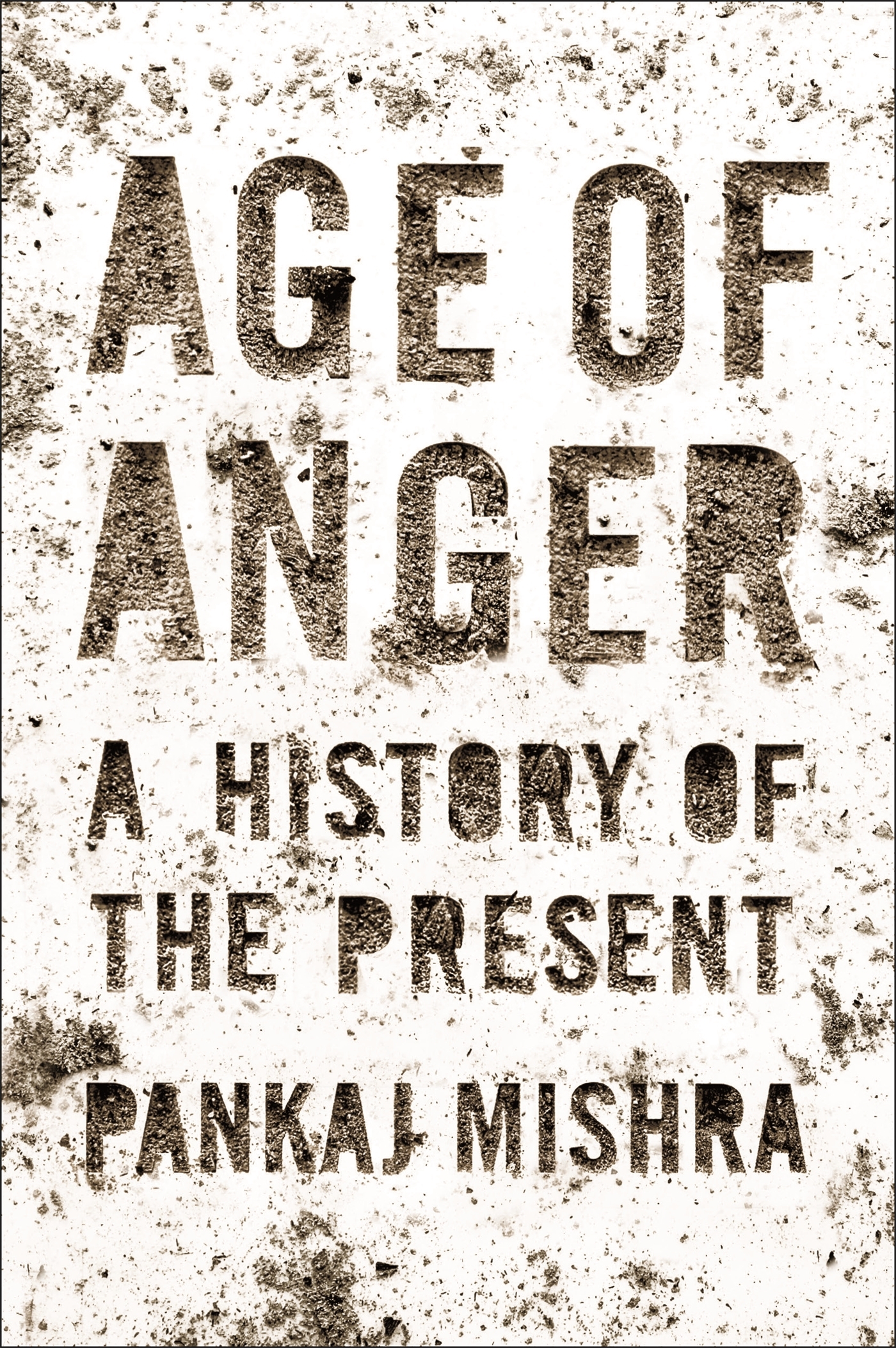
Age of Anger: A History of the Present – Pankaj Mishra

Modernity, secularism, development, and progress have long been viewed by the powerful few as benign ideals for the many. Today, however, botched experiments in nation-building, democracy, industrialization, and urbanization visibly scar much of the world.

As once happened in Europe, the wider embrace of revolutionary politics, mass movements, technology, the pursuit of wealth, and individualism has cast billions adrift in a literally demoralized world.

It was from among the ranks of the disaffected and the spiritually disorientated, that the militants of the nineteenth century arose—angry young men who became cultural nationalists in Germany, messianic revolutionaries in Russia, bellicose chauvinists in Italy, and anarchist terrorists internationally.

Many more people today, unable to fulfill the promises—freedom, stability, and prosperity—of a globalized economy, are increasingly susceptible to demagogues and their simplifications. A common reaction among them is intense hatred of supposed villains, the invention of enemies, attempts to recapture a lost golden age, unfocused fury and self-empowerment through spectacular violence.

In Age of Anger, Pankaj Mishra explores the origins of the great wave of paranoid hatreds that seem inescapable in our close-knit world—from American “shooters” and ISIS to Trump, Modi, and racism and misogyny on social media.

In My Hands Today…

Bright Shining: How Grace changes Everything – Julia Baird

Grace is both mysterious and hard to define. It can be found, in part, when we create ways to find meaning and dignity in connection with each other, building on our shared humanity, being kinder, bigger, better with each other.

If, in its crudest interpretation, karma is getting what you deserve, then grace is the forgiving the unforgivable, favouring the undeserving, loving the unlovable.

But we live in an era where grace is an increasingly rare currency. The silos we consume information in are dotting the media landscape like skyscrapers, and the growing distrust in media, politicians and public figures, have in some ways choked our ability to cut each other slack, to allow each other to stumble, to forgive one another.

So what does grace look like in our world, and how do we recognise it, nurture it in ourselves, and express it, even in the darkest of times? From award-winning journalist Julia Baird, author of the acclaimed national bestseller Phosphorescence , comes Bright Shining , a luminously beautiful, deeply insightful and most timely exploration of grace.

In My Hands Today…

Learning to Love Midlife: 12 Reasons Why Life Gets Better with Age – Chip Conley

The midlife crisis is the butt of so many jokes, but this long-derided life stage has an upside. What if we could reframe our thinking about the natural transition of midlife not as a crisis, but as a chrysalis—a time when something profound awakens in us, as we shed our skin, spread our wings, and pollinate our wisdom to the world?

In Learning to Love Midlife , Chip Conley offers an alternative narrative to the way we commonly think of our 40s, 50s and 60s. Drawing on the latest social science research, inspiring stories, and timeless wisdom, he reveals 12 reasons why life gets better with age. They

No matter where you are in your midlife journey, this perspective‑shifting guide will inspire you to find joy, purpose and success in the years that lie ahead—and how those years can be your best ones yet.

In My Hands Today,,,

Fluke: Chance, Chaos, and Why Everything We Do Matters – Brian Klaas

Want to know what chaos theory can teach us about human events? In the perspective-altering tradition of Malcolm Gladwell’s The Tipping Point and Nassim Nicholas Taleb’s The Black Swan comes a provocative challenge to how we think our world works—and why small, chance events can divert our lives and change everything, by social scientist and Atlantic writer Brian Klaas.

If you could rewind your life to the very beginning and then press play, would everything turn out the same? Or could making an accidental phone call or missing an exit off the highway change not just your life, but history itself? And would you remain blind to the radically different possible world you unknowingly left behind?

In Fluke, myth-shattering social scientist Brian Klaas dives deeply into the phenomenon of random chance and the chaos it can sow, taking aim at most people’s neat and tidy storybook version of reality. The book’s argument is that we willfully ignore a bewildering but for a few small changes, our lives—and our societies—could be radically different.

Offering an entirely new lens, Fluke explores how our world really works, driven by strange interactions and apparently random events. How did one couple’s vacation cause 100,000 people to die? Does our decision to hit the snooze button in the morning radically alter the trajectory of our lives? And has the evolution of humans been inevitable, or are we simply the product of a series of freak accidents? Drawing on social science, chaos theory, history, evolutionary biology, and philosophy, Klaas provides a brilliantly fresh look at why things happen—all while providing mind-bending lessons on how we can live smarter, be happier, and lead more fulfilling lives.