Positive Parenting: Travelling with Children Enhances Parenting

Travelling is an incredible process where one can learn so much without setting foot inside a classroom. Parenting is a lifelong journey that is filled with different challenges at each point. Combining these two enriching experiences might seem like a daunting task, but the truth is that travelling with children can be a transformative and growth-inducing adventure for both parents and their little ones.

According to experts, the most rapid brain development occurs in the first five years of a child’s life, and especially in the first three. Surrounding kids from birth to about three years old with people who are different from them normalises that experience. Travel and educating children about their roles as citizens of the world when they’re young ensures they will retain that message into their adult years because when somebody begins a habit or a tradition early in life, that becomes the foundation through which they view the world for the rest of their life.
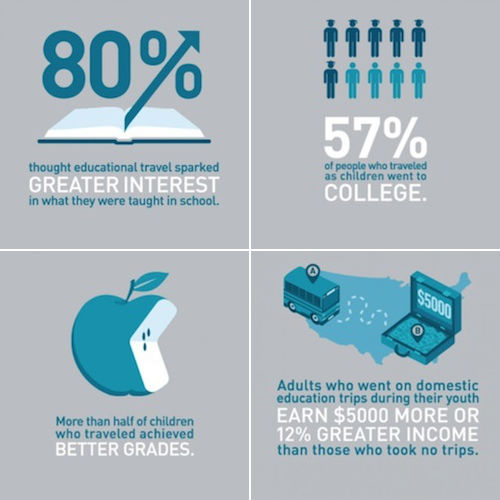
Experts claim that travelling with children can significantly boost development. Travel can expand a kid’s world, making them more empathetic toward cultural differences and helping them adapt to changing situations. It can even shape their linguistic development as babies. Travel has the potential to create a new narrative that teaches children about the similarities with others and lays a strong foundation, especially in the early years. Travelling together fosters stronger bonds between parents and their children. Shared experiences in new and exciting places create lasting memories, promoting a sense of togetherness. Whether it’s exploring ancient ruins, playing on the beach, or sampling local delicacies, the shared joy of discovery reinforces the parent-child connection.

Exposure to different cultures, languages, and ways of life broadens children’s horizons and nurtures open-mindedness. Travelling allows them to see the world through a new lens, developing empathy and respect for diversity. As parents, embracing these experiences alongside children encourages them to set a positive example and cultivate open-mindedness. Travel inherently comes with unforeseen challenges, from delayed flights to language barriers. Facing and overcoming these obstacles teaches children valuable problem-solving and adaptability skills. Parents too, learn to be more patient, flexible, and resourceful, setting a great example for their little ones.

Family travel might not always go as planned, but it presents valuable opportunities to teach resilience to children. Coping with travel mishaps or unfamiliar situations fosters a can-do attitude, teaching them that setbacks are temporary hurdles to overcome. It’s a lesson that will serve them well throughout their lives. Today, with everyone so busy, finding quality family time where everyone can be together can be quite challenging. Travel offers a chance to escape routine and fully immerse in each other’s company. Away from the distractions of work and daily life, parents can genuinely engage with their children, creating cherished memories together. And who can deny that travel is an unparalleled educational experience for children that brings history, geography, and culture to life, and offers practical lessons that go beyond the confines of textbooks? Learning becomes exciting and hands-on, leaving a lasting impact on a child’s understanding of the world.

So how can one ensure that travel, especially with young children is a pleasure and not a pain?

  • Plan Age-Appropriate Itineraries – Consider the interests and energy levels of the children when planning activities and sightseeing. Mix in child-friendly attractions to keep them engaged and excited.
  • Pack Wisely – Travelling with children requires thoughtful packing. Bringing essential items such as snacks, entertainment, first-aid supplies, and comfort items ensures a smooth journey.
  • Involve Children in Planning – Let the little ones have a say in the trip’s planning process. It empowers them and gives them a sense of ownership over the adventure.
  • Be Flexible – While travelling with younger children, especially, it’s always a good idea to embrace the idea of spontaneity and allow for detours. Sometimes, the most memorable experiences come from unexpected twists in the journey.
  • Capture the Moments – In today’s age of social media and digital memories, one must make sure to take photos and videos to preserve the memories of the family travel. Encourage children to keep a travel journal or scrapbook as a creative outlet so they can revisit memories of the trip.
  • Stay Positive – Children pick up on their parents’ emotions and if they find their parents panicking or worried, they also start having meltdowns. By approaching challenges with optimism, children will follow the lead.

Travelling with children can be a rollercoaster ride, but the rewards are immeasurable. It is a journey of personal growth, stronger family bonds, and lifelong lessons. Parents have the power to shape their children’s perspectives through these shared adventures, and in return, they teach parents valuable lessons about patience, adaptability, and the joy of discovering the world anew. So, embark on that family travel adventure. Embrace the chaos and wonder. Let it change you for the better as a parent and create a treasure trove of memories for your children to cherish as they grow.

Bon voyage to wanderlust parenthood!

The Power of Positive Parenting: Nurturing Your Child’s Emotional Intelligence

Nearly 90% of all adults will become parents at some point in their lives. And while most strive to be great parents, they may also find themselves confused and frustrated by the seemingly endless challenges of parenthood. Irrespective of where one is in their parenting journey, the journey is challenging and not with its twists and turns.

Positive parenting is the continual relationship between a parent(s) and a child or children that includes caring, teaching, leading, communicating, and providing for the needs of a child consistently and unconditionally. Parents strive to raise happy, confident, and well-adjusted children who want them to thrive in all aspects of life, including their emotional well-being. Emotional intelligence is a vital skill that enables individuals to understand and manage their own emotions and empathise with others. It plays a significant role in building healthy relationships, making responsible decisions, and navigating life’s challenges.

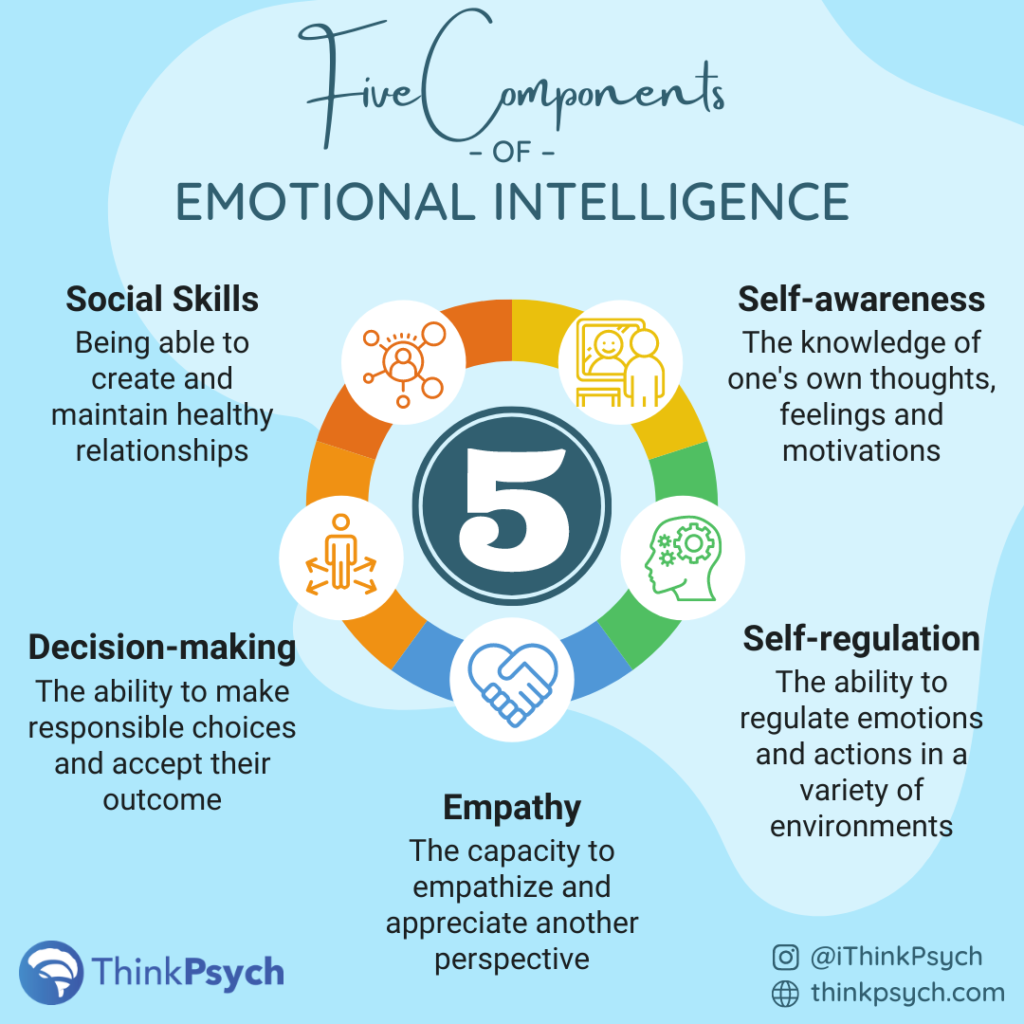
Emotional intelligence encompasses various skills and abilities that contribute to effective emotional management. These skills include self-awareness, self-regulation, empathy, motivation, and social skills. By cultivating emotional intelligence in children, they are equipped with the tools to navigate their emotions and relationships successfully.

Positive parenting is an approach that emphasises respect, empathy, and open communication. It focuses on nurturing a strong parent-child relationship, which serves as the foundation for emotional intelligence development.

Positive parenting creates a loving and supportive environment: Children thrive when they feel loved and supported. Parents should express their affection and appreciation regularly by offering praise for their children’s efforts and achievements and providing comfort and reassurance during difficult times. This sense of security helps children develop a strong foundation for emotional well-being.

Positive parenting advocates active listening: A parent should actively listen to their child’s thoughts, feelings, and concerns. This can be done by maintaining eye contact, nodding, and summarising their words. When children feel heard and understood, they develop trust and learn how to express their emotions effectively.

Positive parenting fosters open communication: Parents should encourage open and honest communication with their children. They should create a safe space where the children are comfortable with sharing their thoughts and feelings without fear of judgment or criticism. Parents should respond with empathy and understanding, validating their emotions and perspectives.

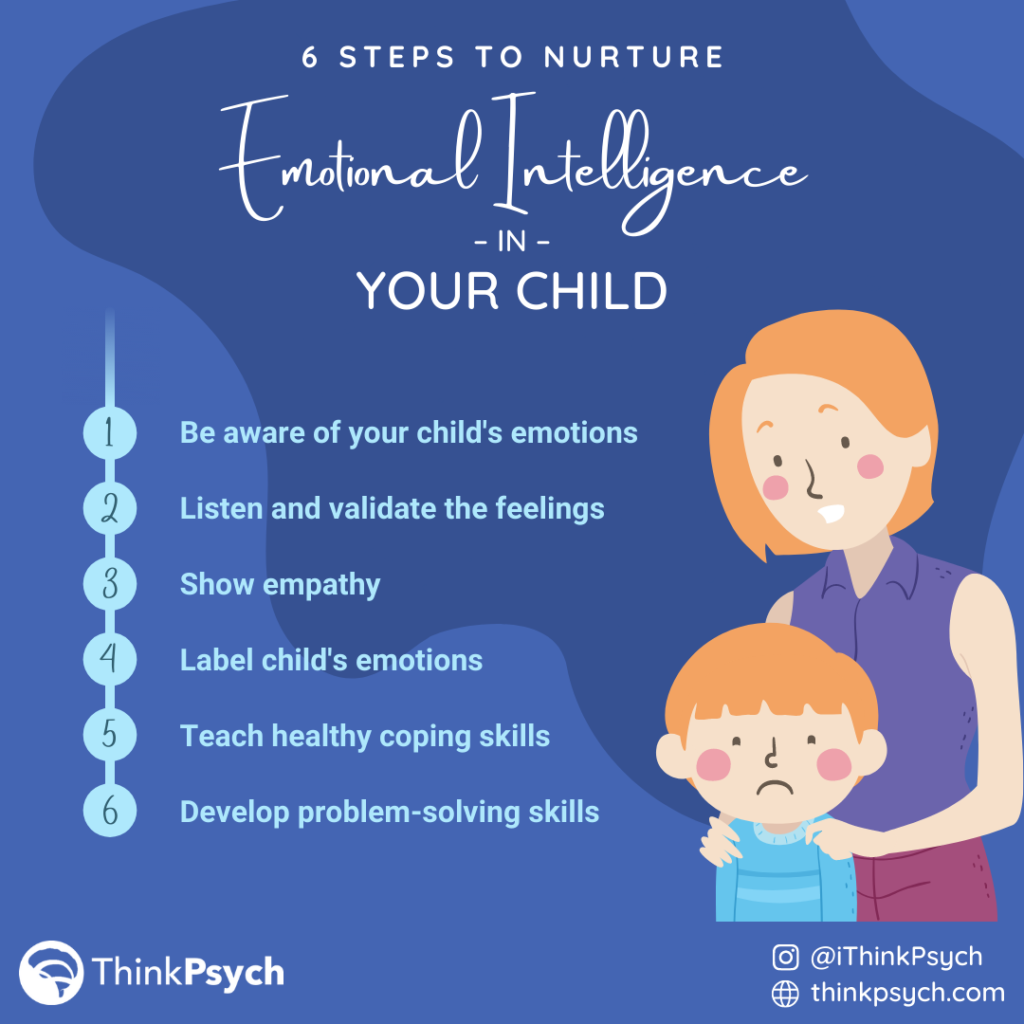
Positive parenting teaches emotional literacy: Help your child develop a vocabulary for their emotions. Label and discuss different emotions, both positive and negative, so they can better understand and communicate their feelings. This awareness lays the groundwork for emotional regulation.

So how can parents use positive parenting to nurture emotional intelligence in their children?

Emotion Coaching: Emotion coaching involves recognising and validating the child’s emotions while guiding them in managing those emotions constructively. When the child experiences a strong emotion, acknowledge and empathise with their feelings. Help them identify the emotion and explore coping strategies to regulate it effectively.

Encourage Problem-Solving: Parents should teach their child problem-solving skills by involving them in decision-making processes. Encourage them to brainstorm solutions and evaluate the pros and cons of each option. This empowers them to think critically, make responsible choices, and develop resilience.

Model Healthy Emotional Expression: Children learn by observing their parents. Parents should model healthy emotional expression by constructively managing their emotions. They should demonstrate effective coping strategies such as deep breathing, taking breaks, or seeking support when they encounter challenging situations and seeing this, their child will learn to emulate these strategies.

Teach Empathy and Perspective-Taking: Parents can help their child to develop empathy by encouraging them to understand and consider the feelings of others. They should engage in discussions about how different actions and words can impact someone’s emotions as well as encourage them to put themselves in others’ shoes and see things from different perspectives.

Foster Emotional Regulation: Emotional regulation is a vital aspect of emotional intelligence. Parents should teach their children various techniques for managing their emotions, such as deep breathing exercises, counting to ten, or engaging in physical activities. They should encourage them to find healthy outlets for their emotions, such as journaling, drawing, or engaging in hobbies.

Encourage Social Skills Development: Social skills play a significant role in emotional intelligence. Parents should encourage their children to engage in activities that foster social interactions, such as team sports, clubs, or community service. They should provide opportunities for them to practice skills like active listening, cooperation, and conflict resolution.

Set Realistic Expectations: Emotional intelligence development is a gradual process. Parents should be patient with their children and set realistic expectations based on their age and individual capabilities. Celebrating small milestones along the way and providing constructive feedback to support their growth will help their children.

Nurturing a child’s emotional intelligence is an investment that will benefit them throughout their lives. By practising positive parenting techniques, one can create a nurturing environment that fosters emotional well-being and resilience. Emotional intelligence is a skill that can be developed and strengthened over time.

Parents, remember to embrace the journey, be present for your child, and watch them flourish as they navigate life with confidence, empathy, and emotional intelligence.