In My Hands Today…

Saving Time: Discovering a Life Beyond the Clock – Jenny Odell

In her first book, How to Do Nothing, Jenny Odell wrote about the importance of disconnecting from the “attention economy” to spend time in quiet contemplation. But what if you don’t have time to spend?

In order to answer this seemingly simple question, Odell took a deep dive into the fundamental structure of our society and found that the clock we live by was built for profit, not people. This is why our lives, even in leisure, have come to seem like a series of moments to be bought, sold, and processed ever more efficiently. Odell shows us how our painful relationship to time is inextricably connected not only to persisting social inequities but to the climate crisis, existential dread, and a lethal fatalism.

This dazzling, subversive, and deeply hopeful book offers us different ways to experience time—inspired by pre-industrial cultures, ecological cues, and geological timescales—that can bring within reach a more humane, responsive way of living. As planet-bound animals, we live inside shortening and lengthening days alongside gardens growing, birds migrating, and cliffs eroding; the stretchy quality of waiting and desire; the way the present may suddenly feel marbled with childhood memory; the slow but sure procession of a pregnancy; the time it takes to heal from injuries. Odell urges us to become stewards of these different rhythms of life in which time is not reducible to standardized units and instead forms the very medium of possibility.

Saving Time tugs at the seams of reality as we know it—the way we experience time itself—and rearranges it, imagining a world not centered on work, the office clock, or the profit motive. If we can “save” time by imagining a life, identity, and source of meaning outside these things, time might also save us.

World Productivity Day

Productivity is the key to success in both personal and professional life. Productivity refers to the efficiency with which tasks are completed within a given timeframe. Celebrated annually on 20 June, World Productivity Day acknowledges the importance of productivity and celebrates achievements, reflect on challenges and finds ways to improve efficiency and effectiveness in personal and professional spheres.

Productivity is not just about getting more things done in less time. It is also about making the most of our time, energy, and resources. Productivity can help us achieve our goals, fulfill our potential, and enjoy a better quality of life.

Productivity also benefits society as a whole. According to the OECD, productivity is the main driver of long-term economic growth and living standards. Productivity can also contribute to social and environmental sustainability by reducing waste, pollution, and inequality. Productivity increases the efficiency of tasks, which saves time and resources. It helps to complete tasks in a shorter time and with fewer errors. Productivity enhances the quality of work. When tasks are completed efficiently, the quality of the work improves. Productivity leads to job satisfaction. When tasks are completed efficiently, employees feel a sense of accomplishment, which enhances their motivation and job satisfaction. Productivity is essential for economic growth. When businesses and individuals are productive, they contribute to economic growth, which leads to a better quality of life for everyone.

Productivity is important in both personal and professional spheres for several reasons. It helps to manage time effectively, set and achieve goals, improve the quality of work, enhance job satisfaction, and promote economic growth. Productivity helps to manage time effectively. In their personal life, it allows individuals to accomplish more in less time, which helps them to have more time for leisure activities. In the professional sphere, it helps to complete tasks efficiently, which leads to improved productivity and profitability. Productivity helps individuals to set and achieve goals. In personal life, it allows individuals to accomplish personal goals, such as learning a new skill or pursuing a hobby. In the professional sphere, it helps businesses to achieve organizational goals, such as increasing sales or improving customer satisfaction. Productivity is essential for improving the quality of work. When tasks are completed efficiently, the quality of work improves. This applies to both personal and professional spheres. In personal life, it allows individuals to accomplish tasks with greater efficiency and accuracy. In the professional sphere, it leads to improved customer satisfaction and increased profitability. Productivity leads to job satisfaction. When tasks are completed efficiently, employees feel a sense of accomplishment, which enhances their motivation and job satisfaction. This applies to both personal and professional spheres. Productivity is essential for economic growth. When businesses and individuals are productive, they contribute to economic growth, which leads to a better quality of life for everyone. In the personal sphere, increased productivity can lead to higher income and a better standard of living. In the professional sphere, it leads to increased profitability and job creation.

World Productivity Day was first observed in 1984 by the World Confederation of Productivity Science. Since then, it has been celebrated every year on 20 June. The day aims to raise awareness about the importance of productivity in enhancing the quality of life and promoting economic growth. The theme of World Productivity Day 2023 is “Productivity for Sustainable Development.” The theme emphasises the importance of productivity in achieving sustainable development goals. It highlights the need to improve productivity to meet the challenges of the 21st century, including poverty, inequality, and environmental degradation.

There are several ways to increase productivity. I have written a blog post at the beginning of the year about some productivity hacks, so please check them out for some really interesting productivity hacks.

There are many ways to celebrate World Productivity Day. Review your progress and take time to look back at what you have accomplished in the past year. What are you proud of? What are you grateful for? What are you still working on? What are your next steps? Set your priorities and identify your most important goals and tasks for the coming year. What are your personal and professional aspirations? What are your values and passions? How can you align your actions with your purpose? Plan your strategy by creating a realistic and flexible plan to achieve your priorities. Break down your goals into smaller and more manageable steps. Schedule your tasks according to your energy levels, deadlines, and preferences. Use tools and apps that can help you organize, track, and automate your work. Learn new skills and seek opportunities to improve your knowledge and abilities. Read books, articles, blogs, or podcasts that can inspire you or teach you something new. Take online courses, webinars, or workshops that can enhance your skills or qualifications. Join communities or networks that can support your learning and growth. And most importantly, celebrate your wins. Reward yourself for your efforts and achievements. Recognize your strengths and successes. Appreciate your challenges and failures as learning opportunities. Share your stories and feedback with others who can celebrate with you or help you improve.

World Productivity Day is an essential day to celebrate productivity and its role in enhancing the quality of life and promoting economic growth. Productivity is crucial for personal and professional success as it helps to complete tasks efficiently, enhance the quality of work, and promote job satisfaction. World Productivity Day is a great opportunity to celebrate our productivity and find ways to improve it further. By following the tips above, one can boost efficiency and effectiveness in work and personal life and enjoy more satisfaction, happiness, and well-being.

Happy World Productivity Day 2023!

In My Hands Today…

Tiny Habits: The Small Changes That Change Everything – B.J. Fogg

The world’s leading expert on habit formation shows how you can have a happier, healthier life: by starting small.

When it comes to change, tiny is mighty. Start with two pushups a day, not a two-hour workout; or five deep breaths each morning rather than an hour of meditation. In Tiny Habits, B.J. Fogg brings his experience coaching more than 40,000 people to help you lose weight, de-stress, sleep better, or achieve any goal of your choice. You just need Fogg’s behavior formula: make it easy, make it fit your life, and make it rewarding. Whenever you get in your car, take one yoga breath. Smile. Whenever you get in bed, turn off your phone. Give yourself a high five.

Change can be easy—once it starts, it grows. Let B.J. Fogg show you exactly how.

Productivity Hacks for the New Year

As we start preparing for the new year, a common resolution is to be more productive and I am always on the lookout for productivity hacks that I can use.

Productivity is more than doing more things or ticking tasks off your to-do list. Productivity means only focusing on accomplishing important things. It is the ratio between the output of goods and services and the input of resources consumed in the process of production. Productivity is the ratio between the output of wealth and the input of resources used in production processes.

The ability to be productive is one of the critical determinants of professional success and personal happiness. Those who can consistently produce good quality output at a sustainable rate can advance in work and life. Being productive boosts morale and creates excellence.

Personal productivity impacts the quality and quantity of results produced. Thus, it’s crucial to improve productivity because higher levels of productivity translate to a better personal and professional life and allows to achieve much more in a given period. Being productive can help one prioritise tasks, manage time and resources efficiently, and frees up time for more rewarding activities.

So in no particular order, here are some of my favourite productivity hacks and some which are new to me and that I plan to use next year.

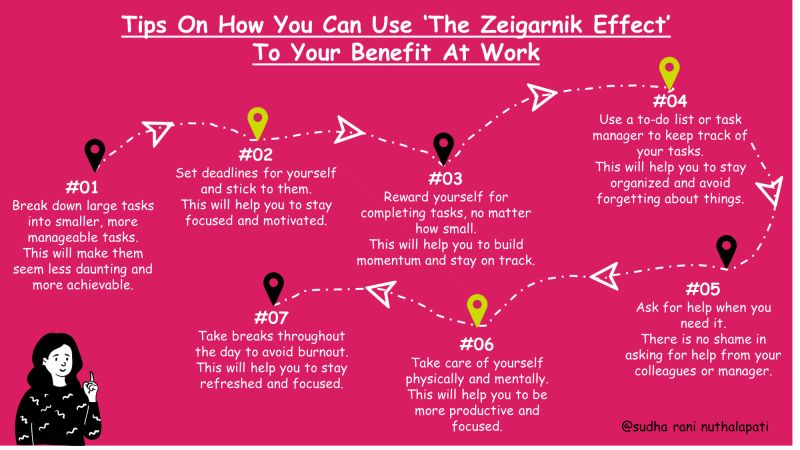
Plan Ahead: One of the best tools for being productive is to plan, be it a day, a week, a month, or even a year. I prefer to do a very broad plan for the year and refine it as I plan for a month and week and then a detailed plan for a day. I like to use Trello and create to-lists with cards per week. Within that card, I plan my week which helps me. The best part is ticking off a task which gives one a sense of satisfaction. A good schedule allows one to note down all tasks and not miss anything important. This also allows you to focus on what is important and should be completed first before focusing on the next important task. It would also help to note the tasks in the order of importance and start the day with the most important task, followed by the next and so on.

Break Down Goals: Any goal when broken down into its parts becomes easier to achieve. If a task is large or something that does not seem easily achievable, then when it is broken down into easily achievable parts, as each part gets ticked off, it becomes easier to accomplish and checking them off makes you feel you are in sight of the goal and seeing the progress also shows you are doing something to get to the end.

Don’t Obsess with Emails: A big drag on productivity is checking emails and other messages as soon as you hear the ding. Research shows that when people were limited to checking their email just three times per day, their stress levels decreased significantly. Those who limited their email checking also felt that they were more able to complete their most important work and felt a greater sense of accomplishment at work.

Learn to Say No: It is hard to say no, especially when the request comes from someone who has authority over you but saying no shifts the way our brain thinks and reacts to situations, allowing us more ability to make decisions for ourselves which affects our mental health. Saying no helps to prioritise leading to new opportunities that wouldn’t have been achievable by saying yes at the same time setting boundaries.

Use Website Blockers: This is something I started doing a few months back and it is a godsend when I am focusing on something. Website blockers help us stop popping over to distracting and unnecessary websites that stop us from being productive.

The Two-Minute Rule: When you start your day, there will be numerous small tasks that crop up. The rule of thumb is should be this – if a task can be completed in two minutes or less, do it and get on with your other tasks, otherwise, add the task to your To-Do list and do it later.

Group Similar Tasks: Batch similar tasks so you can complete them with the same frame of mind. This will make your work process flow smoothly and help you do more in less time.

Avoid Multitasking: I am guilty of this, as I am sure many of you reading this post. Though it may be tempting to do two or more things simultaneously, multitasking does more harm than good. Research shows that about 98% of people are less productive when they multitask as they are not focusing on a single task. Our brains cannot perform multiple tasks at the same time and in moments where we think we’re multitasking, we’re likely just switching quickly from task to task. Focusing on a single task is a much more effective approach.

Start the Day with either a Tough or Easy Task: This is a tough one and a personal hack. The way one starts the day dictates the flow of the rest of the day. You can either start by doing the most demanding task first, so everything else feels more effortless, or do the easiest thing first to gain valuable momentum. When the easiest tasks are completed first, ticking some items off the To-Do list is a good boost to the rest of the day. On the other hand, when a difficult task is finished first, it takes a huge load off your shoulders and the rest of the day becomes easier without the task hanging over your head.

Take Regular Breaks: Breaks are very important to be productive. Breaks give the mind a much-needed chance to recover from intense focus, prevent decision fatigue, relieve stress, increase creativity and help improve memory and focus. Learning to meditate during a mental break helps to relax the mind and body.

Use the Pomodoro Technique: A great technique to boost productivity is the Pomodoro technique which is tomato in Italian. Here, one works in short bursts for say 25 minutes and then takes a 5-minute break. This is one Pomodoro. After four pomodoros, take a longer, more restorative 15-30 minute break. This technique works because the human mind can concentrate on the same thing for a short span. I prefer to work for 50 minutes and take a 10-minute break, but you could use any time frame that works for you.

Work Near Natural Light: This is a simple but potent productivity hack. Working near natural light improves sleep quality, improves mental health, helps in the circadian rhythm, and physically improves Vitamin D levels in the body which is essential for several core bodily functions, including regulating the immune system, maintaining body weight, and ensuring healthy cognitive function.
A simple productivity hack is to create your workspace near natural light. Exposure to sunlight is believed to improve sleep, thereby contributing to your well-being and productivity levels.

Detach from Work after you are Done: Once you finish work for the day, detach from it and if possible, mute email and phone notifications until the next morning. This allows you to return the next morning with a fresh mind and perspective. If you can, separate your workspace from your personal space and this is even more important when you work from home.

Schedule Time for Self-Care: To be productive daily, self-care is essential. Self-care activities allow us to recharge ourselves to prevent burnout. Self-care can be anything that helps us relax and unwind. Reading, watching television, a relaxing bedtime ritual, a 10-minute walk, meditating, painting, or anything else.

What’s your favourite productivity hack? If I have missed any that you swear by, please share them so all of us can benefit from it.

In My Hands Today…

Essentialism: The Disciplined Pursuit of Less – Greg McKeown

Have you ever found yourself stretched too thin?
Do you simultaneously feel overworked and underutilized?
Are you often busy but not productive?
Do you feel like your time is constantly being hijacked by other people’s agendas?

If you answered yes to any of these, the way out is the Way of the EssentialistThe Way of the Essentialist isn’t about getting more done in less time. It’s about getting only the right things done. It is not a time management strategy or a productivity technique. It is a systematic discipline for discerning what is absolutely essential, then eliminating everything that is not, so we can make the highest possible contribution towards the things that really matter.

By forcing us to apply a more selective criterion for what is Essential, the disciplined pursuit of less empowers us to reclaim control of our own choices about where to spend our precious time and energy – instead of giving others the implicit permission to choose for us.

Essentialism is not one more thing – it’s a whole new way of doing everything. A must-read for any leader, manager, or individual who wants to learn who to do less, but better, in every area of their lives, Essentialism is a movement whose time has come.