In My Hands Today,,,

Clear Thinking: Turning Ordinary Moments into Extraordinary Results – Shane Parrish

Few things will change your trajectory in life or business as much as learning to think clearly. Yet few of us recognize opportunities to think in the first place.You might believe you’re thinking clearly in the moments that matter most. But in all likelihood, when the pressure is on, you won’t be thinking at all. And your subsequent actions will inevitably move you further from the results you ultimately seek—love, belonging, success, wealth, victory.

According to Farnam Street founder Shane Parrish, we must get better at recognizing these opportunities for what they are, and deploying our cognitive ability in order to achieve the life we want.

Clear Thinking gives you the tools to recognize the moments that have the potential to transform your trajectory, and reshape how you navigate the critical space between stimulus and response. As Parrish shows, we may imagine we are the protagonists in the story of our lives. But the sad truth is, most of us run on autopilot. Our behavioral defaults, groomed by biology, evolution, and culture, are primed to run the show for us if we don’t intervene.

At our worst, we react to events without reasoning, not even realizing that we’ve missed an opportunity to think at all. At our best, we recognize these moments for what they are, and apply the full capacity of our reasoning and rationality to them.Through stories, mental models, and more, Parrish offers the missing link between behavioral science and real-life outcomes. The result is a must-have manual for optimizing decision-making, gaining competitive advantage, and living a more intentional life.

In My Hands Today,,,

Slow Productivity: The Lost Art of Accomplishment Without Burnout – Cal Newport

From the New York Times bestselling author of Digital Minimalism and Deep Work , a groundbreaking philosophy for pursuing meaningful accomplishment while avoiding overload

Our current definition of “productivity” is broken. It pushes us to treat busyness as a proxy for useful effort, leading to impossibly lengthy task lists and ceaseless meetings. We’re overwhelmed by all we have to do and on the edge of burnout, left to decide between giving into soul-sapping hustle culture or rejecting ambition altogether. But are these really our only choices?

Long before the arrival of pinging inboxes and clogged schedules, history’s most creative and impactful philosophers, scientists, artists, and writers mastered the art of producing valuable work with staying power. In this timely and provocative book, Cal Newport harnesses the wisdom of these traditional knowledge workers to radically transform our modern jobs. Drawing from deep research on the habits and mindsets of a varied cast of storied thinkers – from Galileo and Isaac Newton, to Jane Austen and Georgia O’Keefe – Newport lays out the key principles of “slow productivity,” a more sustainable alternative to the aimless overwhelm that defines our current moment. Combining cultural criticism with systematic pragmatism, Newport deconstructs the absurdities inherent in standard notions of productivity, and then provides step-by-step advice for workers to replace them with a slower, more humane alternative.

From the aggressive rethinking of workload management, to introducing seasonal variation, to shifting your performance toward long-term quality, Slow Productivity provides a roadmap for escaping overload and arriving instead at a more timeless approach to pursuing meaningful accomplishment. The world of work is due for a new revolution. Slow productivity is exactly what we need.

In My Hands Today,,,

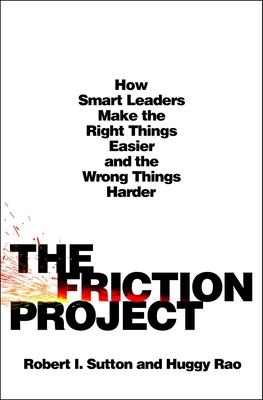
The Friction Project: How Smart Leaders Make the Right Things Easier and the Wrong Things Harder – Robert I. Sutton, Huggy Rao

Every organization is plagued by destructive friction—the forces that make it harder, more complicated, or downright impossible to get anything done. Yet some forms of friction are incredibly useful, and leaders who attempt to improve workplace efficiency often make things even worse. Drawing from seven years of hands-on research, The Friction Project by bestselling authors Robert I. Sutton and Huggy Rao teaches readers how to become “friction fixers,” so that teams and organizations don’t squander the zeal, damage the health, and throttle the creativity and productivity of good people—or burn through cash and other precious resources.

Sutton and Rao kick off the book by unpacking how skilled friction fixers think and act like trustees of others’ time. They provide friction forensics to help readers identify where to avert and repair bad organizational friction and where to maintain and inject good friction. Then their help pyramid shows how friction fixers do their work, which ranges from reframing friction troubles they can’t fix right now so they feel less threatening to designing and repairing organizations. The heart of the book digs into the causes and solutions for five of the most common and damaging friction oblivious leaders, addition sickness, broken connections, jargon monoxide, and fast and frenzied people and teams.

Sound familiar? Sutton and Rao are here to help. They wrap things up with lessons for leading your own friction project, including linking little things to big things; the power of civility, caring, and love for propelling designs and repairs; and embracing the mess that is an inevitable part of the process (while still trying to clean it up).

The Zeigarnik Effect: Unraveling Tasks and Our Memory

In the labyrinth of the human mind, there exists a curious phenomenon—a tug at the strings of consciousness, urging us to return to unfinished tasks, unresolved puzzles, and incomplete stories. This phenomenon, known as the Zeigarnik Effect, offers a fascinating glimpse into the workings of memory, motivation, and cognitive persistence.

The Zeigarnik Effect, named after Lithuanian-Soviet psychologist Bluma Zeigarnik, sheds light on our peculiar tendency to remember uncompleted or interrupted tasks more vividly than their completed counterparts It suggests that incomplete tasks create a state of cognitive tension or “psychological itch,” prompting individuals to seek closure or resolution.

Imagine a bustling café where a diligent waiter takes orders from a myriad of patrons. Each order is meticulously noted down, and the waiter’s mental notepad becomes a canvas for unfinished business. But here’s the twist: once the bill is settled, the waiter’s memory seems to hit a roadblock. The details of the paid orders fade into oblivion, leaving only a faint trace. What sorcery is at play here? Professor Kurt Lewin, a Gestalt psychologist, observed this peculiar memory quirk in the aforementioned waiter. Bluma Zeigarnik, intrigued by Lewin’s observation, embarked on a scientific quest to unravel the underlying processes. In 1927, her research report emerged in the journal Psychologische Forschung, illuminating the phenomenon that now bears her name.

At the heart of the Zeigarnik Effect lies the principle of cognitive dissonance—the discomfort or tension that arises from holding contradictory beliefs or engaging in inconsistent behaviours. Unfinished tasks create a state of cognitive dissonance, driving individuals to seek resolution and restore psychological equilibrium.

Here’s how it works: when we interrupt a task, the tension remains suspended like a musical note waiting for resolution. Our brains, ever the composers of memory, keep this content readily accessible. The unfinished symphony plays on, and we find ourselves recalling these half-done tasks with surprising clarity. It’s as if our minds whisper, “Remember this; it’s not over yet.”

Unfinished tasks capture our attention and occupy our thoughts, leading us to devote mental resources to planning, problem-solving, and goal pursuit. This selective attention enhances memory encoding and retrieval, making incomplete tasks more salient and memorable than completed ones.

The Zeigarnik Effect has significant implications for productivity and motivation, as it suggests that maintaining a “to-do” list or task backlog can enhance focus, engagement, and persistence in goal pursuit. Unfinished tasks serve as potent motivators, driving us to take action and achieve closure.

On the flip side, the Zeigarnik Effect can also contribute to procrastination and task avoidance, as individuals may become overwhelmed by the sheer volume of unfinished tasks and struggle to prioritize or complete them. Understanding the dynamics of the Zeigarnik Effect can help individuals develop strategies to overcome procrastination and enhance task management skills.

In the realm of academia, the Zeigarnik Effect can be effectively deployed. Students who intersperse their study sessions with unrelated activities—whether it’s studying another subject or indulging in a game—receive information better. The cognitive tension created during the study session lingers, making the material more accessible. So, to any student reading this post, take a break, it’s not procrastination—it’s cognitive enhancement.

The Zeigarnik Effect extends its tendrils beyond cafés and classrooms. In the world of sports, it even influenced a rule change. Enter the Harden Rule, named after basketball superstar James Harden. Picture a player repeatedly “chucking it up” whenever an opponent approaches—a strategic interruption. The resulting cognitive bias against this move led to a rule penalising such behaviour.

So how can the Zeigarnik Effect be applied in the real world?

The Zeigarnik Effect has been leveraged in marketing and advertising campaigns to capture consumers’ attention and drive engagement. By creating a sense of anticipation or suspense, marketers can pique interest and encourage consumers to learn more or take action. Advertisers often use cliffhangers or incomplete narratives to capture attention. Think of TV shows that end an episode with a suspenseful scene—our brains itch to know what happens next. Brands can employ the Zeigarnik Effect in marketing campaigns by leaving audiences curious and engaged.

Educators can harness the Zeigarnik Effect to enhance learning and retention in the classroom. By breaking lessons into manageable segments and leaving tasks or questions unanswered, teachers can stimulate curiosity and encourage active participation among students. Students can leverage the Zeigarnik Effect by intentionally interrupting their study sessions. Taking short breaks or switching to a different subject creates cognitive tension, making the material more memorable.

To boost productivity, one can create a to-do list with incomplete tasks. The tension associated with unfinished items motivates one to revisit and complete them. Project managers can strategically leave certain tasks partially undone, ensuring team members remain focused on project completion.

UX designers can apply this principle to create engaging interfaces. For example, progress bars that show incomplete tasks encourage users to continue until the task is finished. Video games often use quests or achievements to trigger the Zeigarnik Effect, motivating players to explore and complete challenges.

When handling customer inquiries, leaving a conversation unresolved: like telling them they will get back, keeps customers engaged and more likely to follow up. Chatbots and automated systems can use this effect to encourage users to return for further assistance.

In negotiations, intentionally leaving certain points unresolved can create cognitive tension. The other party remains curious and open to further discussion. Persuasive communication can benefit from the Zeigarnik Effect. Presenting incomplete information can pique interest and encourage deeper exploration.

When one is stuck on a creative project or problem, take a break. The unresolved tension may lead to sudden insights or solutions. Brainstorming sessions can benefit from intentionally leaving ideas partially developed, sparking curiosity and collaboration.

As with any psychological phenomenon, controversy brews. Some studies failed to replicate Zeigarnik’s initial findings, questioning the reliability of the effect. Yet, like an unfinished melody, it persists in our collective memory.

Ultimately, the Zeigarnik Effect highlights the human desire for closure and resolution in our lives. Whether it’s completing a project, resolving a conflict, or achieving a long-held goal, closure brings a sense of satisfaction, fulfilment, and peace of mind.

While closure is important, it’s also essential to embrace the journey and appreciate the process of growth, discovery, and self-improvement along the way. By recognizing the inherent value of both completion and continuation, we can navigate the complexities of life with grace and resilience.

In the grand tapestry of human experience, the Zeigarnik Effect serves as a reminder of the intricate interplay between memory, motivation, and meaning-making. It invites us to embrace the unfinished stories, unresolved questions, and uncharted territories of our lives with curiosity, courage, and creativity. Whether one is designing an app, writing a novel, or negotiating a deal, it’s worth considering harnessing this cognitive quirk to engage minds and leave symphonies unfinished—until the final note.

The Busy Illusion: Appearances vs. Productivity

A few months ago, I chanced upon an article about a survey that mentioned that Singaporeans were ranked third globally for appearing busy but not necessarily productive. Now, what does this ranking mean, and how should we interpret it?

In a world that glorifies busyness, it’s no surprise that we Singaporeans find ourselves near the top of the list when it comes to appearing busy. Our lives are filled with work commitments, family responsibilities, social engagements, and more. It’s not uncommon for conversations to revolve around how busy we are, almost like a badge of honour.

But here’s the catch: appearing busy doesn’t always translate into being productive. The survey highlighted that while Singaporeans might look swamped with tasks, the actual output may not match their perception. This raises an essential question: Are we optimising our time and efforts effectively?

Singapore’s culture of busyness can be traced back to several factors. Our fast-paced lifestyle, coupled with high expectations at work and in our personal lives, often leads to a constant need to appear busy. The fear of falling behind or not measuring up to societal standards can push us to overcommit, making us look busy without necessarily achieving more.

We are known for our work ethic and commitment to excellence. However, this drive can sometimes result in individuals juggling too many tasks simultaneously. The pressure to perform at our best can inadvertently lead to a frantic appearance of busyness, but not necessarily an increase in productivity.

So, how can we strike a balance between appearing busy and being productive? It’s essential to recognise that looking busy doesn’t equate to success or fulfilment. Instead, let’s focus on achieving a healthy work-life balance, setting realistic goals, and using our time efficiently.

Here are a few practical tips to help us shift our focus from appearances to productivity:

  • Prioritise tasks: Identify your most important tasks and focus on completing them first.
  • Time management: Use techniques like the Pomodoro method to work in focused bursts, followed by short breaks.
  • Delegate when possible: Don’t be afraid to delegate tasks to others to free up your time for more important responsibilities.
  • Learn to say no: Politely decline additional commitments when your plate is already full.
  • Self-care: Make time for self-care to recharge and maintain your physical and mental well-being.

While it’s interesting to see Singaporeans ranked third globally for appearing busy, this survey should serve as a wake-up call. Let’s not be content with the illusion of busyness; instead, let’s strive for genuine productivity and a balanced, fulfilling life. By prioritising our tasks, managing our time wisely, and practising self-care, we can redefine success on our terms.

Remember, it’s not about how busy we appear to be; it’s about the impact we create with our actions and the quality of life we lead. So, let’s break free from the busy illusion and embrace a more meaningful and productive journey ahead.