Digital Minimalism: Choosing a Focused Life in a Noisy World – Cal Newport
Minimalism is the art of knowing how much is just enough. Digital minimalism applies this idea to our personal technology. It’s the key to living a focused life in an increasingly noisy world.
In this timely and enlightening book, the bestselling author of Deep Work introduces a philosophy for technology use that has already improved countless lives.
Digital minimalists are all around us. They’re the calm, happy people who can hold long conversations without furtive glances at their phones. They can get lost in a good book, a woodworking project, or a leisurely morning run. They can have fun with friends and family without the obsessive urge to document the experience. They stay informed about the news of the day, but don’t feel overwhelmed by it. They don’t experience “fear of missing out” because they already know which activities provide them meaning and satisfaction.
Now, Newport gives us a name for this quiet movement, and makes a persuasive case for its urgency in our tech-saturated world. Common sense tips, like turning off notifications, or occasional rituals like observing a digital sabbath, don’t go far enough in helping us take back control of our technological lives, and attempts to unplug completely are complicated by the demands of family, friends and work. What we need instead is a thoughtful method to decide what tools to use, for what purposes, and under what conditions.
Drawing on a diverse array of real-life examples, from Amish farmers to harried parents to Silicon Valley programmers, Newport identifies the common practices of digital minimalists and the ideas that underpin them. He shows how digital minimalists are rethinking their relationship to social media, rediscovering the pleasures of the offline world, and reconnecting with their inner selves through regular periods of solitude. He then shares strategies for integrating these practices into your life, starting with a thirty-day “digital declutter” process that has already helped thousands feel less overwhelmed and more in control.
Technology is intrinsically neither good nor bad. The key is using it to support your goals and values, rather than letting it use you. This book shows the way.
Factfulness: Ten Reasons We’re Wrong About the World – and Why Things Are Better Than You Think – Hans Rosling, Ola Rosling and Anna Rosling Rönnlund
Factfulness:The stress-reducing habit of only carrying opinions for which you have strong supporting facts.
When asked simple questions about global trends – why the world’s population is increasing; how many young women go to school; how many of us live in poverty – we systematically get the answers wrong. So wrong that a chimpanzee choosing answers at random will consistently outguess journalists, Nobel laureates, and investment bankers.
In Factfulness, Professor of International Health and a man who can make data sing, Hans Rosling, together with his two long-time collaborators Anna and Ola, offers a radical new explanation of why this happens, and reveals the ten instincts that distort our perspective.
It turns out that the world, for all its imperfections, is in a much better state than we might think. But when we worry about everything all the time instead of embracing a worldview based on facts, we can lose our ability to focus on the things that threaten us most.
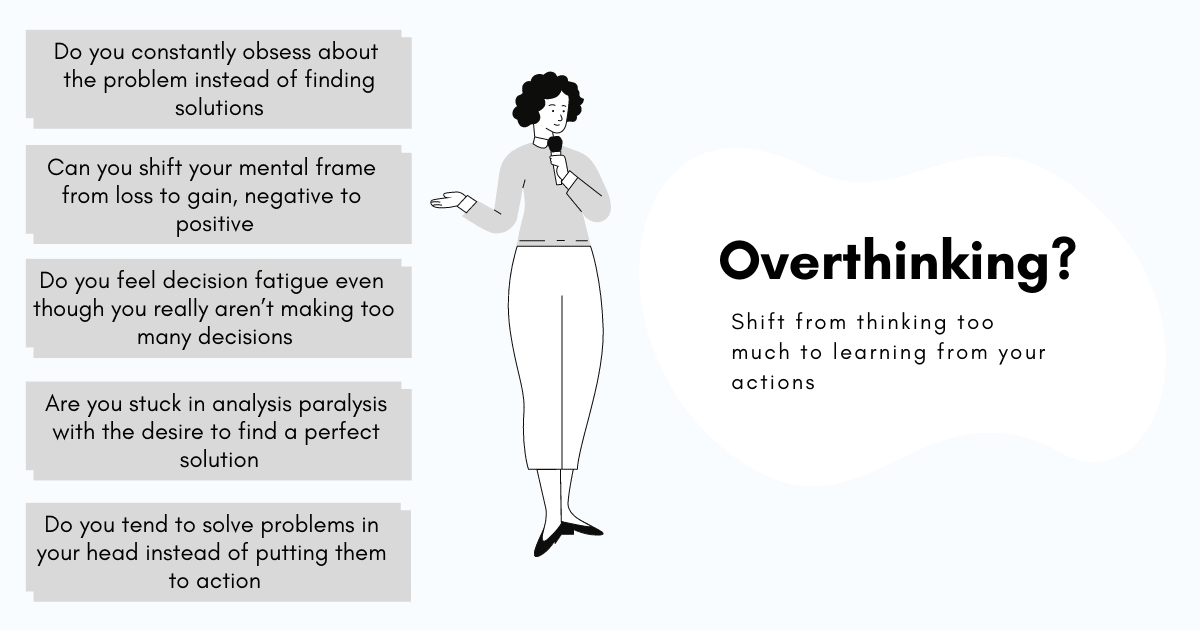
We have been there – we are faced with a decision, it can be a major or a minor one, and start weighing the pros and cons of the choices available. And we think so much, turn every possibility in our heads and weigh on every tiny aspect and the what-ifs so much that we can’t make up our minds. This freezing with inaction is called Overthinking by experts. While it’s human nature to think things through when making a decision or evaluating a situation, it becomes overthinking when you can’t get it out of your head. It happens to all of us at some point in our lives – we all experience events that cause us to worry or stress.
Some people can’t seem to turn their concerns off. They worry about the future, making catastrophic predictions about unlikely events that haven’t happened yet. They also ruminate about the past, beating themselves up about the should haves and could haves. They fret over what others might think of them or let negative self-talk build up in their minds. If I have to summarise overthinking in a couple of sentences, it is that overthinking is when you dwell or worry about the same thought repeatedly and those who overthink can be paralysed by their worries and may struggle to make decisions or take action. Overthinking can be caused by and can contribute to depression, anxiety, and other mental health disorders.
Also referred to as rumination, overthinking is when one repetitively dwells on the same thought or situation over and over to the point it gets in the way of their life. Overthinking usually falls into two categories: ruminating about the past or worrying about the future. Those who struggle with overthinking may feel stuck and unable to do much because it’s hard to get the thoughts out of their heads and concentrate on anything else. According to experts, about 73% of 25 to 35-year-olds chronically overthink, along with about 52% of people aged 45 to 55.
Overthinking is unproductive but not the same as being stressed or worried about a specific circumstance. Having a lot of thoughts about a stressful situation in the short term can prompt one to make a move. When one is nervous or stressed, that can sometimes switch on the adrenaline rush and help with the task. Experts believe that even though people of all ages, genders, or personality types might struggle with rumination, those who are motivated by achievement can be more prone to overthinking.
Although not recognised as a mental disorder, overthinking is often associated with other mental health conditions, including depression, anxiety disorders, obsessive-compulsive disorders and post-traumatic stress disorders. One study found a two-way relationship between overthinking and other mental health issues where high levels of stress, anxiety, and depression can contribute to overthinking and overthinking, in turn, may be associated with increased stress, anxiety, and depression.
Overthinking a tough decision can also cause problems. Replaying all the options in your head can lead to “paralysis by analysis” – you’re afraid to take the wrong action, so you take no action at all. But even making the wrong decision is better than making no decision. But overthinking is not always bad. Sometimes, overthinking can appear to be a benefit. Running through different scenarios in your head is a good way to make hard decisions, and visualising goals is essential to achieving them. But those are strategies that are employed to reach a specific goal. Overthinking is different, it isn’t rational, and it isn’t part of a larger strategy and in fact, it can interfere with problem-solving abilities.
Overthinking may also cause excessive activity in your brain that can be harmful with one Harvard study finding that this excessive brain activity depletes an essential protein, and that may shorten the human lifespan. There can also be major psychological consequences. Another study found that rumination, a form of overthinking, can lead to anxiety, binge drinking or eating, depression and self-harm.
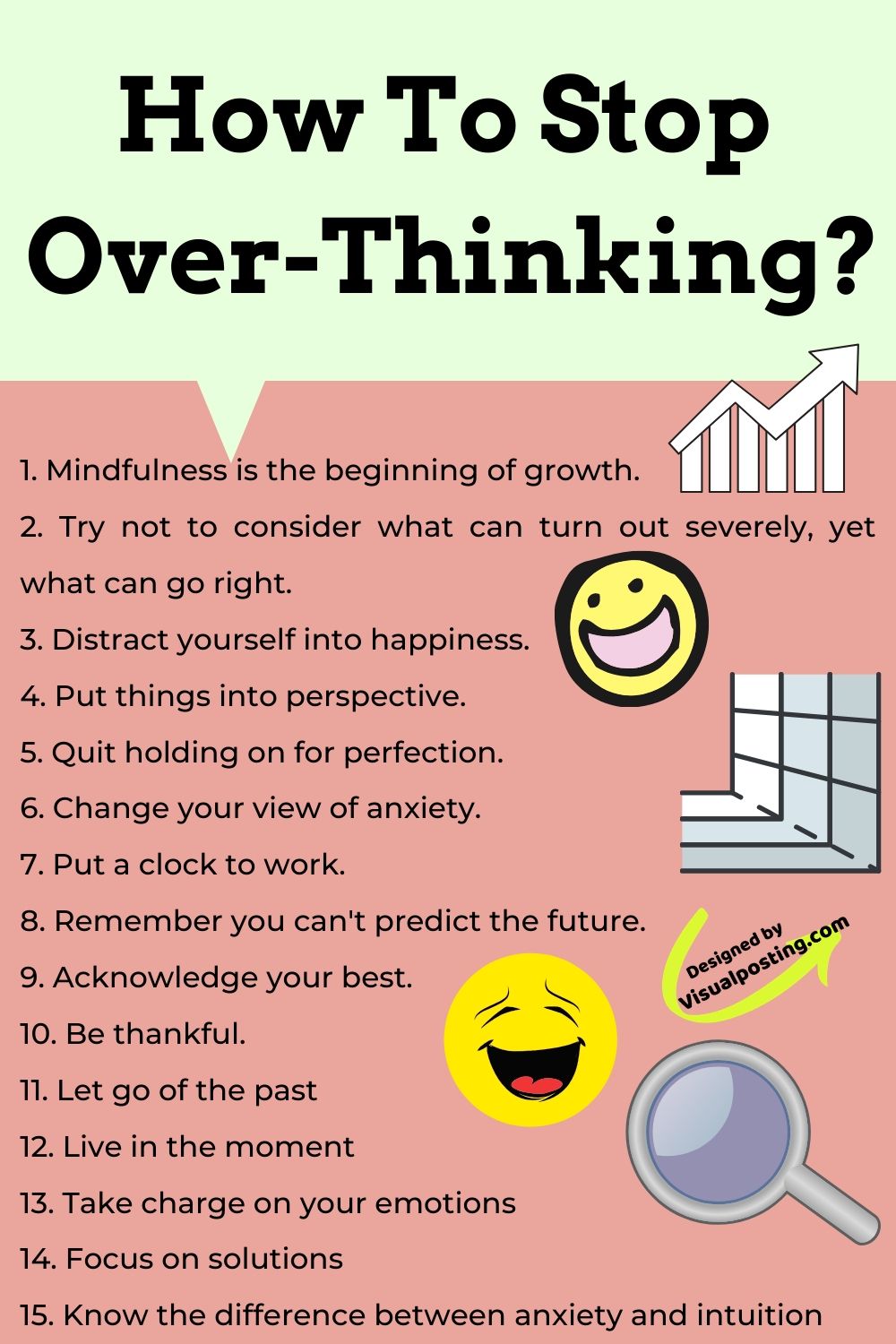
Learning how to not overthink is good for both your body and your mind. Below are some strategies that can help an overthinker stop overthinking.
Keep track of triggers and patterns: A little mindfulness and attention can go a long way toward getting a grip on overthinking. Keep a journal and write down specific moments that cause you to overthink or worry. Soon, you’ll begin to notice patterns and recognise overthinking triggers before they happen which will help in developing a coping strategy for situations that will lead to overthinking.
Challenge your thoughts: The mind does not have to believe everything you think. An effective way to squash overthinking is to challenge worries and ruminations and view them objectively. Calling out overthinking thoughts that are not useful makes them easier to manage.
Get help from family and friends: Asking trusted family and friends for perspectives when you overthink or worry excessively helps to a great extent.
Move your body: Research demonstrates exercise may improve depression, anxiety, and other mental health disorders and also help with chronic overthinking. Even a 5-minute walk can send an influx of good chemicals and hormones, like endorphins, to our brain. Physical movements might also help shift the nervous system out of fight-flight-freeze mode and may help calm any trauma-related rumination.
Seek professional help: If overthinking seems to be taking over your life, it might be good to see a mental health professional. If left unchecked, the stress associated with overthinking may lead to physical health symptoms such as headaches, fatigue, digestive issues like nausea or diarrhoea and difficulty in sleeping.
Retrain the brain: When the brain is at rest, the areas that light up are the problem-solving areas and areas associated with self-referential thinking. So, when left to its own devices, the brain will overthink, and this means, you have to train your brain to do otherwise — particularly if you’re overthinking at certain times, like before bed. It’s possible to reprogram that habit with other mind-clearing activities instead.
Meditate: Attention training is a meditation technique that can benefit people with anxiety and depression and the easiest way to practice it is to focus on something completely mundane and routine, like washing dishes or folding laundry. When one directs the attention to the task in a way that may even feel hyper-focused and zero in on observing themselves and any sensations that arise, that laser focus can help quiet other intrusive thoughts in the head.
Do a brain dump: Journaling is a helpful way to get thoughts out of the head so they’re not overwhelming. Another way that helps is creating to-do lists which can be as detailed as one likes and if on the phone, can be with someone always. This is especially useful when you are awake at night thinking about things. Once you do a brain dump, rest is easier.
Live in the moment: When you live in the now and stop negative emotions and stop overthinking before it spirals out of control and reset it, it can control overthinking. Breathe and focus on the moment and initially, it will take conscious awareness, but gradually it will help to retrain the brain and soon it will come naturally.
Focus on solutions: Identify problems, but give power and energy to solutions. Once you identify the causes of stress and anxiety, take charge and learn to remove or reduce the stressors from your life. It’s not easy and will take time, but if you are consistent, you will gradually get there.
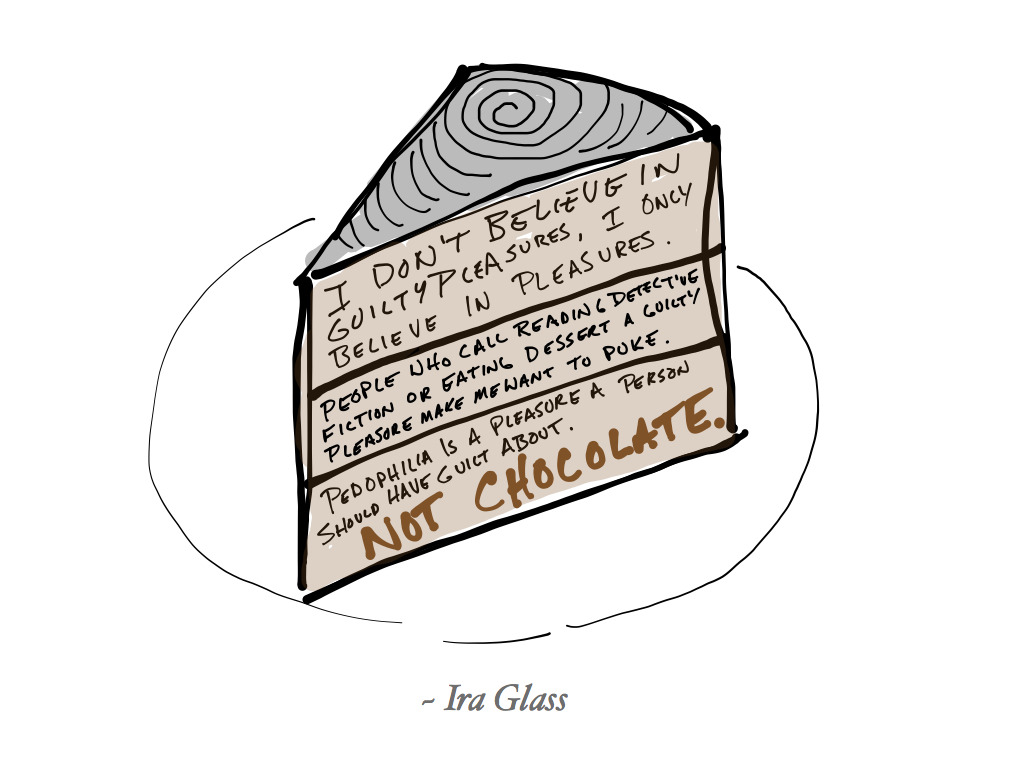
Raindrops on roses and whiskers on kittens is the first line of an evergreen song from the classic, The Sound of Music and my all-time favourite movie. For those who haven’t seen the film, this song takes place when the children are petrified by thunder and lightning and their governess, Maria, sings this song about her favourite things to lighten the mood. The other day, I was humming this song when I thought of this post, but instead of my favourite things, let’s talk about guilty pleasures.
So what is a guilty pleasure? A guilty pleasure is something that one enjoys despite understanding that it is not generally held in high regard, or is seen as unusual or weird. It can also be used to refer to one’s taste for foods that are considered to be advisable to avoid, especially for health reasons. Social norms define what one should be guilty of. One may feel bad when they don’t do house chores, because it is socially appropriate that they be responsible for their house. In social media, the social rule is to be online and participative as much as one can and so because of social norms, there is a feeling of guilt, and we avoid making any mistakes.
Some experts suggest that women and other marginalised groups be careful not to attach negative connotations to pleasure, particularly since they may be associating guilt with pleasure as an outcome of historically having been denied pleasure. Having emotional and intellectual release valves is important for productivity, and balanced living and can help relieve stress during difficult times. Guilty pleasures help provide some important mental breaks, so never feel guilty about them.
Engaging in guilty pleasure brings out our inner child. We engage in mischief and find it thrilling, testing the boundaries of how far we can go without being caught. We feel pleasure and a sense of relief when we allow ourselves to give in to our guilty pleasures. Guilty pleasure is simply the joy of doing something but at the same time feeling a little bad about doing it. This is society’s way of making people feel that their pleasures are not educational, informative, or purposeful.
It is a fact that leisure time should be spent wisely and productively so that the mind can be developed and we gain more knowledge. Our brain needs to rest, and indulging in pleasures that engage with a reward pathway are ways of easing brain stress. Guilty pleasures bring positive emotions, reduce stress, and improve mental health and well-being. Engaging in pleasurable activities is harmless and is considered healthy. One feels good and happy after sitting for at least an hour watching their favourite movie or TV show and the same feeling is got when one travels to a new place or goes to a concert of their favourite musician or artist.
Guilty pleasures don’t have to be grand and expensive. Simple everyday things can be guilty pleasures. Playing an interactive game on your phone before doing house chores can be very rewarding and motivating. You feel a sense of triumph when you allow yourself to have fun.
Enjoying some pleasurable time is good. But too much can cause problems. But if one postpones work by say binge-watching a show, that’s procrastination and that’s a big no-no. But if at the end of the day, you read a book or watch something that need not be educational or productive, that is a guilty pleasure. No one should abuse any guilty pleasure. It should be considered a gift because one can pause what they’re doing and enjoy a piece of chocolate or two before resuming work. It should be used as a tool to relax and reset the brain to function better.
Indulging in guilty pleasures is good only if it is short-term and if you can control your urges. Constantly allowing yourself to give in to these pleasurable urges, especially the negative ones, can be damaging and harmful in the long run. The keys are self-control and balance. Being able to control yourself is important if you don’t want to feel guilty about your pleasures. According to research, those who are self-conscious have greater self-control. This means that if you are very conscious about yourself, what you eat, watch, or do and think about their negative effects on you, you are more likely to guard yourself against over-indulging. Often, it is people who have poor control who feel the guiltiest. This is why you should master and control yourself. Guilty pleasures won’t make you feel so guilty because you are not enslaved by them. Allowing yourself some guilty pleasures can help you recover more quickly and have a healthier disposition.
It is time to drop the shame and indulge in your guilty pleasures. These pleasures are good for your well-being and mental health. You are only productive and inspired when you are happy. Have more self-compassion and be free to enjoy whatever you want as long as you are not hurting anybody. Tell yourself that you deserve this pleasure because you have earned it and don’t allow yourself to feel guilty about it.
The Culture Map: Breaking Through the Invisible Boundaries of Global Business – Erin Meyer
Whether you work in a home office or abroad, business success in our ever more globalized and virtual world requires the skills to navigate through cultural differences and decode cultures foreign to your own. Renowned expert Erin Meyer is your guide through this subtle, sometimes treacherous terrain where people from starkly different backgrounds are expected to work harmoniously together.
When you have Americans who precede anything negative with three nice comments; French, Dutch, Israelis, and Germans who get straight to the point (“your presentation was simply awful”); Latin Americans and Asians who are steeped in hierarchy; Scandinavians who think the best boss is just one of the crowd—the result can be, well, sometimes interesting, even funny, but often disastrous.
Even with English as a global language, it’s easy to fall into cultural traps that endanger careers and sink deals when, say, a Brazilian manager tries to fathom how his Chinese suppliers really get things done, or an American team leader tries to get a handle on the intra-team dynamics between his Russian and Indian team members.
In The Culture Map, Erin Meyer provides a field-tested model for decoding how cultural differences impact international business. She combines a smart analytical framework with practical, actionable advice for succeeding in a global world.