Loving Kindness: Everyone counts and matters

In the last almost one and a half year of meditating, I kept hearing the phrase loving kindness over and over again. I have done the meditation many times, but have been very curious about this and it’s origins, so I decided to find out more.

So what is Loving Kindness? It comes from the word Maitri, a Sanskrit word which in Pali is equivakent to Metta and means benevolence, loving-kindness, friendliness, amity, good will and an active interest in others. The cultivation of benevolence is a popular form of Buddhist meditation and is a part of the four immeasurables in Brahmavihara or the divine abidings meditation. Some small sample studies on the potential of loving-kindness meditation approach on patients suggest potential benefits, however, peer reviews question the quality and sample size of these studies.

Today more than ever, we seem to be living in a world which is characterised by a us versus them mentality. Everywhere, xenophobia and racism seems to be at a peak and we seem to think those who are different than us, or those who disagree with us are not on the same page as us and so should be treated with disdain and be considered as the enemy. This in turn makes us dislike the others, wanting them to not have good lives and all the negative emotions that eventually will turn us into bitter human beings. And then because we dislike and are jelous of people so much, we spiral into lonliness, and this lonliness can happen even if you are surrounded by people. If you can’t engage people authentically, then you are lonely, there is no two ways about it.

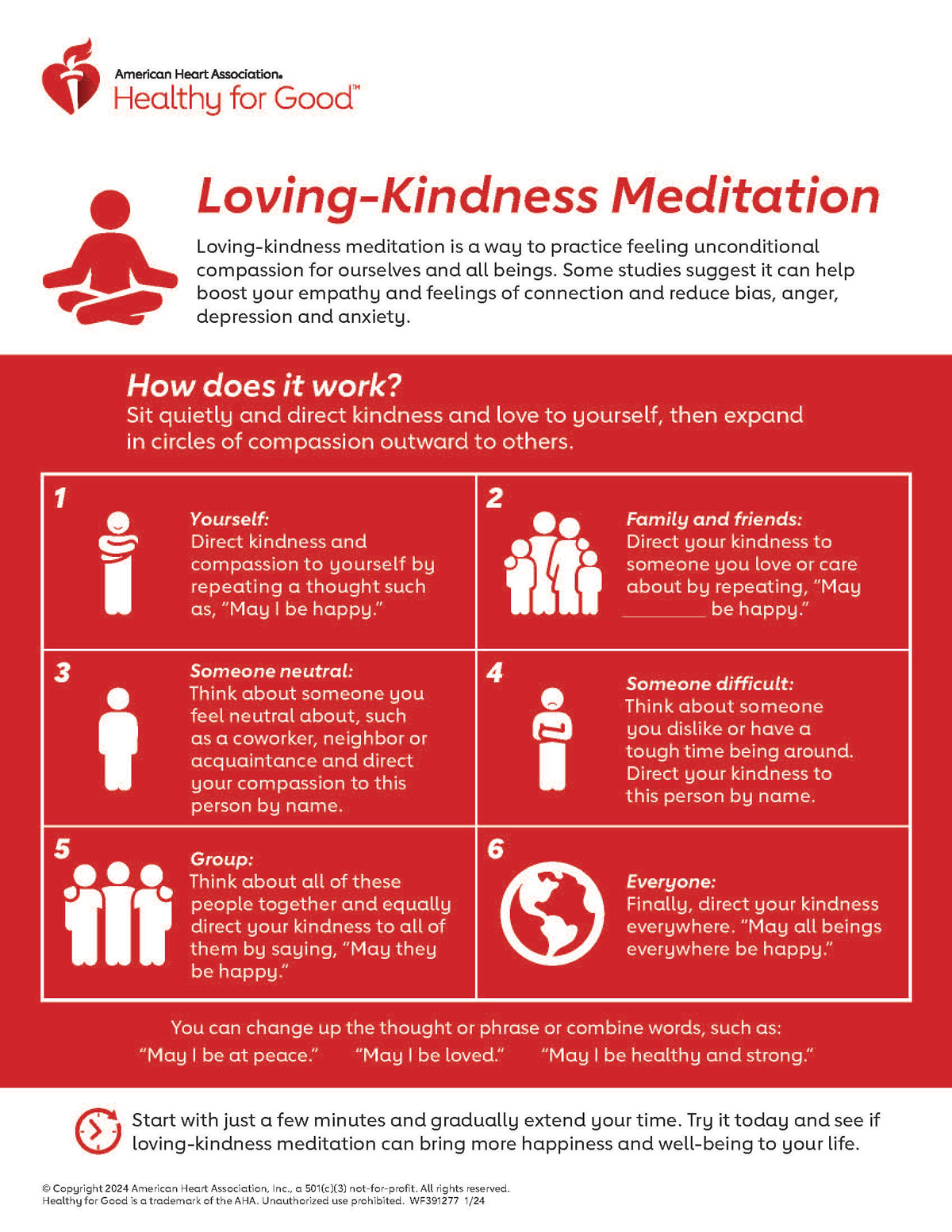
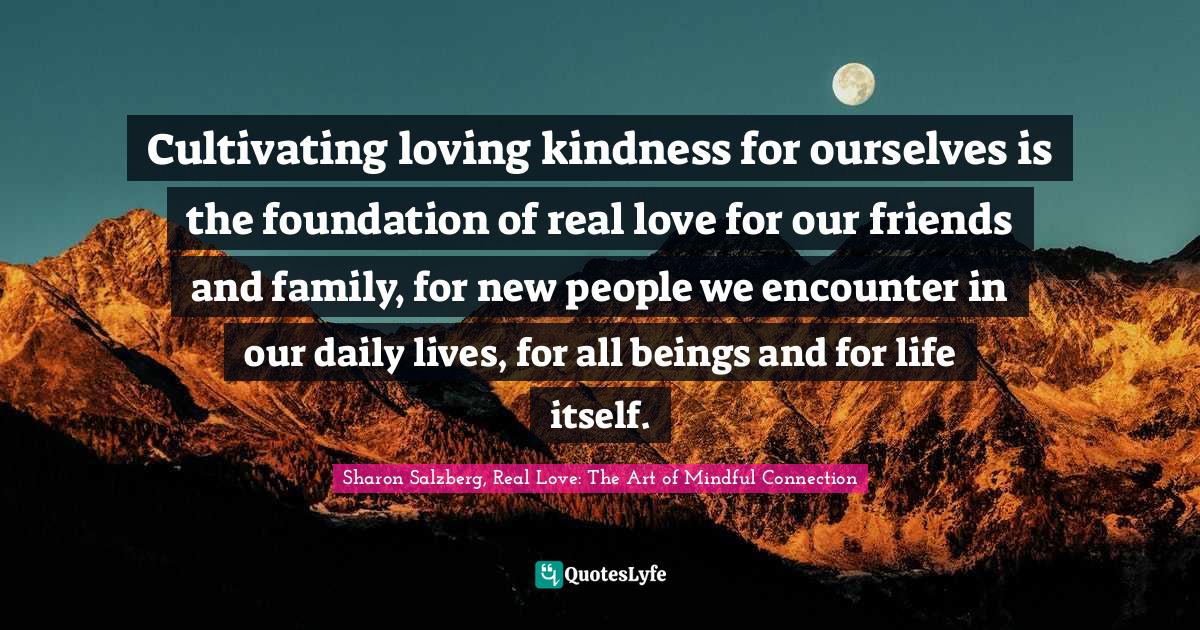
That’s where the practice of Loving Kindness comes in where it about cultivating love as a strength, a muscle, a tool that challenges our tendency to see people, including ourselves as disconnected, statically and rigidly isolated from one another. Loving-kindness is about opening ourselves up to others with compassion and equanimity, which is a challenging exercise, requiring us to push back against assumptions, prejudices, and labels that most of us have internalised.  

According to a study from 2008, mutual trust can catch on and spread between racial groups just as quickly as suspicion can. So just as quickly as we are conditioned to hate someone, we can easily learn to trust someone we perceive as the other.

One does not need to practice Buddhism to practice Loving Kindness and the meditation technique is fairly simple. The meditation can be used to boost well-being and reduce stress with those who regularly practice it able to increase their capacity for forgiveness, connection to others, self-acceptance, and more. Intially the technique feels very weird, but as with everything else we do, as we practice it more, we will get better at sending and receiving love and kindness both to ourselves and to others.

During the loving kindness meditation, you focus benevolent and loving energy toward yourself and others. There are many well-documented benefits of traditional meditation, but as with other techniques, this form of meditation takes practice. It can be difficult and sometimes leads to resistance since the average person is not used to this level of giving and receiving love. Some published studies have noted that this meditation technique may be useful in the management of social anxiety, marital conflict, anger, and coping with the strains of long-term caregiving while other research has suggested that the loving kindness meditation can enhance the activation of brain areas that are involved in emotional processing and empathy to boost a sense of positivity and reduce negativity.

While there are different ways to practice Loving Kindness, here’s what works for me. Sit in a comfortable position at a time when you are likely not to be disturbed. This will take as long as you need, so even a few minutes will do. Sit comfortably, close your eyes, relax your muscles and take a few deep breaths. Imagine yourself experiencing complete physical and emotional wellness and inner peace. Imagine feeling perfect love for yourself, thanking yourself for all that you are, knowing that you are just right, just as you are. Focus on this feeling of inner peace, and imagine that you are breathing out tension and breathing in feelings of love. Repeat three or four positive, reassuring phrases to yourself. Phrases like “May I be happy”, “May I be safe”, “May I be healthy, peaceful, and strong” or “May I give and receive appreciation today”. You can also use phrases that speak to you personally and are unique to yourself.

Once you have repeated your chosen phrases, bask in feelings of warmth and self-compassion for a few moments. If your attention drifts, gently redirect it back to these feelings of loving kindness. Let these feelings envelop you. You can choose to either stay with this focus for the duration of your meditation or begin to shift your focus to loved ones in your life. Begin with someone who you are very close to, such as a spouse, a child, a parent, or a best friend. Feel your gratitude and love for them. Stay with that feeling. You may want to repeat the reassuring phrases. Once you’ve held these feelings toward that person, bring other important people from your life into your awareness, one by one, and envision them with perfect wellness and inner peace. Then branch out to other friends, family members, neighbors, and acquaintances. Extend feelings of loving kindness to people around the globe and focus on a feeling of connection and compassion. You may even want to include those with whom you are in conflict to help reach a place of forgiveness or greater peace.

When you feel that your meditation is complete, open your eyes. Remember that you can revisit the wonderful feelings you generated throughout the day. Internalize how loving kindness meditation feels, and return to those feelings by shifting your focus and taking a few deep breaths.

To get the most out of your Loving Kindness meditation, when you start, use yourself as the sole subject during meditation. As you get more comfortable with the imagery and loving phrases, you can begin to add the visualization of others into your practice. Adding others into the meditation boosts feelings of forgiveness and helps you to let go of rumination for an increased sense of inner peace. And as you develop a regular practice of meditation, you may want to set a timer with a gentle alarm if you’re concerned about spending too much time in focus.

Any meditation will help with feelings of anxiety and make you more zen, but the Loving Kindness meditation, over time will alleviate feelings of resentment, generate forgiveness to yourself and others and allow you to be able to deal with people, specially those you are in conflict with.

Colours and their impact on us every day

For every sighted person on this earth, without colours, life is bleak and sombre. Our world is awash with colour and in a single day, we see thousands of different hues that our brains interpret as scarlet, yellow, purple and fuchsia, to name a few. Nature employs colour with unparalleled artistry, making sunsets more breath-taking, flowers more exquisite, and wildlife more captivating. And we use colour too in myriad ways throughout the day, whether it is choosing a dress, a lip or nail colour or a new shade for our walls, we give a lot of thought and care to the colours we wear, see and use daily. Colour plays a vitally important role in the world in which we live and colours can sway thinking, change actions, and cause reactions. It can irritate or soothe the eyes, raise blood pressure or suppress appetite. When used in the right ways, colours can even save energy consumption.

The appeal of colour is universal and it plays an important role in our lives. Colour is a source of pleasure to everybody which can change moods, reduce or increase tensions, cause excitement and sometimes have a soothing effect on a tired person. Colours influence us on a few different levels. On one hand, we are conditioned socially and culturally to use specific colours for specific occasions, while on the other hand, depending on how the colour influences us, our reaction also varies. It’s also known that women can see more differentiation in colour than men because colour vision depends on three types of cones, two of which are carried on the X-chromosome: L-cones that are more sensitive to the longer wavelengths of light; and S-cones, to shorter wavelengths. The third cones, M-cones, are sensitive to middle wavelengths. So, men’s brains require slightly longer wavelengths of light to experience the same colours and this may be why men prefer colours with short wavelengths, like darker shades of blue and green, or they prefer shades without any wavelengths at all, like white, black, and grey.

Colours are commonly divided into two categories: warm and cool colours. Warm colours provide the illusion of heat and warmth because they remind us of sunlight or heath. Visually, warm colours will appear closer or like they are advancing towards you. Warm colours are those in shades of red, orange, yellow, and combinations of these. Cool colours on the other hand provide a sense of calm and relaxation because they are a visual reminder of elements of nature like water, sky, grass and even ice and snow and unlike warm colours, cool colours appear to recede or are further away from us. Some examples of cool colours would be colours like blue, purple and green. Warm colours are associated with heightened emotions and passion as well as joy and playfulness and can be stimulating. Cool colours make one feel calm, relaxed and refreshed with their receding effect having a meditative effect. Surrounding oneself with the right colour can improve the mood, relieve stress, and help get a good night’s sleep. Black, white and greys are neutral colours and so when a tint is added, it means adding white to colour, while shade means adding black to colour and tone is to add grey to colour.

40% of people worldwide say their favourite colour is blue, by far the most popular with red the first colour a baby sees, at around 2 weeks of age. Pink is the most calming colour and is used in some prisons and mental health institutions to calm worked-up prisoners and patients. White is considered the safest colour for a car as it is visible both during the day and at night. Red and yellow together are the most appetising colours which are why they’re used in a lot of fast food logos and restaurant decor. Some people have a phobia of colour known as Chromophobia which is an ongoing and irrational fear of colours, often stemming from a traumatic event associated with a particular colour. The colour wheel was invented by Isaac Newton who used a prism in 1665 to turn white light into a rainbow and identified seven colours. He felt the last colour, indigo, was a recurrence of the first colour, red and decided to arrange them in a circle. Colour has a big impact on the first impression with between 62 to 90% of a first impression based on how someone is recognising colour in the situation. To make a strong first impression, one should avoid neutrals and add a pop of bright colour to be more memorable. People are more likely to forget something when it’s in black and white with scientists believing that this may be because colour has a stronger appeal to the sense and as a result makes a more lasting impression on the memory. Wearing black makes one appear more powerful.

Everyone has a favourite colour and there is a science or possibly a pseudo-science behind what this means to one’s personality. Here are some colours and what they mean in a personality.

Black

Those whose favourite colour is black strive for power and control in life, but are often artistic and intuitive and do not share things well with others. They are above average, worldly, conventional, proper, polite, and regal. While black may mean depression to the clinical psychologist, to them, it means dignity. They value their inner world keep their private life private with only those close to them who are privy to their thoughts and feelings. They are articulate and at times dramatic, but not unrestrained and know how to share their point of view with conviction and authority. They maintain self-control easily and can control most situations with others perceiving them as serious, sometimes to the point of seeming intimidating. They are very attention driven and focussed and want to get things right and like to project an air of mystery, which sometimes is a mask for moments of insecurity with people finding that juxtaposition of the conventional and unconventional intriguing.

White

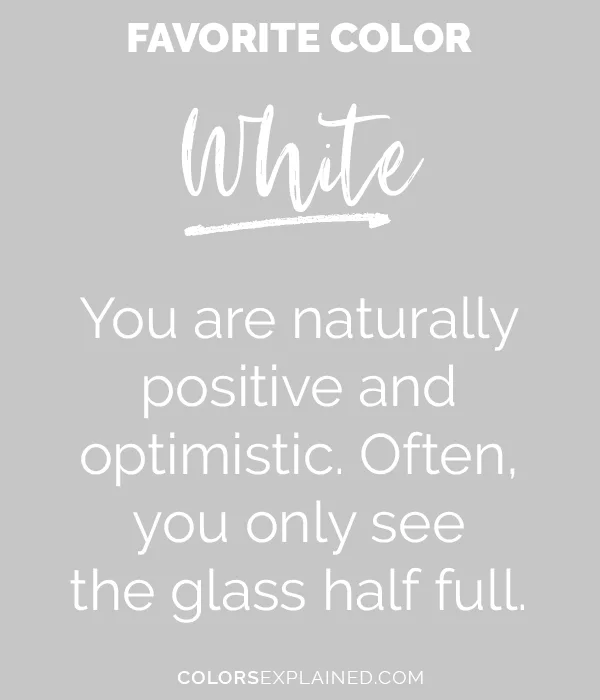
Someone whose favourite colour is white is organised and very independent, and relies on logic to solve problems. They appreciate order and simple elegance with a refined taste and enjoy things that are well crafted and beautiful. They can find treasures in the most unexpected places, are

particular and have high expectations for themselves and others, but don’t deal well with disappointment. They can portray a sense of control no matter what and hide their true feelings.

People may read them as being aloof because of their self-confidence and naturally reserved nature, but when people know them better, they appreciate their mindfulness and wisdom and are often described as an old soul.

Grey

Those who choose grey as their preferred colour are cool and composed and very reliable who tend to conform to keep the peace. They are cautious and seek to strive for compromise in most situations. They seek composure and peace and try very hard to fit themselves into a mould of their own. They are sophisticated and well versed in diplomacy to whom manners and etiquette are important as they feel polished social graces demonstrate respect for themselves as well as others. Professionally, others trust them to set the bar for appropriate behaviour and decorum, but they like to mind their own business and keep to themselves and are comfortable playing the role of a peacemaker. They are perceived as balanced, stable and trustworthy and are appreciated for their gift for identifying alternate avenues and facilitating compromises. They are naturally fair and objective and can put aside personal opinions and feelings and see an issue from all angles.

Red

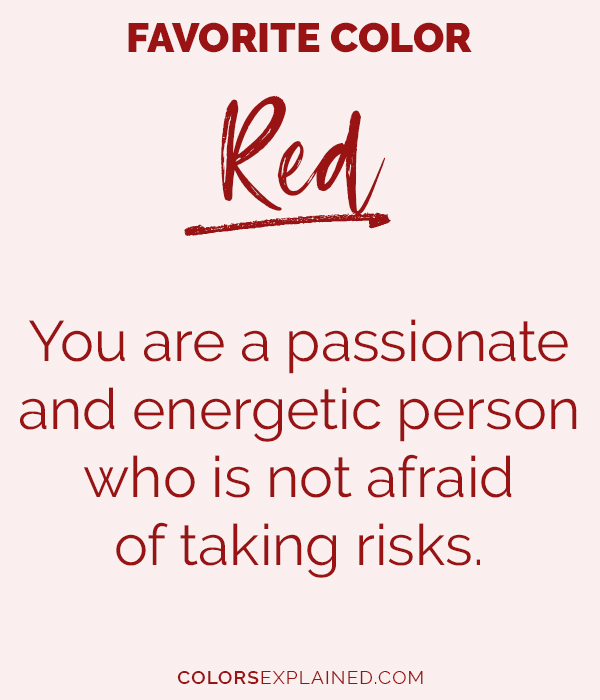
Red lovers have drive and determination and prefer action and risk as well as a need for physical fulfilment and fitness. They are outgoing, assertive, vigorous, and prone to impulsive actions and variable moods, but also feel deep sympathy for their fellow human beings, are an optimist but don’t hesitate to voice out complaints. They have a strong sex drive, are always in the know, present, and always aware of what is going on around them. They exude powerful energy and their presence is always noted. Being outgoing, they are usually the life of the party and the centre of attention. They love big, and at the same time when someone disappoints them or steps on their toes, they don’t hesitate to say exactly how they feel and why and don’t hide their feelings and nip disagreements in the bud, don’t hold grudges and like to move on quickly. Natural leaders who easily gain the respect of their peers and subordinates, they lead with optimism and an animated can-do attitude which is contagious.

Pink

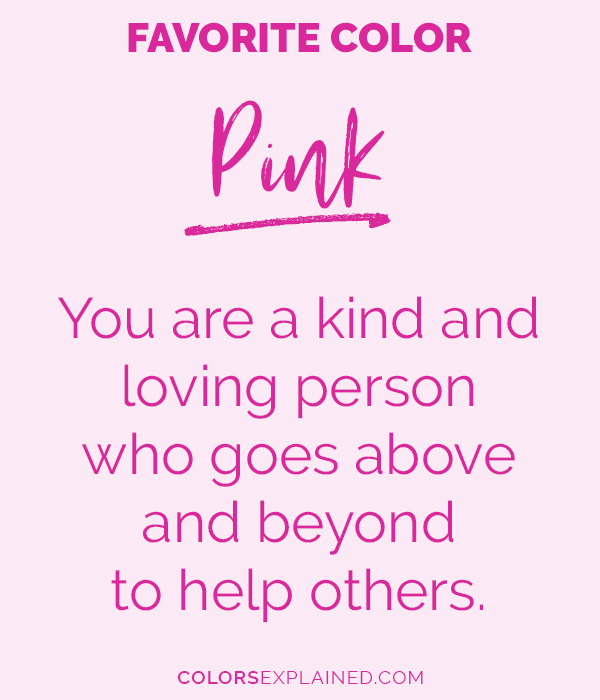
If pink is your favourite colour, all you want in life is unconditional love and to be accepted for who you are by your peers. You are easy-going and have approachable energy and come from a place of assuming the good outweighs the bad in everyone and every situation. Witty and smart, you sparkle socially, particularly in small groups and your caring and encouraging demeanour nurtures long-time friendships and genuinely revel in the success and happiness of others, especially friends and family.

Compassionate, perhaps to a fault, you are the one those closest to you depend on when they need a shoulder to cry on or a boost of confidence. You look at life through rose-coloured glasses and this pretty much sums up your life perspective. Peace, harmony, and calmness are important to you, though you appreciate letting loose on occasion and enjoy embracing all the fun life has to offer.

Orange

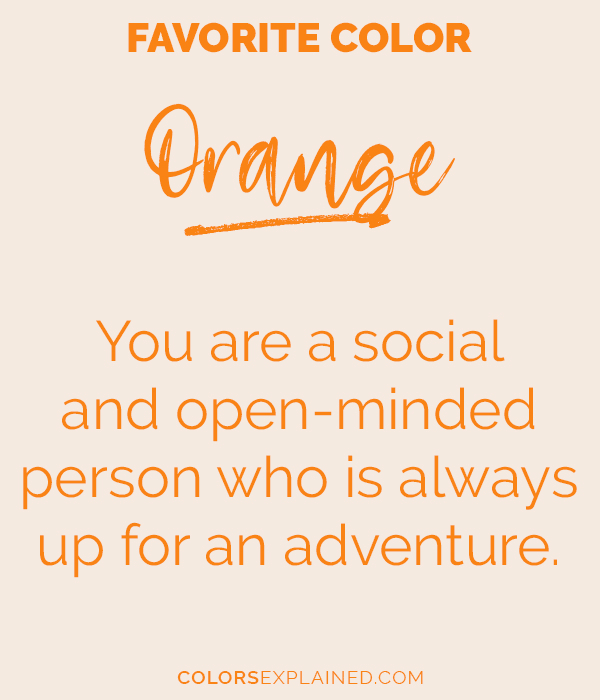
Those who love orange, are the quintessential people person who loves to be with people and socialise, as they want to be accepted and respected as a part of a group. They are good-natured but get swayed by outside opinions. They do good work, have strong loyalties, feel goodwill towards others, and have a solicitous heart. They are the heart and soul of a party and an eternal optimist who fully expects something wonderful to happen to them. These people have perfected the art of being present and living in the moment, focusing on what and who is in front of them. A problem solver at heart, they channel their high energy to inspire and influence others and excel in team building activities due to their natural zest for life and general positivity. No matter what life throws their way, they don’t fold under pressure or cave to panic and take things in stride because surely something wonderful is about to happen!

Yellow

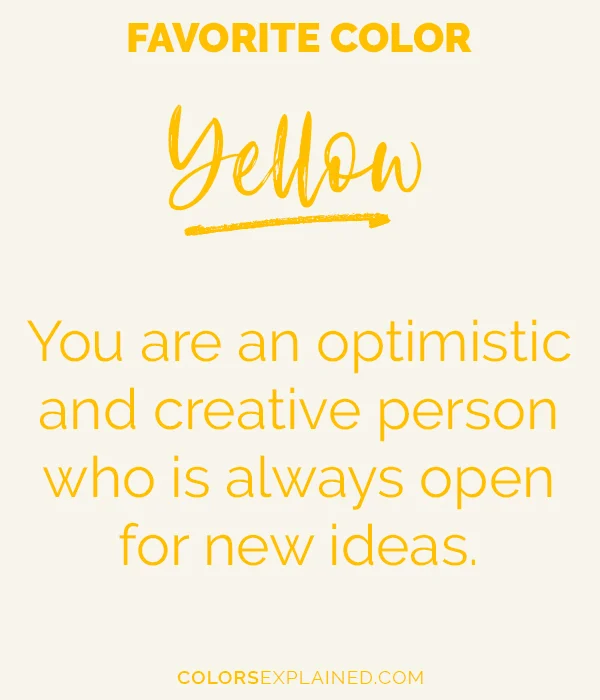
If you love yellow, you enjoy learning and sharing knowledge and you feel a need to always express your individuality. You have a vivid imagination, nervous energy, neatly-formed thoughts and a need to help the world. However, you tend to be aloof and are shy and long to be respected and crave admiration for your wisdom. You’re a safe friend and a reliable confidant and one of your most appealing traits is your consistently sunny and fun disposition with a resolute optimism which is infectious even in the most trying circumstances. An extremely positive person, you refuse to see the glass as half empty and have a reputation of leaping before you look and your impulsiveness sometimes pays off. Your spontaneity and willingness to take action positions you several steps ahead of the competition. You prefer tight-knit social circles to extended networks and those who know you best describe you as happy, imaginative, and highly intellectual.

Brown

Those who say brown is their favourite colour is a great friend who values a stable and simple life over material things. They are shrewd when it comes to money and obstinate in their habits and convictions, parsimonious, dependable and steady. They disdain impulsiveness and are very good bargain hunters. They are simple, genuine and transparent with intentions and get confused by those who have hidden agendas and ulterior motives. They feel the truth is easier to manage and fail to see the value in twisting facts. Dependable and punctual, they have high standards for excellence and experience has taught them that a solid foundation is mandatory for success. They do things slow and steady aka, do it right or not at all, no short-cuts or get rich quick schemes for them and have little patience for the snake oil salesperson type. Family comes first with them and they enjoy the comfort of a stable home where their well-appointed kitchen is the hub of the house.

Purple

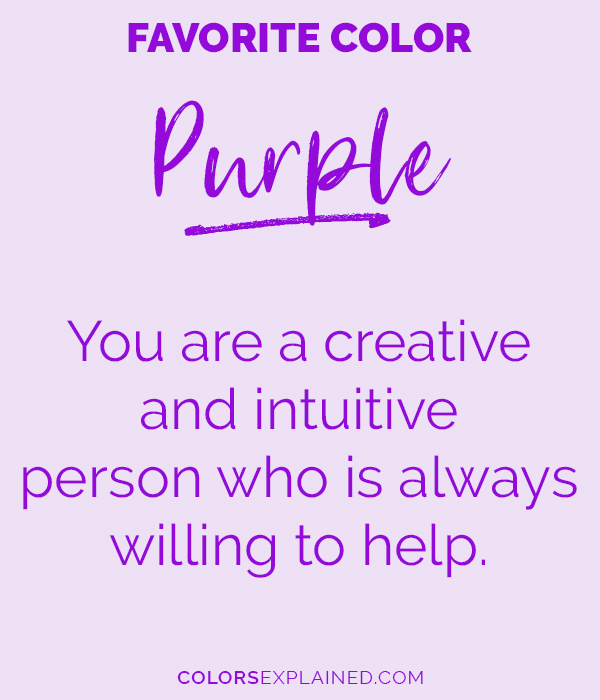
Those who choose purple as their favourite colour are perfectionists who require emotional security in life, and are good humanitarians who help others in need. They have a good mind, a ready wit and an ability to observe things that go unnoticed by others. They have a degree of vanity and display creativity in the fine arts. They relish the subtle but recognise the magnificent with their intuition one of their greatest assets and a chatty and clear little voice inside their heads. A people magnet, their charisma draws everyone to them and others perceive them as visionary and are drawn to their innovative spirit. Their creativity is contagious, making it easy to build teams to execute their grand plans. They take pride in marching to the beat of their drum and being unique and don’t care about fitting in, though they appreciate kindred spirits who choose to zig when everyone else zags.

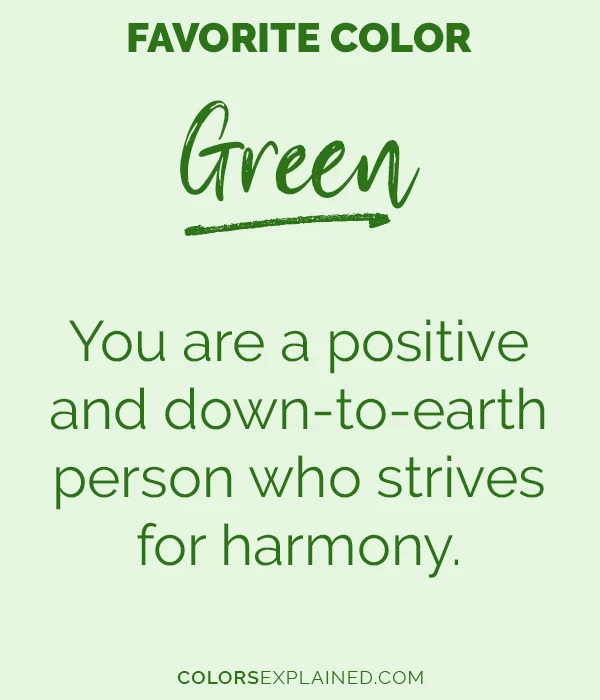
Green

If you have chosen green as the colour you love, you are loyal and consider your reputation as a very important part of your life. You are a good citizen and pillar of the community who is frank, moral, reputable and sensitive to social customs and etiquette. You feel deep affection for your family and have a special connection to nature, it feeds your soul. You dislike chaos and strive for consistency and balance with time management a special strength because you can quickly prioritise. You have business savvy because you target what is most important and delegate what is not and rarely sweat the small stuff as you have a knack for seeing the big picture and understanding multiple points of view. You are admired for your clarity and your objectives and fair outlook of life are respected by those you come in touch with.

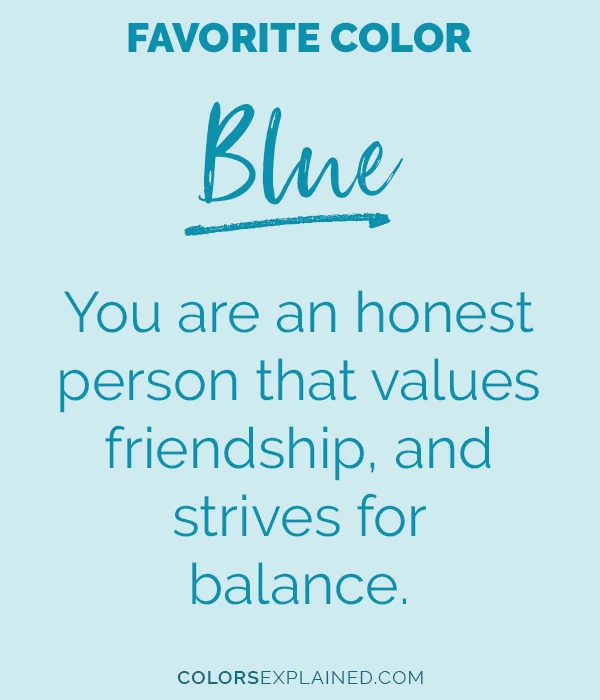
Blue

Those who love blue always make an effort to think of others and their needs. They are deliberate and introspective, have conservative convictions, retreat to gentler surroundings in times of stress and are sensitive to the feelings of others. They are a loyal friend and want to lead a quiet life and want to find inner peace and the absolute truth. They value their close-knit group of friends and family and are loyal, perhaps to a fault. They recognise and put the needs of others first, and find being of service fulfilling, yet don’t allow being taken advantage of or for granted. If tested, they will stand their ground with grace and composure and have a keen sense of fair play and like being in charge of keeping order. Because of their reputation for being trustworthy and good with details, they usually end up with the job of scorekeeper. They endear themselves quickly with their uncanny ability to recall names and titbits of info about others and people remember them for being warm, friendly, and engaging.

Did your favourite colour spell out your personality? I’d love to know in the comments.

Living Authentically: The Courage to Be Yourself

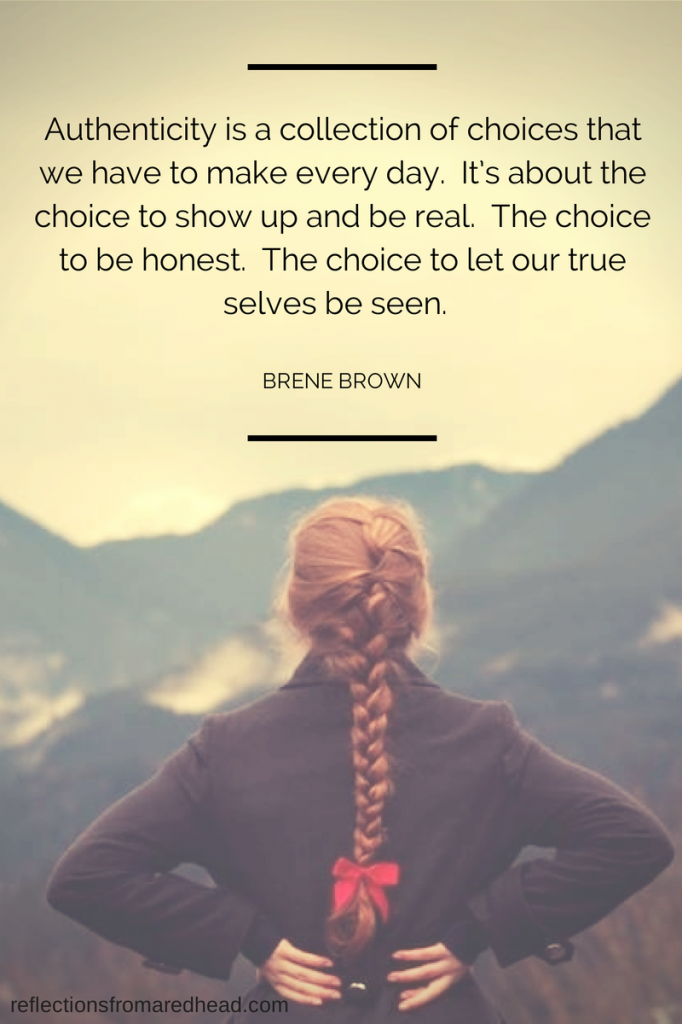
We’ve heard this phase ‘living an authentic life’ quite often now and I was intrigued about what this meant. So I decided to do a bit of research and found out that living authentically essentially means being true to one’s true self and know themselves inside out. Authenticity simply means embracing who you really are, at your very core, and acting in accordance to your own values and beliefs. Being authentic means coming from a real place within, when actions and words are congruent with beliefs and values. An authentic life involves following one’s passion and being intimately connected to our natural abilities, strengths, and talents. Authenticity may come at a cost, yet it typically leads to a richer, more complete life

Living authentically is not stagnant, it is constantly shifting and taking on new forms. We need to be continually learning about ourselves, challenging old beliefs, letting go of baggage we hold, learn to face and overcome fears and doubts. We need to reach deep inside ourselves and find out what makes us tick, what makes us happy, what makes our spirits soar and our heart just grow large, so we can find that part of ourself that is alive, free and unburdened and once we find that, have the courage to live that life. Authentic living requires us to embrace the reality of our freedom and be responsible for how we choose to live.

I personally believe that being authentic and living an authentic life comes about more as one grows older and hopefully wiser, one learns more about their own true self and starts to become more authentic. When one is younger, you tend to become influenced by your parents, family, peers, friends and what you see and read, both online and offline and to a very large extent, this influences your thinking, ideas and even hopes and aspirations with regard to life.

A way to reach our authentic self is to let go from the past and be grounded into the present because it is only then we can be open, curious and accepting of ourselves and others. Also how we perceive our authenticity is a crucial aspect of who we are. Not only does it significantly influence the pleasure we derive from our experiences, but it also affects our judgment and behavior across all aspects of our life. Authenticity and living a complete and fulfilling life are processes rather than outcomes. Living authentically involves moving in a direction that is most authentic to us as individuals.

Modern technology which is so intrusive and intimately connected to all aspects of contemporary existence, can also impact authentic living. As wearable technology continues to revolutionise the health, wellness, and sports sectors, providing previously unknowable biometric information to the general population, they offer, sometimes doubtful promises to enhance users’ lives.

In the long term, putting on an inauthentic front is tiring and ultimately damaging to our mental and physical wellbeing. So how do we go about learning to live an authentic life?

  • We need to become more aware of what is happening within ourselves, both physically and mentally. A stiff neck may be linked to what is going on in the mind, feelings, thoughts, and difficult decisions.
  • Give up the act of living according to what others expect you to act and do. Living a compartmentalised life and presenting a different version of yourself to different people is extremely draining. Live in line with your values and set clear standards for yourself from which you will not deviate from. Then when you stop pleasing everyone, you can achieve true authenticity.
  • We need to start listening to the inner voice rather than losing it in the noise of others’. Learn to listen to your hopes, dreams, and fears and when I say listen, I mean to really listen to what they are and how you will be able to achieve it.
  • Learn to be comfortable with being vulnerable because there is no authenticity where there is no truth, and there is no truth where there is no vulnerability. Honesty and openness are the oxygen for authenticity to thrive and there is no genuineness without a candid dose of reality first.
  • Know yourself inside out, what you are good at, what you are prepared to do, and what you are not. Face up to the truths of who you are. Honesty is not always pleasant, but it has the potential to free you. Be yourself; be honest and transparent in your dealings. People like and are drawn to those they perceive as sincere and genuine and distrust those who are not.
  • In the same vien, own yourself and your truths. Don’t let others push you into their way of thinking, but also don’t stick to views when you are proved wrong or they no longer work for you. Take responsibility for your choices.
  • Focus on the experiences and connections and not on possessions. Relations, especially meaningful relationships add a value to life that the fleeting and ephemeral value of belongings can’t touch. Ultimately, it all boils down to meaning, possessions only have meaning because of the value ascribed to them. When the tastes or standards change, as they are prone to, the meaning associated with the objects shifts. Long story short, there are very few tangible things that add any real value to life, but investing in people pays significant dividends over time.  Life is about experiences and memories, laughter and love, happiness and healing. But none of those things have any meaning without other people. Our legacy will be the lives we touch and the love we leave behind, everything else all fades away with the sands of time. Building a more authentic life means focusing on what matters.
  • Humility and authenticity go hand in hand. As babies, we don’t brag about our achievements, it’s only as we grow up and our egos start to develop, that we start using our achievements to brag about how important we are. To live a more authentic life, approach everything through the lens of humility and curiosity. Become an explorer, feeling your way through the twists and turns of the jungle that is your journey. It all starts with your willingness to take a step back and cultivate modesty.
  • If you want to live a more authentic life, you’ll have to ditch all that made you comfortable living an inauthentic life to begin with. And that means shifting your priorities. Instead of operating based on the expectations of others, learn to trust your own intuition instead. Charting your own course and blazing your own trail can indeed be scary. But at least you’ll know it serves you best because you trust your own instincts. And that’s what genuineness is all about.
  • Act, don’t react, you can’t live an authentic life if you’re constantly riding on the coattails of what other people are doing.  Instead of following along, take the lead. Instead of living according to everyone else’s expectations, embrace your intuition.
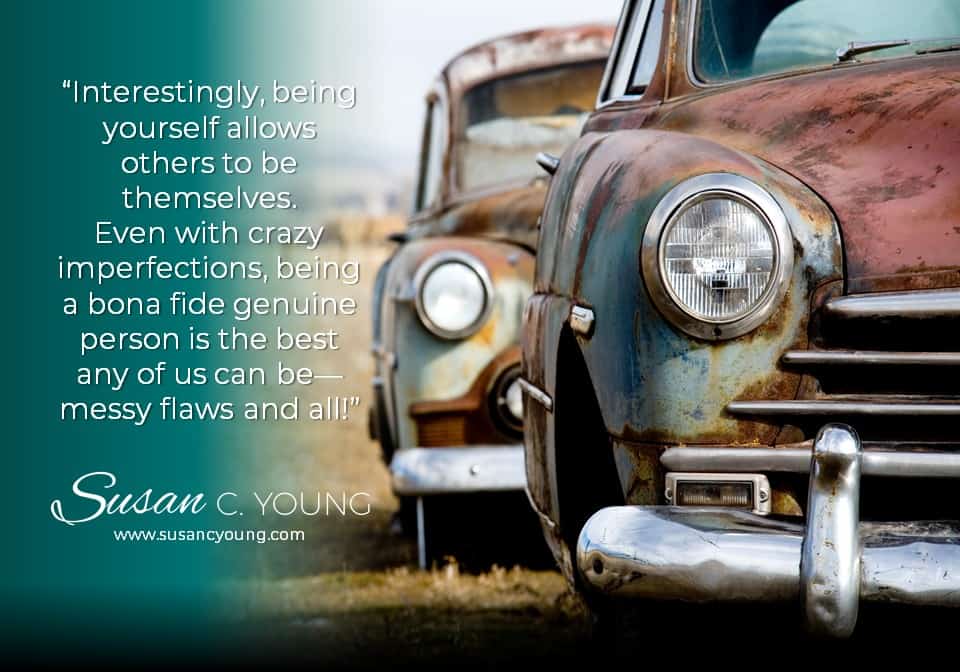
  • Embrace your imperfections. One of the reasons people tend to struggle with authenticity is because they strive for perfection. But perfection is elusive because the bar always gets raised. People tend to drive themselves crazy trying to tweak every little thing about their lives. Accept the messiness and complexity of your reality, that’s what makes for an authentic life.

To check if you are living an authentic life ask yourself the following questions:

  • Do you feel free to make your own choices?
  • Can you express your own views and opinions?
  • Are you able to yourself on a day-to-day basis?

If the answer is No to any of the questions, then reflect on them and also think about this – is this because you are not being true to who you really are?

Also, for those who are parents or will become parents, love your children unconditionally, this means the love is not conditional and does not depend on how the child lives up to a parent’s expectations. Doing this will eventually lead to voices in the head which are constantly critisising and pulling the child down, even when they grow up to become adults.

To live an authentic life, be open to new opportunities and experiences, seek new challenges, and transform the anxiety that forces you to hide into enthusiasm. Engagement can be one of the most positive paths to authenticity. To be real, one must follow their passions while remaining tied intimately to who they are, reflecting their strengths and virtues.

The formula to living authentically is this: Know yourself + Own yourself + Be yourself = The Authentic Life

Music Appreciation: The most potent instrument of education

When I was young, most people I knew had a subscription to a local music sabha. A sabha is supposed to be a congregration or an assembly in ancient India and in the south, a music sabha is a conregration for music lovers, especially during the music season. Close to our home and very close to my grand mother’s home was the music sabha we went to. My grand parents were members and when they moved out of Bombay (when it was still Bombay and had not yet been renamed to Mumbai), my parents took over the membership.

I remember a representative from the sabha would come home once every few months and pass us the membership card along with the sabha schedule for the next few months. This was way before social media and mobile phones, so everything was done manually. This sabha was one of the most prestigiuous sabhas in Bombay at that time. It was established a few years after India’s independence with the aim of promoting the fine arts and provide a platform to showcase various artists in the various areas of the fine arts, especially music, dance and drama.

My parents and grand parents from both sides used to look forward to this programme and we would also be taken to the sabha for a dose of culture and music appreciation. Sometimes when a friend was also going there, we would not mind going, but most times we would rebel. When they could not get us to accompany them, my mum would leave us at my grandmother’s house which was just 2-3 minutes away from the sabha and go and enjoy the concert. We would enjoy the next few hours in the company of friends and when the concert ended, they would come to my grand mother’s house, have dinner and go home. Most of the concerts used to involve classical Carnatic music and dancen and when a distinguished artist was scheduled to perform, people would beg and borrow extra passes so family and friends could also listen and see the artist at play. 

When a distinguished artist was performing, we would all troop down to the sabha and any requests to stay at home would not be entertained as this would be a rare opportunity to hear and see such a distinguished performer. Relatives who stayed in other parts of the city would also make their way and I remember an aunt, my mother’s sister who was herself a singer and had learnt Carnatic music when she was younger would come down, especially if the concert was on a Saturday and stay at her mum’s place so she could attend it. I remember either attending or my parents attending performances by M.S Subbulakshmi among other celebrated artists.

When I just finished school, the sabha was unfortunately destroyed in a devastating fire and for a very long time all performances were stopped while it was being rebuilt. By then, we had all grown up and after a few more years of being members, my parents also gave up their membership and the sabha is now just a distant memory or a place for nostalgia when we pass by it.

Though I didn’t really recognise it then, this forced attendance has help me appreciate music. Though I did learn Carnatic music and my sister learnt Bharatanatyam, as did pretty much every tambram girl I knew, we did not take it up far and gave it up when school got too much for us. But those lessons and the concerts and dance performances we attended gave us a appreciation of what good music was all about. We learnt how to carry a tune and recognise when someone is out of tune. Even today, when I hear music which is even slightly out of tune, even though I may not recognise the raga being played, I know it is not correct and I wince, mostly unconsciously.

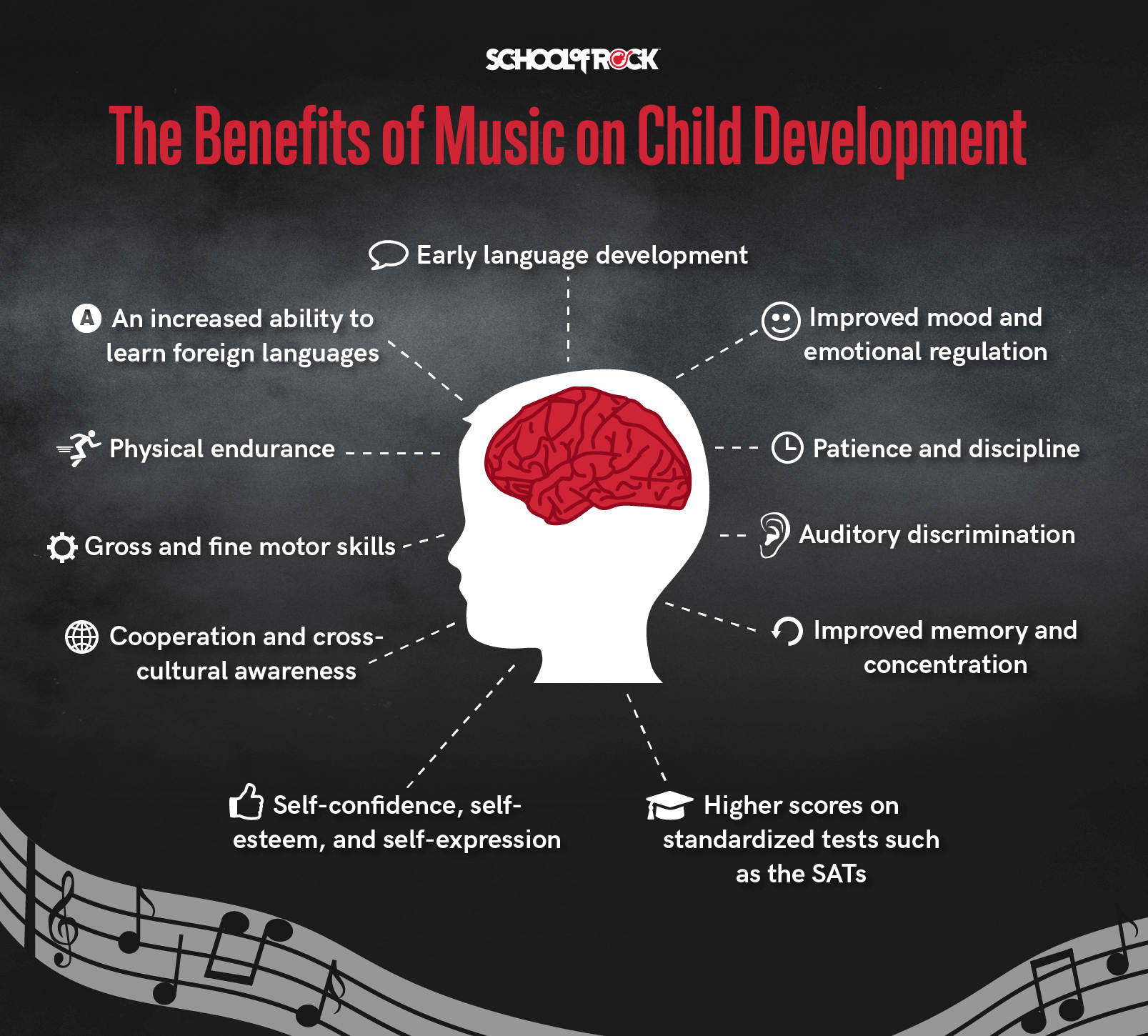
Today, research has confirmed what our parents and grandparents instinctively knew. That when you learn and listen and appreciate good music, it is extremely beneficial, especially to young children. Music is a megavitamin for the brain, the ultimate mood enhancer for emotional balance, a golden key for unlocking creativity, the secret code behind health and longevity, and the connective fiber between human beings of all races, nationalities and generations.

Musical training helps develop language and reasoning as it develops the areas of the brain related to language and reasoning. Children who are exposed to music early are more emotionally developed with empathy towards other cultures and also tend to have a higher self esteem and are better at coping with anxiety. Math and pattern recognition skills are developed with a music education and someone who has learnt music can better detect meaningful, information-bearing elements in sounds. Music also builds the imagination and intellectual curiosity and help foster a positive attitude toward learning and curiosity. An artistic education develops the whole brain and develops a child’s imagination. It is universally known that music helps fight stress and can be incredibly relaxing and also develop spatial intelligence in children.

When I look back in hindsight, I am so thankful to my parents for forcing this on me, even when I could not see it then. At that time, all it meant that going to classical concerts and dance performances meant that my Saturday evenings were being wasted, and I could use that time to play with friends. But today, as I do the same to my children, I realise how much this has benefitted me. GG & BB started learning Carnatic vocal music at about the age of seven. BB dropped it when he was about 12, when puberty hit and his voice started to break, but GG has still continued to learn. When I told her she could drop it if she wanted to, she told me it was very relaxing and wanted to continue. I do believe that these forced lessons have made them appreciate good music, even if their current music taste is not classical. GG also learnt western ballet for almost a decade, but gave it up when school got too much to balance. Today GG continues to sing, both classical and other music while BB, who actually has a good voice and a head for tune, sings very casually, though he will not really admit it.

In My Hands Today…

Can’t Hurt Me: Master Your Mind and Defy the Odds – David Goggins

For David Goggins, childhood was a nightmare — poverty, prejudice, and physical abuse colored his days and haunted his nights. But through self-discipline, mental toughness, and hard work, Goggins transformed himself from a depressed, overweight young man with no future into a U.S. Armed Forces icon and one of the world’s top endurance athletes. The only man in history to complete elite training as a Navy SEAL, Army Ranger, and Air Force Tactical Air Controller, he went on to set records in numerous endurance events, inspiring Outside magazine to name him “The Fittest (Real) Man in America.”

In Can’t Hurt Me, he shares his astonishing life story and reveals that most of us tap into only 40% of our capabilities. Goggins calls this The 40% Rule, and his story illuminates a path that anyone can follow to push past pain, demolish fear, and reach their full potential.