International Self-Care Day is observed on 24 July. The date is deliberate: 24/7, a reminder that care for oneself is not meant to be occasional or dramatic but woven into daily life. The International Self-Care Foundation uses that simple numerical symmetry to reinforce a straightforward point: self-care is ongoing, not seasonal. It is an appealing idea. It is also one that many people misunderstand.
Some hear “self-care” and think of spa vouchers, expensive skincare, gym memberships, and curated morning routines. Others hear it and switch off entirely because it sounds indulgent, vague, or commercial. In conversations around me, the most common misconception is this: self-care means spending money. If you are not buying, booking, or upgrading something, then you are not caring for yourself. That assumption deserves scrutiny.
Self-care, at its core, has nothing to do with consumerism. It is about maintenance. It is about preserving function. It is about the ordinary decisions that prevent collapse. The World Health Organisation defines self-care as the ability of individuals to promote health, prevent disease, maintain health, and cope with illness, with or without professional support. That definition is practical and unsentimental. It includes sleep. Food. Hygiene. Medication. Boundaries. Knowing when you need help. It does not require scented candles. So perhaps International Self-Care Day is less about treating yourself and more about asking a sharper question: Am I quietly making my own life harder than it needs to be?
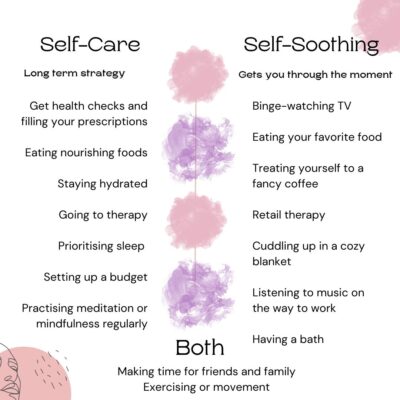
Self-care is not self-soothing
Before going further, it helps to draw a distinction that often gets blurred. Self-soothing is about immediate comfort. It calms distress in the moment. Watching a series after a long day. Ordering takeaway when you are exhausted. Scrolling aimlessly to avoid thinking about something difficult. These behaviours can be understandable responses to stress. They are not inherently wrong.
Self-care is about long-term stability. It might not feel as comforting in the moment. Going to bed on time instead of watching another episode. Cooking a simple meal instead of defaulting to convenience. Having a difficult conversation instead of letting resentment build. Booking a health check you have been postponing. Turning down an invitation because you are already stretched.
Self-soothing reduces discomfort now. Self-care reduces damage later. Both have a place. A life without comfort would be joyless. But when comfort consistently undermines stability, it stops being care. If every evening ends in exhaustion because you traded sleep for distraction, that is not self-care. If every week is overloaded because you cannot decline requests, that is not generosity; it is depletion.
A useful test is this: Will this decision make tomorrow easier or harder? That question removes the aesthetic layer and gets to the logic underneath.

Why self-care matters more than we admit
It is tempting to frame self-care as something gentle and optional. In reality, it is strategic. Bodies and minds adapt to what you repeatedly expose them to. If you normalise chronic sleep deprivation, your baseline mood shifts. If you treat stress as inevitable and unchangeable, your tolerance narrows. If you postpone preventive care, small issues compound quietly.
In many global cities, including places like Singapore, where long working hours and commuting time are common, the rhythm of life can become relentless without anyone intending harm. Work extends into evenings through messages. Family obligations overlap with professional responsibilities. Weekends disappear into errands. No single demand seems unreasonable. The accumulation becomes the problem.
Self-care interrupts accumulation. It protects capacity. When you are rested, fed, and not constantly overstimulated, your reactions soften. You are less brittle. You make fewer impulsive decisions. You recover from setbacks faster. Relationships improve not because you become perfect, but because you are less depleted.
There is also a quieter benefit: perspective. Exhaustion narrows thinking. Everything feels urgent. Everything feels personal. When you are steadier, problems shrink to their actual size. Self-care does not remove difficulty. It prevents avoidable difficulty.

The consumer myth
If the loudest version of self-care involves products and services, it is reasonable that people assume it is expensive. Wellness has become an industry. But maintenance does not require merchandise.
Consider what costs nothing:
- Going to bed 30 minutes earlier.
- Drinking water regularly.
- Stepping outside for 10 minutes of daylight.
- Declining one unnecessary commitment.
- Stretching before sleep.
- Turning off notifications for an hour.
- Planning three simple meals for the week.
None of these actions are glamorous. None of them photograph well. All of them have a measurable impact. When self-care becomes transactional, it risks excluding people who do not have spare income or time. That distortion is worth correcting. Care is not a luxury tier. It is baseline.

Habit problem or life problem?
Here is a necessary counterpoint. Not every struggle is a self-care failure. Sometimes what feels like a discipline issue is actually a structural issue. If your workload is objectively unreasonable, perfect routines will only help you endure it slightly better. If a relationship is chronically draining, better sleep will not fix the dynamic. If your environment is constantly overstimulating, mindfulness exercises alone may not compensate.
A clarifying question helps: If I practised solid self-care for two weeks, would the core strain still be there? If the answer is no, you likely need habit adjustments. If the answer is yes, you may need boundaries, delegation, renegotiation, or longer-term change.
This is not about dramatic life overhauls. It is about accuracy. Self-care should not become a way to tolerate what should be changed.
Prioritising self-care without making it complicated
When life is full, the instinct is to overhaul everything. That rarely works. A more reliable approach is a sequence. Start with three tiers:
- Tier 1 Stability: Sleep, regular meals, basic movement, and essential appointments. These are not optional extras. Protect them first.
- Tier 2 Friction reduction: One small system that makes weekdays easier. Preparing clothes the night before. Pre-deciding breakfast. Blocking focused work time. Simplifying social commitments.
- Tier 3 Restoration: Activities that refill you, like reading, walking, prayer or reflection if that is part of your life, unhurried conversations, and hobbies.
Choose one action from each tier. Not five. Not ten. One. Maintain that for two weeks before adding anything else. This keeps self-care from becoming another ambitious project that collapses under its own weight.
Self-care across life seasons
The shape of self-care changes depending on where you are.
Students: For students, self-care often means structure rather than indulgence. Consistent sleep before exams. Breaking the study into focused blocks. Taking short walks to clear cognitive fatigue. Reducing comparisons on social media. It is less about spa days and more about cognitive sustainability.
Early-career professionals: Here, the temptation is to prove yourself through overextension. Self-care might look like learning to leave on time occasionally, protecting one evening a week from work, and recognising that burnout is not a badge of ambition.
Mid-career professionals: Responsibilities compound here. Work, ageing parents, children, and financial planning. Self-care may require renegotiating expectations. Delegating where possible. Accepting that you cannot attend every event. Letting go of perfection in some areas to preserve energy in others.
Caregivers: For caregivers, self-care is often the hardest to justify. Yet without it, capacity collapses. It might mean arranging short relief windows, even if imperfect. It might mean maintaining one social connection outside caregiving. It might mean asking for help before resentment builds.
Across all seasons, the principle is similar: reduce avoidable strain, preserve energy, and prevent compounding damage.
Practical ways to embed self-care into a busy life
Grand gestures are unreliable. Small placement works better.
- Attach care to existing routines: Stretch while waiting for the kettle. Walk during phone calls. Reflect during a commute rather than scrolling. Insert care where it fits naturally.
- Protect sleep with intention: Treat bedtime as an appointment. Not a reward after productivity, but a foundation for it.
- Simplify decisions: Decision fatigue drains energy. Repeatable meals. Fixed grocery lists. Pre-planned workout days. Remove unnecessary variation.
- Use language carefully: Instead of saying “I should exercise,” say “I need to move so I feel better tomorrow.” The shift sounds small, but it reframes care as functional, not moral.
- Limit exposure: Not every notification deserves attention. Not every debate deserves your participation. Curating input is a form of self-care.
- Normalise asking for support quietly: If stress persists, seeking guidance from a counsellor, GP, or trusted advisor is not a failure. It is maintenance at a different level. Softer phrasing does not reduce its importance.

Underwriting self-care into your life
Perhaps the most honest way to think about self-care is this: it is less about optimisation and more about attention. It is the quiet habit of noticing when something feels strained and choosing not to ignore it. Not everything can be fixed immediately. Not every demand can be removed. But there is dignity in responding thoughtfully rather than reactively. A little more sleep. A little less noise. One fewer unnecessary obligation. Care rarely announces itself loudly. It accumulates, quietly shaping the texture of ordinary days. And over time, that texture matters more than any grand gesture ever could.