Mumbai Memories: Calling Her by Name

Tamil kinship terminology is among the most nuanced in the world, distinguishing not only between maternal and paternal relatives but also between older and younger siblings, in-laws, and even parallel and cross cousins. Within this system, “manni” specifically denotes the wife of an elder brother. Other names are Anna, who is the older brother; chitappa, your father’s younger brother or your mother’s younger sister’s husband; and chitti, the wife of your father’s younger brother or your mother’s younger sister. Athai is your father’s sister, and Athimber is her husband. “Athimber” could also refer to the husband of your older sister. The use of these terms is not arbitrary but is deeply embedded in the social fabric, reinforcing respect, hierarchy, and the roles expected of each family member.

The “manni” traditionally occupies a unique position. She is often seen as a secondary maternal figure to her husband’s younger siblings, especially in large joint families. The respect accorded to her is both a reflection of her status as the wife of the eldest son and a recognition of her role in maintaining familial harmony and upholding traditions.

In the patriarchal structure of Tamil Brahmin families, the use of kinship terms such as “manni” is a way of codifying respect and maintaining the social order. The elder brother’s wife is, by her position, to be respected, and the term “manni” is both an acknowledgement of her seniority and a subtle reinforcement of the family hierarchy. This practice also reflects gendered expectations. While the elder brother commands respect as “Anna,” his wife, as “Manni,” is expected to embody dignity, authority, and nurturing, often mediating between the younger siblings and the older generation.

Tamil Brahmin families, especially the Iyers and Iyengars, have historically been fastidious about ritual purity and the correct observance of customs. The use of proper kinship terms was, and in some cases still is, considered part of this ritual correctness. Addressing the elder brother’s wife by her name, rather than as “manni,” could be seen as a breach of decorum, potentially undermining the carefully maintained social order.

However, the latter part of the 20th century saw significant social and economic changes. Urbanisation, the rise of nuclear families, and increased exposure to cosmopolitan values began to erode the rigid hierarchies of the past. As families became smaller and more egalitarian, the need to maintain strict forms of address diminished. Younger generations, influenced by modern education and global culture, began to prioritise individual identity and personal relationships over traditional roles.

My mother’s paternal family is large, and as I have mentioned previously, they lived in a joint family for years before each brother moved out. Even though they moved out, the old joint family home was still the family headquarters, and connections between cousins were very tight. Also, as most tambram families were in the sixties and seventies in Mumbai, they were still conservative and held on tightly to their rituals and culture, especially with the second generation, who were, for the most part, born and lived in the bustling metropolis that Bombay was becoming.

In this context, and this is something I only realised recently, was the fact that none of the cousins called their brother’s wives “Manni.” Instead, they used her given name. Growing up, I thought this was normal and never gave it a second thought. But when I thought about this recently, I thought this was something so liberal and progressive. None of the older generation objected to this, and I am guessing none of the new brides, especially the first one, insisted on being called “manni!” And this percolated to how I perceived relationship nomenclature.

When I got married, S’s younger sister called me “Manni” and still calls me that, even after all these years, even though I told her to call me by my given name. Some of S’s cousins started by calling me manni and then shifted to my given name, while some others call me akka, which means older sister. I am ok with either “manni,” my name, or akka, as I believe at the end of the day, it’s the respect that’s more important, rather than what you are called.

Addressing sisters-in-law by name, rather than as “manni,” can be seen as a subtle but powerful assertion of equality. It signals a move away from rigid hierarchies and towards relationships based on mutual respect and personal connection.

Tamil Brahmin identity has undergone a profound transformation over the past century. Once defined by strict adherence to ritual, vegetarianism, and caste-based hierarchies, the community has become increasingly cosmopolitan, embracing modernity and global values. The decline of practices such as addressing the elder brother’s wife as “manni” is part of this broader shift. Women in Tamil Brahmin families have played a crucial role in this transformation. As they gained access to education and employment, their roles within the family and society changed dramatically. The authority of the “manni” was no longer derived solely from her position as the elder brother’s wife but from her own achievements and personality.

Ultimately, the choice of how to address a sister-in-law is a personal one, shaped by family dynamics, individual preferences, and broader social trends. What matters most is the quality of the relationship, not the form of address.

Mumbai Memories: The Ambi Phenomenon

All his life, even today in fact, my father has been called ‘Ambi’ by his family and neighbours. So much so that when I was younger, I used to think this was his name. Why? In Tamil Brahmin culture, the term ‘Ambi’ has traditionally been used to refer to the oldest son in a family, a title that carries with it a sense of affection and respect.

The Tamil Brahmin community is known for its rich cultural heritage and adherence to traditional practices. The term ‘Ambi’ likely derives from the word “Amba,” which means mother or goddess in Sanskrit, signifying a connection to nurturing and familial roles. In many families, the firstborn son would be affectionately called ‘Ambi,’ symbolising his position as the primary heir and caretaker within the family unit.

Historically, Tamil Brahmin families have followed strict naming conventions. The firstborn son is often named after his paternal grandfather, while subsequent children may receive names based on familial traditions or characteristics. This practice not only preserves lineage but also reinforces social structures within the community.

The title ‘Ambi’ has implications beyond mere nomenclature; it embodies a set of expectations and responsibilities. As the eldest son, the Ambi is often seen as a leader within the family. He is expected to uphold family traditions, participate in religious rituals, and act as a mediator during disputes. This role is particularly significant in joint family systems common among Tamil Brahmins, where multiple generations live together under one roof.

In many households, the Ambi is also viewed as a bridge between the older and younger generations. He often helps younger siblings navigate societal expectations while maintaining respect for traditional values. This dynamic fosters a sense of unity within families, as the Ambi becomes a central figure around whom family gatherings revolve.

My father, though born to the middle son, was the oldest son of his generation. There were girls born before him, but none of his uncles or aunts had any sons until he was born. So he was the designated ‘Ambi’ in his family. Not only did his extended family call him Ambi, but he was also known as Ambi to the tambram residents in our building. Unfortunately, this practice is now hardly being used. If it were, both S and BB would also be Ambis as they both are the oldest boys in their generation.

The cultural significance of ‘Ambi’ extends into various facets of Tamil Brahmin life. The title signifies love and respect from both parents and relatives. It is not uncommon for children to refer to their uncles or older male relatives as ‘Ambi,’ emphasising the term’s affectionate connotation. Being an Ambi can enhance one’s status among peers within social gatherings. It often comes with expectations of leadership in community events or family functions. The name carries with it a sense of legacy. Many families have multiple generations with members named Ambi or variations thereof (like Chinnambi for younger siblings), showcasing how this tradition persists through time.

Today, with increasing numbers of nuclear families replacing joint family systems, the role of an Ambi may hold a different weight than it once did. However, many still find comfort in these traditional titles as they navigate their identities in a rapidly changing world.

The phenomenon of calling the eldest boy ‘Ambi’ in Tamil Brahmin families encapsulates much more than just a name; it represents deep-rooted cultural values that emphasise respect, responsibility, and familial unity. While modern influences may alter its usage or significance over time, the essence of what it means to be an Ambi remains an integral part of Tamil Brahmin identity.

For future generations, it will be interesting to see how this tradition adapts while still honouring its historical roots. The enduring affection associated with ‘Ambi’ serves as a reminder of the importance of family ties and cultural heritage in shaping individual identities within this vibrant community.

Recipes: Chana Dal Sundal

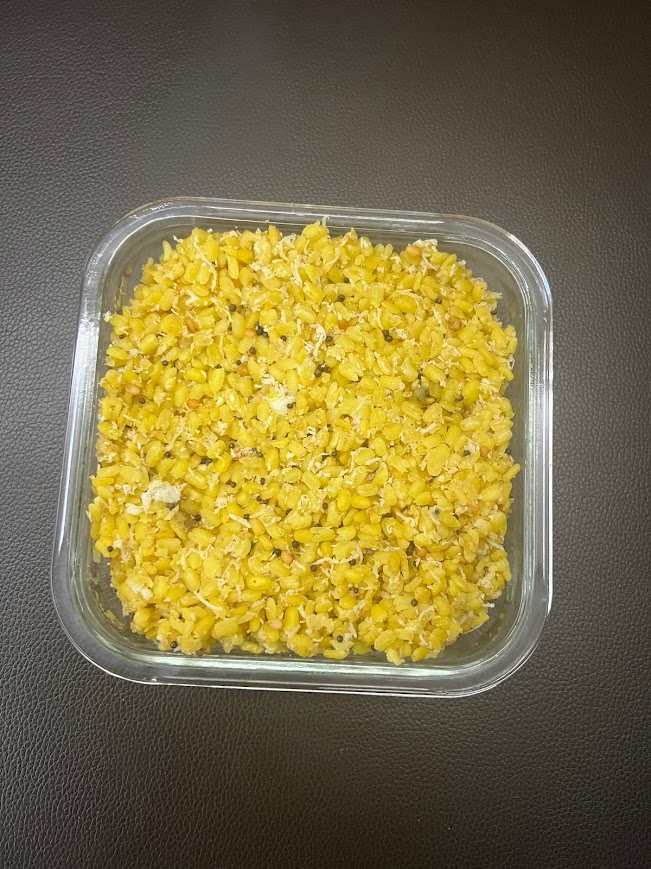
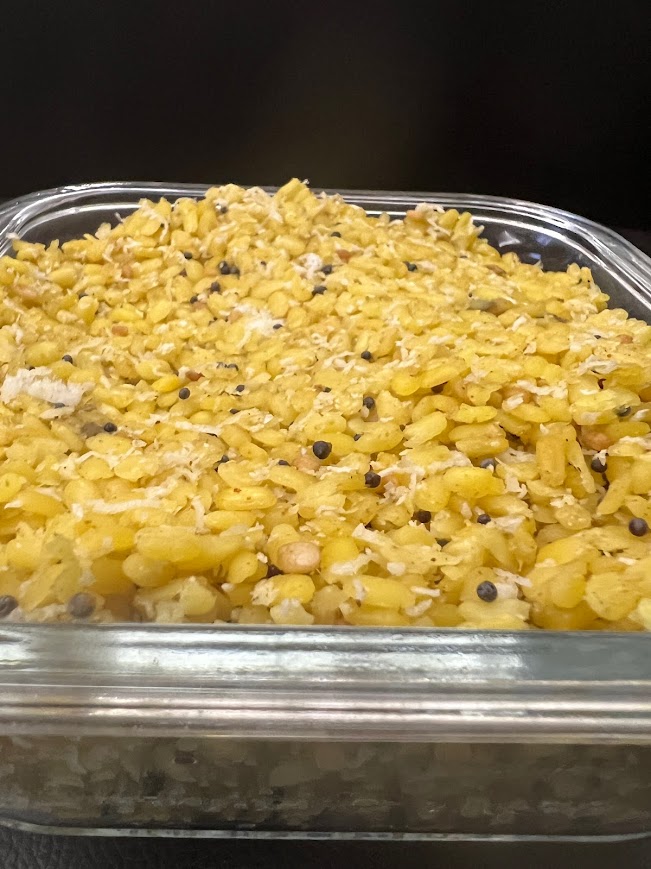
During the festival of Navaratri, I usually make something as an offering or prasadam to the goddess every day. In previous years, I have also made a sweet to go along with the sundal, but this year, because I have to go to work in the morning, I have been making only sundals as an offering.

Chana Dal Sundal is made from split chickpeas or chana dal which is healthy and protein-rich. And the best part about sundals is that you can make it in under 10 minutes, which is such a time saver when you are rushing in the morning!

Chana Dal Sundal

Ingredients:

  • 1 cup chana dal or split chickpeas
  • 2 tbsp oil or ghee
  • ½ tsp mustard seeds
  • ½ tsp split urad dal
  • ¼ tsp asafoetida
  • 2-3 dried red chillies, broken into pieces
  • 10-12 curry leaves, torn
  • 2 tbsp grated coconut, fresh or desiccated
  • Lemon juice to taste
  • Salt to taste
  • Coriander leaves to garnish

Method:

  • Wash the chana dal thoroughly under running water, and then soak it in 2 cups of water for 2-3 hours. After soaking, drain the water and set the chana dal aside.
  • Cook the chana dal with fresh water and a pinch of salt until it is just cooked. We don’t want it cooked like a dal, just until a piece can get crushed between your thumb and index finger.
  • Heat oil in a pan or kadai over medium heat.
  • Add mustard seeds and let them splutter. Then add urad dal, asafoetida, dried red chillies, and curry leaves. Sauté for a minute until the spices release their aroma.
  • Add the cooked chana dal and salt to the pan. Stir well to coat the dal with the tempered spices.
  • Reduce the heat to low and cook the chana dal, stirring frequently, for about 5 minutes.
  • Add the grated coconut and stir well.
  • Turn off the heat, drizzle with lemon juice and stir well.
  • Garnish with coriander leaves and serve hot or cold.

Other Navaratri Sundal recipes: Green Moong Sundal, Green Peas Sundal, Peanut Sundal, Sweet Corn Sundal, Chickpea Sundal

Recipes: Kadamba Kuzhambu

This is another typical recipe which is usually served in temples. It is a no-onion, no-garlic recipe. My mother was talking about this recipe and so I got her to make it while she was here. In Tamil, Kadamba means mixed and this can be eaten as a sambar or a gravy which makes this dish very versatile. The masala is similar to arachavitta sambar and the vegetables are cut similarly to how we cut them for avial. You can use pretty much all root vegetables, including pumpkin, potatoes, sweet potatoes, carrots, drumsticks, raw bananas, beans etc. This was the first time I made this and it was so yummy.

Kadamba Kuzhambu

Ingredients:

  • 2 raw bananas, cut into bite-sized pieces
  • 2 potatoes, cut into bite-sized pieces
  • 1 sweet potato, cut into bite-sized pieces
  • 2 carrots, cut into bite-sized pieces
  • 2 drumsticks, cut into bite-sized pieces
  • 1 small piece of white pumpkin, cut into bite-sized pieces
  • 1 tsp mustard seeds
  • 5-6 curry leaves
  • 1½ tbsp + 1 tsp chana dal
  • 2½ tbsp coriander seeds
  • 10-12 dried red chillies
  • ½ cup fresh coconut
  • 1 lemon-sized ball of tamarind, soaked in hot water for 30 minutes
  • ½ cup toor dal, soaked for 20 minutes
  • 1 tbsp oil
  • Finely chopped coriander leaves to garnish
  • 2 tsp jaggery powder
  • ½ tsp turmeric powder
  • 2 tsp sambar powder (optional)
  • Salt to taste

Method:

  • In a small pressure cooker, pressure cook the toor dal with ¼ tsp turmeric powder till it is soft and the dal has broken down completely. This usually will take around 3 whistles in the cooker. When the pressure reduces, open the cover of the cooker and then whisk the dal well. Keep aside.
  • Mash the tamarind when it becomes cool to touch and then squeeze the tamarind and drain the water so the fibres get separated and you have the water. Alternatively, use 3-4 tbsp tamarind paste which you can get at any Indian store.
  • In a pan, dry roast 8-10 dried red chillies, 1½ tbsp chana dal and 2½ tbsp coriander seeds and once the seeds start to brown, add in the coconut and roast, stirring continuously, until the coconut loses moisture and turns brown. Remove from the flame, and let it cool completely and then grind to a fine powder and keep aside.
  • Heat oil in the same pan and when the oil heats up, add in the mustard seeds, balance chana dal and dried red chillies which have been broken into 2-3 pieces each. Let the mustard seeds splutter and then add the chopped and washed vegetables.
  • Now add the balance of turmeric powder and sambar powder and let the vegetables cook for about 5 minutes. When the vegetables are almost cooked, add the tamarind water and salt as required. You can also add in the jaggery powder if you are using it at this point. Let the water come to a boil and let it simmer for another five minutes.
  • Next, add the cooked dal and the ground powder and mix well. At this point, check for seasoning and add if anything is missing. You can also add extra water if the kuzambu is still thick.
  • Let it come to a boil and let it boil for five minutes.
  • Garnish with finely chopped coriander leaves and shut off the flame. Let it stay covered for 10 minutes for the flavours to infuse and serve hot with rice.

Recipes: Vazhakai Podimas

A very traditional tambram dish, Vazhakai Podimas is a healthy plantain stir fry which barely uses any oil. So this is a very good alternative for those who want to eat green bananas, but don’t want to fry them.

Vazhakai Podimas

Ingredients:

  • 4 medium-sized raw bananas
  • 4 tbsp grated coconut
  • 1 tbsp grated ginger
  • 1 tbsp oil or ghee
  • 1 tsp mustard seeds
  • 1 tbsp split urad dal
  • 1 tsp green chilli paste or 2 green chillies, chopped
  • 3-4 curry leaves, torn
  • 1-2 tsp lemon juice
  • Salt to taste

Method:

  • Wash the raw banana and discard the top and bottom. Cut the bananas into 2-3 large pieces.
  • In a large pan heat water and once the water comes to a rolling boil add the raw bananas and cook them for about 5-6 minutes until the bananas are cooked. You can also steam the bananas.  
  • Once the bananas are cooked evenly and the skin darkens, remove them from the water and peel the skin. Because it is fully cooked, the skin should come off easily.
  • Take out the cooked raw bananas from the water and allow them to cool completely. Peel the skin and grate them after peeling.
  • Now add the grated ginger, coconut and salt and gently mix so the grated raw banana does not get mushy.
  • Heat the oil or ghee in a pan. Once the oil is warm, add the mustard seeds and let them splutter. At this point, add the urad dal and let the dal slightly brown.
  • Then add the green chilli paste or green chilles and curry leaves and stir well.
  • At this point, add the grated bananas which has been mixed with ginger, coconut and salt and mix gently so the tempering is mixed with the vegetable.
  • Drizzle some lemon juice and serve hot with any south Indian meal like sambar or rasam.