
By their very definition and age, teens tend to be self-centred and when they are in this phase, they tend to be rude and curt to people around them, including parents and this, in turn, makes people think, they are being disrespectful. But this a phase, which they outgrow once they become older and thus, more mature and learn to navigate the pitfalls of social conversations.
While I won’t say BB & GG are outright disrespectful, they do, at times, push as many buttons as they can, to see how much they can get away with. I looked and searched online for ideas I can implement at home to nip this in the bud and at the same time, teach them life skills.
We have to understand that this is happening to pretty much every child who enters the teenage years and so as parents and rational adults, we need to tackle this calmly without really reacting to their rude behaviour. They will try and push boundaries, it’s in their blood, but remember, we do not stoop to their level and react and act like them.
Focus on the behaviour and not on the person behaving and set clear rules on what constitutes good behaviour. Also, make sure your teen knows the consequences of bad behaviour and make sure you go through on those consequences when rules are broken.
Be a role model to your child, model the same behaviour you want to see in your child
Ignore mild forms of disrespect. It’s best to ignore mild forms of disrespect like rolling eyes, not replying to questions, shrugging shoulders etc. Ignoring such behaviour will let them know that you don’t give importance to such behaviour and hopefully, this kind of behaviour will peter off gradually.
Speak to them, often and even when they are uncommunicative. I always ask GG & BB how their day was and more often than not, the response I get is either, ‘the usual’ or ‘nothing much’. I don’t give up and sit and ask them in detail and with this try to open communication channels between us. It’s easier with GG (maybe because she is a girl) than BB, but I am not giving up and hope there will be a day when he is as much a chatty Kathy as GG is.
Hope these tips are useful for you when you are dealing with an uncommunicative and unresponsive teen. Do comment below on how you deal with your teen!



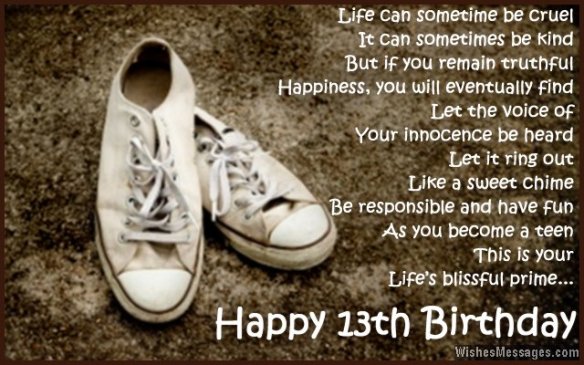
 GG & BB, my wishes for you both are that you both lead happy, contented and fulfilled lives. There are not many years left when you will leave these teen years behind and become full-fledged adults and have all the responsibilities that come with it. Use these years wisely, read as much as you can, grow your mind, work hard in school to achieve the goals you set out for yourselves, enjoy life with family and friends and most importantly have loads of fun while doing all this.
 Sibling rivalry is a fact of life – ask any parent with more than one child and you will definitely hear episodes of sibling rivalry between their children. No parent would distinguish between their children or play favourites, but in spite of all this, there will be times when one child will accuse the parent of favouring the other instead of them. Bringing up twins is no different. From the time BB & GG were babies, we’ve been very scrupulous in making sure we make no distinction between the two. Even clothes, gifts, books and toys were brought for equal amounts. I used to be very particular that anything I brought for any of them had to be of almost equal cost, even if BB & GG were too young to know any better.
 But, even when we were so particular about making sure they both didn’t fight much, we were unsuccessful there. GG was the more assertive one, growing up and BB used to give in to his sister most of the time.
 From the time they were born, BB & GG have been compared, consciously or unconsciously, by everyone for every single thing they did – who turned first, who spoke the first word, who walked first, and so on and so forth! Even I used to subconsciously compare them in terms of milestones met, even when I didn’t consciously want to do it. When they went to kindergarten, in the initial months, they were in the same class and this continued even in school. Even after they were separated into different classes, both in pre-school as well as in primary school, teachers would try to compare their abilities, more because each was strong in a particular subject, which the other may be weak in. It was only when they reached secondary school and went to different schools (which was a tragedy initially and then turned into a blessing). In secondary school, GG has come out of her brother’s academic shadow and has blossomed, in both academics as well as in her CCA and has a leadership position in the school.
 There are times when I tell them to something, for example, switch off their phone and do work, the immediate response would be “what about (the other person)? Has (BB/GG) switched off the phone? He/she is still using it”. It shows up at times when we tell them off for doing something wrong or when one is sulking while being scolded.
 Stop being a referee. When the children are very young, you can referee them, so that fights do not get physical. But as they grow older, stop being the referee. Set rules about physical touching and then unless they are about to hurt themselves, let them resolve their differences on their own. As part of this, make sure they know the consequences of their actions. Fighting may and will lead to the withdrawal of privileges – especially when dealing with teens – take away things that matter to them, like phones and laptops.
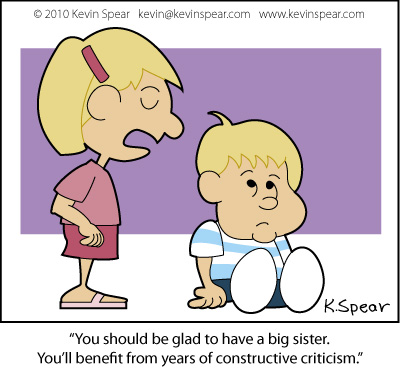 These are some tips on how a parent can minimise sibling rivalry between their children. But at the end of the day, every child is unique, so use the tips that work for your child. Maybe one or more or even none work with them. If you have some other tips that work for your children, I’d love to hear about them in the comments section.
 Memories and Such