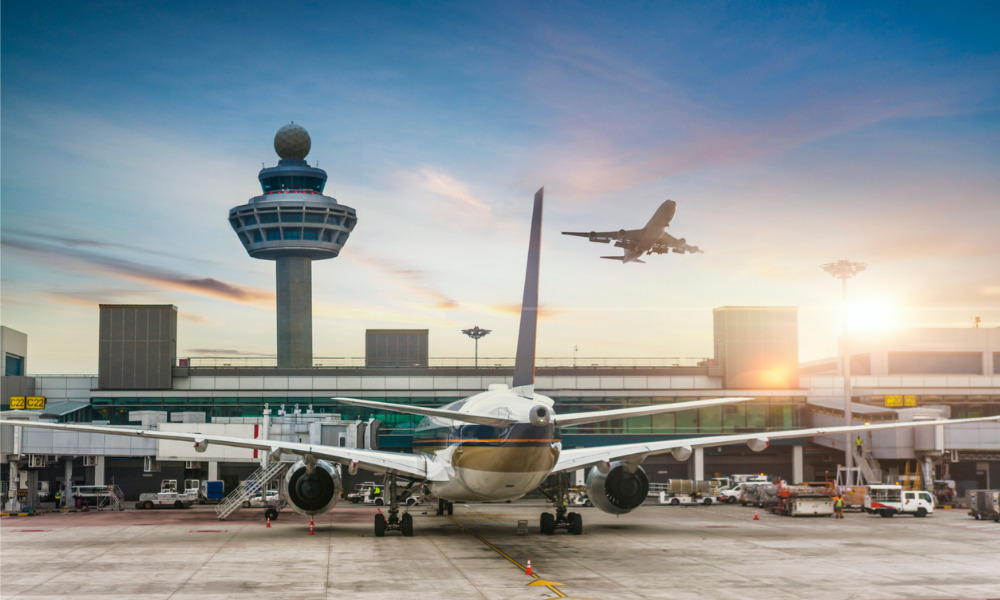
International Civil Aviation Day

Like most toddlers, BB was fascinated by planes, but unlike most boys, this fascination has carried on as he grew up and has propelled him to his area of study and where he is today. But today, with the airline industry in shambles due to the ongoing pandemic, I wonder if he will continue in this field or will make a pivot, but that’s a topic for another day. So, when I heard about this day devoted to civil aviation, I knew I had to find out more.

Tomorrow is the International Civil Aviation Day which has been celebrated on 07 December each year since 1994 by the International Civil Aviation Organisation or ICAO. The ICAO is an autonomous UN Body accountable for keeping up with the safety standards of international aviation. The date was chosen because December 07 1994 was the 50th anniversary of the signing of the Convention on International Civil Aviation. The Convention on International Civil Aviation, also known more popularly as the Chicago Convention, was signed by delegates from 54 countries. This defining international agreement has since permitted the global civil aviation system to develop peacefully and in a manner benefitting all peoples and nations of the world. The purpose of the day is to recognise the importance of aviation, especially international air travel, to the social and economic development of the world and the day is intended is to help generate and reinforce worldwide awareness of the importance of international civil aviation to the social and economic development of countries, and of the unique role of ICAO in helping countries to cooperate and realise a global rapid transit network at the service of all mankind. The importance of aviation as an engine of global connectivity has never been more relevant to look to international flight as a fundamental enabler of global peace and prosperity.

Seventy-five years after ICAO’s foundation, the International Civil Aviation network carries over four billion passengers annually. The global Air Transport sector supports 65.5 million jobs and USD 2.7 trillion in global economic activity, with over 10 million women and men working within the industry to ensure 120,000 flights and 12 million passengers a day are carried safely to their destinations. The wider supply chain, flow-on impacts and jobs in tourism made possible by air transport show that at least 65.5 million jobs and 3.6 per cent of global economic activity are supported by the aviation industry according to research by the Air Transport Action Group (ATAG).
Civil aviation, which includes all non-military aviation, both private and commercial plays a key role in human affairs. It lets us discover our world’s wondrous geographic and cultural diversity, enables us to learn about and benefit from each other and connects societies through global travel and trade, advancing access to food, education and healthcare. Today COVID-19 has severed international connections by air, cut off businesses from clients, kept tourists from destinations and disproportionately affected the vulnerable, it has also disrupted the operations and finances of airlines and airports worldwide, threatening their capacity to assure the global supply of medicines, vaccines, humanitarian aid and other vital goods. Aviation is also an energy-guzzling industry with emissions from the industry accounting for more than 2% of the global total, ranking it in the top ten emitters, so this time can be spent in thinking of ways to make the industry greener.
Every five years, coinciding with ICAO anniversaries, the ICAO council establishes a special anniversary theme for International Civil Aviation Day. Between these anniversary years, Council representatives select a single theme for the full four-year intervening period. The theme until 2023 is Advancing Innovation for Global Aviation Development. Aviation is an important engine of our world and will be playing a critical role in lifting the world to recovery from COVID-19. It connects us and allows us to meet family and friends and also broaden our horizons and our minds. To everyone in this industry, especially in these trying times, here’s hoping that times change for the better and the skies are once again filled with planes transporting people and goods across the seas and land.

In My Hands Today…

The Sun Is a Compass: A 4,000-Mile Journey into the Alaskan Wilds – Caroline Van Hemert

During graduate school, as she conducted experiments on the peculiarly misshapen beaks of chickadees, ornithologist Caroline Van Hemert began to feel stifled in the isolated, sterile environment of the lab. Worried that she was losing her passion for the scientific research she once loved, she was compelled to experience wildness again, to be guided by the sounds of birds and to follow the trails of animals.

In March of 2012, she and her husband set off on a 4,000-mile wilderness journey from the Pacific rainforest to the Alaskan Arctic, traveling by rowboat, ski, foot, raft, and canoe. Together, they survived harrowing dangers while also experiencing incredible moments of joy and grace — migrating birds silhouetted against the moon, the steamy breath of caribou, and the bond that comes from sharing such experiences.

In My Hands Today…

North Korea Undercover: Inside the World’s Most Secret State – John Sweeney

North Korea is like no other tyranny on earth. It is Orwell’s 1984 made reality.

The regime controls the flow of information to its citizens, pouring relentless propaganda through omnipresent loud speakers. Free speech is an illusion: one word out of line and the gulag awaits. State spies are everywhere, ready to punish disloyalty and the slightest sign of discontent.

You must bow to Kim Il Sung, the Eternal Leader and to his son, Generalissimo Kim Jong Il. Worship the dead and then hail the living, the Supreme Leader Kim Jong Un.

North Koreans are told their home is the greatest nation on earth. Big Brother is always watching.

Posing as a university professor, award-winning BBC journalist John Sweeney travelled undercover to gain unprecedented access to the world’s most secret state. Drawing on his own experiences and his extensive interviews with defectors and other key witnesses, North Korea Undercover pulls back the curtain, providing a rare insight into life there today, examining the country’s troubled history and addressing important questions about its uncertain future.

Sweeney’s highly engaging, authoritative account illuminates the dark side of the Hermit Kingdom and challenges the West’s perception of this paranoid nationalist state.

In My Hands Today…

The Yellow Envelope: One Gift, Three Rules, and a Life-Changing Journey Around the World – Kim Dinan

What Would You Do with a Yellow Envelope?

After Kim and her husband decide to quit their jobs to travel around the world, they’re given a yellow envelope containing a check and instructions to give the money away. The only three rules for the envelope: Don’t overthink it; share your experiences; don’t feel pressured to give it all away.

Through Ecuador, Peru, Nepal, and beyond, Kim and Brian face obstacles, including major challenges to their relationship. As she distributes the gift to people she encounters along the way she learns that money does not have a thing to do with the capacity to give, but that giving—of ourselves—is transformational.

In My Hands Today…

Amsterdam: A History of the World’s Most Liberal City – Russell Shorto

Tourists know Amsterdam as a picturesque city of low-slung brick houses lining tidy canals; student travelers know it for its legal brothels and hash bars; art lovers know it for Rembrandt’s glorious portraits.

But the deeper history of Amsterdam, what makes it one of the most fascinating places on earth, is bound up in its unique geography-the constant battle of its citizens to keep the sea at bay and the democratic philosophy that this enduring struggle fostered. Amsterdam is the font of liberalism, in both its senses. Tolerance for free thinking and free love make it a place where, in the words of one of its mayors, “craziness is a value.” But the city also fostered the deeper meaning of liberalism, one that profoundly influenced America: political and economic freedom. Amsterdam was home not only to religious dissidents and radical thinkers but to the world’s first great global corporation.

In this effortlessly erudite account, Russell Shorto traces the idiosyncratic evolution of Amsterdam, showing how such disparate elements as herring anatomy, naked Anabaptists parading through the streets, and an intimate gathering in a sixteenth-century wine-tasting room had a profound effect on Dutch-and world-history. Weaving in his own experiences of his adopted home, Shorto provides an ever-surprising, intellectually engaging story of Amsterdam from the building of its first canals in the 1300s, through its brutal struggle for independence, its golden age as a vast empire, to its complex present in which its cherished ideals of liberalism are under siege.