In My Hands Today…

The 8:55 to Baghdad – Andrew Eames

1164129In 1928, Agatha Christie, the world’s most widely read author, was a thirty-something single mother. With her marriage to her first husband, Archie Christie, over, she decided to take a much needed holiday; the Caribbean had been her intended destination, but a conversation at a dinner party with a couple who had just returned from Iraq changed her mind. Five days later she was off on a completely different trajectory.

Merging literary biography with travel adventure, and ancient histroy with contemporary world events, Andrew Eames tells a riveting tale and reveals fascinating and little-known details en route in this exotic chapter in the life of Agatha Christie. His own trip from London to Baghdad–a journey much more difficult to make in 2002 with the political unrest in the Middle East and the war in Iraq, than it was in 1928–becomes ineluctably intertwined with Agatha’s, and the people he meets could have stepped out of a mystery novel.

Travel to….Hanoi?

The school holidays are almost here and instead of a planned trip to India, I am now thinking of other options. One destination which keeps coming to mind and which I have been looking at for a few years now is Hanoi and the Halong Bay cruise. So what should we expect from a few days in Hanoi? Read on…

Located on the banks of the Red River, Hanoi is one of the most ancient capitals in the world. Colonised by the French in 1873, the city was the administrative centre of French Indochina from 1883 to 1945. Because of its French colonial past, the city filled with broad, perpendicular tree-lined avenues, well-preserved colonial buildings, ancient pagodas, and unique museums within the city centre. After the reunification of Vietnam in 1976, it became the capital of the country. October 2010 officially marked 1,000 years since the establishment of the city.

Hanoi is known for its two main neighbourhoods, namely the French Quarter and Old Quarter. Both are packed with attractions, but easily accessible on foot. Of course, not forgetting the iconic Ha Long Bay which is the main reason for planning a trip to Hanoi. Some of the sights I want to really see, do and soak up in Hanoi are…

man walking with bike and brown cow

Photo by Huy Phan on Pexels.com

The Old Quarter: The prominent district of the Old Quarter is relatively pedestrian-friendly compared to other cities in Vietnam – on weekends and evenings, the streets are closed off to motorised vehicles to make way for bia hoi bars and food stalls selling a variety of Vietnamese food. For a feel of rich old Vietnamese customs, you can also stroll along ancient commercial streets surrounding Hoan Kiem Lake, which are named after their original businesses dating back about 1,000 years. Located on the northern end of Hoan Kiem Lake, Hanoi Old Quarter’s most popular attractions comprise mostly quaint Buddhist shrines, street markets, and traditional Vietnamese arts.

Imperial Citadel of Thang Long: The Imperial Citadel of Thang Long, is an intriguing relic of Vietnam’s history and, signifying its historical and cultural importance, was made a UNESCO World Heritage Site in 2010. Also known as the Hanoi Citadel, many artefacts and items dating back to between the 6th and 20th centuries were excavated in 2004, including foundations of old palaces, ancient roads, ponds and wells. On top of these discoveries, archaeologists also found bronze coins, ceramics and pottery from China and many places in Asia, all of which demonstrate a close trading relationship in the area. Visitors should head for the display room that features interesting excavated items and mock-ups of the citadel itself. The site also has more modern resonance as the home to the D67 Tunnel and House, the headquarters of the Vietnamese People’s Army, from which war was waged from 1955 to 1975.


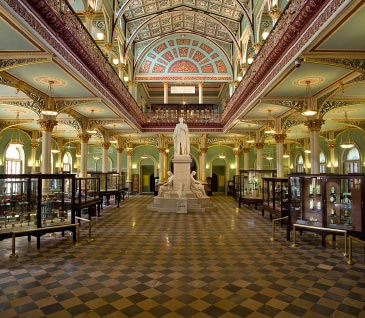
hanoi-museum

Source

Ho Chi Minh Mausoleum: The Ho Chi Minh Mausoleum is a place of pilgrimage for many Vietnamese people who come to pay tribute to “Uncle Ho”, the man who led the fight for an independent, unified Vietnam. Queues to see Ho Chi Minh’s embalmed corpse can stretch for hours outside the gigantic mausoleum, and once inside talking, photography and hands in pockets are banned.


Hoan Kiem Lake: The Hoan Kiem Lake in Hanoi attracts tourists and locals looking to get away from the noise and frenetic pace of the city. Peaceful and quiet, the lake surrounds Ngoc Son Temple, a pagoda sitting in the centre on a small island. The temple attracts many visitors and was built in commemoration of the 13th-century military leader Tran Hung Dao who was renowned for his bravery in the battle against the Yuan Dynasty. Homage is also paid to scholar Van Xuong and Confucian master Nguyen Van Sieu. The island on which the temple is built is known as Jade Island and is accessible by the iconic Huc Bridge or Rising Sun Bridge which is a charming scarlet-painted wooden bridge of classical Vietnamese design. The pagoda is also guarded by two towering posts decorated with Chinese writing. The lake and temple are probably the most famous places in Hanoi city in which to rest and enjoy the view and are a great place to sit back and watch the locals.

Water Puppet Theatre: The world-famous Thang Long Water Puppet Theatre in Hanoi has its roots in an art form that dates back to the 11th century. The tradition of water puppet theatre stems from a time when rice paddy fields were flooded and villagers would make entertainment by standing in the waist-deep water with the puppets performing over the water. Using large rods to support the puppets it appeared as if they were moving across the water with the puppeteers hidden behind a screen.


Don Xuan Market: Dong Xuan Market is the largest market in Hanoi and has a wide array of products for sale over four floors. Located on the northern edge of the Old Quarter, it is an imposing Soviet-style building, surrounded on all sides by merchant shops and stalls. It is a rough-and-ready type of market (some might even say ‘dirty’), especially in the ground floor wet market area. However, head up the stairs and you will find cheap items available at wholesale prices. It is quite an experience, even if you only leave with a pair of cheap sunglasses and a Vietnamese conical hat.


Hang Gai Street: Hang Gai Street is the best place in Hanoi to shop for high quality, fashionable silk materials, traditional Vietnamese apparel, and home furnishings. Also known as Silk Street, the entirety of this 300 metre-long street is lined with fashion boutiques and local tailor shops that have been operating for decades, where you can also order personally tailored suits and dresses that are made to measure. Set on the edge of Hanoi’s Old Quarter near Hoan Kiem Lake, Silk Street is renowned for its quality and choice of craftsmen.


halongbaydaytour

Source

Halong Bay: You can do Halong Bay either as a full day tour or as an overnight one. I am leaning towards the overnight tour as that will give us an experience of sleeping in the cruise itself. Hanoi is only 170 kilometres west of UNESCO-listed Halong Bay, so just about every tour company in the city offers excursions at varying price points. A full day tour to Halong Bay is usually inclusive of roundtrip hotel transport, lunch, tour guide, and cruise along through the incredible scenery of the bay. You also get to explore some of the most popular limestone caves, floating villages, and islets such as Cat Ba Island and Bon Hon Island. Food may be a big issue with us (because we are vegetarians) and so this is something I need to figure out beforehand.

We all love coffee and so I am excited to try Vietnamese coffee at its very source! All in all, this post has made me excited to start planning our holiday to Hanoi. Has it whetted your appetite to visit this lovely city too?


In My Hands Today…

The River’s Tale: A Year on the Mekong – Edward Gargan

402237Along the Mekong, from northern Tibet to Lijiang, from Luang Prabang to Phnom Penh to Can Lo, I moved from one world to another, among cultural islands often ignorant of each other’s presence. Yet each island, as if built on shifting sands and eroded and reshaped by a universal sea, was re-forming itself, or was being remoulded, was expanding its horizons or sinking under the rising waters of a cultural global warming. It was a journey between worlds, worlds fragiley conjoined by a river both ominous and luminescent, muscular and bosomy, harsh and sensuous.

From windswept plateaus to the South China Sea, the Mekong flows for three thousand miles, snaking its way through Southeast Asia. Long fascinated with this part of the world, former New York Times correspondent Edward Gargan embarked on an ambitious exploration of the Mekong and those living within its watershed. The River’s Tale is a rare and profound book that delivers more than a correspondent’s account of a place. It is a seminal examination of the Mekong and its people, a testament to the their struggles, their defeats and their victories.

Solo Travelling

adventure alone daylight desert

Photo by Gabriela Palai on Pexels.com

The older I get, the more solo travelling has started to appeal to me. S and I are completely different when it comes to travel goals and so as the children get older and I am not bound by their schedules.

But there seems to be a big societal deterrent to travelling alone, especially in Asian cultures. Solo travels these days, also seems to the domain of the young millennial. As a middle-aged woman, I have certain standards and so don’t fall into the same category. I like my luxuries and don’t think I can rough it out like the young set, and since if I travel alone, I will have the money to finance it, I don’t see it too much of an issue.

ball shaped blur close up focus

Photo by Porapak Apichodilok on Pexels.com

So why is solo travel good for your soul?

It gives you the complete freedom to do what you want without having any regard for other people in your group. You feel like exploring a certain place in depth, go ahead and do that. On the other hand, if you just want to be a sloth on a particular day, that’s your prerogative.

You gain confidence in yourself. Since you have to depend only on yourself to do all the grunt work for and during your travels and this makes you get out of your comfort zone and forces you to interact with people of different strata. You may make friends with them, some of whom become life-long friends, but again, it’s your call how much further you want to take this.

You become comfortable in your own skin. When you travel alone, you are forced to eat and sightsee alone. I remember the first time I had to eat alone in a restaurant. It was very intimidating (I was travelling on business, not pleasure), but soon realised how much I enjoyed eating alone. I was free to read or watch what I wanted while I ate, without making small talk with people I barely knew and somehow since then, I would not mind eating slightly early or later just so I can eat alone. I am also more comfortable with myself than I was in my twenties. I recently even watched a movie alone in the theatre and found that I actually liked doing things alone.

sunset man

Photo by Ali Naderi on Pexels.com

You step outside your comfort zone. You are responsible for yourself when you travel alone and any hiccups along the way are yours to solve. This helps you develop problem-solving skills as well as the ability to think on your feet. This will stand you in good stead irrespective of what stage of life you are in.

Solo travelling strengthens your creativity. When you have the time to chill and be with yourself, you have the time and more importantly, the bursts of creativity to start on the book you’ve always been meaning to write or start any of the projects you wanted to do like knitting, needlework, embroidery etc.

One other benefit of travelling alone, for a reader like me, is to have the unlimited time to read. You don’t have others impinging on your reading time, while in the hotel room or even while moving from one attraction to the other. Actually, this is not just true of reading, but also of watching movies or anything you wanted to watch but didn’t have the time for.

It may make you happier in the long run. Research suggests that getting into vacation mode has the potential to increase our happiness levels. And spending time alone has also been shown to stave off depression.

woman standing beside chair

Photo by Polina Sirotina on Pexels.com

However, travelling alone makes you more vulnerable to attacks as you don’t have the safety of numbers and seeing a woman alone may make you the target of potential attackers and molesters. So you have to be very careful and have all eyes and ears open all the time. Make sure you guard all your belongings and dress with respect to local cultures and norms. In addition, always do your homework: find out the do’s and don’ts of an area prior to arrival.

Travel, in general, is one of the most beneficial life experiences you can have but there are even more benefits if you decide to do it alone. So what are you waiting for? As for me, I still have one more year before I am free to start to travel alone. Till then, I am going to make my solo travel bucket list.

In My Hands Today…

In Siberia – Colin Thubron

544339

In the early 1980s, Colin Thubron wrote a book about his travels around the Soviet Union in an old Morris Minor. In the late 90s, post–Soviet Union, he decided to explore Siberia—this time by truck, by bus, by boat. The result is an evocative account of an extraordinary region. He travels through exotic cities and deserted villages, meets nostalgic old Stalinists and aggressive Orthodox churchmen, and generally interweaves Siberia’s fascinating history with a description of the place today.