In My Hands Today…

The Third Pole: Mystery, Obsession, and Death on Mount Everest – Mark Synnott

Shivering, exhausted, gasping for oxygen, beyond doubt . . .

A hundred-year mystery lured veteran climber Mark Synnott into an unlikely expedition up Mount Everest during the spring 2019 season that came to be known as “the Year Everest Broke.” What he found was a gripping human story of impassioned characters from around the globe and a mountain that will consume your soul—and your life—if you let it.

The mystery? On June 8, 1924, George Mallory and Sandy Irvine set out to stand on the roof of the world, where no one had stood before. They were last seen eight hundred feet shy of Everest’s summit, still “going strong” for the top. Could they have succeeded decades before Sir Edmund Hillary and Tenzing Norgay? Irvine is believed to have carried a Kodak camera with him to record their attempt, but it, along with his body, has never been found. Did the frozen film in that camera have a photograph of Mallory and Irvine on the summit before they disappeared into the clouds, never to be seen again? Kodak says the film might still be viable. . . .

Mark Synnott made his own ascent up the infamous North Face along with his friend Renan Ozturk, a filmmaker using drones higher than any had previously flown. Readers witness first-hand how Synnott’s quest led him from oxygen-deprivation training to archives and museums in England, to Kathmandu, the Tibetan high plateau, and up the North Face into a massive storm. The infamous traffic jams of climbers at the very summit immediately resulted in tragic deaths. Sherpas revolted. Chinese officials turned on Synnott’s team. An Indian woman miraculously crawled her way to frostbitten survival. Synnott himself went off the safety rope—one slip and no one would have been able to save him—committed to solving the mystery.

Eleven climbers died on Everest that season, all of them mesmerized by an irresistible magic. The Third Pole is a rapidly accelerating ride to the limitless joy and horror of human obsession.

In My Hands Today…

The Devil’s Picnic – Taras Grescoe

From Norwegian moonshine to the pentobarbital sodium sipped by suicide tourists in Switzerland—and, in between, baby eels killed by an infusion of tobacco, a garlicky Spanish stew of bull’s testicles, tea laced with cocaine, and malodorous French cheese—Taras Grescoe has written a travelogue of forbidden indulgences.

As Grescoe crisscrosses the globe in pursuit of his quarry, he delves into questions of regional culture and repressive legislation—from the clandestine absinthe distillation in an obscure Swiss valley to the banning of poppy seed biscuits in Singapore—and launches into a philosophical investigation of what’s truly how something as fundamental as the plants and foods we consume could be so vilified and demonized.

An investigation into what thrills us, what terrifies us, and what would make us travel ten thousand miles and evade the local authorities, The Devil’s Picnic is a delicious and compelling expedition into the heart of vice and desire.

In My Hands Today…

Border: A Journey to the Edge of Europe – Kapka Kassabova

In this extraordinary work of narrative reportage, Kapka Kassabova returns to Bulgaria, from where she emigrated as a girl twenty-five years previously, to explore the border it shares with Turkey and Greece. When she was a child, the border zone was rumored to be an easier crossing point into the West than the Berlin Wall, and it swarmed with soldiers and spies. On holidays in the “Red Riviera” on the Black Sea, she remembers playing on the beach only miles from a bristling electrified fence whose barbs pointed inward toward the enemy: the citizens of the totalitarian regime.

Kassabova discovers a place that has been shaped by successive forces of history: the Soviet and Ottoman empires, and, older still, myth and legend. Her exquisite portraits of fire walkers, smugglers, treasure hunters, botanists, and border guards populate the book. There are also the ragged men and women who have walked across Turkey from Syria and Iraq. But there seem to be nonhuman forces at work here too: This densely forested landscape is rich with curative springs and Thracian tombs, and the tug of the ancient world, of circular time and animism, is never far off.

Border is a scintillating, immersive travel narrative that is also a shadow history of the Cold War, a sideways look at the migration crisis troubling Europe, and a deep, witchy descent into interior and exterior geographies.

In My Hands Today…

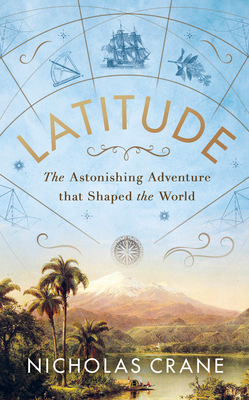
Latitude: The astonishing journey to discover the shape of the earth – Nicholas Crane

The year is 1735.
Twelve unruly men board ships bound for South America.
Their mission? To discover the true shape of the earth.
They will be exposed to a wilderness of dangers none can imagine.
The survivors won’t return for ten years.

They knew the world wasn’t a sphere. Either it stretched at the poles or it bulged at the equator. But which?

They needed to know because accurate maps saved lives at sea and made money on land. But measuring the earth was so difficult that most thought it impossible.

The world’s first international team of scientists was sent to a continent of unmapped rainforests and ice-shrouded volcanoes where they attempted to measure the length on the ground of one degree of latitude.

Beset by egos and disease, storms and earthquakes, mutiny and murder, they struggled for ten years to reach the single figure they sought.

Latitude is an epic story of survival and science set in mountain camps and remote observatories. A breathtaking tale of courage in adversity, it is celebrated today as the first modern exploring expedition.

In My Hands Today…

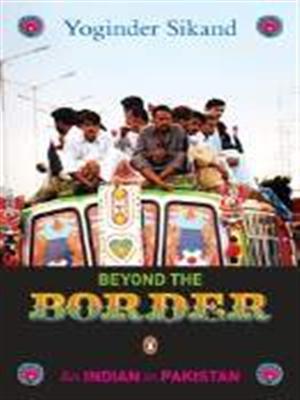
Beyond the Border: An Indian in Pakistan – Yoginder Sikand

Beyond the border, based on two journeys that yoginder sikand undertook to pakistan, covering lahore, multan, hyderabad (sindh), moenjo daro, bhit shah, and Islamabad, among others, is a strikingly unconventional account of what life is like for ordinary pakistanis the pakistan he discovers only remotely resembles the stereotypical muslim nation of the hindu imagination from shiela, the daughter of a feudal lord, named after her mother’s Indian best friend, to a rundown, local eatery owner who offers the author free food because sikand is the first indian to visit his stall, encounters with pakistanis from all walks of life draw up a very different picture: Pakistan is a country as diverse, paradoxical and rich in narratives as india departing from the fiercely polemical rhetoric common in indian and pakistani accounts of each other, yoginder Sikand not only gives lie to the strategist s view of the India-Pakistan divide but also dispels the myths that have filtered into the indian psyche about pakistan being the terrible other in this brilliantly perceptive and quirky travelogue, he illuminates the pakistani side of the story, while telling his own tale of exploration and self-discovery